Category Archives: Abbie’s column

Abbie’s newspaper columns

Ninfa-ish or Ninfa-esque. Sort of.

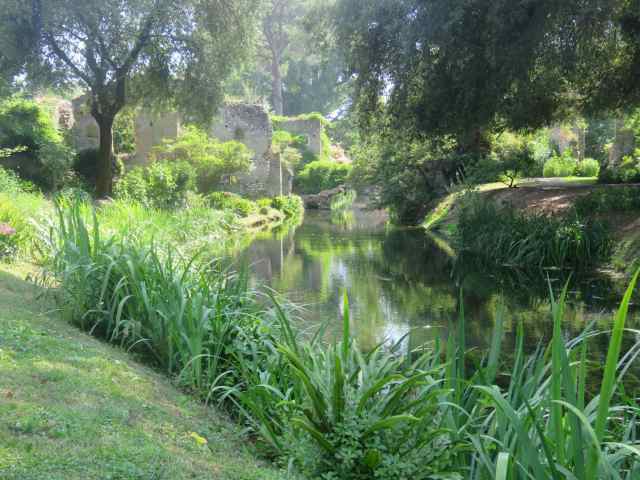
One of the iconic vistas at Ninfa

I don’t think I have ever felt so flattered in my life as when Australian garden expert, Michael McCoy came here two weeks ago saying that a Wellington landscaper friend told him he must come, that our garden is ‘like Ninfa but without the ruins’. Well, I was even more flattered when he endorsed that observation after we walked around for 2 ½ hours in rain. It took that long to get around because we found so many shared gardening values and, indeed, experiences.

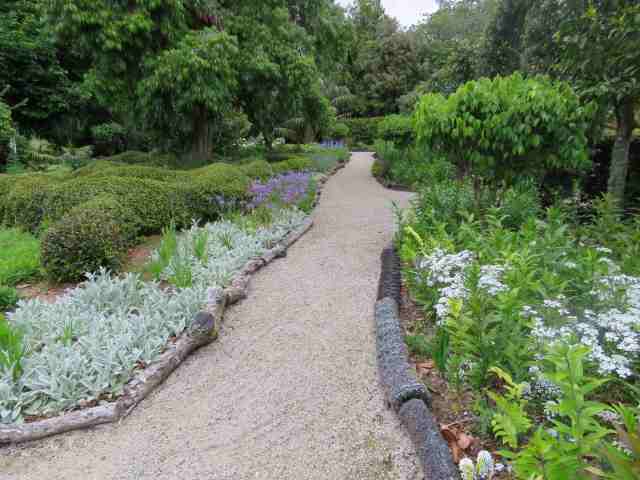
Not exactly Ninfa, our Wild North Garden, but I guess it has a similar ambience but without the ruins

Upon reflection, it isn’t so much that we are like Ninfa (and we certainly lack ruins), but that these two younger professionals in the garden design scene saw the romanticism that we have embraced in our garden. We have reached it in a different way to Ninfa but soft-edged romanticism was the goal and this was an endorsement that we are reaching that goal.
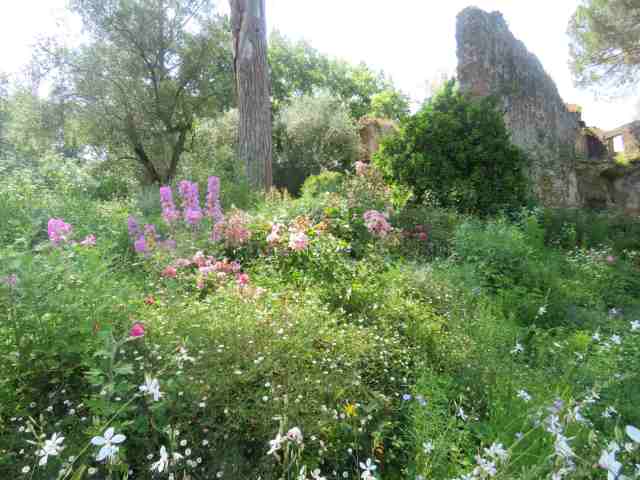
Ninfa with lush growth that is not commonly seen in the hot, dry climate of southern Italy

For those of you who don’t know Ninfa, it is a garden in southern Italy that is often hailed as ‘the world’s most romantic garden’ and it is built around the remains of an entire town that was occupied from Roman times through until it was sacked in 1370. So 750 year old ruins. Our only ruin is a collapsed low brick wall which fell back around 1960s or 70s. I don’t think that counts. Ninfa is renowned for its roses and we don’t have a mass of climbing roses. Neither Mark nor I could recall long grass at Ninfa; I went through my photos from our visit and they don’t have long grass and meadows as we do. So how are we like Ninfa without the ruins?
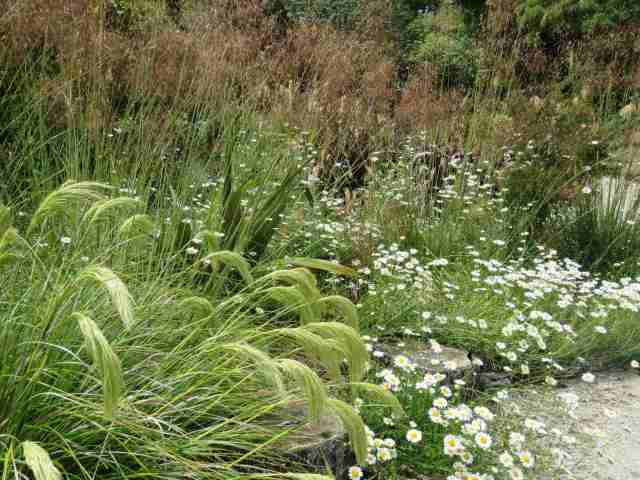
The Court Garden last week here at Tikorangi

Soft-edged gardening is what it is all about. I see I wrote a piece about romantic gardens for Woman magazine at the beginning of last year and I must be getting old because until I reread it, I had no memory of writing it at all. ‘I grow old… I grow old… I shall wear the bottoms of my trousers rolled’, to quote T.S. Eliot in his Love Song of J. Alfred Prufrock. At least I still dare to eat a peach.
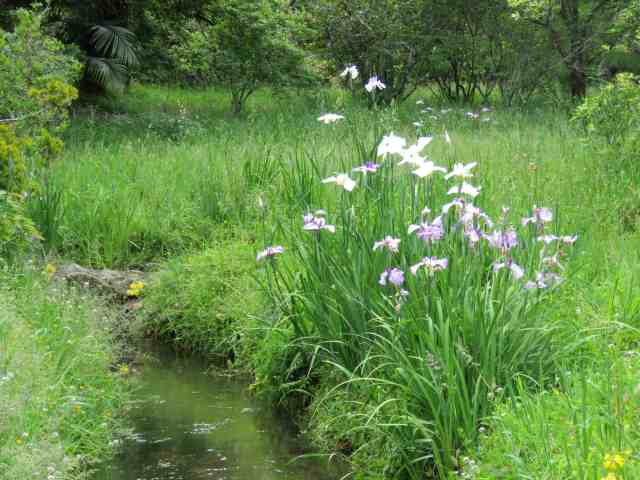
Higo iris now in bloom in our park

Before I found those earlier thoughts, I had been musing all week about what makes a romantic garden. In no particular order, I would list the following:
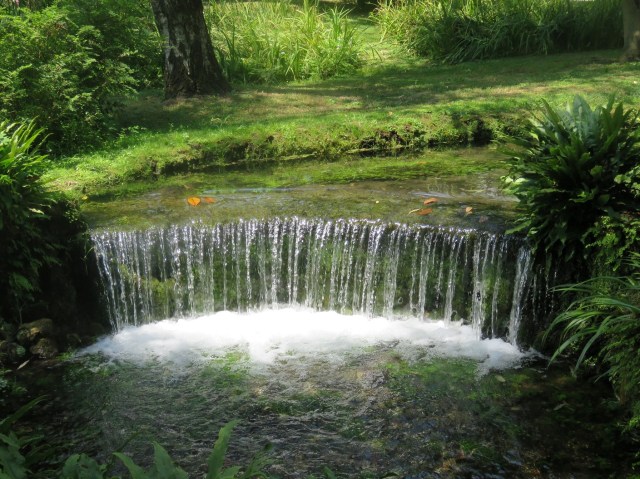
Water is an integral part of the garden at Ninfa
Same principle Mark arrived at long before we even heard of Ninfa – creating small drops to enable the flowing water to be heard as well as seen. We have so little fall from where water enters our property on one side to where it exits on the opposite boundary that this tooks some thought and effort to achieve.
  • Water – a reasonably large body of water that is moving so it brings the element of sound. Ninfa was exceptional in that it was in a dry, arid part of Italy but it had its own river which gave the feeling of an oasis in a barren landscape beyond. Years ago, when Mark was playing with our onsite water, he worked on ponds and rapids to achieve small drops in level to get the sound of flowing water.
  • Lush growth – onsite water plays a large part in being able to manage a lush garden. I don’t think I have seen a dry garden that could be described as romantic. Water and lush growth also encourage birds, flowers bring bees and other insects and these natural creatures bring more life to a garden. We do lush growth very easily in our little corner of the world where three weeks without rain has us muttering darkly about drought.
  • No straight lines, right angles or hard edges. Formal gardens may be many things, but romantic they are not. And no wretched edging plants defining the line between garden and path. To our mutual amusement, Michael McCoy and I share an intense dislike for suburban edging plants.
  • Avoid evidence of maintaining the garden with glyphosate, too. There is not much that is less romantic than edges that have clearly been sprayed, or indeed expanses of liverwort which are too often a sign of long-term maintenance with glyphosate (Round Up).
Dappled light and glimpses beyond in our Wild North Garden
  • Light and shade and dappled light which usually means some taller trees. Too often, the delight in variations of light and shade are not factored into planning gardens but they add another dimension beyond flowers, foliage and form. With light and shade come views through. Designs with tightly enclosed garden rooms may be cosy and contained, but they are not often romantic. Glimpses beyond hint at further areas to be experienced.

Romanticism at Gresgarth, Arabella Lennox-Boyd’s lovely garden in the north west of England.
  • An absence of dominating man-made features or much that is modern. As soon as you add man-made features into a garden, be it a gazebo (oft referred to as ‘gazzybows’ here), a Japanese-style bridge painted red or any other piece of brightly painted garden structure, a modern sculpture or a stark white statue, the eye is always drawn to that piece rather than to the wider environment. Old ruins or suitably aged and mellow pieces can be added but in great moderation and with care. Less is more in a romantic garden and any additions should blend and meld, not shout out to be noticed. Forget focal points which are to direct the eye – they belong in more structured garden styles. The romantic garden is more of an absorbing experience than a directed one.
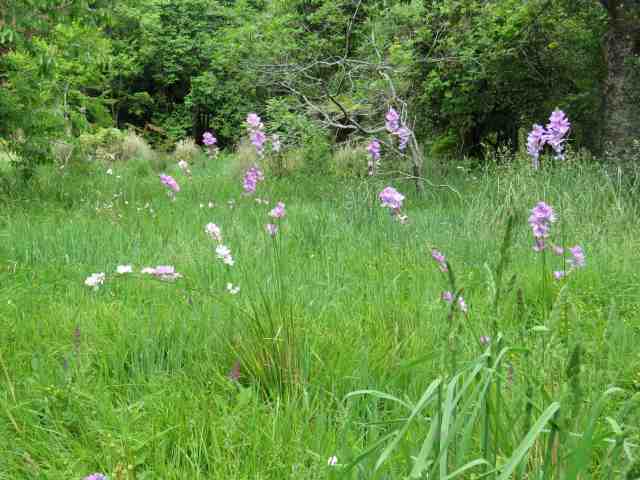
Ixias used as meadow flowers
  • Flowers are generally in simpler, looser forms. Not necessarily small but if large, they look better if they are on the blousy side. Flowers with the tight form of, say, auriculas or formal camellias are more at home in more controlled situations. The same rule of thumb applies to plants with rigid, stiff forms. Looser forms also give more sense of movement – they will sway and respond to the slightest breeze.
Mown paths give definition – in the area we refer to as the park here at Tikorangi
We have a few roses but not a lot. Because we don’t spray them, they are integrated into plantings that will hide their poor foliage and generally disappointing form when they are not blooming in profusion. The dog, as you may gather, is my constant companion.

Without ruins and rambling roses, we have basically done it with long grass and meandering mown paths following the natural contours of the land (no straight lines!). The paths are what give definition and stop the long grass from looking like the area has just been shut up and left. In our climate, the grass growth is so strong all year round that we have to mow everything down twice a year – in midsummer and midwinter so the end of January and the end of June. But long grass, flowers growing semi-wild and meadows are not a defining characteristic of a romantic garden. They are just one style that sits within the romantic genre.
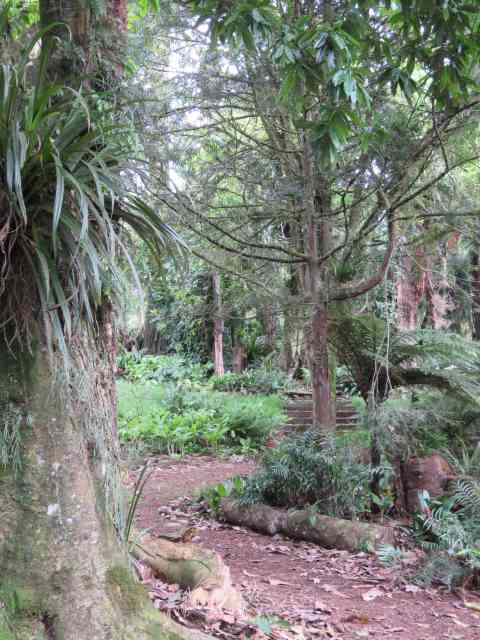
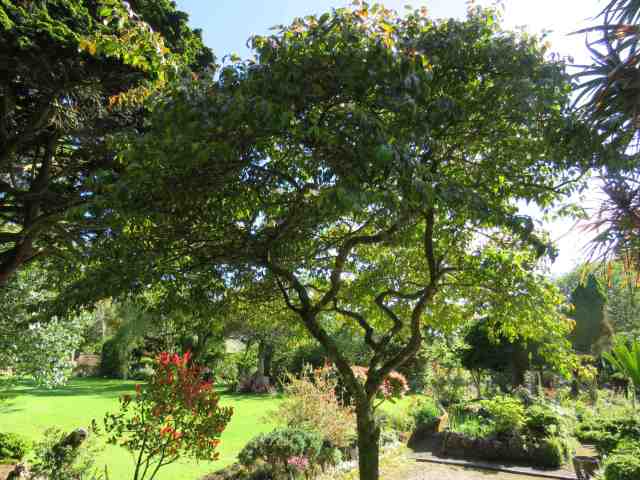
It is not all about long grass here at Tikorangi; sometimes it is about views through, gently leading from one area to another rather than straitjacketing areas into tightly defined garden rooms.

Romantic gardens come back to being in the garden, not looking at the garden, gardening with Nature more than by controlling Nature and creating gardens that sit within the landscape rather than on the land.

It is not everybody’s cup of tea.  It is bringing different eyes to a garden situation and with that, different expectations. It makes us happy,  brings us delight and, mostly, that is all that matters. But I am still honoured and flattered  that others have referenced Ninfa as a comparator.
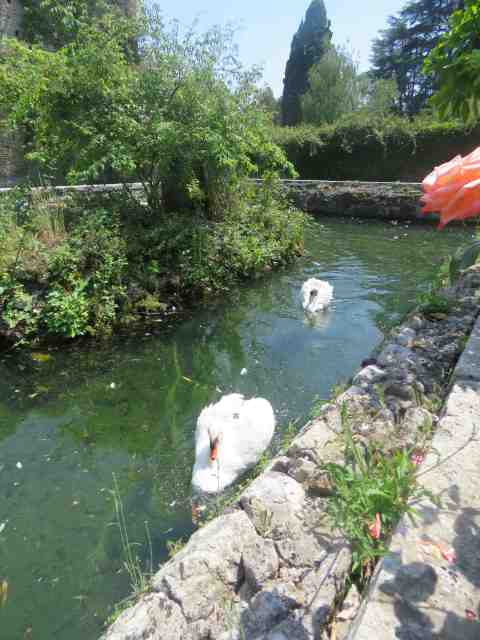
Ninfa with its moat and decorative white swans (and a distinctly vulgar orange hybrid tea rose on the right that disturbed me)
Lacking both moat and white swans, we have to make do the neighbour’s white runner ducks who visit the Wild North Garden from time to time.
Finally, just as a point of comparison – NOT romantic in our Wave Garden and lily border – too sharp-edged, too pristine, too tightly managed to be considered romantic. I like it, I like the contrast and it may be described in various ways, but romantic is not one of them.

Needs must when drastic pruning is required

We generally prefer to lift, limb and encourage the natural form of a plant like this mature Camellia ‘Tiny Princess’ but it isn’t always possible.

We carry out a lot of pruning in our garden but not a whole lot of drastic, hard pruning to reduce a plant to juvenility. Generally, we like to celebrate maturity in plants and to shape or clip to bring out their natural form if required. But sometimes there are plants that are beyond that and drastic action is needed because they have lost what ornamental merit they had.

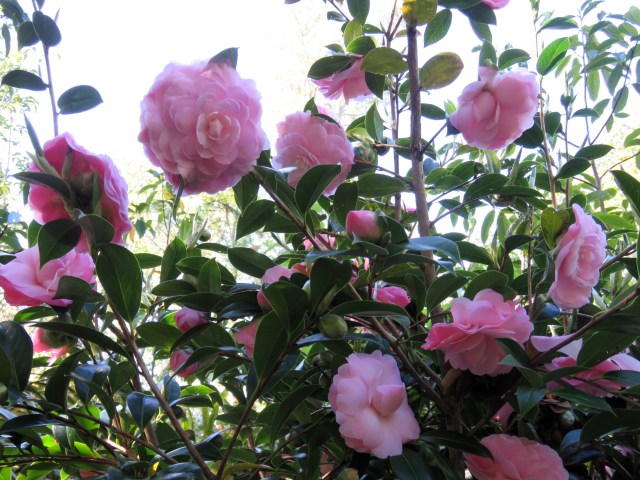
I was delighted to find some perfect blooms on a specimen of Camellia ‘Mimosa Jury’ on a former nursery stock plant this season but it is many years since the original plant in the garden has looked like this.

So it is with some of the original camellias bred by Felix Jury, some of which are now household names. We regard the original plants as having some intrinsic value simply because they are the very first one but there comes a time when they can lack any aesthetic merit, especially these days when camellia petal blight has robbed them even of pretty flowers. In particular, ‘Mimosa Jury’, ‘Waterlily’ and ‘Softly’ had reached for the sky and left nothing but bare legs and messy, blighted blooms and aborted buds visible at ground level.

What remains of Camellia ‘Softly’ after a brutal prune but we expect it to recover. It must have been at least six metres tall last week.
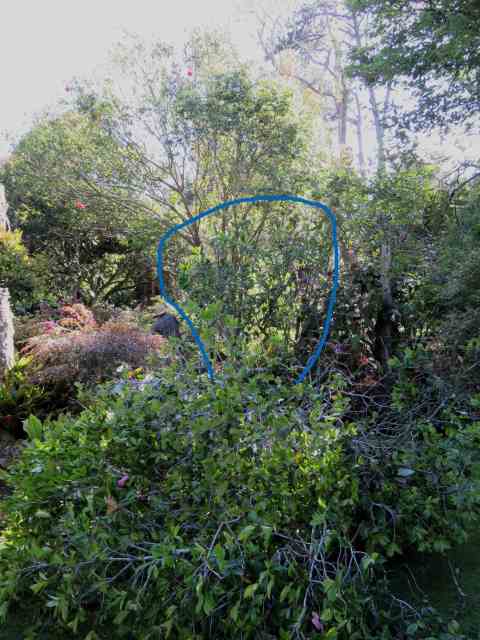
That is Zach, to the left of the blue circle, taking down ‘Mimosa Jury’ which was taller than the one still standing behind. In front is the mountain of material taken off already.

A word of warning: we have a fairly long season when we can do this sort of extreme pruning – late winter through spring is best, so August to October. We can get away with going into November this year because spring has been a little late and we get regular rain. It really is too late and risky for people in climates who are staring down the barrel of a long, dry, hot summer which may start very soon. Your plant may just sigh and die rather than springing into fresh growth.

This specimen of Camellia ‘Tiny Star’ had become leggy and way too tall to appreciate the dainty blooms. It was cut back very hard indeed two years ago so has just put on its third season of fresh growth and should be as pretty as a picture in flower next spring.

You can cut back to ground level with camellias and they will grow again but you get a thicket of young shoots and no form to the plant. We prefer to cut off to anywhere between a metre up to three metres, depending on the situation, so that the plant will look established again quickly. If we can, we will leave a few wispy branches that still have leaves on them, even if we trim them off later when the new growths have appeared. In this case, ‘Softly’ is back to bare wood while ‘Mimosa’ has a few thin branches with leaves. We shape the remaining trunks and branches, often reducing them to a strong central leader and maybe five or seven branches from that leader.

When I say reestablish ‘quickly’, I mean two years. The plants will push out new shoots this season and bush out again next growing season but they won’t flower and look lush until they have that second growing season behind them so into the third flush of new growth. Patience is a virtue in gardening.

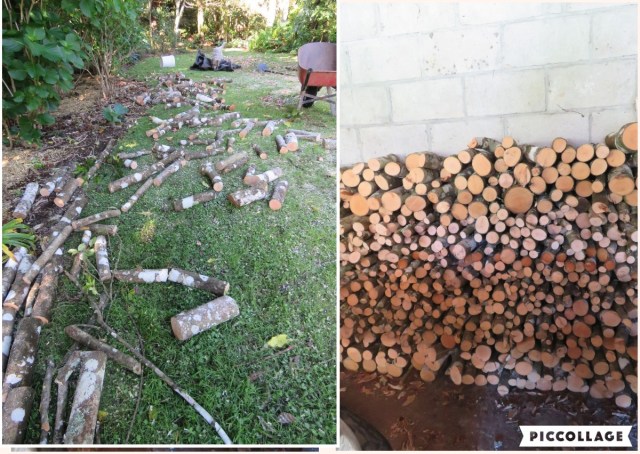
As is our usual practice, we deal with the waste by retrieving what is suitable for firewood and putting the leafy and twiggy remains through the chipper to use as mulch.

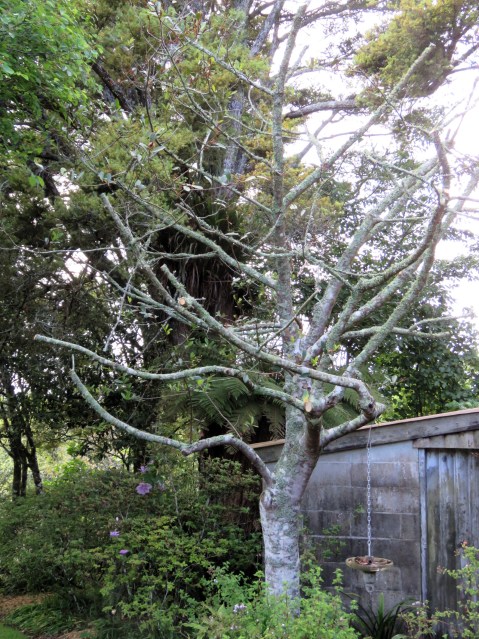
The bare branches of an established plant of ‘Velvet and Cream’ – an extreme example of getting a decent shaped plant out of it after we failed to train it adequately from the start.

You can do this style of extreme pruning on michelias, too and we have reduced a M. laevifolia ‘Velvet and Cream’ to a leafless frame this week as well but you do need to start with a strong growing, healthy specimen. If it is not growing vigorously, it is may die. If you are wondering about hard pruning a michelia (botanically magnolias these days), there are more before and after photos over time here from an earlier effort on another specimen.

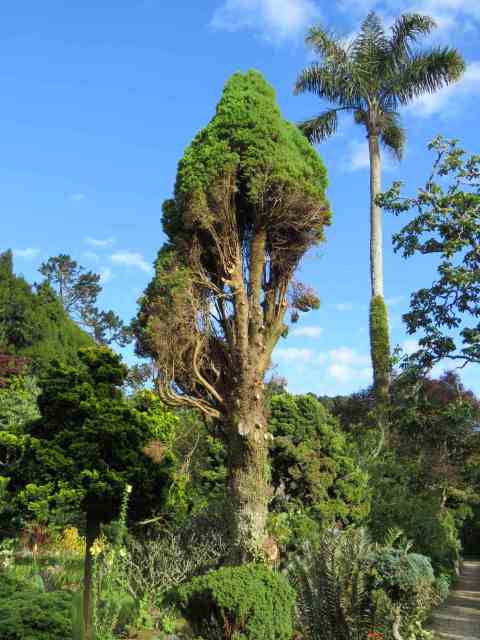
Work has stopped until the babies fledge and fly. Then, sadly, it is farewell to Picea albertiana ‘Conica’.

Some plants are beyond rescue. Work has stopped, temporarily, on the Picea albertiana ‘Conica’ in the rockery. It was once a fine specimen of admirable size and form. It was also kept in good health because Mark sprayed it for red spider once a year. As it grew larger, it became harder to spray and Mark – He Who Used To Do All The Spraying here – became increasingly reluctant to routinely spray to keep plants healthy. We decided that good environmental practice was more important than keeping inappropriate plants alive in the garden. In the years since he stopped spraying, the red spiders have pretty much taken over and the tree has gone into serious decline, as well as developing a pronounced lean. Time for it to go.

Cutting down has stopped because what remains houses a bird’s nest with babies. It may just be a common old blackbird but we are not willing to knowingly kill a family simply because we want to finish a task. Completion can wait a little longer until the branches are no longer occupied.

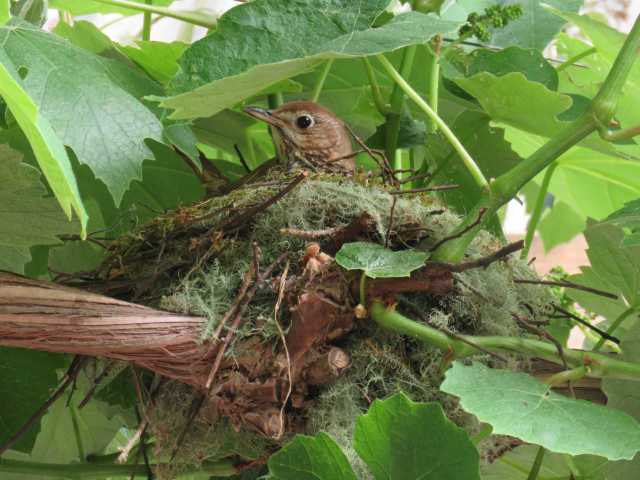
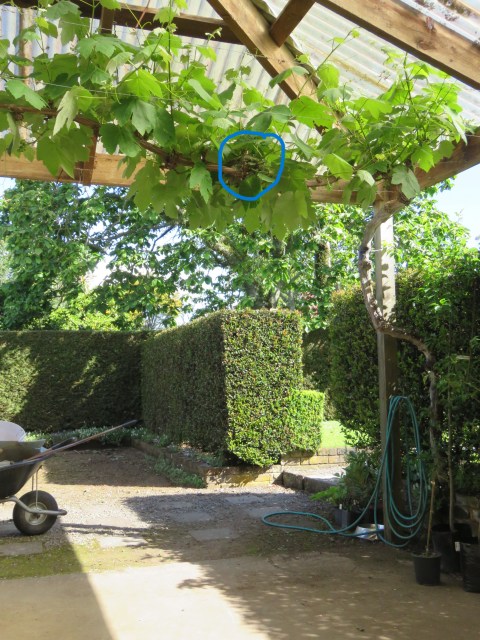
Talking of birds, Mama Thrush is bringing Zach and me delight although Ralph the dog is not so appreciative. She built her nest in the grapevine that grows beneath the verandah on the front of our shed which happens to be our main seating area when Lloyd and Zach are here at work. Her early anxieties appear to have faded and she has become accustomed to humans below. We can co-exist.

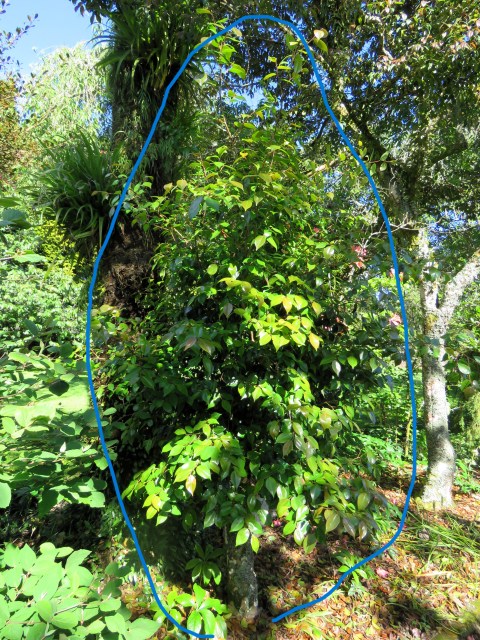
Mama Thrush’s nest outlined in blue – sheltered from the weather but taking a few chances on the humans nearby.

Life amongst death

Te Henui cemetery

I have been a little quiet here for the past few weeks. In part this is because life can get in the way and indeed, some fairly large chunks of my time have been consumed by matters unrelated to gardening. And sometimes I think I have nothing worth saying that I have not said before. But I am back again.

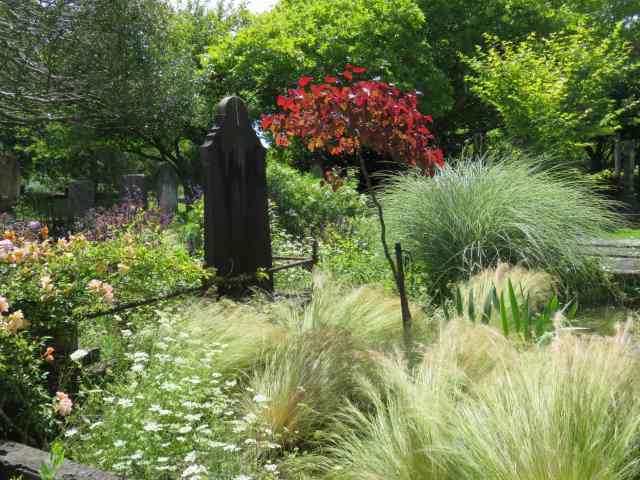
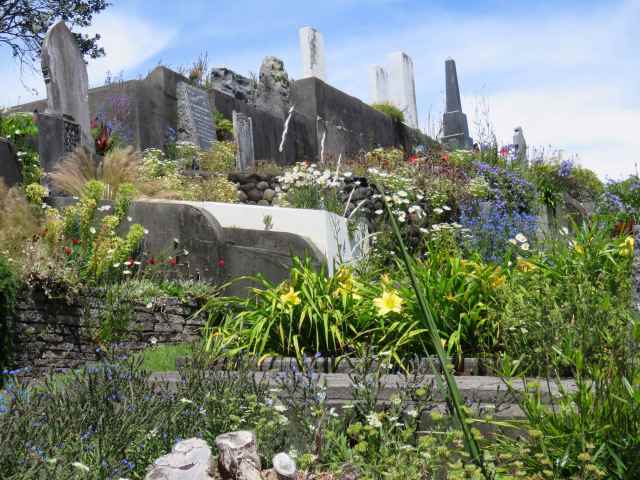
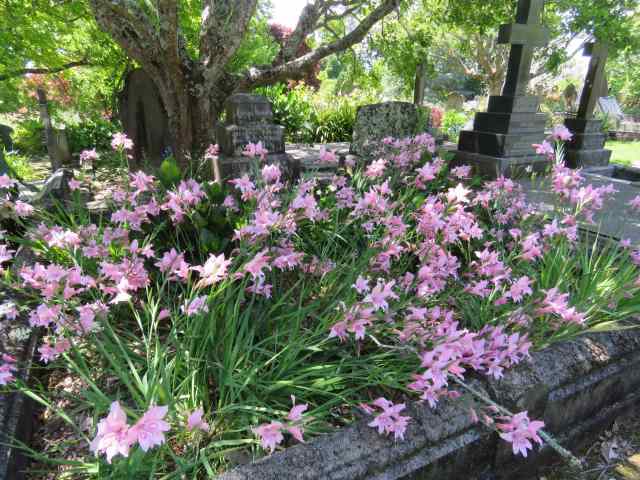
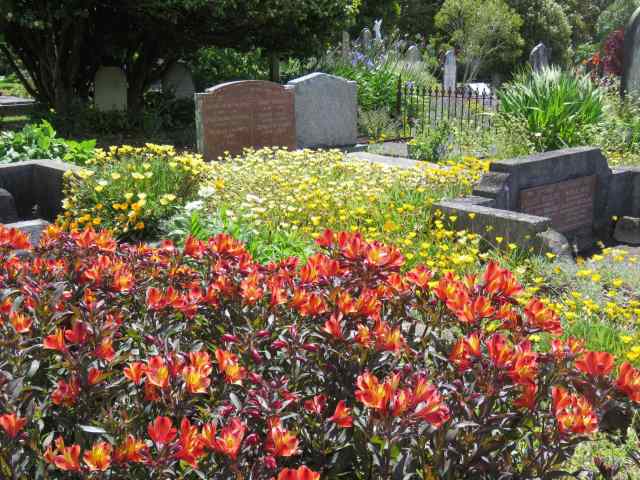
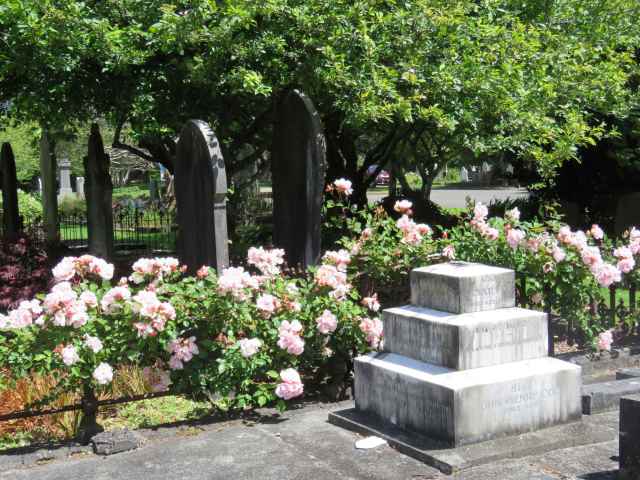
I dropped in yesterday to Te Henui cemetery yesterday, not to pay respects to the dead but to revel in the flowers. It was a while since I had last visited. On a day with bright sunlight and a strong, blustery wind, it was distinctly less than ideal conditions for photographs but the graveyard never disappoints.

The catalyst to visit came in part from being sent a newsletter written by Michael McCoy who had visited it in the pouring rain a week earlier. McCoy is not a name that is well known in this country and when he came here the following day, I wished I had googled him before he arrived because he certainly has a much higher profile elsewhere – particularly in Australia – and an impressive résumé to match. Garden designer, writer of books, TV writer and host and leader of masterclass tours, he has covered his ground internationally and in an extended conversation with him, we found so much common ground that I was both inspired and affirmed.  

Alas, his newsletter to subscribers (like my Canberra daughter who forwarded it to me) does not appear to be posted to his main website (https://thegardenist.com.au/)  and I can’t find it on line to add the link so I can not share it in full. Suffice to say, his joy in the experience of visiting the cemetery made me proud to be a local and to have a loose connection to some of the volunteers who turn this place of death and often long-forgotten memories into a place that celebrates life with colour and light. His concluding sentences are:

“But what I’m forever chasing, and experience with joyous regularity, are those magical moments when conscious enjoyment turns to inexplicable enchantment. 

I never imagined it could happen in a cemetery. In the pouring rain.”

Just those lines have started me thinking about those magical moments I have experienced in other people’s gardens in this country, in other parts of the world and, indeed, in our own garden. There is a good thought to carry me through the day. But in the meantime, I will leave you with some (mostly) joyous moments from amongst the tombstones. I still think of this graveyard as the grown-ups version of miniature gardens and sand saucers that so many of us made in our childhoods and that adds to its charm.

Alas poor Annie and Clarence

Shirley in her garden

I remembered the adage that old gardeners never die, they just turn into compost. All I could think was ‘not with our modern burial techniques, they don’t, especially if they have been embalmed’ and I wondered if my memory was correct. I typed in ‘old gardeners never die’ and Google gave me several variations.

‘Old gardeners never die, they just run out of thyme’ – a bit twee or naff, I thought.

‘Old gardeners never die. They just spade away and then throw in the trowel.’ This seemed a bit wittier.

‘Old gardeners never die; they just very slowly turn into the most magnificent compost. But what a marvellous, active brew it is!’ That is the full quote I was thinking of.

Mark says he thought old gardeners never die, they just turn into garden gnomes. This is a family joke because, as his father became older and older, he did indeed start to remind us of a gnome. As we grow older, I have reflected more on how we made it possible for Felix to stay in his home and garden until he shuffled off the mortal coils well into his 80s.

We do not see a Ryman Healthcare Village beckoning to us in our future, even though I see many advertisements targeting our demographic with what are meant to be enticing visions of a care-free ‘village’ lifestyle with folks of a similar age bracket. Not too many of them look like gardeners to me.

How to manage a completely flat area surrounded by neighbour’s fences and to give an illusion of space and distance. On the left is a bold planting of simply splendid red astelias by the house.
I need to ask Shirley which red astelia her magnificent four plants are. Mark and his father spent years working on breeding red astelias – one of our native plants – and, despite all their efforts, Shirley’s plants are better and more of a statement than any we have growing here.

No, if I am lucky enough to live long, I want to be like Stratford gardener, Shirley Greenhill. I called in to see Shirley and her garden during the garden festival yesterday and she is indomitable. Shirley has been a stalwart of the Taranaki garden scene for more decades than many of us can remember. Her previous large garden is still cited as being particularly lovely, cool climate gardening on varied terrain managed with skill and charm. As an ageing widow, she reluctantly decided to move to something more sensible, more manageable, on a town section that has largely flat terrain with an easy-care modern home.

A river of rhodohypoxis is no mean feat to keep going. I should have asked what takes over from the rhodohypoxis in this area after they have peaked, because I am sure there will be something.

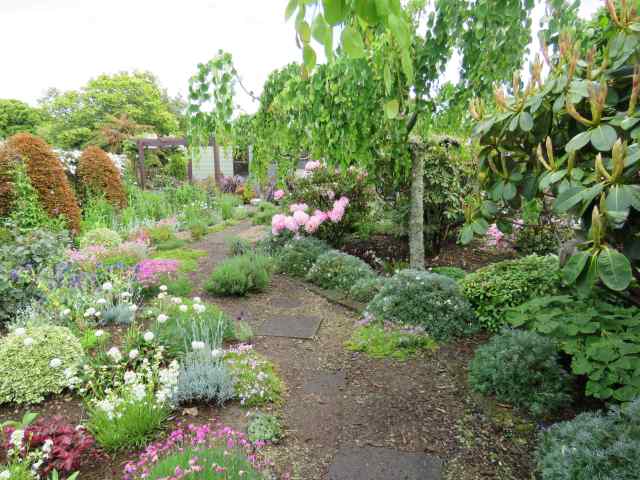
Shirley set about turning this ‘sensible choice’ into her own and she has certainly not taken the low maintenance option to her retirement garden. She loves plants and she loves gardening, even though she has had to scale down to a much smaller area. It is not that small though, by retirement standards. She has a lifetime of experience in active gardening and she loves many different plants and a high level of interest in her garden. I imagine there is something of interest to look at in every week of the year. If I lived a little closer, I would ask to visit to see and track it through the seasons.

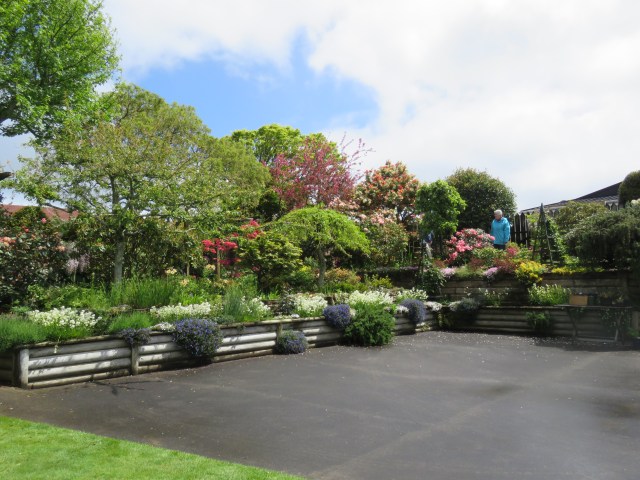
Making use of every piece of available space with just a pocket handkerchief of lawn remaining
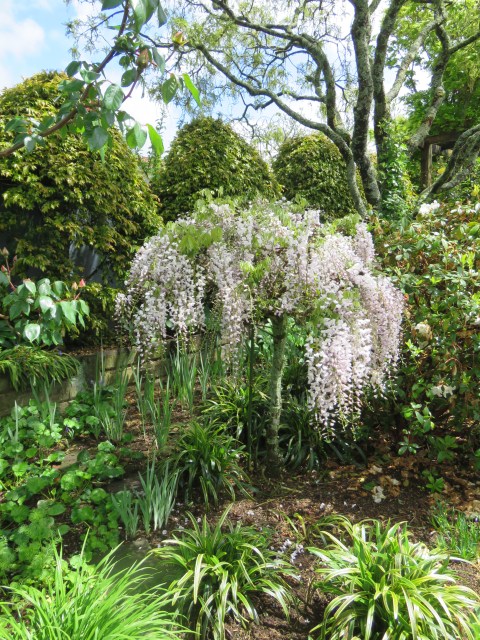
It is not the best coloured wisteria I have seen, being neither blue nor white, but it is a very good example of managing to keep one of the word’s more rampant plants confined to a small space and still keep it flowering abundantly.

I didn’t want to embarrass Shirley by asking to photograph her but there is a charming clip of her on prime time TV show, Seven Sharp, from October 26. It is available online  here for another 20 days  and she features from 17.10 minutes on.   If I reach the age of 88 and am still active, effervescent, and clearly in full possession of all my mental faculties, I will feel blessed indeed. What a role model for those of us who are now entering that stage of being aware that we have more years behind us than we have ahead.

No space for lawn but the considered placement of clipped shrubs and some moderately bold choices of larger trees and shrubs gives presence to the low underplantings of assorted treasures.

I bought the very last copy of her self-published book, “I am in the garden” – a charming memoir which I felt deserved a place in our bookcase. Shirley tells me she is working on a second book in a similar vein because she just loves writing. My latest visit to her garden is a memory that I want to hold on to.

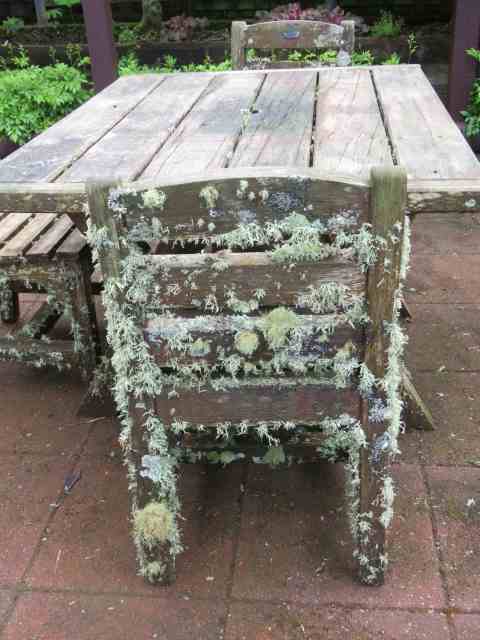
Shirley’s outdoor dining set amused me because it is a clear example of what so many of us have found in this climate of regular rainfall and high humidity – if you leave your furniture outside all year round, the lichen takes over. I always console myself with the thought that lichen growth is apparently a sign of good air quality.

Three gardens (not ours)

Three Elms Garden

Despite my intentions, life has got in the way and I have not been out and about visiting gardens and artist’s studios open on various trails this week in Taranaki as much as I thought I would. But I did get to three gardens on Thursday, which is about my limit for a day.

How to completely screen your neighbour’s house from view when it is very close – at Three Elms

First up was Three Elms, in New Plymouth which exceeded my expectations. The owners, Shane and Lisa McNab, have always credited us with inspiring them to garden – albeit several decades ago – and they tell me they made their first plant purchase from us. It was a pot of rhodohypoxis. They have clearly learned a huge amount in the time since.

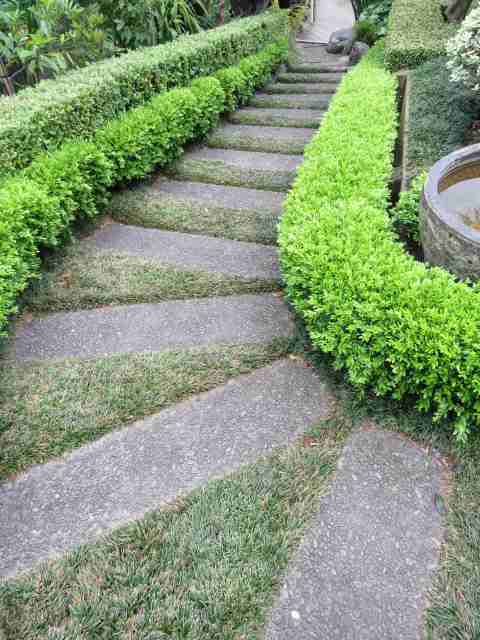
It takes a lot of skill to manage a very steep section but Three Elms show it can be done in such a way that the changes in level seem effortless

Three Elms is a town garden on a section that is not large but started out as a steep challenge. It is a due to their hard work and thoughtfulness that the gradient is no longer a problem. They have created small terraces with fairly easy transitions between them, belying the original slope and making moving around the area straightforward. Talk to Shane, if you visit, about the lengths he had to go to installing the large boulders and rocks that are used extensively. They are a feat of determination and physical effort.

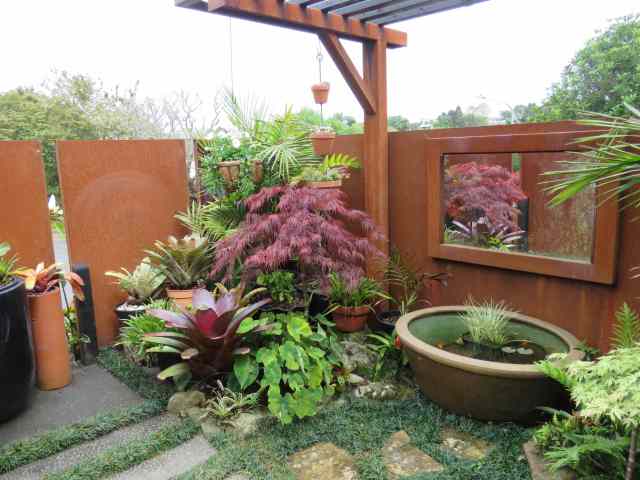
That is a tropical cordyline, believe it not, with strelitzia, a dwarf maple and a palm.

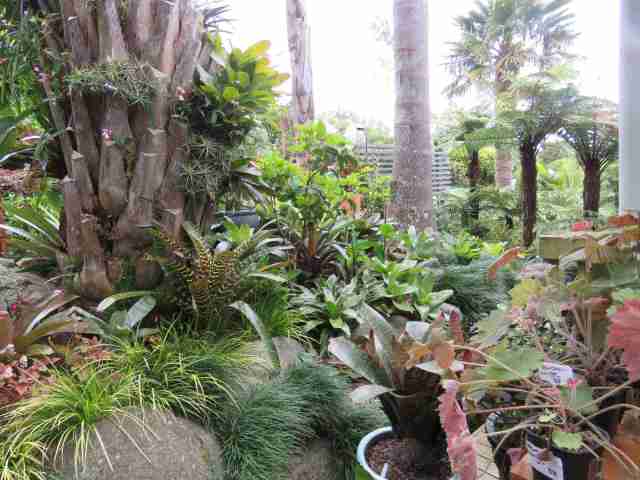
The hard landscaping provides the framework but it is the plantings that star. As they should, in my opinion. Pretty much every square metre has been carefully thought about and tended with skill and care over many years and it shows in the plant selections, the health of the plants and the harmonious combinations. There are a lot of bromeliads but it is not only bromeliads, by any manner of means.

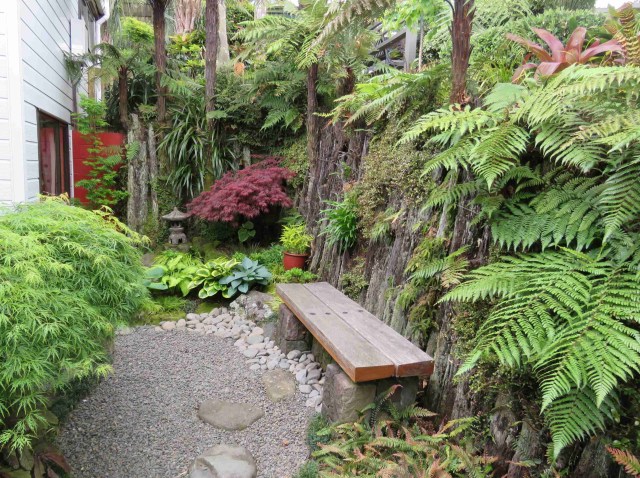
A nod to Japan makes use of a challenging space between the back of the house and a ponga (tree fern) retaining wall.

Gardens are only work if you don’t enjoy what you are doing. Three Elms has had a lot of time, thought, skill and – yes – love given to it over many years and it shows. If you are out and about garden visiting locally this weekend, go and see it.

Hurworth Country Garden

Hurworth Country Garden also delighted me. I had been to an event there late last year but events distract from looking at a garden and I wanted to have a better look. I was about a third of the way around it when I found myself thinking, “This is a really graceful garden” and that is not a descriptor that I have ever used about a garden before.

It is pretty large for a retirement garden situated just beyond the city limits and immaculately presented, but that high level of maintenance doesn’t interfere with the feeling of relaxed charm and space – and indeed, grace. Again, it reflects the skill, experience and thought of its owners, Jan and Graeme Worthington. I do like a thoughtful garden.

I loved the vibrant colour of the raised beds edging to the house verandahs, contrasting with the more subtle colours of much of the rest of the garden.

Jan’s use of colour is subtle but not monochromatic. When I commented on this, she put it down to her experience in quilt making. I haven’t seen her quilts but I imagine they are as immaculate and harmonious as her garden.

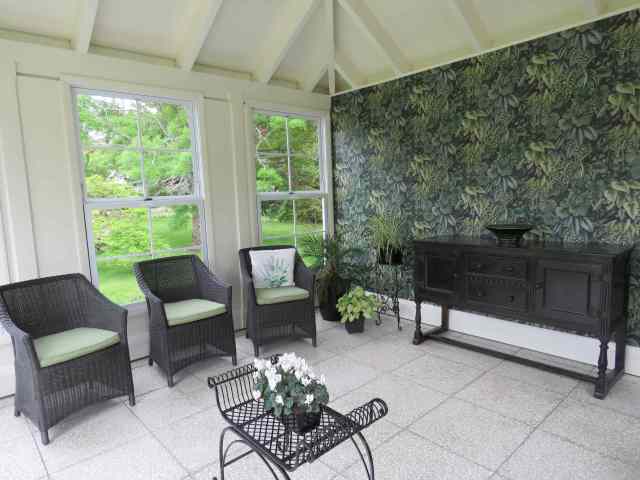
I coveted Hurworth’s garden room

They also have one of the loveliest garden rooms I have seen and I do like a good garden room. I didn’t even think to ask how and when they use it when the garden is not open to the public; it is perhaps a little too far from the house to use for summer meals and entertaining but it is the sort of room I could visualise sitting in myself, just to enjoy the ambience and views. Hurworth is a garden with a particularly lovely ambience.

Kowhai Garden

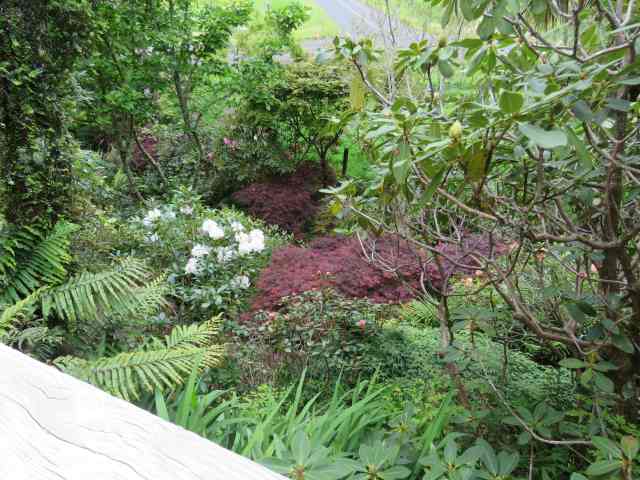
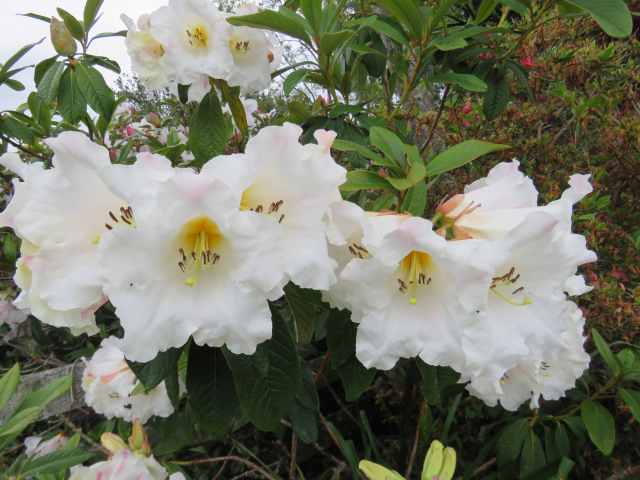
The third garden I went to was Kowhai Garden which has a remarkable collection of rhododendrons – over 900, I believe. It is not just rhododendrons but they are the stars at this time of the year. I entertained myself identifying those I knew, dredging my memory banks from the days when we had a nursery that specialised in the genus. Again, it is an example of how people cope with gardens that include a very steep slope, as much of this large garden has. What stood out for me were the rhododendrons that are thriving in a low maintenance environment – not only flowering well but also keeping good foliage and good plant form. Some are performing much better than others.

Rhododendron ‘Lemon Lodge’

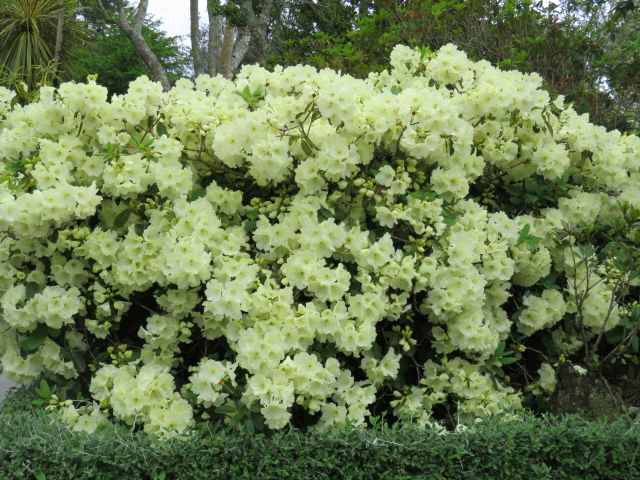
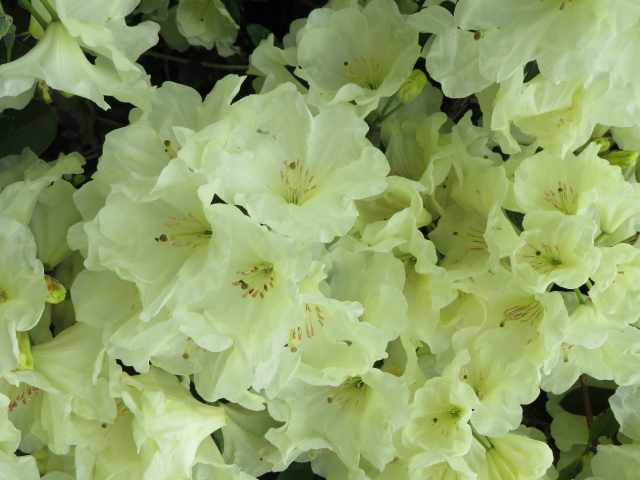
Near the house is an outstanding plant of ‘Lemon Lodge’ – simply the best specimen I have ever seen.

Rhododendron ‘Floral Fete’

Also looking lovely were plants of R.nuttallii x lindley hybrids – these ones are ‘Floral Fete’, the owner, Neil Tapsell told me. There used to be a number of named forms of this cross around including the likes of ‘Mi Amor’, ‘Stead’s Best’ and ‘White Waves’. I am not sure how many are still available commercially but it remains a beautiful hybrid and ‘Floral Fete’ is as good as any of the forms I have seen and arguably better than ‘Mi Amor’.

Here endeth my summary of Thursday’s garden visits. I am hoping to get to see another couple over the weekend but the arrival today of our most beautiful Jury hybrid, our little baby granddaughter accompanied by her mama, may yet derail my plans.

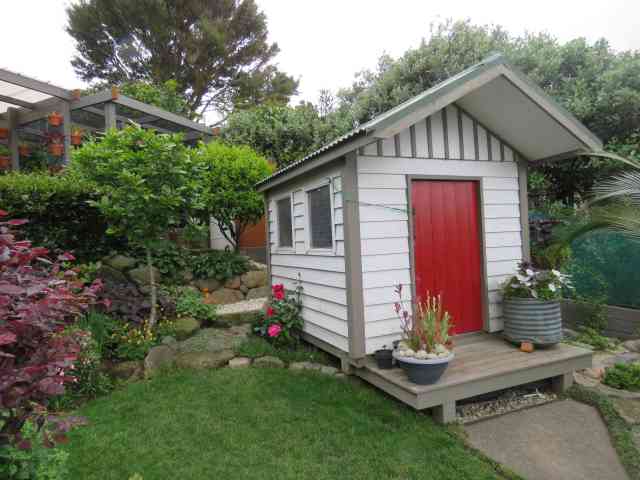
Finally, I add this photo from Three Elms not because it shows much of the garden but I am always interested in how gardeners manage their behind the scenes workspaces in small town gardens. Tidily and discreetly, in this case, I would say. Our behind the scenes spaces are much more expansive and untidy and I am in awe at anybody who can manage to screen and disguise garden service areas so well.