Category Archives: Garden book reviews

Abbie’s book reviews

Lynda Hallinan’s year in her country garden

In my flu ridden state last week, I was so grateful to Lynda Hallinan. Her new book, Back to the Land – a Year of Country Gardening – made me laugh out loud on several occasions. She fair sparkles in this book.

Many readers will know Lynda Hallinan as former editor of the NZ Gardener magazine, now editor at large. In that role, she entirely repositioned the magazine to appeal to a younger demographic. She read the mood well and was at the vanguard of the renewed interest in growing food at home to the extent that I uncharitably took to referring to said mag as The Girls’ Vegetable Monthly. But readership figures showed that was where the interest lay and the very personal, anecdotal take on growing food was highly successful. Having met the author on a couple of occasions having had a few dealings with her, we have always known here that she is genuinely interested in a whole range of plants well beyond carrots. That is not always true of garden writers or editors, by any manner of means.

Her book is in diary form, covering from June 1, 2011 to mid May this year – a year in which she adjusted to life back in the country with baby and husband after years of inner city living as a single career woman. To coin a phrase of respect from my late father in law: “she’s a worker, I’ll give you that”. With a new baby, regular writing commissions plus some TV and radio work as well as personal appearances, she is out there gardening on a grand scale. There is a strong emphasis on edible crops but she is also developing a significant ornamental garden. She has a regular stall at Clevedon Farmers’ Market. And she cooks, preserves, pickles and makes various fresh beverages (many alcoholic). All this is managed with family support but without the whole machine of paid staff backing up behind which the likes of Hugh Fearnley-Whittingstall of River Cottage needs to keep his show on track.

As I was reading “Back to the Land”, I started making jokes to Mark about having found New Zealand’s potential answer to Martha Stewart. She is the doyenne of lifestyle, including gardening, in USA – aside from her unfortunate brush with insider trading which resulted in a short period behind bars. Her TV gardening programmes had Mark riveted for a brief time. He was in awe of her compost mountains. Martha, of course, is an expert on everything and does everything properly. “She had better hope,” I said, “that Our Lynda never takes up dog breeding or crafts”. That was before I came to the diary entry: “When I first became interested in gardening, the crafty cottage craze was in full swing. I embroidered pillows with pictures of herbs, made my own natural hand creams and grew swags of English lavender and statice to hang from the rafters to dry.” Right. I am now wondering if I should warn Lynda to stay away from the share market which was so nearly the undoing of her older American counterpart.

So what else did I like about this book? Of course the author can write. She has been a journalist and editor for years. But it was a pleasant surprise to find that, away from the limitations of magazine writing (word count, prescriptive structure and similar external requirements), she can write even better.

There is no commercial sponsorship or intrusive product placement. When the author recommends a product or a source, (which she does freely), the reader can reasonably assume that this is genuine and independent advice. A return to old fashioned credibility, one might say. All sources are acknowledged. In a book packed with practical information but in diary format, there are indexes at the back. Two indexes even – one for recipes and one for gardening. The recipes are wide-ranging and eclectic and it is the most seamless integration of recipes and gardening text that I have seen in any publication. The gardening practices are focussed on sustainability, not quick-fix modern consumerism. Don’t expect to find raised beds filled with endless heavy grade plastic bags of potting mix here.
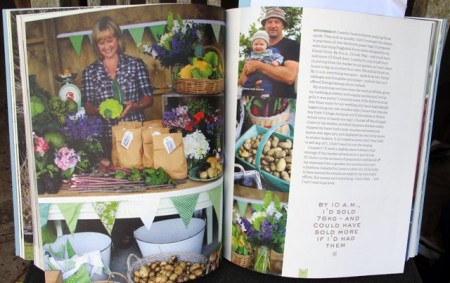
I haven’t even touched on the lovely photography by Sally Tagg. Some are illustrative, many are mood photos. Plant photos are captioned with names. The photos capture the spirit of what is a lifestyle book. The publisher is Penguin which means that the production values are high quality – at last they have the content to match (which can’t be said of all their recent gardening publications). The book evokes a slightly soft focus nostalgia although the content is a thoroughly modern take on old practices.

It is primarily aimed at women. My advice is that, if it appeals, go and buy a copy for yourself now (especially if you need cheering up) and then you will know if you want to buy copies as Christmas presents for others. The growing conditions described in the book are Hunua and will be very similar to much of Waikato.

Move over Martha Stewart. The new generation has come of age in the world of gardening and lifestyle.

Back to the Land. A Year of Country Gardening by Lynda Hallinan. Photography by Sally Tagg. (Penguin; ISBN: 978 0 143 56708 0)


First published in the Waikato Times and reprinted here with their permission.
The Bad Tempered Gardener from the Welsh borderlands

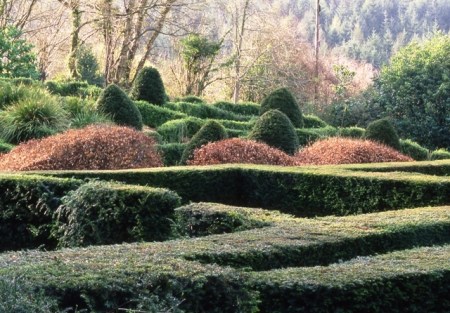
Veddw, the garden of Anne Wareham and Charles Hawes (photo copyright Charles Hawes)

Veddw, the garden of Anne Wareham and Charles Hawes (photo copyright Charles Hawes)

Anne Wareham (photo credit Charles Hawes)

Anne Wareham (photo credit Charles Hawes)

Anne Wareham had my attention from the first page of her book, bravely titled “The Bad Tempered Gardener”. Her second sentence opens:

I have to make my way in a world which is totally alien to me. A world where people are inevitably passionate, always ‘green’ and always terribly concerned about the little furry things….

She continues:

I began to get tired of hearing every garden described as ‘lovely’. I visited many of them and often found them to be banal and uninspired. I began to wish for writers who would tell the truth about the gardens and gardening and found only ‘garden stories’ and discussions of gardening techniques…. The problem is the fond idea that gardening is inevitably nice but dull…. ”

What is interesting about Anne Wareham’s work is that this is contemporary thinking about gardening from a hands-on perspective. I have also been reading Vita Sackville West’s collated newspaper columns from the early 1950s. She is renowned for creating the garden at Sissinghurst. There has been a proud tradition of garden writing by gardeners – Russell Page, Beth Chatto, Penelope Hobhouse and other great names, particularly in the world of English gardening. Not to put too fine a point on it, they are all either elderly or dead. Where is the current thinking?

Garden writing at this time seems to fall into three categories. There are academic treatises out of institutions where gardening has been hijacked by higher status landscape design. Then there are all the novice wannabe books which are of no interest at all to the serious gardener. All that breathless naivety and ingenuous enthusiasm wears very thin if you are not in the target demographic. The rest tends to be either prosaic description or praise in purple prose. There is no attempt at critique and very little in the way of ideas.

Apparently it is the same in the UK though I did think that the writer of the BBC Gardening Blog was guilty of gross hyperbole when he or she babbled of this book that: “Everyone, but everyone has been talking about possibly the most controversial book ever written about gardening.” It is not that radical and actually slots quite nicely into the tradition of garden writing. It is thought provoking and a breath of fresh air.

That said, it is not highly polished and the forty five chapters stand independently, almost as if they are a collation of pieces published previously, though there is no reference to this being the case. So there is not a cohesive argument but more a case of recurring themes. What I can tell about this book is that there is a great deal of thinking time that has gone into formulating the ideas and opinions. The author has two acres of intensive garden which she started from scratch and two acres of woodland which she maintains with her husband. Much of gardening is repetitive and takes little concentration so there is a lot of solitary thinking time. It takes one to know one. It is how I operate so I recognise it in someone else. And I have never before read a book where I have so often felt as if I was in conversation with the author. I kept wanting to say: “Exactly. I wrote about this very thing here.” Whether it is water maintenance, show gardens, rose gardens, scented plants, the impact of devaluing the garden visit experience by bringing it under the amateur and charitable banner, the hyperbole of garden descriptions – this is all familiar territory.

The Bad Tempered Gardener by Anne Wareham

The Bad Tempered Gardener by Anne Wareham

Thought provoking chapters are interspersed with short pieces on plants. These have little relevance in New Zealand. Erigeron is that highly invasive daisy that is actually on the banned list here. Tulip mania has never struck this country in the European manner (to buy fresh bulbs every season seems profligate). Alchemilla mollis is not the easy, frothy plant here that it is in the UK. These are just little interludes, breathing spaces, between the more opinionated pieces. Of interest are the chapters on the creation of her own garden, Veddw, on the Welsh border and the principles which drove her in design and plant selection. We are not in agreement on plants, but that is fine. To disagree with a well thought out and strongly held position challenges one’s own thinking.

Best guess is that the author has cultivated a certain prickly persona. I doubt very much that she is inherently any more bad tempered than the rest of us. The title of her book is probably as much a nod to the late Christoper Lloyd (he of Great Dixter fame) with his book titled “The Well-Tempered Garden” and maybe to Germaine Greer. Readers here may not be aware of the latter’s enthusiasm for gardening. She wrote a newspaper column under the pseudonym of Rose Blight and a collation of these were released in book form under the title of “The Revolting Gardener”.
Indeed, I am wondering about extending the theme with my own book – “The Opinionated Gardener”. Don’t hold your breath, however. I am unlikely to find a publisher any time soon.

I sourced my copy through Amazon though Touchwood Books or good bookshops will be able to order it in. As far as I know it is not on the shelves in this country.

The Bad Tempered Gardener by Anne Wareham. Photographs by Charles Hawes. (Frances Lincoln Ltd; ISBN: 978 0 7112 3150 4).

The reflecting pool at Veddw (instructions are in the book). Photo credit: copyright Charles Hawes

The reflecting pool at Veddw (instructions are in the book). Photo credit: copyright Charles Hawes

First published in the Waikato Times and reproduced here with their permission.

Organic Gardening Bible by Bob Flowerdew

If the rather grandiose title makes you raise your eyebrows, the subtitle is more modest: “Successful growing the natural way”. Bob Flowerdew has been gardening organically for 30 years and is a well known radio contributor (BBC Radio4 Gardeners’ Question Time), author and sometime television presenter.

Pare down organic gardening and take it away from the faith based aspects (lunar planting, biodynamics, reverence for heirloom varieties, romantic interpretations of times past, even interlocking with astrology and homeopathy) and what you end up with is the unvarnished reality. Quite simply, to be an effective organic gardener, you have to be a good gardener following sound environmental practices because when things go wrong, you don’t have the option of falling back on chemical intervention. If you get it wrong, you won’t get a harvest.

Bob Flowerdew takes organic gardening back to the basic principles of sustainable gardening with a common sense approach. He does not try and pretend it is all wonderfully easy and anybody can do it at the drop of a hat. Modern aberrations like tomato grow bags and raised bed potagers do not make an appearance. It takes time and practice to learn how to be a good gardener though good advice can help short circuit some of the common mistakes. There is information about which plants fix minerals in the soils, on the pros and cons of various companion planting options, green crops and which ones are recommended in various situations and at different times of the year. This is the first time we have seen mention of the effect green crops can have on crop rotation. For example, mustard is a brassica and that has to be factored in to planning. The author’s preferred fallback option is miner’s lettuce (Claytonia perfoliata). The focus is on creating healthy and rich micro environments within your garden. There is a wealth of information contained in the 270 pages (and large format at that), with a comprehensive index at the back. However, we were surprised at the absence of information about the importance of carbon in maintaining soil health. Not even traditional charcoal got a look in.

That aside, if you want good, sound information on organic gardening methods without the smoke and mirrors that too often accompany such books, this is a good place to start. It is just a shame it is English and geared to a colder climate. That is its major drawback for New Zealand gardeners in warmer conditions.

Organic Gardening Bible by Bob Flowerdew (Kyle Books; ISBN: 978 0 85783 035 7) reviewed by Abbie Jury.

First published by Waikato Times and reprinted here with their permission.

The Ornamental Edible Garden

The Ornamental Edible Garden

The Ornamental Edible Garden

Should you covet a garden which is both edible and ornamental, then this is the book for you. That said, the definition of ornamental is formal in design so you need to be leaning towards a graph paper garden with central axis, quadrants, focal points and geometric layout. You then add the soft furnishings of colour toned or contrasted plants, predominantly edible or medicinal but there is plenty of flexibility in the name of aesthetics. It is a gardening genre which is currently very popular and can be managed on any scale, from tiny to large.

Chapters cover design, construction, planting and both the theory and practice of pleasing planting combinations, plus basic information on growing a whole range of vegetables, herbs, fruit and ornamentals which may qualify. There are hints on soil management and pest control so it is pretty much a complete manual for someone wanting to try this style of gardening. You probably need to be a very tidy, precise sort of person. All the examples in the book are immaculately presented and groomed. If you are a more relaxed gardener, you may want to look at more laissez faire gardening styles.

Although it is a New Zealand publication, the content and style is international, so you won’t get specifics for our conditions. I would have liked to have seen some discussion on the pros and cons of hedging in the edible garden (read: root competition) and building materials get the once over lightly rather than helpful in-depth discussion. I could be a pedant on some of the detail. Rudolf Steiner was many things but I don’t think a horticulturist was one of them – he was a theorist. Not all chemical pesticides are systemic and there are increasing options which are highly specific as opposed to killing indiscriminately. But in the end, these do not detract from what is a useful, credible and highly competent presentation of a gardening style.

Gil Hanly is one of this country’s most experienced garden photographers and it is encouraging to see the publisher willing to commission both an author and a specialist photographer. The book is well organised and well laid out. It has all those things we used to take for granted – index, table of contents, tables of information and charts, well captioned photographs, botanical names – in fact sufficient detail to appeal to gardeners beyond the novice.

The Ornamental Edible Garden by Diana Anthony, photographs by Gil Hanly (David Bateman; ISBN: 978 1 86953 812 5) reviewed by Abbie Jury.

First published in the Waikato Times and reprinted here with their permission.
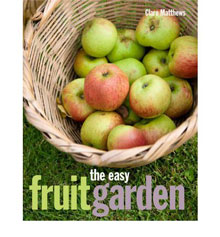
The Easy Fruit Garden by Clare Matthews

The Easy Fruit GardenI do not understand why New Holland wanted to release this book in New Zealand. It is a nice enough book but of precious little relevance to New Zealand growing conditions. It is just so very English – in fact so English that it refers to John Innes number two and John Innes number three with the assumption that the reader will know that these pertain to potting mixes. Jostaberries, sloes, hoverflies and hazels – it is just so redolent of English gardening.

There is little of relevance for New Zealand gardeners. The cultivars they grow are different. Pests and diseases are often different. There is no information to guide NZ gardeners on the climatic ranges of plants. I don’t think citrus are even mentioned, yet they are one of the mainstays for many of us. Yes some of the techniques are transferable but in a colder climate with slower rates of growth, they just garden differently from us.

You would probably only want this book if you are a nostalgic Brit or you are planning on moving to rural Britain.

The Easy Fruit Garden by Clare Matthews (New Holland; ISBN: 978 1 84773 858 5) reviewed by Abbie Jury.

First published in the Waikato Times and reprinted here with their permission.