Category Archives: Garden lore

Wisdom and hints

Garden Lore

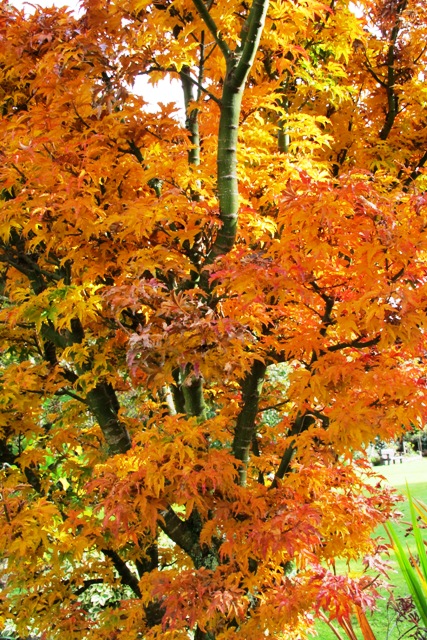
“It would be worthwhile having a cultivated garden if only to see what Autumn does to it.”

Alfred Austin, The Garden That I Love (1894).
047
001Garden lore – rat catching

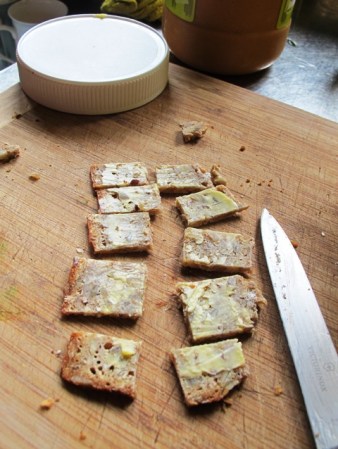
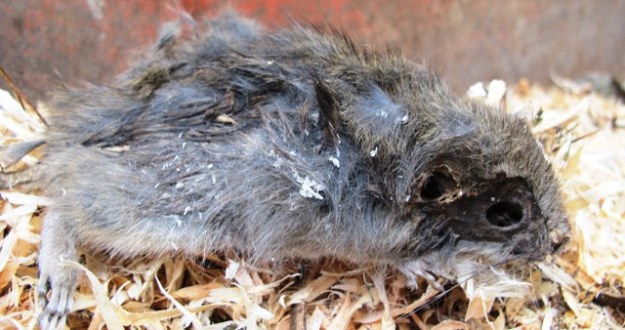
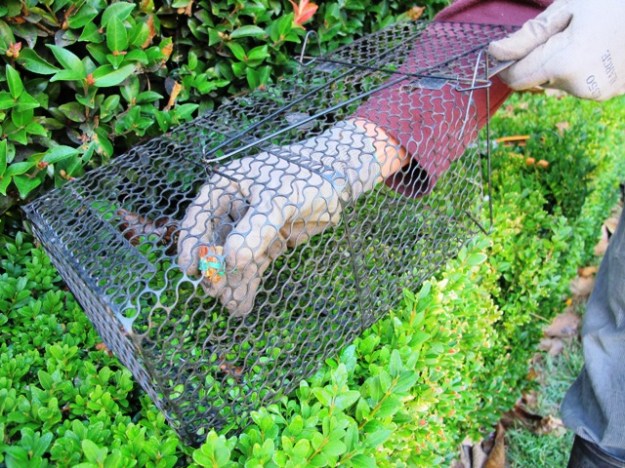
Sadly, rats are a fact of life and not an indication of squalor as I am sure many river-side residents will know. We get rats here because we have a macadamia nut orchard and processing plant immediately next door and we also have a flowing stream which can bring them in. The current tally this autumn is already 21 despatched. We have a strong preference for trapping, not poisoning these days and a trapping round is part of Mark’s daily routine. He uses small squares of stale bread spread with both butter and peanut butter as bait. The downside of trapping is that you do have to be willing to kill the rat. He used to leave this to the dogs but gave up when one escaped from them. Nowadays, he tips the trapped prey into a sack and whacks the sack on concrete. It is a quick end.
002
You can buy poison across the counter but follow instructions. A regional council pest control officer once told me he despaired at the number of people who thought they knew better than to secure the bait because the rat would take it back to its nest. He had pulled out a fridge in a shed and found maybe 200 baits behind, stockpiled by the rats (which were still alive) as a squirrel stockpiles acorns. The bait needs to be secured and out of the way of dogs. We had a dog once that ate rat bait. It was a traumatic wait to see if he would survive. He did. We have also seen one of our dogs and a cat from earlier days get quite ill after eating poisoned rats. The experience of having a dying, poisoned rat wedge itself in the chimney breast (they go in search of water), there to decompose over many weeks put us off poisoning once and for all. Hence the return to trapping.

And I managed to get that far without making a joke about the Pied Piper of Hamilton.

First published in the Waikato Times and reprinted here with their permission.

Garden Lore

“Gardening is an unnatural pursuit. The gardener views nature as an abundantly filled grab bag from which he is free to select a number of items he would like to use in his garden, and then dispose of the rest in the trash. But he’s mistaken: once opened, the grab bag turns out to be Pandora’s box, which constantly releases demons that besiege the gardener and his garden.”

Henk Gerritsen, Essay on Gardening (2008)

001 (5)
Hedge trimming

Autumn is hedge clipping time for many people. The aim is to time it so the hedge makes a light flush of fresh growth which has time to harden before any frosts arrive. If you are in a colder frost-prone area, do not delay because if the growth is still fresh and tender, it can get burned and look unsightly all winter.

If you want the formality of sharp lines, it pays to use a string line. Over time and repeated clippings, levels and lines can start to wobble and undulate and it can take years to try and get them straight and true again – a decade, in fact, for our elderly totara hedge which had previously developed a fair curve. On low hedges, a measuring stick may suffice.

The aim with established hedges is to keep them at the same height and thickness. Trimming encourages dense, leafy growth which is easier to clip. It is only when a hedge has been allowed to get away to a larger size that it becomes necessary to cut back so hard that you can see bare wood. This is best left until winter, not done in autumn. Before you do it, makes sure that your hedge plants will sprout again from bare wood. Most conifers won’t. Buxus, camellias and totaras will.

If you still have buxus hedges, keeping them on the looser side can help reduce the impact of buxus blight. Repeated clipping can render buxus hedges very dense and solid over time, particularly little B. suffruticosa. Dare I say it, thinning your hedge can help air movement which makes it harder for the fungal spores to take hold. If you have a leaf blower, blasting out the build-up of dead leaves and debris in your buxus will also help.

First published in the Waikato Times and reprinted here with their permission.
Garden Lore

“Our trees rise in cones, globes and pyramids. We see the marks of scissors upon every plant and bush….I would rather look upon a tree in all its luxuriancy and diffusion of boughs and branches, then when it is thus cut and trimmed into a mathematical figure; and cannot but fancy that an orchard in flower looks infinitely more delightful, than all the little labyrinths of the most finished parterre.”

Joseph Addison (1672 – 1719)

058Autumn planting

Autumn is about more than colouring foliage. Despite an indifferent summer, we are gently morphing into autumn. When the autumn rains arrive – which they will and probably sooner rather than later – it is a signal that optimal planting time is here, particularly for woody trees and shrubs which includes hedges. Planting in autumn gives time for root systems to start developing before growth slows down or stops in winter, positioning the plants to take full advantage of spring growth. It means most plants will be well established before the potential stress of drought next summer. The more traditional spring planting dates back to the days when garden centres did not get delivery of new season stock until late winter. Nowadays, most nursery stock is container grown and available all year round but old gardening habits die hard. The more drought-prone you are, the more important it is that you plant before winter, not after it.

While you are waiting for the autumn rains, you can be planting out winter vegetables. The reference to “winter veg” does not mean you plant them in winter. They need to be planted in autumn because they make most of their growth before winter and can then be held in the ground through the lower temperatures to be harvested fresh as required. White butterflies are still very active, so if you are planting winter brassicas (and that includes rocket and many of the Chinese greens as well as the usual cabbage, cauli and broc), you may need to erect some sort of cover to stop them becoming caterpillar fodder in the early stages.

First published in the Waikato Times and reprinted here with their permission.

Garden Lore

“Of al the floures in the mede,
Thanne love I most thise floures white and rede,
Swiche as men callen daysyes in our toun…
Allas, that I ne had Englyssh, ryme or prose,
Suffisant this flour to preyse aryght!”

Geoffrey Chaucer, Prologue to The Legend of Good Women ( c 1380-1386)

016
Composting matters

It came as something of a surprise to Mark when I commented that the sticky labels on fruit and vegetables do not break down in the compost. I discovered this a while ago when I emptied out the black compost bin we use for kitchen scraps and it was full of these sticky identifications in mint condition. I was reminded again when I found one in the rose garden. It will have travelled there in the compost and have been at least a year from the first stage when the fruit it adorned was eaten, but the label still showed no signs of breaking down. There must be some sort of coating on them. I try and separate them from the compost waste now and very irritating it is too. I am unconvinced that such stickers add anything to modern life.

The other ingredient that came out of the black compost bin in the same state it went in was the humble egg shell. Well, plural. By the hundreds. After seeing their ability to maintain their original form despite a long time in a somewhat sludgy environment, I now try and crush them before I put them in the scrap bucket. They are basically calcium so a good addition to the soils, unless you are gardening on chalk.

Contrary to the advice often given, we add all our citrus peel to the same waste bin. With our own orange trees, there is a lot of it. The compost worms just work around the peel and it gradually breaks down of its own accord. Worms are not so pernickety after all.

First published in the Waikato Times and reprinted here with their permission.

Garden Lore

“I fear I am a little impatient of the school of gardening that encourages the selection of plants merely as artistic furniture, chosen for colour only, like ribbons or embroidery silk. I feel sorry for plants that are obliged to make a struggle for life in uncongenial situations, because their owner wishes all things of those shades of pink, blue or orange to fit in next to the grey or crimson planting.”

Edward Augustus Bowles My Garden in Spring (1914)

OLYMPUS DIGITAL CAMERA

Garden Lore: arum lilies

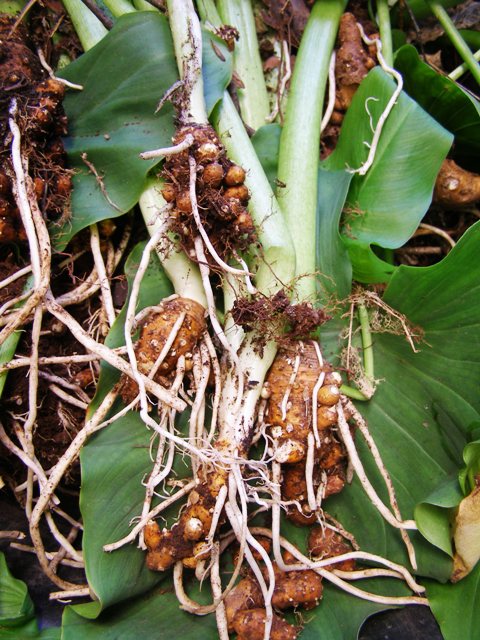
Arum lilies are something of a scourge in this country. These are the remains of a selected white splashed-green flowered form called ‘Green Goddess’. I have just done what I hope is the final clean up in my eradication efforts. You can imagine the hollow laugh of disbelief from Mark when I informed him that ‘Green Goddess’ has an Award of Merit from Britain’s prestigious Royal Horticultural Society. It is clearly not a weed there, no sirree.

The common weedy arum here is from South Africa and is Zantedeschia aethiopica, although Z. italicum is also a problem. The issue is that these plants just do too well here. They are tolerant of a very wide range of conditions and, being toxic, stock won’t touch them so they can multiply even on grazed land. Not only do they spread by seed but you can see from the root system why they can be difficult to eradicate. The rhizome below ground has numerous offsets and every one has the potential to grow to a separate plant.

I eradicated by digging carefully and thoroughly gathering all the baby offsets. Don’t risk composting them. Either dry and then burn them or put them out in the rubbish for deep burial at landfill. Never, ever dump them on the roadside. I have just done what I hope is the final follow-up to root out the remaining stragglers after 3 years. If you want to go the chemical way, the Weedbusters website recommends metsulforon-methyl with glyphosate and penetrant (to make it stick). Or Escort is what Mark recommends – that is the metsulforon-methyl bit.

The smaller growing, coloured zantedeschias that are often known as calla lilies are generally derived from different species and do not show the same weedy inclination, being prized as cut flowers and making excellent garden plants. However, they are apparently all equally toxic so take care when handling them as their sap can burn.

First published in the Waikato Times and reprinted here with their permission.