Category Archives: Garden lore

Wisdom and hints

Garden lore

If you are digging a new garden in a grassed area, you will save yourself a lot of trouble if you deal to the grassy cover from the start. You can spray the grass with glyphosate to kill it. Wait three days after spraying before you dig. Alternatively, you can skim the top layer of turf off to a depth of 5cm and stack the layers upside down to rot down. This will give you fertile topsoil to spread back on the garden in due course. Or, if you are digging deep enough, you can spread the top layer at the bottom of the trench, preferably upside down, and cover it with soil to stop the grass from regrowing.

Cicely: When I see a spade, I call it a spade.
Gwendoline: I am glad to say that I have never seen a spade. It is obvious that our social spheres have been widely different.

Oscar Wilde, The Importance of Being Earnest (1895)
Garden lore

A partial quote this week, relevant to changeable spring weather, which I noted some years ago from none other than Billy Connelly: “There is no such thing as bad weather,” he boldly asserted on television. He went on to blame television weather presenters for continually referring to sunny days as “good” and rainy days as “bad”, causing depression in people who live in high rainfall areas.

“There is no such thing as bad weather. There are only the wrong clothes.”

Tikorangi The Jury Garden

The time to hard prune camellias and rhododendrons is running out so do it right now before spring advances further. That way, the plants will still be able to flush with new growth on what remains. If you leave pruning and shaping camellias too late, you end up cutting off most of next year’s flower buds. However, you do have to sacrifice this year’s rhododendron flowering if you are wanting to cut plants back hard. If you leave it until after blooming, you are more likely to kill the plant instead. Timing is of the essence. Birds are nesting so check before you murder their babies as collateral damage with your pruning efforts.

Published in the Waikato Times and reprinted here with their permission.

Garden lore

I fear I am a little impatient of the school of gardening that encourages the selection of plants merely as artistic furniture, chosen for colours only, like ribbons or embroidery silk. I feel sorry for plants that are obliged to make a struggle for life in uncongenial situations because their owner wishes all things of those shades of pink, blue or orange to fit in next to the grey or crimson planting.

Edward Augustus Bowles My Garden in Spring (1914)

If you don’t want to use chemical weedkillers, boiling water can be a simple alternative, particularly between pavers or on cracks or joins in concrete. The boiling water not only kills weeds instantly, it also sterilises the soil to reduce more weed seeds germinating in the area. However, don’t use it near the base of plants that you want to continue growing. Obviously you need to be extremely careful and avoid carting the hot water jug when you have pets or small children around. Wearing covered footwear is also a good safety precaution.

Garden lore

I’ve noticed something about gardening. You set out to do one thing and pretty soon you’re doing something else, which leads to some other thing, and so on. By the end of the day, you look at the shovel stuck in the half-dug rose bed and wonder what on earth you’ve been doing.

Anne Raven Deep in the Green (1995)

wood ash

wood ash

Wood Ash

Wood ash is a traditional fertiliser but comes with warnings. The ash from your household fires is fine to use as long as you never burn plastics, polystyrene or tanalised timber in your fire. If you have a very efficient modern wood burner which doesn’t leave much ash, what it does leave will be heavily concentrated. Wood ash is alkaline (so acid loving plants won’t like it and if you add too much to your compost heap, it can alter the pH balance). It has good levels of phosphorus and is high in potassium but has no nitrogen. If in doubt, weigh 200 grams in a plastic bag and sprinkle that over a square metre. That will give you a rule of thumb for a light application. Near enough is good enough – it won’t matter if you up the rate. It seems a pity to waste a natural fertiliser when you can use it spread over lawns and garden, especially the vegetable garden, and get a bonus from your firewood.

Published in the Waikato Times and reprinted here with their permission.

Garden lore

The fair-weather gardener, who will do nothing except when the wind and weather and everything else are favourable, is never master of his craft.

Canon Henry Ellacombe (1822 -1916)

Feeding Plants

In climates subject to relatively high rainfall and torrential downpours, the timing of feeding plants is more important. All that precipitation leaches the soil and washes away fertiliser. Plants can only take up fertiliser when they are in growth so the optimum feeding time is spring. If you feed when they are dormant (and winter planting instructions usually include adding fertiliser in some form or other to the planting hole), much of the goodness will have washed away before the plant is ever ready to take it up. The soil does not store nitrogen readily.

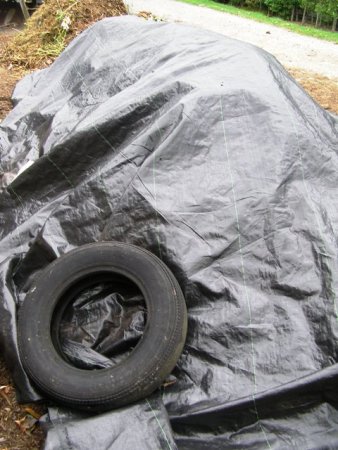
For the same reason, it is really important to cover compost heaps in wet climates to stop the goodness leaching out with the run-off.

Published in the Waikato Times and reprinted here with their permission.