Category Archives: Garden lore

Wisdom and hints

Garden lore: Friday 26 December, 2014

???????????????????????????????
Growing hostas from seed
Swathes of hostas can look effective in the shade garden but are expensive if you are buying a large number of plants from a garden centre. Raising them from seed is not difficult and most varieties will set seed, so keep an eye open as summer progresses. Hostas do not grow true from seed and even if you start with a variegated one, the vast majority of seedlings will have solid coloured leaves because they will revert to their originating plain variety. The multi-coloured and quirky hostas are all sports from plain ones. Seedlings will also vary from each other even if the seed is all from the same plant. If you want the uniformity of identical plants, you will have to either buy them or divide existing plants and be patient while they establish. We like the seedling variation which adds subtle detail and interest.

When selecting seed, choose plants with desirable characteristics, including some resistant to slug and snail damage. The finer and thinner the leaf, the more likely it is to be eaten.
Thicker, tougher leaves are clearly not as delicious. Wait until the seed has ripened and then pick it and sow it in pots or trays. While you will sometimes find that plants seed down in the garden, it is hit and miss whereas raised in a tray, you should get the majority to germinate and grow. If you bulk up with seedlings, you can then go and buy some truly spectacular ones to feature amongst their more modest cousins.

First published in the Waikato Times and reprinted here with their permission.
Garden lore: a Flower Fairy Christmas

001 - Copy

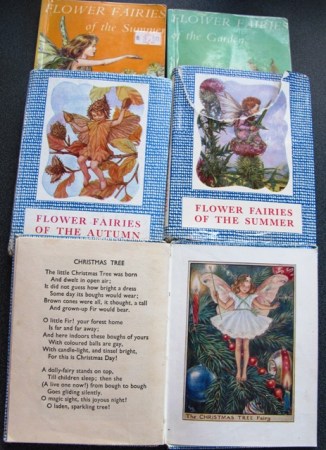
The little Christmas Tree was born
And dwelt in open air;
It did not guess how bright a dress
Some day its boughs would wear;
Brown cones were all, it thought, a tall
And grown-up Fir would bear.

O little Fir! Your forest home
Is far and far away;
And here indoors these boughs of yours
With coloured balls are gay,
With candle-light, and tinsel bright,
For this is Christmas Day!

Fairies of the Trees by Cicely Mary Barker (1940)
???????????????????????????????Garden lore: A Flower Fairy Christmas
Despite having an English mother, the flower fairy books were not a part of my childhood. It took Mark and his mother to introduce them to our daughters. A friend squealed in delight when she saw them again and commented that she learned all she knew about wild flowers and native plants of Britain from them in her childhood. Today’s quote is from this little series of seven books.

Our own little sweet pea fairy with her Nana Jury from three decades ago

Our own little sweet pea fairy with her Nana Jury from three decades ago


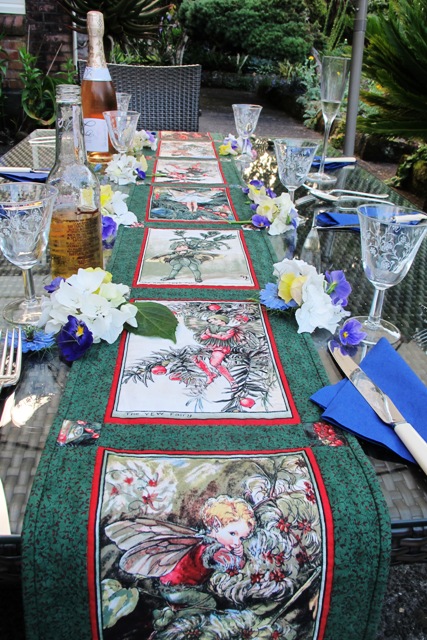
To be honest, the poetry isn’t great by any manner of means and it is very girly-girly. These days there is an entire industry of fairy memorabilia spawned by the series. At its best, that memorabilia is ethereal-faerie in nature, at its worst it lacks both charm and subtlety. But the books holds special memories for our family. I have a photo of our eldest aged 3 at the Playcentre Christmas party dressed as the sweet pea fairy. A few years ago she made me a quilted Christmas table runner based on the flower fairies and every year it makes me smile as we look at the fairies of winter in a New Zealand summer Christmas.

Happy Christmas to readers. Maybe there is somebody out there with greater poetic skills who could do a flower creatures book for our native flora?

First published in the Waikato Times and reprinted here with their permission.
Garden Lore

“The word ha-ha comes from an Anglo-Saxon word which I believe is spelt haugh, but anyway is pronounced how and means a ditch…. I thought it was a silly Victorian word and was given this explanation by an amateur archaeologist who was also my mother-in-law. She was extremely knowledgeable about ditches, embankments and fortifications which she kept an eye on for the Department of Ancient Monuments, so I guess she was right.”

Personal letter from a Waikato Times reader in response to my recent post about a ha-ha.

???????????????????????????????

Garden Lore: The Christmas Poinsettia

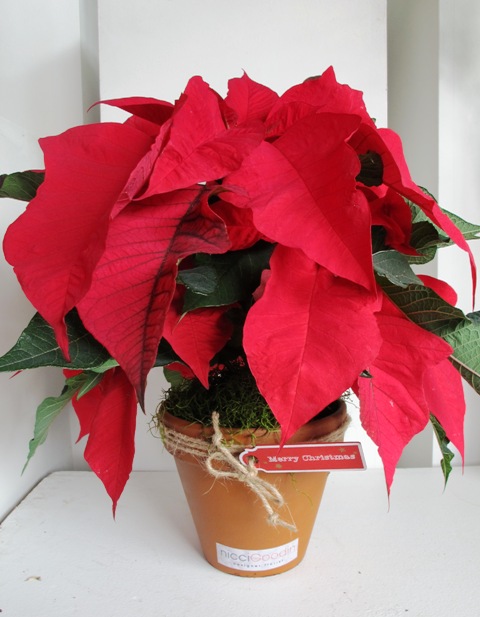
Is there a container plant both more seasonal and disposable than the Christmas poinsettia? It is a Mexican euphorbia, Euphorbia pulcherrima, believe it or not, and the presentation of it as a colourful houseplant is through clever growing techniques. If you have ever tried planting one out in the garden after Christmas, you may have found that it soon became a somewhat leggy, scrubby plant without the brilliant colour and compact growth. It can reach maybe 4 metres in height and is a shrub.

The brilliant red appears in leaf bracts. The flower itself is an insignificant structure. It comes in other colours from white through green, orange and pink but the association with Christmas means that the reds are the most favoured. The growing requirements to get the leaf bracts to colour well are very specific and require a period of nights which are pitch black and days filled with bright light – about 12 hours of each, in fact. Given that this plant became associated with Christmas in the northern hemisphere a long time ago, the fact that we see so many plants offered for sale remarkably cheaply here in the southern hemisphere is because the crop is grown en masse in controlled conditions under cover. It is a uniformly high quality product, but it is also the most disposable of house plants. If you feel inclined to indulge in a spot of plant torture, they can apparently be turned into effective bonsais and if you are of a mind to do this, you will probably be inclined to attend to the darkness and light requirements as well.

First published in the Waikato Times and reprinted with their permission.

Garden Lore

“We saw the palaces and garden of Versailles… full of statues, vases, fountains, and colonnades. In all that belongs essentially to a garden they are extraordinarily deficient.”

Percy Bysshe Shelley, Journal, September 3, 1816

???????????????????????????????

Hypertufa basin

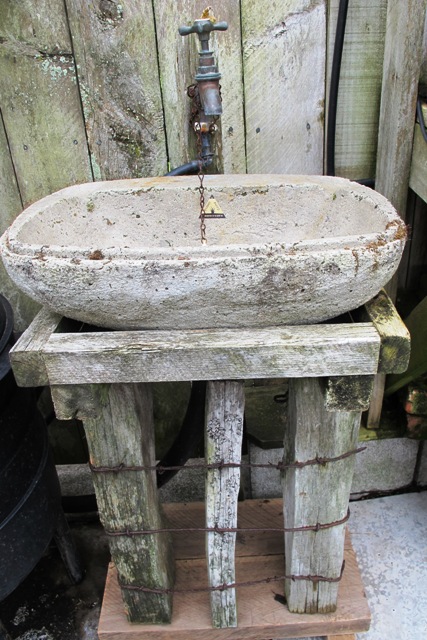
A wash basin of some description is very handy in the garden, but old porcelain or stainless steel usually looks out of place. I spotted this hypertufa basin in a Hawera garden recently. I assume this was commercially made because it had a Tomo Potz label still attached but, for DIY enthusiasts, it is not too difficult to make one. Hypertufa was all the rage a decade or more ago. It gives the weathered look of stone without the weight.

The internet has an abundance of recipes and step by step instructions. Martha Stewart made it popular in USA and the common American recipe is 3 parts peat moss to 3 parts perlite or vermiculite (used in hydroponics) to 2 parts cement (not the instant, ready-mix convenience bags). This is a 3:3:2 ratio. I found a New Zealand recipe which was 2 parts peat, 1 part river sand (not fine beach sand) to 1 part cement making a 2:1: 1 ratio. Essentially it comes back to 1 part of cement to 3 parts of gritty but light bulk. You need a mould which is where an old basin would come in handy. Just make sure you have your plug fitting to hand when you are making the basin so you get the drainage hole the right size from the start.

Hypertufa is used for natural looking troughs or pots. Why, I even have a couple myself, though I admit they were a gift. They are much easier to handle than the heavy, old concrete pots I inherited.

First published in the Waikato Times and reprinted here with their permission.

Garden Lore: Friday 28 November, 2014

“I have rarely seen either ruins or rivers well manufactured.”

William Gilpin Remarks on Forest Scenery and Other Woodland Views (1834)

The ha-ha at Puketarata as viewed from below

The ha-ha at Puketarata as viewed from below

Garden Lore: A Ha-ha

Behold, a ha-ha. Or, as we prefer to call them here, an infinity lawn. That is a bit of an in-joke referencing infinity pools and landscapers’ love of such visual tricks. It is in fact a stock barrier which can trace its origins back at least 800 years in both Europe and China. This particular one is at Puketarata Garden near Hawera and you can see how it is constructed and how they have managed to keep the end stock-proofed while allowing easy access through to the garden. From on top, the mown lawn melds into the grazed grass without a visual interruption and encourages the eye to look to the vista beyond. It is a huge improvement on a fence, blurring the line between garden and the natural environment.

The origin of the term ha-ha is not known, apparently. We are of the view that it is what imbibing guests say as an unsuspecting victim falls off the edge at drunken, carefree garden parties.

The ha-ha as viewed from above - the near seamless connection to the wider landscape is what it is about

The ha-ha as viewed from above – the near seamless connection to the wider landscape is what it is about

First published in the Waikato Times and reprinted here with their permission.