
Category Archives: Garden lore

Wisdom and hints

Garden Lore

Don’t think I haven’t tried; I have fertilized my crops with a variety of stimulants. I have scattered Hitler’s speeches and most of DuPont’s most expensive chemicals over their stunted growths, but so far all I have to show for my trouble is a small bed of wild marijuana, a sprig of mint, and a dislocation of the trunk muscles that has an excellent change of developing into a full-blown rupture… I only hope that Uncle Sam isn’t relying too heavily on my Victory Crop to sustain the nation through the coming winter.

Groucho Marx, Groucho Marx and other Short Stories and Tall Tales (1993) edited by Robert S. Bader
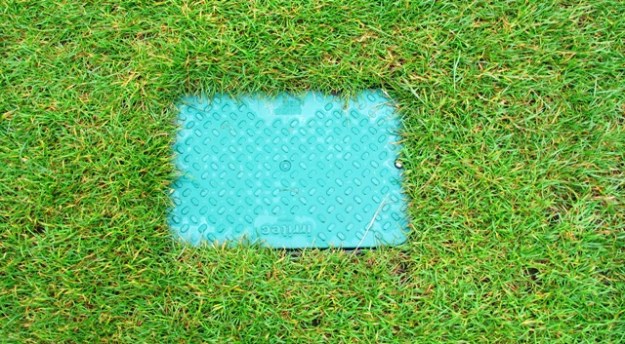
green?
I have mentioned before the folly of thinking that painting something green will somehow make that object blend better into a predominantly green garden environment. I could not resist photographing this fine example of how wrong that green premise can be. It is at Wisley (the RHS garden) and there were many such ground items painted this garish aqua tone, presumably in an attempt to render them less visible. Charcoal, dear readers. I keep telling you to paint things charcoal if you want them to blend. Or leave them au naturel. Gently rusting metal would have looked less intrusive in this case. If you feel you must go green, at least pick a green from the yellow tones, not the blue toned column to avoid this look.

First published in the Waikato Times and reprinted here with their permission.
Garden Lore

By the time one is eighty, it is said there is no longer a tug of war in the garden with the May flowers hauling like mad against the claims of the other months. All is at last in balance and all is serene. The gardener is usually dead, of course.

Henry Mitchell The Essential Earthman (1981)

black gardens. Yes, black.

Black gardens. Yes, black.

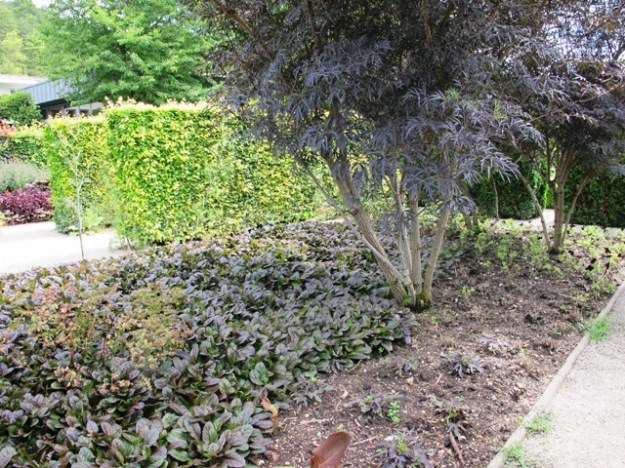
If you have ever wondered what it would be like to do a black garden as counterpoint to the many re-creations throughout the world of the famous Sissinghurst white garden, I found you an example. This is one of a couple of “black” garden rooms at the Musée des Impressionnismes in Giverny.

Hmmm. There was no black mondo grass which would be the usual starting point for a black garden here but it illustrates the problem that there are very few all black plants. What you are likely to end up with is a sombre deep burgundy garden which is very flat in colour, brown-toned, even. The centrepiece here is Sambucus nigra or the cut-leafed dark elderberry which can look effective in some settings, if a little like the poor man’s maple. Clearly the dark ajuga groundcover is doing well but none of this is black. At the rear, you can see a quandary. The freshly planted pansies have flowers that are indubitably noir, but is the green foliage acceptable? Elsewhere were very dark foliaged plants sporting bright orange or red blooms. Should one cut the flowering stems off in the quest for purity of vision?

A black garden is perhaps best described as a novelty garden, better in concept than execution as most experienced gardeners will realise if they think through the plant options.

First published in the Waikato Times and reprinted here with their permission.

Garden Lore

Decorum is the refinement of propriety. It is in order to procure stable-dung for hot-beds; it is proper to do this at all times when it is wanted, but it is decorous to have the work performed early in the morning, that the putrescent vapours and dropping litter may not prove offensive to the master of the garden, should he, or any of his family or friends, visit the scene.

John Claudius Loudon Encyclopedia of Gardening (1822)

Urban paving
Urban paving

How to cope with the escalating demand for off street parking is a major urban issue. The severe flooding that assails the United Kingdom with ever-increasing regularity has in part been attributed to the problems of urbanisation and increasing run-off. Water has to go somewhere and if it cannot be absorbed into the ground because of concrete and tarmac, it will either pond, flood or flow until it finds somewhere to go. Urban stormwater systems are not built to drain all the water away, merely the excess water.

There are commercial products designed to give a firm base for car parking while still allowing drainage and ground absorption. Laid properly, the area can still be mowed or raked. Even sealed areas need maintenance, whether by sweeping or the use of a leaf blower. This midway position is a much sounder option environmentally, as well as being softer to the eye than expanses of seal.

First published in the Waikato Times and reprinted here with their permission.
Garden Lore

“Few lend (but fools)
Their working Tools.”

Thomas Tusser Hundreth Good Pointes of Husbandrie (1557)

???????????????????????????????
Garden Lore: Winter Pruning

Winter and early spring are the optimum pruning times for most plants. Because the act of cutting back can stimulate plants into growth, timing can be important. Close to the coast, we only get light frosts so we never have to worry too much. But if you are used to waking to white ground and ice on puddles, hold back until the end of the month and leave the hydrangeas and roses until last.

Grapevines, raspberries – indeed all the brambles – and kiwi fruit need annual pruning or they will swamp you with their rampant growth. While pruning is recommended for most fruit trees, it doesn’t usually matter if you skip a year or two.

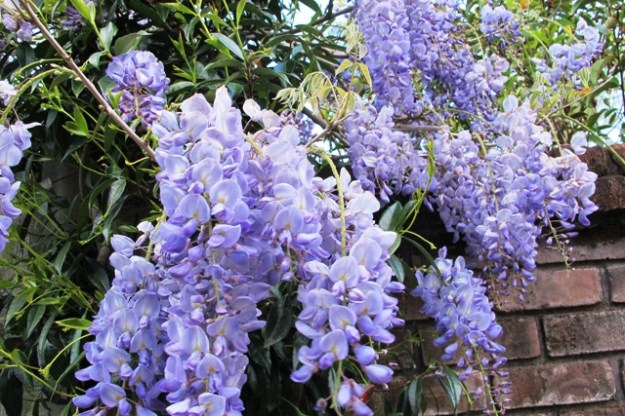
Always prune wisterias. They are as determined and rampant as kiwifruit. Roses will survive without pruning – although you may rue the day if you allow climbing ones free range and they look better for some care. Hydrangeas are pruned to increase flower size and to stop bushes getting too big. They will still bloom if you don’t prune them.

The critical piece of information you need is whether plants flower or fruit on last season’s new growth or on the new growth that they are preparing to make this spring. If is last year’s growth, as in hydrangeas, wisteria and raspberries, if you cut too hard, you simply won’t get any flowers or fruit this spring. Roses flower on fresh growth so you are pruning for shape and health and can cut back very hard. The same goes for grape vines. One size does not fit all in this matter.

First published in the Waikato Times and reprinted here with their permission.
Garden Lore

“His greatest passion is for transplanting. Everything we possess he moves from one end of the garden to the other, to produce better effects. Roses take the place of jessamines, jessamines of honeysuckles, and honeysuckles of lilacs, till they have all danced round as far as the space allows.”

Fanny Burney (Madame D’Arblay), Letter to her Father (1794).

?????????????????????: ??????????

Laying gravel chip

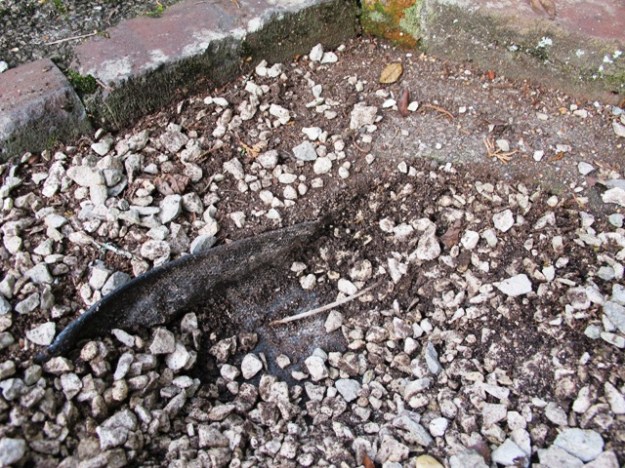
If you are laying gravel or chip, putting down a layer of weed matting first saves a great deal of work in the long run and prolongs the life of the surface. Weed mat allows water to drain through but prevents the mud and soil below from rising up to contaminate the gravel. It also stops weed seeds in the soil from germinating so the only weed germination you will get is what blows in.

We laid this limestone chip maybe 15 years ago. I raked back one corner to show the weed mat secured with a wire hoop. It has kept the chip relatively clean over the years and we still get very few weeds in it. The chip looked alarmingly white when we first laid it on a small square of lawn which we couldn’t reach with our super-duper new lawnmower, but it has mellowed out with time. We excavated down about 7.5cm, maybe 10cm, to allow for sufficient depth so that the weed mat is never visible.

The only maintenance required on this area is removing leaf litter. It was tedious to do with a leaf rake but then we found the leaf blower is perfect for removing windblown litter without disturbing the chip as long as you have a light hand. We plan more gravel paths and will lay weed mat first. It is short term effort for long term gain.

First published in the Waikato Times and reprinted here with their permission.