Category Archives: Grow it yourself

Grow it yourself: bay tree

The culinary bay has a long and noble history

The culinary bay has a long and noble history

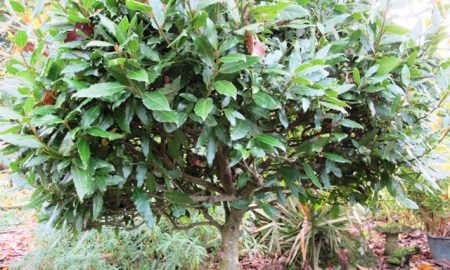
The culinary bay is Laurus nobilis, also referred to as sweet bay. It has a long history dating right back to ancient Greece and Rome yet is still widely used today. It is easy to grow and hardy for all conditions in this country. However it needs to be kept trimmed. Left to their own devices, bay trees can reach 15 metres. Fortunately once a year is usually sufficient. We trim ours hard in early spring and the fresh growth soon appears to cover up the unsightly woodiness. At the same time, we clean up the base. Bays will sucker and shoot all over the place. If you train the plant to a standard lollipop shape, it is easy to cut away growth at the base.

One plant will yield plenty of leaves for any family. The current fashion is to use clipped bays as formal standards in potagers, but you will never need that number of leaves and there are other more interesting plants you can clip for effect. Besides, as well as suckering, bays are vulnerable to thrips – tiny insects which live on the underside of the leaf and suck the chlorophyll out, turning the leaf silver. We never spray our bay and would not want to spray insecticide on an edible leaf. Planting in a position with good air movement helps (thrips don’t like drafts) and stopping the plant from being too dense will also help reduce infestations.

Bay is not difficult to strike from cutting, though most people buy it. It grows reaonably quickly so it is not necessary to pay over the odds for a large one, unless you are impatient. If you have an abundance of leaves, they are reputed to repel pantry moths when you strew them through your food cupboard.

First published in the Waikato Times and reprinted here withe their permission.
Grow it yourself: rosemary

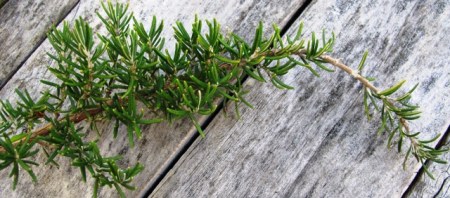
Such a pretty name for this herb (botanically Rosmarinus officinalis) which has had a resurgence in popularity in modern cooking. It is no longer reserved for roast lamb but is widely used to give that southern European flavour, especially when sprinkled over roasting potatoes. There is no reason at all to use the dried, often stale product from the supermarket when every good home can have a rosemary bush to provide year round fresh flavour.

The key to growing rosemary successfully is to remember that it is a Mediterranean herb which means it is used to poor, dry soils and hot sun. So don’t be too kind to it. I recently killed an established prostrate rosemary in a large pot by giving it a topdressing of compost. If I had just left it alone, it should have been fine. Waterlogged soils will kill it even faster.

Rosemary is easy enough to root from cutting (choose new growth which has hardened so it is not floppy) or you can buy a plant. If you get a shrub, it will get some size to it and may even reach close to 2 metres over time if you don’t clip it. You should also have a choice of prostrate or dwarf forms which are more suitable for containers. If you don’t give the plant a haircut from time to time, it will get woody and gnarly rather than staying bushy. You can prune your bush right now. Most rosemary have blue flowers in summer which bees find irresistible.

If you have a dog, make sure you site your plant away from corners and edges where the dog is likely to mark its territory by peeing on your herb. I speak from experience here….

First published in the Waikato Times and reprinted here with their permission.

Grow it yourself: aubergines

GIY – aubergines

Goodness knows why these are described as eggplants – some varieties are egg shaped? The texture can be a little like an over-boiled egg in its shell? Aubergine is a much more attractive name for what is widely seen as a sophisticated vegetable, showing up ever more frequently in modern NZ recipes. The problem with aubergines is getting your timing right because they need maximum heat all summer long. Essentially you need three to four months of warm weather to get a worthwhile harvest and, being a plant from warm climates, it will succumb as soon as temperatures drop in autumn. For most of us, this means starting the plants in pots under cover so they have some size before planting them out when soil temperatures rise in November. You can either buy a few plants from the garden centre or start from seed. If you choose the latter, you may do better if you go for quicker maturing varieties with smaller fruit.

Aubergines are solanums along with potatoes, capsicums and tomatoes but they are not as easy to grow. They like humus rich, friable soils in full sun. Once you have planted them out, treat them like a capsicum or even a tomato. They may need staking if they start to fall over. They will benefit from early pinching out of new shoots to encourage them to be bushy. They will need watering in dry summer times. But the bottom line is that you don’t have established plants in the ground by the beginning of December, you have missed the boat.

First published in the Waikato Times and reprinted here with their permission.

Grow it yourself: cape gooseberries (Physalis peruviana)

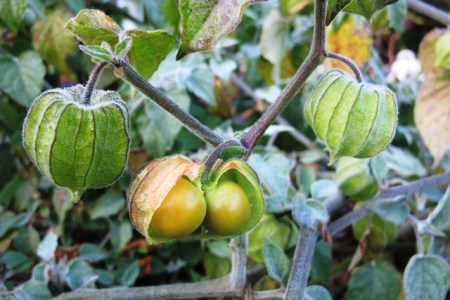
Physalis peruviana - commonly known as cape gooseberries

Physalis peruviana – commonly known as cape gooseberries

Few people know the proper name of the cape gooseberry, though Physalis peruviana gives a handy clue on origin – Peru. So it joins other South American fruits such as feijoas, the NZ cranberry and the tamarillo which are easy to grow here. This is a wild fruit that you leave growing more for browsing upon or for encouraging children out to forage rather than for substantial harvests. That said, if you can get enough, it stews well and makes a fine, tasty jam.

Cape gooseberries are a solanum and you may spot the physical similarities to other solanums like tomatoes, aubergine, potato and even the nightshades. Tomatillos are also related. They all look even closer relatives at this time of the year when mildew blights the foliage. Theoretically, you can certainly grow them as a tidy row in the vegetable garden but in practice, most people just let seedlings go in rougher areas or margins of the garden where a bit of untidiness doesn’t matter. The little green fruit which turn yellow when ripe are extremely decorative in their papery sheaths, but the rest of the plant is pretty scruffy. In mild conditions, the plant will stay as a short lived perennial but in colder areas it is generally treated as an annual. The more summer heat it receives, the better crop you will get.

If you have a friend with a plant, get a ripe squishy fruit and grow the seed. Once you have it growing, it gently seeds down. It is sometimes available for sale in the garden centres but all plants grown in this country will be seedlings, not named selections, so you might as well start from free seed if you can.

First published in the Waikato Times and reprinted here with their permission.

Grow it yourself: pumpkins

It is pumpkin harvest time, not planting time. Alas the first buttercup pumpkin here (they are the smaller, green coated ones) was a terrible disappointment – watery and lacking flavour. Mongrel seed, even though it came from a major seed company. They are not the buttercups they were meant to be. There is a surprisingly large range of different pumpkin seed you can buy, but the pumpkin grower here plans to keep to the proven heritage varieties next year – grey ironbark for keeping and classic buttercup for eating fresh.

Pumpkins take up a huge amount of room for 3 to 4 months yet are very cheap to buy, so if you only have a small garden, you can probably grow higher value crops. Timing for planting is important. They usually go in as small plants when the soil is warming up but no later than December. You can accelerate early growth by planting them in a bed of warm compost. In good conditions, they then rocket away. Keep the water up to them as the fruit develops because these are thirsty plants. The young shoots of pumpkins, chokos and the like are a taste treat for quick cooking.

Pests and diseases include white fly and mildew but these come late in the season, after the fruit has formed. They should not have much effect on the yield and are rarely treated.

We grew Austrian Oil Seed pumpkins last year because they produce hull-less seed. They took up the usual large amount of space for a small seed yield and the pumpkin flesh was only stock food. We are back to buying pumpkin seed this year.

First published in the Waikato Times and reprinted here with their permission.