Category Archives: Grow it yourself

Grow it yourself: feijoas

The ubiquitous feijoa

The ubiquitous feijoa

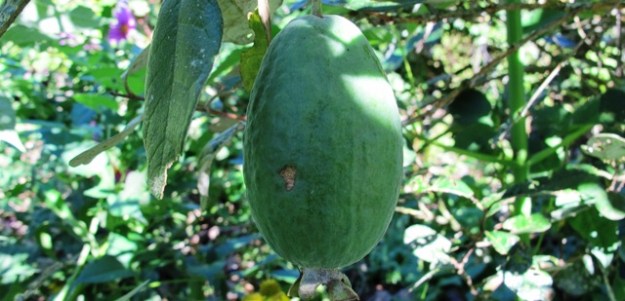
There are a number of plants we have embraced with such gusto in this country that we have all but made them our own – Pinus radiata, yams, kumara, kiwifruit… and feijoas from South America. Every family should have at least one feijoa tree. They are wonderfully easy to grow, requiring no special care at all once established. Find a position in full sun and preferably not in the full blast of the prevailing wind for best cropping.
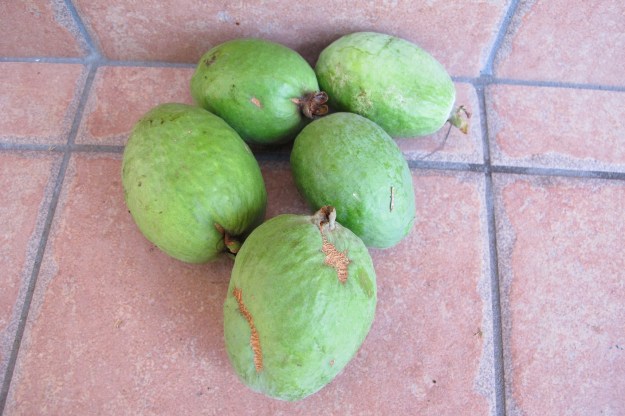
It is usual to harvest feijoas as windfalls

When it comes to buying a feijoa, choose a named cultivar (“Unique” is probably the most widely available). If you buy a range of different varieties, you can extend the fruiting season and solve pollination issues. “Unique” is self fertile but most others need a pollinator, though feijoas are so widely grown that often a neighbour’s tree will do the job. Don’t fall for cheap seedlings, even for hedging. They may never fruit well, or indeed at all. Breeding and selection has given much larger fruit and better cropping. If you are going to give garden space, you might as well grow a good variety. The other important thing to know is that the advice sometimes given that you can use feijoa as a clipped hedge plant (I have even seen it suggested as a replacement for buxus) is particularly ill-informed if you want a harvest. You are likely to cut off most fruiting shoots. When it comes to pruning, it is better to thin the canopy, cutting branches off right back at the trunk, rather than trying to clip all over. Generally, a feijoa does not need pruning but allow for them to reach about four metres in height. Keep the ground beneath clear if possible, to allow for easy collection of fruit as it falls.

Feijoas are not particularly easy to strike from cutting but if you have a home propagation unit, it is worth a try. Use new season’s growth which has hardened off – in other words, the branch tips.

First published in the Waikato Times and reproduced here with their permission.

Grow it yourself: kumara

The world has many different types of sweet potato but the one we have made our own in New Zealand is the kumara. Had we grown them this year, we would be looking to harvest around now. But we didn’t so we will be buying them instead. Kumara are a warm climate crop so the further south and the further inland you are, the more problematic they are to get through. They need somewhere between five and six months of warm weather (preferably in the low 20s) to set plenty of tubers. You can help by planting in black plastic and using cloches early in the season. They are easier to grow well if you are right on the coast and gardening in sandy soils which heat up. However they don’t want to bake and dry out in midsummer.

Kumara will sprout like potatoes over winter so you can cover the tuber with soil or straw in early spring. That tuber will put out many shoots which can be pulled off and planted out when big enough and when roots have started to form. They don’t like any frost at all, so in inland or cooler areas, they can be started in pots for planting out in mid November. Plant them about 40cm apart in the hottest and sunniest spot in your garden and watch them r-u-n. It is easier to understand when you know they are close relatives of convolvulus. Besides keeping a little water up to them all summer, the other care they need is to have their wayward vines lifted every week or so, or trained over a wall or path. If you don’t do this, the vines start to send roots down along their length and a plant which is using its energy to create a whole lot of new roots is not developing good tubers. Harvest when the foliage turns yellow and store in dry conditions about room temperature.

First published in the Waikato Times and reprinted here with their permission.

Grow it Yourself: Broad Beans

People either love or hate broad beans but they are worth trying in the home vegetable garden where you can harvest them before they develop the tough grey outer skin which is so off-putting. Indeed, I have a friend who will only harvest them to eat when she can cook the complete young pod. We find them tasty at all stages and once the hard shell has developed, we let them mature and store them dry. The dried beans are delicious when reconstituted though I admit I peel off the outer casing of each bean after soaking them. Broad beans are often called fava beans overseas and in upmarket eateries where they have enjoyed a recent revival as a fashion ingredient.

Broad beans are one of the few crops which continue to grow through winter. Autumn planting means you will be harvesting in spring when there are not a lot of other fresh vegetables which are ready. Plant the beans directly into the ground at finished spacing. We favour a double row about 30cm apart and the plants in each row at least 15cm apart but not more than 20cm. The plants need some support as they grow, or they will fall over under their own weight. The quickest way we know is to support them either side with a long piece of horizontal bamboo suspended at about 60cm off the ground and supported at both ends of the row. You could achieve the same support by running a wire along but bamboo is good because you can easily incorporate cross pieces for added support. It saves having to stake individual plants. Once the plants have reached about a metre in height, we nip out the tops to eat as fresh greens.

If you sow in succession from autumn through to late winter, you can be harvesting from August to Christmas.

First published in the Waikato Times and reprinted here with their permission.

Grow it yourself: asparagus

Asparagus is a long term crop. For me it ranks as my number one all time favourite vegetable so I am happy to see it in our garden but, as a permanent crop which completely monopolises its allotted area for a decade or even two, it might not be such a worthwhile option in small gardens. Added to that, you can’t start harvesting it for the first couple of years so it is not ideal if you plan on moving or you are renting. We once moved just as an asparagus patch was coming on stream and remain scarred by the experience.

Asparagus does not fit into the current no dig craze. It is a clumping, deciduous perennial and it needs to go into ground which has been very well prepared and which has excellent drainage. The usual recommendation is to dig very thoroughly, creating a trench and adding plenty of well rotted manure and compost. Make sure that you are not planting on top of fresh manure. Give it time to mature. The aim is to create a bed of fertile and friable soil. Asparagus is generally planted as divisions in winter, reasonably deep at 15cm and about 30cm apart. Don’t refill the trench completely on planting. Just put a few cm of dirt on top and keep filling as the fresh shoots grow, otherwise they may never penetrate the surface. It is not the easiest crop to get established but once away, all that is required is regular hand weeding and annual mulching with compost. The compost feeds the asparagus crowns and discourages competing weeds.

If the asparagus crowns you have purchased look very small (and we have had that experience), you may find it more successful starting them in pots until they look sufficiently vigorous to plant out.

First published in the Waikato Times and reprinted here with their permission.

Grow it Yourself: Rocket

How did we ever cope when salads were predominantly Iceberg lettuce? Now we expect a mix of leafy greens and the quick maturing rocket has become a bit of a star contributor with its peppery flavour. It is also frequently used as a generous garnish in modern cafe-style cooking.

There are in fact two plants referred to as rocket. The most common is an annual (Eruca sativa). It bolts to seed rather too quickly if grown in midsummer, but autumn and spring are perfect sowing times and you can expect to be harvesting in three to four weeks. Such a quick turn over crop is direct sown into the ground and some gardeners like to sow a small patch every week or two to ensure continued supply. It needs a regular supply of water (which is why it is not the best mid summer crop) to prevent it bolting to seed too soon and in the process getting unpleasantly bitter.

The other plant also referred to as rocket is arugula (technically Diplotaxis tenuifolia). The arugula is slower to mature (Kings Seeds says 55 days as opposed to about 28) and it is considerably slower to bolt to seed. Sometimes it is described as a perennial rocket but it is merely longer lived, rather than truly perennial.

Both forms are brassicas, originally from the Mediterranean. Being brassicas tends to mean they can get infested with white butterflies in summer but grown in the shoulder seasons, they are a tasty addition to salads. They are hardy, so planted now should hold well into winter.

First published in the Waikato Times and reproduced here with their permission.