Category Archives: Outdoor classroom

Planting an easy-care hanging basket of succulents: step-by-step with Abbie Jury and Chris Sorensen

If you are an admirer of other people’s hanging baskets but lack the resolve to feed weekly and water up to three times a day in the height of summer, you may enjoy constructing one from easy-care succulents.
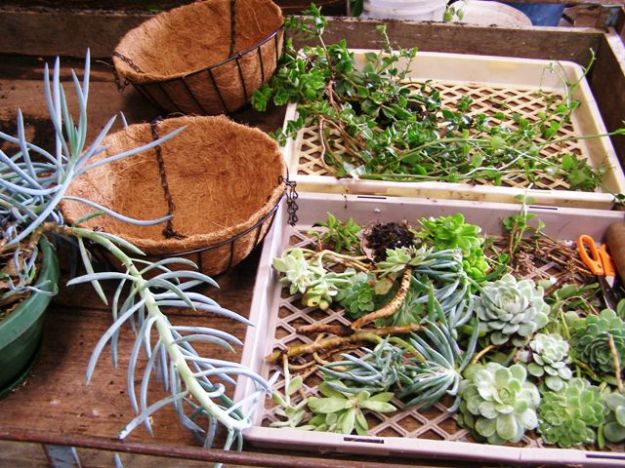
photo-1-copyphoto1a-copy

1) You can use solid plastic hanging baskets or you can chose to use wire baskets with a coconut fibre lining which allow you to plant all around the basket surface. You can even tie two hanging baskets together to create a round ball. It doesn’t matter whether your pieces of succulent plants have roots or not but if they are just cuttings, it can help to cut them a day or two early and let them dry
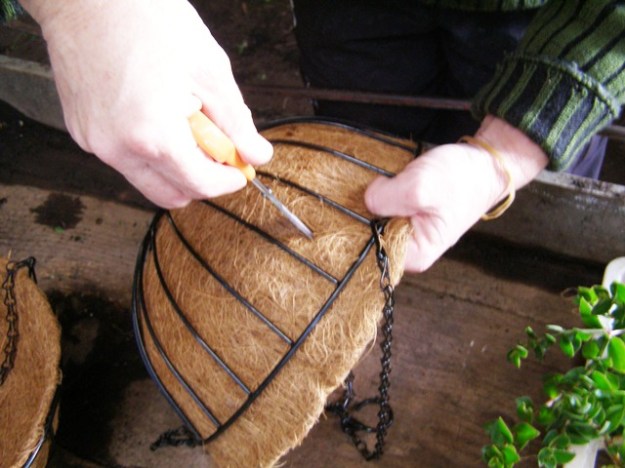
2) Cut slits or holes at random intervals all over the basket lining. Turn the basket upside down for planting.

step3-copystep3a-horizontal-copy

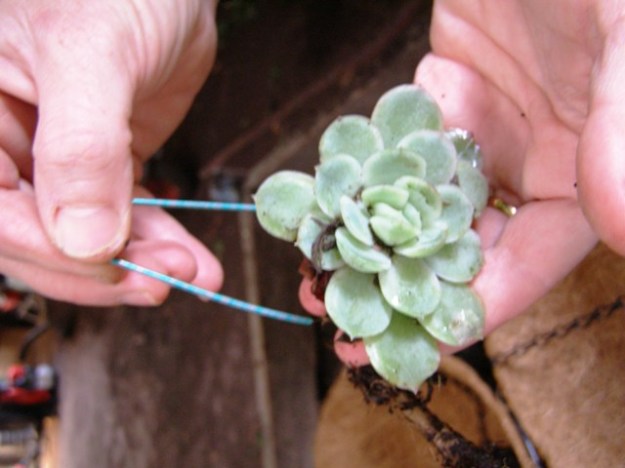
3) Poke the stems of the succulents through the holes. If you have rosettes without stems, bend flexible wire to make hoops around 8cm long and use these to skewer the rosettes into place. Smaller rosettes are not as heavy so are less likely to fall out.
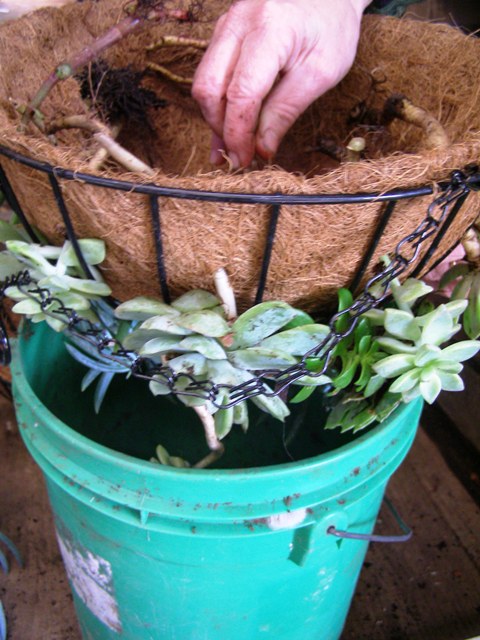
4) Supporting the plants with your hand, turn the basket up the right way and gently hold it in a suitable sized bucket. Fill the basket with a free draining potting mix containing slow release fertiliser. Succulents can survive in poor, dry conditions but they will grow better with food and water. However be mean, rather than generous if you are adding the fertiliser yourself.
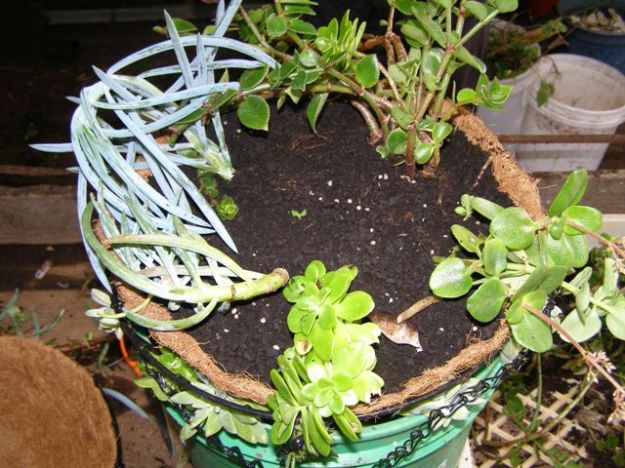
5) Plant the top of the basket with some trailing types of succulents so they can hang over the side. You may wish to include one or two flowering plants such as impatiens to add seasonal colour.
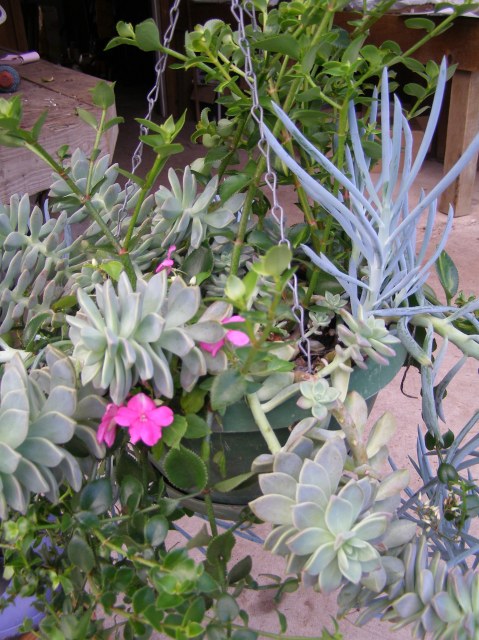
6) This basket was planted about three months ago and already looks well furnished and healthy.

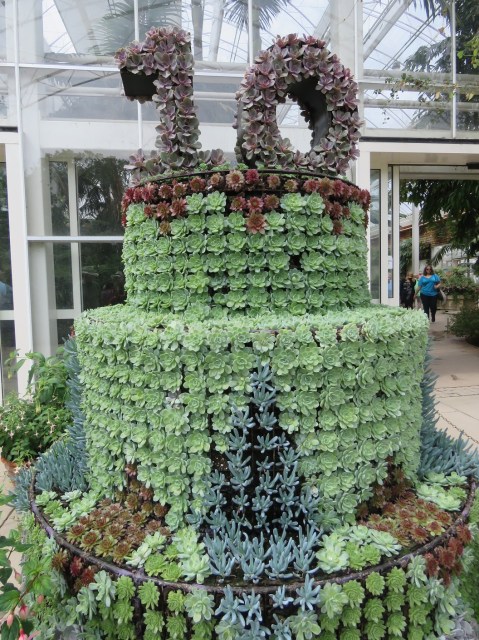
Finally, as a modern postscript from 2017 (because I see people are still looking at this post), I give you the succulent display to celebrate the 10th anniversary of the new glasshouse at RHS Wisley Gardens in the UK. Not exactly a hanging basket but showing a similar basic technique.
Renovating a lawn: step-by-step guide

Sometimes a make-do patch and feed is not sufficient for a lawn and more drastic remedial action is required.

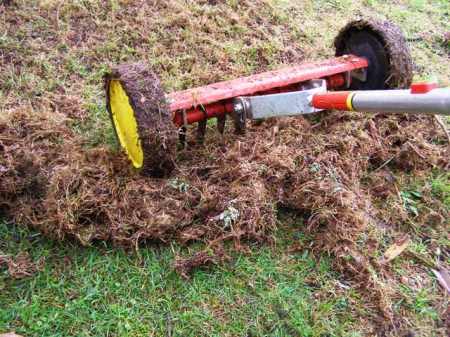
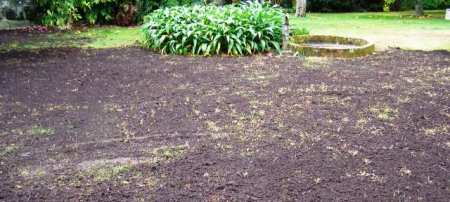
1) Rake out the dead grass and accumulated debris from the existing lawn – referred to as scarifying or dethatching. We have a manually operated tool for this purpose which is easy to use. You can also use a garden rake or there are powered machines which you can hire. Remove the piles to the compost heap.

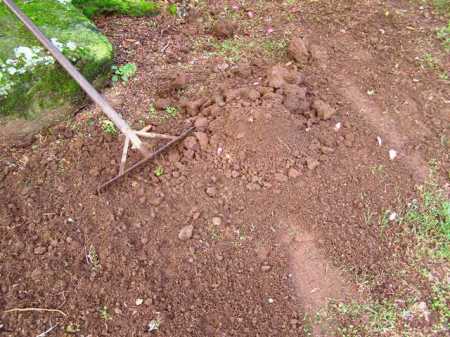
2) Level out bumps and hollows, bringing in clean topsoil if required. Ideally you want the top soil to be free of weeds. Where possible, rake to a fine tilth but if you are working over an existing lawn, you can only do this in the bare patches. Too much raking and scarifying can remove the existing grasses that you want to keep. Preparation is the key to a good lawn – there are no shortcuts.

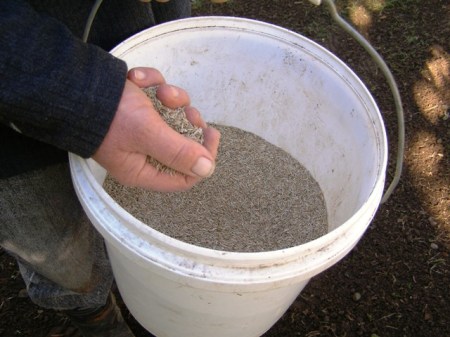
3) Grass seed is best bought and sown fresh. The packet will give the recommended application rate. Measure out a sample square metre and weigh out the recommended quantity so you can see the correct quantity. Don’t rely on guesswork. Broadcast the seed by scattering to get a feel for how thickly to spread it. We applied it about half rate because we were over-sowing existing lawn which still had some grass growing.

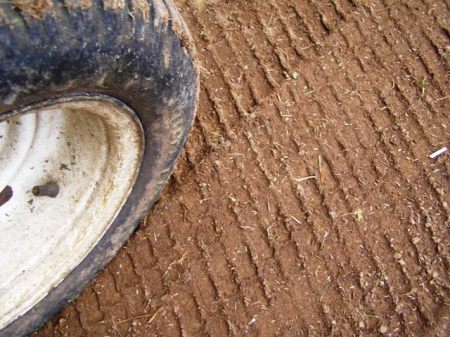
4) Compress the soil. Traditionally, lawn rollers are used for this process although we used our lawnmower which has wide tyres. Any rolling weight is fine. You are compressing the top layer, not trying to compact the entire lawn.

5) We chose to spread a fine layer of compost about one centimetre thick to hold the grass seed and give it a good start. We raked out all twigs and larger pieces from the compost. This was spread after rolling.

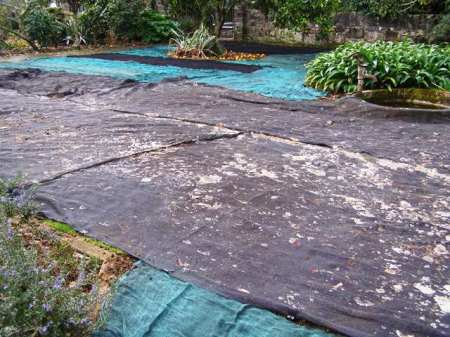
6) The greatest peril is birds – every seed eating bird in the district will be trying to get the grass seed. The worst offenders are sparrows and finches. It is worth the effort to cover the sown areas until it is clear that the grass is germinating and starting to look green. We used a combination of bird netting and old shade cloth and left it on for about three weeks.

Winter pruning apple trees: step-by-step guide Abbie Jury and Colin Spicer

Apple trees benefit from a little attention in winter and in summer – easy care summer strategies for apples.

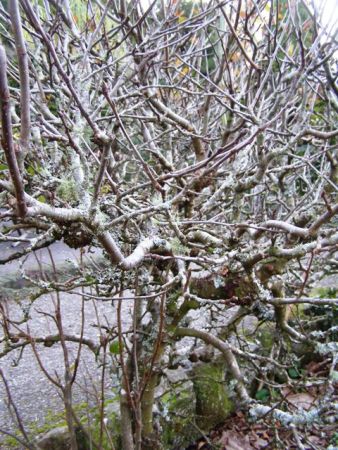
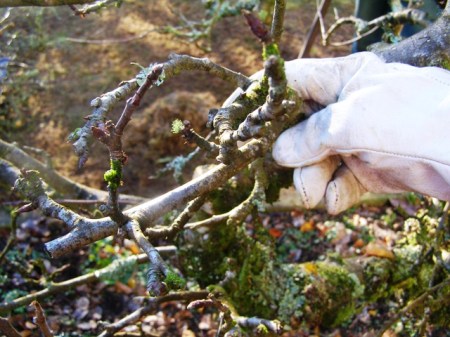
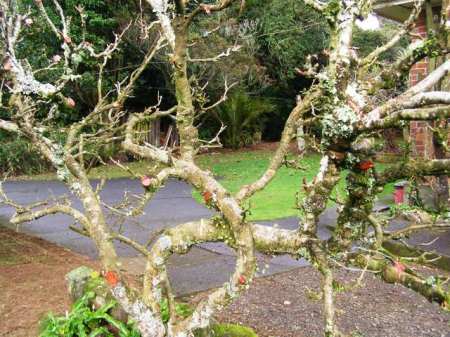
1) This dwarf apple tree has not has not had any attention other than a light haircut in winter and again in summer for many years. It is congested and overgrown and while it still fruits, the quality of the crop will improve in better conditions.

2) Select the branches which will give the tree its framework. Keep the main leader in the centre of the plant and choose branches which are well spaced to allow for air movement and maximum light. Remove all surplus growth not needed for this framework, including branches which cross each other. We are pruning for a tree which is more or less an espalier shape – two dimensional with height and width but little depth because it grows in a narrow border beside our driveway.

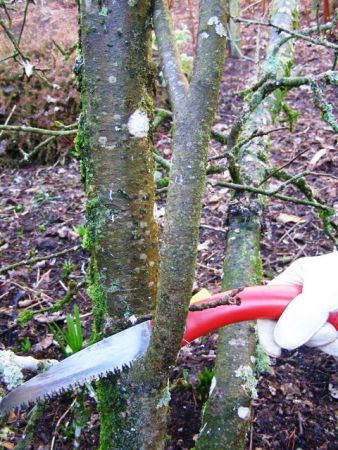
3) Now that the basic shape of the tree has been restored, thin out the clusters of fruiting spurs. Apples will continue to set fruit on old spurs for several years, but best results will be on growths from one to three years old. Where a spur is cut off, the plant will usually push out a fresh growth in spring.

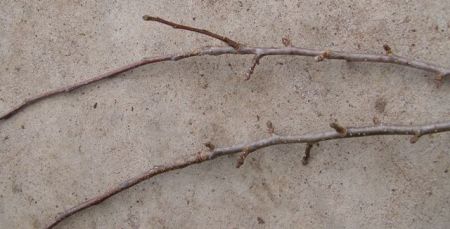
4) This shoot shows two years of growth. The lower half was new growth made in spring two years ago and the upper half is growth from last spring. You can see the fruiting spurs forming on the 2008 growth. These will flower and set fruit this year. If you make the mistake of always pruning by trimming off the long whippy new growths, you are cutting off all the fresh fruiting spurs. Try to get a mix of fresh spurs and already established spurs so that you are encouraging gradual replacement.

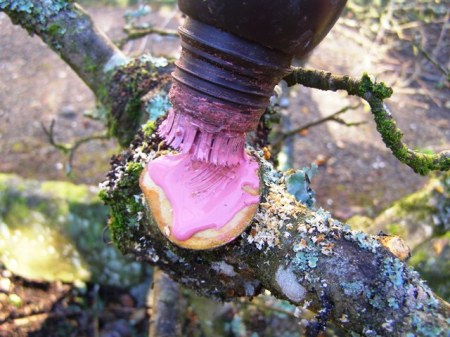
5) Sealing the cuts is optional but strongly recommended by our visiting pruning expert. He applies Bacseal which is an antibacterial sealant. Avoid getting this on your hands and always wait until you have finished all the pruning to avoid brushing wet surfaces with your skin or clothing.

6) A spray of lime sulphur will clean up the heavy lichen infestation. Follow up with a copper spray at winter strength in three weeks time to get the tree into a much healthier state. Follow the instructions on the containers for dilution rates for both sprays.

Outdoor Classroom – Winter pruning Hydrangea macrophylla

The common hydrangeas grown here belong to the macrophylla family. These give us most of the traditional mop-tops along with the flat heads of many lace-cap varieties. Less common hydrangea species (the ones with oak leaves, cone flower heads, evergreens and the like) often have different pruning requirements.

1) It is not essential to prune hydrangeas. They will still flower if not pruned but you will usually get many small flowers on a bush which grows ever larger. Pruning takes place to keep the bush smaller and tidier and to encourage bigger blooms.

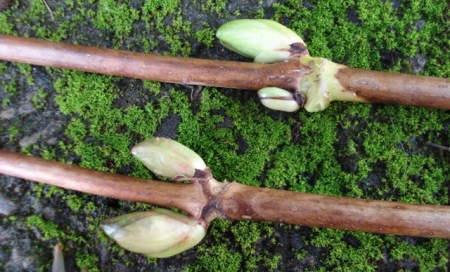
2) Most hydrangea stems will have a series of buds in pairs visible down their length. The fat buds are flower buds. The thin, small buds are leaf buds. Ideally you want pairs of fat buds, because that will be two flower heads but sometimes you find one fat bud paired with a small leaf bud. You will only get one flower from that spike.

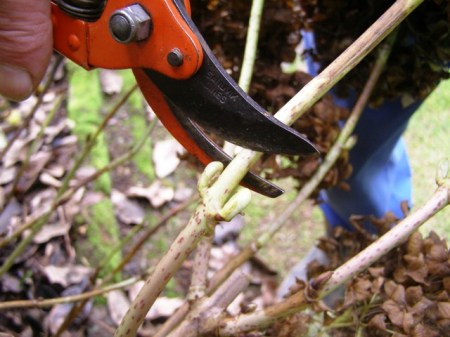
3) Using secateurs, prune back to the lowest pair of fat buds. If that is still much taller than you want, trim back to the lowest single fat bud.

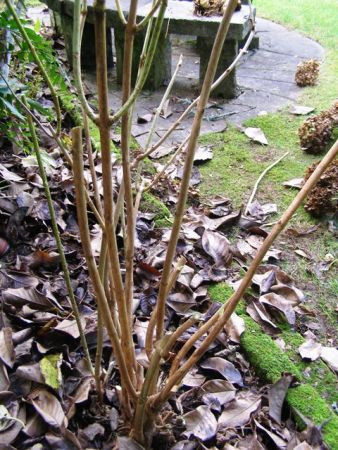
4) After you have reduced the height of each stem, look at the clump and take out any really old, thick, woody stems and any spindly weak ones. You can also take out stems which are headed sideways and those with no flower buds if you want to keep your bush more compact.

5) Because most hydrangeas flower on last year’s growth, if you cut too low down and without taking any account of the difference between leaf buds and flower buds, you will have cut all this summer’s flowers off. You can cut off near to ground level if you want to rejuvenate an old plant and it will shoot again but you will have to wait 18 months for flowers. We have pruned for flowers on this plant.

Getting the best from bananas in marginal conditions – step-by-step with Abbie and Mark Jury

A step by step guide by Abbie and Mark Jury first published in the Taranaki Daily News and reproduced here with permission as a PDF.

New Outdoor Classrooms are uploaded fortnightly.