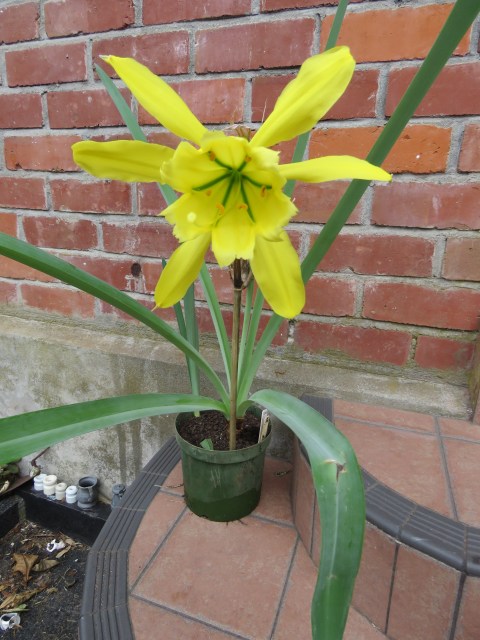
A paramongaia, no less, which does not seem to have a helpful common name
Well lookee here! Zach appeared brandishing this pot from one of our covered houses in amazement. I was equally astonished that Mark could dredge the species name from somewhere in the deep recesses of his memory, loosely connected to his remembering seeing its relative the pamianthe in flower at Jack Goodwin’s and that must have been at least 35 years ago.
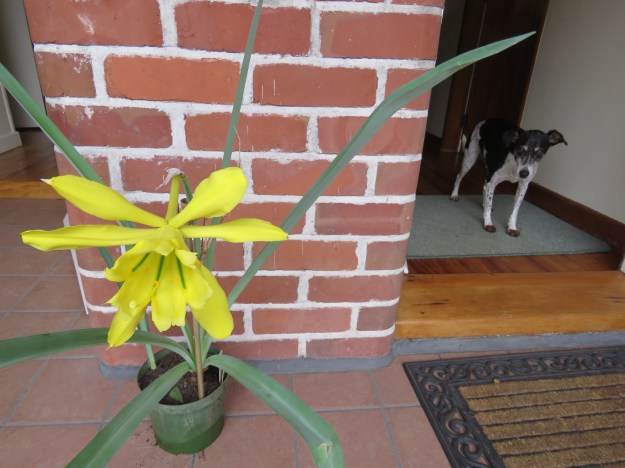
This is in fact Paramongaia weberbaueri, native to Peru and Bolivia where it grows in harsh, dry, stony conditions. It looks a bit like a totally over the top daffodil on steroids. That flower is 20cm across and the trumpet is 10cm long. I measured. It must be night-scented because it was very strongly scented first thing this morning but only pleasantly scented later in the day.
Patience rewarded – the first flowering on our paramongaia
It goes so far back here that even Mark, with his elephantine memory when it comes to the source of plants, can’t recall who gave it to him but we have not seen it in flower before. It has been repotted occasionally down the years and we seem to have about 10 plants of it when he will have started with only one. That is enough for me to plant out half of them in the rockery to see it they like our conditions.
We have succeeded with its compatriot bulb, the Worsleya procera as a garden plant; the challenge now is to see if we can succeed with the paramongaia in the garden. This may take time. Ask me in ten or twelve years if we have them flowering in the rockery.
Even elderly Dudley may have been surprised by its appearance on the doorstep.
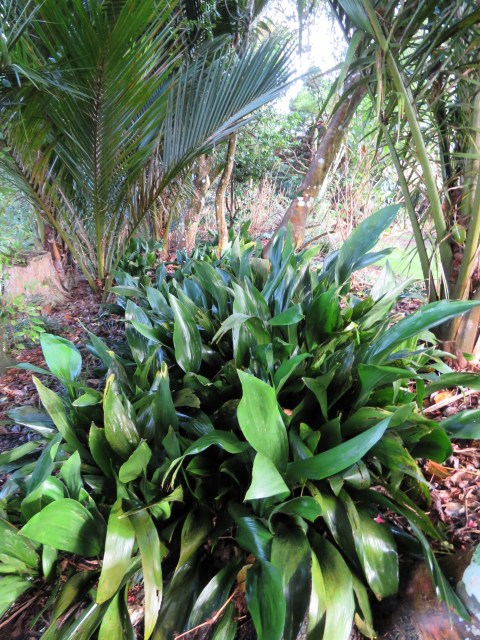
I was this number of years old before I learned that the large patch of healthy but utilitarian ground cover we have growing in one area of shaded woodland is in fact an aspidistra, probably Aspidistra elatior. It was our gardener Zach who told me and all I can say is that a garden apprentice who can teach you things is a treasure.
I had only ever known aspidistras from literature – characterised as a dull, often dusty plant languishing in a corner, sitting on a lace tablecloth in Victorian parlours. They are, I find, commonly referred to as the cast-iron plant because they are seemingly indestructible as a house plant. The Victorians favoured them because they tolerated gas fumes and coal smoke as well as low light levels and drought. They only required occasional dusting, really. It is just a shame they are, perhaps, a litttle… dull.
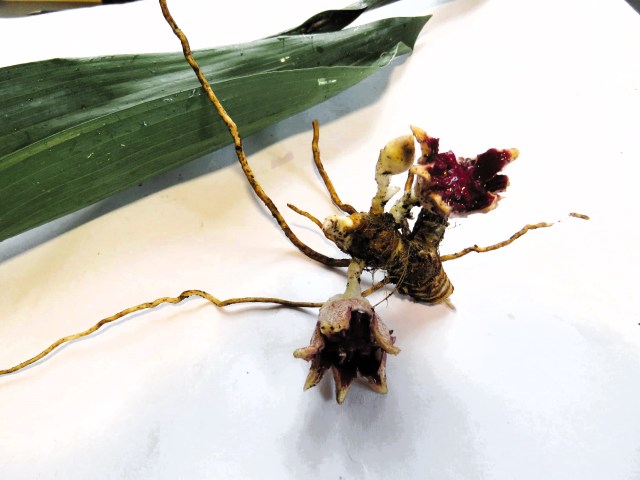
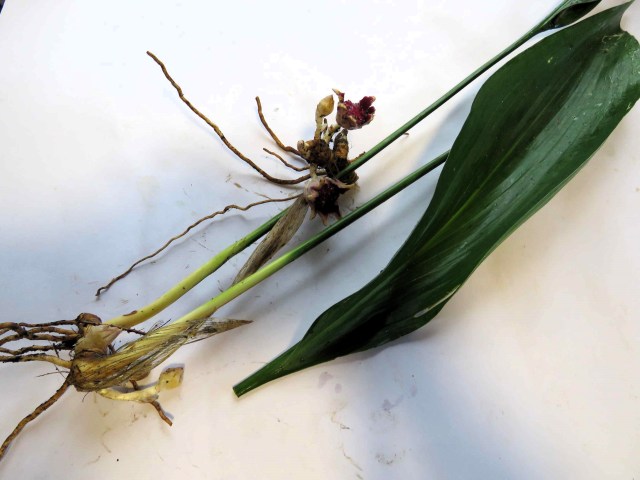
I had looked at this large clump of ours without ever really pondering what it was. I was more disappointed in the fact that I had never seen it flower. I imagined a plant with foliage like that putting up a white spadix-type of bloom, not unlike a peace lily. No, Zach, told me. The flower comes from the base and you have to ferret around the base to find it. No wonder I never saw it flower. The clump has always been one of those anonymous plants that is just there to furnish a space.
The aspidistra flowers are not what I expected
The flowers could be described as curious or, equally, underwhelming. They come up from the rhizome on stems about 1.5cm high and are a fleshy looking cup with a starry burgundy inner about 2cm across. They are very small. And shy. Interesting but never showy.
Aspidistras are a large family of forest-dwelling plants found throughout areas of Asia. In terms of woodland ground cover, they are useful, making a lush clump around knee-high to hip-high. Presumably they are not particularly tasty because the damage from slugs, snails and caterpillars is minimal. The old foliage dies off gracefully and they continue to look lush all year round with absolutely no grooming. All I have ever done is to pull out a bit debris that has fallen from above. In 40 years, we have twice taken bits off to spread a little further in that area – and once was this week. Otherwise, they have kept more or less to their original space, quietly minding their own business.
I am looking at them with more respect now that I have stopped hoping for some large white spadix-type blooms. It seems that as a woodland ground cover, they are as easy-care and accepting of benign neglect as they were in Victorian parlours. Just keep them out of the sun, is apparently the secret.
Growing from rhizomes, aspidistra are easy to divide but also obliging about staying where they are planted and not spreading far and wide
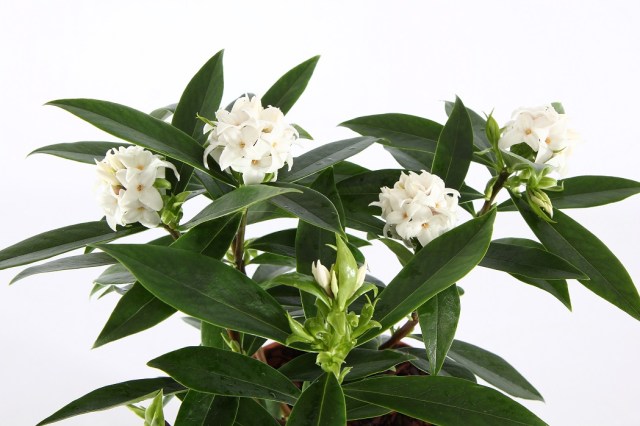
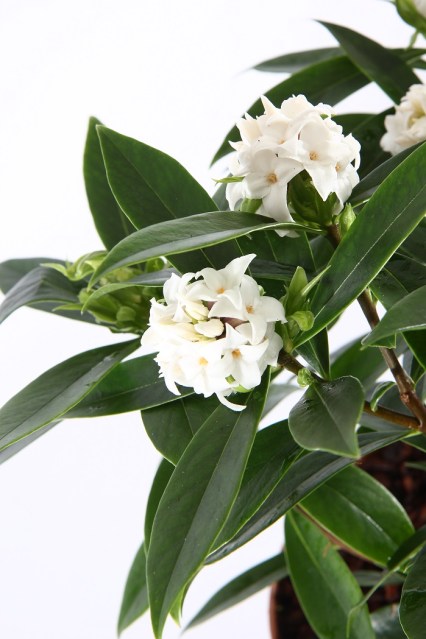
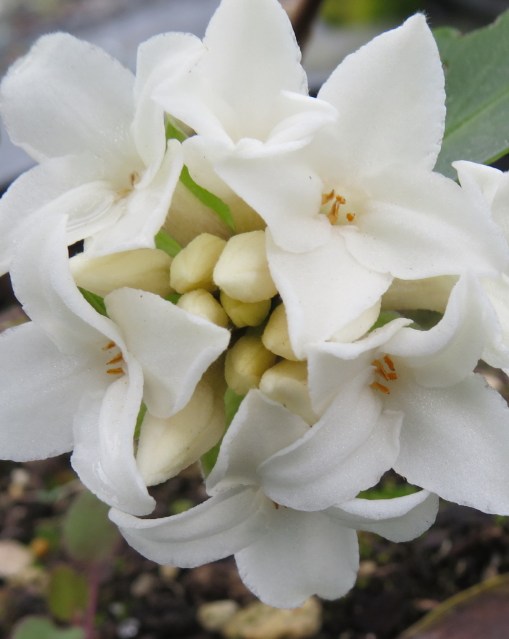
A new release! It has been a while since the last new Jury plant hit the garden centres (though there are more in the pipeline) but the latest one is here, albeit only in New Zealand at this stage. What is it? A pure white daphne – the white form of Daphne ‘Perfume Princess’.
Our new white daphne – ‘Perfume Princess White’
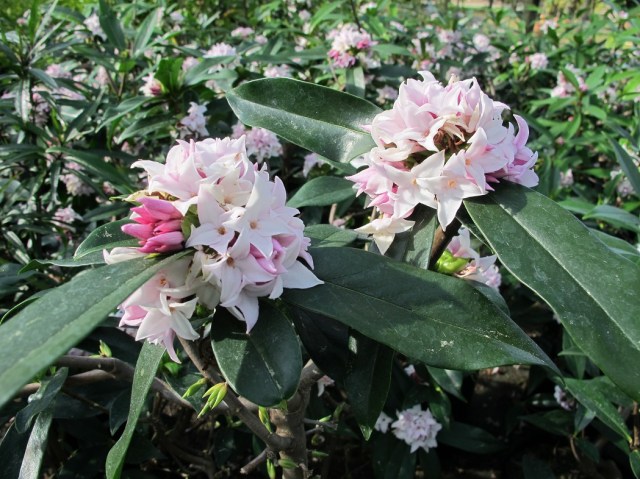
Had it been me naming this new daphne, I would have called it Daphne Snow Princess but it wasn’t which is why it is Daphne ‘Perfume Princess White’ which is at least descriptive. And it is true that it is like ‘Perfume Princess’ except in colour so it has the very long flowering season, the ability to flower down the stem, larger individual blooms, fragrance, vigour and health of its older twin sibling.
The original Daphne Perfume Princess, showing the typical colouring of D. odora
New Zealand gardeners love their white flowers but the rest of the world tends to prefer colour, especially those who live in areas which are under snow in winter.
I am told it will be available in Australia towards the end of the year and other countries will follow as stock is built up.
Just a reminder that this is a non-commercial site and if you want this plant, you will need to go to your local garden centres. We stopped mailorder in 2003 and stopped selling any plants at all in 2010. As we are removed now (retired) from production and distribution, I can’t even tell you which garden centres near you currently have it in stock (yes, I do get asked this sort of question on a frequent basis). All I can say is that if you are keen to get a plant, you are more likely to find it in one of the mainstream garden centres, rather than smaller specialist ones or nurseries. And supply will be limited in this first year of release. It is worth having, though. I can say that, at least.
Postscript: Sorry to sound grumpy. It is true, I do get a bit grumpy answering emails and phone callsfrom people who assume that because I write about a plant, they should be able to order it from us or, failing that, I can advise them where they can source it. Even from overseas, at times! What is it, I wonder, about my site that makes people think I am trying to sell them stuff?
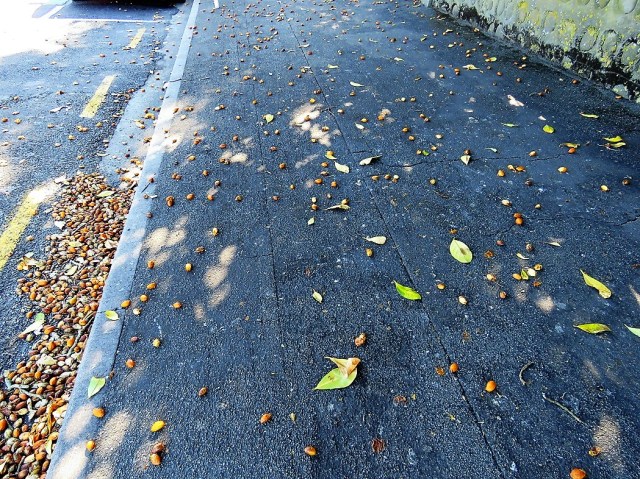
Given the uneven nature of the pavements in my local town, my eyes were looking down when I came across this remarkable sight. The fruiting of the karaka. Even by karaka standards, this is a bountiful crop and very decorative on a sunny day, although I imagine some locals are less pleased about the amount strewn over the footpath.
It is a common coastal tree both in the wild and as a distinctive, evergreen, garden specimen. The ever-handy internet tells me that botanists think that its original habitat was the northern half of the North Island and the northerly offshore islands. The fact that it is now found all round the country and even on the Chatham Islands is because it was a valuable food source for Maori who deliberately planted it and cultivated it.
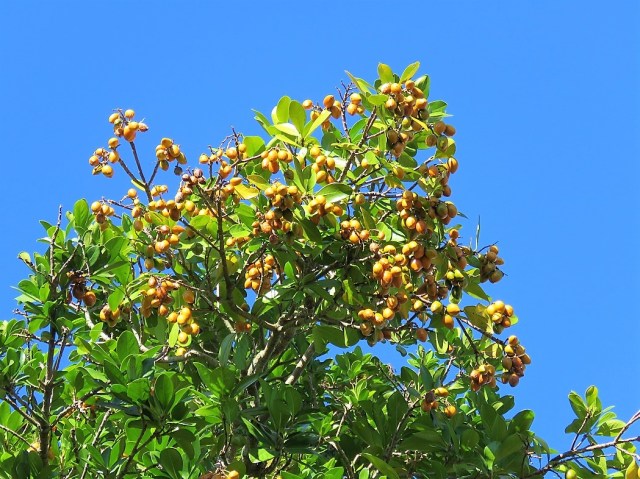
That is quite a crop of berries on the karaka tree
I think most New Zealanders know that the karaka berries are highly poisonous unless prepared correctly. It is not the fruit pulp that is the problem, it is the toxic kernel. Should you want to know how the fruit is prepared for human consumption in the indigenous diet, I can refer you to this article on The Spin Off. In the interests of research, I sampled the flesh of a ripe fruit and I can tell you it is indeed sweet and fruity although it is only a thin layer over the rather large kernel. It reminded me of the taste of loquats.
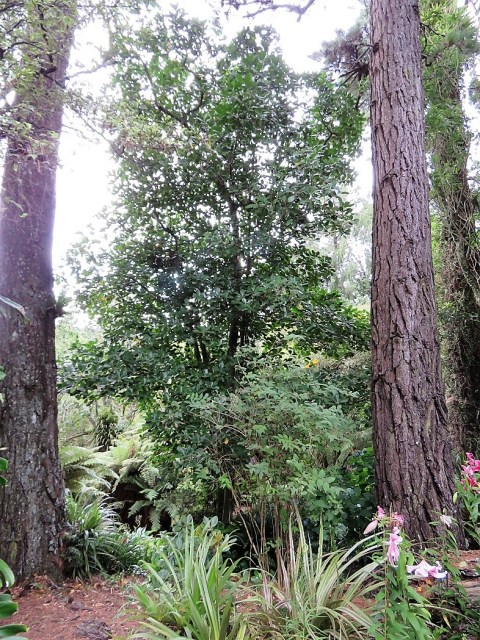
The tree in the centre is a self-sown karaka destined for the chop
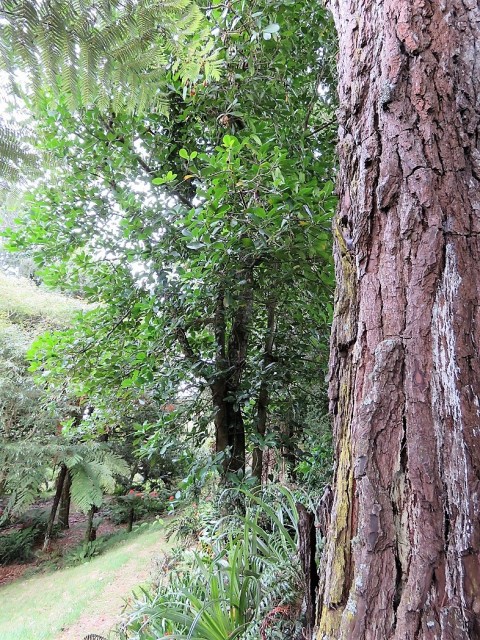
Karaka pop up all around our property as self-sown seedlings along with tree ferns, nikau palms and kawakawa. This one got away on us and is destined for the chainsaw because it blocks a vista we want to keep open. Like most seedlings, we will let them grow if they are in the wilder margins or shelter belts but restrict them in cultivated garden areas. If we didn’t, we would have a forest of karaka because I swear, every fruit that falls beneath this tree germinates and I have to weed them out when small.
I kept seeing references on line to it being toxic to dogs who, allegedly, eat the whole fruit including the kernels. I asked Mark if he had ever heard of a dog being poisoned by karaka berries and he scoffed, pointing out that they are of no interest to dogs at all and he certainly had never heard of it happening. There are many things we grow in the garden that are toxic to dogs, including yew trees, but the chances of you inadvertently killing the family pet by growing a karaka tree seem very remote although it must have happened in the occasional instance to be recorded. It makes a good specimen tree with its lush foliage and quick growth without becoming a forest giant (it stops at about 15 metres naturally so you can keep it smaller in a garden situation) and the fruit will bring the kereru into your garden.
I doubt that there are many people in New Zealand, other than botanists, who know the botanical name for this tree – Corynocarpus laevigatus. There is a name I had to look up and I know that I will never remember it. We all know it by its Maori name- karaka. There may be more people who can pronounce it correctly, but not too many more. It is usually pronounced karaka to sound like cracker. I looked that up too and while there are regional variations, phonetically it can be transcribed as cah-raa-cah or kuh-raa-kuh (but with a short u sound), bearing in mind that the Maori language places equal stress on all syllables. Mark and I are practising to at least try and get it closer to the correct pronunciation.
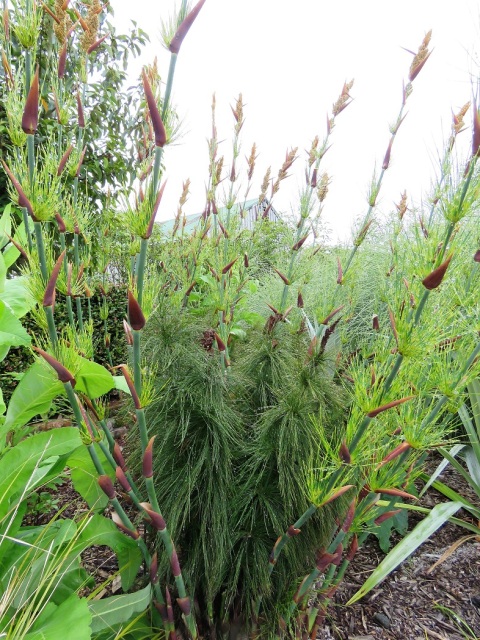
I lost count of the number of times we were asked about Elegia capensis during our recent open days. I have used it extensively with the grasses in the new Court Garden and it is looking rather splendid.
Its common name is the horsetail restio and the entire restionaceae plant family hails from South Africa. There are plenty of them but E. capensis is the most common in ornamental gardens. It is not too fussy on conditions as long as it never dries out entirely and is not subjected to very cold winters.
Most visitors described it as looking like a bamboo but with feathery growth, which is apt. The new shoots come up in spring like narrow bamboo shoots, first developing brownish sheaths at points up the stem before growing the fine foliage in tiers. The stems last about three years before dying off.
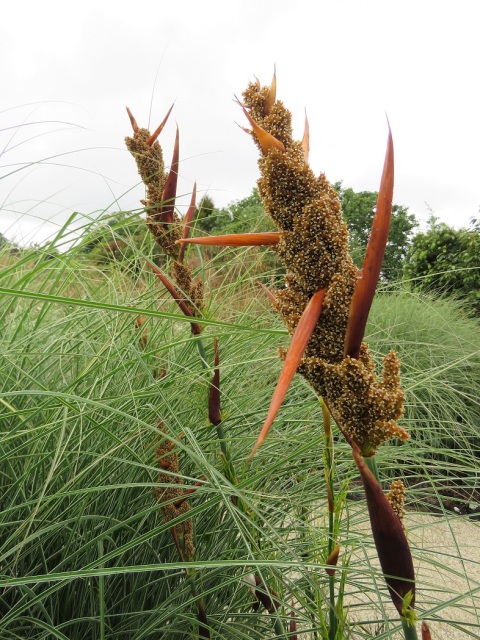
When you look at the seed head, it is just as well that seed is not viable here
Our plants have never set viable seed. Whether that is because they are all one clone and they need other clones to set seed or whether it is the lack of smoke from bushfires, we are not sure. They may even be fully dioecious – needing both male and female plants to set viable seed. These are plants that have evolved to deal with frequent fires (they sprout afresh from underground rhizomes). PlantzAfrica says: “The seeds react well to treatment with smoke or with the ‘Instant Smoke Plus’ seed primer. Without this treatment the germination rate is poor.” I have never even heard of Instant Smoke Plus before.
We used to produce a few to sell in the nursery but the death rate in production was high. I have only just discovered why. We assumed that they would be similar to other plants like hostas and rodgersias that grow from rhizomes. In other words, we would lift the plants in winter, separate the rhizomes and repot them ready for spring growth. Then I read somewhere that they should be divided in February – late summer – so we tried that and it was not particularly successful either. What I have since discovered is that their roots are very sensitive, making the plants difficult to propagate by division. They are evergreen and not overly hardy so they are in growth all the time, unlike plants like the aforementioned hostas which have a dormant period. Commercially, they are more commonly raised from seed.
Where we have been successful in dividing this elegia, it has not been by taking apart the rhizomes but by cutting off large chunks of the original plant and putting the entire chunk into the new location. When I say cutting off large chunks, this requires a strong person, a very sharp spade and sometimes an axe, to take off blocks that are about 20 cm across which need to be replanted straight away. Brute strength, not high-level skill.
I see BBC Gardeners’ World describe this plant as invasive, which I think is wrong. It doesn’t seed readily – or at all here. Nor does it run below the soil surface so it is not invading. It is, however, strong growing and can make a large clump in the right conditions and that large clump is not easy to reduce or eliminate because of the solid nature of the rhizomes.
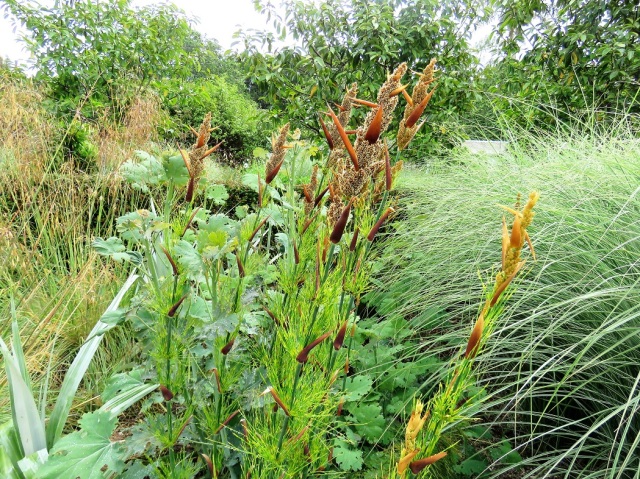
The maceaya is the poppy foliage amongst the elegia
What is setting out to be genuinely invasive is the Macleaya cordata, commonly known as the Plume Poppy which is interplanted with the elegia. We have it in a shade garden where it certainly ‘ran’ below the soil surface but not in a particularly problematic manner. In full sun in the Court Garden, it is not so much running as sprinting – in every direction including into the pristine new paths. Attractive it may be, but it is a worry. I may just have to leave it in the shade garden and find a less determined plant option for the sunny, grass garden.
Terry’s restio, as we refer to it here.
We have another restio that I picked up from Terry Hatch at Joy Plants in Drury but I am not sure where – or if – I kept its species name. It is not as vigorous as the elegia so better suited to the perennial borders where I have it planted but lacks the immediate visual charm of the deep green colour and tiers of feathery foliage up the stem. There is no such thing as a perfect plant for all situations.


 Tikorangi The Jury Garden