Category Archives: Plant collector

flowering this week, tried and true plants

Plant Collector – Hippeastrum aulicum


Hippeastrum aulicum

Hippeastrum aulicum

At this time of the year the big red flowers of Hippeastrum aulicum look like Jacobean lilies. We use it as a woodland plant because our past experience is that narcissi fly can devastate hippeastrums planted in the sun but the flies don’t go into the shaded areas to lay their eggs in the crowns of the bulbs. It takes a while for the bulbs to get large enough to flower but they are happy to be planted and left alone, gently increasing year by year so, after several decades, we have large clumps of them which oblige with gorgeous blooms in spring, standing 60 to 70cm high on strong stems. With us, they are completely evergreen though they may drop their foliage in harsher conditions.
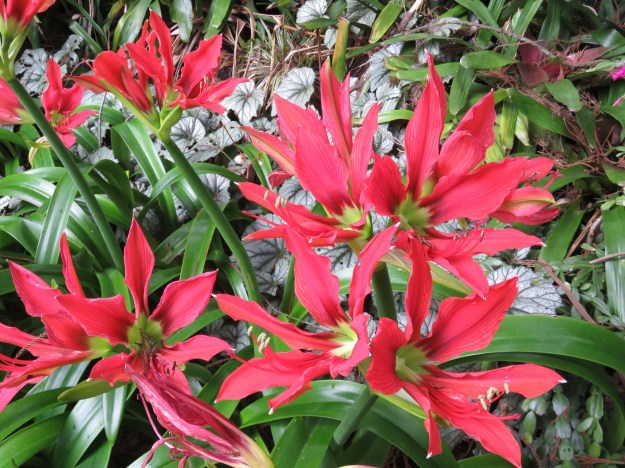
A colourful woodland plant - H. aulicum

A colourful woodland plant – H. aulicum

Just for a change, the hippeastrum family doesn’t come from South Africa which is home to the majority of bulbs that we grow successfully here. Instead they hail from South America and this particular one is native to Brazil and Paraguay. H. aulicum is a species and not widely available though the curious H.papilio is sometimes offered for sale (expect to pay about $30 for a single, flowering sized bulb) and there are many hybrids which are brightly coloured, big flowered things for growing in containers. I am not so keen on the hybrids, papilio is less obliging as a garden plant but aulicum is both exotic to look at and a consistent performer.
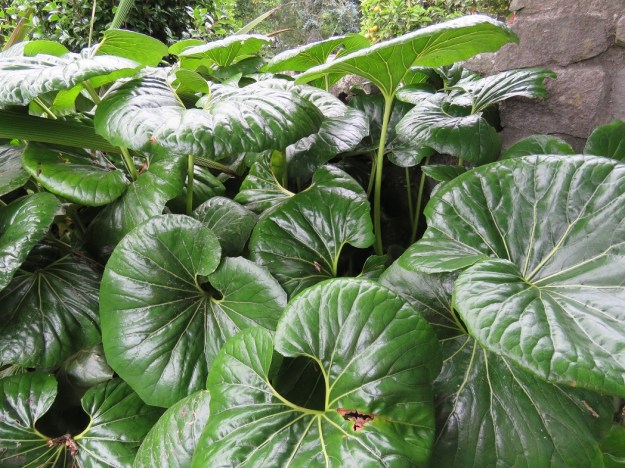
Tried and True: Ligularia reniformis

  • img_6451* Impressive in size and lush appearance.
    * Evergreen.
    * Looks tropical but can withstand light frost and cool winters.
    * Widely available for sale.

 In this country, as in Australia, we all know this plant as the tractor seat ligularia, which says quite a bit about our rural origins. I guess the leaves could be said to resemble a traditional tractor seat in shape and when growing strongly, getting pretty close in size. We have almost made this plant our own in New Zealand and have certainly pushed the boundaries of where it is grown – it is technically sub tropical and from East Asia. In warm areas, it gets considerably larger but even in cooler areas with a bit of frost, it makes an impressive clump a metre across and a metre high over time. It will need more protected conditions where frosts are more frequent but it is happy in high shade and on woodland margins. Typical of any perennial, it likes rich, well cultivated soil with plenty of humus and good moisture levels. While not immune to the munching ways of slugs and snails, it is nowhere near as tasty as hostas and we have never worried about pests or diseases on our plants. It is grown for its foliage and if you have the space for a large and impressive plant with large and impressive leaves (think giant water lily pads), it is a good addition and easy to contrast with a whole range of other plants. Reniformis is widely available in garden centres.

Plant Collector: Anopterus glandulosa


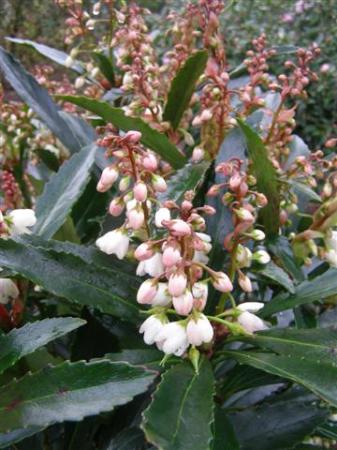
Anopterus glandulosa - a slow growing treasure

Anopterus glandulosa - a slow growing treasure

It did take a long time for our Anopterus glandulosa to do much other than just sit and put up a few racemes of flowers each spring but eventually it grew a little and after a decade (possibly more than a decade, in fact) it just gets better every year. Its flowers look like lily-of-the-valley but this is an evergreen shrub from Tasmania. The literature tells me it can make a small tree but at the rate it is growing, that might be when our grandchildren (who have yet to make an appearance) are adults. I can see why it is rated as rare because this is not a quick turn-over shrub for the trade so if you ever see it offered for sale, grab it because you may be looking a long time to find it again. The leaves are long, leathery, shiny dark green with saw-toothed edges. Even without its flowers, it is a tidy little evergreen shrub which keeps good form without needing pruning and then for many weeks in spring, it is adorned with its racemes of pink buds opening to white flowers.


There are apparently only two species of anopterus and the other member of the family must be of negligible merit because most of the references only record glandulosa. They are closely related to escallonias which readers may know for a hedging option. If you find somebody with an anopterus, you may be able to raise it successfully from seed.

Plant Collector: Calanthe orchids

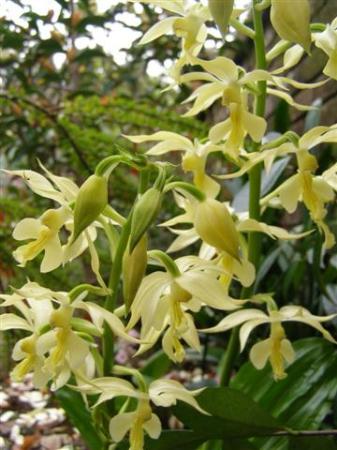
Calanthe orchids - happy growing in our woodland

Calanthe orchids - happy growing in our woodland

Orchids are one of the largest and most complex groups in the plant world – fearfully complicated to try and navigate your way through. Our interest here is in orchids as garden plants and one of the star performers is the calanthe family. These are called ground orchids or terrestrial orchids – in other words they are happy to grow in good garden soil. In the right conditions, you can plant them and leave them alone for many years where they just gently build up and make a better display with more flower spikes. There are well over 150 different species of calanthes and inevitably some will be better and showier as garden plants in our conditions than others. There is a bit of a question mark over the correct name for this lovely soft yellow one- probably a form of sieboldii or striata. Note: I have now been informed that in fact it is Calanthe ‘Higo’ (C. sieboldii x C. aristulifera) which makes sense to us.

Most of the calanthes come from tropical and sub tropical Asia and are generally evergreen. Presumably the forms thriving with us are the sub tropical types because tropical, we are not. We use them as woodland plants and have only once ever had them tickled up by a vicious frost. Their only downside is that they are quite leafy and the foliage hangs on for grim death long after it has become tatty and shredded. They benefit from an occasional tidy up. The new growth comes in spring and is quite lush so that every year garden visitors ask us which variety the yellow flowered hosta is.

Probably because orchids are such a complex plant family, orchid societies continue to grow, show and share when many other specialist groups have gone out of existence. They are a friendly and knowledgeable bunch and if you want to start building up a collection, either joining the local branch or visiting their shows is the best place to start.

Plant Collector: Magnolia Serene

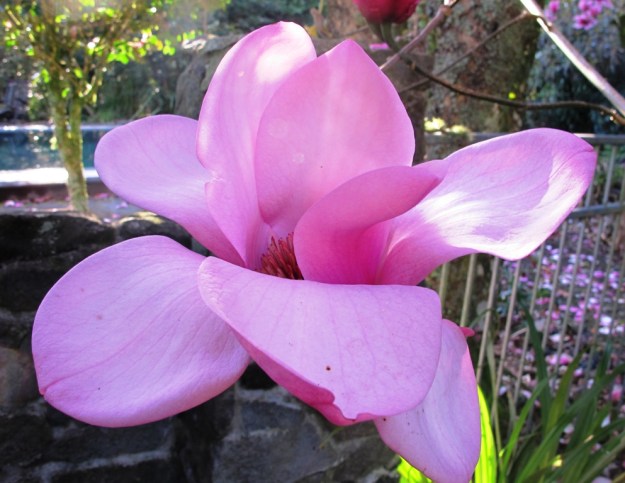
The very pink Magnolia Serene in full bloom

The very pink Magnolia Serene in full bloom

For us, Serene in full flower heralds the last chapter of the magnolia season each year. It is the latest and the last of the Jury magnolias to flower. It is also the pinkest. This is another of the series named by Felix Jury back in the early 1970s and the original tree now stands around six metres tall and is pyramidal in shape rather than spreading. In full flower, it is just a mass of large rosy pink bowl-shaped blooms.

001Being so late to flower, Serene is an excellent choice for people in colder areas or prone to late frosts. It also tends to miss the worst of the equinoctial winds. Cold conditions will make the plant adjust to blooming even later but Serene does get its flowers through before its foliage. We are picky here – we want deciduous magnolias to mass flower on bare stems before the new season’s leaves unfurl. When the leaves do come, they are a particularly good deep green and tidy in form so Serene stands out as a good summer foliage plant in a way in which few deciduous magnolias do. It will also set a flush of summer flowers which is bonus territory.
Serene was another of the series Felix bred using his wonder breeder parent, slightly embarrassingly named Magnolia Mark Jury. Its other parent is liliiflora.