Category Archives: Plant collector

flowering this week, tried and true plants

Plant collector: Agapetes serpens

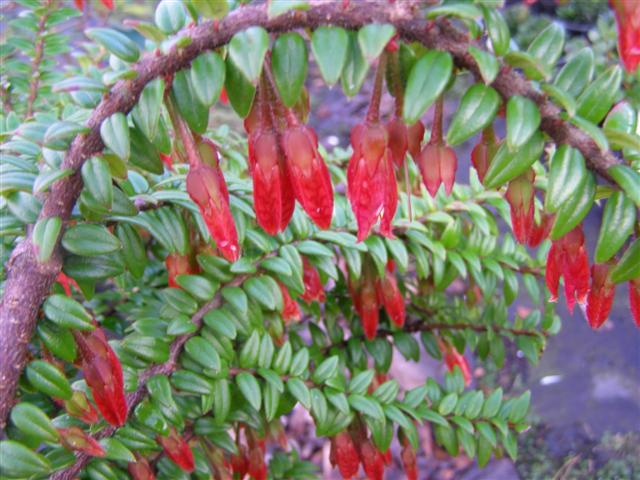
Agapetes serpens - attracts nectar feeding birds in winter

Agapetes serpens - attracts nectar feeding birds in winter

Agapetes serpens is a surprisingly hardy woodland plant from the Himalayan region and there we have been for years thinking it was a somewhat tender plant from India! Right general geographic area at least (she says in self defence). It is an evergreen shrub but with arching growth – aptly described by another as being like a vegetable octopus. What is really lovely through winter and spring is the prolonged flowering season when the branches are festooned with tiny hanging red bells with cute little chevron markings which Mark always thinks resemble Chinese lanterns and these must contain nectar because the wax-eyes come in to feed regularly. Mark was delighted to see even a bellbird come in to feed on one of our plants.

In the wild, A.serpens is often epiphytic which means it grows perched in the embrace of a larger tree. Consequently, in a more suburban environment, it is equally suited to growing in a container or a hanging basket. As the plant matures, its roots develop into big nubbly, woody protruberances pushing themselves above the soil, which we assume is for water storage. We grow serpens both in the shade where its foliage stays predominantly green and in full sun where it tends to be red-toned. I am still a little hesitant about declaring it as totally hardy so in colder, inland areas it would probably be wise to treat it as a woodland plant which needs some overhead cover rather than using it out in the open.

Agapetes are related botanically to the vacciniums (which includes proper cranberries) and all are members of the wider ericaceae family which takes in the heaths and heathers as well.
The Plant Collector: Lachenalia reflexa

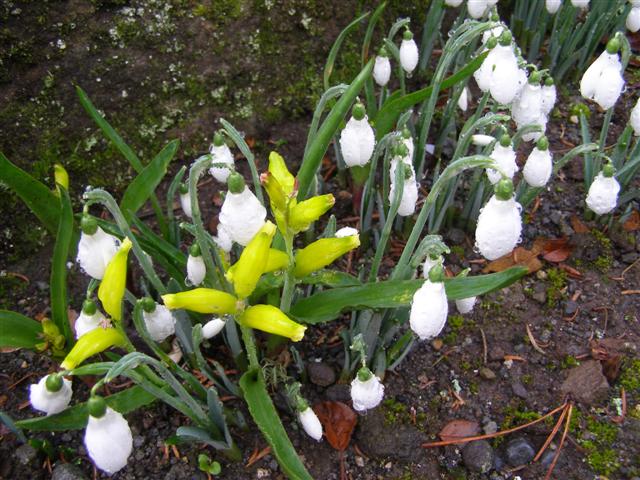
The earliest bulbs are in flower - Lachenalia reflexa midst the snowdrops

The earliest bulbs are in flower - Lachenalia reflexa midst the snowdrops

I have this little self-imposed rule which is that I can’t repeat a plant (at least, not yet) so the plant this week is not the delightful English snowdrops (this form is Galanthus S. Arnott which is the most reliable performer in our conditions), even though the clumps and drifts we have in full flower throughout the garden are an absolute delight. No, we are looking at the yellow flowers coming through with the snowdrops. This is Lachenalia reflexa. It is the yellowest of the lachenalias we grow here, all of which are native to South Africa. There are well over 100 different species, often taken for granted in their homeland where they are just wild flowers. Not all are easy to grow. Reflexa isn’t too difficult though it is not particularly vigorous, which is why it is not common. The yellow is a pure bright lemon shade, sometimes with green markings which fade out as the flower matures. Like most lachenalias, it doesn’t hang onto its foliage for particularly long after flowering. These plants are growing on the edge of our gravel driveway beside a low stone wall. Many of the species bulbs (which is as they occur in the wild) are used to surviving in quite harsh conditions with little soil and low fertility. If you try and treat them like choice garden plants, they don’t always cope. The critical issue, as always with bulbs, is to ensure excellent drainage, even more so when they are dormant (in summer for reflexa), to avoid them rotting out.

Tried and True – heucheras

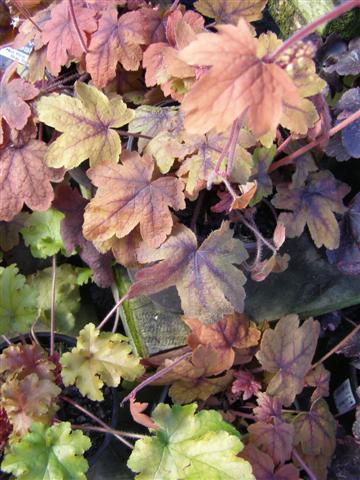
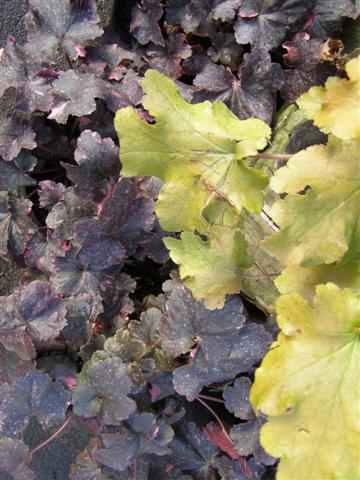
Heucheras - burgundy and lime shades

Heucheras - burgundy and lime shades

• Widely available in garden centres.
• Evergreen and generally hardy.
• Interesting range of colours and foliage markings.

Heucheras have gone through something resembling a makeover in recent years, thanks mainly to American plant breeders, and are now a stock line in every garden centre. I have never heard them go under a common name in this country, but they are the clumping perennials with frilly, maple-shaped leaves often with mottled or frosted markings. They do flower but the tiny blooms are secondary to the wonderful foliage. Being native to North America, heucheras are reasonably hardy, even though they are evergreen. It was the lovely burgundy and purple shades which made most of us take notice of this plant genus here. Since then there have been a range of amber, gold and almost ginger shades as well and there is a lovely little lime green.

Heucheras in autumn tones

Heucheras in autumn tones

It took me a while to learn how to grow heucheras successfully. It was a little irritating to admire them in other people’s gardens and to have their owners smile smugly and say that they had no difficulty with them, all the while seeing my own plants get smaller, not larger. The secret, which they did not tell me at the time, is that heucheras are not a perennial that you can plant and leave for years. They thrive on being lifted and divided regularly (late winter to early spring is the best time for this) and replanted in well cultivated soil with plenty of humus added. I also find they do better in a colder, open area of the garden where they get plenty of light but they are not baked in the summer sun. In good conditions, the divisions reward you by making satisfyingly big clumps within the season with foliage which keeps its colour well and is generally untroubled by pests and diseases.

Flowering this week: Rhododendron cubittii

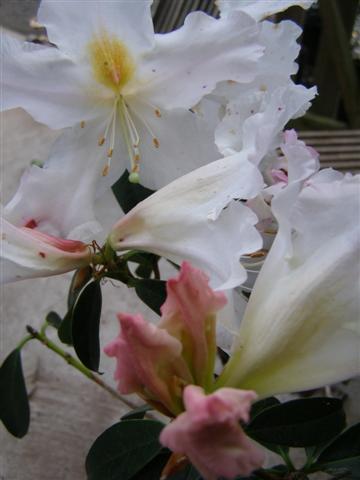
Early, frilly and fragrant - Rhododendron cubittii

Early, frilly and fragrant - Rhododendron cubittii

The early rhododendrons are just starting to flower and amongst them is the gorgeous R.cubittii. We tend to take our ability to grow these delights for granted but there are many rhododendron enthusiasts in the world who would sell their soul to be able to have these strongly scented and somewhat exotic types in their gardens. Cubittii hails from Burma, first collected around 1875 – long before that country became renamed Myanmar and shut its borders. Rhododendron buds at the point of opening are a lovely feature in themselves and cubittii has buds in dusky pink which open to big, frilly flowers, mostly white with a yellow throat and pink flush on the backs of the petals. The scent is sufficiently strong to hang in the air around it.

Cubittii is one of the better options for warmer areas because it is largely resistant to the dreaded thrips which turn leaves silver. Grown in full sun, it makes a compact shrub of about 1.5m x 1.5m (the sun encourages bushier, lower growth whereas shrubs tend to stretch and reach for the light in shadier conditions). I have always advised people in cold, frost-prone areas to shy away from this variety but I am told on excellent authority that it does well in Palmerston North in sheltered positions. If it grows well there, it can be grown pretty much anywhere in Taranaki, bar sub alpine areas or the coldest inland valleys. Just plant it in the lea of some trees to protect the early blooms from frosts.

Flowering this week: Vireya rhododendron saxifragoides

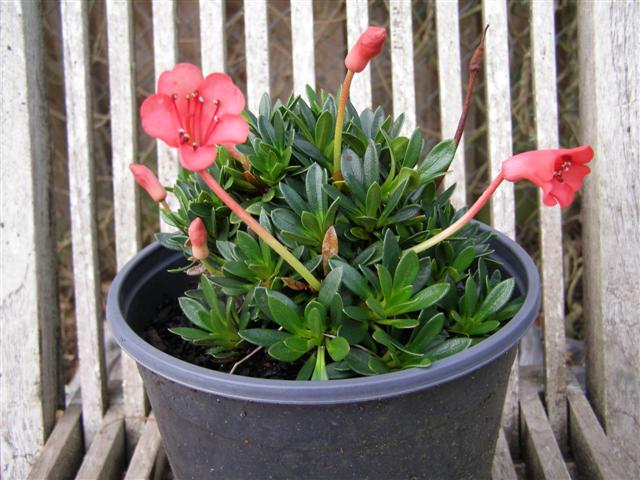
Eight years of growth, maybe more, in good nursery conditions and R.saxifragoides reaches this size

Eight years of growth, maybe more, in good nursery conditions and R.saxifragoides reaches this size

We have a standing joke here about plants which we won’t part with unless the recipient passes both an interview and a test – saxifragoides is one of those plants. After a good eight years, maybe more, this plant is 6cm high and about 14cm across. We don’t want to waste a plant that grows so slowly on somebody who has no idea what it is or too little appreciation of what it takes for the plant to reach this stature. It is an odd little vireya species from New Guinea which makes a mounded cushion (generally a small mounded cushion) and which is far more tolerant of both cold and wet conditions than any other vireya we know. In fact it is often found growing in cold bogs in its native habitat (other rhododendrons will quickly give up the ghost and die if their roots stay wet for long) as well as in alpine grasslands. It is not as forgiving in our garden where I have managed to kill off two or three plants now. It seems easier to keep healthy in a pot.

The flowers are red and held singly (most rhododendrons have clusters or trusses). Sharp-eyed readers may pick the similarity in flower to the rather larger vireya hybrids, Jiminy Cricket, Saxon Glow and Saxon Blush. Yes, saxifragoides is a parent of these and gives the hardier characteristics and the leaf shape to its offspring. In the wild, saxifragoides will layer naturally (put down fresh roots from branches which touch the ground) and seed down. Very old clumps have been found which have even developed a woody rhizome below ground but in cultivation it is normally propagated from cutting – very small cuttings as you can perhaps imagine from the picture.