
- Cut the spent flowers off your hellebores to stop the likely infestation of aphids, which find them a pleasant home, and to prevent them self seeding.
- You still have time to start your own summer veg from seed but don’t delay with tomatoes, cucumbers, melons, aubergines, capsicums and the like. These are all started off sown in trays or pots for planting out in the garden later next month. If you only want one or two plants, it is probably just as cheap to buy the plants as packets of seed but sowing seed gives you the chance to be generous and share plants with friends and family.
- Mark will be starting his corn in baby pots here. It is too early to plant out in the open yet but this being his most favourite vegetable of all, he likes to maximize the season and to get an early start with established plants.
- Cloches come into their own at this time of the year. They will warm the soil more quickly, so allowing earlier planting out. They will also protect young crops and keep rain splash off micro greens.
- In the ornamental garden, dahlias can be lifted and divided.
- Feed roses if you have yet to do so. They are in full growth now so will have maximum uptake of fertiliser. If you are laying mulch around your roses, keep it well clear of the rose crown near the ground.
- Kumara can be chitted, like potatoes. Place them on damp sawdust, straw or even crumpled newspaper in a warm, dark spot to encourage them to start sprouting. Kumara are another crop that needs maximum growing time, so the timing of planting out is important.
- Get a copper spray onto deciduous fruit trees as they break dormancy. This is a key application to prevent problems later and is the single most important spray of the season.
Category Archives: Seasonal garden guides
In the garden this week: September 17, 2010
- Give top priority to getting woody trees and shrubs planted which includes fruit trees. The soils are warming up and you want these plants to get established and make fresh root growth before summer. As a general rule, fruit trees do best in full sun.
- It is time to wage war on wandering jew (tradescantia) and onion weed. These are not easy weeds to eliminate. If you are hand pulling them, don’t pile them in a heap and hope they will rot down – they will merely grow. You need to kill them, usually best done with heat – black rubbish sacks on concrete under a hot sun will work but does take effort. If you are willing to spray, Shortcut or Amitrol appear to be best options for home gardeners but you also need to add a surfactant to make the spray stick. Grazon or Tordon Gold will work if you are a farmer with these in the cupboard. Glyphosate won’t work at all. With wandering jew, if you roll up the top layer (and dispose of it elsewhere because every piece will grow again if it gets the chance), you will get a better kill with spray because you are killing the layers closest to the ground. Be prepared to spray on repeated occasions for eradication.
- Don’t rush to plant tender summer crops such as tomatoes, cucumbers, aubergines or melons in the garden yet. You won’t gain anything and it really is still too cold. You can, however, be giving them a head start in containers in a sheltered position such as a porch or a glasshouse. If you have been tempted to buy baby plants from the garden centre, pot them on to a larger pot and cosset them until the great Labour Weekend plant out. It is really important that small plants not be checked in their growth by poor conditions (too dry, too cold, too wet or root bound in pots which are too small for them). They rarely recover from early encounters with adverse conditions.
- Pinch off the first flowers on your freshly planted strawberries. This allows the plant to get larger and stronger and produce more fruit in the long run. It takes a lot of energy for a plant to produce fruit and you don’t want to exhaust the poor wee juvenile plants. You can still plant strawberries but don’t delay if you want fruit for Christmas. I see the handy advice is to put in five plants per family member. If you have a large family and you are buying plants, it would be cheaper to wait until next year and to plant runners much earlier in the season.
- Keep the fertilising round going this month. Cheap and cheerful fertilisers are fine for the garden – keep the expensive, slow release fertilisers for container plants. Compost will also nourish and has the advantage of improving the texture and health of the soils. We recommend laying the compost on top as a mulch to suppress weeds. Nature and the worms will do the rest to mix it in with the dirt below.
In the Garden this week: September 10, 2010
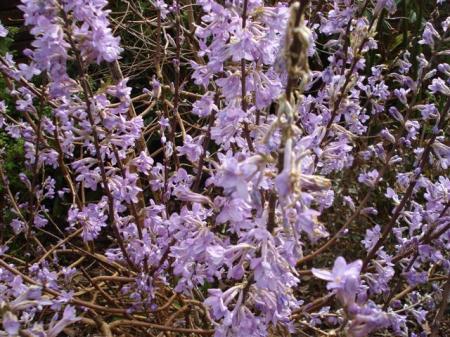
Daphne genkwa looked fantastic last year - but died when I pruned it after flowering
- The common daphne is odora and does not appreciate hard pruning. Dainty Daphne x burkwoodii can also be touchy. Keep pruning to a light haircut each year rather than a major cut-back. The Himalayan Daphne bholua has a more robust constitution and can get rather large, scruffy and leggy if left to its own devices. This one you can cut back hard. Now is the time to prune those daphnes which are finishing their winter flowering. The beautiful blue Daphne genkwa will be coming into flower soon – don’t even prune this one. I killed a splendid, established specimen last year by cutting it back after flowering.
- If you can reduce your number of slugs and snails now, you will be reducing the breeding population when they get frisky as spring temperatures warm up.
- Keep an eye on emerging hostas because you can be sure that all slugs and snails are watching closely for this manna from the soil. Jenny Oakley from Manaia swears by the use of crushed eggshells sprinkled on the crown of the hosta before the leaves unfurl to deter early munchers though she also follows up with bait later. Ringing the plants in sand, coffee grounds, sawdust or anything gritty is said to discourage some slimy predators though Mark is sceptical of this claim. However, the bakers bran liberally sprinkled around plants under attack worked a treat and is an environmentally friendly technique – the birds eat the bloated slugs and snails.
- It is the last chance to get a crop of late broad beans sown. If you leave it any later, it won’t be worth the effort and space. Get carrots sown soon. Don’t fertilise carrots but they need well cultivated soil to get their roots down. Fresh animal manure is a particular no-no for carrots and causes forking of the carrot and too much leafy top growth.
- If you want to plant yams, you can be setting them to sprout in trays now. Yams are frost tender but need a long growing season (five to six months) so you want to get them started as soon as the danger of late frosts is over.
- You can continue lifting and dividing perennials as they come into growth because they have the energy to overcome the havoc and destruction you wreak on their root systems and crowns. If you have many to do, prioritise the spring perennials and then follow up with summer ones like coreopsis, asters and chrysanthemums.
In the garden this week: September 3, 2010
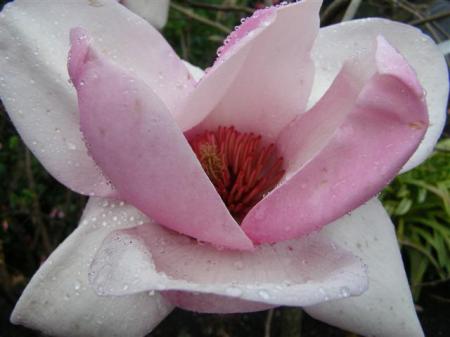
Magnolia Iolanthe is opening her flowers
• Spring is here. The magnolias are fantastic right at the moment so take the time to get out to parks and gardens to admire them.
• If you use annuals for spring display, you will need to buy plants now and get them out to the garden. It is too late to do seeds for spring but you can start your summer annuals in trays or pots for planting out later. If you are planting baby plants, pinch out the flowers and any long growths to encourage bushiness. If your plant gets stressed soon after planting out, it will try to ensure its survival by skipping most of the flowering step and going straight to seed. You can discourage this by disbudding it because this forces more growth.
• Now is the time to prune luculias which can get very leggy if left entirely to their own devices. Try and find two leaf buds down the stems and prune back to these. As the plant flushes with spring growth, it leads to a bushier shape.
• Get around all your rhododendrons and vireyas as soon as possible to get dead out wood and to carry out any pruning required. This is one plant you prune now, not after flowering. You want to make the most of the plant’s spring flush. If you prune them after that growth flush, you will weaken the plant and make it more difficult for it recover from heavy pruning. Follow up with a feed and some mulch – rhododendrons are surface rooting so they can easily fry in dry conditions.
• Time is running out for planting onions if you want a decent crop. Get your seed in this weekend.
• The advice on using washing powder as a moss killer has certainly caught the attention of many readers. I am suspecting that the cheap budget powder I have tried is not as effective as Cold Water Surf. But more interesting was the gentleman who emailed to say that he bought straight washing soda (sodium carbonate or Na2CO3 ) in bulk from Bin Inn and he tried applying it both lightly as one broadcasts lawn seed and more heavily so it was visible. Within two days, the moss was dead. It also killed the pesky liverwort. For those who care about the environment, washing soda is arguably a purer option, lacking all the extra additions of washing powder and it appears that you don’t need to be heavy handed to get a good result. You are, by the way, using these in powder form.
In the Garden: August 27, 2010
- The Living Art bonsai fraternity will be at Cedar Lodge Nursery on Egmont Road this Sunday from 10am to 4pm and are keen to share their knowledge and enthusiasm with anybody interested in learning more. Some might style this hobby as occupying the bondage and discipline sector of the gardening world and there is no doubt that the skills are highly specialized so it helps to learn from people who know what they are doing.
- You are running out of time for moving large plants. They need time to settle in and make some fresh root growth before the heat of summer starts. Take as large a root ball as you can manage and prune back the top to reduce the stress on the plant. Make sure you dig a deep enough hole to replant, ensuring that the level of the plant remains the same but no deeper than it was.
- September is nearly here and that is the big time for planting the summer vegetable garden. If you haven’t yet dug your green crops in, do it this very weekend so the process of breaking down in the soil can be well underway before you want to plant.
- Learning to grow vegetables from seed can save you a great deal of money as well as extending the range of different varieties you can grow. Some seeds, such as carrots, peas, onions, beet and lettuce can be sown directly into the position where they are to grow. Others, particularly tomatoes, melons, cucumbers, aubergines and pretty much anything exotic or needing a long growing season are started in seed trays or small pots for planting out later in the season. Egg cartons can be a useful quick turnover seed tray and, like the cardboard core of toilet rolls or even newspaper folded into tubes mean that when the seed has germinated and put on some growth, you can plant out the whole item without disturbing the roots. The temporary pot will decompose very quickly in the soil but keep this technique for germinating quick turn over crops such as lettuce, cabbage or bok choy.
- If you haven’t got a copper spray onto your deciduous fruit trees yet, do not delay. You want it done before bud break and that is imminent.
- Further to the article on growing apple trees at home by Glyn Church in the Taranaki Daily News last week, I have been looking at control of codling moth, the single most troublesome pest we have for apples. The short answer is that there is too much information to summarise in brief. If you are organic, Hort Research have been doing a lot of work on organic controls which you can find easily on the internet. There are no one-step answers – the pheromone traps need to be used in conjunction with other measures. The collar of corrugated cardboard around the main stems is not a stand-alone technique. If you had a problem last year and didn’t do anything, it will get worse this year. This is why we will be resorting to spraying this year, to try and break the cycle after a decade of total neglect which has allowed numbers to build up. Springtime is when you need to start the fight against codling moth.
 Tikorangi The Jury Garden