Category Archives: Seasonal garden guides

Weekly garden guide, In the garden this week, In the Taranaki garden

In The Garden: November 18, 2011

A fortnightly series first published in the Weekend Gardener and reproduced here with their permission.
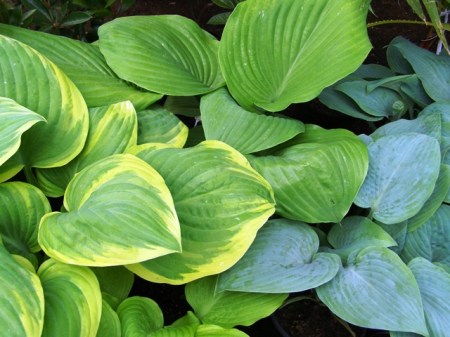
Planting out hostas now

Planting out hostas now

With our annual garden festival (now the Powerco Taranaki Garden Spectacular) over, it is back into the garden with a vengeance. The festival is incredibly important to us but standing on concrete all day every day for ten days on end, meeting and greeting visitors is far more tiring than a hard day in the garden. Unless we have a very wet spell, it is late for planting out woody trees and shrubs. Large plants will now be heeled into the vegetable garden because it has very well cultivated soil and offers easy planting and growing conditions, to be relocated next autumn. Any planting now requires wetting the root ball thoroughly. We plunge the plant, pot and all, into a bucket (or a drum for large plants) until the bubbles stop rising which means the root ball is saturated. This can take anything up to 30 minutes. Once a root ball has dried out, it is very hard to get it to take up water again without soaking.

We will continue planting out perennials, particularly hostas and bromeliads. Perennials in full growth can be divided now, as long as they are well watered and planted into well dug soil where they can get their roots out easily. We mulch with compost as a matter of routine, to enrich the soil and to keep moisture levels up in the soil before summer arrives. It also controls weeds, as long as you make a hot compost mix which kills any seeds in the composting process.
Top tasks:

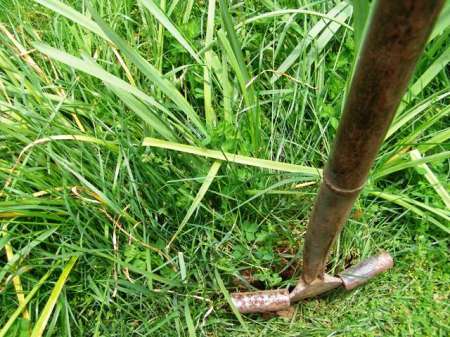
1) The daffodils in the lawn need to be lifted and separated. I will only replant the large bulbs. They have been there for many years and the flowering is now greatly reduced which means that either they need dividing or we have a problem with narcissi fly in them. If I leave it any longer, I won’t remember exactly where the bulbs are because the grass will cover them.
2) Narcissi fly are on the wing. They look like a small blowfly but with a yellow abdomen. Removing all foliage from narcissi bulbs will reduce problems as long as I cover the bulbs with dirt so the narcissi fly can’t lay its eggs in the hole left from the foliage. Mark also stalks the flies individually with a little sprayer of Decis, which is a synthetic pyrethroid.
3) Label overcrowded patches of spring bulbs which need lifting and dividing when they are dormant over summer.

In the Garden: November 4, 2011

The start of a new fortnightly series first published in the Weekend Gardener and reproduced here with their permission.

An easy method of killing unwanted moss

An easy method of killing unwanted moss

With our garden festival currently in full swing (now styled the Powerco Taranaki Garden Spectacular), all our efforts in the garden have been on presentation for the most important days of our garden visitor year. We call this garden grooming – a bit like giving your car a valet treatment. It doesn’t last long but it looks great in the meantime. When it comes to the lawns, we have made a deliberate decision to avoid chemical use where possible, both for weed control and fertilising. We use a mulcher mower, an edger and we hand dig flat weeds. As long as the rest is comprised of small, fine leafed green plants which mow well, we are willing to live with a mixed colony rather than just rye grass and fescue. At least our lawns are not toxic.

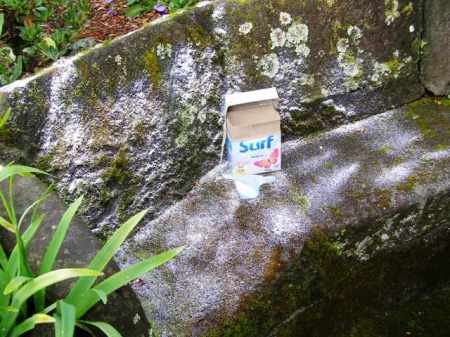
We don’t worry too much about moss in the lawns – it occurs most in shade where the grasses struggle. And if we were Japanese, we would revere the moss. But with our high rainfalls and humid conditions, we get a lot of moss growth on paths, brickwork and stonework. Often I will sprinkle soda ash (which is simply powdered washing soda crystals available from bulk bins) which kills the moss overnight. Indeed, cold water washing powders work equally well though I have found the leading brands are better than the budget brands – perhaps they have more water softener in them. Our chemist daughter reassures me that there should not be any problems of toxicity in using soda ash or washing powder to kill moss though if you get too carried away over time, you will be altering the pH of your soils because they are alkaline. I have experimented on grass and it kills moss without harming the grass. Do not do as someone I know – use so much that when it rained, his entire lawn foamed. The moss dies but does not disappear so you have to rake it out of lawns and brush it off hard surfaces.

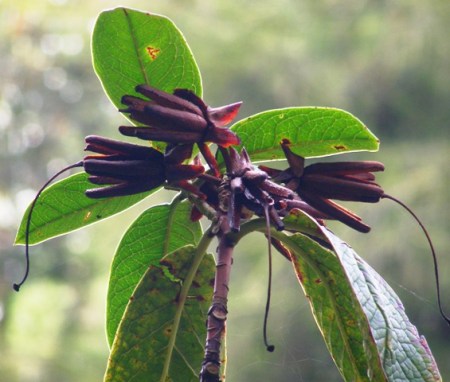
Rhododendron seed head, missed from last year

Rhododendron seed head, missed from last year

Top tasks:
1) Deadheading rhododendrons. While conventional wisdom is that all rhododendrons including vireyas need deadheading, in fact only those that set seed need it. Setting too much seed can weaken a plant and even cause it to die over time. The others just look better for having it done.
2) Mulching garden beds. There is no point in mulching dry soils so we like to get it on before summer. We mulch frequently with homemade hot compost mix which means we rarely need to fertilise garden borders.
3) Getting the planting out of this season’s trees and shrubs completed. November is getting late for this but we soak all root balls thoroughly and can generally rely on regular rainfall here in North Taranaki.

Tikorangi Diary: Thursday 16 September 2011

The original Iolanthe is a wondrous sight this week

The original Iolanthe is a wondrous sight this week


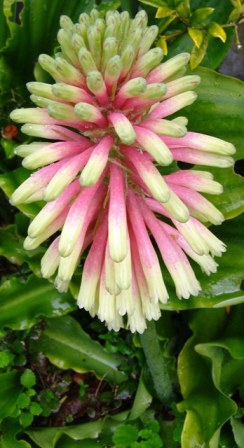
Veltheimia bracteata "Rosalba"

Veltheimia bracteata "Rosalba"

It is not easy to convey the full impact of the original Magnolia Iolanthe in flower. It is a wondrous event. Mind you, at about 50 years old, the canopy does measure around 10 metres across so there is rather a lot of Iolanthe to be wondrous. As somebody commented to us, what will Felix Jury be like in full flower when it achieves the same age and similar stature? Possibly even more astounding. We never tire of magnolia time here.

We advertise that we are open for plant sales on Fridays and Saturdays which means that we will definitely be here in attendance. In fact we are here most of the time and the garden is open every day (there is an honesty box if we are not around) but we just don’t guarantee our availability on other days. You can ring first to check if you want to come on other days. Details on what we have available are listed in Plant Sales. I have to comment though that despite every page on Plant Sales explaining that we do not courier or mail order plants, (sales are to personal customers only), every single day brings enquiries from people who have either failed to read that header comment or who hope that we will make an exception for them. If it was easy to pack and courier plants, we would still be doing it but it isn’t, so we don’t. End of story, I am afraid. We will however hold plants out the back while you arrange for somebody else to pick them up for you or until you can get here.

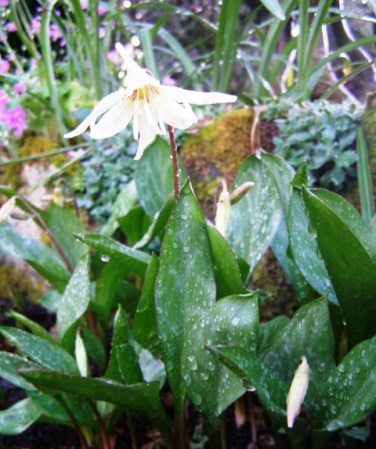
The dainty delight of the erythronium

The dainty delight of the erythronium

The highly sought after lemon and pink variant of veltheimia (bracteata Rosalba) is just coming into flower but we only have a few plants left so be in quickly if you want it. We have plenty of the more common pink (bracteata). And just as a complete contrast to the opulent magnolias, we have plants of one of the daintiest and most ephemeral seasonal delights – dogs tooth violets or erythroniums. Spring here is all about the big pictures and the tiny treasures. Why would anybody want an evergreen garden which looks the same all year round?

Ideas to Import

Simple ideas from English gardens. First printed in the Weekend Gardener, issue 321 August 25 to September 7 and reprinted here with their permission.

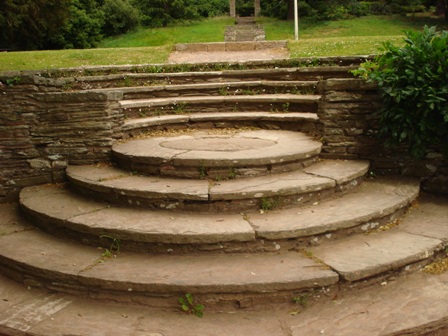
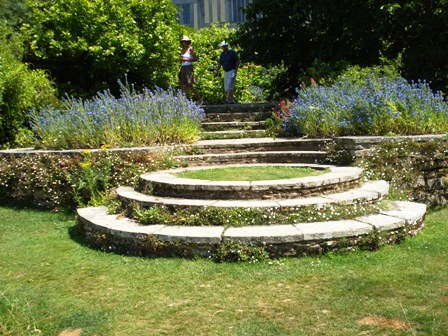
Lutyens steps at Hestercomb

Lutyens steps at Hestercomb

Lutyens steps at Great Dixter

Lutyens steps at Great Dixter

Nobody does statement garden steps quite like the great English architect Edwin Lutyens did. Outward facing semi circles lead you into the steps from both sides with the transition of a full circle in the centre. These examples are from Hestercomb and Great Dixter.

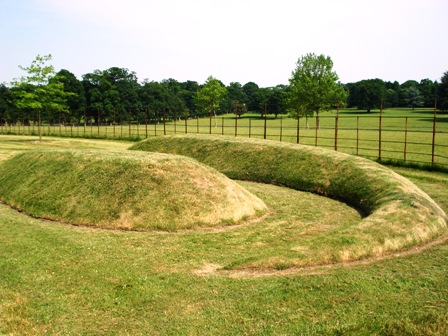
Discreet and informal seating for up to seven people in the outer reaches of the garden at Helmingham Hall. The tree trunk sections are set at the same height and backed by an informal brush barrier which frames the seating area. The view from the seating area is across a recent freeform earth feature towards the Tudor deer park.

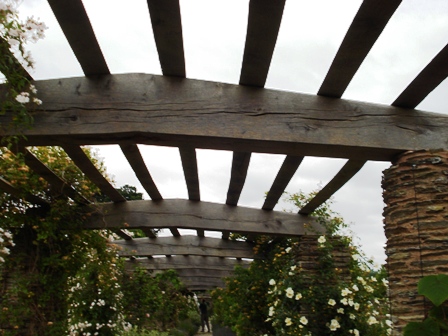
The simple device of subtly shaping the cross beams of this pergola at Hestercomb gives a lighter, more graceful effect as well as guiding the eye down the long view.

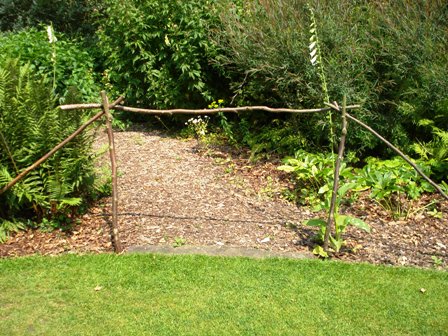
It is clear that this path is closed in Beth Chatto’s garden and the use of fresh saplings (probably hazel) forms a discreet visual barrier. Traditionally, English gardeners have used stakes and supports in their natural form, harvested from their own property, rather than the common use of imported bamboo, tantalised timber or metal stakes used in New Zealand.

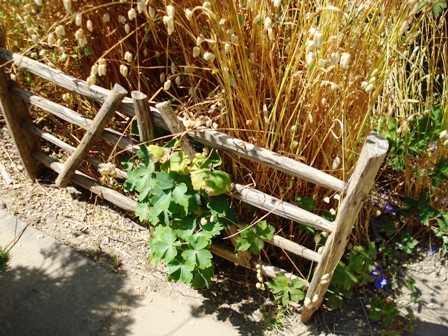
A rustic, low wooden fence built like a gate is an attractive, permanent means of holding back the floppy growth from falling over the narrow paths at Great Dixter.

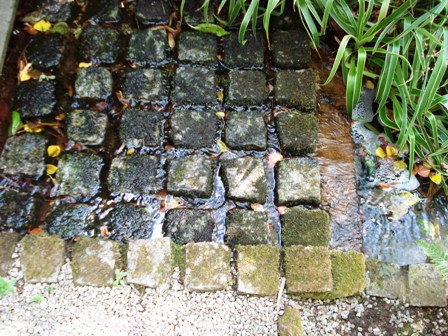
Using small, square cobbles makes the most of what is otherwise a rather insignificant small stream at Lamorran Garden in Cornwall.

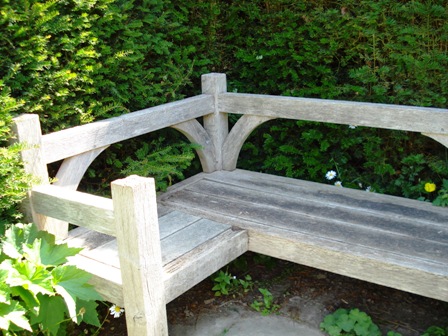
Adding a return to this seat at Great Dixter makes it a generous and attractive feature rather than just another wooden garden seat. It does not, however, increase the seating capacity.

Tikorangi Diary: Thursday August 25, 2011

If you are in New Zealand and have Sky, don’t miss Alan’s Garden Secrets on the Living Channel at 4.30pm on Sundays (rescreened at 8am on Monday). It is the inimitable Alan Titchmarsh, a doyen of British gardening. Last Sunday he was tracing the history of seventeenth century English gardening – Tudor England. Buxus hedging, knot gardens, parterres and all that. It was absolutely fascinating, at least the first half was. It fell away a bit in the last section. But it gave much food for thought and has stimulated quite a bit of conversation here since. I am wondering whether the Waikato readers will be ready for some thoughts on how we have taken buxus hedging and suburbanised it. The new look garden pages get launched at the start of September and I will be back into regular, weekly contributions.

We have a profound respect for Alan Titchmarsh who has a wealth of experience. Coming up this Sunday is his interpretation of eighteenth century gardening and we will be watching it avidly. But it should come with a warning. Titchmarsh’s style is very much of the people – he is an unpretentious Yorkshireman. Unfortunately, in this series, that translates into little DIY segments. The thyme knot garden was bad enough, but the trompe l’oeil installation plumbed hitherto unsuspected depths of naffdom. Mark and I looked at each other in utter disbelief and laughed. What else could we do? Goodness knows whose idea it was to intersperse an otherwise excellent programme with demonstrations which would be more fitting to our local Fringe Garden Festival. When the credits rolled at the end, we realised that these demonstrations were taking place in the Old Vicarage Garden in Norfolk, which we have visited. We are now wondering if they left Alan’s trompe l’oeil in place after filming….

It was this TV show which spawned three tweets. If you don’t follow Twitter, the format may confuse you (the essence of Twitter is brevity). If you do follow Twitter, I tweetie under the name of Tikorangi.

#Gardenornamentation 1: If you can’t afford the real thing, you are better off with nothing (repro classical best avoided).
#Gardenornamentation 2: Anything armless or white – best shunned I think.
#Gardenornamentation 3: Hot trend prediction: obelisks. You too can make your garden look like everybody else’s. Just need a focal obelisk.

On the gardening front, a week of fine weather is helping the magnolias but we are still nowhere near peak display yet. The snow and frost hit the early varieties badly but the mid season varieties are untouched. We are open as usual for plant sales on Fridays and Saturdays, though we are around most times on other days. The garden is now open for the season but wait another week or two if you want to see a spectacular magnolia display. However, the daffodils, Hippeastrum aulicum, reticulata camellias, Prunus campanulata (complete with masses of tui) and early azaleas are all looking lovely.