Category Archives: Seasonal garden guides

Weekly garden guide, In the garden this week, In the Taranaki garden

December 14, 2007 Weekly Garden Guide

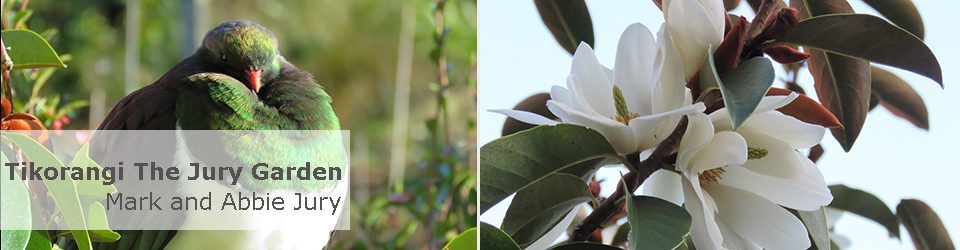
Ornithological update at the Jury Garden: the kereru bebe is now flying and no longer needs its protective ring fencing. The morepork family of five are still in residence despite the best efforts of the tuis. Mongrel Mob vs Black Power has little on this territorial battle. The Californian Quail have hatched out fourteen babies of very tiny stature which Mama Quail is leading around the garden. We have our ginger cat under house arrest to protect the quail family though the trick is keeping her confined without her realising she is a prisoner. The quail have added greatly to the stress in Mark’s life as Mama is inclined to leave the slowest behind and he tries to reunite the family. We had the first fatality of the slowest, weakest and coldest fledgling despite his best efforts.

  • In New Zealand, cabbage trees or cordylines get attacked by a native caterpillar. It is absent overseas which is why our cordylines can look so splendid over there. Running your hands up and squeezing the middle core of the leaves at this time can effect a reasonable kill rate on the offending caterpillar. The caterpillars hang out in between the leaves at the centre.
  • With the Elton John rains having hit last weekend and intermittent showers since, you can lay mulch on the garden though we recommend getting the hose out for another soak before you do it. We may be in for a dry summer so get onto mulching immediately.
  • The first crop of monarch caterpillars is steadily munching through the swan plants. There will be a second wave and it is these later ones which are likely to winter over in your garden. A bit of planning ahead can ensure that you have feed for the second coming. Start seed now and keep it protected from eggs while the plants get established.
  • If you want decent sized leeks this winter, do not delay on getting seedlings planted. You will still get a crop from seed but they are likely to be smaller. It is also time to plant celery and brussel sprouts. Continue to sow corn, peas and salad vegetables all of which will mature before winter. Don’t delay on getting plants of capsicums, pumpkins, tomatoes and the like into the garden.

  • Now that citrus has generally finished flowering, a spray of copper and summer oil is important to stop all sorts of nasties.

December 7, 2007 Weekly Garden Guide

While we are hardly in the drought territory of Australia, the current dry season is certainly having an impact. Suspend planting ornamentals and trees until the rains return. Don’t lay mulch on dry gardens (the mulch will keep the gardens dry) but with the possibility of a dry summer continuing, be prepared with the mulch to lay after the next decent rain. Water container plants daily. If you spread fertiliser, water it in. At least the dry is keeping mildew problems at bay and the roses are loving the conditions with fewer fungal problems.

  • Conditions are ideal for weeding generally and for push hoeing in particular. While you need to gather up weeds which have formed seed heads (even when pulled out, some will continue to ripen their seeds in the sun) you can just leave other weeds sitting on the surface and the sun will shrivel them to a cinder in a short space of time.
  • Pruning is also a pleasant occupation in the dry weather and now is still the time to prune most plants except flowering cherries.
  • Any planting in the dry vegetable garden involves thorough cultivation of the ground. Compacted soil dries out faster. By aerating the soil and tilling it, you increase its water holding capacity. As you prepare for planting, dig a trench, cultivate it well, fill the trench with water and compost and then cover it all lightly with soil. Leave the top dry so that it acts as a barrier to water loss. Done this way, you should not need to water again on a regular basis unless we get very dry in mid summer. Don’t delay on getting pumpkins in.
  • Wisterias are making a bid for world domination. You can resort to hedge clippers for their summer prune if you wish because you don’t need to be too precise. If you are more particular, take off all their wild waving new growths and prune back to about four leaf buds from the main stems. Keep an eye open for borer holes. Oil (even cooking oil or CRC) or fly spray down the hole will work.
  • Deal to convolvulus and wandering jew now. If you are not organic, Woody Weedkiller or Banvine is an effective option for the former and Shortcut, Amitrol or Grazon for the latter.

November 30, 2007 Weekly Garden Guide

  • We are getting very dry so make sure container plants get a dose of water daily. Few plants like a flood or drought regime (that is where you suddenly notice that the plants are wilting so you give them a really good soak and then ignore them until it happens again). Woody plants are likely to develop root problems. If the water pours out the bottom as fast as you pour it on top, you can be sure that it is flowing straight through and not being absorbed by the roots or the potting mix. In this case, water a little often, soak the whole container if you can or apply some surfactant or a little detergent to encourage penetration by the water. Scratch around the surface to see how far the water is penetrating.
  • Wetting the surface of garden beds is not going to do anything except keep down the dust. Gardens need a good slow soak but if your style of gardening depends on watering, maybe now is the time to review what you are growing and how you are managing it. It is not good gardening practice to have to water all the time and not at all PC in an era when water is becoming a scarce resource. At the very least, make plans to pile on a mulch after the next good rains when the soil is damp.
  • Keep turning your compost heap and make sure it does not dry out. It is probably acceptable to water compost and you do not want it developing fire fang.
  • Do not cut lawns too short (scalping them) as it causes them to dry out faster and to burn.
  • Keep sowing dwarf beans at two week intervals, assuming you like fresh beans.
  • With the rise in temperature, summer weeds such as portulaca are starting to germinate. Push hoe often to try and get rid of these weeds before they get established.
  • If you have not sprayed the onehunga weed in lawns, you are leaving it late so get on to it straight away. This is the nasty, prickly summer weed which can make it impossible to walk barefooted on lawns and is the bane of all children.
  • Keep copper sprays on potatoes and tomatoes and keep up with pinching out laterals on tomatoes (the leafy side shoots) to encourage good cropping.
  • Spring flowering perennials can be cut back and divided but you will need to keep them watered until they perk up again.

November 23, 2007 Weekly Garden Guide

  • Prune back the laterals (leafy growths) on grape vines to encourage fruit set. Trim to two leaves beyond the forming bunch. If you are troubled by mealie bugs, now is the time to spray them just as they are getting started. Ask advice at your garden centre for on suitable sprays options. We use Orthene but you can’t, unless you have a licence. In principle any spraying oil should work, perhaps with another insecticide added, provided you get good coverage. One timely spray now can virtually eliminate mealie bugs for the season.
  • With most apple trees having finished flowering, you can do battle with codling moth. Again consult your garden centre as to the current options, or good old Carbaryl has a good hit rate if you still have it. Tipping new growths by hand will largely deal to the leaf curling midge which attacks the very ends. Unroll the leaves and you may find a small pink creature inside. You either nip them off or spray them. You can use pheromone traps for codling moth if you don’t wish to spray with pesticide.
  • Keep the water up to container plants. If you are not very consistent, then at least move the containers into semi shaded spots or relocate them near taps. Container plants are by definition feature plants and if they get stressed and sad, it is a really bad look.
  • Wasps are getting started. Mark deals to wasp nests with a spoon tied to the end of a long bamboo stick (he is nervous about getting too close). Carbaryl not only deals to codling moth but will do wasp nests too if you drop it just inside the entrance. Wasp nests can be recognised by the sight of several wasps entering and departing from a hole. Wasps are yellow. Bees are brown. It is better to deal to wasp nests as they are just getting started.
  • Spring and early summer are the optimum times for feeding just about everything because plants are in full growth. Leave expensive, plastic coated synthetic fertiliser bubbles for container plants (which is what they were designed for) and use cheaper options such as Bioboost, good ol’ blood and bone, nitrophoska blue or high quality compost.
  • The leafy tips of broad beans should be on the menu, if they have not been eaten already.
  • Keep successional plantings of fennel, corn, peas, beans and most other vegetables though you are getting late for planting seeds of heat loving vegetables (capsicums, aubergine etc). You are better to use small plants of these.

November 16, 2007 Weekly Garden Guide

The useful rains this week mean that you can divide perennials now if you wish. Most are in full growth so will repair the stress of your splitting them up.

  • If you have a plant with a very dry rootball, watering it in after planting will not do the trick and it is more likely that the centre of the rootball will remain dry and the roots will start to die. There is no substitute for soaking the plant thoroughly in a bucket or trough before introducing it to its new home.
  • Water holding crystals which turn to jelly are fine for container plants of annuals but do not be tempted to use them with woody plants, bulbs or perennials because they will make the plant too wet in winter. If you have very dry container plants, you can sprinkle the surface with surfactant to help the plant absorb water. Surfactants are cheap to buy but even a little dishwashing detergent will suffice.
  • Deadheading annuals and perennials does extend the flowering season considerably, if you can be bothered. Roses also benefit from deadheading, as do rhododendrons.
  • Keep sowing corn, scarlet runner beans, lettuces, green beans and all the summer and early autumn veg. It really and truly is your last chance to start melons from seed but it is the optimum time for planting kumaras.
  • If you are really keen, you can start your brussel sprouts for winter though we are not the best climate for brussels which prefer colder conditions and frosty conditions. Inland gardeners may be better placed to impress their coastal cousins with their brussel sprouts.
  • Keep a copper spray on potatoes (remember the Irish potato famines…) and on tomatoes. This is best done every couple of weeks after rain if you want to maximise your harvest though you can get away with less. If leaf miners and caterpillars are attacking your brassicas (the discovery of cooked caterpillars in your broccoli is most off putting, even if your mother insists that it is merely added protein) you may need to resort to an insecticide spray. Ask at your local garden centre for the current recommended option.