Category Archives: Seasonal garden guides

Weekly garden guide, In the garden this week, In the Taranaki garden

Garden Diary – the first entry May 28, 2010

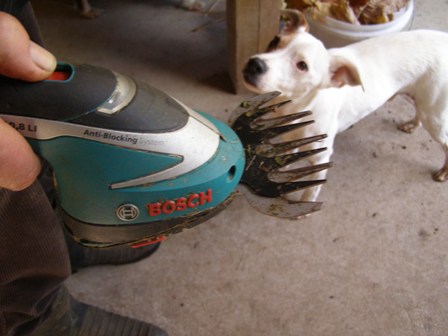
Mark covets the neighbour's wife's toy - her Bosch trimmer

Mark covets the neighbour's wife's toy - her Bosch trimmer

Ha! I knew I loved writing, but I didn’t realise quite how much until I stopped the weekly routine. So herewith the first of a new series. Instead of casting around each week to dispense advice on what readers should be doing in their garden, I thought instead I would record what we have actually done.

Mark has been playing with a new toy which belongs to Lloyd’s wife (Lloyd being our neighbour, friend and one remaining staff member). I don’t think his wife knows they are over here but despite initial scepticism, these battery powered clippers by Bosch have proven to be so useful that I can see Mark needs a set for his birthday. He has spent hours cutting back the long grass from the bulbs he has naturalised in the park (dwarf cyclamen, dwarf narcissi, snowdrops – galanthus – lachenalias and more). The clippers are much faster to use than snips and have saved a major flare-up of his RSI. He is besotted with them and loves to demonstrate how easily they cut back spent perennials and seed heads as well. To me, they resemble hairdresser’s clippers. Not that I have anything against hairdressers.
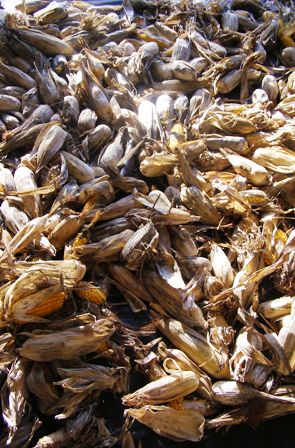
Drying the maize crop for the pigeons

Drying the maize crop for the pigeons

In the edible garden, which is entirely Mark’s domain here, he has been continuing his nightly rat and mouse bait round to combat the growing population. He gathered the maize which he grows to feed his pigeons (I call him the Jack Duckworth of Tikorangi) and has it spread out to dry. He continues to eat fresh sweet corn every day for lunch. The walnut harvest is being dried, the last of the tree-ripened apples were gathered this week but there is a major failure in the vegetable garden. He did not follow the advice we dispensed weekly a couple of months ago and there is a dearth of green vegetables. I have had to buy some – the first vegetables we have bought for close to a year.

Lloyd has spent much of the week weed-eating areas which we can not mow. If he times this autumn round well, grass growth slows so much that it does not need to be done again until we open the garden at magnolia time. An amazingly mild autumn may upset this routine. Grass growth continues unabated.

Our most reliable Friend of the Garden, Colin, has been up for the week. He likes to escape his retirement village (widely known in this country as a Home for the Bewildered) and spend an intensive four days in the garden at least once every six weeks. As a retired horticulturist, he is one of the few people we trust with areas full of treasures so he has done a major clean up of Mark’s cold border in the park – just in time as the trilliums are pushing through.

I am continuing my major revamp of the Avenue Gardens – this week a badly overgrown area of choking and choked perennials which has involved some pretty heavy digging. I have taken out the lot, divided them and discarded large quantities which are surplus to requirements before replanting in freshly dug ground. I have also been dividing and potting Soloman Seal (polygonatum multiflorum) to sell during our annual garden festival at the end of October and digging and dividing some large clumps of a particularly good variegated form of Crinum moorei. We know only too well that one of the drawcards here is our ability to offer plants for sale that can’t be found elsewhere.

For any local readers who noticed the article that replaced me in the Taranaki Daily News on Friday:
1) The unnamed vireya photographed was Golden Charm (one of ours, bred by Felix Jury).
2) The advice given to cut your luculia back to half a metre high after flowering only applies to Luculia gratissima (Early Dawn is the common sugar pink one in flower now). If you do that to Luculia pinceana types (Fragrant Cloud is the spectacular, heavily scented almond pink one most commonly available), you will kill them. We prefer to let Early Dawn grow. It forms a graceful under-storey large shrub.
In the Garden this Week: May 20, 2011

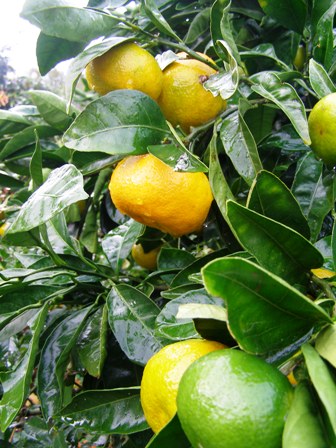
Arguably the most critical copper spray of the year on citrus now

Arguably the most critical copper spray of the year on citrus now

• Get a copper spray on to citrus trees as soon as dry weather returns. This is a particularly important spray to stop fruit rotting on the trees before it even ripens and to stop leaf drop. Mandarins are particularly susceptible.

• Sow broad beans and you can continue planting the reliable brassicas (except Brussels sprouts – it is far too late for them. Your Brussels should already be half a metre high by now if you are to get a crop in late winter).

• We are dubious of the practice of fertilising and routinely spraying your lawns because it is just all round bad environmental practice but if you insist on continuing to use hormone sprays, getting them on now rather than waiting for spring may contain some of the damage to neighbouring plants. Plants coming into fresh leaf in spring are extremely susceptible to the faintest hint of spray drift. Hormone sprays are used to take out undesirable lawn weeds. Hand weeding is kinder to the environment if you don’t want a bio-diverse lawn.

• Get the last of your autumn harvest in before you lose the lot. Any potatoes still in the ground will be getting eaten. We have finished the tomatoes here but the capsicums and peppers will hold longer in the shed whereas they rot in the garden. Gather nuts and dry them rather than leaving them to feed the local rodents.

• Polyanthus can be lifted and thinned. Replant the strong crowns to get a better display shortly.

• Keep an eye on leaf litter landing in fish ponds and water features. If you let it rot down in the water, it increases the nutrient levels leading to later problems with algae growth and it can even kill the fish by reducing oxygen levels. A kitchen sieve or butterfly net is a useful scoop for this task.

• Lily bulbs are now in stock at garden centres. These are best bought fresh so if you want to grow these wonderful summer bulbs, get in early. Pot them if you are not ready to put them straight into the garden because they don’t store well.

In the Garden this week: Friday 13 May, 2011

* The Chief Weed Controller here (aka Mark) advises that the weeds are germinating in abundance and to make a weeding round a priority. If you get on top of this wave of weeds, you should have a largely weed-free winter and delayed start to spring infestations, especially if you lay a mulch after dealing to the blighters. We are a bit too wet now and there is not enough heat in the sun to make push hoeing effective unless you rake it all up immediately and remove it. Hand weeding or glyphosate (weed spraying, on a dry day) are the usual techniques for this time of year.

* If you are a less than enthusiastic gardener, get out to do the big autumn clean up before the weather turns cold and miserable. Otherwise you will spend the winter looking out the windows at a messy garden. If you do a trim, tidy and weed now, you can get through the next few months with the occasional mow and raking up the debris.

* Rake up autumn leaves in discreet piles so they can break down to give you rich leaf mould to rake back out onto the garden later. They will rot down more quickly in a heap.

* Cover your compost heap or bin, if you have not yet done so. It keeps the compost warmer and stops the goodness being leached out by the winter rains.

* Gardeners in inland areas should be battening down the hatches in preparation for early frosts. Take cuttings of frost prone plants like fuchsias, begonias and vireya rhododendrons as an insurance. Coastal gardeners probably don’t need to worry about this in our milder conditions.

* Remove saucers from beneath container plants, both indoors and out. It is not good for plants to sit around in cold water during winter. Cut back your watering of indoor plants – they are better kept on the dry side now.

* Part of your tidy up round of the vegetable garden is to sow all vacant areas in a green crop – urgently. Lupins, oats, even plain ryegrass will help. Green crops condition and nourish the soil in preparation for spring planting but even more helpfully, their roots stop the ground from compacting and make it much easier to dig over later, particularly in heavy soils.

In the garden this week: May 6, 2011

• Get green crops sown urgently in bare areas of the vegetable garden. You are running out of time for the seeds to germinate and start growing before winter slows all growth.

• Finish the autumn feeding round as a priority. There is no point in feeding plants which have stopped growing for winter but we still have a little warmth left before the full blast of winter returns to stay.

• Make the final cuts to the root balls of large plants you plan to move soon. You should have cut the first two sides some weeks ago. Cut the other two sides and beneath the plant and leave it to rest for another week or two before moving it. You can move quite substantial plants as long as you have enough combined physical strength (or mechanical equipment) to take a very large root mass with it. Prepare the new location in advance so when you come to do the move, the plant is not left with its roots exposed to drying winds or light for long.

• It is the very last chance to sow seed of quick maturing green vegetables such as mizuna and other Asian greens, spinach and winter lettuce if you are to ensure continued supply through the colder times.

• As winter looms, sowing microgreens in seed trays can be a quick and nutritious harvest, especially if you have a glasshouse, conservatory or large eaves to protect the germinating seeds and to lift the temperature. Pretty well any and every vegetable can be eaten as a microgreen which is when the first half dozen young and tender leaves appear. BBC Gardeners’ World was recommending it as a great way to use up leftover seeds remaining in open packets from last year which seemed sensible.

• The grass seed should be calling you if you still have bare areas to sow. You will get better results if you do it immediately rather than in the depths of winter.

• The very large stinky plant shown on our newspaper’s garden pages last week was in fact the Titan Arum by common name (or Amorphophallus titanum, to be more botanically correct). It has one of the largest flowers in the world and smells so revolting because it relies on tricking beetles and flies that usually feed on rotting meat in order to be pollinated.

In the garden this week: Friday April 29, 2011

Prunus serrula would have been better kept to a single leader when it was a young plant

Prunus serrula would have been better kept to a single leader when it was a young plant

• Get any spring bulbs planted without delay. They need to be growing now to give you the anticipated display later.

• Rhubarb is a clumping perennial and benefits from being lifted and divided. It is a gross feeder and likes really well cultivated soil. So double dig the area (dig, then dig again) and add plenty of compost before replanting big divisions.

• Broad beans can be planted now for harvest in spring. Picked when young and tender, they are truly tasty. If they get away on you and go old and tough, dry them. They are also known as fava beans and are delicious when soaked, skinned and used in bean dishes or added to falafel.

• A reminder to get your strawberry runners planted without delay so they can get established and build enough strength to start cropping on cue in spring.

• It is only tradition that says garlic should be planted on the shortest day of the year. We have had good success planting considerably earlier, in May. The plants are stronger and better able to withstand the very wet early spring weather we can get here when temperatures are still cold. If you are going to plant your garlic early (and long keeping brown onions can be done at the same time), prepare the ground now. Dig it over well, adding plenty of compost and maybe some animal manure. Then leave it to sit for a few weeks before planting. These crops need excellent drainage, but they do better when the soil has settled a little rather than being freshly fluffed up.

• It is good pruning and shaping time on woody trees and shrubs (though best done when the overhead branches are not showering you in water). A good pruning job is when it is not clear by looking at the plant where you have been, despite the mountain of branches on the path beside you. Rather than hacking the entire bush, being selective about which branches you remove or shorten and cutting flush to the main stems makes a big difference. However, there are times when drastic action is required – such as the shabby camellia in Outdoor Classroom this week.

• Most trees are best kept to a single leader – one trunk. Where a trunk is forked near the base, it is a structural weakness in the tree which can lead to it eventually splitting apart. The earlier this is done to a tree, the easier it is to train what remains to a good shape.