Or Merry Christmas from New Zealand. Although, as one who favours ‘seasons greetings’ for those of us who are not affiliated to any church, maybe it is time I worked on committing “ngā mihi o te wā” to memory.
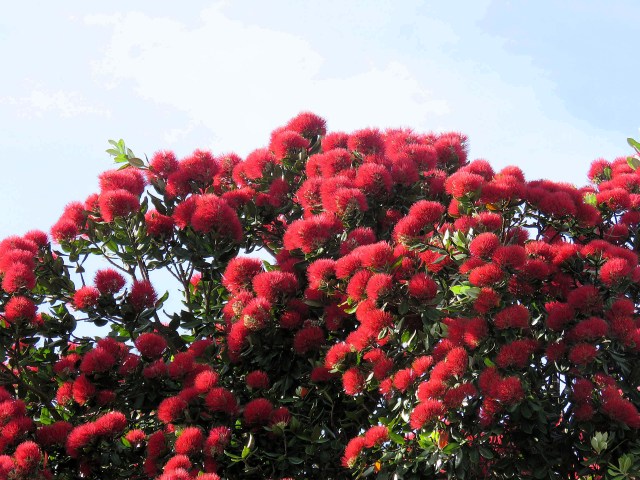
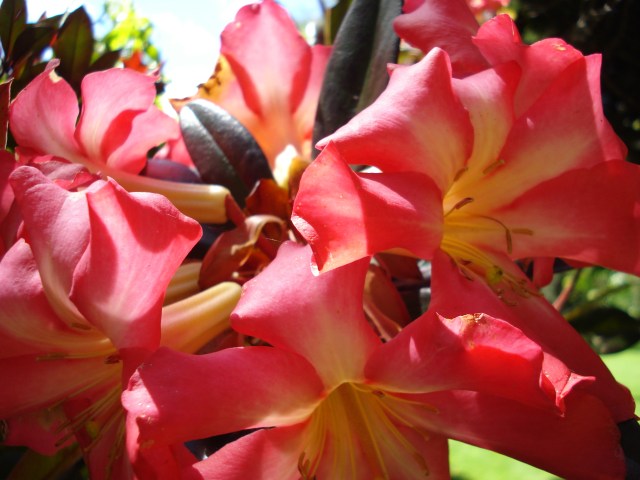
The flowers are what is often referred to as the New Zealand Christmas tree (on account of it blooming around Christmas), known here as the pōhutukawa (botanically Metrosideros excelsa).
Given its natural distribution is roughly a west-east line from where we are in North Taranaki across to Gisborne, I sometimes wonder how people in more southerly climes feel about it being the designated national Christmas tree. It is a remarkable tree with its capacity to grow in perilous positions on windswept coastlines. Being an archipelago of fairly small islands set midst vast oceans, we have pretty wild coastal areas. Our nearest small town of Waitara is right on the coast and there are two trees that dominate that urban setting, two trees that will not just survive, but thrive in that exposed situation. One is the pōhutukawa, the other is the Norfolk Island pine (Araucaria heterophylla).
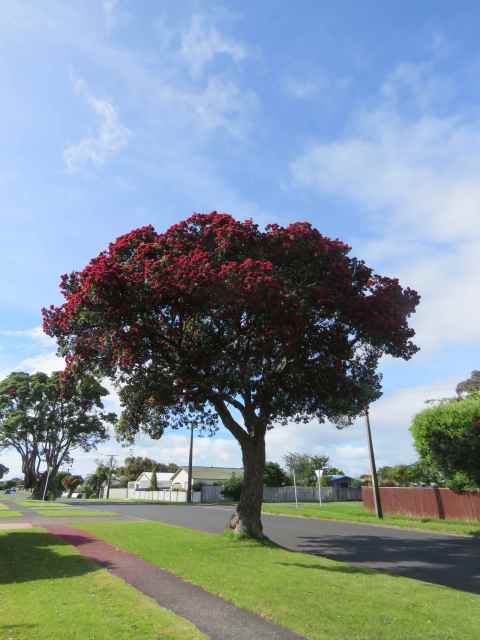
I set out to find a good specimen of the pōhutukawa in Waitara to photograph. I don’t want to burst sentimental bubbles, but this is a variable species. Not all pōhutukawa are equal when it comes to blooming. They all seem to grow well enough but quite a few flower more brown than red, some have but a sparse display of blooms and some don’t seem to flower at all. Also, maybe I had better whisper that its season in bloom is but short. I had to pass a lot of trees on the waterfront and on streets to find this one that stood out for its floral display.
In its urban context in the town of Waitara. A street planted with pōhutukawa, one of many such streets, where this specimen stood out as blooming particularly well.
I am sure I have noted before that many, if not most, pōhutukawa that are sold are seedlings. They will be variable and looking at the make up of the ones in this area, the majority will vary to the less showy side. If you are going to plant a single specimen, buy a named form because it should have been selected for its good flowering and propagated from cutting so will stay true. If you are going to plant many, find a good seed source because the percentage of better forms in the seedlings will be higher.
Go well. Stay safe. And may 2026 bring at least some of what you hope for.
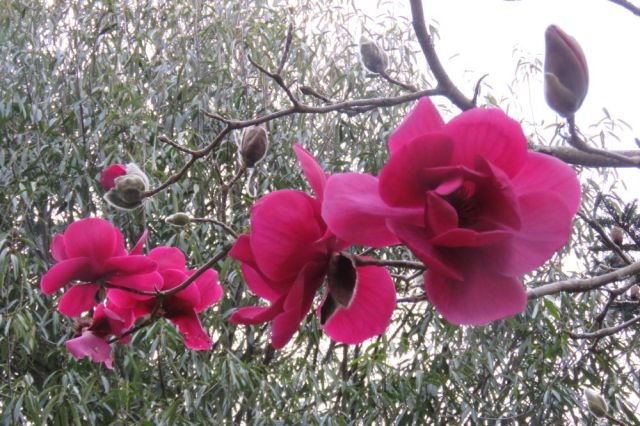
It is a well-known fact that King Charles 111 is a very keen gardener and has been for a long time. We received confirmation this week that Mark’s Magnolia ‘Felix Jury’ was included in a collection of 25 carefully selected plants presented to him to mark his coronation.
The gift was from the Royal Horticultural Society (RHS), specifically from the Rhododendron, Camellia and Magnolia Group of which he has been the royal patron since 2018. Reportedly, he was delighted to receive the plants this week and they are destined for his Sandringham estate which is undergoing a major rejuvenation under his personal direction.
There are only three magnolias included in this collection and all are from Aotearoa New Zealand, which is a sign of this country’s standing in the heady world of international magnolias. Most of the collection is focused on rhododendrons with just three camellias included, one of which is also a NZ hybrid. ‘Festival of Lights’ was bred by the late Neville Haydon of Camellia Haven fame.
Magnolia ‘Genie’ bred by Vance Hooper
The other two magnolias are ‘Genie’ which is the best-known cultivar of breeder, Vance Hooper and the late Os Blumhardt of Whangarei’s ‘Starwars’.
‘Starwars’ dates back to the 1960s when Felix was also raising the first generation of Jury magnolia hybrids. We knew Os Blumhardt fairly well. He used to stay with us when he came to Taranaki and he was most encouraging to Mark in his early days of plant breeding and extraordinarily generous with his own material. We still have some very fine vireyas and camellias of his in our garden and his early, limited work with michelias (‘Mixed Up Miss’ and ‘Bubbles’ are his best known) laid the groundwork for Mark’s Fairy Magnolia series many years later. But we were less enamoured by his Magnolia ‘Starwars’ – until we made a magnolia trip to the UK, Italy and Switzerland back in the early 2000s.
Magnolia ‘Starwars’ bred by Os Blumhardt
At home, we have ‘Starwars’ planted on the roadside on our lower boundary in a row of other magnolias. It is pretty enough and puts on a good show but the flowers are a bit floppy and, to be brutal, it looks a bit dated compared to many of the magnolias we grow now. It was a different story in the UK and Europe. That was before any of Mark’s hybrids were available in that part of the world and we were tracking how his father’s varieties were performing. There is a huge difference in climate, growing conditions and light between here and over there and there is no guarantee that plants will look the same. We were a bit disappointed, particularly in ‘Iolanthe’ in those conditions.
‘Starwars’, on the other hand, was an absolute stand-out and it was being grown widely. Many of the international group we were travelling with assumed it was a Jury plant because it came from NZ. After we had seen several looking brilliant, Mark was moved to reply, “No, it isn’t one of ours but I wish it was.” I think it has earned its place in the Royal Collection as a proven performer.
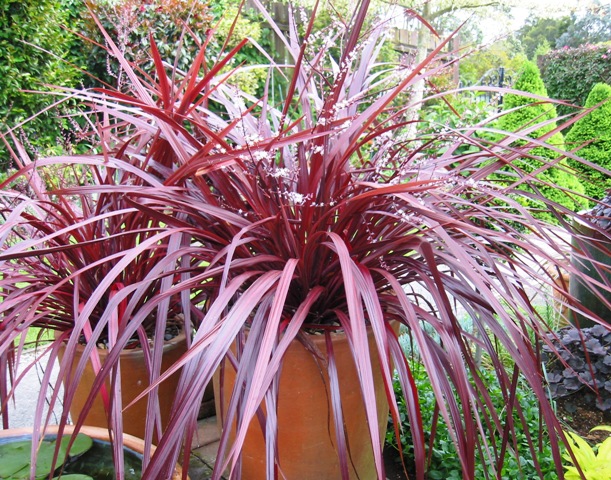
Cordyline Red Fountain
This is not the first of our plants to grace the royal estates. The first we know of was when our Cordyline ‘Red Fountain’ was presented to the then Prince Charles in a ceremony at Auckland Regional Botanic Gardens – but not by us. While I have no doubt that the plant was a very fine specimen, we rather doubted that it had all the phytosanitary clearance and paperwork needed for plants to cross international borders. Mark quipped at the time that maybe we should alert Border Control that the royal entourage was carrying plant material. We have no way of knowing whether Royals are subject to the same regulations as travellers of lesser status or whether it even left the country. I hope it might be in his garden at Highgrove.
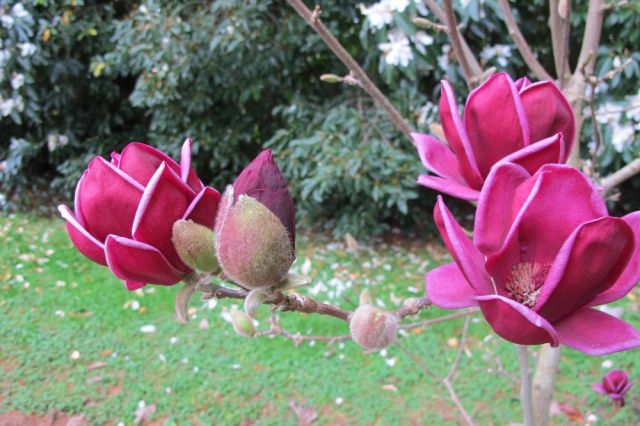
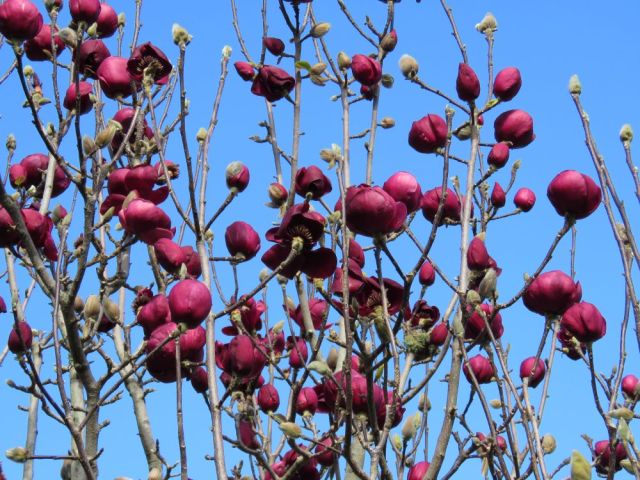
Next, there was a presentation of Mark’s Magnolia ‘Black Tulip’ to the late Queen in 2010. We don’t know which royal garden that plant ended up in – maybe Windsor?
Then there was the ceremonial planting of another specimen of Magnolia ‘Black Tulip’ by the Burmese leader Aung San Suu Kyi with the then Prince of Wales and the Duchess of Cornwall at their London residence of Clarence House in 2012.
That felt like a significant moment in history and to our great amusement, it is immortalised in a You Tube clip. That video shows it in a prime spot close to the residence. From memory, the magnolia they move over to look at was one planted by the Dalai Lama but I can’t remember what that variety was now – one of the species, maybe.
Magnolia Black Tulip
At the time, I wrote here: “We are honoured by this international recognition, though Mark would have preferred them to have planted his Magnolia Felix instead. It appears to be performing very well in the UK and the Royals’ gardens are large enough to take large flowered magnolias.”
We are very pleased that it will be ‘Felix Jury’ that will grace the Sandringham estate.
“The Rhododendron, Camellia and Magnolia Coronation Collection is a collection of
plants and trees gifted to His Majesty, to mark his Coronation. As our Royal Patron
it represents our appreciation of how much his support and interest in our genera is
valued by our members from around the world.
It tells the story of the Rhododendron, Camellia and Magnolia Group’s one hundred
and seven-year history. The twenty-five plants and trees provide a historical and
horticultural link between the genera and the Royal Family and represents the
legacy of great gardens, the passion of private breeders and having good plants
in the garden. The specially chosen plants form a tapestry of our beautiful genera
internationally.
The best of the past and of the future, old and new. We hope that His Majesty enjoys
these plants and that they give him great satisfaction in the years ahead.”
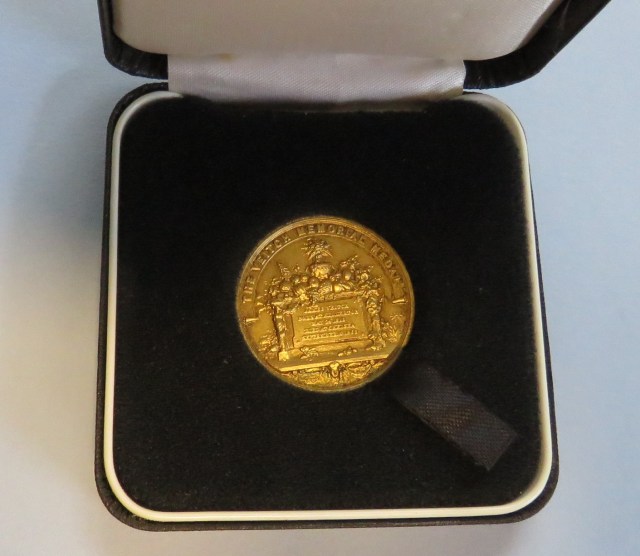
In different times, we would have been in London now for Mark to attend a special presentation. He has been awarded the RHS Veitch Memorial Medal although I don’t expect many people in this part of the world to understand just how big that honour is.
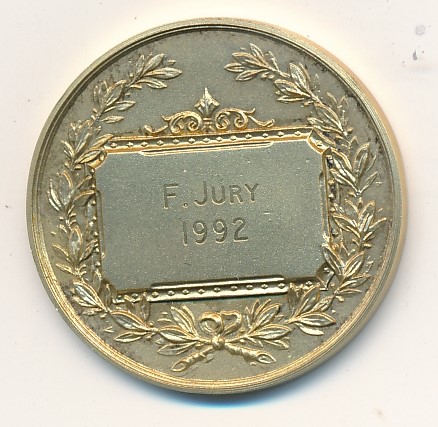
Felix’s medal. Mark’s may take a while to arrive from the UK. International mail is much slower than it used to be.
The Veitch is the highest honour Britain’s prestigious Royal Horticultural Society award to people who are not citizens of that country. It is also the highest international honour we know of in our field – a literal medal that is gold in colour but I rather doubt that it is made of gold. I draw a comparison to the medals earned by sportspeople when they win a world championship. For us, the honour is in that league.
Mark Jury
We have known for about two months that Mark is one of this year’s recipients but were asked to keep it quiet until after the presentation ceremony in London yesterday. They usually award about four Veitch medals a year, covering the globe. For us, it is doubly special because Mark’s father, Felix, was awarded it in 1992 and this is one of the very (very) few times, that two generations from one family have received it. I still remember Felix’s quiet pride to be honoured internationally for his work in plant breeding.
I trawled the list of recipients down the years and oh my, but the company is very elevated internationally. As far as I could see, Mark is the thirteenth New Zealander to have been honoured since its inception in 1870, of whom only three others are still alive (Alan Jellyman, Keith Hammett and Bev McConnell).
For Mark, it is even more of an honour to have been nominated by international colleagues. Last year alone, over 425 000 of his cultivars grown under licence were sold internationally. This does not include production and sales of plants he has bred but we did not retain ownership rights over.
Our thanks go to Anthony Tesselaar Plants, our Australian-based agents, who have had the role of managing Mark’s cultivars on the international market over many years and who have always acted in his best interests.
In the manner of magazine writers these days, I interviewed Mark with quickfire questions on his plants. Well, to put it more accurately, as we sat having an afternoon cup of tea, I double-checked my preconceptions.
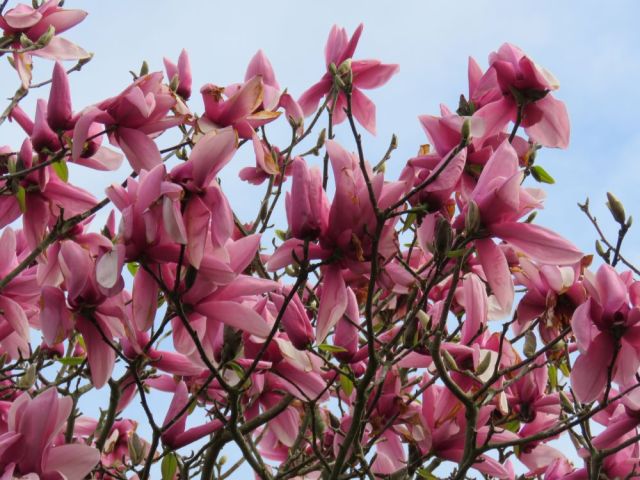
Magnolia ‘Felix Jury’
Favourite magnolia you have bred: Magnolia ‘Felix Jury’. (Named for his father because it was what Felix was trying to get to in his earlier generation of breeding).
Rhododendron ‘Floral Sun’
Favourite rhododendron: ‘Floral Sun’. (To quote Mark from an earlier time when he was unusually extravagant in his assessment or maybe had been drinking wine, “If I never breed anything as lovely as that again, I will die happy.”
Vireya rhododendron ‘Pink Jazz’
Favourite vireya rhododendron: ‘Pink Jazz’ (which is why it is named for our first-born child in an oblique sort of way).
Camellia ‘Fairy Blush’
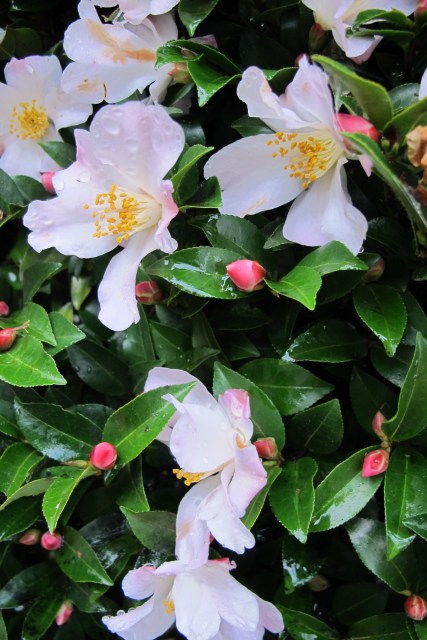
Favourite camellia: ‘Fairy Blush’ (known here as the one that got away from us in terms of retaining ownership rights. It was the very first plant of his own breeding that Mark named and released on the open market).
Fairy Magnolia Blush
Favourite michelia: “RFA,” he replied. “Room for improvement”. The michelias are on ongoing project at this stage, but of those already released, he named ‘Fairy Magnolia Blush’ because it is the first to bring colour into the range.
Daphne ‘Perfume Princess’
Biggest surprise: Daphne ‘Perfume Princess’.
It is not so much a red letter day here as a gold medal day and that does not happen often.
The summer gardens are our newest area and starting to mature well
This is it, folks. The die has been cast, the decision made. This is our last festival. I am referring to the Centuria Taranaki Garden Festival that starts in under three weeks – on Friday 28 October. This is likely to be your last chance to visit our garden.
Much and all as we love meeting you and seeing you enjoy our garden, we would rather go out on a high note than fade away. The garden is looking its very best – or it will be in another couple of weeks. This festival looks as though it will be a cracker event and that seems a good time for us to say farewell before we close the gates to visitors.
If you are one of the people who say, “I have been meaning to come for ages,” this is your last opportunity. We won’t stop gardening or sell up but we will be closed to the public from November 7 and we won’t be opening next year.
La Mer
We are particularly keen that our music in the garden event on Sunday 30 October be a success. We can’t control the weather (and the music from La Mer is weather dependent) but we have everything else in hand. La Mer is a four-piece group playing a mix of gypsy swing and French chanson which blends delightfully with a garden setting.
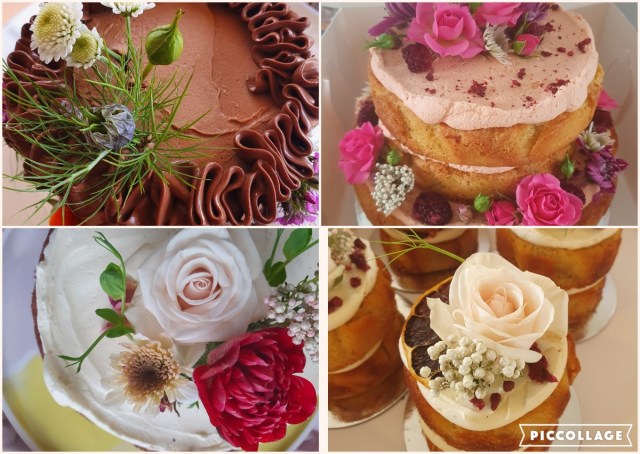
Delights from the Garden Cake Kitchen, available by the slice on the day
Not only is Rose from the Garden Cake Kitchen selling her dreamy cakes by the slice, but there is more.
Humble Grazing’s platters need to be pre-ordered
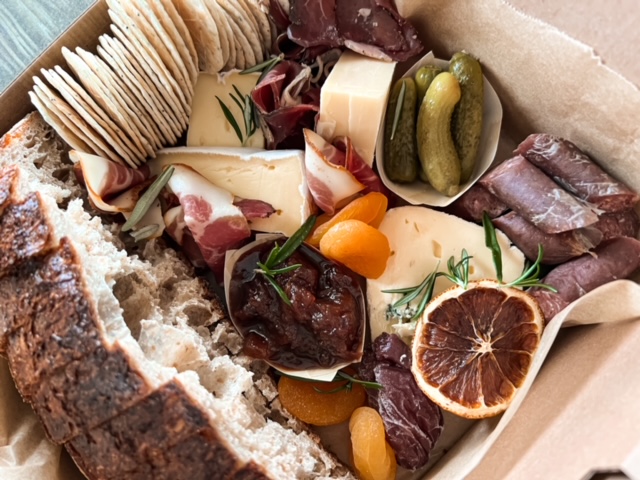
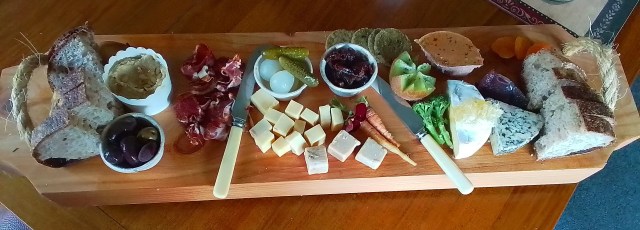
Look! I have been lucky enough to try Humble Grazing’s platters before. This is most of one taken out of the box and plattered for our consumption. And consume it we did, with great gusto.
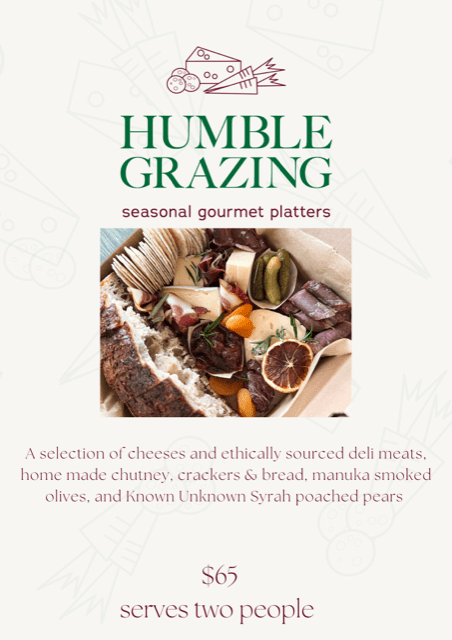
Becky from Humble Grazing is offering pre-ordered platters for those of a more savoury persuasion. Becky can be contacted through her Facebook page, her website under the name of Humble Grazing or Instagram. If the weather forces a cancellation of the music and you have pre-ordered a platter, you can pick it up from here and take it back to your accommodation to consume. You are welcome to bring a bottle of wine to accompany your platter – or indeed bring your own picnic.
Good coffee and more from Etta
But we will also have the Etta Coffee Van on site selling both hot and cold drinks. These include iced coffee and chocolate (the day may even be hot!), smoothies and a range of organic teas, if coffee is not your favoured afternoon drink.
Seating is limited so maybe add a picnic blanket or folding chairs if you want to be seated. La Mer will be playing from 2.00pm onwards. Please come. There is no additional charge for the event – just the garden entry fee of $10. You are free to sit and enjoy the music or to wander the garden at your leisure. For those of us who are still Covid-anxious, we have plenty of space and being able to physically distance is not an issue.
Jennifer
Auckland botanical artist, Jennifer Duval-Smith is our artist in residence. Three of her four nature journaling workshops are already fully booked and there are just a few places left on her Tuesday 1 Nov workshop centred on the grandeur and glory of rhododendrons.
If you are interested in my garden tours on Friday 28 Oct, Tuesday 1 and Thursday 3 Nov, no bookings are needed. Just be here at 11am and we will be starting from the main lawn. These tours last between about 75 to 90 minutes but you don’t have to stay the whole distance. That said, Mark is in awe at my ability to enter the garden with a group and return later with pretty much the same number as I started.
And it will all end on November 6 when we close our gates (metaphorically speaking).
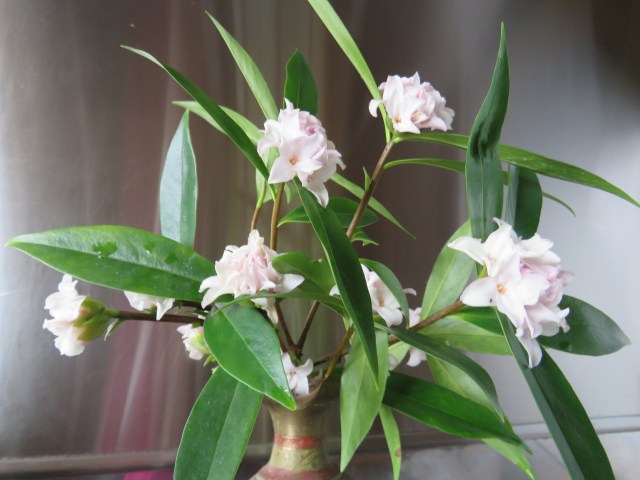
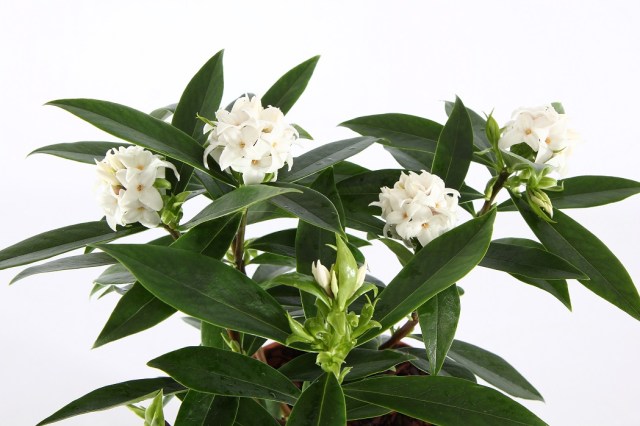
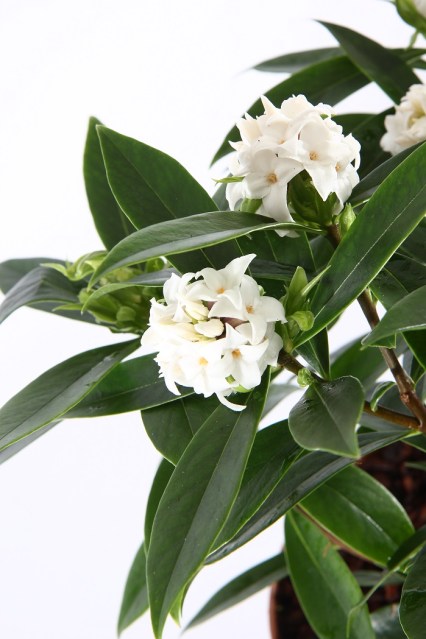
A new release! It has been a while since the last new Jury plant hit the garden centres (though there are more in the pipeline) but the latest one is here, albeit only in New Zealand at this stage. What is it? A pure white daphne – the white form of Daphne ‘Perfume Princess’.
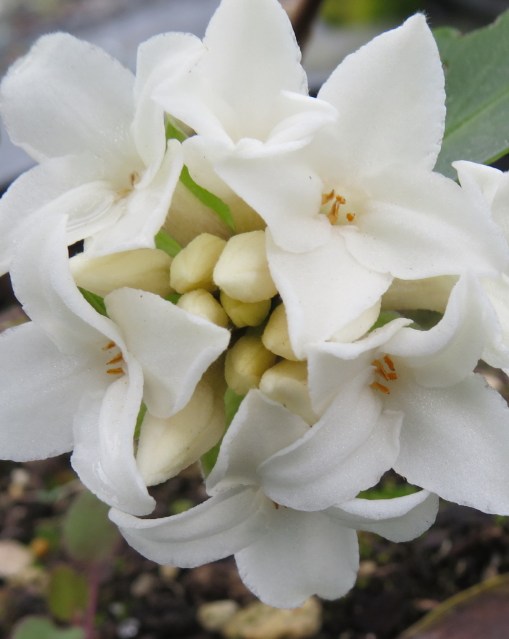
Our new white daphne – ‘Perfume Princess White’
Had it been me naming this new daphne, I would have called it Daphne Snow Princess but it wasn’t which is why it is Daphne ‘Perfume Princess White’ which is at least descriptive. And it is true that it is like ‘Perfume Princess’ except in colour so it has the very long flowering season, the ability to flower down the stem, larger individual blooms, fragrance, vigour and health of its older twin sibling.
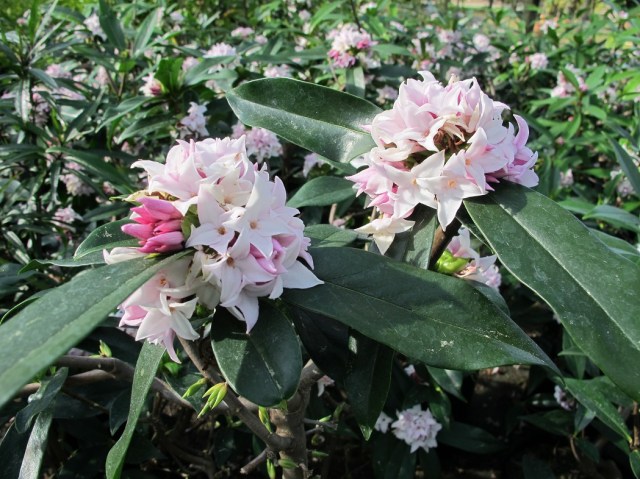
The original Daphne Perfume Princess, showing the typical colouring of D. odora
New Zealand gardeners love their white flowers but the rest of the world tends to prefer colour, especially those who live in areas which are under snow in winter.
I am told it will be available in Australia towards the end of the year and other countries will follow as stock is built up.
Just a reminder that this is a non-commercial site and if you want this plant, you will need to go to your local garden centres. We stopped mailorder in 2003 and stopped selling any plants at all in 2010. As we are removed now (retired) from production and distribution, I can’t even tell you which garden centres near you currently have it in stock (yes, I do get asked this sort of question on a frequent basis). All I can say is that if you are keen to get a plant, you are more likely to find it in one of the mainstream garden centres, rather than smaller specialist ones or nurseries. And supply will be limited in this first year of release. It is worth having, though. I can say that, at least.
Postscript: Sorry to sound grumpy. It is true, I do get a bit grumpy answering emails and phone callsfrom people who assume that because I write about a plant, they should be able to order it from us or, failing that, I can advise them where they can source it. Even from overseas, at times! What is it, I wonder, about my site that makes people think I am trying to sell them stuff?








 Tikorangi The Jury Garden