Category Archives: Stop press

A Case of the Emperor’s New Clothes?

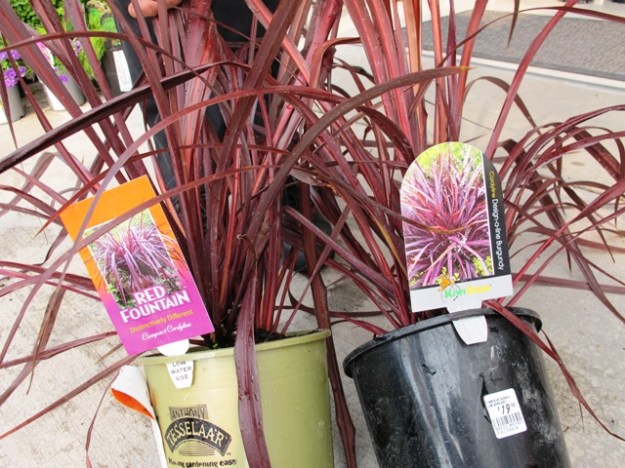
Cordyline Red Fountain (ours) and Cordyline Design-A-Line Burgundy - identical DNA

Cordyline Red Fountain (ours) and Cordyline Design-A-Line Burgundy – identical DNA


The saga of Cordyline Red Fountain continues.

Gobsmacked we were by the decision of the NZ Plant Variety Rights’ Office to grant equal legal protection to Cordyline Roma 06 (also known as Cordyline Burgundy). It seemed that they were determined to find differences where none existed and as far as we were concerned, Cordyline Roma 06 was a generic copy with no unique, distinguishing characteristics. We could not understand why our repeated requests for a blind trial to see if the two were distinguishable were ignored.

Well, ain’t DNA just a wonderful thing? We were wrong in describing Cordyline Roma 06 as a generic copy. Not a copy at all. It has absolutely perfectly matched DNA to Cordyline Red Fountain. Identical DNA.

We had plants DNA tested in a specialist DNA laboratory in Australia. The comparator variety, Cordyline Pinot Noir showed in excess of 5000 markers of difference. Cordyline Red Fountain and Cordyline Roma 06 showed… none. None at all.

This surely disproves the claim made repeatedly by Malcolm Woolmore that he went back and repeated the original cross. We were always sure that was not true, because of aspects of that original cross known only to us. He did not have access to the original breeder plants we had here, so he would have used different parent plants and the DNA would have shown that.

So what now? In the light of this independent, scientific evidence, will the NZ Plant Variety Rights’ Office review the original application and data submitted and reject the original proposal? This is what we thought should have happened from the very beginning. DNA evidence is now deemed sufficient to send somebody to jail for life in murder trials. We are not suggesting that this would be an appropriate action in this case, but we are waiting to see what will happen next.

New Zealand is a member of the International Union for the Protection of New Varieties in Plants (UPOV) so this situation will not sit in isolation but is already receiving international scrutiny.

Cordyline Red Fountain and Cordyline Burgundy - side by side garden centre plants, apparently with identical DNA

Cordyline Red Fountain and Cordyline Burgundy – side by side garden centre plants, apparently with identical DNA

Tikorangi News

Tikorangi-Butter-paper

Welcome to the first edition of Tikorangi News which your council has undertaken to write in response to complaints from a few local residents that they don’t know what is happening in their district. At New Lympouth District Council, we take our duty to consult local residents very seriously and we hope this newsletter will fill the gap. We would like to thank the guardians of the old Tikorangi Dairy Factory for making their butter wrapper available to use as letterhead, reminding us of the semi rural nature of the area. regular_smile

036• We at Council are deeply aware that traffic is a major issue for many Tikorangi residents but we have AWESOME news. We have brokered an arrangement between companies, their subcontractors and Tikorangi School. Starting next week, the trucks will be calling in to the school where the students will be painting happy faces on all the vehicles. We are confident that smiley faces will bring a smile to all Tikorangi residents as the trucks pass by. Drivers have also been instructed to give a cheery wave as they pass. regular_smile regular_smile regular_smile

• Graymooth Petroleum have told us that they are very, very sorry that their drilling rig on Kowhai B allegedly broke their consented noise levels on one occasion and they promise they are doing all they can to remedy this situation. We are confident that this is the case because they even returned our wet bus ticket to us. The good news is that they have nearly finished this well and may shortly be moving their rig to the Stratford area which means it will no longer be our concern. sad_smile

???????????????????????????????• Tikorangi residents will be as thrilled as Council is that the Len Lye Centre has been given the green light. It is only because of Toad Energy’s wonderful generosity that this project is going ahead. In recognition of the special relationship between Toad and Tikorangi, residents will be guaranteed free entry to the new centre when it opens for a period of five years. regular_smile
???????????????????????????????• A few residents have suggested that Greymooth are not abiding by their declared number of light vehicles on their Kowhai B site. We are pleased to report that Greymooth have assured us that they are abiding by all conditions of their consent. We suggest that busybody residents who have counted up to 17 light vehicles parked in the two carparks at the same time should perhaps find something better to do with their time and get a real job. There are only six light vehicles a day travelling to the Kowhai B site. Similarly, Toad have assured us that they too are keeping strictly to the terms of their consent and there are only 8 light vehicles and 3 heavy vehicles driving on to their Mangahewa C site in any 24 hour period during drilling activities.

???????????????????????????????regular_smileThe next edition of the Tikorangi News will be called the Todger News after your council successfully negotiated a sponsorship deal with both Toad Energy and Greymooth Petroleum. This is good news because it means the special needs of Tikorangi will no longer be a drain on the other ratepayers of the district.

• Residents are reminded that they are best to contact the company concerned in the first instance when they have worries. This cuts out the middle man and companies can let us know what queries they have logged. We recently requested the logs from both Toad and Greymooth and were thrilled at the positive entries.
“Thanks so much for our awesome new road. Now we can speed down it at 120km an hour” said one Tikorangi East Road resident (Good news, Otaraoa Rd people. Roadworks will be starting in your area soon!)
“ Thanks guys for the generous gift of a hamper. My wife and I loved it. Now we no longer notice the sound of your generators and drilling rig at night.”
“Don’t take any notice of the carpers and moaners, guys. These few greenies are probably the same types who spend their time buggerising around on Facebook and besmirching the reputation of NLDC. We think you’re great. I will be back at work next week, by the way.”
It was wonderful to read so many positive comments and to know that the companies are taking such good care of you all. ???????????????????????????????

• On a more serious note, Council is reducing the affected party zone for new sites to those people whose residences are 20 metres or less from the site. This brings it in line with the notional boundary ruling in the District Scheme where noise levels are monitored at a distance of 20 metres from the nearest neighbouring houses. Effects from this change should be less than minor and no parties will be adversely affected. The rural character of the area will not be changed by this minor amendment.

• Big thanks go to both companies and their active programme of retro fitting double glazing in houses where the owners do not even have affected party status. This is a wonderfully generous move on their part and one which they are under no obligation to make. regular_smile

???????????????????????????????cry_smile We are acting on concerns raised by an elected councillor at a recent Council meeting regarding malcontents in Tikorangi “besmirching the reputation of the Council”. He suggested a public education programme might be required. Council categorically rejects any insinuation that this may be a case of shooting the messenger and is investigating models of re-education programmes pioneered in the Soviet gulags, the Chinese re-education through labour programmes and the Vietnamese voluntary relocation strategies of the 1970s. We are confident that any troublemaking dissidents in Tikorangi can and will be dealt with promptly and efficiently and will no longer be able to embarrass your council and to sully the reputation of Taranaki.

• Finally, in response to community concerns, we at New Lympouth District Council can assure Tikorangi residents that as far as disruption as a result of the petrochemical industry is concerned, we will leave no stone unturned in our quest to find where the buck stops. We think it may be with central government but we are mindful it may even be international – maybe WTO or OPEC.

• Kia kaha Tikorangi! And remember, you drive a car so you can’t complain. regular_smile

Tikorangi-Butter-footer

Saving Tikorangi – what could Councils do?

???????????????????????????????
Following on from my post on Tikorangi Lost – how a little community is being sacrificed to the petrochemical dollar, I suggest the following:

1) Stop hiding behind legislation. If the ability for Councils to take a lead role in planning and managing development is not possible under existing legislation and regulation, then admit publicly that is the case and immediately approach central Government seeking change. It appears that the current regulations may be inadequate to meet such major development.
2) Set a moratorium on new consents and major variations to existing consents while an overall plan is put in place and pending the final report from the Commissioner for the Environment.
3) Develop a plan for the district involving local residents as well as the companies.
4) Review the extent to which the use of non-notified consents and the virtual elimination of “affected party status” has led to a culture of exclusion bordering on secrecy between companies and councils whereby local residents only find out what is happening after the consents have been approved.
5) Appoint a residents’ advocate.
6) Give residents a voice, the chance to give a report card, victim impact report even, on what the personal impact has been. Stop ignoring them.
7) Initiate a study into levels of stress and anxiety in local residents as a result of the rapid petrochemical development.
8) Create a single point of contact at Council.
9) Impose a 70km speed limit throughout areas of Tikorangi affected by petrochem dev – ie from Princess St through Ngatimaru Rd to Kowhai A site, Inland North Rd as far as Otaraoa Rd, Otaraoa Rd as far inland as Mckee, Tikorangi Rd from the intersection with Otaraoa Rd to Mangahewa E site.
10) Cease issuing permits for well sites in excess of what a site is suitable for and in excess of what companies have actually planned. This is effectively an open mandate for them to do whatever they want in the future.
11) Do not allow existing use as a reason for granting major variations, as was done with the increase in site area for Mangahewa C, setting a dangerous precedent. If a company applies for use which is beyond the capacity of their site at the time, that should be the company’s problem and not a reason to allow them to hugely expand the site.
12) Conduct independent traffic counts including specific attention to heavy loads and hazardous loads.
13) Define community consultation. A letter box drop is not community consultation. Nor is dropping a large bundle of papers on a local resident or organisation without explanation or interpretation. Indeed, a meeting where a company presents its plans to local residents is not community consultation either. It is merely communicating decisions already made and is therefore community liaison.
14) As the intensity of development escalates, the chances of a major incident greatly increase. This could be an on-site incident such as a well blow out or major malfunction, or a traffic accident involving heavy vehicles, often carrying dangerous goods. Many locals would like advice as to emergency actions in the event of such an incident. Put simply, which way should we drive to get out?
15) Actively discourage Greymouth’s pepper-potting of well sites. Do not permit them to establish separate well sites a few hundred metres apart. Todd have chosen to establish fewer sites and directionally drill. While the impact on neighbours is therefore much higher, the total number of people adversely affected is much lower. Allowing companies to pepper pot sites impacts negatively on many more people and on the environment.
16) Take best practice from one company as the required benchmark for other companies. Todd Energy have made major improvements to flaring, reducing the length of time flaring took place on their third well on Mangahewa C site, to under 30 hours, if my memory is correct. This is a massive change from the months of flaring previously and the improvement for locals was major as a result. If Todd can do it, so can other companies. Similarly, Todd maintains extremely high standards of community liaison and acts on complaints. This does not appear to be true with all companies.
026 - Copy
17) Acknowledge that in the countryside, the norm is silence at night. Setting allowable limits for industrial noise, pays no heed to the severe degradation of quality of life when low grade industrial noise permeates the environment 24 hours a day. The same goes for light. The norm in the country is darkness at night. The well sites are very brightly lit.
18) Look at the whole picture, not just the well sites. The construction is a major intrusion and the infrastructure seems to have bypassed Councils’ notice altogether – the pipelines, the roadworks, the power supplies, the use of helicopters, the seismic surveys. There is layer upon layer.
19) Stop consents being merely a checklist of boxes to be ticked. Look at applications in the context of what is already happening, what the cumulative effect will be and how it all fits with a development plan drawn up for the area.
20) Undertake regular Assessments of Environmental Effects and formal reviews of resource consents. Recognise that when companies pursue a very active programme of encouraging residents to complain direct to them, that it means they can fudge the extent of resident complaints. Indeed, it appears to have been so effective that it can entirely escape New Plymouth District Council’s attention. Council then acts on the unverified assumption that there are no significant problems.
21) Seek external verification of company reports on environmental effects. Do not rely solely on information supplied by the companies and “visual inspections”.
22) Change the way complaints are recorded at Council. Complaints from Tikorangi residents about noise, light, traffic, the state of the roads, littering and assorted other presenting issues are more likely to be about petrochemical development than about anything else, yet they appear to be recorded under a host of other categories.
23) Monitor closely what is happening to property values and the length of time it takes to sell property in Tikorangi. These are another indicator of the health and desirability of the area.
24) Require that sites have screen planting put in as part of the initial site preparation. These industrial sites are an eyesore in a rural area and detract hugely from the visual quality of the environment. Within two or three years of initial site works, that planting should screen sites from view. Take the ability to screen from view into account when approving a site. In other words, hide them. Screen planting may also absorb some of the noise.
25) Recognise that the precedent set by allowing Greymouth Petroleum to position an 8 well site (Kowhai B) immediately on the boundary of the Foreman farm and about 300 metres from Graham Foreman’s home, without his agreement, has set a new bar for permissable intrusion. Many locals now fear that they could suddenly find a rig on their boundary, too.
26) Write a code of conduct for petrochemical companies, even if it has to be voluntary.
27) Independently verify claims made by companies and recognise that the consultants employed by those companies work for them. They are not independent consultants and their advice needs to be considered in that context.

In short, do some actual planning for once.

These, these types of measures are what I have been seeking for over fifteen years since I first sat in Mayor Claire Stewart’s office with the then so-called “planners”. It appears that nothing has ever been done. Councils have abdicated any role or responsibility for planning and leave it to the petrochemical companies.

Tikorangi and other similar areas are paying an unacceptably high price for Councils’ willingness to pander to the powerful petrochemical companies and the petrochemical dollar. The problems are only going to escalate with rampant and uncontrolled growth of the industry.

Genuine resident Tikorangi goat. Draw your own conclusions

Genuine resident Tikorangi goat. Draw your own conclusions

Not one but three new Jury magnolias this year

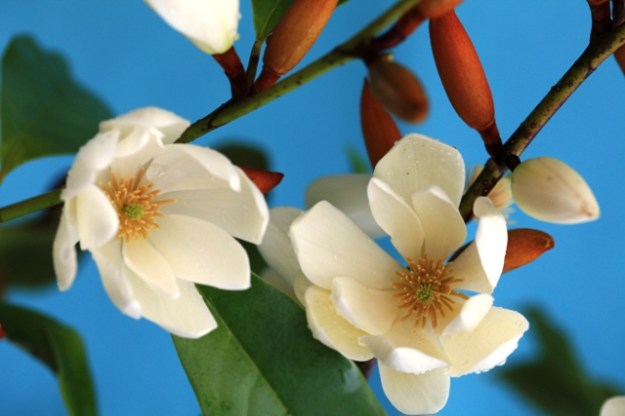
The sublime blooms on Fairy Magnolia® White

The sublime blooms on Fairy Magnolia® White


It is not often that we have three major new releases coming out in one year. And, to be honest, it takes so many years of trialling and then building up that by the time they are released, they no longer feel “new” to us. But there is a surge of pride with these three hybrids of Mark’s breeding.
Magnolia Honey Tulip, our new yellow version of Black Tulip

Magnolia Honey Tulip, our new yellow version of Black Tulip


Mark is very particular about deciduous magnolias and had only named three – all in red tones. The fourth, to be released this year, is his first in the yellows. Honey Tulip™ is a golden honey version of Black Tulip. Given the somewhat floppy nature of most yellow magnolias with their soft petals and tendency to become paler as the flowering season progresses, we think Honey Tulip represents an advance in flower form, petal substance and retention of its colour intensity through the season. In New Zealand, where most yellow magnolias flower at the same time as they come into leaf, it is to Honey Tulip’s credit that it flowers on bare wood. Trials suggest that it will remain a smaller growing tree.

Fairy Magnolia® is the branding attached to our new range of michelias. These have been reclassified as magnolias but we wanted to differentiate these new michelias from the usual evergreen magnolias which are the leather-leafed grandiflora types. These are much lighter in growth and fill a different role in the garden and landscape. The first release was Fairy Magnolia® Blush.

Fairy Magnolia Cream - many flowers over a long season

Fairy Magnolia Cream – many flowers over a long season


Fairy Magnolia® Cream is a free flowering, strongly fragrant pure cream, opening in early spring. While of similar breeding and performance to Blush, its foliage is a brighter green and its peak flowering season extends into months. Each bloom measures at least 10cm across. Cream will take clipping well to keep it hedged, compact or topiaried or it can be left to form a bushy ,large shrub around 4 metres tall by 2.5 metres wide.

Fairy Magnolia® White (pictured at the top) comes down a different breeding chain and is a selection from a run of seedlings we have been referring to as the Snow Flurry series. The fragrant, purest white flowers are sublime, opening from brown velvet buds. It flowers earlier than Blush and Cream, starting in winter, so it is not likely to be as hardy as those two. However, we think it will prove to be hardier than existing doltsopa selections, making a garden friendly, improved substitute for “Silver Clouds”. The foliage is smaller and the plant shows no signs of defoliating after flowering (a major drawback to many doltsopas). It is much bushier in growth and will ultimately reach around 5m by 4m if not trimmed.

All plants will be available in New Zealand in limited quantities and some will be available overseas. These plants are produced under licence (in other words we only have small numbers to sell to personal customers later in the year when we open for plant sales) so ask your local garden centre. Overseas readers may like to check out Anthony Tesselaar Plants for availability.

Magnolia (deciduous) Honey Tulip

Magnolia (deciduous) Honey Tulip


Fairy Magnolia Cream

Fairy Magnolia Cream

A Tale of Two Plants

For the latest update, check out “A Case of the Emperor’s New Clothes?

How we have been ground down by opportunism and bureaucracy
Cordyline Red Fountain - CopyCordyline-BurgundyCan you tell the difference between these two plants? No? That is hardly a surprise to us and we should be experts because one of them is our own Cordyline Red Fountain.

The growing trials - can you pick the difference?

The growing trials – can you pick the difference?

Red Fountain was the lucky result of a sustained breeding programme spanning decades by both the late Felix Jury and Mark Jury. When it was first released, it was unique. There were no other clumping cordylines with rich burgundy leaves which arch outwards. We applied for, and received, the equivalent of a patent (Plant Variety Rights in NZ and Plant Breeders Rights internationally) first in New Zealand and subsequently in Australia, USA, Europe, South Africa, the UK and Canada. This means that nobody is allowed to propagate the plant for sale except under licence and provides the opportunity for a return to the breeder.

Father - Felix Jury (d.1997)  in a patch of Cordyline Red Fountain

Father – Felix Jury (d.1997) in a patch of Cordyline Red Fountain

When Malcolm Woolmore of Lyndale Nurseries/Kiwi Flora in Auckland released a look-a-like plant, we were intensely irritated. This is a man who loudly proclaims that he supports NZ plant breeders – but not, apparently, breeders who are not his own clients. He didn’t mind attempting to compete at home and internationally with us, using a plant which few, if any, can tell apart. He named it Cordyline Burgundy while ours is marketed on the major USA market as Cordyline Festival Burgundy (ref footnote 1). The similarity in names did not seem a coincidence.

and son - Mark Jury with Cordyline Red Fountain

and son – Mark Jury with Cordyline Red Fountain

When he applied for Plant Variety Rights here and overseas, we were confident that our interests would be protected. After all, the legislation specifies that a plant must be distinctively different (ref footnote 2) to be able to be patented and his had no distinctive differences that we could see, nor indeed anybody else to whom we showed his plant.

In this country, plant variety rights are decided by the Deputy Commissioner of the NZ PVR Office, a very small division of the new super Ministry of Business, Innovation and Employment. When we started to suspect that the Deputy Commissioner was determined to find differences between Red Fountain and the ring-in, we began to ask for a blind test. That is where plants of both varieties of the same size and age and in the same pots are mixed up and a group of suitable people are asked to separate them into the two varieties. That, we thought, was a fair test – they were either alike or able to be accurately differentiated. Our requests were ultimately ignored.

Growing trials (pictured above, photo 3) were carried out at an independent location. Apparently, none of the professionals or staff who looked after these growing trials could pick any difference between the two varieties.

In due course, the Deputy Commissioner, Mr Chris Barnaby, ruled that Cordyline Roma 06 (marketed as Cordyline Burgundy) was distinctively different and he awarded it PVR. This was based on the trial and examination by measurement of 8 leaves of Red Fountain and 8 leaves of Roma 06. Apparently when you get out the tape measure, the pedicel on Roma 06 is a little shorter, when measured over 8 leaves. The pedicel is the narrowing at the base of the leaf where it grows from the central stem. There is no difference in colour, shape or growth habit.

In the Examination Report it is even admitted that when the 16 leaves were mixed up, the examiners could not tell them apart. In other words, no customer is ever going to be able to tell the plants apart and precious few growers or plantspeople will either but the Deputy Commissioner was not going to let that stop him from granting equal rights to this identical looking variety.

We were stunned by this decision.

Our agents, Anthony Tesselaar Plants, immediately lodged an appeal on our behalf, reiterating earlier requests for a blind test and questioning the sample size for the assessment (eight leaves only of each). It became clear that despite having made the original decision, the review was also to be carried out by the same individual, Mr Barnaby. Both our agents and we contacted Mr Barnaby’s superior, the Commissioner, to table our concerns at the lack of independence in the review process and to ask for a blind test. It took a long time and, we assume, a question from the Minister’s office before the Commissioner replied saying nothing of note and declining to get involved.

We went to see our local Member of Parliament, Jonathan Young who appeared to grasp the issues quickly. He raised the matter with the Minister, but all that happened was that we received a reply couched in such bureaucratese that we burst out laughing. “Yes Minister” style, probably emanating from the Commissioner and Deputy Commissioner. It satisfied our MP but not us.
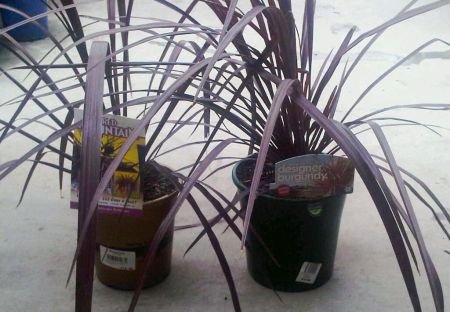
Side by side at the garden centre. Is the customer likely to see any difference?

Side by side at the garden centre. Is the customer likely to see any difference?

The Deputy Commissioner completely ignored repeated requests for a blind test and ruled in favour of his earlier decision. No surprises there. To rule any other way would be to admit that he had made a mistake earlier, or that the comparison testing wasn’t adequate and that did not seem likely.

All that is left would be to take the matter to court – us vs the Government of New Zealand. We do not see that as an option. We lack their budget and the costs could well exceed the royalty returns even if the court ruled in our favour.

We no longer have any confidence in the Plant Variety Rights system in this country. Clearly all PVR has become is a rather expensive marketing tool controlled by a querulous individual in government employment. The only reason to continue with existing PVRs we hold is to honour contractual agreements already in place. It has become clear it offers no protection at all to existing intellectual property rights.

We have been disappointed at the willingness of Malcolm Woolmore, through his company Kiwi Flora, to take advantage of years of plant breeding and years of establishing a new plant in the international marketplace by releasing a copy product. He claims to have repeated the original cross (banksii x pumilio). For technical reasons of which only a few are aware, we doubt it. To us, it looks as if it is just a seedling from our Red Fountain.

Notes:
1) The marketing name of Cordyline Festival Burgundy for USA was to avoid confusion with an existing plant – Pennisetum Purple Fountain.
2) Distinctive differences, for the purposes of a plant patent, include specified minimal distances between key genetic characteristics.

For the record, in the photos at the top, Cordyline Red Fountain is to the left, Cordyline Burgundy to the right. In the photo below, Cordyline Burgundy (also known as Roma 06) is at the front and Red Fountain is at the back.

Postscript Sunday 27 January
I fully expected Malcolm Woolmore to come out swinging. In fact I would probably have been disappointed had he not, forever wondering whether he had read the piece above. I cut and paste the section from his February eBrief received today, Sunday 27 January because the link to his site appears to be faulty, taking you instead to his December eBrief. I have no desire to enter debate with Mr Woolmore so my only comment is that I will leave it up to readers to decide. Go and have a look at the two plants side by side in your local garden centre.

A One Sided Tale of Two Plants
Read Abbie Jury’s blog or Google Chris Barnaby, Cordyline Burgundy, Malcolm Woolmore, Lyndale Nurseries and heaps of other words and you will read a one sided story titled ‘A Tale of Two Plants’.
Mrs Jury does not seem to share UPOVS (International Union for the Protection of new Varieties of plants) respect for the Deputy Commissioner of the NZ PVR Office, Chris Barnaby. Chris, a past Chairman of UPOV, has been maligned and misunderstood in an attack that some might consider libellous.
I will not comment further, as Mrs Jury, I believe, says more than enough for most to question whether her story is complete and unbiased.
Suffice to say, that the intention to grant Australian Plant Breeders Rights for Cordyline ROMA 06 or Cordyline ‘Burgundy’ was published last year, after independently being assessed and found to be distinct.
That is, in addition to the decision made in New Zealand.
For the record, Cordyline ‘Burgundy’ has resulted from a collaborative breeding programme established between Robert Harrison of Greenhill’s Propagation Nursery (Vic. Australia) and Lyndale.
It is one of four plants selected, of which you will hear more about at least two. (One of which is dwarf). Cordyline ‘Burgundy’ is represented overseas by Kiwiflora.
Our breeding program did not take decades, but it did involve the application of embryo rescue and other technology.
(More on this when others cultivars are released).
Kind regards
Malcolm & The Lyndale Team”