Photo: Fiona Clark
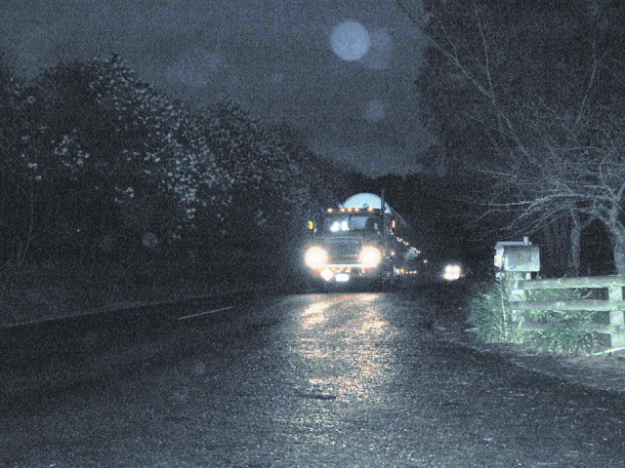
We went back to New Plymouth District Council recently. Yet again. To discuss ways in which we could better manage matters related to heavy petrochemical traffic.
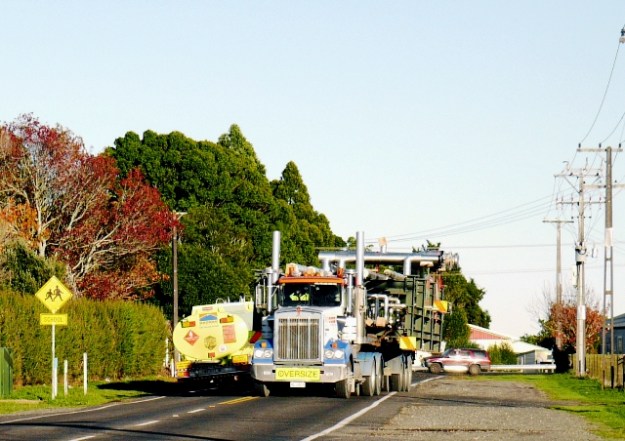
Photo: Fiona Clark
Quite a few residents worry about the heavy traffic passing our school.
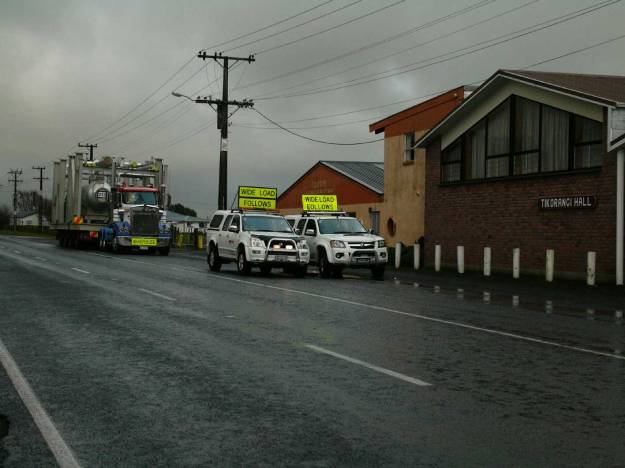
Photo: Fiona Clark
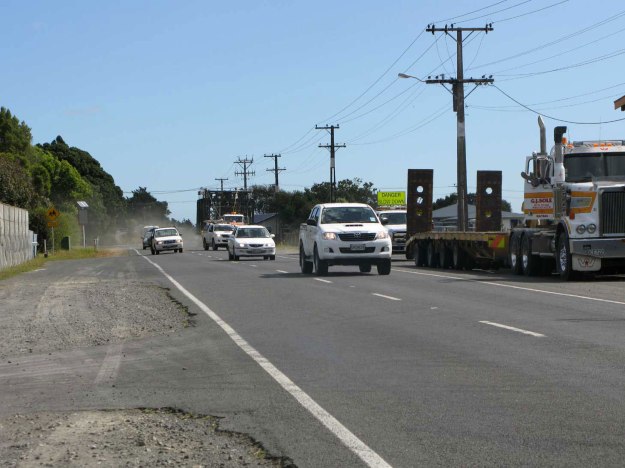
Photo: Fiona Clark
Look at that speedway effect. We are still trying to get the message across that using the heart of our community as a heavy traffic layby is not good.
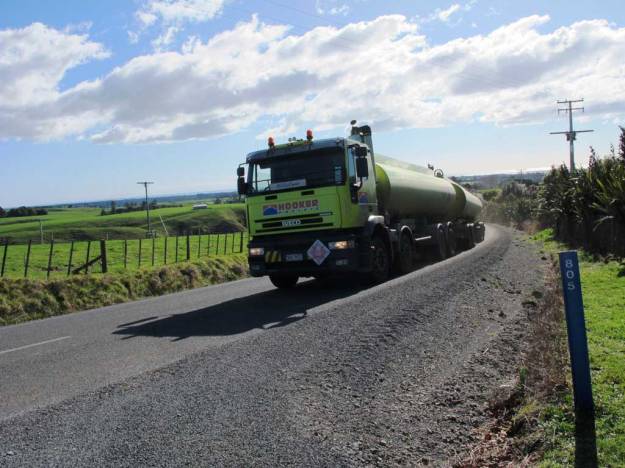 We protested modern road design with such step sides that nobody can ever pull to the side let alone walk, cycle or ride a horse alongside. We see this as a major loss of rural amenity.
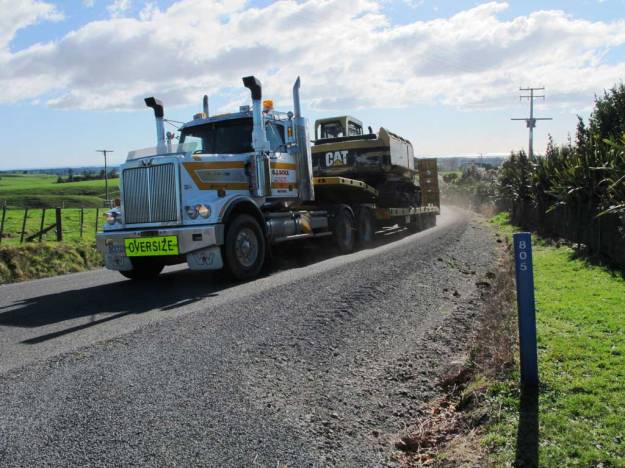 We tabled a concern that this type of hostile road design is incompatible with these roads being part of a designated cycle route. There is nowhere for bikes to go when challenged by frequent heavy transport.
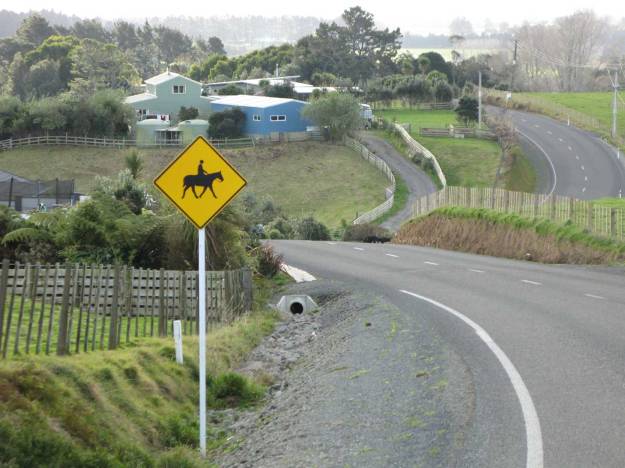
Photo: Fiona Clark
We expressed concern at recent road upgrades which make the traffic go even faster at the cost of any other road user and often to the detriment of roadside residents.
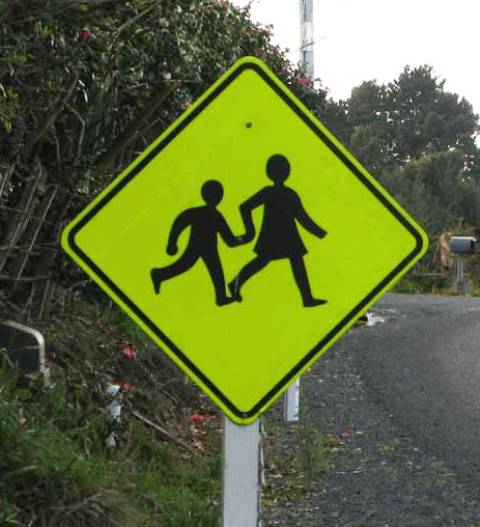 We asked that Council make every sign count. We have so many signs and road cones now that few people take notice. Children crossing signs where locals know no children have lived for decades, horse signs (above) where no horses can be ridden any longer and ever more company signs.
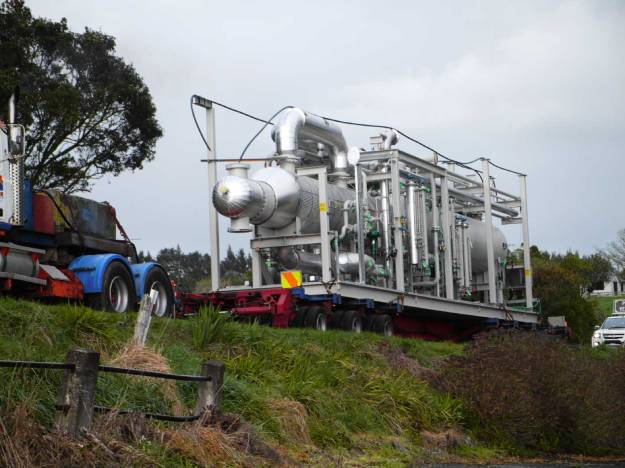
Photo: Fiona Clark
We pointed out the impact of huge loads passing close by. We raised concerns at the excessive speeds some traffic travels.
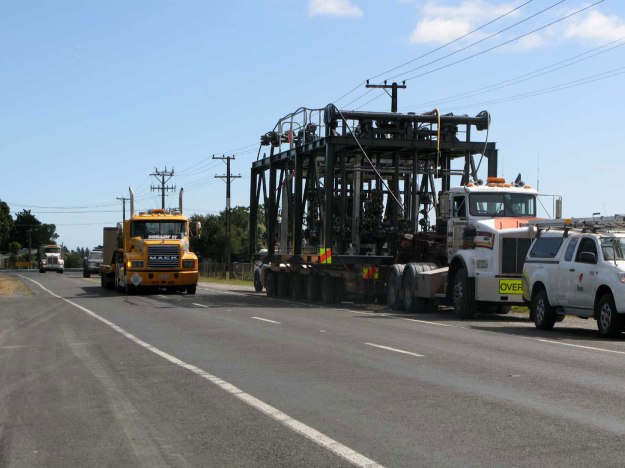
Photo: Fiona Clark
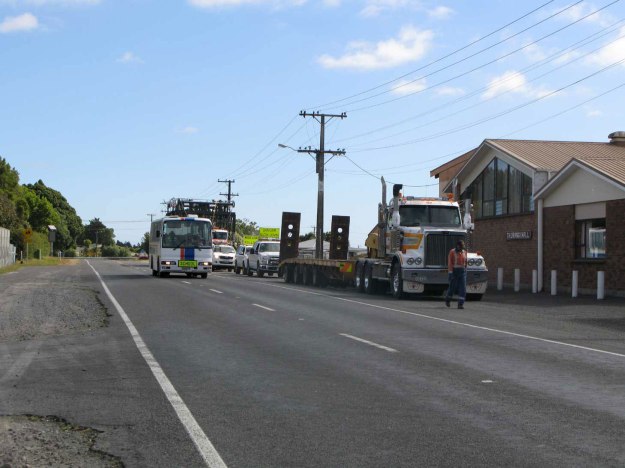
Photo: Fiona Clark
We pointed out that this traffic was almost certainly parked up because it was school bus time – forcing the school bus over the centre line. We noted that if the speed limit was lowered, it should no longer be necessary to avoid school bus times as a safety measure.
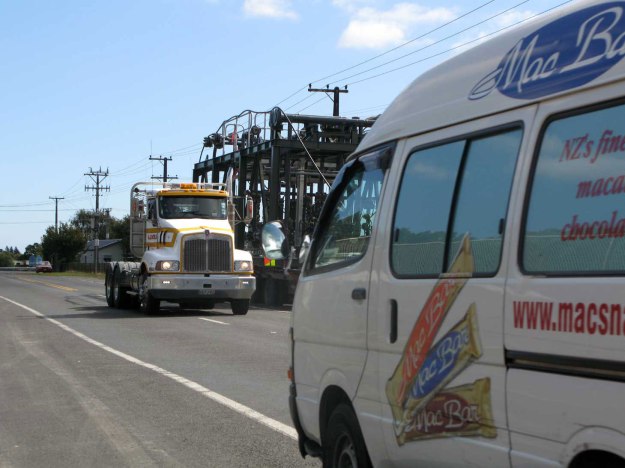
Photo: Fiona Clark
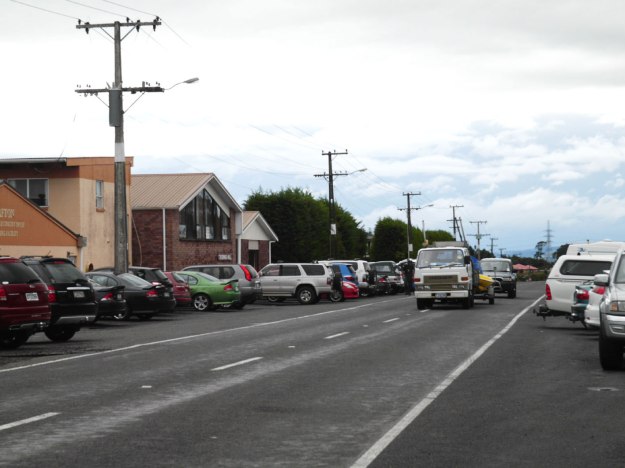
Photo: Fiona Clark
Our community continues to try and function as it always has. This is our sports club and hall area.
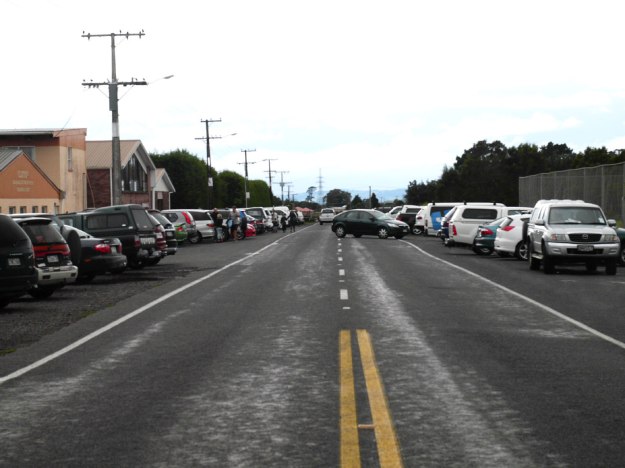
Photo: Fiona Clark
Heavy transport -including tanker and trailer units carrying petrochemical product pass through the middle of this activity.
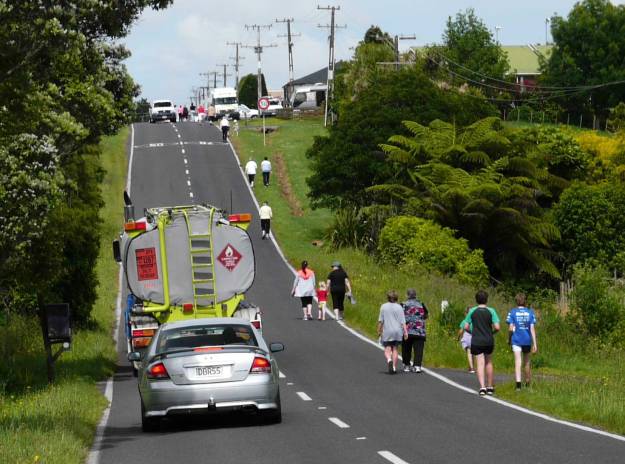
Photo: Fiona Clark
The fun run and walk continue as the tanker passes by.
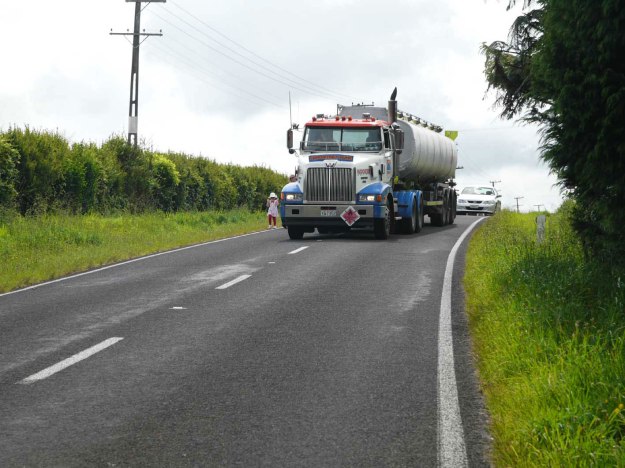
Photo: Fiona Clark
Look at the wee dot with her sunhat to the left of the tanker – the fun run and walk again.
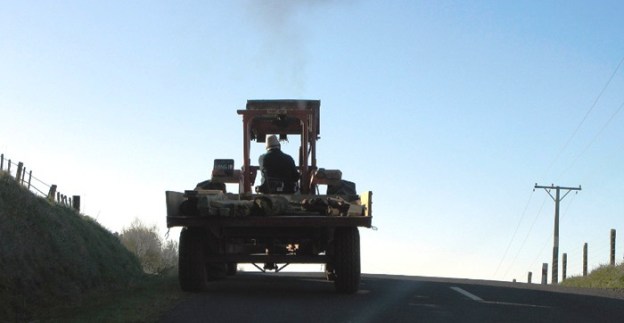
Photo: Fiona Clark
We asked for a lower maximum speed limit to be trialled. At the moment it is 100 km and many of us think that is just too fast for safety. The Council listened. They heard what we were saying and saw what we were showing. They wanted to take some action and the easiest initial action was to instruct staff to start the process of looking at lowering the speed limit but only on one road – Otaraoa Road. But even such a small gain is progress, we thought. It was reported in the local paper. Enter these three men.
Photo removed
Nobody consulted them, they said, claiming to speak for the good folk of Tikorangi – the “genuine residents”. You can read their story here.
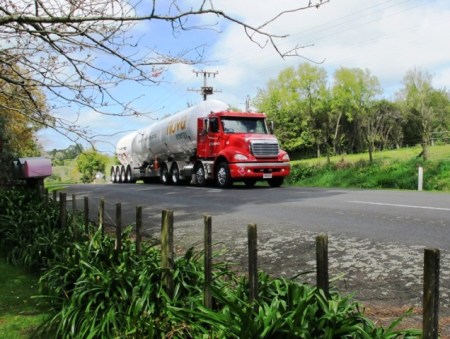 Oh there have been some jokes. Shame the newspaper photographer didn’t stick around to snap these men with a petrochemical tanker and trailer unit bearing down on them at speed from behind, more than one person said. Where are their banjos and rifles, another quipped. Goodness, even Jed Clampett and the Beverley Hillbillies have been mentioned. But what on earth made these men think it was all right to attempt to discredit me, then get into their vehicles to drive down and pose outside Mark’s and my place, resembling a Wild West posse? I can only assume they meant to look intimidating and confrontational when all they had to do was to pick up the phone and ask a few questions.
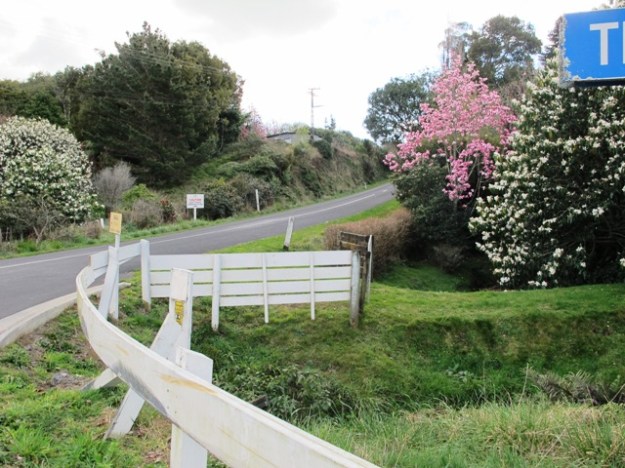
There is no problem with speed, they said. The problem, seen clearly here, is allegedly the vegetation from OUR place blocking the view! Oh really? The pictures tell the story. Heavy transport is one of the highest impact effects of petrochemical development. There are ways it can be managed better to reduce the negative impacts. That is what we have been saying since early last year.
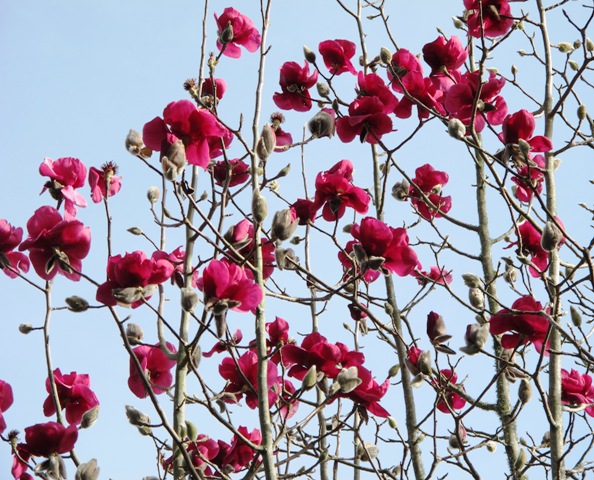
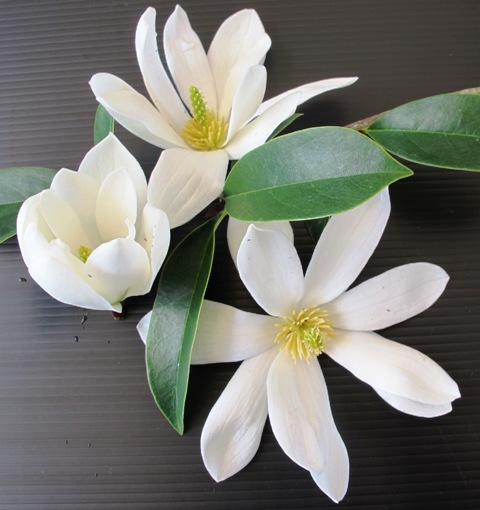
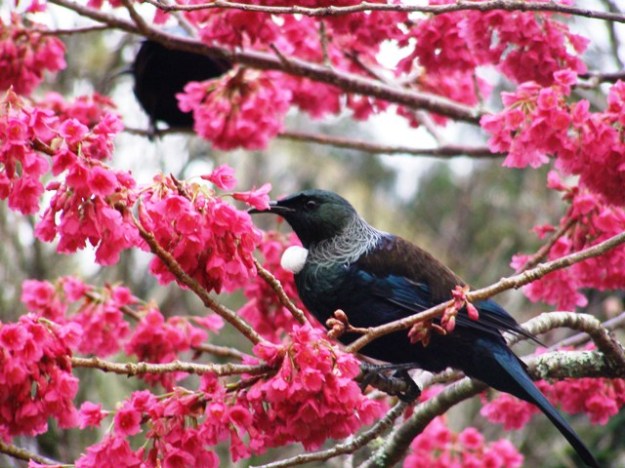 Nothing excites the tui more than the Prunus campanulata. These are somewhat controversial, especially in warm northern areas, because too many of them set seed freely, threatening to become noxious weeds. Both the tui and we would be grieved to see all campanulatas banned, though we are vigilant weeders on the germinating seed. We have a number of different trees that come into flower in sequence and we can have literally scores of fiercely territorial tui bickering and fighting in these trees as they try and claim their feeding space. There are times it can appear as if the trees are dancing with the tui.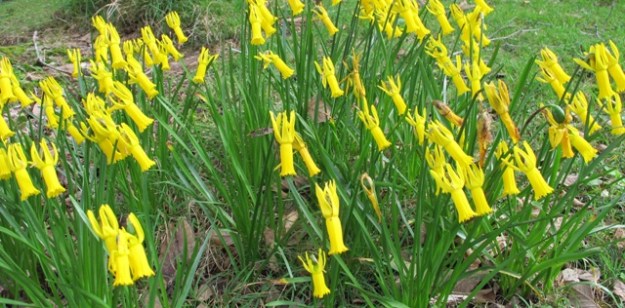
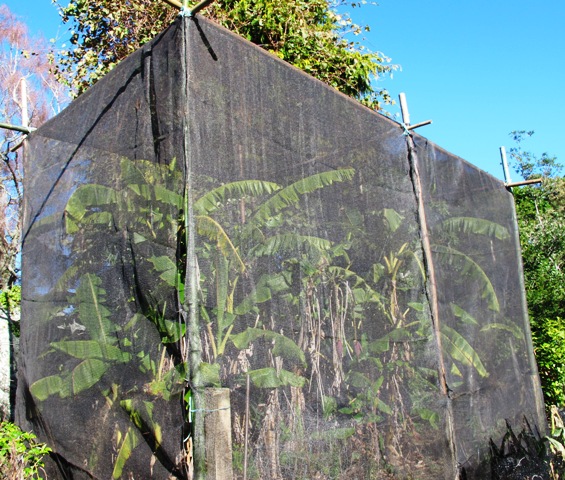
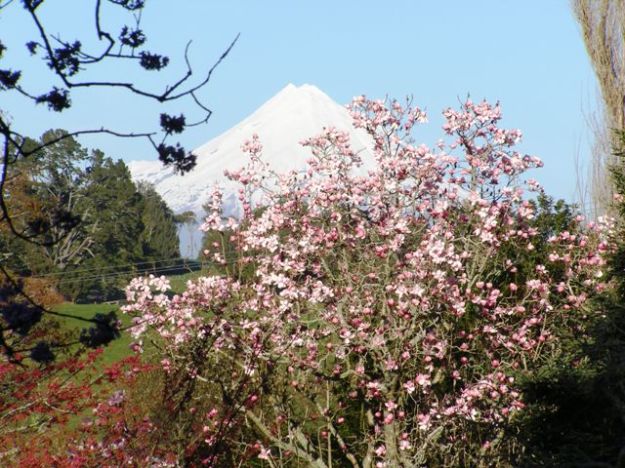
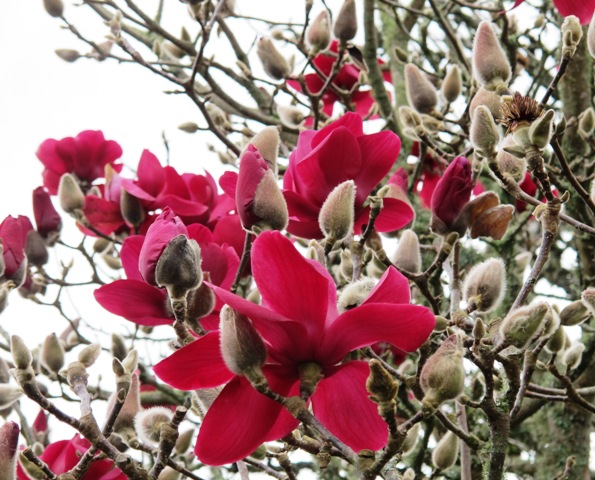
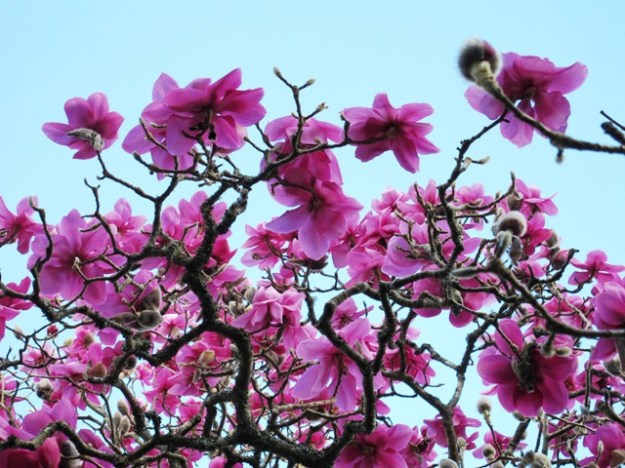
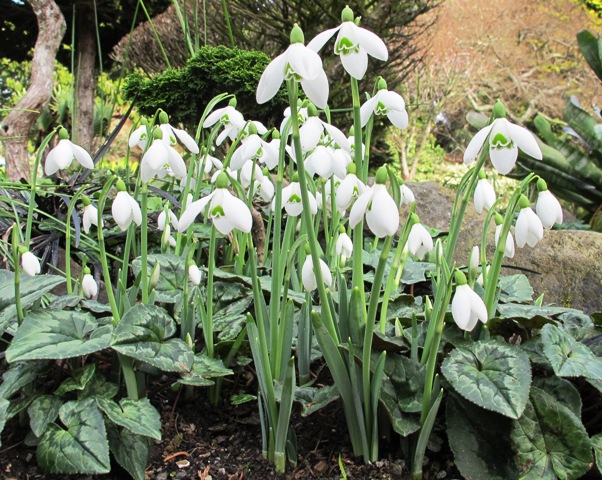

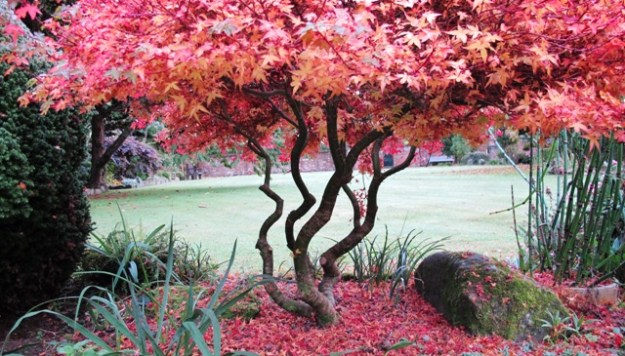 There is nothing like the advent of the winter months to remind us that our climate is pretty good. Where we garden, on the coastal strip of Taranaki, we share the same disturbed westerly air pattern that moderates the climate of much of the west of New Zealand. It means we don’t get particularly cold and occasional frosts are generally light. We don’t put our gardens to bed for winter and retreat indoors. In fact we have colour and bloom all twelve months of the year and June is one of our busy months for planting trees, shrubs and perennials.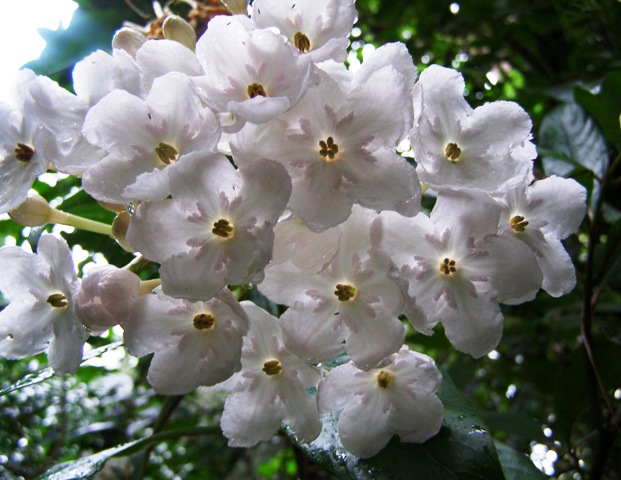
 We are off to England to look at summer gardens this month. There is much to learn from their skills with summer flowering perennials and we particularly want to look more closely at what is now called the New Perennials Movement (which might be styled ‘meadow gardening and grasses meet traditional herbaceous drifts’). We have to squash any such trips in before the glory of the magnolia season starts here next month.
 This is Kowhai C site as seen from Mangahewa E site. These sites belong to two different companies drilling right on their boundary which happens to cut through Tikorangi.
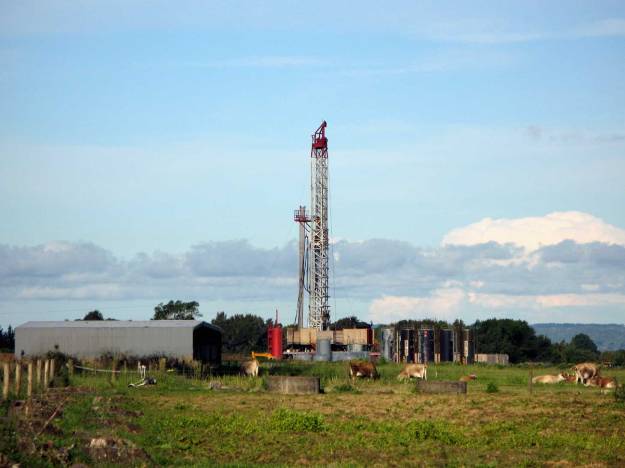 Here we have Kowhai C site – the one this community said it didn’t want but got anyway. This photo was taken 150 metres to the side of Kowhai B site in order to get a clear view. Both sites belong to the same company – Greymouth Petroleum. Kowhai B is consented for 8 wells. Only one has been drilled so far. Close by, so very close that one wonders why the company needed a second site, Kowhai C is consented for 4 wells.
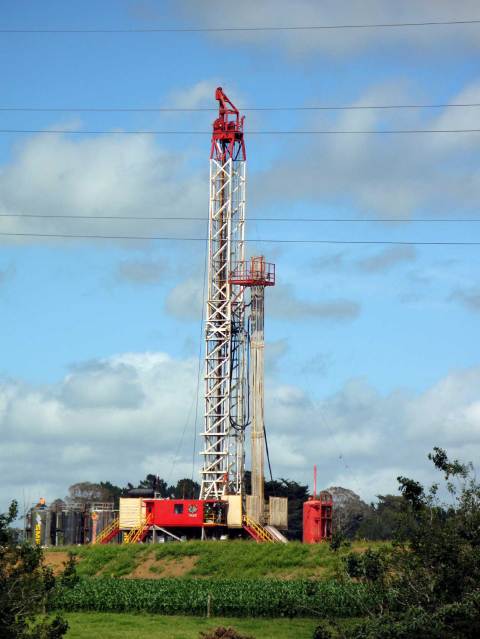 Kowhai C again, this time from Otaraoa Road. It is one of about 10 well sites Greymouth Petroleum has in Tikorangi. I know of 9 that have been consented – I am not sure of the current status of Urenui A (which is not in Urenui but is in Tikorangi).
 This photo taken about August last year – the rig has now gone but it was on Mangahewa C, as photographed from Kowhai C. It is like a quadrilateral of sites, already. These two belong to separate companies again.
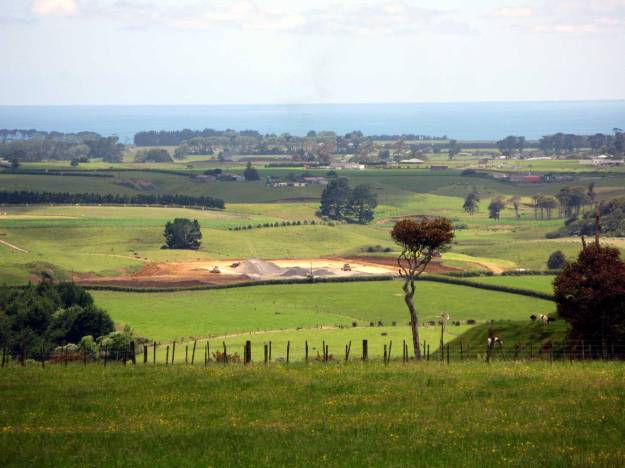 Mangahewa E site from Stockman Road (near Mangahewa C site). These two Mangahewa sites are Todd Energy’s but, to be fair, it should be pointed out that Mangahewa C site has 8 wells drilled on it so is at capacity on its current consent.
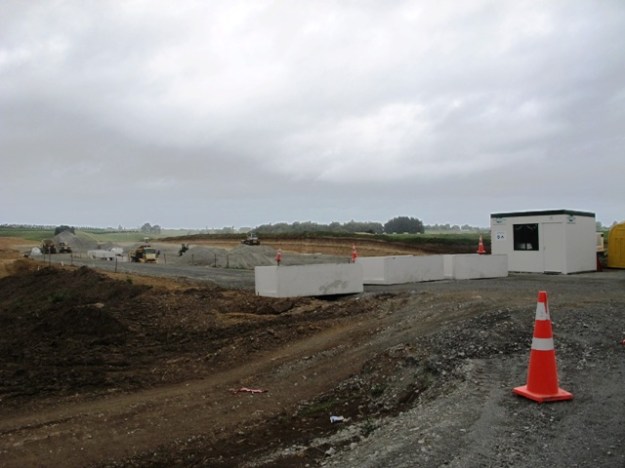 Work progresses on the new Mangahewa E site.
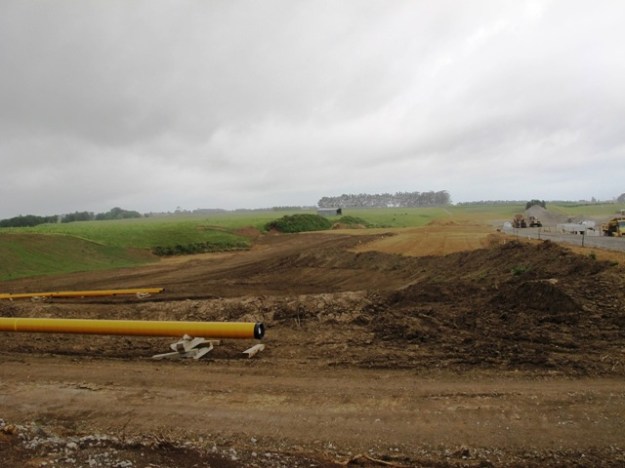 Mangahewa E site again. It is often stated that this petrochemical development (still called “exploration” but they are long past exploration in Tikorangi where it is decades since a dry well was drilled) is “temporary”. Does this look temporary? How can these developments be temporary when the majority of consents are open ended with no expiry date? Only the most recent three sites have a time limit on the consents – 15, 20 and 30 years. In whose books is this “temporary”?
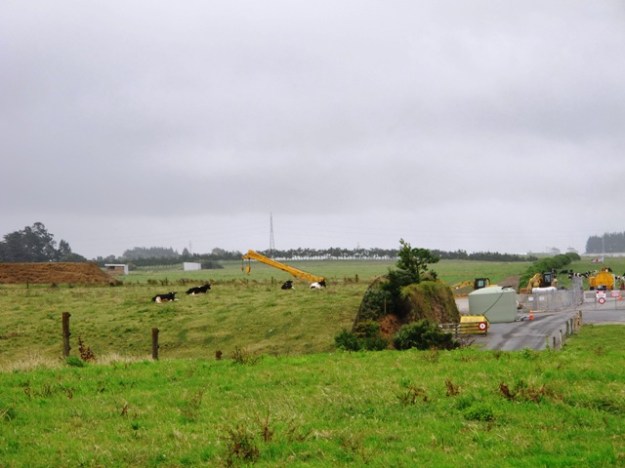 And work progresses on extensions at Turangi A site. These are the other company’s sites (Greymouth Petroleum).
 But wait, there are more. Turangi C site is, according to the company (Greymouth Petroleum) “about” 850 metres from Turangi A site. It can’t be any more than that from Turangi B site, in that case, because it is pretty much set back between the two. Neither Turangi A nor Turangi B have been drilled to capacity. So why does the company need a third site and could they not have deviation drilled from one of the other two sites? Who knows? Only the company and neither New Plymouth District Council nor Taranaki Regional Council seem inclined to ask them why. It looks mighty like speculative consenting to some of us – described by the company rep to me as “future proofing”. Right-o then. That is future proofing the company, not Tikorangi.
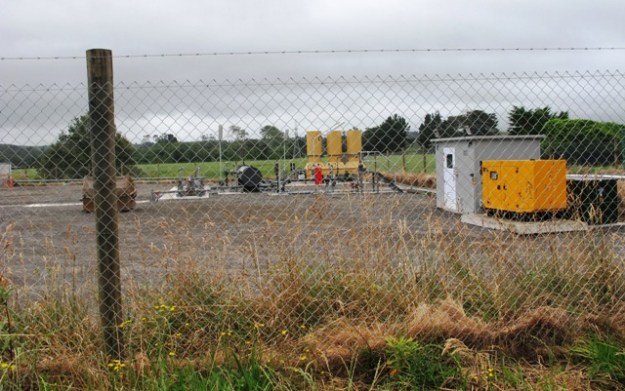 And Kowhai B site with one hole drilled, as viewed from the neighbour’s property. It doesn’t look “temporary” and it was anything but silent on the day I took this photo. It has a significant impact on the neighbour’s adjoining paddock and could well affect his future property options but he was never deemed an “affected party”. I think, to the right of centre at the front of the photo, that is an example of the screen planting done by the company. It’ll be quite a few years before anything is screened by that sort of planting.
 Tikorangi The Jury Garden