Category Archives: Tikorangi notes

Tikorangi Tui tui tui

Latest posts: Friday 17 August, 2012

1) Be bold with colour. White is not always right. Safe, but often dull.
2) The first a new series: Garden Lore. Quotes and hints – random and eclectic maybe, but I hope interesting and helpful.
3) Plant Collector this week is on pretty little Camellia Sweet Jane.
4) My first ever video on You Tube – two minutes of many tui in one of our campanulata cherry trees plus birdsong.
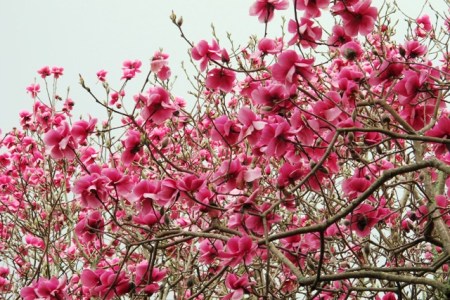
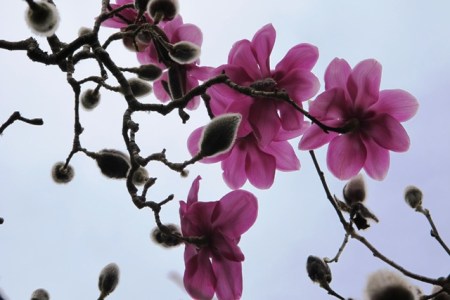
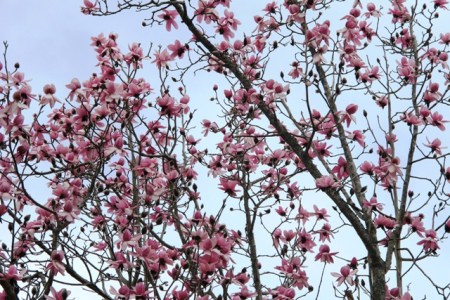
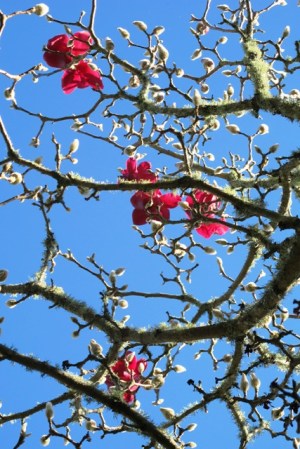
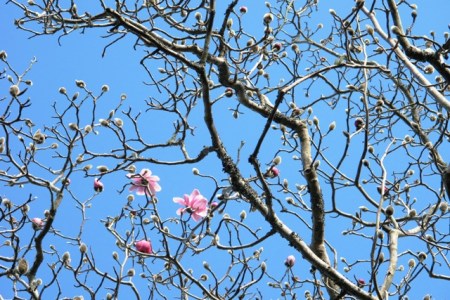
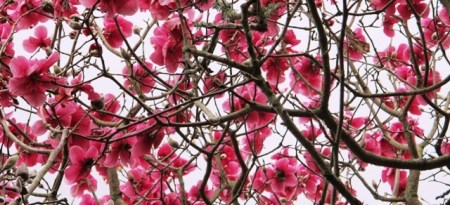
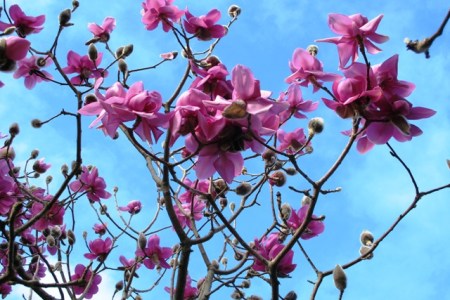
I figured yesterday, as I took these photos, that some (though fewer in number these days) favour floral wallpaper in their home. Here we have floral skypaper instead. Sometimes I worry that many of my magnolia photographs are taken from below, looking up to the sky whereas other people’s magnolia photos are taken looking down on the individual blooms. The reason is that so many of our magnolias are now achieving quite some stature so our close up view does tend to be looking upwards at them. But no matter which way you look at them, magnolias make a breathtakingly lovely display. We still have many which are just opening their first blooms or not even showing colour yet and we look forward to the season continuing right through September. Our early display, in full bloom now, is heavily dominated by the stronger coloured reds, purples and deepest pinks – the two photos here of unnamed seedlings – which we grow so well here. We appear to get deeper colours here than other parts of the world which is presumably related to soil conditions and to the quality of very clear, pure light we have. Mid and later season magnolias are more inclined to the pales and whites.

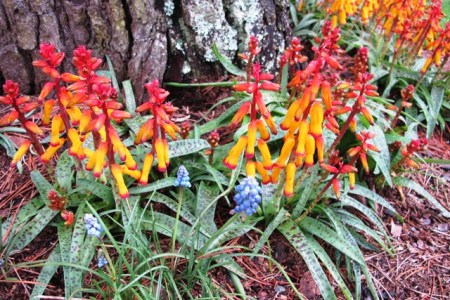
As a contrast to the candy pinks, I photographed the lachenalias and muscari (grape hyacinths) below which nestle in around the trunk of one of our old pine trees. The muscari evoke childhood memories for me. I admit that Lachenalia aloides is not my favourite lachenalia – they are a little garish, looking maybe as if they made from plastic and sold at a cheap store but they provide a cheerful splash of colour in a naturalised setting.
Tikorangi Notes: Friday 10 August, 2012

Lanarth again - at its best against our blue skies

Lanarth again – at its best against our blue skies

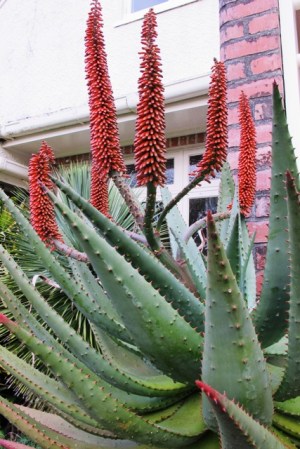
Aloe aloe aloe

Aloe aloe aloe

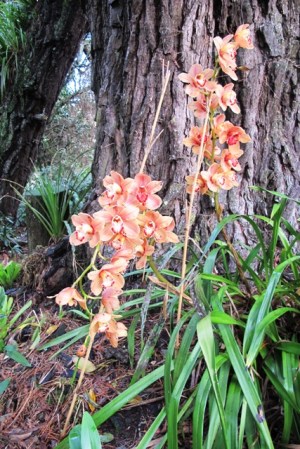
I was caught slightly on the hop this week when somebody rang from the Wairarapa, planning a garden visit. I suggested another week would be better for the magnolia display and he asked what else was in flower. I burbled on, mentioning the big-leafed rhododendrons, michelias and camellias. I could also have reeled off the campanulata cherries, swathes of early flowering narcissi, vireya rhododendrons, hellebores, early clivias, azaleas, the last of the snowdrops, early lachenalias, calanthe and cymbidium orchids, Cyclamen coum, bromeliads, even some of the aloes. Mark keeps reminding me that in harsher climates, gardens don’t have flowers all year round. We take it for granted here and while August is technically winter, the spring flowering has started in earnest now. It is unstoppable. Mind, the magnolias did not appreciate the hail storm two days ago. I went out looking for a good photograph and the first Vulcan blooms all looked as if somebody had ripped all the edges of the petals. Give it another few days, and many replacement blooms will have opened. It is a magic time of year here and the birds are in agreement too.

Cymbidium orchids in the woodland

Cymbidium orchids in the woodland

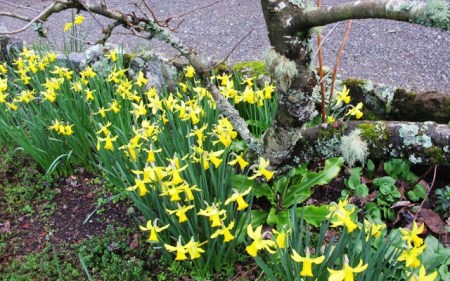
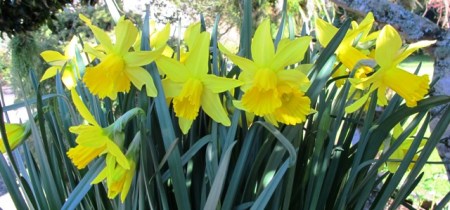
All the early narcissi are in flower

All the early narcissi are in flower

Tikorangi Notes: Friday 3 August, 2012

Magnolia Lanarth is coming into flower

Magnolia Lanarth is coming into flower

With the advent of August, our garden is now open again for the season and more is coming into flower every day. Magnolia campbellii is in full bloom, Lanarth is opening as is Vulcan, assorted unnamed seedlings are opening and the early michelias (now reclassified as magnolias) are in full bloom. Between the michelias and the many daphne plants, the garden is full of scent. The earliest of the big leafed rhododendrons (R. macabeanum and R. sino grande types) are coming into flower. And at the lowest level, there are many early spring bulbs blooming. As the snowdrops start to pass over, the early narcissi (many of the cyclamineus type) are blooming and Cyclamen coum flowers on. Mark’s efforts on his bulb hillside are bearing fruit (or maybe bearing flowers in ever increasing quantities is a better description). While we may get a cold snap or two, spring has very much arrived.

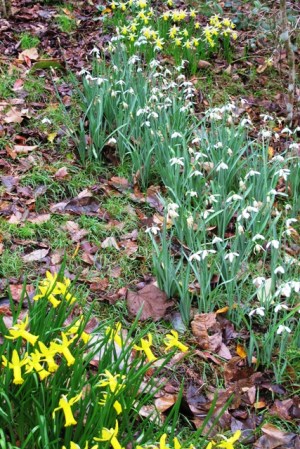
Mark's bulb hillside - Narcissus cyclamineus at the front, galanthus in the centre and Narcissus Twilight to the rear

Mark’s bulb hillside – Narcissus cyclamineus at the front, galanthus in the centre and Narcissus Twilight to the rear

We have no new posts this week to list – the gardening page of the Waikato Times has been put to one side to make additional space for Olympic sports news.

Magnolia campbellii in full flight this week

Magnolia campbellii in full flight this week

Tikorangi Notes: Friday 27 July, 2012

Narcissus Peeping Tom is a wonderful early season performer

Narcissus Peeping Tom is a wonderful early season performer

Helleborus x sternii

Helleborus x sternii

Latest posts:

1) The curse of the narcissus fly, also called bulb fly. Truth be told, it is not the fly that causes the damage – it is the larvae that eat the bulbs from the inside out.

2) The delight of Helleborus x sternii in our woodland areas. Green flowers have a charm of their own.

3) Grow it yourself: runner beans, or climbing beans this week.

4) I have been re-posting Outdoor Classrooms in a more user-friendly format. This takes a while and I have quite a few still to go but some are done should you wish to know how to renovate old camellia plants, or most of what you are likely to need to know about making compost (in a step by step 3 part series), maybe you fancy making a bamboo obelisk, or you need to prune your apple trees or maybe hydrangeas.

5) Spring is arriving here with its usual rush. If you a Facebook person, you can get the photos posted on your Facebook timeline if you “like” our Facebook page (http://www.facebook.com/thejurygarden) as the parlance goes.

The first blooms on Magnolia Vulcan are the very best

The first blooms on Magnolia Vulcan are the very best

Tikorangi notes: Friday July 20, 2012

The very first flowers of the season on Magnolia campbellii

The very first flowers of the season on Magnolia campbellii

Latest posts:

1) Modern perennial plantings, more in the style of Braque than Mondrian.

2) When only one plant is ever found, it could be said that this is as close to extinct as anything could be – Pennantia baylisiana.

3) Grow it yourself: cauliflower (not that we will be. Growing them, that is)

4) Floods earlier this week – on Monday in fact. These events happen here. It certainly was not the worst flood we have had but these things are still quite exciting when they occur.

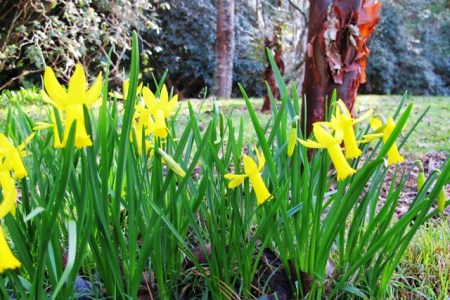
Narcissus cyclamineus at the base of Acer griseum

Narcissus cyclamineus at the base of Acer griseum

July is usually the bleakest winter month here, but aside from a few cold days and torrential rain on Sunday and Monday, it has not been too bad at all. Last summer was one of the least memorable ever, but autumn and winter (so far) have been significantly better than usual.

The first magnolia flowers have opened on M. campbellii and on Mark’s earliest flowering hybrids and more will open every day. The snowdrops are flowering and more and more of the narcissi are opening. Last week it was just the hoop petticoats (N. bulbocodium citrinus), this week there are various cyclamineus types opening. More camellias open every day. The cymbidium orchids are in flower (and need staking) and Cyclamen coum blooms on It is a magical time of the year and will just keep getting better as we progress into spring. We could never complain that winter is bleak here.

Lloyd is doing a major reconstruction of our steep path down to the park which has eroded badly with heavy rain. I am nearing the end of the major makeover on the rose garden – after the earlier satisfaction it has morphed into hard graft now. Three more fine days and it should be done.

Officially, we reopen the garden at the beginning of August but wait a few more weeks if you want to see the magnolias in full flight.