
This Italy actually exists
Cliched though this scene may appear, it is not contrived. I just came across the view as we walked from Villa Adriana to the nearest coffee shop five minutes up the road. We wanted our morning caffeine hit before we tramped the ruins. Not only were there red poppies growing wild in the barley crop, the blue chicory and white convolvulus (field bindweed) were flowering alongside the stone wall that edged the road. I probably laughed out loud in delight.
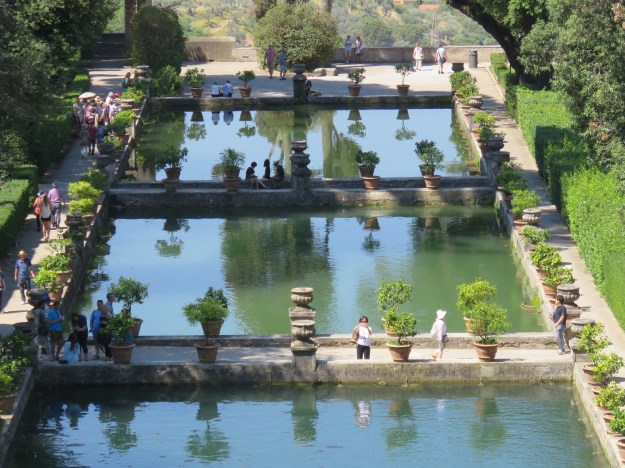 Villa d’Este in Tivoli is known worldwide as one of the great Italian gardens. Built by The Man Who Would be Pope to compensate his thwarted ambition, it dates back to 1560. It was grand then. It is still grand today and water features throughout. His land excavations to achieve this garden would have put Capability Brown into the shade.
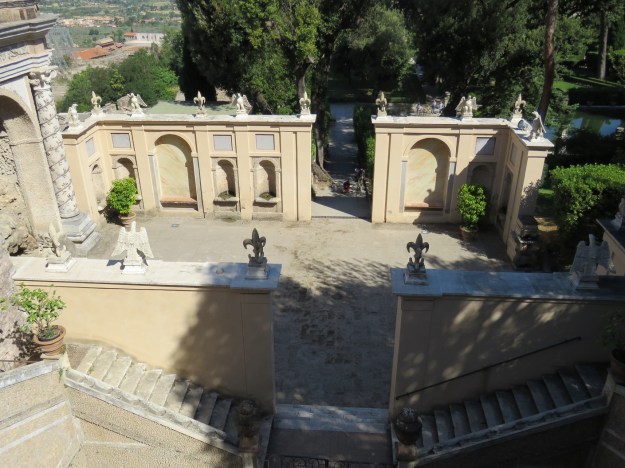
Formal but not strictly symmetrical at Villa d’Este
We have looked at some of the great Italian gardens on previous visits and had come to the conclusion that it is the settings, the hard landscaping – particularly the stonework – the history, the handling of space and proportions and the symmetry that makes these gardens endure as monuments to wealth, power and sometimes grace down the centuries. It is not so much to do with the plants or the maintenance. In a moment of profundity, as we walked through Villa d’Este, I noted that the symmetry is achieved through repetition, not through slavish measurement. It is that repetition and symmetry on a large scale that makes them so pleasing to the eye.
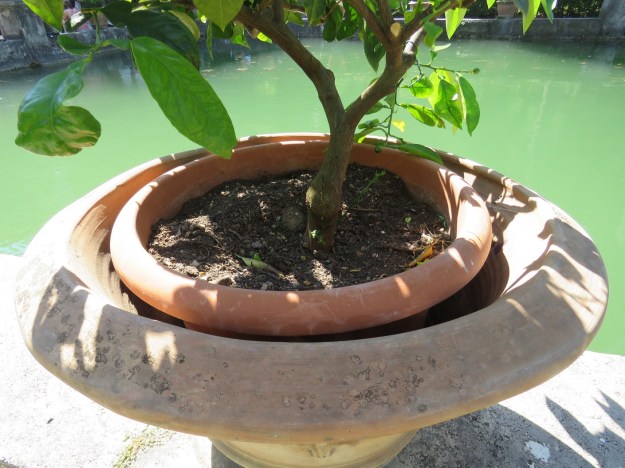 Attention to detail is not a strong point in Italian garden maintenance. Plants are not required to be immaculate. Irrigation hoses are often visible. It is okay to have plastic pots visible inside the terracotta pots. Water quality can leave a lot to be desired. Lawns are impossible in their climate. Some coarse grass kept green by watering is the best that one can hope for. The big picture is what matters. But, should you have grand visions of creating an “Italian-style” garden at home in New Zealand, maybe be aware that there is not one skerrick of tanalised timber – be they posts or plywood edgings or pergola beams – in any of these originals. Personally, I do not think that you can be Italianate or even Italianesque and use undisguised tanalised timber as a substitute for stone and terracotta. Ditto modern ‘dragonstone’ urns. And imposing suburban New Zealand values of pristine maintenance and velvet lawns takes such gardens even further away from the originals.
 The straw broom brought a smile to our faces. Regular readers may remember me posting about the making of these in China. Sometimes there is a charm to old ways. Besides, as Mark points out, these brooms work very well. Our first ever visit to Italy was back in the early 2000s when we went on an IDS tour of northern Italian gardens. It was there we first saw the widespread use of leaf blowers and came home and bought one. These days, Mark is using ours less and less. He is a bit of a purist, our Mark, and has become concerned at how dependent we have become on the internal combustion engine to maintain the garden. If somebody would just make him a few straw brooms, he would be a happy man.
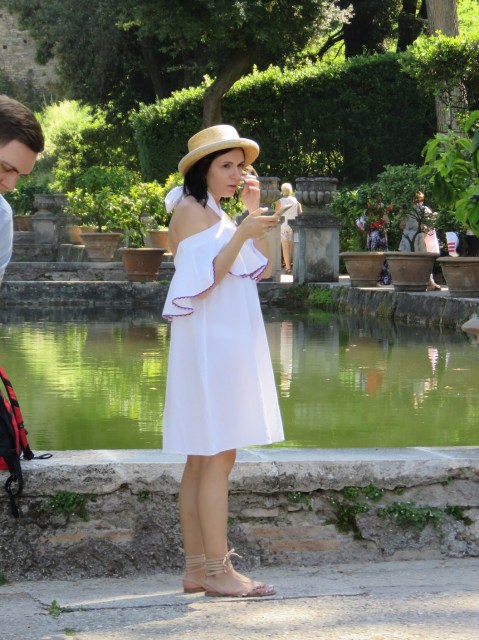 I am sure it takes a great deal of work to look like a modern-day princess, even more so when the temperature is over 30 Celsius and the location requires walking down and then up hundreds of steps. Mark noted that she was also behaving like a princess – the one with the pea under the mattress. I couldn’t possibly comment. Even when I was considerably younger, I do not think I ever managed the princess look.
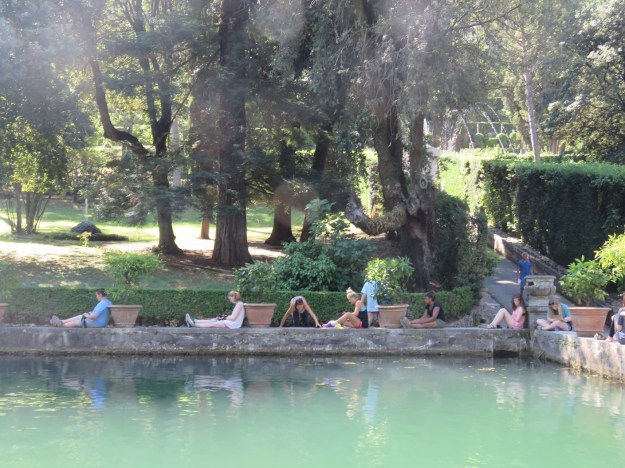

Real life nymphs at Villa d’Este
I preferred the real-life nymphs. It transpired they were American art students doing an art history semester in Italy. Mark discreetly walked past them as they sketched and reported that they were extremely competent at drawing.

Villa Adriana – just one small view of a huge complex
Villa Adriana surprised us by its scale. It is the Emperor Hadrian’s retreat dating back to 200AD. The word villa encompasses a range of building styles and scale in Italy. The one at Villa d’Este is more akin to a palace. Villa Adriana is an entire small city of largely unrestored ruins encompassing about 250 acres. What is more, you can walk amongst them. I found a Roman toilet and an ancient olive grove that was simply astonishing. More on the olive grove another time. This was the Roman empire but it had an air of abandoned desolation even today, as though the tourist plans and archaeological aspirations of even a few years ago had fallen on hard times.

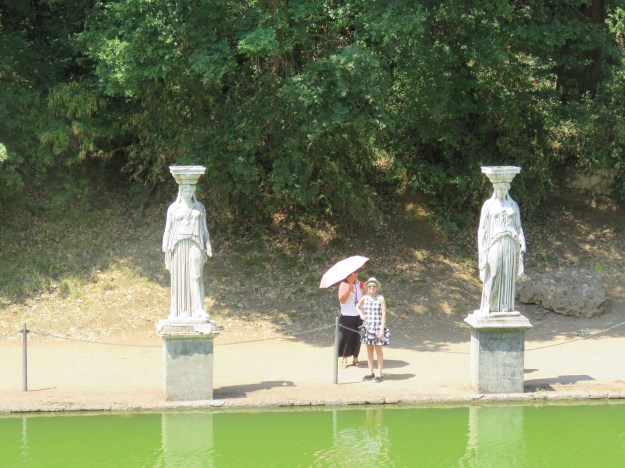 There was a fair amount of statuary of the armless, legless and formerly white variety but I think most of it was more recent reproduction already in decay. Much of the surviving, original statuary and marble had been raided 500 years ago by Cardinal Ippolito ll d’Este and relocated to his nearby pad but we did not know this when we went around Villa d’Este.
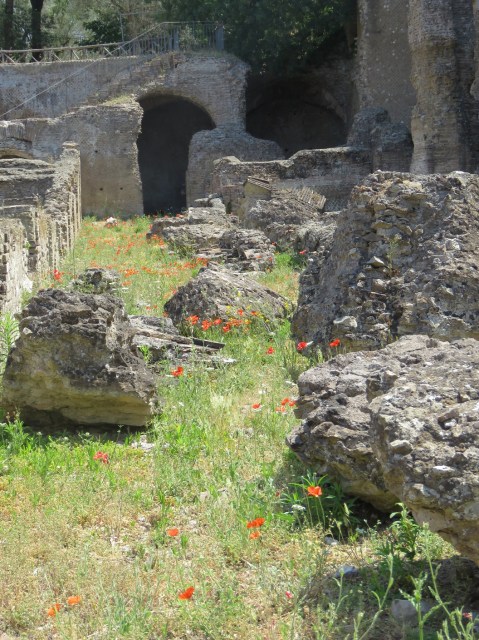 The wildflowers in the ruins of Adriana had a simple charm. In those drought-like conditions, the spring rains must bring a short-lived surge of germination and growth. The plants shoot straight into flower but conditions prevent them becoming invasive problems.
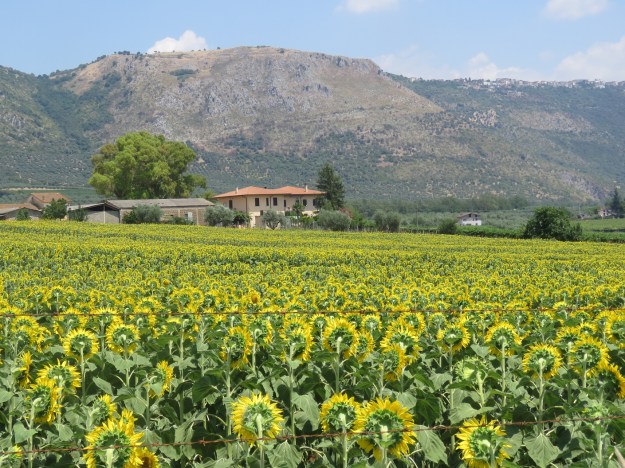 Finally, fields of sunflowers on the road to Ninfa. All facing the wrong way for the picture book image with the house and hills behind. Viewed from the other side, we lost the landscape context.
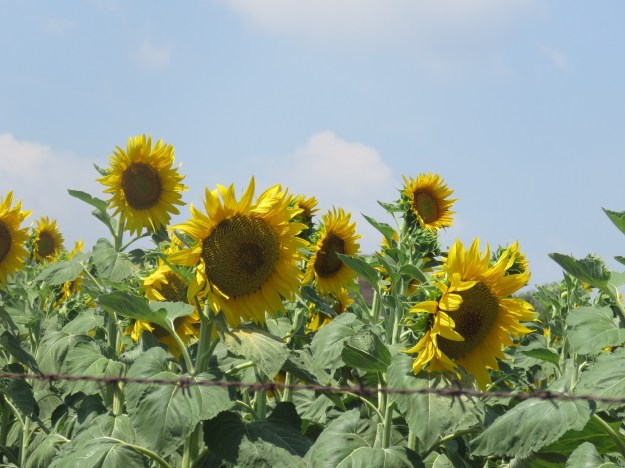
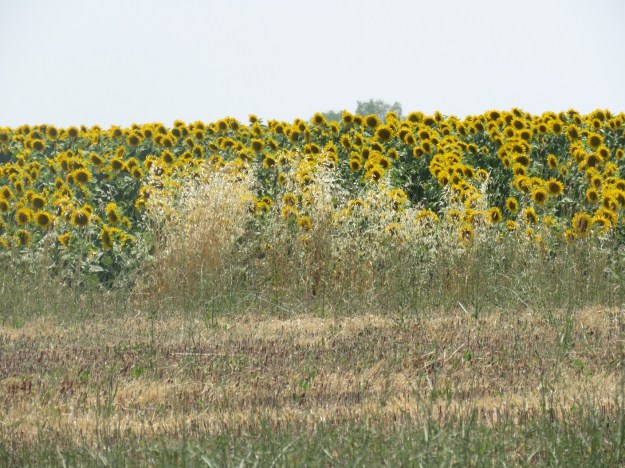
The light is so different in Italy

 Behold our handsome Dudley. Or Dudders, to give him his cricketing name. I wrote about Dudley’s penchant for self-serve avocados two years ago in The Avocado Thief.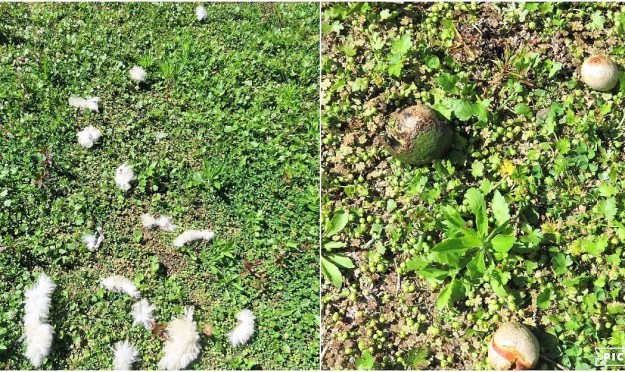
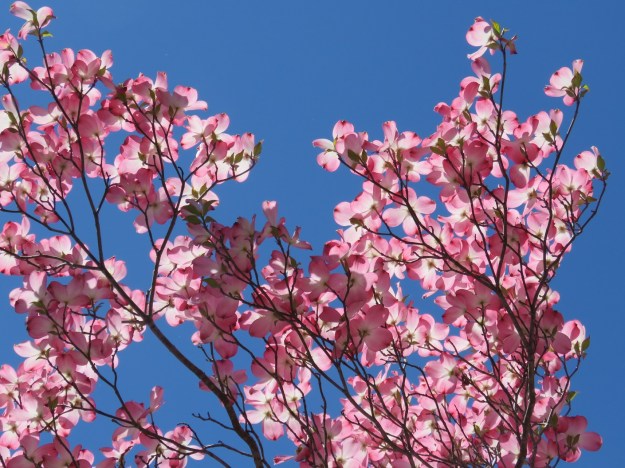
 The cornus or dogwoods were simply amazing in Canberra last week. I have never seen anything quite like them. They do not flower like that here. These trees were a mass of bloom and you could clearly get them in shades of sugar pink to apple blossom pink and or simple white. Viewed close up, they were like stylised paintings in their simplicity. Lovely bark, too.
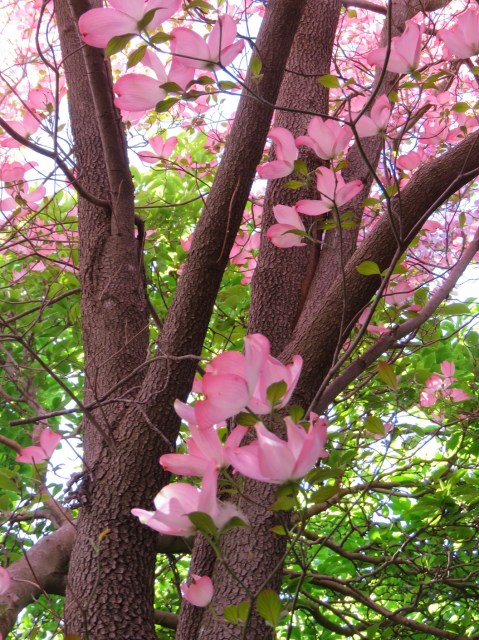 As far as I could make out, they were generally C. florida – or maybe some were hybrids in which case likely crossed with C. nuttallii in order to get bigger flowers. ‘Florida’ means full of flowers, not that it comes from the state of Florida. In fact, it hails from the more north eastern areas.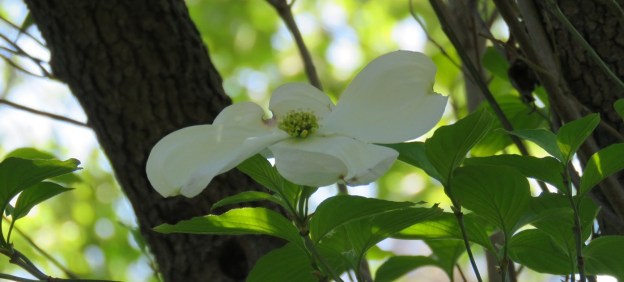
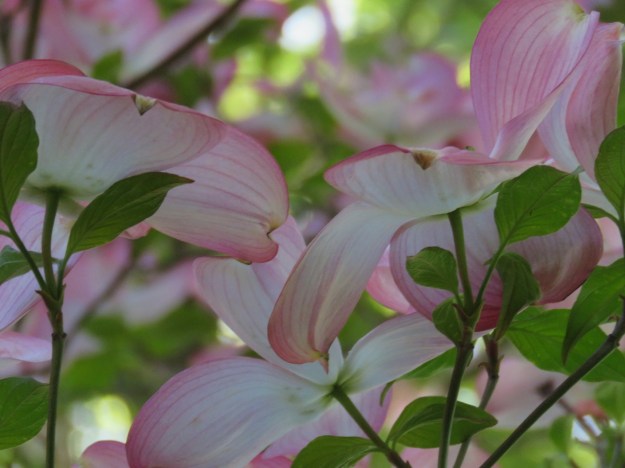 The cornus or dogwood family is quite large. There seems some debate over how many species, but probably in excess of 50. If you take a swathe across the temperate northern hemisphere areas from China, Korea and Japan over to North America, you take in most of the areas of natural habitat.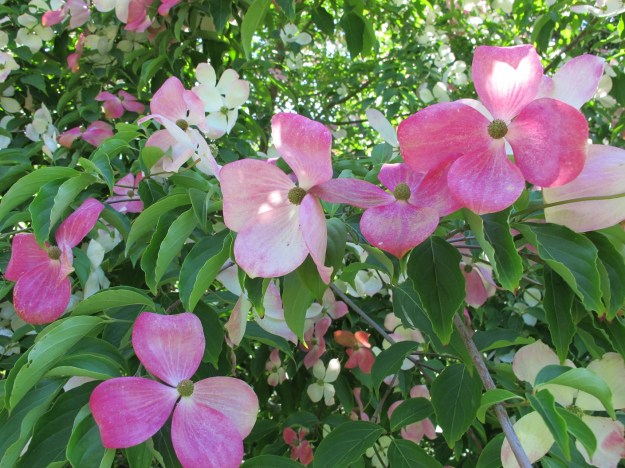



 Tikorangi The Jury Garden