Rhythm and repetition

The borders springing into fresh growth afer their winter hiatus

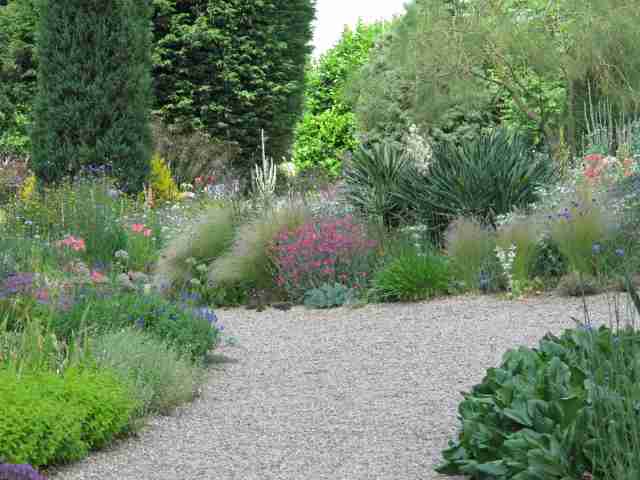
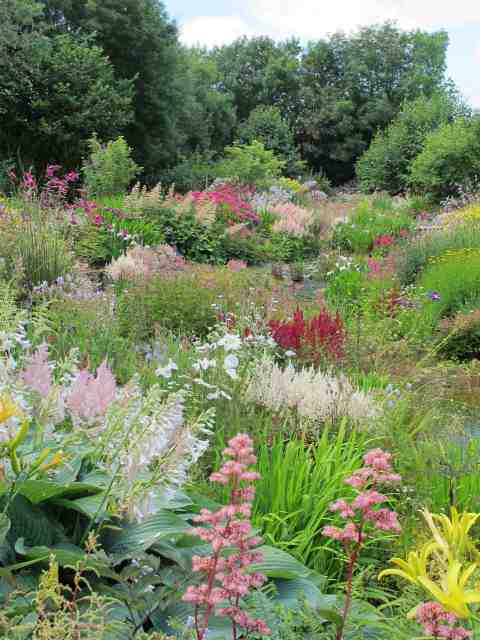
Oh my, but the summer borders are looking pretty. From being fairly empty and dull a few weeks ago, they have sprung back into life. When I planted them back in 2016, I remember muttering words like ‘rhythm’ and ‘echo’ as I was placing plants, with English designer, Dan Pearson, firmly at the front of my mind. I see I once recorded that I was working with about 120 different plant varieties in that area, starting with a blank canvas, so placing plants to achieve some continuity of rhythm was important in avoiding a mishmash. It is only this spring that I looked at it and thought, ‘yes, that continuity makes sense’.

Looking back from the other end
I have highlighted in blue the patches of blue – I counted ten all up

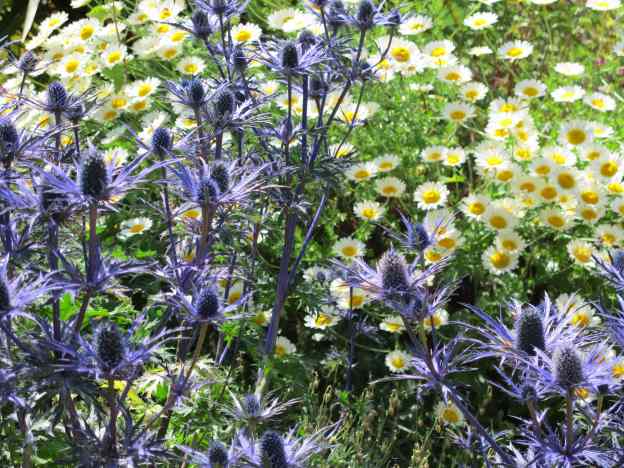
It is the repetition of a colour, not so much the same plant, that made the whole visually pleasing. At this time of the year, it is patches and threads of blue down the length that lifts my heart. Later in summer, it will be more about orange and yellow with splashes of purple leading the eye down the full length.

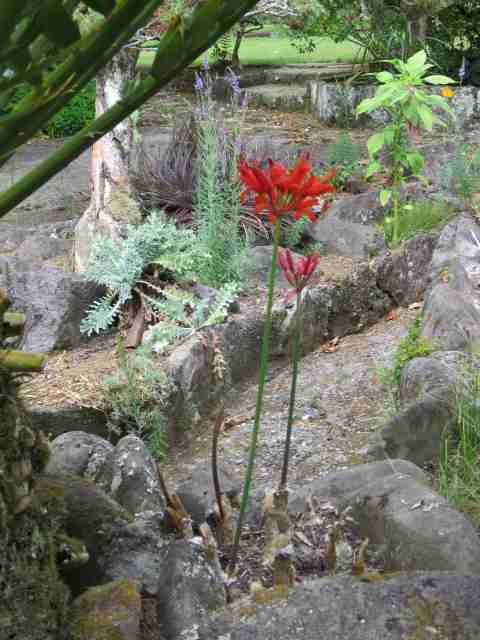
Strelitzia bring the blue, orange and red together in a single, very odd bloom. When those flowers die, they always remind me of a horse’s head.

Years ago – at least twenty years, maybe longer – the oft-repeated mantra of planting was to unify a garden by repeating plants throughout. I see in 2012, I wrote a piece querying this common wisdom and asking whether in fact that repetition just makes a garden downright dull. If you are using renga renga lilies (Arthropodium cirratum),  or even clivias, then yes, it will look dull and repetitious. It is not that simple.

If you are going to use a lot of just one single plant variety repeated or threaded through a larger area, it needs to be very carefully chosen, not just what is cheap, available and easy to grow. It needs to be bold and strong enough in its own right to work visually and not just when it is in flower. I have seen it done with euphorbia which has good foliage, reasonable form and flowers that can smack you in the eyeballs. It is not my choice because I find the acid yellow a bit too strident and that is a matter of personal taste. But it can indeed keep a big perennial planting knitted together as a cohesive whole.

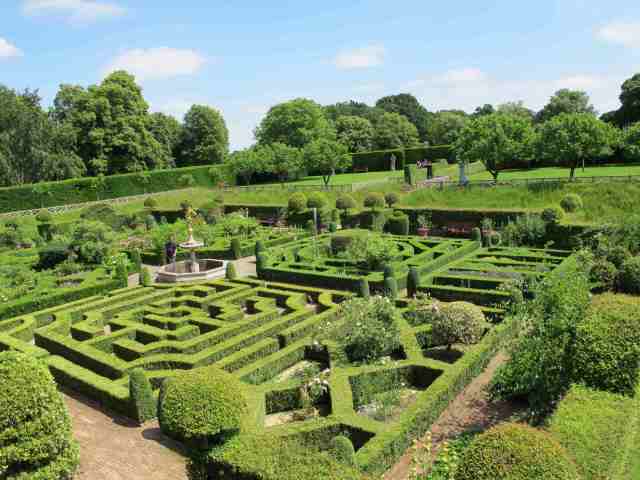
Not our garden. This is English designer, Tom Suart-Smith’s exquisite terrace at Mount St John in Yorkshire using clipped buxus mounds repeated through exuberant perennials.

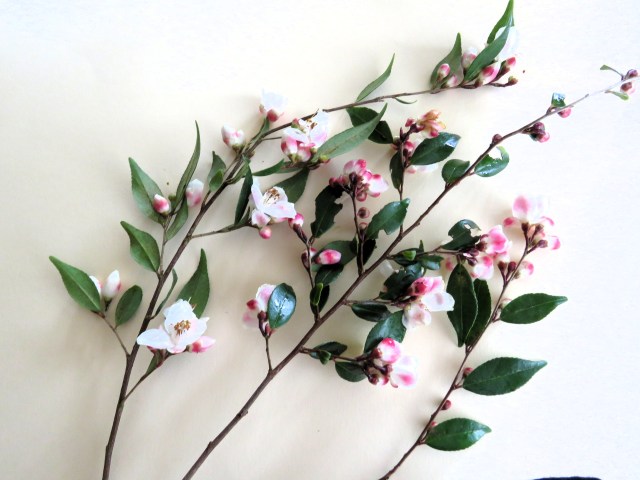
I have seen tightly clipped shrubs used amongst perennials – usually tightly clipped buxus mounds and that can work well – better scattered randomly in my eyes than placed with mathematical precision. We have used the lesser-known Camellia yuhsienensis down one side of the borders – but only five of them. I clip and shape them but not to a uniform shape – more to keep them to a certain size and they give some winter interest when there is not much happening at ground level.

White foxgloves giving some stature and unity to the very loose plantings in the Iolanthe garden here

At this time of the year, it is the over-the-top white foxgloves that keep the loosely ordered chaos of our Iolanthe garden working visually. They are thugs, more perennial than biennial in those conditions and some are towering clumps over two metres tall, all in pure white. I need to thin them (‘edit’ them in modern parlance) because we are getting too many but those tall spires randomly spread through the area hold it all together visually. I admit the foxgloves are serendipity, not forward planning.

We watched an old documentary on the UK’s royal gardens earlier this week, and King Charles’ plant choice was tall delphiniums which are equally seasonal, a whole more work and arguably classier than my white foxgloves. He had them as the bold statement plant in many areas at Highgrove.

Iris sibirica ‘Caesar’ Brother’ in the foreground and Iris sibirica ‘Blue Moon” at the top of the photo

It is the repetition of colour that is working in our twin borders and that comes down more to rhythm than simply repeating the same plant. True, it is the bold blocks of Iris sibirica that give the mass of blue at this time of the year but they not the same variety of that iris and there are also blue bearded iris in flower and plenty of the dainty blue Orthrosanthus multiflorus, which is an Australian native that looks like a blue flowered libertia.

Orthrosanthus multiflorus is a very handy little plant

If your garden is very small, then you treat the area as a whole and picking one bold plant to thread through can certainly hold it all together visually. In a larger garden, it can make it all look the same if you insist on repeating the same plant on a much larger canvas. It is a lot more interesting to ring the changes and create different atmospheres in different areas. You can also achieve unity by repetition of form, not necessarily the same plant.

The orthrosanthus – apparently known as the morning iris – sits gently amongst the daintiest kniphofia, fennel foliage and alstromeria, adding to the thread of blue that holds the overall display together at this time of year.

Or you can do it by colour and that is what is giving me joy. I did plan it, though in my mind and not on paper, so it is not by chance or good fortune. It is even more pleasing to see a plan coming together and for me, it is about rhythm and harmony, rather than controlled repetition.

Not just blue – here we have orange tritonia echoing across the path to kniphofia and alstromerias. With Raplh, as per usual

Show time!

It is the time of the year when the deciduous azaleas star and there aren’t too many plants that star in bloom as they do. For 49 weeks of the year, they are largely ignored and then boom!

If you set aside the flower power, deciduous azaleas are a fairly unremarkable plant, at least in our conditions. I have never seen one with exceptionally attractive form. In winter when they have no leaves, they tend to look twiggy, scruffy and dead. With their fresh foliage in spring, they are generally unremarkable. By the end of summer, in our mild, humid conditions, the foliage is often mildewed. As I went around photographing ours on Thursday, I thought they would look better if we did a big round on taking out the dead wood, which we haven’t done for some years. This is a task best done when the plants are in leaf because in winter, it is hard to tell the difference between dead wood and live wood. But even when we clean them up in this way, it is still very hard to turn an azalea shrub into a good form which stands on its own merit because their growth habit is so twiggy, so formless.

These shortcomings are forgiven when they come into bloom. Masses of bloom, often strongly scented and the colour range is extensive. Some have a vibrance and mass that is rarely equalled. ‘Look at me! Look at me!’ they shout. Others are much more restrained in hue if you can’t think how to integrate the pure colour of the oranges, reds and yellows.

We have a fair swag of them, mostly planted between the 1950s and the 1960s. Some came into the garden as named varieties but the names have been lost in the mists of time. Felix Jury immediately used these in controlled crosses and raised more from seed. Mark also dabbled in turn, particularly with getting double flowers. Deciduous azaleas are one member of the rhododendron family that I think you can safely buy based on flower colour alone, without worrying about searching out particular varieties.

Most of our azaleas are surrounded by large expanses of green. And a rhododendron is not going to survive being planted right on the streambank like this azalea (which is itself a member of the rhododendron family but let us not be pedantic).

Azaleas are useful because they are nowhere near as touchy about growing conditions as most rhododendrons, particularly wet feet, as we refer to heavy soils that never dry out. In those earlier days, our park was prone to flooding. They will also tolerate dry and exposed conditions, living and growing when many rhododendrons will quietly give up the ghost and die. We only have a few deciduous azaleas in the cultivated gardens around the house; most are in the looser areas of the park and the  Wild North Garden. And therein lies a lesson on placement. I don’t think they are an easy plant to place well in smaller, urban gardens, especially the strong coloured varieties.

It is hard to place a plant as dominant as this when in bloom in a smaller, town section planted in the soft pinks of springtime.

I drive past such a small garden every time I go to town. Freshly planted, my guess is that the owners went to the garden centre in spring and bought everything in flower that they liked. It has been particularly pretty this spring with both Magnolia Felix Jury and Iolanthe putting on a show despite their small stature at this early stage, along with some very pretty cherry blossoms, rhododendrons and camellias. And, this week, one garish deciduous azalea in bright yellow. I can see why they bought it but it does rather stand out as lacking harmony with the rest of the garden. The more restrained colours are easier to integrate.

I think our brightest azaleas work because they are standing pretty much in isolation surrounded by masses of green. When they have finished flowering, they will just be another shrub down in the park, like a neutral coloured cushion on a sofa. It is much harder to place them well in a small garden.

If you are in New Zealand and want to buy a deciduous azalea or three, do it right now. This is not a plant that fits modern methods of production and retail so you are unlikely to find them easily when they are not in bloom. Garden centres are not keen on them because they only sell when in flower.

I briefly attempted to disentangle the differences between deciduous, mollis, Ilam and Ghent azaleas, to name just a few groups. Mark gave me a potted history of the azalea in Aotearoa New Zealand and names like Exbury, Stead, Yeats and Denis Hughes all came up, along with notable collections around the country when they were a very popular plant several decades ago. Alas, I am not so fascinated by the genus as to give the time to fact check it all. I will say that if you use the broad term of ‘deciduous azaleas’, it will encompass the lot.

I picked one flower from each azalea that I could reach currently in flower, just to show the range of colour, size and flower form.
The three double white flowers are Mark’s efforts. I did not know this until he saw me laying out the flower board selection.
Too much? I admit there is a whole lot of this orange wonder in its location in a wilder area of the park where it has thrived, untouched by human hands for decades.

My lukewarm attitude to big red rhododendrons

Noyo Chief, big, bold and red.

Back in the days when we used to retail plants, I would quip that nine out of every ten big, red rhododendrons were bought by men; the tenth was usually bought by a woman for her husband. This may well be an exaggeration but it made me view big, red, rhodos as very… well… masculine.

Looking down to the park. Noyo Chief on the right, polyandrum on the left of the mown path. And photobombing Ralph in the foreground.

It may be that, in the intervening years, men have matured beyond that manly cliché and refined their tastes. I couldn’t possibly comment. This train of thought came back to me as I stood looking down one of the tracks to our park. On one side is a large, handsome plant of ‘Noyo Chief’ in full bloom and on the other side of the track is R. polyandrum in flower. My brain registered that ‘Noyo Chief’ was putting on its usual showy display but my heart drew me down to look more closely at polyandrum. It is all a matter of taste and preference. I can see  the merit of the big red but it was the gentler charm of the very fragrant, loose-flowered cream that stirred my emotions.

Polyandrum with its heavily scented, large flowers that measure up to 17cm across but not your classic ball truss of a rhododendron.

Back in the early 1980s, Mark started the nursery here. We will give his father, Felix, credit for many things but contrary to what some people still think, he did not start the nursery. That was all Mark’s effort, from one wheelbarrow up. He started with rhododendrons as the main line and, as one in four New Zealanders lived in the Auckland area at the time (now more or less, one in three), he always had the goal to produce rhododendrons more suited to their climate. This meant varieties that would keep good foliage and not need regular spraying in a mild, high humidity climate that lacked winter chill.

The NZ hybrid Rubicon is one of the best reds – my camera has turned it pinker than it is to the naked eye. But you can see the silvering on the leaves which is a sign of thrips which we get badly in mild climates. This plant flowered brilliantly for years and then simply… died.

There are a few big ball truss types that perform well in Auckland and this includes the arboreums, many of which are big reds. ‘Kaponga’ is a good example. But it was the maddenii group that Mark targeted. Felix had already found that they performed way better here in our mild, humid climate, keeping healthy foliage without spraying, flowering abundantly every year and many, if not most, had fragrance. Most of Felix’s successful hybrids are from within the maddenii group – ‘Bernice’, ‘Moon Orchid’, ‘Floral Dance’ and ‘Barbara Jury’, amongst others.

This is an unnamed maddenii from Felix’s breeding – the same cross that gave Moon Orchid and Felicity Fair.
The same maddenii beside white Mount Everest. I like that contrast of the looser maddenii with the chunky sturdiness of the ball truss on Everest.

Alas, none of the maddeniis have big, ball trusses that are generally associated with rhododendrons. Nor do they come in red, be it bright red or dark red or pure red. And the maddeniis don’t have that chunky, solid, rounded form of growth seen in many rhododendrons, instead being much looser in form. We spent years working hard to convince the buying public of their merits. It often felt like pushing the proverbial excrement uphill and I don’t miss those days at all. These days, I am happy to enjoy them in our own garden. The maddeniis make my heart sing more than any other group of rhododendrons. Personal taste and all that.

Rhododendron nuttallii x lindleyi ‘Stead’s Best’ delights me far more than any big, bold red.

As a postscript to big red rhododendrons, let me tell the story of ‘Fireman Jeff’. Back in the early days of the nursery, our country’s borders were much looser and there was a lot of new material coming into the country. Mark bought all the new hybrids he could find locally, mostly originating from the USA. It was the era of plants like ‘Lems Monarch’, ‘Lems Cameo’, ‘Puget Sound’, ‘Trude Webster’ and so many more. I see our 1990 mailorder catalogue ran to a full 127 different rhododendron options, which seems a huge number for what was still a small nursery. ‘Fireman Jeff’ was amongst those recent imports. Mark and I must have been a bit tired in 1989 when we wrote its description for our catalogue:

Fireman Jeff (Jean Marie de Montague x Grosclaude) 2m Mid season.

This over-rated hybrid is best suited to a cooler climate where its bright red, almost hose in hose flowers could make a splendid feature in your neighbour’s garden. Large plants $10.00.

I see a year later, in 1990, we changed our tune a bit and wrote: “To prove our comments last year wrong, it flowered beautifully for us this season. Better suited to cooler climates where it may justify its good reputation.” And we had put the price up to $15.50. We dropped if from our range, though, because it wasn’t suitable for our target market.

I lack any photos of Fireman Jeff. This instead is another maddenii seedling.

‘Fireman Jeff’ is still being sold extensively but the advice remains sound – best in cooler climates (south or inland) with winter chill and lower humidity. Keeping to the arboreums and maddeniis is a safer move if, like us, you are high humidity and lacking winter chill. With a garden dating back to the early 1950s here, we can speak with some authority on the rhododendrons that have lasted the distance in these conditions.

These are both unnamed seedlings but again, that combination of the tight ball truss and the loose maddenii bells pleases me.

Good things take time *

Pleached Fairy Magnolia Whites in a row shaped to a flat plane. We have two such rows.

Behold our pleached rows of Fairy Magnolia White! I am delighted. A goal has been achieved. It has taken 10 years and that was starting with big plants. In retrospect,  I admit that it seems quite a long time but such is the way of gardening. It has looked fine and established for maybe 6 or 7 of those intervening years but finally, we have it how it was envisaged.

Pleached street trees in Vernon

Pleaching is creating a hedge on stilts where the foliage is knitted together to form a length that is more or less flat on two sides but uninterrupted in its length. I photographed pleached street trees in Vernon, the small French town closest to Giverny back in 2014 but I think it was Mark who drew my attention to them because he already had the plan of pleached rows defining our summer gardens, on which we had started the groundworks back at home.

Lloyd on our baby tractor, moving in trees one at a time back in 2014
The start of the summer gardens, when we were all a decade younger. You can see the peg in the ground – they were working to string lines to get the spacings even and straight.

So it was Mark’s vision and his and Lloyd’s hard work that saw large plants going into the new ground in the spring of 2014 and autumn of 2015. We already had the plants growing in a field on our property across the road. They were our original stock plants from when we first released Fairy Magnolia White and they were trained to a strong central leader or trunk. It was no mean feat digging them and getting them across the road and planted but Mark and Lloyd were 10 years younger then. As an aside of useful advice, as soon as they were planted, Mark removed about a third of the foliage, which seemed brutal at the time but was all about reducing the stress on the plants after transplanting.

This is what it looked like a month ago when Fairy Magnolia White was in bloom

In the years since, they have been trimmed once a year – as flowering finishes – to get them to the form we want but it was when our gardener, Zach, joined us that it all started to come together. This must be the third or maybe fourth year that Zach has trimmed them and he has it just right now. As garden tasks go, it is not a massive job – I think it only took him just over two days – and the heaviest part is managing the ladders, which are large. But it is a skilled, precise job. It is all secateur and handsaw work – not hedge clippers.

Squared off to be narrow in width, as viewed from one end of a row

It will look sharper when the hedge of Camellia Fairy Blush beneath also gets its big trim this week and the gap between that hedge and the pleached michelias above is fully defined. I was impatient to record my delight with the clearly defined, more-or-less two dimensional appearance (height and length but little width).  

We have three archways of Podocarpus parlatorei. This front one still needs to thicken in the middle but it is getting there.

Credit to Zach, too, for creating the archways of Podocarpus parlatorei in the same garden. Mark had always planned either arches or gables – to echo the gables on the house. Realistically, had it been left to us, I am guessing we would probably have taken the easier route and just trimmed to tight columns but Zach has trained them over to be arches and they have almost filled out to final thickness. They are tied in, in case you are wondering how he did it. The key is getting it tied in when the new growth is soft enough to bend. When it has hardened, it will break. The podocarps are trimmed annually but he has kept the arch tied and trimmed every few months. Again, getting the ladder into place is the most onerous part of this task. Mark, Lloyd and I are all getting a bit old to be carting the largest ladders and working at height. This is just yet another reason why I appreciate younger generations.

Time, too, has seen our clivia plantings go from strength to strength and they are certainly starring this spring. You can have too many clivias in a garden; the orange and red ones are very strident. I am not a fan of mass plantings of clivia but we have integrated them amongst other plants in shady areas and they glow. Ours are almost all seedlings raised here from controlled crosses. This means that Mark has taken the pollen from ones he thinks are good and used the pollen on other selected specimens, marked the pollinated flowers and gathered the ripened seed to sow in nursery conditions. It is quite a bit of faffing about but increases the likelihood of getting superior seedlings rather than leaving it all to Nature. We now have so many that we just weed out seedlings and thinnings.

Mixed colours and mixed plantings are our style, not blocks of single coloured clivias

The reason why clivias are usually expensive to buy is that they are slow growing. It takes much longer than most common perennials to get them large enough to set flowers and sell in garden centres – years more, in fact.

Gardening really is about the longer game but it is particularly rewarding when you see visions realised and areas that get better as plants mature.  

* The heading is a reference that it is likely only New Zealanders will understand. Cheese. Yes cheese. A reference to a long running advertisment for a brand of tasty cheese.

Too many bluebells!

So pretty beneath the trees in an area that is not cultivated garden

The romantic haze of blue of a drift of bluebells – how delightful. And yes, it is but only in the right place. I have written about bluebells down the years and we went to some trouble to establish drifts here. Ironically, back in 2007, I wrote: “The bluebell planting was a bit of triumph for Mark. He had been gently nurturing a patch in the vegetable garden to build numbers and came up with about 2000 this year. Now 2000 bluebells may sound a large amount to most people but his mission, he explained, was to try and get that 2000 to look more like 20 000. It takes a huge number to have much impact in a large area.”

I was first inspired by a natural bluebell wood in Scotland back in the early 1990s and I loved bluebell season when our friends, Bruce and Lorri Ellis, had Te Popo Garden. I have a childhood memory of my mother’s treasured bluebells. She was a good English gardener, my mother, and she encouraged us to pick flowers as long as we picked them with long enough stems to be put in vases. But the bluebells were prohibited; we were allowed to pick the common, blue grape hyacinths (muscari) but not the bluebells.

We also enjoy the bluebells in wilder areas, These all grew from seed Mark scattered. The presence of pink and white ones tell you that they are Spanish bluebells.

I once spent some time unravelling the differences between Spanish and English bluebells  and came to the conclusion that what we have here are all Spanish bluebells, or maybe Spanglish hybrids, but not the more desirable English species.

Our mistake here has been to allow some into cultivated areas of the garden. Bluebells are best kept to wilder situations. I speak from experience. Bluebells are thugs; in well cultivated garden conditions, they are more than thuggish and can spread at a frankly alarming rate. Not only do the bulbs multiply over-enthusiastically , but the seed disperses freely and germinates happily where it lands. We started trying to deadhead our garden bluebells some years ago. Now we – as in Zach and I, but mostly Zach – are trying to eradicate them from some areas and to drastically thin them where eradication is not possible. Bluebells may be pretty but we don’t want them everywhere.

Bluebells are fine in this situation, around a tree trunk where they are contained by mowing. The narcissi are bulbocodiums and you can tell the tree is a eucalyptus by that interesting twirl on the trunk.

I am sure we could hit them with spray but that is a last resort here and we haven’t quite reached that stage of desperation.

What to do with all the bulbs that have been dug is the question that is now troubling us. I don’t want to give them away seeing we have decided they are weedy. They can’t go into the compost because they won’t die in there. Some of the early ones went into buckets of water to see if they will rot down but that is taking a long time and we don’t need buckets of water so much as tanks or drums. Also, we won’t appreciate stagnant water as temperatures rise and mosquitoes become active.  

I don’t think they are going to die here, even sitting on weedmat

Some have been spread on a stand-out area covered in weedmat in the hope that they will dry out and dessicate. But they are actually growing and flowering there. Maybe when the heat of summer comes, we can keep turning the heap and drying them out but I reckon they are tough enough to survive.

We have resorted to removing the foliage and putting them into plastic sacks. The theory is that black sacks will heat enough over summer to cook the plants inside them and it mostly worked on wandering willie (wandering jew or tradescantia) in the past but the volume was considerably less.

Our landfill wheelie bin is not to be used for green waste unless it is noxious weeds. I may make a professional decision that bluebell bulbs are indeed noxious weeds and start putting a bag a fortnight into the landfill bin but it will take months to clear them.

Any helpful ideas?

Ajuga – a better behaved blue drift in a garden situation

The moral of this story is not to repeat our mistake and allow any bluebells at all into garden beds. Ajuga is a much more garden friendly option to create a blue haze.

The meadow we are developing in the Wild North Garden with a scatttering of bluebells, but mostly pinkbells, at the top of the photo

It has taken us years to learn how to create a sustainable flowery meadow in our conditions of high rainfall and high fertility but I feel we are succeeding in the Wild North Garden. Looking at it this week, I thought that a flowery meadow that goes from spring to autumn is more rewarding than a bluebell drift that looks lovely for three weeks of the year.

Ralph, back to sniffing out rabbits or maybe rats down in the bamboo grove

For those of you who expressed concern about our dog, Ralph, after last week’s post, I am pleased to report he is not far off being back to his normal self. He appears to have some damage to his lungs with a persistent cough. We have our fingers crossed that this may heal over time. Organ damage is a known side effect of the poisons he ingested but whether it will be permanent remains to be seen. Otherwise, he is back to his usual exuberance and if he were human, he would thank you for your concern. We are deeply relieved.