The Jury magnolia legacy – first published in the RHS Rhododendrons, Camellias and Magnolias 2017 yearbook

Back in 1973, when Mark and I were impoverished university students, his father, Felix, gave us the cheque he had received from Os Blumhardt for the right to release Magnolia ‘Serene’. It was for NZ$150 and that was the only money Felix ever received for any plant he bred. At the same time, Duncan and Davies released his Magnolia ‘Iolanthe’ but, despite being the powerhouse nursery of the southern hemisphere, paying breeders for their plants was never part of their operation. Sometimes we ponder how different the family finances might have been had Felix received even a very small royalty payment for his Phormium ‘Yellow Wave’, but that is another story. The remaining Felix Jury magnolia cultivars were not released until the late 1980s when Mark set up the plant nursery here. With the exception of ‘Vulcan’, where the immediate public response took us by surprise, the releases were all very low key.

Magnolia Apollo

Magnolia Athene

Magnolia Lotus

Magnolia Milky Way

It takes time for magnolias to prove themselves and it is only in the last couple of decades that the Jury magnolias have become known internationally. There aren’t many of them. Felix only named eight of his own breeding – Magnolias ‘Apollo’, ‘Athene’, ‘Atlas’, ‘Iolanthe’, ‘Lotus’, ‘Milky Way’, ‘Serene’ and ‘Vulcan™’ . We don’t include the variety M. ‘Mark Jury’ in that list because it arrived here as a seedling and all Felix did was to grow it and, in due course, name it. Mark vetoed his father’s suggestion of naming a few more because they were too close to ones already selected, although we have a few fine sister seedlings from those breeding lines in the garden here.

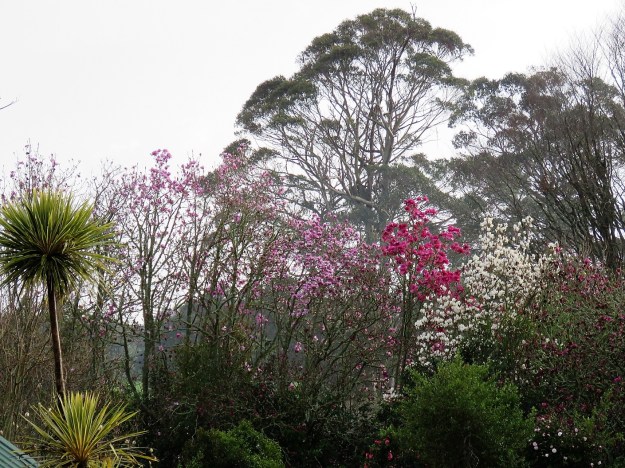
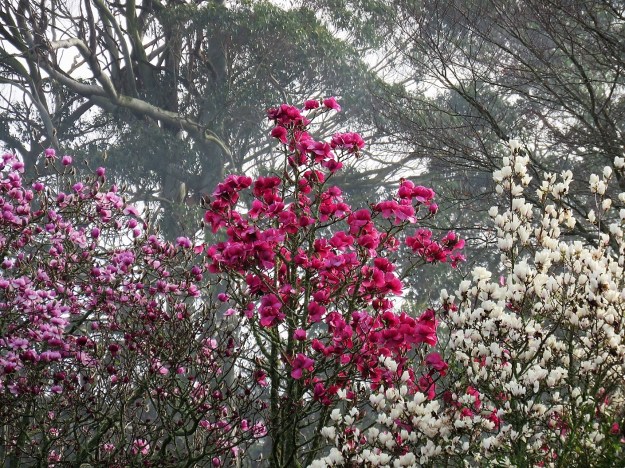
In his turn, Mark has named four deciduous magnolias so far – ‘Black Tulip’, ‘Burgundy Star™’, ‘Felix Jury’ and ‘Honey Tulip™’ – though he has raised many more controlled crosses than his father ever did. Records here do not include total numbers of plants raised but certainly Felix never raised a large number – maybe 50 or so. Mark has been much more focussed and a rough guess puts the number of deciduous magnolias raised to flowering size in excess of 1000. If a particular cross shows promise, Mark will locate the plants in places where they have the space to grow to maturity and, as the years pass, the display just gets better. There are a lot of what we call “also-rans” – not destined to be named but too good to chainsaw out. Late winter and early springtime here is simply glorious.

Magnolia Atlas

When it comes to naming a plant, consideration is given to whether it represents a breakthrough in some aspect and is significantly different to anything already named. It must also produce flowers on young plants, bloom on bare wood in our climate, not grow so rapidly as to indicate it will become a forest giant, propagate relatively easily and flower reliably every year while setting buds down the stems to prolong the season. That list may be why Mark has only named four so far.

At the time when Felix started crossing magnolias, there were few varieties available in New Zealand and most were species. He wanted to see if he could get large cup and saucer blooms with good colour, flowering on a young plant. His lucky breeding break came with the cultivar he imported from Hilliers. It was meant to be M. campbellii ssp mollicomata ‘Lanarth’ but when it bloomed for the first time, it was clearly a hybrid, probably ‘Lanarth’ x sargentiana robusta. He named it for his youngest son, Mark Jury. It proved to be an excellent breeder plant and five of Felix’s eight named cultivars used ‘Mark Jury’ as pollen donor.

Magnolia Iolanthe

We rate ‘Iolanthe’ as one of the very best he named. The original plant is still located beside our driveway and has now achieved magnificent stature at about 10 metres high and a canopy the same distance across after 50 years. Every year it takes our breath away with its beauty. The blooms have stayed very large (some cultivars produce smaller blooms once past juvenility) and because it sets flower buds down the stem, even the worst spring storms do not ruin the display for the year. At about two months in flower, it has one of the longest seasons.

Magnolia Serene

Serene is the last of the season to bloom for us and we have always been surprised that this top performing strawberry pink variety has not gained the reputation and market traction it deserves. Hindsight is a wonderful thing and with the passage of time, we think ‘Atlas’ would not meet the selection criteria today. Despite a huge flower, possible unequalled at the time, with good form and a pretty colour, its performance falls short because it only sets buds on the tips of branches. A storm can take out the flowering for the year. That said, it is one that appears to perform well in Britain. ‘Athene’ and ‘Milky Way’ are both wonderful performers but probably too similar to have named both. ‘Lotus’ is lovely but the pure white magnolia field is very crowded now. ‘Apollo’, while abundantly floriferous and more compact in its growth, does not have the same beauty of flower form that the others have.

Magnolia Vulcan

It was ‘Vulcan’ that cemented Felix’s reputation, even if this cultivar has never proven itself in the cooler climes of Britain and northern Europe. You will just have to take our word for it that in milder climates, it can be the most remarkable red colour and, for its time, it represented a colour breakthrough and set the standard for the next generations of red cultivars. We have a remarkable intensity and quality of light in New Zealand even in the depths of winter, and the first red buds to break in July never fail to impress. For many years after we first released this cultivar, we could track its flowering from north to south by the phone calls we received. That is a rare plant.

Over time and with many competing unnamed seedlings of the next generations flowering here, we certainly concede that ‘Vulcan’ blooms do not age gracefully and later flowers are much smaller and in murky purple shades. It appears that those later flowers are the best most British gardeners can ever expect to see in their conditions. Mark is still on the quest for the perfect Vulcan upgrade – a large bloom on a smaller tree, flowering later in the season to extend the climatic range and with colour that ages more gracefully, which means losing the purple undertones that the parentage of ‘Lanarth’ brought in. He is tantalisingly close to pure red but not yet ready to take the plunge and name another in his red series. Having named three so far, a fourth must be something different, special or a significant improvement.

Magnolia Black Tulip

‘Black Tulip’ was the first release of Mark’s cultivars and we were gratified by the immediate public response. Mark’s personal preference is for solid colour in blooms and in the windy climes of New Zealand, we have to select for heavy textured petals and firm blooms that can withstand the equinoctial winds that often strike at peak flowering. ‘Black Tulip’ certainly fitted these criteria and is suitable for smaller gardens though it will never be as bold and showy as grander specimens.

Magnolia Burgundy Star

‘Burgundy Star’ has yet to prove itself overseas. Being three quarter M. liliiflora nigra, the hope is that it may prove to be hardier in colder climates. The original plant in our carpark is exceptional –  fastigiate in its growth which is to its credit as a driveway or courtyard specimen, with a mass of good-sized, red, starry blooms over a long period of time. Only time will tell if this translates to other climates and locations.

Magnolia Felix Jury

Magnolia Felix Jury

So far, ‘Felix Jury’ is the stand-out performer of Mark’s selections. He named it for his father because it was what Felix had been trying to get to – a rich-coloured, large-flowered cup and saucer bloom with a long season. It is a source of pleasure to us that Felix was still alive to see the first blooms. On the first young plants, we described it as rich pink, but with age and maturity, the blooms have deepened to red in our climate and this is a specimen magnolia that just gets better with age and size. We have been delighted to see specimen plants well established in the UK, particularly at Wisley and also The Garden House in Devon. While we haven’t seen those plants in bloom, we are assured they are impressive, though probably more pink than red.


Magnolia Honey Tulip

Mark’s latest release is ‘Honey Tulip’, his best yellow cultivar so far. Again the flower shows excellent heavy texture in the petals, unlike the softer texture we see in the American yellow varieties we grow here. The form is different with a solid cup and the colour does not fade out as the season progresses. We are also pleased with the generous bud set we see on the plants here and it does not look as if it will ever get as large as some of the yellows. It is still early days – ask us in another twenty years how we rate it.

The ultimate goal would be to get to a pure yellow cup and saucer bloom of ‘Iolanthe’ or ‘Felix Jury’ size and splendour, along with the performance characteristics of those two cultivars but that is still a long way off and may not be attained in Mark’s lifetime. The pure red magnolia is closer. The deciduous magnolia programme is ongoing here.

The property is planted out in seedlings

The evergreen magnolias are a separate thread. We are with the Chinese – it is much easier to continue to refer to these as michelias and differentiate them from the better known grandifloras. Mark became interested in these 20 years ago and they are very much a work in progress. When he started, there were only a small number of species to work with and even fewer hybrids but he wondered whether he could extend the colour range and the habit of growth to get more garden-friendly options. In the time since, there has been an explosion of new species collected, particularly in China and Vietnam but New Zealand’s borders are now closed to new plants and he has had to rely on the original species he has access to – particularly M. figo, M. doltsopa, M. maudiae and M. laevifolia (formerly known as Michelia yunnanensis). He is not overly worried about this situation because most of the recent discoveries have been tropical and he is keen to increase hardiness overall, not to decrease it by introducing tropical genes. He had already decided that M. champaca and M. x ‘Alba’ – both of which we have here – were blind alleys when it came to his breeding programme.

Fairy Magnolia White

Most of the hardier species are white or cream flowered but the advantage in terms of colour has come through the most common form of M. figo in New Zealand being more colourful than those we have seen in other countries. Our form includes yellow and purple and that has extended the colour range in the hybrids.

Fairy Magnolia Blush

Michelias have a much quicker turnaround than deciduous magnolias and the number of hybrids here already greatly exceeds the number of the latter. A number of the hybrids show exciting promise in colour and flower size and are certainly extending the range. But the selection criteria includes several critical new factors. The hybrids must not set too much seed, they must make foliage growth down the stems and not just on the tips and they must not show the tendency of some michelias to defoliate either at flowering time or in wet spring seasons. Even more problematic are the issues of fragrance and ease of propagation from cutting. There is frequent disappointment. Mark oft bemoans the fact that he can cross two of the most fragrant of michelias and the offspring lack discernible scent. And the best coloured michelias have so far failed the propagation test. He is also after clean colours. With purple and yellow being the available colour genes, there is a disappointing number of murky coloured offspring which are rejected out of hand. There is a long way to go yet and the downstream crosses are getting ever more complex although he continues to work with the same narrow, original species base.

Moving large Fairy Magnolia Whites into the new garden where the plan is two pleached rows

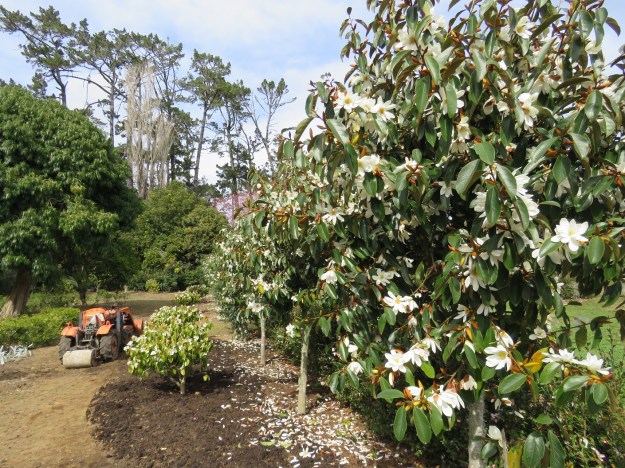
The upshot of this is that only three cultivars have been released to date and none of these show the exciting colour breaks. It is heartening, however, that these three are showing more hardiness than expected, considering the use of two somewhat tender species in M. figo and M. doltsopa. These cultivars are being marketed internationally by our agents, Anthony Tesselaar Plants, under the Fairy Magnolia® branding. ‘Fairy Magnolia Pink’ is a foggii x laevifolia hybrid and brought indubitably pink tones into the range. It is floriferous over a long period of time and particularly good as a clipped specimen. Our row of five clipped lollipops are a real feature and easy to maintain at a set size with an annual hard spring prune and a light autumn trim. On the downside, the foliage is a little more olive green than we would like.

Fairy Magnolia Cream

The selection released as ‘Fairy Magnolia Cream’ is from similar breeding lines and has beautiful flower form, excellent fragrance and foliage in a cleaner hue of green. ‘Fairy Magnolia White’ is different breeding, bringing in more M. doltsopa and is therefore larger growing but with correspondingly larger blooms, also fragrant. We doubt that it is as hardy as the other two and see it more as an improved, garden-friendly version of the M. doltsopa parent. In recent times, we have planted a double avenue of ‘Fairy Magnolia White’ with a view to pleaching them and we have been pleased with how well this cultivar is responding to clipping and training.

A collection of blooms, showing the range in size and colour

The breeding programme will continue. There is a long way to go yet, although really what Mark would like is for one of our children to come home and take it into the next generation. With all three of our human offspring living overseas, this is one aspect of the breeding programme that is not looking hopeful.

Fairy Magnolia White

Apollo (probably liliiflora nigra hybrid x ‘Lanarth’, bred by Felix Jury) Released 1990

Athene (lennei alba x ‘Mark Jury’, bred by Felix Jury) 1988

Atlas (lennei x ‘Mark Jury’, bred by Felix Jury) 1989

Black Tulip (‘Vulcan’ x, bred by Mark Jury) 1998

Burgundy Star™ (liliiflora nigra x ‘Vulcan’, bred by Mark Jury) 2006

Fairy Magnolia Blush (M. laevifolia x foggii hybrid, bred by Mark Jury) 2008

Fairy Magnolia Cream (M. laevifolia x foggii hybrid, bred by Mark Jury) 2013

Fairy Magnolia white (M. laevifolia x doltsopa, bred by Mark Jury) 2013

Felix Jury (‘Atlas’ x ‘Vulcan’, bred by Mark Jury) 2000

Honey Tulip™ (‘Yellow Bird’ x ‘Iolanthe’, bred by Mark Jury) 2013

Iolanthe (lennei x ‘Mark Jury’, bred by Felix Jury) 1970s

Lotus (lennei alba x ‘Mark Jury’, bred by Felix Jury) 1988

Milky Way (lennei alba x ‘Mark Jury’, bred by Felix Jury) 1988

Serene (liliflora x ‘Mark Jury’, bred by Felix Jury) 1970s

Vulcan™ (liliiflora hybrid x ‘Lanarth’, bred by Felix Jury) 1989

Fairy Magnolia Blush – the original stock plants, now lollipops

A perfect garden?

The elliptical pool reflecting the house

Is there such a thing as a perfect garden? I would have said no until we visited a private garden in a little village in the Cotswolds. It was as close to perfect as I have seen.

Let me explain what I mean when I say perfect, by starting with what I don’t mean. I don’t mean it is the best garden that I have ever seen or the most exciting one – we don’t rank gardens like that. Nor that it is static and frozen in time. It is anything but. What I mean is that on the day we visited, it was a garden in perfect harmony where all the elements came together at the same time.

I would list those elements as:

  • the owners’ expectations, wishes and lifestyle
  • the designer and his design within the particular location
  • the plantings
  • use of colour
  • the hard landscaping
  • the underpinning infrastructure,
  • the maintenance of the garden
  • and the incidents of surprise and delight.

All these elements were in balance, to an extent that I have not seen before. There were no jarring notes.

The designer is Dan Pearson, a gentle tour de force in the contemporary gardening scene. He has a strong focus on enhancing nature by working with it, bringing a naturalistic philosophy to his gardens.

To set the scene, from memory the owners told us it is an acre in size. It is flat and Pearson took it back almost to a blank canvas. With the typical Cotswold two-storeyed cottage in the local golden stone being on the road side of the site, the body of the garden has four distinct sections, three of which feature water. The first is by a charming stream boundary and centres on a large elliptical pool with restrained plantings. The second is a formal garden built around a canal, with a dining area closest to the house. The third is the most spacious and contains a swimming pool. It was apparently the first garden Pearson had done that included a swimming pool and he was not keen. I can understand why. Pools are awfully difficult to integrate without turning it into the Miami look. But this pool was beautifully executed, though that is easier when you don’t have our laws requiring childproof fencing close in on all swimming pools.

The fourth area contains contemporary block plantings adjacent to another outdoor entertaining area.

The swimming pool and meadows


The canal garden

There is a feeling of timelessness, particularly in the canal garden, that I attribute to the proportions the designer has brought to the space. We had been thinking about issues of space, proportions and symmetry in Italy the week before. It is those which make classic Italian gardens classic. Looking at it in a much smaller-scale domestic garden reinforced the view that this is what you can get if you choose the right designer. The key word is “can”. It is not guaranteed from all designers but I will say that it is even rarer to see an amateur gardener achieve this. That confident use of space and proportion underpins everything but done really well, it is not obvious.

What I call the ‘hidden infrastructure’ of the garden is well camouflaged to the point where it was not apparent at all. Again, attention to detail is paramount. There is no pond lining visible on the elliptical pool. I asked and the pool is made the old fashioned way, presumably with clay lining to remove the need for an unsightly pool liner. I did not spot a single skerrick of plastic anywhere in the garden. No cheap solar powered lights either.  There were no visible hoses hanging about, no clumsy afterthoughts of garden edgings. The swimming pool filter was housed out of sight. The motorised pool cover was near to silent and the wiring was hidden. The compost bins and inevitable wheelie bins were discreetly housed. Everything had been thought of. We fall well short of that in our own garden but we admire the impressive attention to detail.

Look at the attention to detail on the dry stone walls

The visible infrastructure – more commonly called the hard landscaping – was beautifully executed to the highest of standards. Just look at the wonderful oak-framed arrow slits in the new stone wall.

The maintenance of the garden was unobtrusive but immaculate. Britain has a long, enviable tradition of training professional gardeners. Not for them the experience of the self-claimed garden maintenance contractors. An Auckland friend ruefully noted recently that “The woman doing my “gardening” was moved to “prune” my daphne last month. I will have a daphne-free winter.” These are high level skills that keep this Cotswold garden in peak condition and true to the original vision while meeting the owners’ expectations. There is a wonderful eye for detail and a sure hand in knowing what to leave and what to ‘edit’, as is said in modern parlance.

Roseraie de l’Hay, I think 

The plantings were botanically varied but more restrained than the current UK fashion for large and vibrant perennials in ever more shocking colour combinations – and probably easier to live with for that. But I appreciated the unexpectedness of colour – the bright golden aquilegias and the  yellow Clematis tangutica, the latter combined with red crocosmia. A less bold planting would have gone for the safe but cliched option of the white rugosa, Rosa Blanc Double de Coubert, rather than the bold, deep cerise of what I assume is Roseraie de l’Hay.

This is a garden of charm, restraint and timeless elegance. It has the good bones that may allow it to endure down the decades. On the day, for us, it was simply a delight of gardening perfection.

Again, I have posted an additional album of photos on Facebook for those who would like to see more pictures around the garden.

Even the wheelie bins and compost bins were screened from view by dry stone walls. 

Advice on the matter of gardening gloves

Away from travel and garden trends for a moment and onto the practical matter of gardening gloves. We use these every day, washing them if they get too caked with mud to be comfortable. What I am looking for in a glove is one that stops my hands getting cold and wet in winter, that does not cause sweatiness in summer and that allows fine movement in my fingers. While accepting that the right hand glove always deteriorates first (being right handed), I also want reasonable longevity before the finger tips lose their protective coating and then develop holes.

I have stood before the gardening gloves display stand at Mitre 10 and there is a huge array to choose from. I don’t like gloves that are very stiff or large and cumbersome so I rule those out. That still leaves a large range of fabric types with the palms and fingers coated in PU, which is a polyeurethane. The problem is the price. I have tried the expensive brands and they are very good. They may last a bit longer than the cheap ones, but not hugely longer to justify the price.

I used to buy packs of three pairs at Mitre 10 and they kept us going for years. But when they changed the supplier and went to “one size fits all”, I stopped. One size does NOT fit all. One size generally fits a man with an average sized hand only. It forced me to look online. Trade Me is our NZ equivalent of EBay and indeed there are more economical options for gardening gloves.

The green gloves above are apparently bamboo fibre. 100% biodegradable they say, but I am not sure how that works with polyurethane coating on the fingers and palms. They are good. And cheap enough at $2.90 a pair plus freight. They have a similar life span to other similar gardening gloves I have tried over the years. I am happy to recommend them.

We were getting through our stash so I went on line to order more and found the white ones. A pack of 12 pair for $12. Add freight and they become $1.50 a pair. These are sold through a safety supplies company and touted as suitable for “electronics industry assembly, computer assembly, automotive assembly, precision operation, quality inspection, agriculture, etc.” The construction is the same as all the other fabric gloves with PU undersides, maybe slightly lighter grade. At $1.50 a pair delivered, they will do just fine. I am not at all convinced that the named brands are more than ten times better and more durable than these cheapies. They all perish on the finger tips, in my experience.

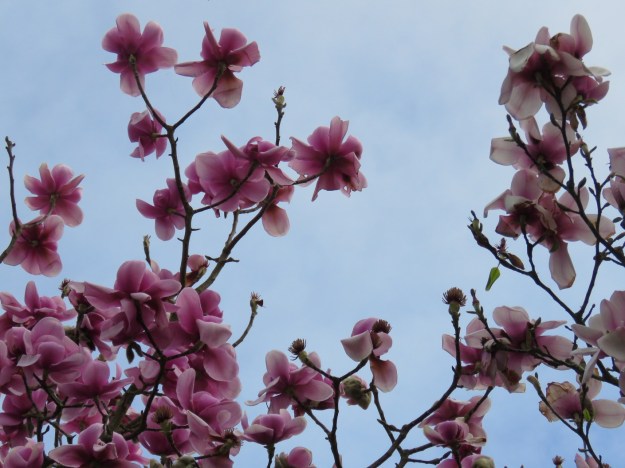
Gardening gloves are necessary but not exciting and will not make any hearts sing so I give you our maunga and magnolia as of 8.15am this morning. Mount Taranaki and Magnolia campbellii as seen (by the camera zoom, I admit) from our garden this morning.


A garden destination for all tastes and expectations? Trentham in Stoke-on-Trent

Trentham Gardens shows that it can get pretty close to being all things to all people. Even on a cool, grey Monday afternoon, the place was humming. Mark and I have a running gag about the “sense of arrival” at gardens. One day I will explain the origin of our cynicism about this but we worked out long ago that the greatest “sense of arrival” is a full carpark. And on this Monday afternoon, I photographed our rental car so we could find it again later. As an aside, you can have any colour of car you like in Britain, as long as it is black or grey. And one grey rental car looks pretty much like 80% of the other cars.

Trentham had a long and illustrious history before falling on hard times. Very hard times. The splendid Capability Brown lake apparently became the smelly, festering sewer for the Trent River and all who lived and worked nearby – especially the potteries for which Stoke-on-Trent is famous – resulting in the family vacating the grand home. When nobody wanted to take the estate off his hands, the 4th Duke of Sutherland committed an act of great vandalism in 1912 and had most of the house demolished. Why? Many must have asked that question down the years.

Why? The remains of the original house

St Modwen Properties certainly must have asked that question when they took over the property in 1996 and declared a brave mission statement:

“Regenerate and restore the historic Estate and gardens turning it into a premier tourist and leisure destination of national significance.” 

The shopping village – Swiss chalet naff?

Those plans included extensive gardens, monkeys, a luxury hotel on the site of the original house (yet to materialise) and a whole lot more. Are they on track? They sure are. Moving from the well-filled carpark, you first encounter the retail village. True, it is what I might describe as ‘Swiss chalet naff’ in style but it appears to pull the punters and I bet the main street retailers hate it. We are not good shoppers so we passed through quickly.

The Italian terraces where the main plantings are by Tom Stuart-Smith

We were there to see the Tom Stuart-Smith and Piet Oudolf gardens and then we found there were extensive new plantings by Nigel Dunnett. Three modern stars of the gardening scene is pretty good. And add in the David Austin rose border to make it four stars. But if ever there was a destination that fitted the “but wait there is more” descriptor, it is Trentham. There are summer concerts (see my footnote *). We did not go to the Monkey Forest (with real monkeys). Nor did we find the maze or the show gardens or go on the model railway. We should have taken the boat ride because the walk around the lake was closed for some reason so we could not get access to all the new Dunnett plantings. But honestly, there is enough there in the gardens around the site of the old house to keep most of us happy.

Looking across the Stuart-Smith plantings to a surviving original gateway

Tom Stuart-Smith planting

Put briefly, Tom Stuart-Smith has been given free rein on the original Italianate terraces. The planting is typical of his signature style that we have seen – big, bold and handsome combinations. The phlomis, Stipa gigantea, eryngiums, geraniums, tall campanulas and thalictrum all  come to mind at this time of the year. We saw his beautiful terraces at Mount St John in Yorkshire a few years ago and the Trentham plantings are in a similar mode but on a much bigger scale. The earlier photos I had seen of the Trentham terraces had looked a bit bitsy but these have matured to generous plantings that envelop the visitor.

More signature Oudolf than “Floral Labyrinth” and we were a little too early in the season to see its full glory

The Piet Oudolf gardens are styled as the “Floral Labyrinth” – do I detect the earnest hand of the marketing wing of Trentham in that name? Stylistically, they were similar to his work we saw at Pensthorpe in Norfolk on our last visit. Mark describes it as Gertrude Jekyll on steroids – carefully composed clumps of large perennials which will hold themselves up and not require ongoing dead heading, knitted together in a harmonious flow. When I say large, I mean a fair swag of them are shoulder or head height but no taller and a clump may be more than two metres across. We were just a little early for the full glory of peak flower but the veronicastrum and geraniums were lovely and there was plenty of other interest.

Piet Oudolf’s “Rivers of Grass” at Trentham

The Rivers of Grass were charming in a much lower key way. I deduced these were also the work of Piet Oudolf because there is a similarity to the meadow at Bury Court so I was pleased to be proven correct on that. Then I realised that Scampston in Yorkshire also has its Oudolf drifts of grass, though I was unconvinced by that one in a more rigid layout. All seem to use molinia which has a shimmering quality, seen at its best at Trentham on the day we were there, with the subtle inclusion of other flowering plants to add richness.

Dunnett at Trentham

More Dunnett and his Sheffield team at Trentham

The newest plantings are those of Nigel Dunnett and his Sheffield team. The photos tell the story. These are so fresh and deceptively simple. Just a joy. It is the first time I have seen a Sheffield planting that is so tightly colour-toned as the blue border. Consumer demand? Further round the lake, I understand it is more woodland which would have been interesting had the path not been closed because we have only seen Sheffield plantings in full sun so far. What a delight they are. I see their branding is as “Pictorial Meadows” which seems an appropriate descriptor.

The ‘Upper Flower Garden” – oops

What is really interesting on this massive project is that a private business has looked to some of the top designers and practitioners working in the field of contemporary landscape, design and gardening to turn a very old site into a modern attraction. We are lucky indeed that St Modwen, as owners of Trentham, had the vision to go well beyond the obvious Victorian bedding plant tradition. It is a brave decision. If you are looking at a mass market, the reality is that the average Joe or Josie Public is going to be quite happy with bedding plants of the floral clock genre – lots of tidy colour planted in patterns. These are not entirely lacking at Trentham, as witness the “Upper Flower Garden”. I raised my eyebrows at these but I bet poor old Tom Stuart-Smith has to avert his eyes in horror when he stands on this top terrace to get a long view of his plantings out to the lake. But in the hands of a less visionary investment company, this could have been the story of the entire place.

My photos are entirely ‘of the day’ – a snapshot in time. When top-flight plantspeople are given free rein, they are not planting for a small window of time. These are plantings that are designed to take the gardens through the seasons, or at least three seasons from spring bulbs through to autumn colour with a more static picture of winter rest. This is a high level skill but never more so than in public plantings predominantly of perennials, where one planting must gently age and fade gracefully as the next wave of plants takes over. Which is to say that should you visit a month or two months later, the gardens may look very different but should still look as if they are at or close to their peak.

There is a really complex entry charge system, depending on which areas you want to visit (the gardens count as one area). Goodness me, you can even use Tesco Clubcard vouchers (Tesco being a supermarket chain). It is worth looking on line – I found a two for one weekday voucher there though I then felt a bit mean when I used it.

Postscript *I do not want to overstate the evening concerts. In fact I looked at the programme boards and wondered if it was just the one contracted band in different guises. The amphitheatre stage was but modest. Maybe they are catering to a specific local demographic, this year at least? On our last visit we saw Hatfield House in London preparing for a major concert. U2? Or was it UB40? I have waited three years to use my photo of the portaloos at Hatfield. Trentham is not trying that scale of concert at this stage but give them time. I am sure they will be looking at it for feasibility and profitability.

Portaloos at Hatfield House in 2014

Because I had many more photos than I could use on this post, I have added an album on Facebook.

Dear New Zealand, fences do not have to look like this

Dear People,

In New Zealand we must be the world’s leading proponents of the utility, tanalised pine boundary fence. I have written about this before but clearly in vain. The existing fences have gone forth and multiplied. They are appearing in ever greater numbers.  And honestly, they are all equal in terms of the absence of any aesthetic merit.

It is not as if substantial barricades in tanalised timber come cheaply. For just a little more expenditure and effort, it is possible to turn them into something easier on the eye. In the hope of winning over some converts, I keep collecting the occasional example of alternatives. This latest one is from Veddw Garden in Wales so it will not be from tanalised pine, that timber of choice that NZ has made its own. And I concede that it is not constructed from the palings favoured here but from posts which I didn’t think to measure at the time.  Staining it dark and using random lengths makes it considerably more interesting visually, while it fits in with its surroundings.


A simple wooden fence at Veddw

It doesn’t take a lot to alter the effect but that attention to detail can make a huge difference in a garden and in the wider environment.

Yours,

Abbie