

The magnolia and the maunga from our garden in Tikorangi
In the heart of wintry July, M. campbellii is the first magnolia to open and promises the delight of a new spring. At least, that is when our tree blooms. All the tarseal and concrete in the central city of New Plymouth lifts the temperature and the cluster of trees in the Huatoki Reserve by Powderham Street open their first flowers in June, before they have even shed all their autumn foliage.
For the past two Julys, I have spent more time than I should have taking photos of our tree against the snow-capped peak of Mount Taranaki. The magnolia and the maunga, I call the series. There is a distance of maybe 40 km or so between the two so this is right at the limits of both the zoom on my camera and my technical skills but I keep trying for the perfect image without having to resort to cheating with filters and the computer.

M. campbellii in the grounds of the Church of St John Baptist in Waitara
When I look at my photo file on campbellii, I have a series of trees framed against backgrounds – one in our local town of Waitara against the spire of the Church of St John the Baptist, a specimen at Tupare garden with the backdrop of the rushing Waiwhakaiho River, the aforementioned Powderham Street specimens against a carpark building, even one on Mount Baotai, framed by Chinese roof lines. I think what drives me is the effort to capture the spirit of over the top, gorgeous flowers appearing in a winter landscape.

Quaker Mason form
Magnolia campbellii is one of the oldest varieties in New Zealand. It dates back to the second half of the nineteenth century and was sold commercially by Duncan and Davies as early as 1915. Before you rush out to buy one, you need to be aware that this species can take many years before it sets flower buds and ultimately grows into a very large tree. Its early season blooming also makes it vulnerable to frost damage in cooler parts of the country. If you are only going to plant one magnolia, maybe look to one of the more recent hybrids, although M. campbellii itself belongs in any collection. Our specimen here was one of the first trees planted in our park by Mark’s father, Felix, in the early 1950s.
The pink campbellii is the most common in Taranaki where the majority are the particularly good ‘Quaker-Mason form’. It is traced back to Thomas Mason (commonly referred to as Quaker Mason, on account of him being a Quaker), a prominent Wellington horticulturist who arrived as a new settler in 1841 and had a huge influence through until the end the century. But the pink that we take as the norm here, is in fact not at all common in the wild where most campbelliis are white. Apparently our pink originated in Darjeeling – an area better known for its tea in India’s north east.
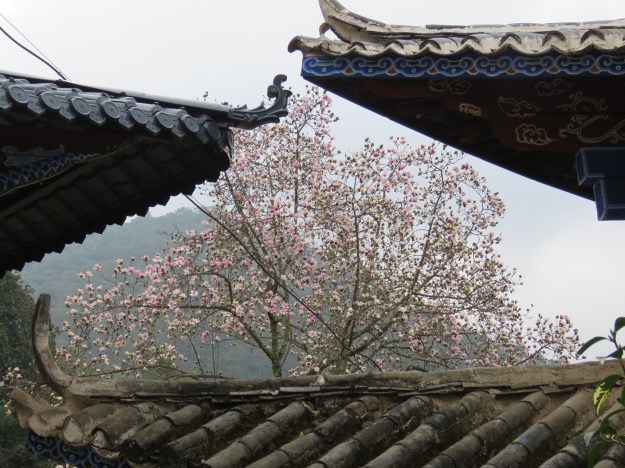
M. campbellii on Mount Baotai in south west China, with Chinese powerlines
Overall, M. campbellii has a wide natural distribution. It grows from eastern Nepal, across Sikkim and Assam into south western China and down to northern Burma. We were thrilled to see a plant on Mount Baotai in China last year, even though its pale pink blooms showed it to be a pretty average form of the species. We couldn’t tell if it was naturally occurring or had been moved into its current position, as the modern Chinese are wont to do.
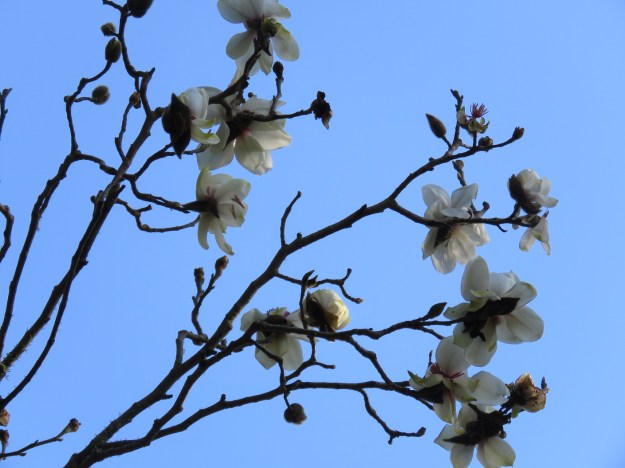
The white form at Tupare
 We don’t have a white M. campbellii in our garden so I had to head to Tupare Garden in New Plymouth to photograph their mature specimen that dates back to the late 1940s or early 50s. The blooms have a curious green flush at the juvenile stage but the tree is not a strong growing, distinctive form. It is not a patch on all the pink Quaker-Mason specimens around but there will be other white forms available in New Zealand.
These are all Magnolia campbellii var. campbellii. The other popular form of the same species, known as Magnolia campbellii var. mollicomata, originates from areas further to the east and flowers several weeks later. Our fine specimen of purple ‘Lanarth’ (or Magnolia campbellii var. mollicomata ‘Lanarth’, to be pedantic) will not flower until halfway into August.
First published in the July issue of New Zealand Gardener and reprinted here with their permission.
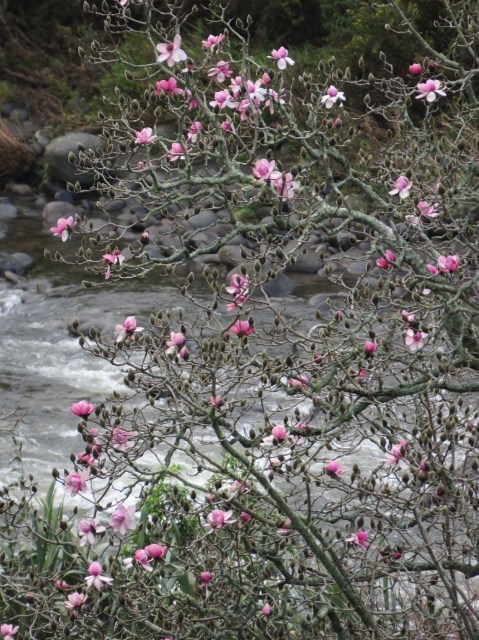
The pink campbellii at Tupare with the rushing river beyond
Two footnotes:
The word maunga means mountain in the Maori language. In Taranaki, where the presence of our beautiful maunga (Mount Taranaki) is a defining element for all who live here, the word maunga is often used in preference to the English word.
The blue skies are indeed genuine. We have a clarity and intensity of light here all year round, even in mid winter. Though it must be said that not every day in winter has blue skies!
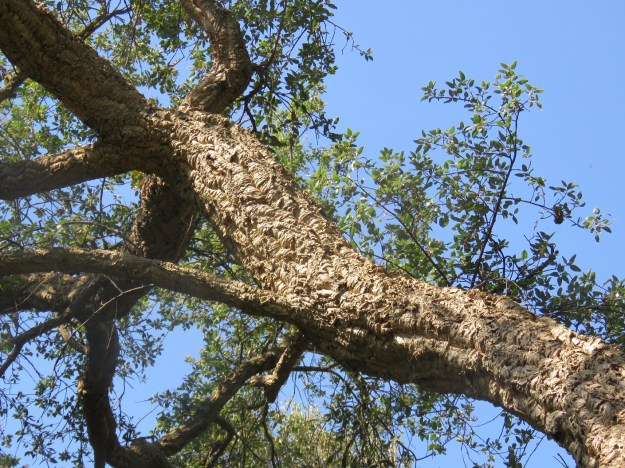
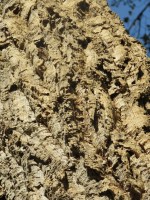 In New Zealand, it is rare to see a wine bottle with a cork these days and most of those will be plastic. This is the land of the stelvin screw top closure. But I give you the curious cork oak, Quercus suber. This fine specimen is in the garden of La Torrecchia. The switch to screw tops has done much to relieve the pressure on these trees which had, apparently resulted in too many inferior corks. It is a curious fact that many restaurants here still pour a mouthful of wine to be sampled by the patron when, as I understand it, this tradition came about because of wine being tainted by the original cork.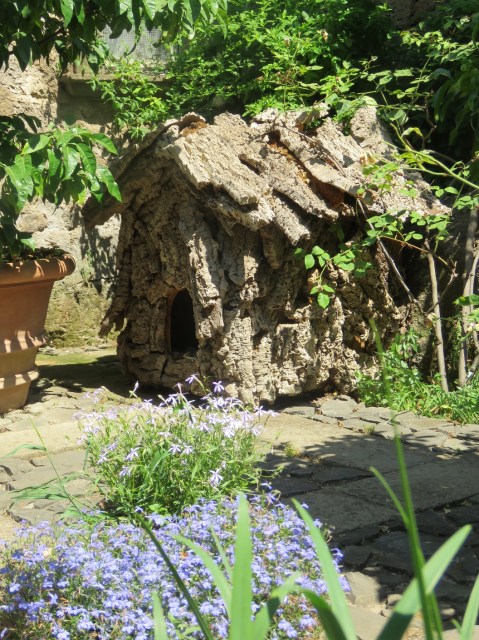

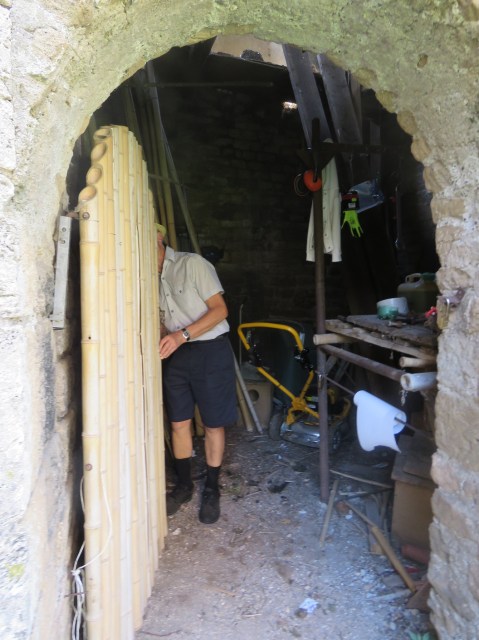 I give you the inquisitive man to whom I am married. He does like to look closely. In this case, he was interested in the construction of the bamboo door to the tool shed that he spotted at Ninfa. The bamboo will have been harvested from their own plantations in the garden and are a creative solution to crafting a door to fit a non-standard entry which likely dates back to the Middle Ages when the buildings of this town were largely constructed. I hasten to add, the door was left open. Mark may inspect but does not usually pry.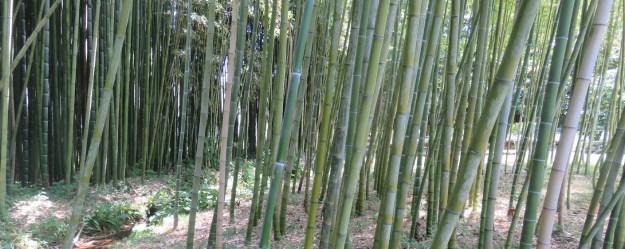
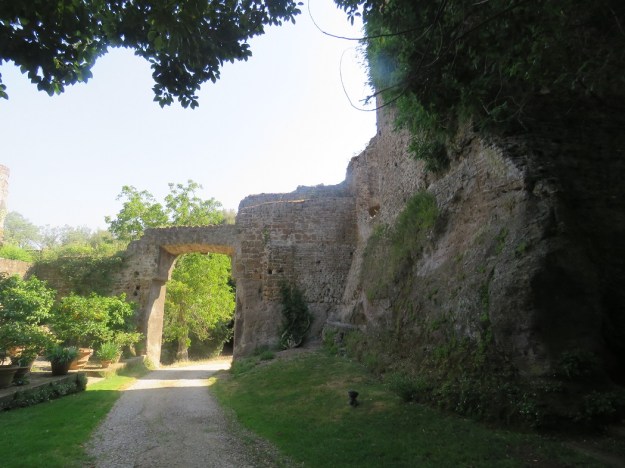
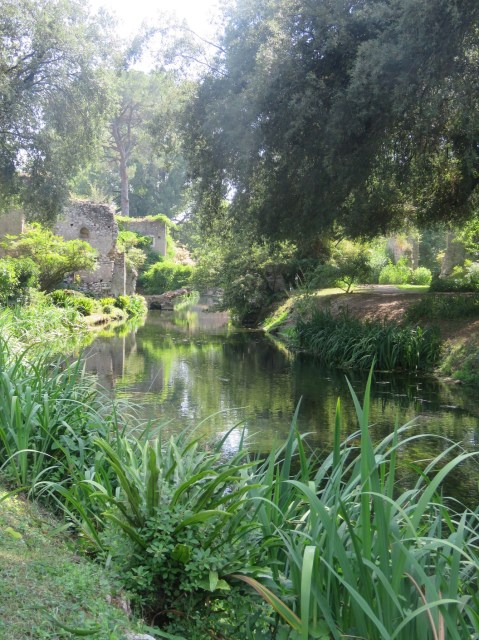 “You must go to Ninfa if you are interested in romantic gardens,” I was told very firmly by One Who Knows. So I obeyed. That was the prime reason we went to Italy as part of our trip just concluded. And because Ninfa has very limited opening days, the entire itinerary was organised around one of those dates.
 It is not your classic Italian garden full of intersecting axis and formal spaces. Not at all. Indeed, it is described as being English in style – a descriptor I have met before in a northern Italian garden described to us as being in the “romantic English style”. By this is meant soft edged, informal design with more focus on plant variety, seasonal change and groupings of plants – more frou frou, as I call it, than the heavily clipped and controlled style of the usual Italian gardens of stature.
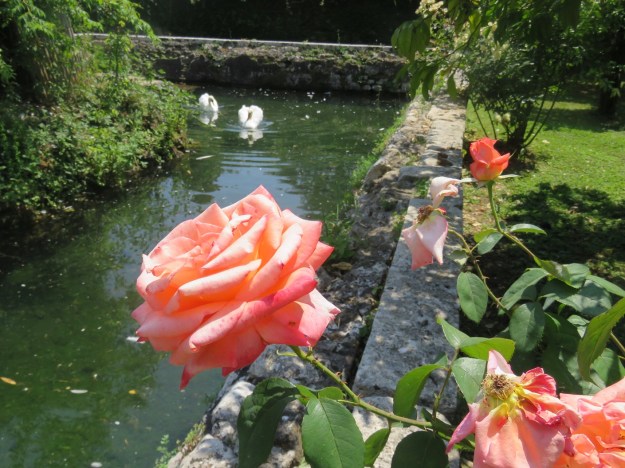
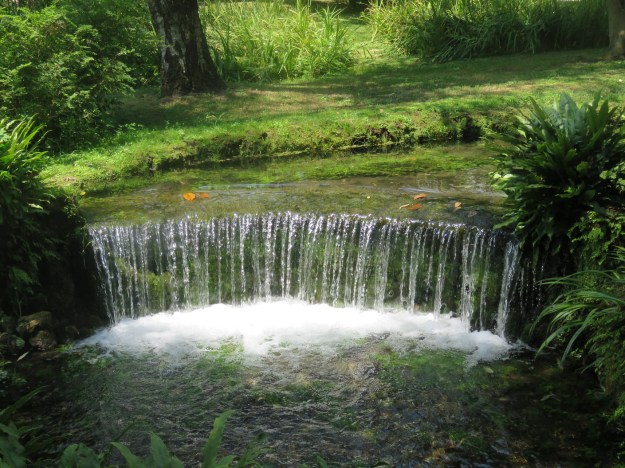 The garden of Ninfa is built around the ruins of an entire town that was sacked in 1370 after being occupied since Roman times. The scale of the ruins is nothing short of astonishing to a New Zealander unaccustomed to centuries of visible occupation. To create a garden around such imposing structures is a dream situation. In a hot dry climate, water is even more important and the abundance and sound of flowing water is integral to the magic of Ninfa, blessed as it is with the river of the same name flowing through the garden. Irrigation is necessary to achieve the lushness and growth in what is a harsh, dry environment.

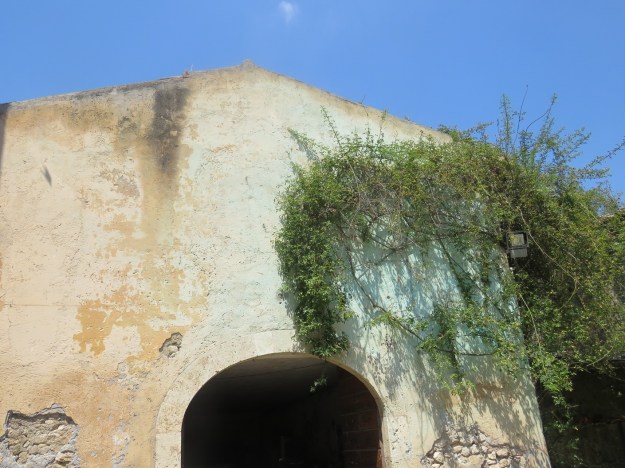

 If you want to know more about Ninfa, the official website is


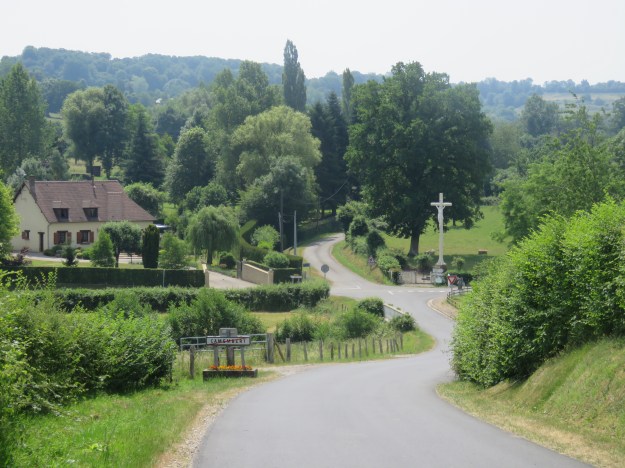 This! This really is the village of Camembert. It exists and it is the origin of the cheese. It is picturesque but small these days containing a church, a carpark with two charge stations for electric cars, a museum to honour Camembert cheese that has limited opening hours and a tourist shop. And some houses, but not many.

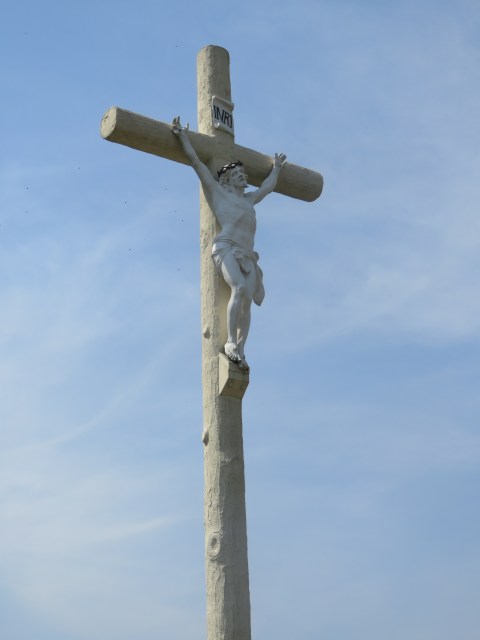

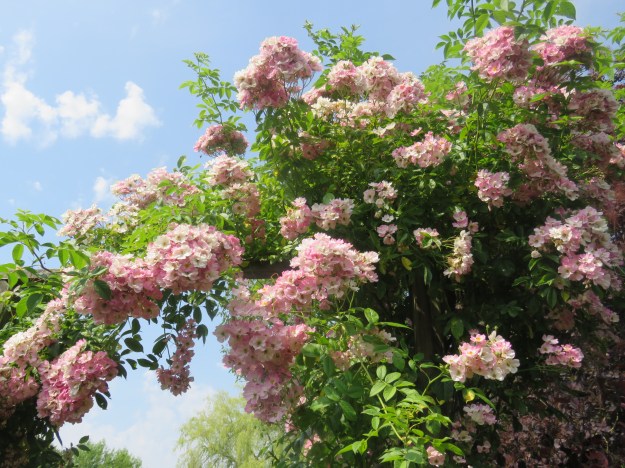

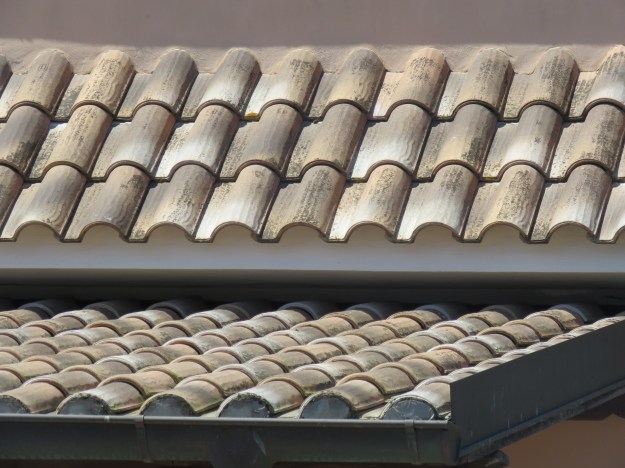
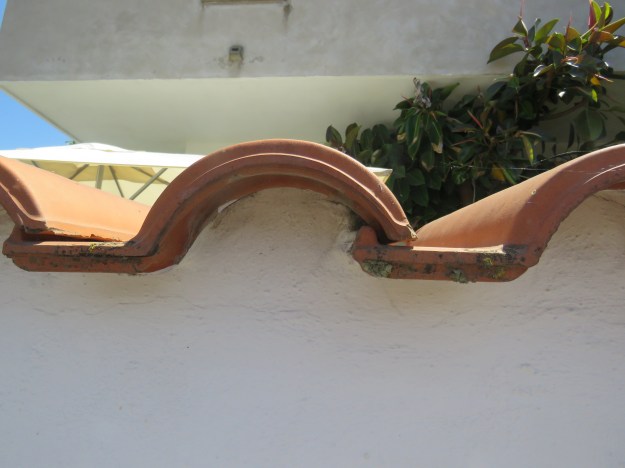
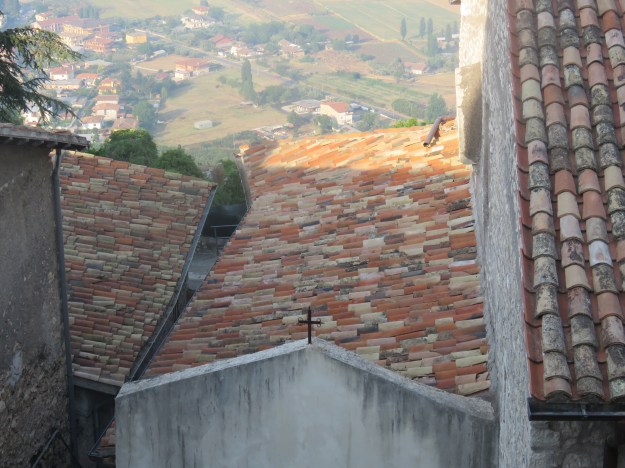 We have moved on from Italy and are now hanging out in Camembert in Normandy – and yes, Camembert is the original home of the cheese that bears its name. But that is another story still to come. Back in Italy, looking out over the mellow tones of the tiled roofs is part of the landscape.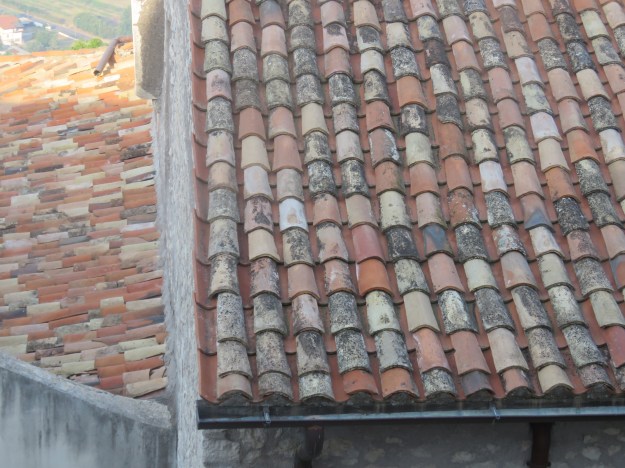


 Tikorangi The Jury Garden