
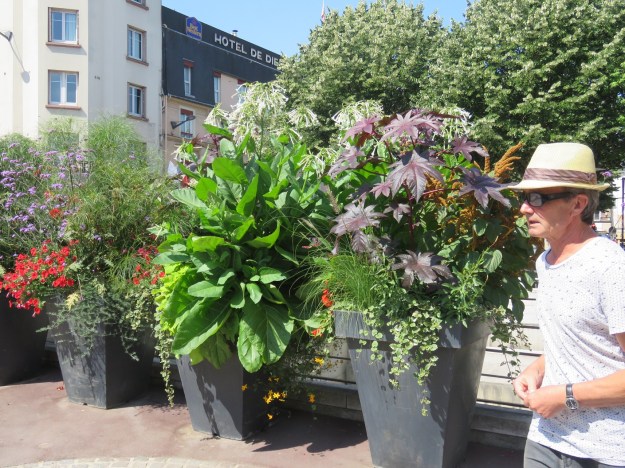
Potted colour in Rouen
One wonders – well, I wonder – if the person who did the sign off in at Rouen’s town council realised the scale of the planters to be installed at that railway station. “Let’s pretty up the area with some potted colour,” I imagine somebody saying. The result was the BIGGEST examples of potted colour that we have seen. Clearly hand watered – Mark checks these things out.

Same city. Not quite like the railway station planters.
Further down towards the River Seine was an example of amenity planting without irrigation. Not even the modern style prairie plantings can get established and flourish without added water. The idea may have been good but most plants bolt to flower and seed when put under extreme stress in an attempt to ensure their continued survival. Much of Europe was experiencing a heat wave when we were there. Both in Italy and in France, locals told us that it most unusual for the temperature to be sitting well into the thirties (Celsius) in June.
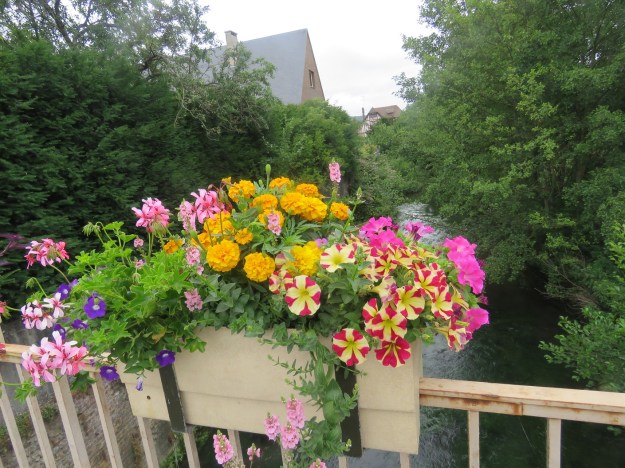
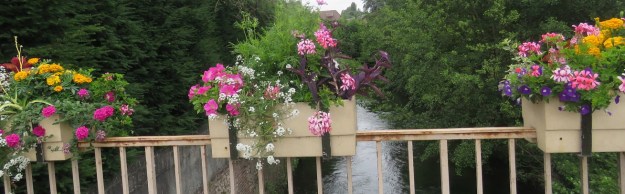
Potted colour in Pont-l’Évêque
While on the subject of urban plantings, the planter boxes on the bridge at Pont-l’Évêque made up for their lack of sophistication with exuberance. It was just that we were in Pont-l’Évêque that I thought I would photograph le pont but then I worked out it was in fact les ponts – there were many bridges and I have no idea which one gave its name to the area.
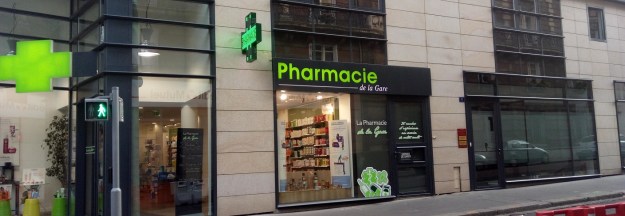
A pharmacy on every corner
Our second daughter joined us in France and it was she who marvelled at the fact there appeared to be a pharmacy, or chemist as we call them, on pretty much every corner in Rouen. Why so many, she asked. I have no idea but it reminded me of a useful skill French pharmacists have. They are trained to identify edible fungi – as in wild collected mushrooms, toadstools and the like. So if you are not sure of the safety of what you have gathered, you can pop in to your friendly local pharmacy. I do not think this is a service offered at our local Waitara chemist’s shop but there are times it would be handy.

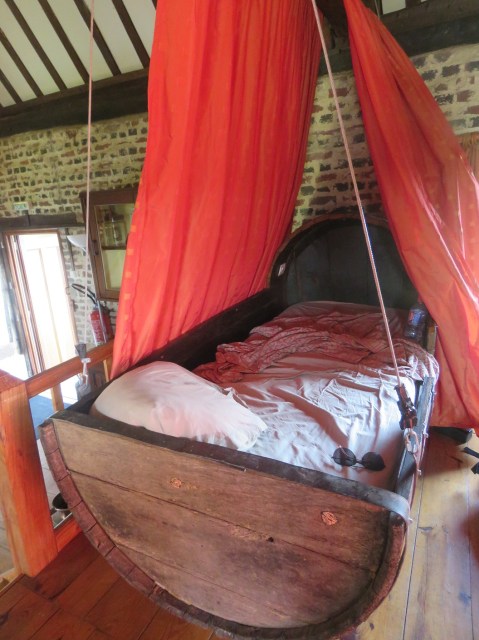 We stayed in another Air BnB place in Camembert – in this case a Norman barn that had been converted to a large apartment. Some of the conversion was a little curious but we did not electrocute ourselves and the opportunity to sleep in an adult-sized cradle created from a half cider barrel may never come my way again.
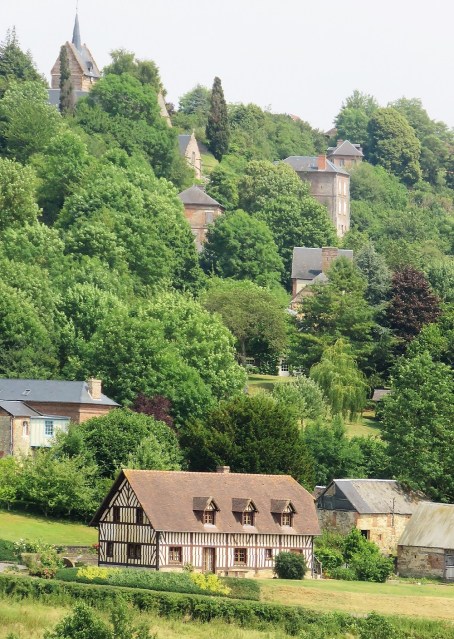
Crouttes, near Vimoutier
The whole area around Camembert and Vimoutiers was extremely charming and picturesque. However, we were puzzled at the lack of the French equivalent of country pubs and eateries and also at the apparent emptiness of many of the villages. I think it comes down to issues of personal space and population density. In areas with very dense housing such as Tivoli and Sermonetta in Italy where we had been a few days previously, everybody comes out of their apartments to socialise on the streets and the plazas, especially as late afternoon meets early evening. In the UK which also has high density housing, people are often out and about. This area of rural Normandy was more like Tikorangi – big personal spaces and homes with land attached. Given the luxury of both indoor and outdoor private space, people stay at home more. At least that is my theory.
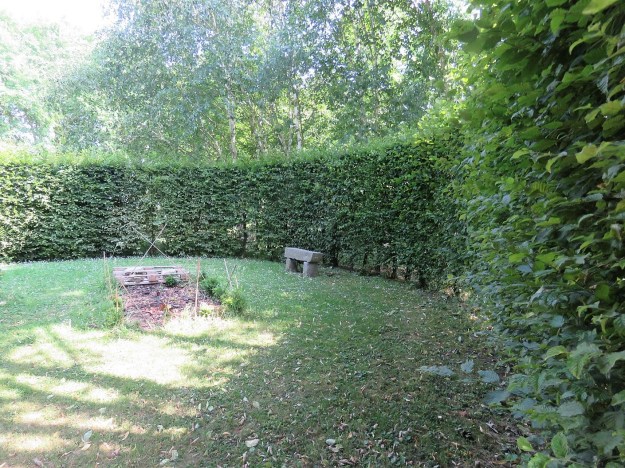
The green circle…
We went to a garden. I do not need to name it but it was advertised on the tourist trail. The welcoming sign was perhaps a giveaway that we should not set our expectations too high. What was quite interesting about this garden was that it had all the trappings of a comprehensive modern garden – the romantic rose garden, the new perennials garden, a “Japanese” garden, a productive kitchen garden, a traditional, medieval physic garden that harked back to the magnificent old buildings that gave the place its structure, even the enclosed green circle or rondel garden such as can be seen at Sissinghurst and many imitators. It was all there. Sort of. What was missing were gardening skills and flair. Particularly gardening skills. And any eye for detail. There is a lesson there somewhere.

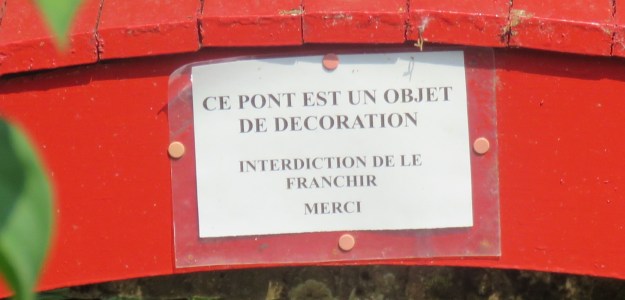
Posted withour comment – the Japanese garden from the aforementioned garden.
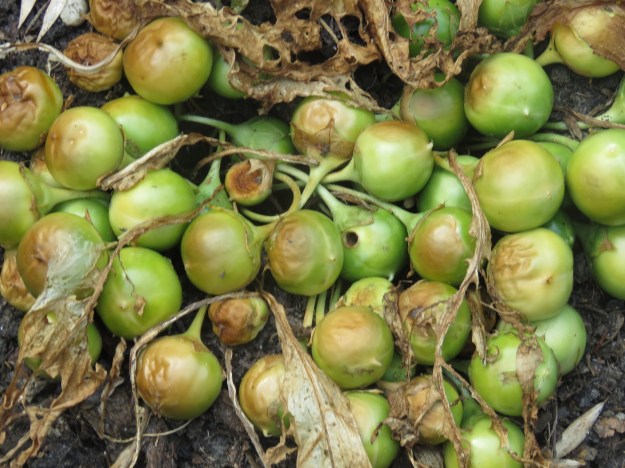 The fruit of the mandrake! Mandragora officinarum, to be botanical. This is not something one sees often. It is apparently the root that is harvested for whatever purpose one harvests mandrake, but the fruit are certainly eye-catching too. I think it was in the physic garden.
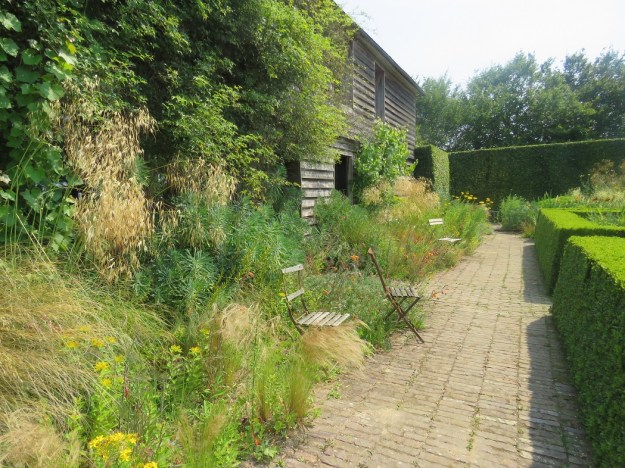
La Plume! Romantic summer France
Next post will be the summer glory that is La Plume, a modern French garden in a country better known for its historic gardens than modern innovation.
 Five years ago, I wrote a piece entitled “But where are the hollyhocks?”. Occasionally a garden visitor sears him or herself on the brain and on this particular occasion, a gentleman came out from our garden and asked that very question, declaring that he could not find any hollyhocks. I have never forgotten because it was such a bizarre question. Until that point, it had never occurred to me that anybody might regard a garden as seriously deficient for the want of some hollyhocks. We failed that test.
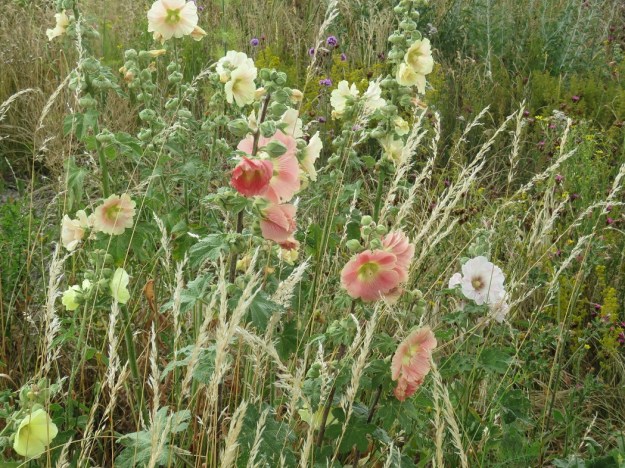 But we found the hollyhocks in London. An entire block of them growing wild. This was part of the Olympic Village plantings. Most of these plantings were prairie-flavoured while hollyhocks are pretty much traditional cottage-garden plants. This may be why they were kept separate and all on their lonesome. They made us smile. I am only guessing that the other plants like the mullein and Verbena bonariensis have introduced themselves to the hollyhock party.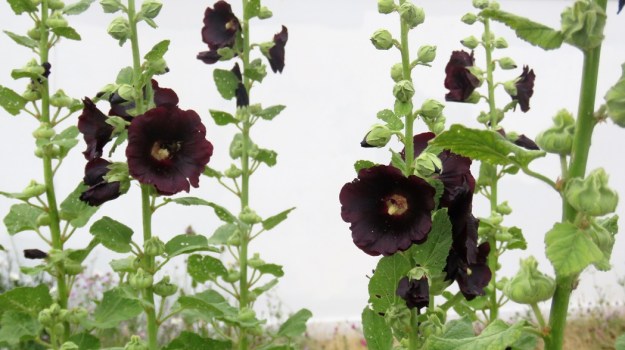

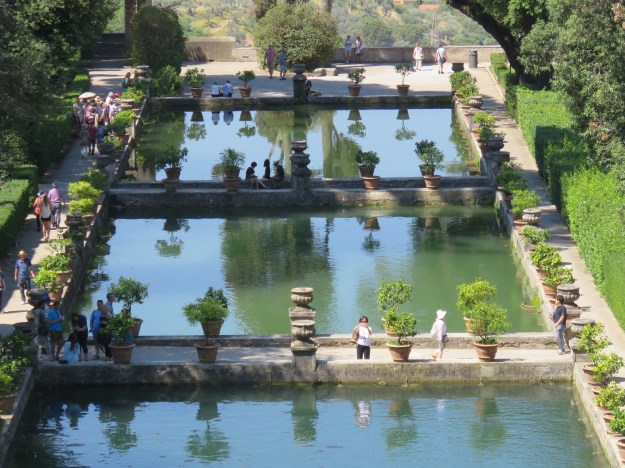 Villa d’Este in Tivoli is known worldwide as one of the great Italian gardens. Built by The Man Who Would be Pope to compensate his thwarted ambition, it dates back to 1560. It was grand then. It is still grand today and water features throughout. His land excavations to achieve this garden would have put Capability Brown into the shade.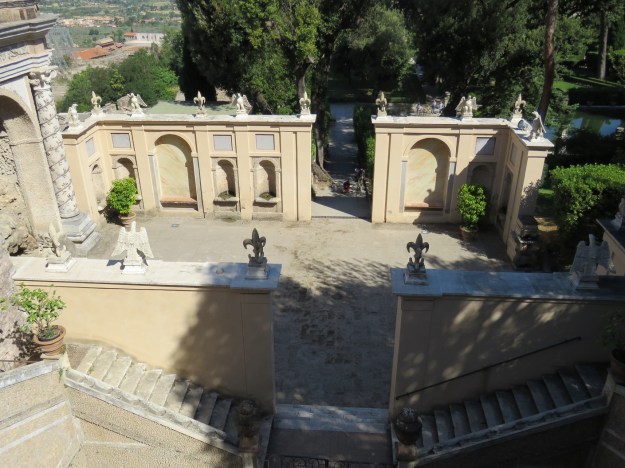
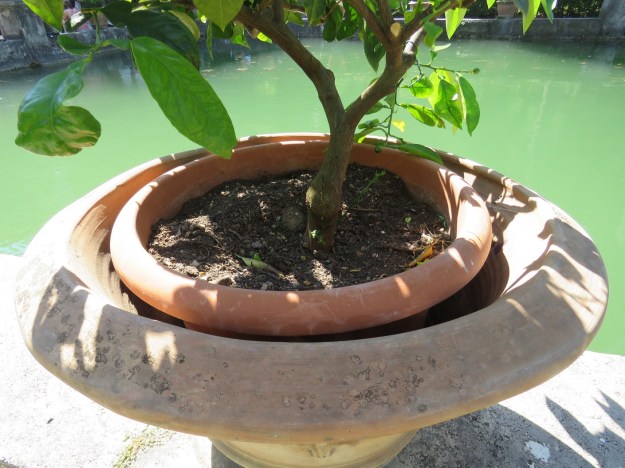 Attention to detail is not a strong point in Italian garden maintenance. Plants are not required to be immaculate. Irrigation hoses are often visible. It is okay to have plastic pots visible inside the terracotta pots. Water quality can leave a lot to be desired. Lawns are impossible in their climate. Some coarse grass kept green by watering is the best that one can hope for. The big picture is what matters. But, should you have grand visions of creating an
  The straw broom brought a smile to our faces. Regular readers may remember me posting about the
 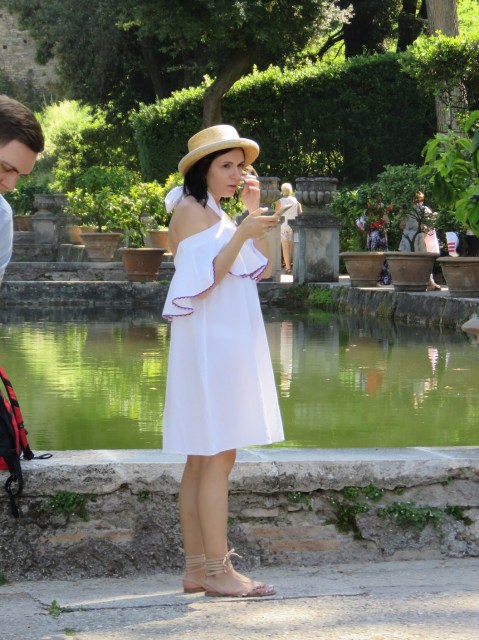 I am sure it takes a great deal of work to look like a modern-day princess, even more so when the temperature is over 30 Celsius and the location requires walking down and then up hundreds of steps. Mark noted that she was also behaving like a princess – the one with the pea under the mattress. I couldn’t possibly comment. Even when I was considerably younger, I do not think I ever managed the princess look.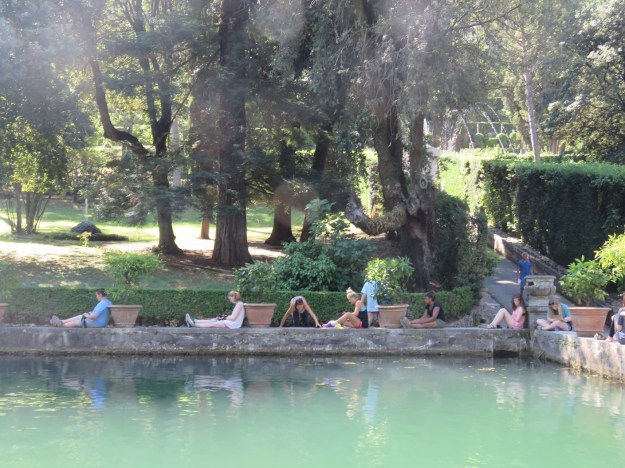


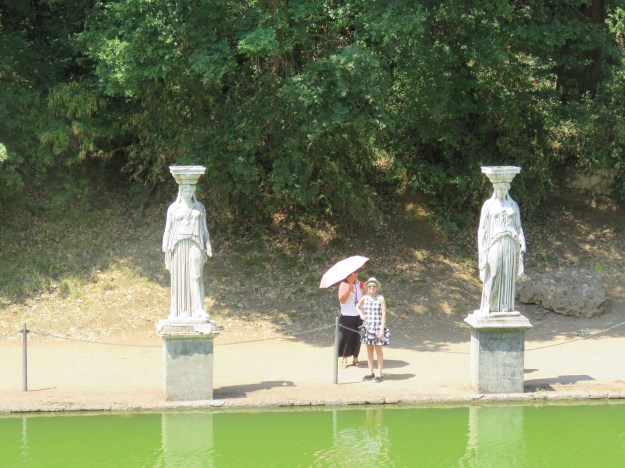 There was a fair amount of statuary of the armless, legless and formerly white variety but I think most of it was more recent reproduction already in decay. Much of the surviving, original statuary and marble had been raided 500 years ago by Cardinal Ippolito ll d’Este and relocated to his nearby pad but we did not know this when we went around Villa d’Este.
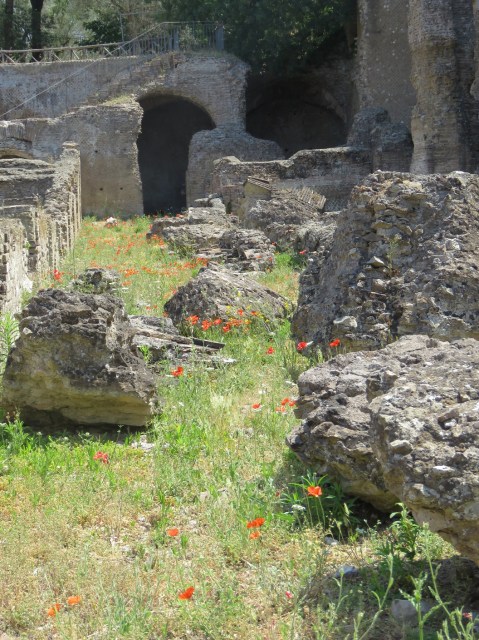 The wildflowers in the ruins of Adriana had a simple charm. In those drought-like conditions, the spring rains must bring a short-lived surge of germination and growth. The plants shoot straight into flower but conditions prevent them becoming invasive problems.
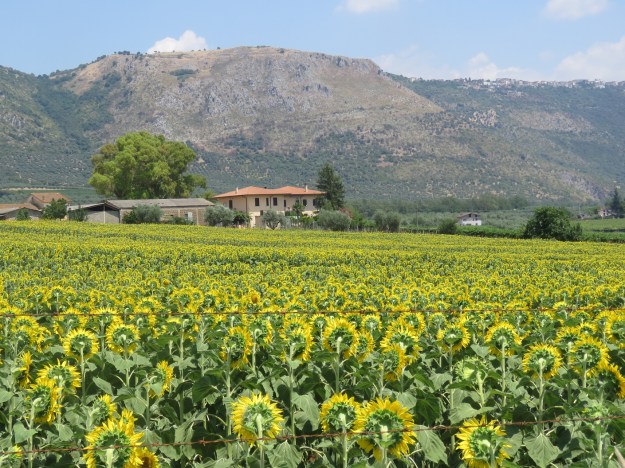 Finally, fields of sunflowers on the road to Ninfa. All facing the wrong way for the picture book image with the house and hills behind. Viewed from the other side, we lost the landscape context.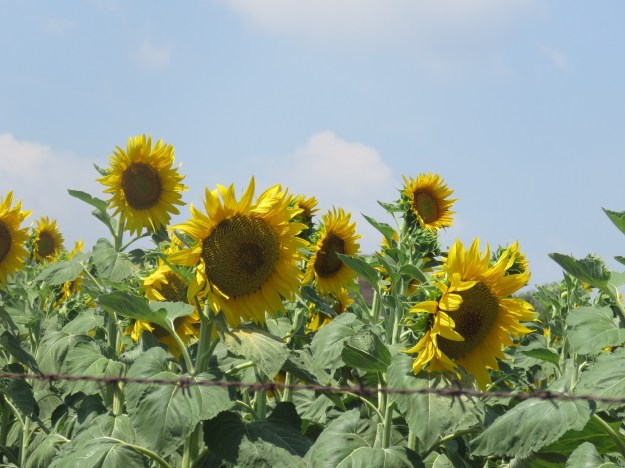


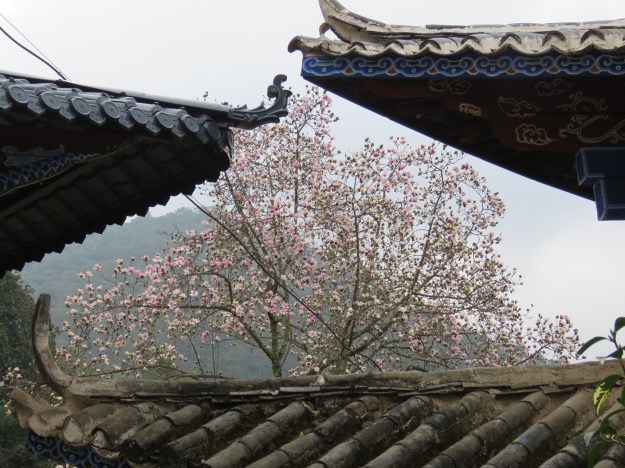
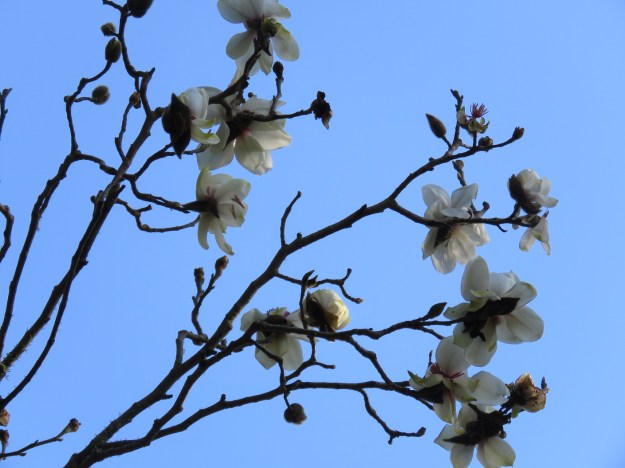
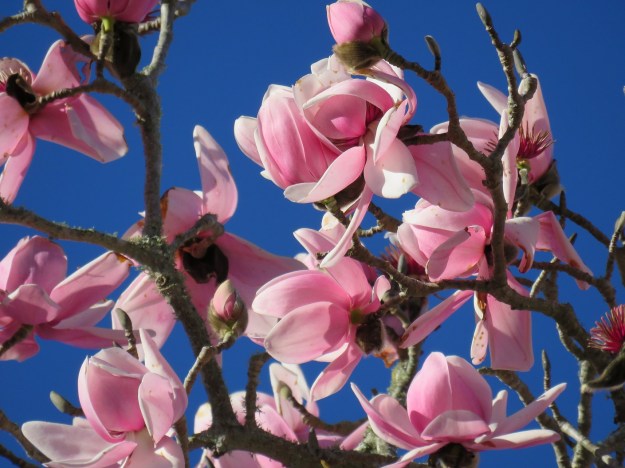
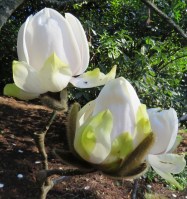 We don’t have a white M. campbellii in our garden so I had to head to Tupare Garden in New Plymouth to photograph their mature specimen that dates back to the late 1940s or early 50s. The blooms have a curious green flush at the juvenile stage but the tree is not a strong growing, distinctive form. It is not a patch on all the pink Quaker-Mason specimens around but there will be other white forms available in New Zealand.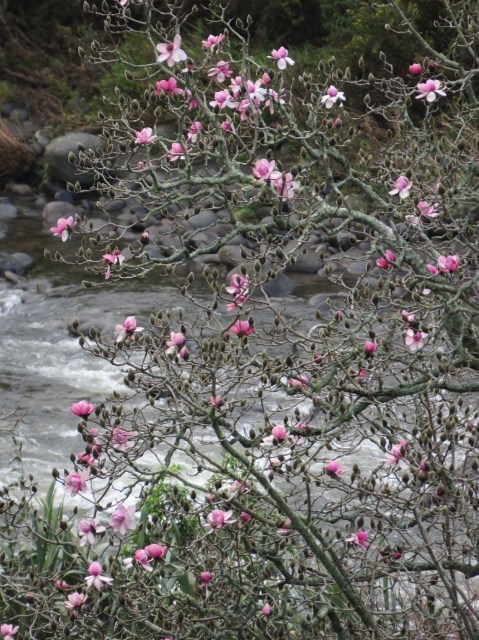
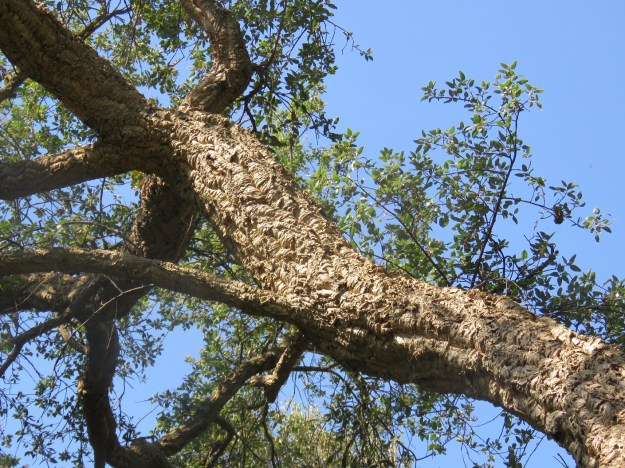
 In New Zealand, it is rare to see a wine bottle with a cork these days and most of those will be plastic. This is the land of the stelvin screw top closure. But I give you the curious cork oak, Quercus suber. This fine specimen is in the garden of La Torrecchia. The switch to screw tops has done much to relieve the pressure on these trees which had, apparently resulted in too many inferior corks. It is a curious fact that many restaurants here still pour a mouthful of wine to be sampled by the patron when, as I understand it, this tradition came about because of wine being tainted by the original cork.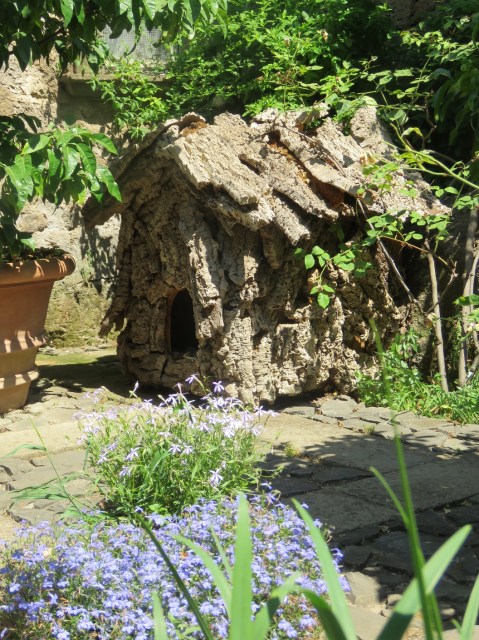

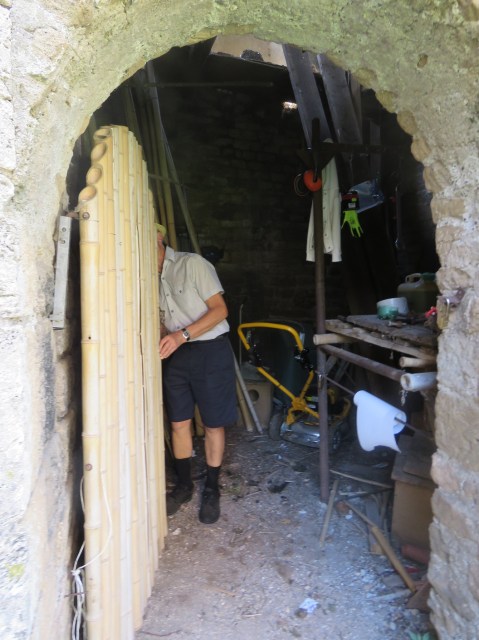 I give you the inquisitive man to whom I am married. He does like to look closely. In this case, he was interested in the construction of the bamboo door to the tool shed that he spotted at Ninfa. The bamboo will have been harvested from their own plantations in the garden and are a creative solution to crafting a door to fit a non-standard entry which likely dates back to the Middle Ages when the buildings of this town were largely constructed. I hasten to add, the door was left open. Mark may inspect but does not usually pry.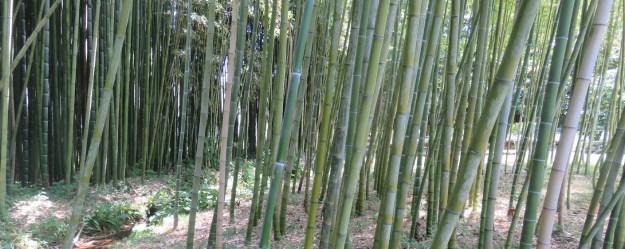
 Tikorangi The Jury Garden