Plants for dry shade – for Radio Live listeners and others

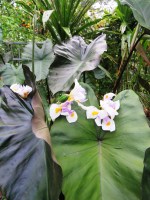
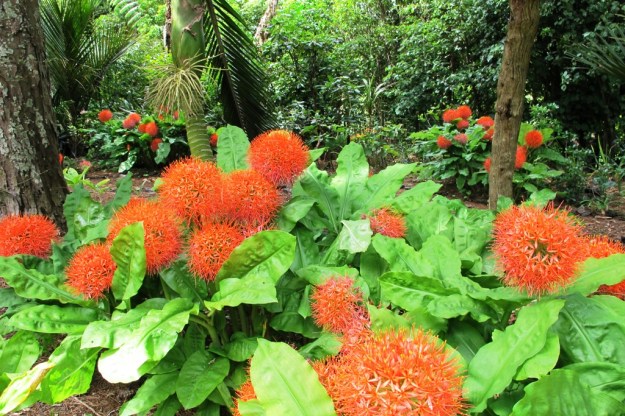
Scadoxus multiflorus ssp katherinae, beneath a canopy of rimu, pine and nikau

Scadoxus multiflorus ssp katherinae, beneath a canopy of rimu, pine and nikau

After talking to Tony Murrell on Radio Live this morning, here is the quick list of some of the plants we have found we can grow in our dry shade areas.

Bulk cheapie fillers (and many gardeners need these to get some quick coverage)
ajuga
phlomis
francoa (the bridal veil plant) – both ramosa and sonchifolia
impatiens
pulmonaria
mondo grass and lirope
scuttellaria

Triffids (for those who have B I G space to fill
Fruit salad plant (monstera delicosa)
various plectranthus but they need to be kept under control
philodendron
(short list – we are not too keen on many triffids here)

Shrubs
evergreen azaleas
vireya rhododendrons
cordylines – both natives and some of the more tropical varieties
hydrangeas – on the outer margins
some of the small palms – Lytocaryum weddellianum (the wedding palm or feather palm) is one that is performing well in our shade in several places.

Building up the planting areas beneath huge rimu trees

Building up the planting areas beneath huge rimu trees

Natives
renga renga lilies (arthropodium)
ferns – many and varied
dracophyllum latifolia
parsonsia (native jasmine)
tree ferns or pongas which just arrive these days
nikau palms (we planted the first ones, now they just seed down and we keep those which are not in the wrong places)
astelias – bush species including A. fragrans
widow-makers – collospermum which also just arrive of their own accord
cordyline – particularly banksii

“Backbone” plants
ferns
clivias
farfugium and ligularia of various species
ferns
hostas
helleborus – particularly x sternii and also foetidus (better than the more common orientalis in full shade)
dicentra (can’t keep D.spectabilis going here but D.eximia does very well
zygocactus
and did I mention ferns? Lots of different ferns, both native and exotic.

Choice treasures and bulbs and high interest plants
scadoxus – puniceus and multiflorus ssp katherinae
cyclamen on the margins but not into the deeper shade
Soloman Seal – Polygonatum multiflorum
arisaemas
veltheimias
hippeastrum – particularly aulicum but papilio is also looking promising
trilliums
haemanthus albifloss
Crinum moorei – even better is the variegated form of C. moorei
bromeliads
orchids – cymbidiums, dendrobiums, calanthes
Paris polyphylla
streptocarpus

Other points from my conversation with Tony Murrell (love that man – he is so easy to talk with and so enthusiastic about plants):

  1. If you want bluebell or snowdrop woods in the English style, remember they are mostly beneath deciduous trees. In New Zealand, evergreens dominate and our shady areas remain shaded all year round.
  2. Lift and limb the canopy trees. There is not a lot that grows in deepest shade so you need to keep the canopy higher to allow light.
  3. We are completely frost free in our shade areas but even gardeners in colder parts of the country may be surprised what they can get away with in terms of more tender material beneath evergreen trees.
  4. While many of the plants we grow are epiphytic or have epiphytic origins (in other words, they don’t have big root systems below ground but will often be happy settling in forks in the trees), it is still necessary to build up soil at ground level to allow many plants to get established. The big trees suck up all the moisture and goodness from the ground and small plants find it very hard to compete. If you find it hard to dig into the ground because of the existing roots, plants will find it equally hard to get their roots in.
  5. We raise beds by using mostly found items like old tree trunks, ponga logs, rounds of sawn timber – anything that looks natural (NEVER tanalised timber!) In dry shade conditions, they last a long time.

Our shade areas are low maintenance and generally self sustaining, We don’t water, we don’t spray, we don’t add fertiliser. Very few weeds grow in the shade, especially with the thick mulch that builds up over time. All we have to do is tidy up bigger bits of falling debris and carry out a bit of general maintenance.

I have written about many of these plants in earlier posts – use the search engine box on the right hand side if you want to check them out in more detail.
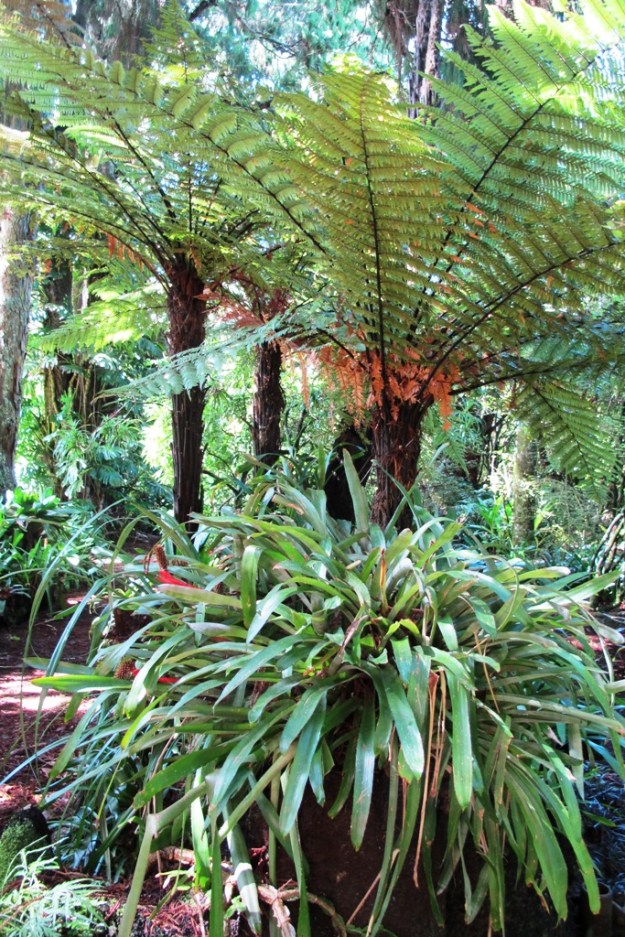
Again, building up beds beneath the rimu trees, using ponga logs in this case that have already lasted decades

Again, building up beds beneath the rimu trees, using ponga logs in this case that have already lasted decades
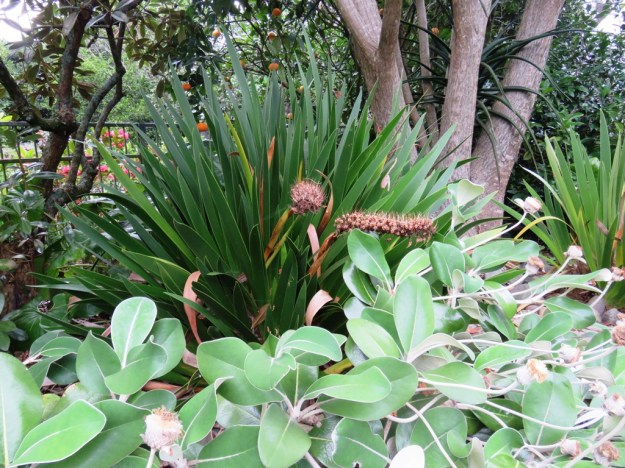
‘Editing’ the plants for a lower maintenance garden

A few years ago. It is amazing how much the skyline of trees has changed since. My feet.

A few years ago. It is amazing how much the skyline of trees has changed since. My feet.

Editing, dear New Zealand readers. Cleaning up the borders and beds is often about editing the plantings.  I know this because I read a certain amount of British garden media.

I have certainly been editing the plantings in the gardens around our swimming pool. It seemed a good summer occupation and on a few hot days this week, the flow between gardening and cooling off in the pool has been excellent.

The gardens were put in when we built the pool in the late 1990s and, in that clichéd way, we naturally opted for a sort of tropical feel. It was never thought out very well at the time. In the years since, I recall doing one relatively major rejig of the gardens but beyond that, they have only had the most perfunctory of care and minimal maintenance. This often included plugging gaps with whatever I had to hand.  And it was showing that lack of attention.

I am a more thoughtful gardener than I used to be. I think that comes with experience. Knowing that we were unlikely maintain a pristine swimming pool, we had chosen from the start not to make it a key landscape feature but rather to site it discreetly where it is largely out of view. I am not keen on garish blue pools taking centre stage so ours is also a modest dark grey and we went with a black pool cover.

Curculigo, euphorbia and Ligularia reniformis, lush enough to pretend to be tropical and low maintenance

Curculigo, euphorbia and Ligularia reniformis, lush enough to pretend to be tropical and low maintenance

The upshot of this is that I figured we want a really low maintenance approach to the gardens around the pool and that it should be specifically targeted to the swimming season – which for us is mid to late December through to mid February. There is no point in putting in plants that flower outside that time because we won’t see them. Extreme editing was called for to eliminate my previous efforts to plug gaps and add seasonal interest with assorted perennials and bulbs.

I am quite happy with the earlier effort blocking up the Ligularia reniformis with Curculigo recurvata (nice foliage contrast and happily co-existing). We removed all but one of the damn dangerous euphorbia (E. mellifera, I think) which seeds far too freely and has disappointingly insignificant flowers but compensates with good form and foliage. Ligularia reniformis is getting to be a cliché in New Zealand gardens and I will restrict how widely we use it elsewhere in the garden, but it is very handsome and lush here, reaching well over a metre in height. However, the compact red dahlia hybrid will have to go. Not our style. Too suburban in our context.

Pachystegia insignis in the foreground, Xeronema callistemon behind and overhead a large Aloe bainseii

Pachystegia insignis in the foreground, Xeronema callistemon behind and overhead a large Aloe bainseii

The Pachystegia insignis (Marlborough rock daisy)  and Xeronema callistemon (Poor Knights lily)  flower outside the summer season entirely but these native plants are not the easiest to grow in our environment and the plants are handsome and well established with good foliage contrast. Besides, it is not in our nature to edit our plantings down to a simplistic mass.

IMG_6956It is the next ten square metres or so where I have gone for a block planting. It was a mish-mash. No longer. I chose to use two common plants – the pretty but tough Dietes grandiflora and black taro. At least we know it as black taro but I am not sure if it is a colocasia (in which case it may be ‘Black Magic’) or an alocasia.  It looks very new and raw at this stage, but I expect it to be a pleasing combination with plenty of pretty flowers next summer and good foliage interest. And low maintenance, without looking like a supermarket carpark.

Patience is a virtue. The freshly planted dietes and black taro.

Patience is a virtue. The freshly planted dietes and black taro.

I see some debate in garden media about whether digging and dividing perennials is necessary. Many folk seem to dread and shun digging – hence the no-dig craze for vegetable gardens. All I can say is that since I started doing a lot more digging and dividing, the garden looks hugely better for these efforts and the perennial plants thrive in more friable conditions with less soil compaction. It is also a learning experience as I experiment with plant combinations and think through the seasonal effects. It is a whole lot more interesting than mere garden maintenance and gives an opportunity to review and edit the plant selections. And it doesn’t even cost any money because I am working with plants already in the garden. There is nothing to fear from increasing the dig and divide regime.

IMG_6892And for those of you who don’t follow the garden Facebook page, I offer you my little study in dietes blooms. It makes no logical sense to float them in water, because they are not damp-loving plants at all. I just thought they would look charming, and they did – first in the swimming pool and then I gathered them all (slightly battered) to float them in the stream. Because I could.

IMG_6896

IMG_6907

Garden lore: chainsaw pruning

“There appears to be a large element of tree worship in us Americans, and anything remotely connected with a tree is approached with a numinous awe. People who are slothful by nature and who never get around to cutting down the peony and lily stalks in November (though this is well worth the labor) and who never divide irises on time, or plant the daffodil bulbs before Thanksgiving, or prune the climbing roses – such persons nevertheless leap into action when leaves fall, as if the fate of the garden depended on raking them immediately. I do not intend to comment on that situation, on the grounds that fiddling with leaves is no more harmful than cocktail parties, marijuana, stock car racing, and other little bees that people get in their bonnets.”

Henry Mitchell, The Essential Earthman (1981).

Camellias severed to bare stumps 6 months ago

Camellias severed to bare stumps 6 months ago

Times have certainly changed since Mitchell wrote the above para. The modest rake is more likely to be a noisy leaf blower these days. Loosely related, I thought some readers may be interested to see the after effects of extreme winter pruning.

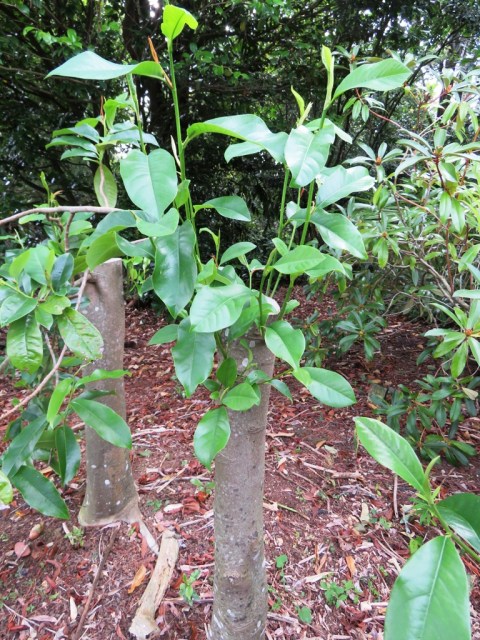
Both the michelias and camellias were four to five metres high, stretched and thin as they reached for the light. Because we are making a new garden and have opened the area to the light, we wanted a hedge effect, not a straggly, willowy shelter belt. In winter last year, these plants were taken to with a chainsaw. They were cut off at about a metre in height, in many cases leaving no foliage at all.

Well established michelia hybrids respond to hard pruning with abundant fresh growth

Well established michelia hybrids respond to hard pruning with abundant fresh growth

After about six months and a spring flush, the new growth is phenomenal. We won’t get any flowers this year but we will have a bushy, well established hedge sooner, rather than later.

This extreme action does not work with all shrubs but it can be done with camellias and michelias. It may not work in harsher climates, either, but in our mild, temperate conditions it is fine. The timing is relatively important. It needs to be done well before the spring flush and we find early winter is the best season. It is a hedging technique. The trade off is that you lose the shape of the plant but gain bushy growth instead.

Plant UNcollector – the tale of our disappointing white nepeta

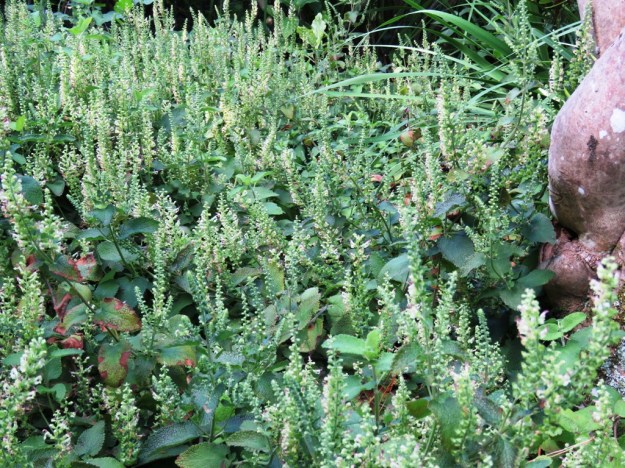
In reality, it is even more insignificant than in this photo

In reality, it is even more insignificant than in this photo

There are not many plants as disappointing as our white nepeta. Before you rush to set me right by telling me that your white nepeta is absolutely gorgeous, I will declare that I have had a look at the internet and I see there are various white forms around and most of them look to be an improvement on the one we had here. Note the past tense. We have taken it out – and there was a fair swag of it – and it is now on the compost heap.

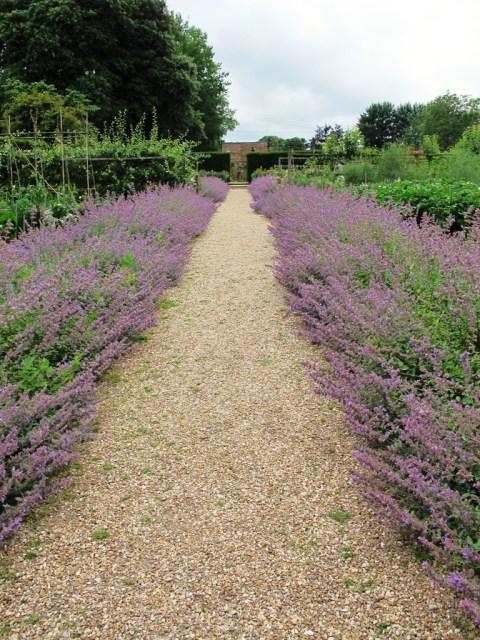
Nepeta is not exactly a plant of class and distinction but it is easy to grow, forgiving and on its day, it gives a haze of colour as well as feeding the bees. We were quite taken by its use in plantings that resemble rail tracks in a couple of English gardens we visited, despite my reservations about both the use of edging plants and planting in rows.

The railway track effect at Tintinhull in England where the nepeta looked lovely

The railway track effect at Tintinhull in England where the nepeta looked lovely

We came home and looked at our nepeta in askance. I could not remember ever being wowed by its lilac haze in bloom but it was certainly spreading widely. This season, I said to myself, I will take special notice. It was not growing in a spot I walk past every day but it was relatively prominent. Dammit, I thought, when I saw seed heads on it. How did I miss it again? Was it really such a flash in the pan? Mark, it turned out, had been thinking the same. We stood looking at it together and realised it was possibly the world’s most boring white nepeta with the tiniest of insignificant flowers at the same time as setting seed. Sure the bumble bees liked it but they will like our lilac nepetas just as much or maybe more. Mark has a tray of seedlings raised, ready to plant as an immediate replacement.

Mark is unconvinced by the notion of white nepeta which, in his mind, contradicts the very nature of nepeta which should be blue or lilac. But the joke is on us that we had both failed to notice that ours never flowered in the right colour.

On the verges

Agapanthus with the dreaded convolvus - the latter is pretty in flower but we do not need it

Agapanthus with the dreaded convolvus – the latter is pretty in flower but we do not need it

As you drive around the countryside in January, ponder this: does a sprayed roadside with dead grass and roadside litter look better than wildflowers? And are garden escapes (which takes in most roadside plants and flowers) environmentally worse than repeated application of weedkiller? Maybe it is time we reviewed our attitude to weeds.

It is often said that a weed is simply a plant in the wrong place, though I see Sara Stein is attributed with the extended statement, “A weed is a plant that is not only in the wrong place, but intends to stay.” After all, even weeds are native to somewhere and one country’s treasure can be another country’s problem.

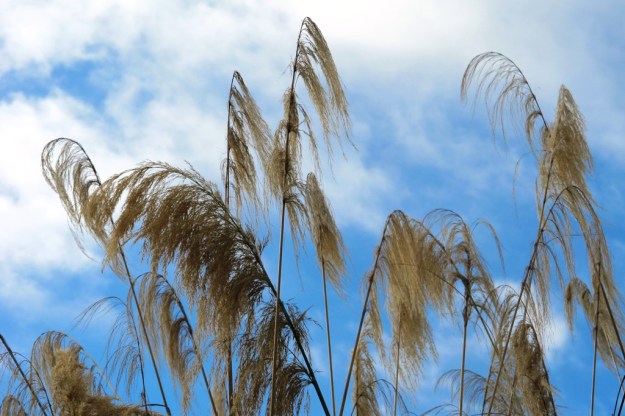
Toetoe beside the new Waikato expressway

Toetoe beside the new Waikato expressway

A disclaimer first: our native bush and forest are precious and vulnerable to takeover by invasive and aggressive imports. We do not need another old man’s beard (Clematis vitalba) and perish the thought that Japanese knotweed (Fallopia japonica) ever gets a major foothold here. If you are lucky enough to live adjacent to near-pristine native bush, that brings an obligation to be very careful with what escapes your property and colonises roadsides. It also behoves us all to have some awareness of what is on our Regional Council banned and watch lists.

But most of us live in heavily modified environments and I suspect a preference for weedkiller over wildflowers arose from our farming heritage and feeling of obligation that “weeds” should not be permitted to invade precious farmland. Nowadays, when farming has become much more industrialised – a green desert, often, lacking even shelter belts – based entirely on imported grass and feed species, I don’t think that argument holds.

The ugliness of the sprayed  verge

The ugliness of the sprayed verge

Each time we visit Britain, we are entranced by their hedgerows and natural roadside vegetation. Apparently, after major clearance in decades past, there came an awareness that hedgerows contribute a great deal to the eco-system and grants were made available to reinstate them. There is not widespread mowing of road verges, let alone the ugliness of spraying. Would that we had such an enlightened attitude here. In vain do we protest that repeated spraying creates a vacuum into which unwanted weeds move first (notably the invasive, yellow bristle grass in Tikorangi), but it also prevents the ground from absorbing rainfall. Instead, the surface water is funnelled down drainage ditches, washing with it weed spray and any petrol residue from the road into waterways. How much better to have a growing roadside which filters the run-off?

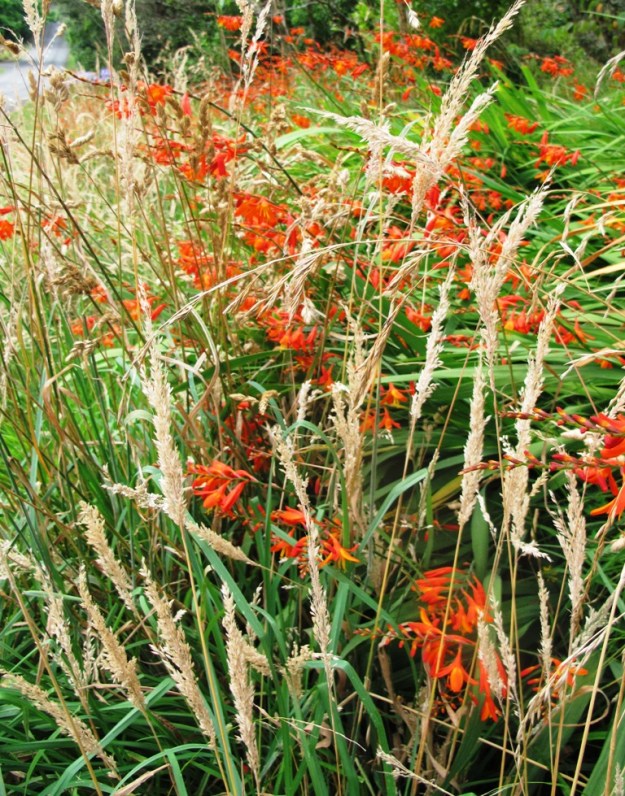
Crocosmia - weed or woldflower?

Crocosmia – weed or woldflower?

Roadside vegetation is more interesting visually too, offering flowers and seasonal colour. Add to that a wildlife corridor role and we argue that they can make a significant contribution to a healthy environment. If you are worried about using imported ornamentals, you can encourage native re-vegetation. The native plantings alongside the new Waikato Expressway feature an abundance of toetoe which is wonderfully sculptural and interesting, especially silhouetted against the sky.

But we like the random mix of plants and colours we see. I look for the point where wild hydrangeas on the Otorohanga bypass change from blue tones to pink tones. I guess that marks the transition to limestone country. All our hydrangeas in Taranaki are blue as blue and they thrive on roadsides in a climate where we get summer rainfall.

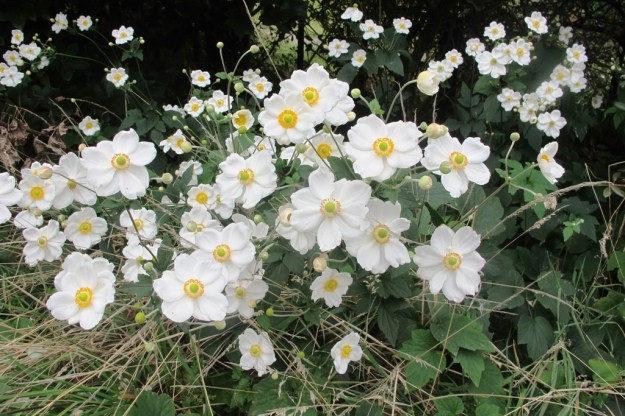
005The white Japanese anemones that flower in the long grass around the country corner where we live make me smile every autumn. Orange-red crocosmia – earlier referred to as montbretia – feature large around here. So too do red hot pokers, fennel, arum lilies and cannas while further north the ox-eye daises, yellow vetch and wild carrot feature more.
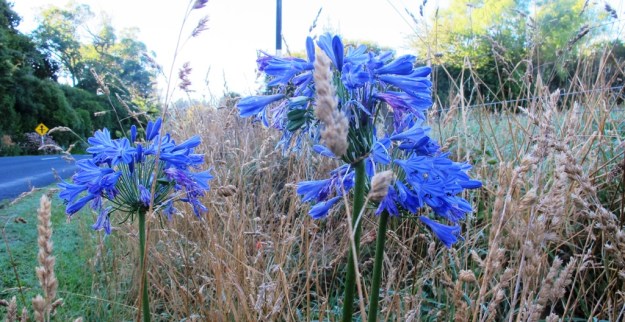
012And agapanthus. There is a plant that is a great deal more revered overseas than here. It is controversial, actively discouraged and some forms banned in northern regions. Some folk hate it with a passion and it cannot be sprayed out with glyphosate. But truly, our roadsides round here would be the poorer without the summer display. In its defence, we have not seen this tough plant seed down any great distance from its parent in our conditions and it is also very good at stabilising clay banks.

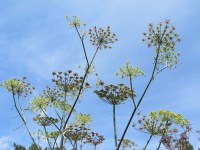
I recall two English garden visitors a few years ago who asked what were the “giant bluebell and what looks like a lace-cap yellow hydrangea” flowering on all our roadsides. The yellow lace-cap was fennel but the giant bluebell had me absolutely stumped until I next drove out. It immediately dawned on me that they were referring to agapanthus. It is not cold-hardy in large parts of Europe and the UK and is a prized garden plant. No wonder they failed to identify it growing wild in abundance here.

abbie 20 10 2015 copy

Fennel, not lace cap hydrangea

Fennel, not lace cap hydrangea

First published in the January issue of New Zealand Gardener.