Solastalgia – the story of our corner and changing times

Oddly enough, I find being able to put a name to the sense of loss and grief I feel at what is happening to our beloved area of Tikorangi is helpful. Solastalgiathe distress that is produced by environmental change impacting on people while they are directly connected to their home environment. Faced by the high impact of petrochemical development around us on every side, I now refer to the Tikorangi Gaslands. The tragedy is that it is not a joke.

IMG_20141214_0002This is what our corner of Otaraoa and Tikorangi Roads used to look like in the mid 1990s. The havoc on the left hand side is the result of major work Mark carried out to reduce flooding through our park and to return some of the stream to its original bed. His tidy grandfather had straightened up the stream to run along the boundary back around the early 1900s.
IMG_20141214_0001A year or two later and our children are getting off the school bus on what was a quiet country road. Note the trees on the right hand side.
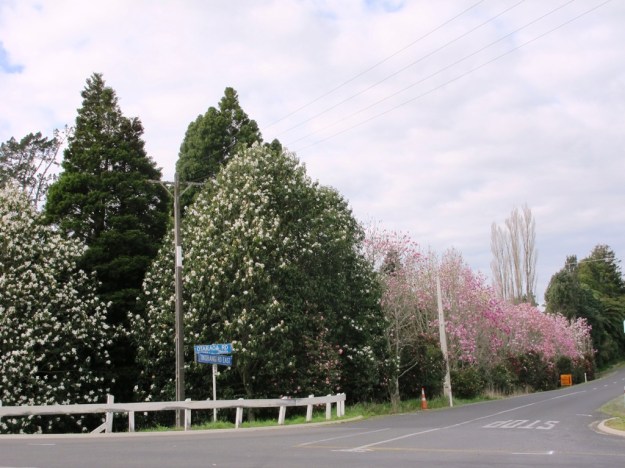
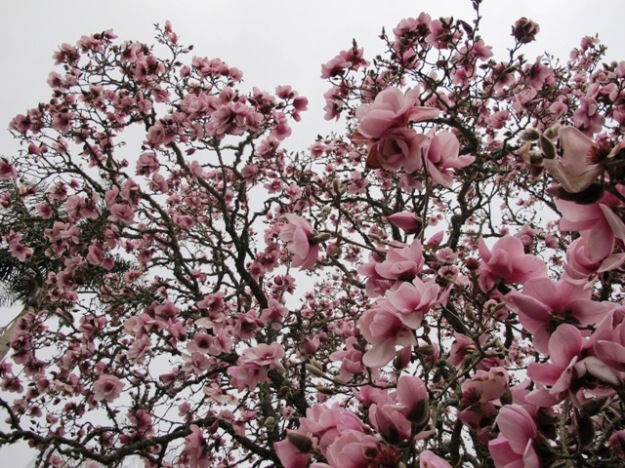
???????????????????????????????This is what our side of the road looks like now. The trees have grown up and many people tell us how much they enjoy the flowering.
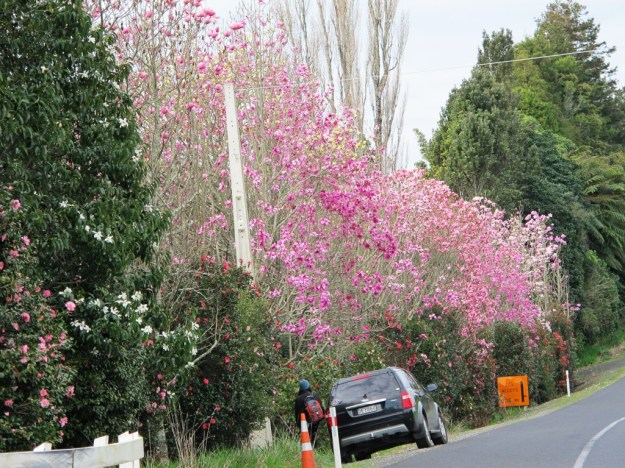
???????????????????????????????But we now have the petrochemical industry all round us and down this formerly quiet little country lane is the huge Mangahewa C site with its eight gas wells, single men’s camp and much additional activity. The road has been strengthened and widened for their heavy transport, all done in such a way as it is now impossible to walk along the verge. It is sometimes referred to as “loss of rural amenity”. Children can no longer walk safely to and from school bus stops, cycling is not safe, forget horse riding. It is pretty difficult to find a safe position to stand clear when the heavy transport thunders by. Meantime, across the intersection, the other side of Tikorangi Road – largely unused by the petrochemical industry – has remained unchanged over the past 20 years. It is a stark contrast.
???????????????????????????????And on the right hand side of the road where there used to be trees, there is now a green wasteland dominated by the designated high tension power lines that Todd Energy, a petrochemical company, deemed necessary for their operations. Sadly, petrochemical development is now given precedence over rural amenity, local residents or the preservation of the environment. This is our world of 2014. During the day we listen to the heavy transport. At night, our formerly pitch black sky is often lit by gas flares in one or more quadrants. On an otherwise quiet Sunday morning today, I could hear the distant noise from Mangahewa E site. Every night we go to sleep to a low drone from one of the plants and we are not even sure which one it is any longer because there are four possible sources for the noise. But under the Resource Management Act, we are told by our councils that “effects are less than minor” and we are not, therefore, an affected party.

No wonder some of us feel grief for what we have lost. Solastalgia.
From New Plymouth, New Zealand to Plymouth, England

IMG_20141214_0001 (5)
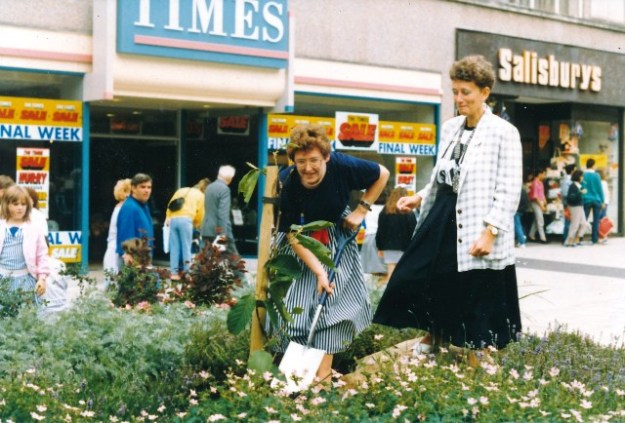
I found this photo in our archives. On the back it reads: “Planting of Magnolia Iolanthe on Monday 25/7/88 in New George Street, Plymouth, England by New Plymouth, NZ Soroptimist Carolyn Lean and Plymouth and District Soroptimist President – Ida Miles.”

Iolanthe is of course the first flagship Jury magnolia. Are there any readers in Plymouth UK who know if it is still growing? I am pretty sure that is the New Zealand Soroptimist doing the digging. I recall meeting her once.

The original Magnolia Iolanthe in our garden here last spring

The original Magnolia Iolanthe in our garden here last spring

Plant Collector – Higo Iris and Primula helodoxa

Down by the stream

Down by the stream

The prettiest photo moment in the garden this week has been the meeting of Japan and China in the Higo Iris and Primula helodoxa down by our stream. These are conditions where the plants will never dry out. They get plenty of sun but are in heavy soil on the stream bank.

P. helodoxa is one of the more common primulas in this country. It is a candelabra type – layers of flowers perhaps more akin to a tiered cake stand than a candelabra. The flowers are sweetly scented but rather a bright, sulphurous yellow in colour. In the right conditions, it is so easy to grow that it is borderline weedy because it sets seed freely and increases by clumping. We try and deadhead our plants because they are by running water. Helodoxa is one of the Primula prolifera group and is known in some parts of the world as ‘Glory of the Marsh’, which is rather lovely.

The Higo irises are from Japan and sometimes referred to as Japanese water iris. Higo is not a species. It is a particular strain of iris that originated from the species I. ensata. These are from wild collected seed and are proving quite resilient with us. The named Higo hybrids tend to have been bred for cutting and bringing indoors whereas we want garden performance, not floral perfection. We have Higos by the stream and I am also trying some as garden plants amongst other perennials where they are now into their third year of performing well. I am just a bit worried that they may be multiplying too enthusiastically. The foliage is thin and grass-like. They are deciduous whereas the primula is evergreen.

First published in the Waikato Times and reprinted here with their permission.

Saturday morning at the Christmas tree farm

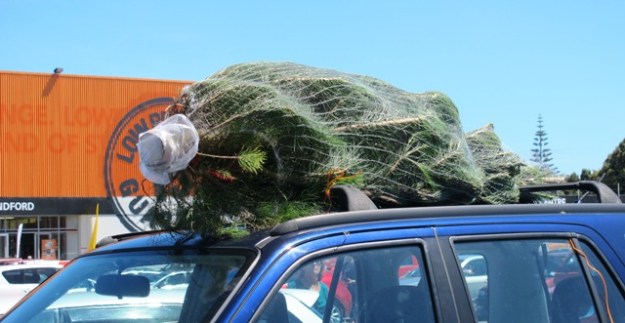
A southern Christmas – the pine tree on the SUV roof against a background of blue summer skies and orange Mitre 10.

A southern Christmas – the pine tree on the SUV roof against a background of blue summer skies and orange Mitre 10.

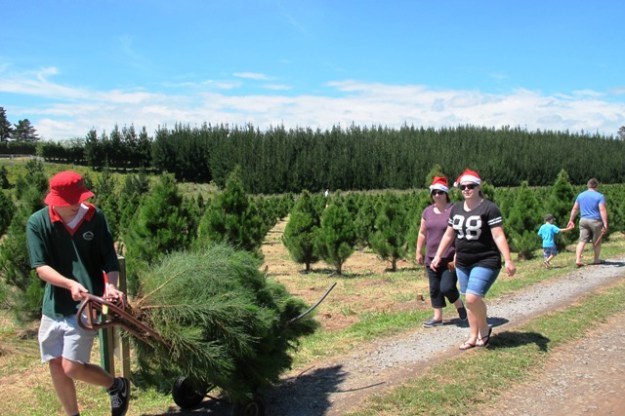
A visit to a Christmas tree farm was a new experience for me. In fact, I was amazed when I called in on Saturday morning. The whole place was buzzing. Cars, trailers, families, staff, a tree wrapping machine – even a sausage sizzle. It was like a single focus gala day. This was a set-up where you chose your own tree and it was cut to order on the spot.

My interest had been whetted when I saw a vehicle outside the supermarket with a wrapped tree tied to the roof. Clearly this was not one purchased from a trailer beside the road. Christmas trees were already on my mind because there is something about the disposable nature of them that was nagging at me and I had been gently looking for alternative ideas. Ours is a household where we have a tree every year – but not a tinsel one in sight – but we have never paid money for one. I can remember our second daughter once wistfully suggesting that maybe we could buy a perfectly shaped specimen but the DIY ethos rules supreme and this was dismissed on the spot. Of course we live in the country with self-gathered options available. It is different for urban dwellers.

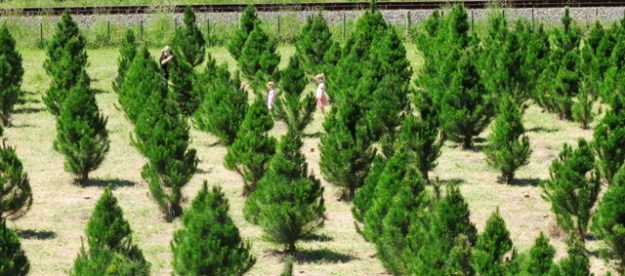
Choosing exactly the right tree was a family affair although the choice is Pinus radiata or Pinus radiata

Choosing exactly the right tree was a family affair although the choice is Pinus radiata or Pinus radiata

I was so impressed by this Christmas tree farm. Our main local one is Cedar Lodge Nursery. Outside this period, they continue to produce and sell a range of interesting conifers which are not widely available on the market. With a proud tradition over the decades, they are one of the few remaining tree nurseries in this country to still offer a mail order service. But come December, it is all about pine trees for Christmas.

The use of Pinus radiata as the main Christmas tree is largely a New Zealand tradition. The Europeans and North Americans lean more to members of the abies and picea families – the spruces and the firs. These are much slower growing, even more so when you factor in naturally slower growth rates in less hospitable climates than we have here.

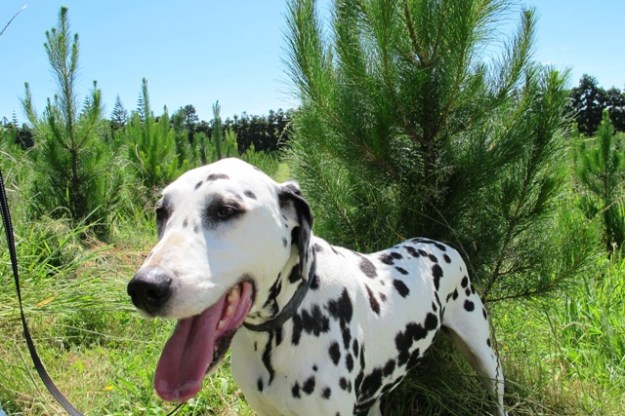
Max the Dalmatian posed amongst the pine trees destined to the 2015 crop for harvesting. These have yet to be trimmed to get the denser habit which is desirable.

Max the Dalmatian posed amongst the pine trees destined to the 2015 crop for harvesting. These have yet to be trimmed to get the denser habit which is desirable.

The clipped and shaped Pinus radiata that I was looking at last Saturday were three and a half years old. That will be from the time they were sown as seed and they had made handsome trees around the two metre mark. It will take longer than that to get the Northern hemisphere abies and picea Christmas trees to saleable size. In the hierarchy of splendid, long term trees, the abies and piceas rank much higher than the utility pine.

I hesitated over severing probably hundreds of thousands of them in their youth to hold the tinsel and a Christmas fairy for a few short weeks when in London in early December a decade ago. There were hundreds of Nordman firs (Abies of Nordmanniana) being sold cheaply in the Portobello Road street markets. Mark allayed my fears by pointing out that many of these will be thinnings from forestry plantings and the ability to sell them as Christmas trees is no doubt a welcome addition to income.

It was a hive of cheerful activity at the Christmas tree farm

It was a hive of cheerful activity at the Christmas tree farm

Our pine trees are grown as a crop, as are many other plants. Yes they are a disposable, consumer commodity. So are poinsettia and most pot chyrsanthemums. The trees are starting to die the moment they are cut off to your request but so are all cut flowers. It is not as if we are stripping out our forests. If you are worried about environmental issues, I am sure you can forgo the synthetic wrapping to hold the tree in a more compact form until you get it home.

Some suppliers offer a recycling service where you can return the poor dried out thing to be mulched. Or if you can find a suitable spot to hide it, it will break down naturally over time and feed the soils – saving on the fuel to run the powerful mulcher.

The advice on care for cut Christmas trees is that the critical issue is to re-cut the main stem of the tree when you get it home and plunge it immediately into a bucket of cold water. This fresh cut enables the plant to keep sucking up water which is what extends its life. Keep topping up the level every few days but the advice to seal the cut with boiling water, or to add sugar or aspirins is unnecessary and unlikely to add to the longevity of your tree. A tablespoon of bleach should stop the water from going stagnant.

Enjoy your pine Christmas tree with a clear conscience. Our quick turn-around Christmas trees will have made more contribution to the environment in their short lives than any more permanent tinsel tree.

Last year’s leftover trees, kept trimmed, now 4 ½ years old for those who want a super duper grade of tree and have wide enough doors to fit one inside

Last year’s leftover trees, kept trimmed, now 4 ½ years old for those who want a super duper grade of tree and have wide enough doors to fit one inside

First published in the Waikato Times and reprinted here with their permission.

Garden Lore

“The word ha-ha comes from an Anglo-Saxon word which I believe is spelt haugh, but anyway is pronounced how and means a ditch…. I thought it was a silly Victorian word and was given this explanation by an amateur archaeologist who was also my mother-in-law. She was extremely knowledgeable about ditches, embankments and fortifications which she kept an eye on for the Department of Ancient Monuments, so I guess she was right.”

Personal letter from a Waikato Times reader in response to my recent post about a ha-ha.

???????????????????????????????

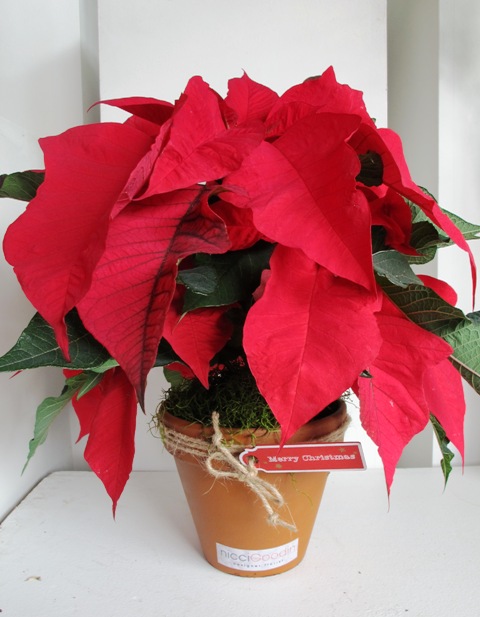
Garden Lore: The Christmas Poinsettia

Is there a container plant both more seasonal and disposable than the Christmas poinsettia? It is a Mexican euphorbia, Euphorbia pulcherrima, believe it or not, and the presentation of it as a colourful houseplant is through clever growing techniques. If you have ever tried planting one out in the garden after Christmas, you may have found that it soon became a somewhat leggy, scrubby plant without the brilliant colour and compact growth. It can reach maybe 4 metres in height and is a shrub.

The brilliant red appears in leaf bracts. The flower itself is an insignificant structure. It comes in other colours from white through green, orange and pink but the association with Christmas means that the reds are the most favoured. The growing requirements to get the leaf bracts to colour well are very specific and require a period of nights which are pitch black and days filled with bright light – about 12 hours of each, in fact. Given that this plant became associated with Christmas in the northern hemisphere a long time ago, the fact that we see so many plants offered for sale remarkably cheaply here in the southern hemisphere is because the crop is grown en masse in controlled conditions under cover. It is a uniformly high quality product, but it is also the most disposable of house plants. If you feel inclined to indulge in a spot of plant torture, they can apparently be turned into effective bonsais and if you are of a mind to do this, you will probably be inclined to attend to the darkness and light requirements as well.

First published in the Waikato Times and reprinted with their permission.