“April is the cruellest month”, wrote T.S. Eliot in his famous poem, The Waste Land. Not, I have to say, out of fear of late frosts in a northern hemisphere spring, as one gardening wit thought. Here, it is July that brings us the bleakest days of winter.
But as July progresses, it also heralds the start of a new gardening year. Magnolias and snowdrops mark the passing of winter into spring.
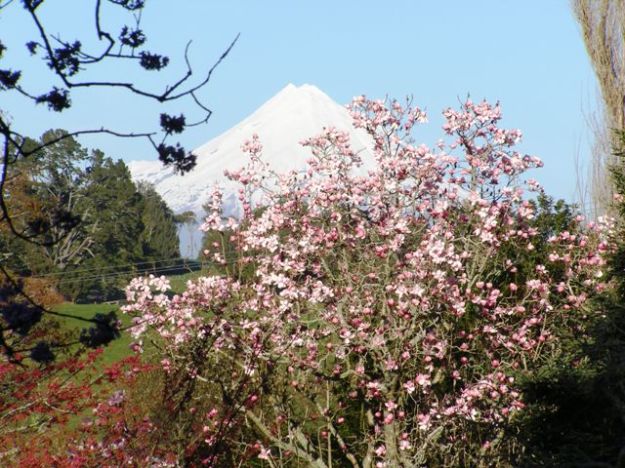
Magnolia campbellii
The first deciduous magnolia of the season to open is always M. campbellii. There is an attractive group of them in New Plymouth on Powderham Street and the first flowers on those appear in late June, sometimes before all the leaves have fallen. Asphalt and concrete in cities raise temperatures enough to trigger flowering earlier than in country areas. M. campbellii is not a great option in colder parts of the country because frosts can take the early blooms out but where space and climate allow, it is beautiful. Our tree was considerably larger until a falling Lombardy poplar took out half of it, but it is staging a comeback. There is a white form too, but the pink is generally regarded as superior.
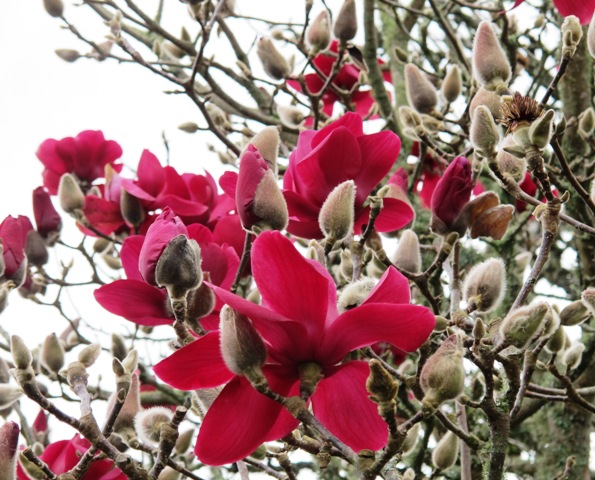
Magnolia Vulcan
July also sees the first blooms opening on Magnolias ‘Lanarth’ and ‘Vulcan’. The latter was bred here by my late father in law, Felix Jury, and marked the first of the new generation red-toned magnolias. For several years after we first released it, we used to be able to track it flowering down the country by the phone enquiries. It opens in Northland much earlier than it shows colour in Otago and Southland.
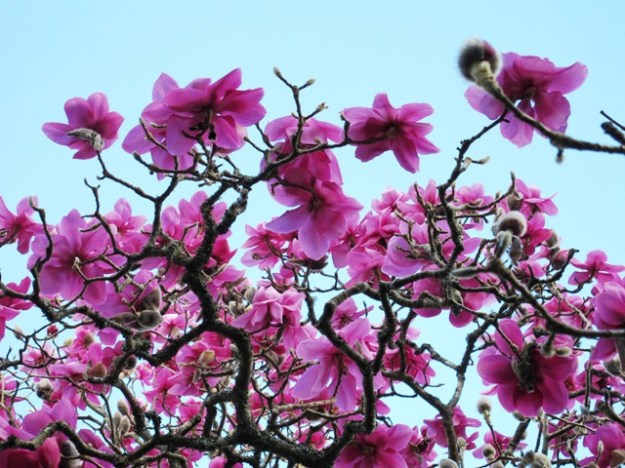
Magnolia Lanarth
Lanarth (technically M. campbellii var. mollicomata ‘Lanarth’) remains the best purple available, in our opinion, even though its flowering season is brief because it only sets flower buds on the tips and they all bloom at once, rather than in sequence down the stems. It is worth having in a large garden because it will take your breath away for two or three weeks in late July and early August but smaller gardens probably need trees with a longer season.
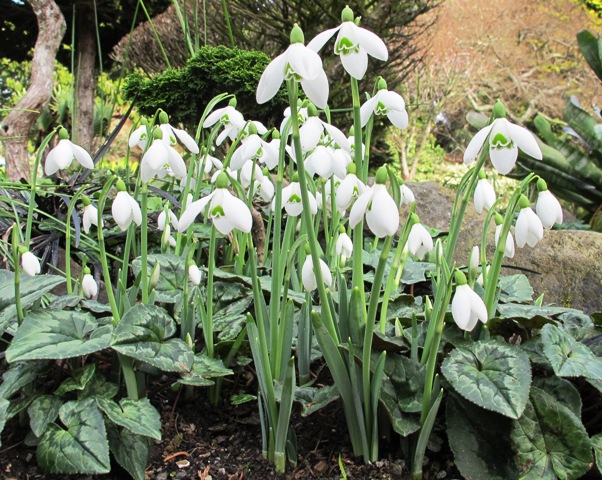
Galanthus S. Arnott
At the other end of the scale, we find snowdrops enchanting. We have tried growing a wide range of different species but in the end it is Galanthus nivalus ‘S. Arnott’ that is happiest here in the mid north, although we also get a good run from the larger leafed G. elwesii. Gardeners in cooler, southern areas will have a bigger selection to choose from but we have to go with what performs here.
Snowdrops are one of the few bulbs where the standard advice is to lift and divide in full growth – usually straight after flowering although there is no reason why you can’t do it when they are dormant. They multiply satisfyingly well and we are on a mission to spread these charmers in huge swathes throughout the garden.

What northerners often call snowdrops are not. They are leucojums, commonly called snowflakes. Proper snowdrops are much smaller and prettier. They have a central cup surrounded by three longer petals that look like dainty wings. Leucojums, on the other hand, just have the cup as a bloom and are much stronger growing with plenty of foliage that looks like daffodil leaves. You often see them growing in paddocks around old farmhouses. Some of the bigger flowered selections make good garden plants (Leucojum vernum ‘Gravetye Giant’ is the one we use), because they have a much longer flowering season than galanthus. But they lack the dainty refinement of the proper snowdrop. There can be little doubt about that.
First publshed in the New Zealand Gardener July issue and reprinted here with their permission.
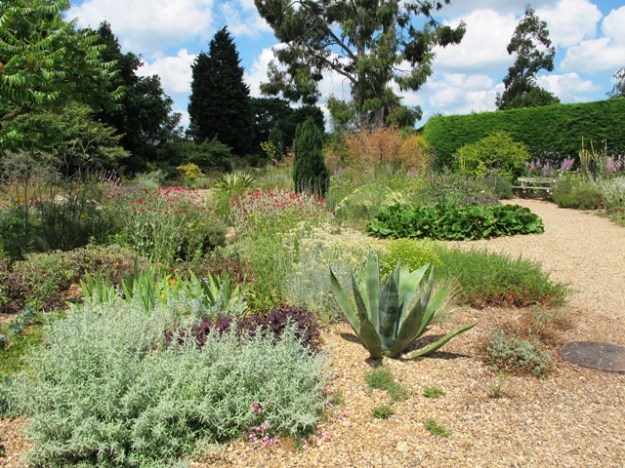



 There is nothing like the advent of the winter months to remind us that our climate is pretty good. Where we garden, on the coastal strip of Taranaki, we share the same disturbed westerly air pattern that moderates the climate of much of the west of New Zealand. It means we don’t get particularly cold and occasional frosts are generally light. We don’t put our gardens to bed for winter and retreat indoors. In fact we have colour and bloom all twelve months of the year and June is one of our busy months for planting trees, shrubs and perennials.
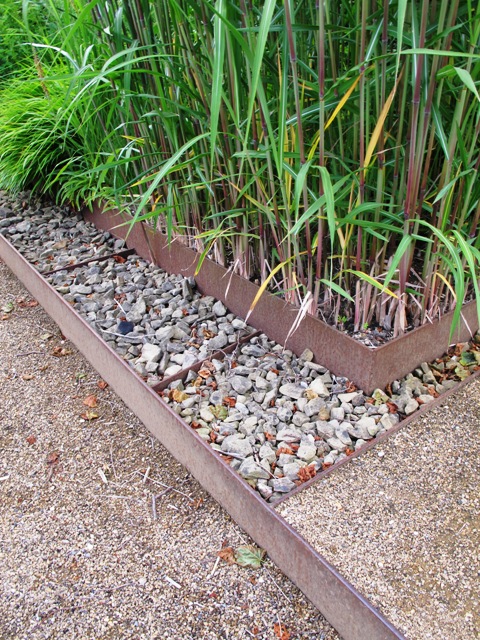
 We are off to England to look at summer gardens this month. There is much to learn from their skills with summer flowering perennials and we particularly want to look more closely at what is now called the New Perennials Movement (which might be styled ‘meadow gardening and grasses meet traditional herbaceous drifts’). We have to squash any such trips in before the glory of the magnolia season starts here next month.
 Tikorangi The Jury Garden