Seedling variation

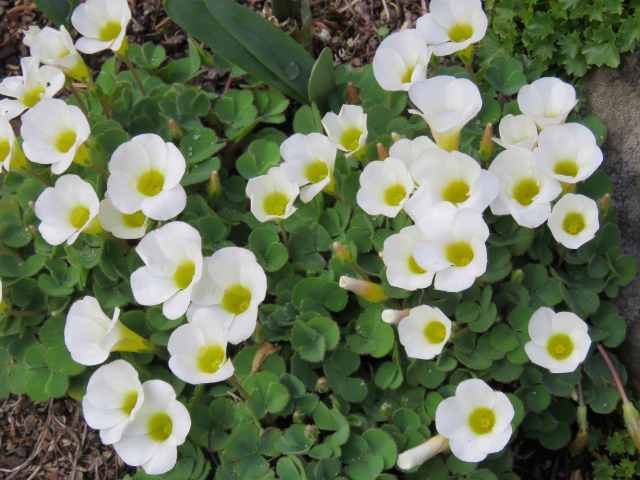
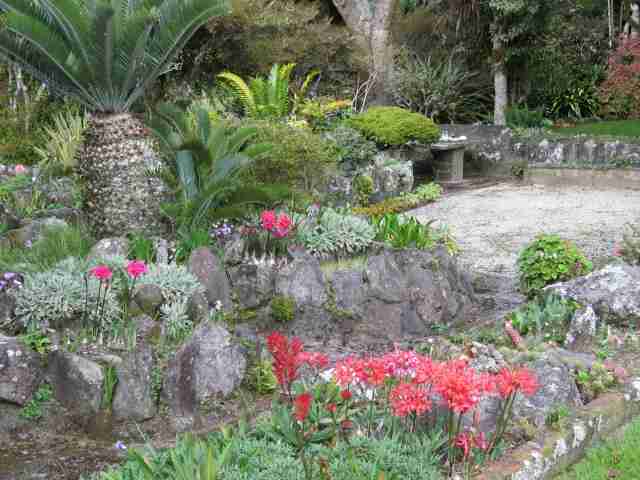
I found the range of different seedlings in the self-sown dwarf cosmos this year interesting and thought some readers may, too. Last year, we planted seedlings of Cosmos ‘Bright Lights Mix’ (from King’s Seeds) for late summer colour in the rockery. They performed well, stayed compact in growth and provided vibrant splashes of colour at an otherwise drab time of year for that garden. Our rockery is predominantly smaller bulbs and it peaks twice a year in autumn and then in spring. Summer conditions are tough when it dries out, the soil heats up and there is little life in the soil but the cosmos didn’t turn a hair.

Because the seedlings are reasonably easy to recognise, they didn’t get weeded out but came up, bushed out and flowered in abundance over recent weeks. It is much easier if they can self-seed and not need to be raised from scratch in a seed tray and then planted out again. These cosmos are not subtle; they are perhaps reminiscent of marigolds (tagetes) but a simpler flower with clean colours so I prefer them. Cheerful, they are.

Mark’s and my early evening sitting spot is on the front porch, looking across the rockery and the variation of growth habit and flower colour caught my attention. These second generation seedlings were showing more variation than the original plants from last year. Most of the plants have remained pretty bushy and compact, which is what we want in the rockery even though we are usually sniffy about bedding plants, commonly seen in floral clocks and on traffic roundabouts. But some of the plants have reverted to the taller, more open, willowy growth that I associate with other cosmos varieties I have grown in the past.

It was the variation in colour, size and flower form that led me to picking a selection. The colour range is from a clear lemon yellow, through a gamut of golden hues to orange and then deepening to reds, but not a pure red as we know it. Some are fully single with just one row of petals, some have two rows of petals and the ones with three rows of petals are the fullest flowers on the plants. Bees love them but it wasn’t until I looked up the supplier’s website that I found out they are, allegedly, not only edible for humans but also tasty. “Flowers are edible with a sweet nectar flavour, try them in salads as garnishes or float in summer cocktails.” I have not used them as a culinary garnish, but I am sure this may be handy to know.

Most plants in the wild reproduce by seed and Nature is full of seedling variation. My cosmos are just a small example of Nature in action. When you buy packets of seed, you are trusting the supplier to have made selections from the best and most desirable seeding parents. When you save your own seed, always select from the best plant – be it garlic, tomatoes, annuals or anything else. Don’t make the mistake of saving seed from the smallest plant or fruit that you don’t want to eat. Careful seedling selection down the years is what gave us sweet corn instead of tough old maize, chunky orange carrots instead of very thin purple ones and a host of other plants. 

I may yet pull out the leggy cosmos to give more chance for the more compact ones to be the seeders but the bees will have cross-pollinated them already and any seedlings may still throw taller plants. In removing the leggy ones, I am just bettering the odds of a compact future generation.

Zach diffidently gave me a few seedlings of a named cosmos he had raised from seed. “I don’t think you will like it,” he said. “Murky colours.” He knows I prefer clean colours in the garden whereas he likes colour blends. I guess you could describe the flowers as subtle; to my eyes, they are more insipid that subtle. I won’t be sad if these ones fail to seed down.

I once photographed these tall, white cosmos in an Auckland garden. En masse, they were absolutely lovely. I even bought a packet of seed in anticipation of something similar in our blue and white Wave Garden but I am not very good with starting from seed – that is Mark’s territory. From memory, my seed was patchy in the extreme and the only plants that grew to flowering size were not pure white but candy pink and white which was not what I wanted at all. Clearly that seed had been collected from a plant that had cross pollinated with a neighbouring pink. Maybe I could try again.

Summer gardening

Gladioli bulbs

Here is a sight to strike terror in many gardeners. Those are gladiolus bulbs, in this case a yellow flowered hybrid. I knew it was a ‘vigorous’ grower, as the euphemism goes. I just didn’t realise quite how enthusiastic it was about increasing.

No wonder Gladiolus daleni is escaping from gardens into the wild

Some aspects of gardening are somewhat akin to micro-surgery. Removing many of those bulblets that have detached from the parent is one such activity. There is not much alternative to gently working through the soil and picking them out one by one. I had noticed Gladiolus dalenii had the same habit and I haven’t started on that patch yet. The only other plants I can think of that we grow here with a similar bulblet production are the ixias and alliums. They should come with a warning that control may require precision gardening.

When I thought about it, I share the opinion of Crocosmia ‘Lucifer’ – foliage ratio too high, flowering season too short, rampant growth and a bad seed-setter

When I wrote recently about plants that may be good but I don’t want them everywhere,  it clearly struck a chord with a number of readers. My current bête noire is mondo grass – ophiopogon – and that means picking out every fallen seed as well all the runners. Susan, who leads the volunteers at the Te Henui cemetery, tells me she is reviewing the plant material they use and making lists of plants that she intends to get rid of and those that she wants to restrict heavily. They want the place looking colourful, vibrant and pretty all year but, while the overall area is very large, much of it is viewed close-up and they don’t have the labour to carry out the highly detailed plant care that is possible in a domestic garden. As a result, they need to use plants which will still look good – or at least not a mess – when their flowering is over. I could understand that she had the large pink watsonias on her list to get rid of; I was initially surprised that lychnis and Crocosmia ‘Lucifer’ are also for the chop. Fortunately, Susan keeps good records and I have asked her if I can use her plant list as she refines it. I think it will be a good resource for perennials that under-perform or fail to pass over gracefully in our climate. That will take time to eventuate but may be a lot more useful to New Zealand gardeners than overseas plant lists.

Yet again, I have been surprised by how much time and effort I put in over summer to keep our new perennial gardens looking good. Our experience in the past included extensive use of perennials and bulbs in shade gardens but not in full sun where perennials G R O W, spread and often flop over. In our conditions, we spend a lot of time deadheading to restrict the rampant spread and a fair amount of time staking and tying followed by de-staking. You can get rid of this by being a great deal more selective about which plants you use but many of the ones I enjoy the most need this extra attention. It can all become a bit utilitarian if plants are to be selected primarily on being low maintenance.

If you are going for a lower maintenance garden, stick to trees and shrubs, avoid bulbs and only use perennials in shady areas is my advice. Shade gardening is generally lower maintenance because the plants don’t grow as rampantly in lower light levels. We are into high-interest gardening rather than low-maintenance gardening.

It is always a bit harder working out what to do in high summer. It is the right time to dig bulbs as just a few are starting into growth but totally the wrong time to move woody trees and shrubs. I find I can move perennials as long as I can get water to the site (we don’t irrigate here) and replant them well with plenty of compost and water and then mulch. They are currently in full growth so can re-establish quickly if steps are taken to mitigate the summer dry and heat. I am chipping my way through some of the lesser borders we have in the garden.

Preternaturally tidy at this moment in time

Like many, if not most, homes in this country, we have awkward, narrow, very dry borders around the house defined by a concrete path. I find the two I have just done preternaturally tidy. This one is predominantly home to two different forms of veltheimia and I haven’t done anything with it but weed and tidy for maybe 15 years. This time, I dug everything bar the rosemary plants and two lapageria vines, saturated the poor, spent soil and enriched it with compost before replanting. As I walk past that abnormal tidiness several times a day, it occurs to me that this is what too many people judge to be ‘good gardening’. No, what is good gardening is when all the plants bed in and how it looks firstly this spring and then in 3, 5 or 8 years’ time, maybe longer.

Commonly referred to here as ‘the veltheimia border’ but I reworked it because I realised the veltheimias were in the process of going back, not thriving.

It was very gratifying in late spring to have a garden designer friend from Auckland call in with a companion he wanted to see the place. What he singled out was how well the plants were bedded in. Not tidiness, but the creation of plant communities that are established and look as though they belong together over time.

Orchids happily bedded in, seen in spring.

So much of gardening is taking the longer view rather than instant gratification. And tidiness can be over-rated.

Spot the difference

Ratibida pinnata in the centre. Or is it?

The plot thickens. About three years ago, we bought a plant as Ratibida pinnata. When I posted a photo of it, another nurseryperson commented that she thought it was actually Rudbeckia laciniata ‘Herbstonne’. I couldn’t tell from looking on line so I bought both the rudbeckia (also known as the cut-leaf coneflower) and ratibida (or gray-headed coneflower) again to identify. At the time, when I was comparing both new, young plants, to the one I had, I came to the conclusion that the original label was correct.

Rudbeckia laciniata ‘Herbstonne’

I was wrong. Having forgotten which I decided was which, I picked both flowers and foliage from each and brought them inside to compare to photos on line, with help from Zach and Mark. The foliage was a better guide than the flowers which can change dramatically from bud to maturity. The nurserywoman – Kate from Seaflowers Nursery – was right. What we had bought as Ratibida pinnata is in fact Rudbeckia laciniata ‘Herbstonne’. We are sure of that.

Comparing flowers of various stages – rudbeckia to the left, ratibida to the right.
The flowers may be similar but the foliage is very different – rudbeckia on the right and ratibida on the left

The flowers of both don’t pass what Mark describes as the ‘man on the galloping horse’ test. Would somebody passing by at speed be able to see any difference? No. In fact somebody walking past very slowly probably wouldn’t spot the difference. The colour, flower size and form, growth habit and stages of flowering from bud to petal drop are very close indeed. It was only when I picked assorted flowers to compare that the differences became obvious. The rudbeckia cone is more pointed right through from bud stage and it does not form as many disk flowers around the base of the cone. Subtle differences in flowers but the foliage is clearly not the same at all.

But what we have as the correct ratibida has us puzzled. The foliage does not match the photographs on line from websites in its native USA, including Minnesota Wildflowers.

Actual ratibida foliage – from Minnesota Wildflowers
Spot the problem – different foliage on the plant we have as Ratibida pinnata in Aotearoa New Zealand

Confusingly, the plant Auckland Regional Botanic Gardens has posted as Ratibida pinnata looks to be the Rudbeckia laciniata. Maybe they bought it from the same source that our original plant came from?

My current conclusion, which I am more than happy to see corrected if I am wrong, is that if you buy Rudbeckia laciniata ‘Herbstonne’ in this country, it is highly likely that is exactly what you will get. However, if you buy Ratibida pinnata you may well receive the Rudbeckia laciniata instead. Or you may receive what we doubt is the ratibida but looks mighty like a rudbeckia species that is closely related to R. laciniata, to our eyes. All we need is a botanist with specialist knowledge in American wildflowers to clear this up for us. I see there are about 25 different rudbeckia species and my curiosity is not great enough for me to meticulously comb through all the different variations (species and named forms) to see if I can work out whether we are right.

Left to right: rudbeckia, helenium, rudbeckia, helianthus and what may or may not be ratibida

I am a fan of the American wildflowers that are largely members of the asteraceae family. Think daisy family, more or less. I love the colours in the summer garden but what I appreciate most is the sheer flower power of them giving a bold show. Some sunny perennials can be a little too heavy on the foliage to flower ratio or the length of blooming time can be very short. Not these plants – flowers in abundance and often over a long period of time.

I couldn’t fit the echinaceas on the same flower lay so had to do them separately.

Away from flowers and into colour, Zach gave me the ‘sad beige’ concept this week and it seems to fit well with my earlier posts on real estate grey. I had not heard of sad beige before but there is a little corner of You Tube and TikTok devoted to the topic. If you share my humour, you may find it amusing to dip into the existential misery of sad beige here, and here and here. But wait there is more. I laughed out loud.

Give me colour in my life. No sad beige and no real estate grey for me.

The blue lit tree fern was a little startling
This one changed colour every few seconds

I meant to post a few photos of our recent excursion to see the Festival of Lights in Pukekura Park, the central city park in New Plymouth. What a joyous event, open to all and teeming with people out to enjoy the experience of seeing a park that is known and loved by all, lit up for the holiday season. We all complain about how much we pay on our rates bills (local property taxes) but I do not mind how much this costs in dollar terms. The bringing together of the community to enjoy a free event over several weeks is worth every cent.

Illuminating Poet’s Bridge and the lake

Botanical inaccuracy

I am amused. I have some hand cream that was gifted to me and its name is ‘Kyoto in Bloom’ by Glasshouse Fragrances. Glasshouse came to my attention when we were approached to use the garden for filming a promo for the brand and very charming the result was. I failed to keep the link, I am sorry, but it was a pretty, young woman holding products as she merrily tripped her way around various flowery locations here. Very Instagramish.

Randomly, I read the print on the back of my tube of hand cream. There I found the following paragraph in very small font but full caps as shown below:

“YOU HAVE ARRIVED IN THE FULL BLOOM OF SPRING, ON A PATH OF CAMELLIA, LOTUS AND AMBER, TO CHERRY BLOSSOMS, PINK AS PAINTED OVAL LIPS, TO THE ZEN TEMPLE OF THE GOLDEN PAVILION WHERE YOU FEEL CALMED, INSPIRED BY SIMPLICITY AND FOCUSED BY RESTRAINT TO SEE BEAUTY IN EVERYTHING.”

Shall we unpack that a little? Were it more recent, I would assume it was written by Artificial Intelligence but I have had it over a year so I think it is a human producing this word salad. Elder daughter is currently home for a visit and her comment was that if it wasn’t Glasshouse, she would assume it was simply one of those bad Google translate examples we all like to read aloud with amusement. But Glasshouse is a reputable Australian brand so I think it must be a flight of fancy from the design department.

Japan does have sasanqua camellias although the naturally occurring species will be single. At least they have some stronger pinks in their genes.

Yes, Japan has camellias but very few camellias have scent. The varieties native to Japan are the sasanqua group which have a sort of mossy, earthy aroma that is not perhaps what a cosmetics company regards as scent.

Nelumbo nucifera or lotus flower (photo credit: Hong Zhang (jennyzhh2008), CC0, via Wikimedia Commons)

The sacred lotus has some fairly particular requirements when it comes to cultivation and, while prized in Japan, is not native and is more likely to be found inside the temple and probably never as a woodland plant beside a path.

Amber has a comma after it which makes it a noun. It is fossilized tree resin so I am not sure what it is doing in there.

This is actually Prunus ‘Awanui’ but likely very similar to the Japanese cherry trees. ‘Pink as painted oval lips’? I think not.

I looked up the most popular cherry trees that dominate Kyoto’s famous blossom season and it seems that the Yoshino Cherry or Prunus x yedoensis is by far the most widely grown. It at least is scented although ‘pink as painted oval lips’ may be over-stating the case as they are commonly white or palest pink. I have never been to see the cherry blossom in Japan and I am pretty sure that the Glasshouse copy writer hasn’t either.

Expecting me to find the state of Zen and beauty in the simplicity of my hand cream might be a tad ambitious. Besides, while strongly scented, my olfactory system (aka: sense of smell) can detect nary a hint of either blossom or camellia scent and I am familiar with both.

It all rather reminded me of the Sydney creatives who set about marketing air freshener based on the beauty (but not necessarily fragrance) of magnolias.

Botanical accuracy matters more to some of us than others.

Postscript: It gets worse. Quite a bit worse, really. A reader has alerted me to the Golden Temple reference – a pre-1400 national monument that was deliberately burned down in 1950 and became the subject of a bleak novel, ‘The Temple of the Golden Pavilion’. At least it is in Kyoto so that bit is accurate. But wait, there is more: the author of the novel, Yukio Mishima, met a particularly gruesome end that, frankly, is not Zen at all. Even my hand cream is more Zen than that, albeit encased in gold plastic, not gold leaf.

“It is a good plant but we don’t need it everywhere”

Mark will only have planted a few Scadoxus katherinae at the start – maybe 3 or 4. I think we can say they have naturalised now but they are not invasive.

This is my new mantra. We have always had some level of self-seeding in the garden, some more desirable than others. We are fine with desirable plants like Scadoxus multiflorus ssp katherinae and the Himalyan lily, Cardiocrinum giganteum, deciding where they are happiest growing and gently settling in by spreading seed; we call that naturalising. Similarly, when the plants are natives, we don’t worry about them spreading around and we just decide whether we want them where they appear and weed them out if not. Nikau palms, tree ferns, kowhai and the like fit into that category.

Then there are the invaders, of whom our worst offender is Prunus campanulata. At the moment the parent plants have a stay of execution but we aim to remove every seedling we see. We cut down the parent bangalow palms (Archontophoenix cunninghamiana) because of their rampant seeding. It may be we reach a day when the prunus suffer the same fate.

Verbena bonariensis in purple. I didn’t even plant it. It came in on something else and is welcome to stay but I don’t want it everywhere whereas it would like to be in every garden. Fortunately, it is easy to pull out.

Establishing the summer gardens has added a whole new range of plants that want to expand their territory beyond their allotted area – not for nothing are they called colonisers. The reason is that plants growing in well-cultivated soil in sunny conditions can multiply and spread exponentially, both from below ground and by airborne seed.  

When I planted the summer gardens in the years between 2017 and 2019, I made it a priority to use different plant material in each garden. While they are adjacent to each other, I wanted clear differentiation between the Wave Garden, lily border, Court Garden, back border and the twin borders while anything and everything that was left over was fine in the wilder Iolanthe Garden. I avoided repeating plants because as soon as your start using the same plant palette, they all end up losing definition and looking the same. I was pretty disciplined about it and there are only one or two repeats.

Gaura flowers for such a long time – this photo was actually April last year and the plants started flowering before Christmas. But it does seed down and not every seedling is precious.

Many of the plants have different ideas and that is escalating. Which is why I find myself saying often, “It is a good plant but we don’t need it everywhere.” I mentioned  mondo grass in last week’s post. It is very handy, both in black or green but it also sneaks all round the place both by seed and by spreading below ground. Too much. We will have much too much mondo if we don’t take charge now. Besides, it doesn’t look that great when it gets very thick and it is not easy to thin without a major effort on lifting, dividing and replanting. It needs restricting and reducing right now.

You may not believe me but you can have too many gloriosas and they can spread too enthusiastically and bury themselves so deep it is difficult to dig them out.

But there are so many more spreaders. Perennial lobelias, tigridias, verbascums be they chaixii or virgatum, Verbena bonariensis, crocosmia, scuttellaria, lychnis, gaura (so much gaura…), gladiolus and more. I have been gently restricting Gloriosa superba but I now think I have been too gentle and I need to get them out by the barrow-load and confine them to just two or three areas. And white foxgloves. I went to quite a lot of trouble to get a pure strain of white foxgloves established but now they want to be everywhere. Knowledgeable visitors from Europe last spring were astounded by the size of my white foxgloves, declaring that they have never seen them so large in Europe.  Therein lies the problem: foxgloves are thugs that smother their neighbours and they seed far and wide. They need to be kept to a limited number of places where they can star but not smother.

Where we are, there is little to no danger of these plants escaping into the wild but I can see how we have arrived at a situation in this country where many, possibly most, of our environmental weeds are escapees from gardens. Pretty escapees they may be, but it does not stop them being weeds when they spread uncontrollably in the wild.

We gardeners need to take responsibility for our plants.

Tigridias build up quickly and do like to move around. I have places where they are allowed to stay but woe betide those that think they can breach the boundary.

I do a lot more deadheading these days than I ever anticipated but that is basically short-circuiting what will be an even larger task if I don’t. A stitch in time and all that. We don’t generally compost seed heads. While we make hot compost, it is not always hot enough to kill off seeds and we certainly don’t want to be spreading viable seed right through the garden in the compost. Mostly, we dump them in piles in deep shade out of sight, which is possible in a large garden but not always practical in small, urban gardens.

The retired nurserywoman in me feels bad about wasting so much good plant material that has commercial value, but not to us. When we had the nursery, we mainly grew woody trees and shrubs which generally take a whole lot more skill, specialised facilities and time to get to saleable size. We used to question how some perennials could be sold at a similar price to a shrub or tree. Now I have a whole lot more experience gardening with sunny perennials and realise how easy it is to multiply most of them, I am even more amazed at the prices I see in garden centres.

Verbascum virgatum making itself right at home by the old prop houses – and about 40 metres away from here as well. From just a single plant last year, I now have them spreading alarmingly

One of the interesting parts of gardening is deciding plant combinations and it is certainly easier when you have too much plant material rather than too little so that, at least, is a good problem to have. Verbena virgatum can go entirely though. It is way too enthusiastic and if I turn my back it will have infiltrated everywhere. It is pretty enough but not a good plant when it comes to behaviour. Keep to Verbascum creticum, I say. Similar large yellow flowers although in spring, not summer, and while it seeds, it has never been a problem for us.