Irises – named for the Greek goddess of rainbows

Louisiana iris are flowering by our stream

Louisiana iris are flowering by our stream

I am enjoying the irises enormously this season. This week we have three main types in flower – the Sibericans, bearded irises and the Louisanas.

Botanically Iridaceae, they are more romantically named for Iris, the Greek goddess of the rainbow. It is a big family – there are maybe 300 different species and they are grouped in different botanical sections. Then there are thousands upon thousands of different hybrids, for irises have been bred extensively for hundreds of years. Some of those hybrids are what I would describe – politely, if disparagingly – as ‘novelties’. This is more evident in the bearded iris class than anywhere else but I will draw veil of silence beyond saying that not all hybrids are improvements.
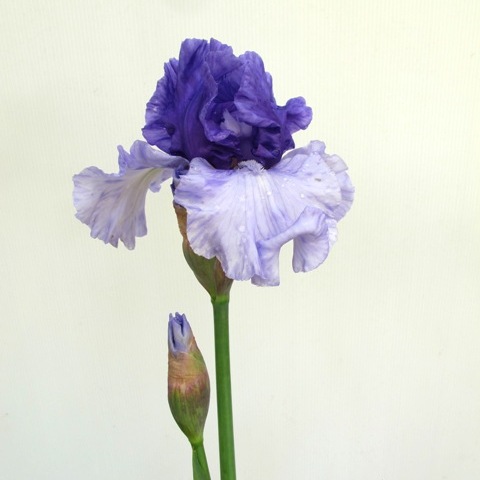
'Crowned Heads'

‘Crowned Heads’

We are not the best bearded iris territory here. These ones grow from rhizomes that sit on top of the soil and they tend to prefer free draining, sandy soils (great if you live on the coast though you may have to stake the flower spikes). They like their rhizomes baked in the sun and they are fine with winter frosts but are not so at home in high rainfall, high humidity climates. They are also better without a whole lot of other foliage flopping over their rhizomes, which tends to happen in perennial beds.

Yes that is a black iris, called 'Anvil of Darkness' no less, and an old yellow variety to the right

Yes that is a black iris, called ‘Anvil of Darkness’, and an old yellow variety to the right

The modern hybrids are often touchier than the old toughies. I was delighted by the iris fields of nursery plantings I saw last spring (www.theirisboutique.co.nz) and tramped up and down looking at them all. The owner, Coleen Peri, has given me a few new ones to try here. Bless her, she avoided the weird colour mixes, splashes and splotches that I personally dislike. The very dark ones are interesting but are not going to be easy to place in the garden so that they stand out. There are some exquisite blues available but my most reliable standby is still an old pure yellow one which dates back to Mark’s mother. It is very forgiving and tolerant.

One of the easiest of all iris to grow, as long as you have heavy or damp soil - Iris sibirica

One of the easiest of all iris to grow, as long as you have heavy or damp soil – Iris sibirica

The easiest of all irises to grow must be the Siberian iris or I. sibirica. As its name suggests, it is fully hardy but it does want to grow in a heavier soil which doesn’t dry out during the growing season. It is dormant in winter, so winter dry won’t matter – though few of us have dry winters in this neck of the woods. It has the classic form with three upright and three falling petals and comes mostly in gorgeous shades of blue. Because it is clump forming (it has a fibrous root system as opposed to many irises which are either bulbs or rhizomes), it can be planted and left for many years. I get a lot of pleasure from the border where I have combined it with the big hairy-leafed Bergenia ciliata. I like the contrast between the foliages and they co-exist happily together.

The Louisiana irises are in flower down by our stream. These ones hail from the bogs and swamps of Louisiana and are easy to grow in clumps on the margins of water, although they can also be grown in heavy soils. These are plant and leave types, too. The lovely Japanese Higo irises will not come into flower for another few weeks yet. We are still working on establishing these here and they appear to be at their best immediately by water. We want lots of them blooming into December because we love their colours and ethereal form.

Moraea villosa or the peacock iris

Moraea villosa or the peacock iris

Then there are the Dutch iris (often sold widely and cheaply as corms in autumn). They looked out of place in the rockery, vulgar even, so I moved them into a perennial border where they flowered away in early spring and looked much better. Dutch iris are not native to Holland. It is just the Dutch who did the breeding to get these popular forms for the floristry and garden markets. The dwarf (ground-hugging) Iris cristata from USA look much more appropriate in the rockery and have that classic three up, three down petal formation so often associated with the iris family. The peacock iris (moraea) species which grow from corms, also fit in well with the rockery and different species flower through autumn, winter and spring though many people would not even pick some as irises.

It seems a general rule that if the iris grows from rhizomes or bulbs, it needs excellent drainage and will do better in lighter soils and full sun. If it has a clumping, fibrous root system, it leans more to heavy soils and damper conditions. One size does not fit all when it comes to the large iris family.

A field of irises being grown commercially

A field of irises being grown commercially

First published in the Waikato Times and reprinted here with their permission.
Garden lore

“If gardening isn’t a pleasure for you, chances are the work will merely give you a rotten disposition. If you’d rather be golfing or fishing, get a bumper sticker that says so, and forget gardening.”

Elsa Bakalar A Garden of One’s Own (1994)

014
Dividing plants

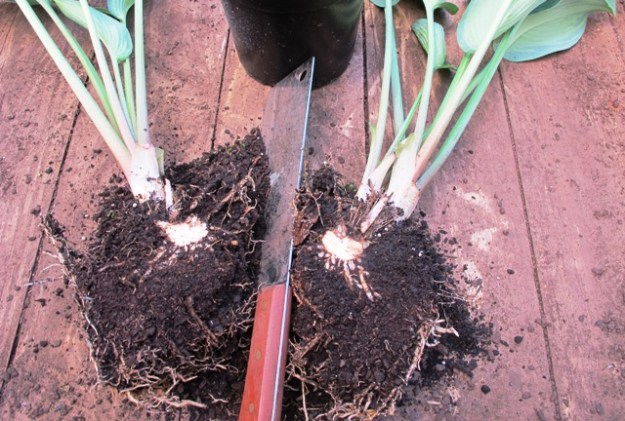
If you have been buying perennials recently, you can often divide these immediately and plant double the number. This is Hosta June which showed more than one growing point. I cut it down the middle, making sure that each side had both leaves (which means growing tips) and roots. I find a meat cleaver is easiest for this operation although a carving knife will do. Some people use a sharp spade but it is harder to get the cut in exactly the right place because you have less control over the spade.

Plants which are in full growth, as most perennials are in spring, will recover more quickly. Just make sure you plant them into ground which you have prepared well by digging it over thoroughly and preferably adding compost or humus. Water the plants in and keep the moisture levels up for the next few weeks. You need to give them a good start because you will have shocked the plant by cutting it in half.

Commercially, these plants are generally divided in winter with much more precision and controlled conditions (which will generate many more plants) but for the home gardener, dividing it in full growth can give good results and it is easy to see what you are doing.

First published in the Waikato Times and reprinted here with their permission.
Where to start? Childhood success in gardening

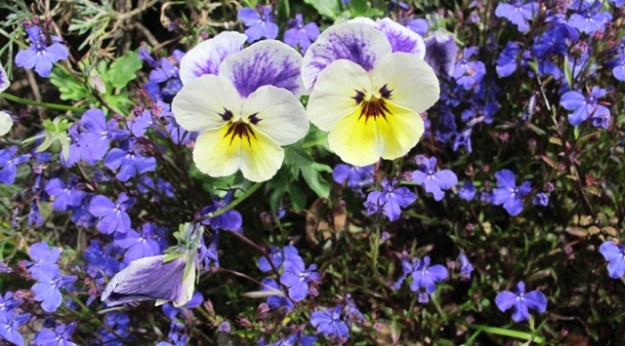
Lobelia and pansies - two choices among many quick maturing annuals

Lobelia and pansies – two choices among many quick maturing annuals

I was chatting to a Waikato reader this week and we got on to the subject of encouraging children to garden. It’s not rocket science. Setting up your child for success will breed enthusiasm and confidence.

Our three progeny are well and truly adult now (and gardening adults at that) but they were whizzes at school garden competitions, sand saucers, miniature gardens and floral art. In self defence, I have to say they never won any of the calf rearing cups and ribbons (their experience was at rural schools) and success in the lamb-related sections was rare. But at anything to do with gardening and flowers, they were winners. We set them up for success.

Back in the days when rural schools here promoted competitive school gardens, I was once asked to judge the winners. These were little plots at home where the children grew flowers, herbs or vegetables. Goodness me, they were all raised from seed in those days, organised at a subsidised rate by the schools.

I still remember that judging round as I visited maybe 20 different garden plots. The saddest sight was that of a sole child of older parents. They had a lovely house and garden and poor daughter had been banished to a hidden, shaded spot out the back so as not to spoil the overall appearance of the property. She was doomed to failure.

Children’s gardens need to be in the best possible position where they are in full view and walked past all the time, not hidden away. Think of it like the wretched trampoline that dogs so many parents. If that is hidden away from view, it is not used anywhere near as much as if it is in prime position. As every parent knows, the years of childhood seem long at the time but in retrospect they have flashed past. Tramps, sandpits, paddling pools, plastic toys and their ilk don’t combine with the beautiful house and garden but they are transient. Children’s gardens are in the same class. Celebrate them. Don’t hide them away. Put them in a prominent spot by a main access path in full sun.

Rural families may have a damaged farm trough to recycle as a child's garden but move it to a sunny, prominent spot

Rural families may have a damaged farm trough to recycle as a child’s garden but move it to a sunny, prominent spot

Children like a defined space that is their own. A raised garden bed may be just the ticket but is not necessary. Defining an area with stones or bricks may suffice. Our youngest had a successful garden in a cracked farm trough which had been recycled as a sandpit and then had a third life as his vege garden. I mention this for rural readers who may have suitable farm trough lying around which they can move to the right position.

Keep the size manageable. Generally a metre square is all a small child needs, maybe two square metres for one who is a little older. Getting too large can become daunting, especially when it comes to weeding.

Guarantee success by preparing the soil. Digging it over, making sure it is friable without huge clods and adding compost or sheep pellets means that most plants will grow as required. It is too much to expect young children to be able to dig a garden. That ability comes with experience. If time allows, letting the first flush or two of weeds germinate and push hoeing them off saves an awful lot of weeding later on. Odds on, however, most children will be too keen to get planting and not want to wait for that process but at least rake the surface level for them.

If you are starting on a patch of lawn, make sure you remove all the turf first rather then digging it in.

The purist in me says that children should be encouraged to learn how to grow plants from seed. The realist says that times have changed and for a first experience, it gives a quicker result to start with punnets of small plants. The middle ground is to do a mix of purchased seedlings and seed that can be direct sown into the ground. Just avoid seeds that need to be started in individual pots or seed trays.

Let your child choose what they want to grow. Herbs often appeal to older children. Oreganum, marjoram, thyme, chives and parsley are good options. Coriander can be direct sown. If flowers are the choice, guide them to quick maturing annuals. Pansies, lobelia, nigella, petunias, alyssum, ageratum – the list is long. Let your child choose maybe five different ones. Most children I have seen like to plant in patterns.

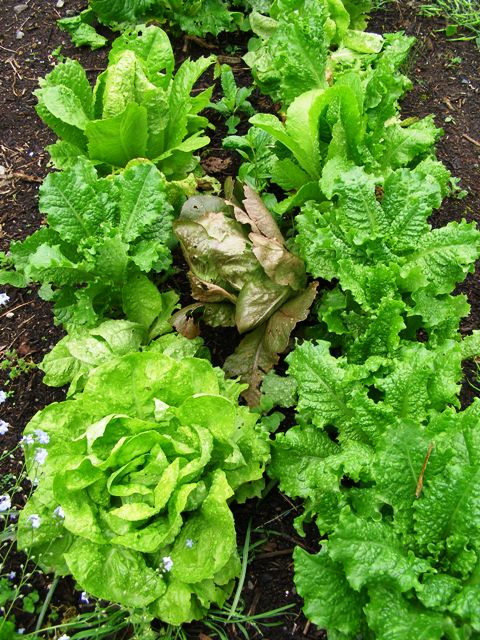
Quick maturing vegetables are the way to go with children

Quick maturing vegetables are the way to go with children

When it comes to vegetables, quick maturing is the way to go. Lettuces or Asian greens are good options. Radishes are the classic choice but few children like eating them. Peas and dwarf beans can be direct sown from seed. A Sweet 100 tomato is a good choice, but keep it to just one strong plant. By mid to late summer, it will probably take up the entire patch but by then, many of the other crops will have finished and interest may have waned.

Success breeds enthusiasm. Set your child up for success from the start even if it involves some work behind the scenes.

First published by Waikato Times and reprinted here with their permission.

Garden Lore

“Earthworms are used by research scientists looking to improve human medical conditions because their bodies have many similarities with our own: nervous system, blood vessels, haemoglobin, kidney-like organs prgans producing urine… But don’t get too worried about the weird relations you never knew you had because worms also have five hearts and both male and female reproduction organs, they breathe through their skins and when they want to eat they stick their throats out of their mouths to grab their food. It’s going to be a while before they start moving into houses and driving cars.”

Niall EdworthyThe Curious Gardener’s Almanac” (2006)
???????????????????????????????
Narcissus Fly

Photo credit: Sandy Rae, Wiki Commons

Photo credit: Sandy Rae, Wiki Commons

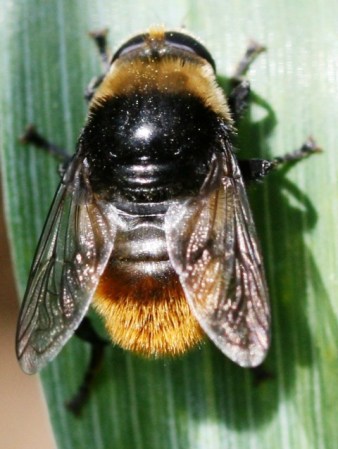
Narcissi flies are on the wing now and will be laying eggs in the withering crowns of certain bulbs. Narcissi (daffodils) are a prime target but they also attack hippeastrums, snowdrops, snowflakes, hyacinths and I have seen them attack Scadoxus katherinae. Bulbs which are close to the surface are particularly vulnerable. The fly (which looks like a cross between a very small bumblebee and a blowfly) lays its eggs on the spent foliage. When the egg hatches, the larva crawls down and burrows into the bulb, eating it from the inside out.

Mark stalks them in the rockery every fine day with his little hand sprayer of Decis (a synthetic pyrethroid,the same as is in fly spray) but if you are not inclined to spend the time on the hunt (there is an element of the thrill of the chase going on here), you can take other steps. Remove the dying foliage as soon as it starts turning brown -it has fulfilled its purpose of replenishing the bulb for next season – and lay additional mulch over the bulbs to get a greater depth. If your bulbs are in containers, remove them to a shady position immediately. These varmints prefer a sunny outlook, in our experience. Dig and divide clumps which have become so congested that they are pushing themselves out of the ground and replant them so that they are fully covered. Left unchecked, narcissi fly can multiply to the point where they can decimate a patch of bulbs to the point where you will get no flowers at all.

First published in the Waikato Times and reprinted here with their permission.
Plant Collector: Staghorn fern or Platycerium

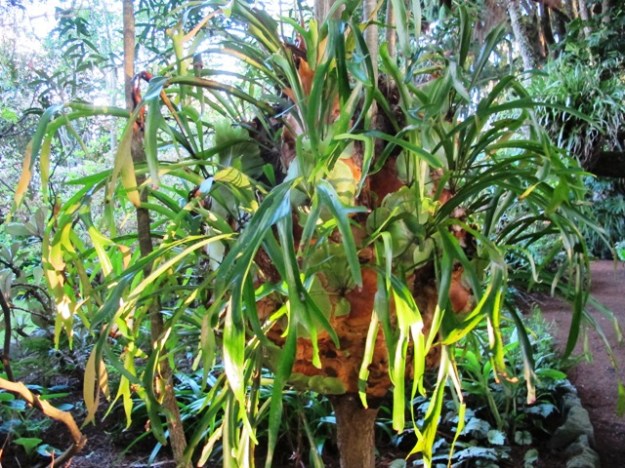
Our giant staghorn fern or platycerium

Our giant staghorn fern or platycerium

In some parts of the world, these are all referred to as elkhorn ferns. I guess we are more familiar with stags than elks in this neck of the woods. The leaves are generally seen as resembling antlers. The general wisdom in NZ is that there are only two varieties – the staghorn and the elkhorn but in fact there appear to be nearer 20 different ones, hailing from the tropics and subtropics in a band around the globe, central to and south of the equator. Best guess is that this one is P. bifurcatum which is native to Java, New Guinea and the east coast of Australia. This tells you that it is frost tender.

The platyceriums are all ephiphytic and are widely grown as houseplants. This particular plant, after decades in our woodland area, measures about a metre across and a metre deep, holding the rather slender host tree in an all-round embrace. It draws all the nutrition and moisture it needs from the air. We give it no attention at all beyond an annual tidy up when I remove the dislodged foliage that has fallen from the trees above. Staghorns are sold from time to time and often grown as house plants in chillier areas. Just wire it to a support of some assortment. Grown as a houseplant, it will need more attention because it won’t be receiving the nutrition and moisture but there are plenty of references on how to care for them in a controlled environment.

First published in the Waikato Times and reprinted here with their permission.