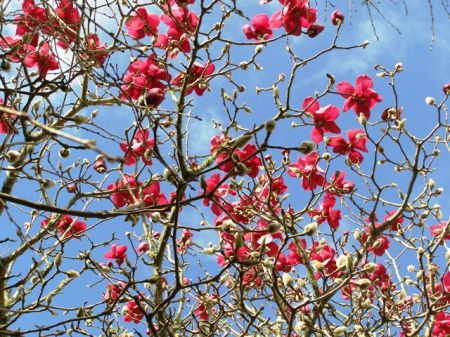
Magnolia Vulcan – spectacular and magnificent in flower but too far up to ever smell
When I entered my teens, my mother gave me a book on charm. I can only recall two pieces of advice from it, though I read it time and again. One was to err on the side of restraint – that one white accessory with a little black dress may be stunning but three or four are bitsy (think Audrey Hepburn-esque style). The second was not to apply perfume before 10am. Until mid morning, the subtle scent from one’s morning bath should carry one through and to add perfume on top is heavy handed and inappropriate. Understatement was an integral part of charm in the sixties.
It was the perfume rule that had me thinking (though the merit of subtlety in accessorizing is a handy rule of thumb and not just for clothing). In years of plant retailing, I met a scary number of people – always women – who would only buy a plant if it was fragrant.
As a defining attribute, I think fragrance is over-rated and doesn’t stand up to logical scrutiny. It is different in cut flowers. The wafting fragrance from a vase of flowers indoors is a delight but even then you need quite a large amount of very fragrant flowers to scent an entire room.
Seriously, apply the sniff test in the garden if you are obsessed with growing scented plants. There are not that many plants that will pass the metre sniff test – that is, able to perfume the air a metre beyond the plant and that usually requires a warm, calm day. Some daphnes will do it, as will the rare Michelia alba and proper orange blossom.
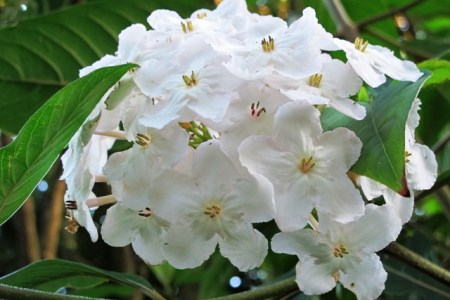
Luculia Fragrant Pearl – passing the 50cm sniff test
Come in a little closer and there are a range of plants which will tease you with a hint of fragrance as you pass by – philadelphus or mock orange blossom, luculia, auratum lilies, the stronger scented jonquils. But if you stop and immerse your olfactory organ (that is your nose) in the reproductive organs of the plant (that is the flower), there is a very strong perfume.
Therein lies the problem. Generally you have to stop and sniff a flower to get a true sense of its scent, or, in many cases, any scent at all. And nobody goes around their garden sniffing each and every flower every time. So the presence of perfume is often irrelevant in practice.
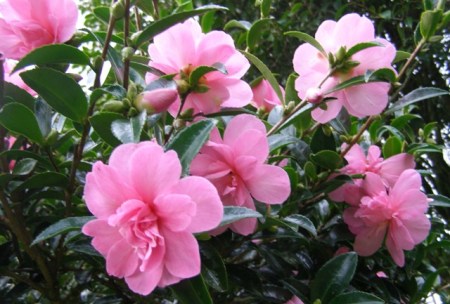
Some flowers are so subtly scented that you need the right conditions to get any fragrance at all. Scented camellias are of this ilk, but the public romanticism is such that merely advertising this attribute will help sales. I know.
Then there are plants where scent is related to time of day. How many people have bought the common port wine magnolia (Michelia figo) because of the promise of heady scent, only to be disappointed? The flowers are small and insignificant, the scent comes in late afternoon to night so you won’t get a whiff of anything at other times, and then the actual aroma is closer to the old Juicy Fruit chewing gum than anything else.
The bottom line is that plants have not evolved with scent to please humans. So there is no guarantee that the biggest, showiest and brightest blooms will also have the best fragrance. More often, the scent is there to attract pollinators so it is frequently linked to rather small, insignificant blooms which might otherwise pass unnoticed. There are a whole lot of scented rhododendrons and, almost without exception, they are white or pastel coloured. Bright flowers don’t need scent to attract their pollinator when they do it by colour. Night scented plants are generally pollinated by night flying insects so they don’t need to be fragrant during the day and they don’t need size and colour.
Floral scent is delightful and much appreciated. No synthetic scent can match the best natural fragrances. But those natural scents are by their very essence ephemeral. To extend their life, you have to capture the scent in oils, perfumes, pot pourri and the like. To make it mandatory that a plant be scented before you will buy it, is to elevate one characteristic beyond its merit. I regard scent as a bonus but first and foremost, a flowering plant must be interesting, attractive and appropriate to the position.
And when the next person asks me whether such and such a magnolia is scented, I may weep. We grow many magnolias here and revere them above other flowering trees. Many of ours are large now, and I can safely state that I have never stood beneath a large magnolia in flower and been amazed at the heady fragrance. Stick your nose in the flower and some are pleasantly scented, but that is pretty hard to do when the flower is five metres up the tree. Who cares when the floral display so astounding? Must the lily be gilded further with compulsory scent?
-39.042098
174.300314



 3) Strong gloves are recommended, along with sharp secateurs.
 4) This season’s new canes which will bear fruit next summer are red. The old canes, which are dying off, are brown and dry. Remove all old canes from the base of the plant. Thin out any weak new canes.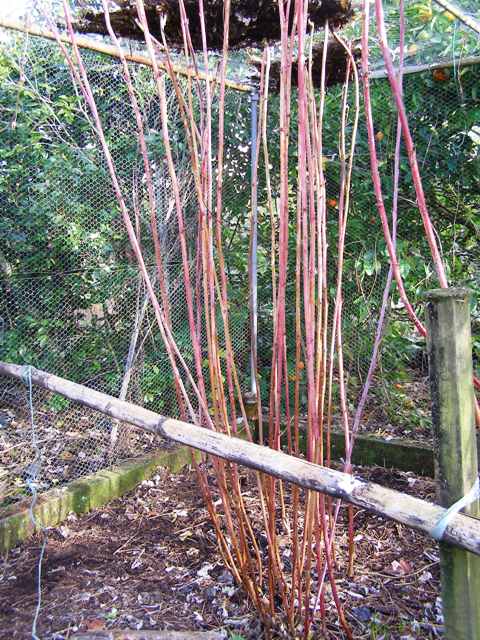
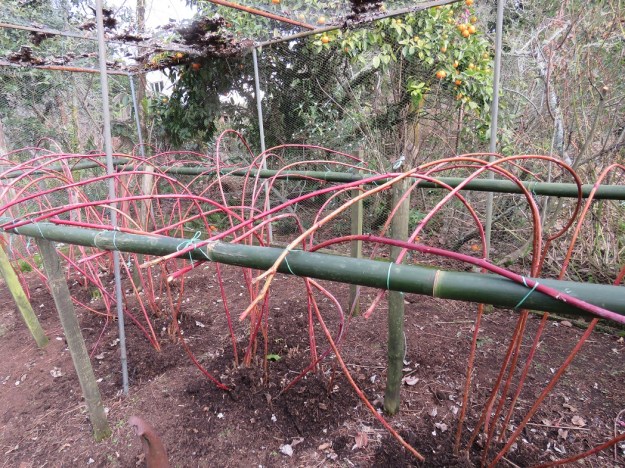 6) Alternatively, hoop the canes over and tie them to a frame as shown here. This is now my preferred approach. While it takes a little more time, it keeps the rampant canes under better control, increases the fruit set down the stem and makes picking very much easier. I then feed each clump with a generous helping of compost.
 6) The prunings need to be burned or disposed of. We clip them to manageable lengths and gather them in a wool bale for convenience. You can’t compost prickly old stems. Town dwellers may like to dry them and then burn them on a woodfire or put them out with the rubbish. Ours will go on the burning heap.
 Tikorangi The Jury Garden