No. We do not have a Mediterranean climate here

The romance of lavender - though it can be shortlived in our climate

The romance of lavender - though it can be shortlived in our climate

We were watching an interview with the head gardener at Tresco Abbey on the Scilly Islands just off the coast of Cornwall. The garden is notable for growing a whole range of plant material which is too tender for the mainland and the gardener claimed they had a Mediterranean climate. He then proceeded to elaborate and it could have been me describing our climate here.

“We never get very hot and we never get very cold,” I say. “In fact we are almost frost free and we get regular rains twelve months of the year along with high sunshine hours.” Is that a Mediterranean climate? I don’t think so. It is what we call a temperate, maritime climate. Wikipedia agrees with me. A Mediterranean climate is that which is experienced by all those countries ringing the Med – places like the south of France, Portugal, coastal Spain, Italy, Greece and down to the coastal areas of North Africa. It is also found in California, south and west Australia and parts of South Africa. These are places where they grow wonderful pistachios, luscious olives and grapes, where lavender, bourgainvillea and red geraniums flourish. Hot, dry summers and cool, damp winters are what characterise the Mediterranean climate.

Almost a signature plant for Mediterranean gardening

Almost a signature plant for Mediterranean gardening

Head inland from these coastal areas and you get to the classic continental climate – hotter, drier summers and much colder, dry winters. The closest thing we have to a Mediterranean climate in NZ is probably Hawkes Bay while only Central Otago could be said to have a continental climate. There are reasons why they are the cherry and apricot bowls of New Zealand. The rest of us fall pretty much into the aforementioned temperate, maritime class with the upper reaches of Northland leaning to the subtropical end of the spectrum.

No amount of wishful thinking and attempting to redefine our climatic definitions (we have seen wild claims that the North Island is subtropical) is going to alter the actual temperatures and rainfall distribution we have. Most of us would like to be a degree or two warmer all year round and a little drier – or at least have the rain fall at night and please make it warm rain. But we are not a sub tropical Pacific island and we have to understand what we have in terms of climate and garden within that.

This is not to say that we can’t grow some of those Med plants. We can and we do but they are not always long lived. Many of those plants are the grey foliaged ones – whether the aforementioned lavender, cistus (rock rose), oleander, even artemisia (the wormwoods), rosemary and succulent sempervivums. In areas of higher rainfall, the one critical issue to growing these types of plants is superb drainage. Most of them also need full sun. In New Zealand, they are often recommended for coastal conditions where sandy soils give sharp drainage and dry out quickly in summer.

The same is true of many of the Australian native plants which have adapted to drier conditions. Some put on terrific floral displays – the grevilleas, some of the wattles, anigozanthus, even the fragrant boronias which many of us have tried and lost. It is usually the wetter climate and fertile soils that are the death knell of these plants, as indeed with most of the showy proteas from South Africa.

It is not all bad. We do have quite a bit of success with some of the Australian plants from their subtropical forest areas. These plants are used to higher humidity and heavy rainfall while tolerating the cooler conditions we have. Plants like the doryanthes (spear lily), the subtropical cordylines, the aromatic myrtles such as Backhousia anisata and citriodora will all thrive in our climate if given reasonably protected conditions.
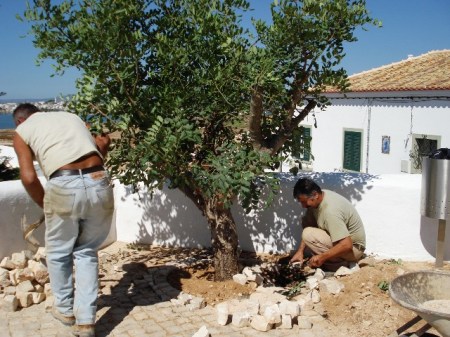
Gardening styles and plants  have evolved for very different conditions in the Med - this is Portugal

Gardening styles and plants have evolved for very different conditions in the Med - this is Portugal

The problems often come with the desire to recreate the romance of a holiday. For many New Zealanders, the Mediterranean areas with their long history, their breathtakingly quaint villages contrasting with the grandest architecture imaginable, crowned by a blue as blue sky (most of us visit in summer) are the pinnacle of sophisticated style. If it is sophisticated there, it must be sophisticated at home, right? Wrong. Mediterranean gardens and plants have evolved for Mediterranean conditions. They are more likely to look contrived, verging even on the pretentious, when set in this green and verdant environment of ours.

Experienced gardeners often like to push the boundaries of what can be grown in their conditions. It is enormously satisfying to look at a thriving plant which would generally turn up its toes and die in such an alien location. But experienced gardeners rarely try and create an entire garden using a genre from a foreign land and an incompatible climate. Nothing shouts novice louder.

If you want that Med look, it may be easier to move. What we do have in the centre and north of the North Island is one of most benign climates imaginable and the result is lots of lush growth which is the envy of those from harsher climes. We are better to start with what we have rather than to try and recreate an inappropriate fantasy from foreign shores.
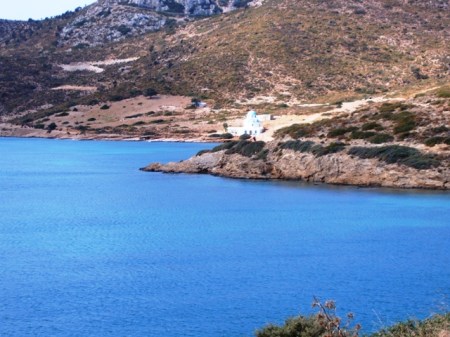
There is a certain folly in trying to recreate the romance of a Greek island holiday back home

There is a certain folly in trying to recreate the romance of a Greek island holiday back home

First published in the Waikato Times and reprinted here with their permission.
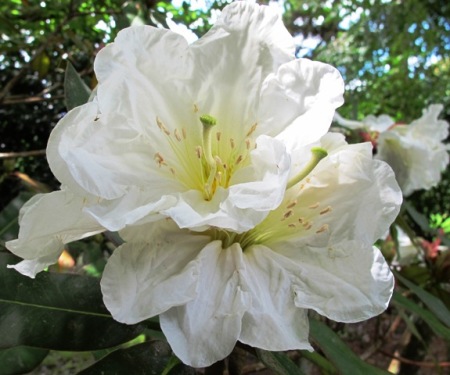
Plant Collector: Rhododendron diaprepes

Flowering in the height of summer - R. diaprepes

Flowering in the height of summer - R. diaprepes

A rhododendron flowering in late January? Yes, and a big, fragrant white one at that. It is something of a visual surprise each time I look at the curved border of rhododendrons, all resolutely green with their spring foliage still fresh and bright. There, in their midst, is a large plant flowering freely.

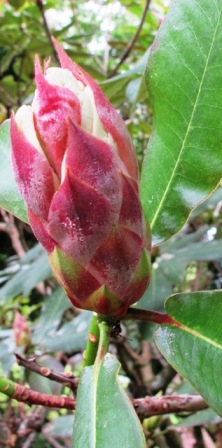
Big buds open to big fragrant flowers - R. diaprepes

Big buds open to big fragrant flowers - R. diaprepes

R. diaprepes is one of the Rhododendron fortunei group. Any plant which bears a variation of the word fortune in its name has been named, and in most cases was first collected by, one of Britain’s foremost plant collectors – Robert Fortune. He was also responsible for getting tea out of China and into British control in India but that is another story. However, it was not he who collected R. diaprepes from the Yunnan area of China. It was found later. He did collect the species, R. fortunei which has a sub species in the form of R. decorum (which flowers earlier and is a little smaller than diaprepes but otherwise similar). Then R. decorum has a subspecies in the form of diaprepes. Got that? Our rhododendron is a sub sub species (or ssp). It probably does not matter unless you are into the botany and taxonomy of rhododendrons.

R. diaprepes has big flowers, big buds, big leaves and is several metres high. Although it has a little thrip (which is what causes silver foliage), it is not too bad in that department and overall, the foliage is pretty clean and healthy. This is a collector’s rhododendron. The chances of finding it offered for sale these days are probably zero in this country. It is a good reason to learn how to do your own propagation if you want the unexpected delight and fragrance of such a late flowering cultivar in your own garden.

First published in the Waikato Times and reprinted here with their permission.
Grow it Yourself – Broccoli

Ssh and I will make an admission. I am not keen at all on broccoli despite understanding that it is terribly good for me. There is just something about the taste and texture that does not appeal, though I concede it is acceptable in a creamy soup with blue cheese. But, it is a staple vegetable and so easy to grow that it is a mainstay for most vegetable gardeners. We avoid growing it over summer here because it is a magnet for white butterflies and we don’t want to have to spray it but as the cooler weather of autumn approaches, it is planting time again. The white butterflies peter out when cooler weather comes and in the interim, it is easier to keep small plants insect free.

If you start from seed, it is usual to sow it into small pots or a seed tray to get the plants growing strongly before planting them in the garden. Unless you have a huge family of voracious broccoli eaters, buying an occasional punnet of seedlings is the easy way to go. They need the usual well cultivated soil rich in humus and with plenty of sun. Being a leafy green, they also appreciate fertiliser. We prefer to give this through extensive use of compost (nature’s very own slow release fertiliser) and blood and bone or you can feed with any number of cheap and cheerful proprietary mixes if you prefer. Aim for one rich in nitrogen. Keep the water up to the plants if we get a dry spell – leafy plants need plenty of moisture. Allow about half a metre of space around each plant. It seems a lot when the plants are small but they need room to spread and they don’t appreciate competition from neighbours. Plant them a little deeper than they are in the seed pots to encourage them to develop more roots higher up the stem.

Broccoli is generally cold hardy and will hold in the ground in winter to enable you to harvest as little or as much as you want at a time. Plants may need protecting from birds while they get established.

First published in the Waikato Times and reprinted here with their permission.
In the Garden this Fortnight: January 26, 2012

A fortnightly series first published in the Weekend Gardener and reproduced here with their permission.

The dreaded Onehunga weed needs active management

The dreaded Onehunga weed needs active management

Onehunga weed is that innocent looking but prickly interloper to the lawn which makes walking in bare feet a misery. It is an annual weed and the prickles are part of its seed setting cycle. We had an invasion of it in some areas and rather than spraying, we tried scalping the lawn just before Christmas. By scalping, I mean cutting on a very low level and removing all the clippings to the compost heap. We normally mulch the clippings back in to the lawn. The lawn looked patchy for the next few weeks but the Onehunga weed was gone – including the new crop of seed heads. There is a risk element to this approach. Had we then struck a prolonged period of high temperatures and sun, we would have had to have started watering the lawn or watched a dust bowl develop. Scalping a lawn in early to mid summer is not usually recommended. As it happened, we had plenty of torrential rain to green up the lawn again.

You can spray for Onehunga weed (though you need to do it earlier in the season before the plants flower and set prickles) but we are increasingly reluctant to use lawn sprays, leaning to the view that maintaining one’s lawn chemically is getting close to environmental vandalism. Recent research from Massey has found a new strain of Onehunga weed which is resistant to the usual lawn sprays -another warning, perhaps, about gardening strategies that depend on chemical intervention. The weed generally germinates in autumn and grows through winter to flower and die in summer. If you have a lush, healthy lawn, it will find it harder to get going in competition with established grasses. Lifting the mower a notch or two higher can help keep a lawn in better condition (a scalped or shaved lawn is never a healthy lawn) and we are big advocates of using a mulcher mower, thereby avoiding having to feed the lawn. Where we need to over sow or renovate areas, we use homemade compost rather than proprietary fertiliser. Our lawns don’t look like bowling greens but they are generally healthy and green.

Onehunga weed is shallow rooted so if you only have a small area of grass, you can hand weed it. It is always better to get in early before it spreads – which it will do at alarming speed if you ignore it.

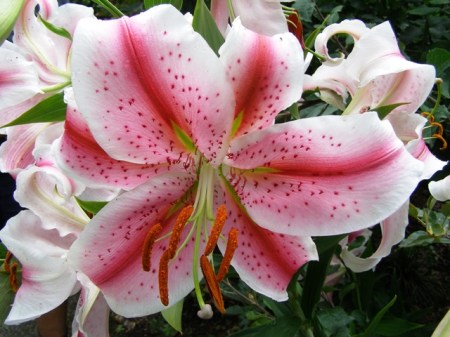
This one is auratum Flossie - all the lilies are opening now
This one is auratum Flossie – all the lilies are opening now

Top tasks:
1) An emergency staking round on some of the top heavy auratum lilies. We grow a lot of these for summer fragrance and blooms. Because they are garden plants and not show blooms, we support the flower heads on neighbouring plants where possible, but some just have to be staked. Home harvested, fresh green bamboo stakes are less visually intrusive than bought bamboos stakes. We shun plastic stakes but will use rusty old steel on occasion.

2) The rose garden is looking tired. I have major plans for a renovation of this area in winter but will start by lifting and dividing some of the stronger perennials, potting them to planter bags and keeping them out of sight and under irrigation while they recover. It takes many more plants than anyone ever expects to furnish a garden which has been gutted out. I need to start now to have sufficient plants to do a major rework and replant in winter.

Tikorangi Notes: Friday 20 January 2012

Latest Posts: Friday January 20, 2012

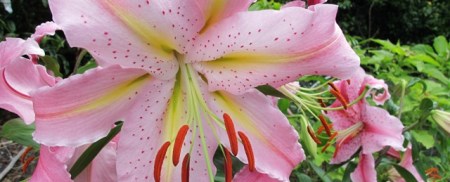
1) How lovely is the golden-rayed lily of Japan? The auratum lilies (of which we have many) are just opening here.

2) Of matters related to social class and social conscience (or basil, cardoon and lawns, to put it in gardening terms).

3) Grow it Yourself – cardoon (warning: it needs space).

4) Tikorangi – the new Texas? What intensive petrochemical development next door actually means to us.

5) Lovely lily, lily love – the first instalment of photos this week in a new album of lilies currently in flower here posted on our Facebook garden page.

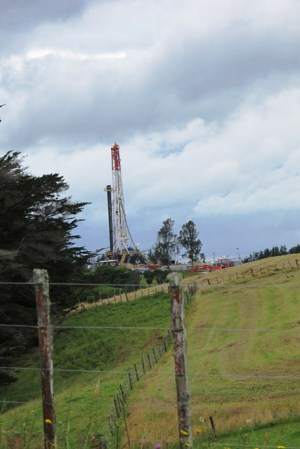
Just up the road - on the neighbouring property, in fact

Just up the road - on the neighbouring property, in fact

Tikorangi Notes: Friday January 20, 2012

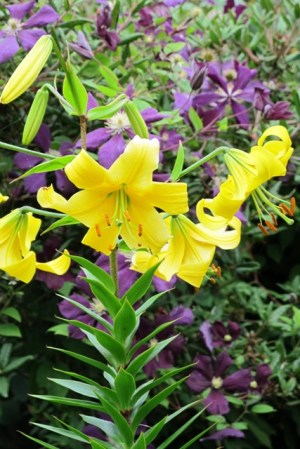
Our indifferent summer continues, the lilies are opening and the clematis look great. I am working in the rockery and we hear there are to be at least another 22 wells drilled in the close environs. Yes folks, we live in the proud energy heart of New Zealand, the new Texas of the Long White Cloud. Taranaki may be dairy heartland with one of the best growing climates possible, but we embrace the boom and bust of the petrochemical industry with unquestioning fervour. It is just a shame that a fair amount of it is centred right in Tikorangi where we live. To raise any objections is to be a sad-sack, a Luddite or worse – a greenie who stands in the way of progress and employment.

Over the years I have devoted a lot of time and energy to trying to get measures to mitigate the impact of the petrochemical industry on local residents. I don’t actually blame the private companies who will do as much or as little as is required of them in any given situation. And to be fair to the company involved next door to us, they have never employed the intimidatory and bullying tactics we saw in the past with other companies. In fact they are unfailingly courteous and do their utmost to keep us informed and to act on any concerns. But the bottom line is that their activities impinge heavily on residents close to their sites.

I hold the councils to account – the District Council and the Regional Council. And they have never done anything at all to inspire any confidence in their planning (what planning?) or in the rigour of their monitoring. No, they think it is great because it keeps the money flow going and they appear to do all they can to remove any impediments to the companies.

So we have learned to roll with the punches and take the long view. We can’t see the sites from our garden – even if that is because we have so many trees. I can generally avoid having to drive past the sites because most of them are up the road from us. We have adapted to the gradual increase in heavy traffic, much of which runs along our two road boundaries. I don’t want to be able to hear the site work either and most of the time I can’t. If fracking nearly the entire sub strata of the area where we live causes problems down the track as many around the world fear, we will cross that bridge when we come to it.

We are circling the wagons and looking inwards. Oil and gas is a finite resource. The Jury family were settled here and planting trees long before that resource was even discovered. I anticipate that we will still be settled and planting trees after the resource has been used up.

In the meantime we smell the lilies.