Tikorangi Notes: Friday 23 December, 2011

Red dahlias for Christmas (but not for Plant Collector profiling)

Red dahlias for Christmas (but not for Plant Collector profiling)

Latest posts:
1) Oh Christmas tree, oh Christmas tree (Abbie’s column) and why it may be a misnomer to brand the iconic pohutukawa as the New Zealand Christmas tree.
2) While the reasons why philadelphus is often referred to as mock orange blossom may elude me, the pure, fragrant beauty of the flowers at Christmas is above reproach.
3) Was there even life before basil?

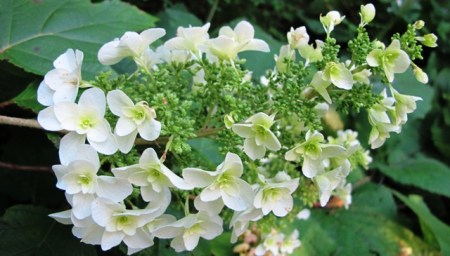
The dainty Hydrangea quercifolia "Snowflake"

The dainty Hydrangea quercifolia "Snowflake"

Tikorangi Notes: Friday December 23, 2011
Just two days before Christmas and the sun is shining brightly, temperatures are rising and there is no wind. After the torrential downpours of last week, it feels like a little Christmas blessing. In the garden we are busy with a grooming round. Well, two of us are. Mark is determinedly following his own path of draining the settling pond which stops our stream in the park from silting up and doing a weeding round. He takes the lion’s share of responsibility for weeding here. Lloyd and I are titivating in preparation for a wedding to be held here on New Year’s Eve.

Other gardens focus on the wedding venue market but not us. Mark prefers people to come because they want to see the garden rather than to see the place used as a venue. I did a handful of weddings a few years ago – singlehandedly because Mark resolutely stuck to his principles and made himself scarce. But then I met… Bridezilla. That was my last ever booking. If I had known how demanding she would be, I would have trebled the price I quoted and even then I do not think that would have compensated for treating me like the hired help in my own garden.

But, we have a wedding coming and we agreed to this one because it is our daughter’s best friend. And it is proving to be a Major Event. Pride says we have to have the top gardens in immaculate condition, even though we know that guests are here for the event and few will do anything more than cast their eyes around and say, “Oh, very nice…”. Given that the colour scheme for the wedding is the wonderfully retro orange and brown, it is perhaps just as well that the dominant garden colour at this time is lush green. We are in the gentle hiatus between late spring flowers and summer lilies, though the hydrangeas are coming into their own.

The garden remains open for visiting each day. There is an honesty box if we are not around. Best wishes for Christmas to all who read this page.

Oh Christmas tree, oh Christmas tree…

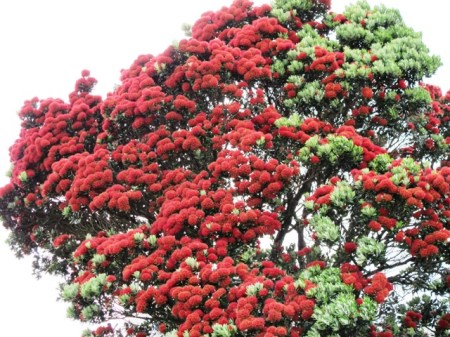
The pohutukawa - often called the NZ Christmas tree

The pohutukawa - often called the NZ Christmas tree

Ah, the Christmas tree. I was a little amused by a comment on Twitter from somebody that their potted pohutukawa had arrived but was considerably smaller than they had expected so their decorations were now placed beside it. Somebody else posted a photo of their potted karaka tree festooned in gold tinsel, Christmas balls and lights. It looked odd, but logic says it is no odder than adorning a pine tree in similar fashion.

Some brand the pohutukawa as the New Zealand Christmas tree. Living near the coast as I do, pohutukawa feature very strongly in the landscape. They obligingly flower at Christmas, lighting up the landscape. But of course there are large parts of New Zealand where they don’t grow or aren’t needed and residents there may well question the seasonal accolades bestowed upon it. When I say they don’t grow, the problem is that this special tree is not overly hardy. Indeed it is distinctly frost tender when juvenile. If you look at the distribution, it is largely coastal because disturbed air flows from the sea prevent frosts. Head just five or more kilometres inland and it can be too cold for them.

The other aspect of pohutukawa is that they are a wonderfully obliging and resilient coastal tree, putting up with salt laden wind and making enormous buttress roots to hold back the ravages of coastal erosion. They will grow where most other trees struggle badly, defoliate and die. Our coastal areas would be barren wastelands without them. Once you move to more sheltered areas inland, you have a much larger palette of trees to choose from so the tough pohutukawa might not be the tree of first choice. So for those of us who live in coastal areas from about the lower middle of the North Island upwards, the pohutukawa is our New Zealand Christmas tree but there will be New Zealanders who have never seen one in flower.
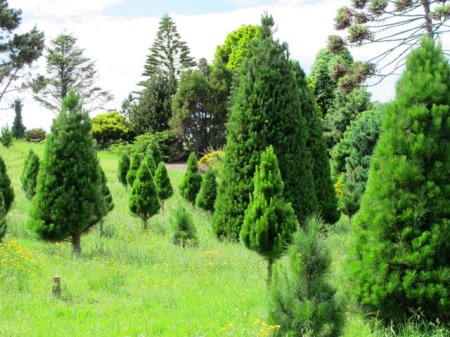
Did some not make the grade in years past? A commercial grower's roadside field. Spot the two that have never been clipped

Did some not make the grade in years past? A commercial grower's roadside field. Spot the two that have never been clipped

For others, it has to be said the common old pine tree is more likely to deserve the award. Many people do not realise it is in fact native to California – it grows wild in a limited area of the Monterey Peninsula. But I think we could probably crown this country as the Pinus radiata capital of the world and certainly other countries don’t tend to use the humble pine as a Christmas tree. The handsome abies family are the favoured tree in Europe, particularly A. procera and A. nordmanniana, and these are so much slower growing that there are good grounds for raising eyebrows at the environmental vandalism of severing them to become temporary frames for Christmas lights. At least Pinus radiata grows so quickly in this country that it is more or less disposable. It also clips very well and if you buy a cut tree from a commercial grower, you should get a well shaped specimen with shorter needles. We were always into gathering wildlings, though the children would have liked better shaped specimens when they were young. They used to bewail the unbalanced shapes, the scruffy branches and the extra bits tied in to pad out particularly sparse areas.

Should you contemplate a growing Christmas tree in a pot as a last minute green alternative, you need to factor in three aspects. A large tree has a correspondingly large root system and is damned heavy. Don’t expect a living tree of two metres plus unless you have a small fork lift. It then takes a fair amount of skill to keep large plants healthy for an entire year so thinking you can keep your living Christmas tree and reuse it in future years may not be entirely practical. You are far more likely to have a moth eaten looking specimen with dead patches, badly root bound and hungry come next December. Thirdly, should you have purchased a living tree with a view to planting it out in the New Year, make sure you harden it off slowly to the bright sunlight when you bring it outdoors, saturate the root ball before planting and keep watering the poor thing all summer. But above all, choose the site carefully. Most living Christmas trees are forest giants in their infancy. They are not generally suitable candidates for suburban gardens, even less so if you are planting one a year.
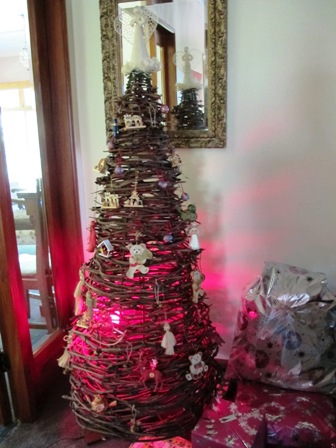
The grapevine version

The grapevine version

If you are still determined to try a live option for the future, take a look at our native matai and start clipping and training it early.

If the live Christmas tree is an ethical option based on concerns about the abject waste of severing a tree in its prime to adorn your house for two short weeks, it would probably be kinder to the environment to stick to the disposable pine tree or go for the reusable option. As a family which shuns the horrors of the tinsel Christmas tree, I am hoping my efforts with the woven grapevine pyramid will be greeted by the returning adult children today as an acceptable alternative.

Merry Christmas everyone and best wishes for a safe and happy festive season.

First published in the Waikato Times and reproduced here with their permission.

Plant Collector – Philadelphus

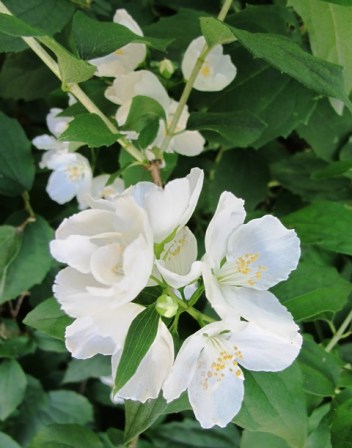
The exquisite simplicity of the fragrant philadelphus

The exquisite simplicity of the fragrant philadelphus

I went out to the garden looking for something Christmas-y but the recent rains haven’t helped. The perfect red dahlia did not quite cut the mustard for this column but my eye fell on the pristine, snow white flowers of the philadelphus. I think this one is P. coronarius, the most commonly grown species. The whole family is often referred to as mock orange blossom. Sweetly scented though this plant is, as one whose garden is at times awash with the genuine orange blossom scent, all I can say is that to label the philadelphus so was the work of either an optimist or a plant marketer.

Philadelphus only star when in flower. For the rest of the year, they are largely anonymous border shrubs but that is fine because gardens need some quiet fillers in order to highlight showier plants. While there are a few evergreen ones, they are generally deciduous. The simple blooms remain pristine white, not burning in the sun or turning brown with age.

We saw a large range of particularly showy philadelphus in early summer English gardens, many much larger flowers, semi doubles, doubles, even pink tones. We figured they are hugely more popular there because they are such an obliging plant in a wide variety of conditions including alkaline soils and hard winters. New Zealand gardeners tend not to be fans of twiggy, deciduous shrubs. Plants flower on the previous season’s new growth which means that it is better to prune and shape by taking out older, woody stems entirely rather than giving the plant a hair cut all over. However, these are well behaved shrubs which only need attention every few years.

Apparently they pick well. I may have to try combining them with my red dahlias for a Christmas themed vase.

First published in the Waikato Times and reproduced here with their permission.

Grow it yourself: basil

Was there life before basil? Surprisingly yes, but it probably amounted to soggy sliced tomatoes drowned in salt and fine white pepper with Maggi onion dip in place of pesto. Of all the herbs, nothing shouts summer like basil. In my opinion it is only worth eating fresh so it is very seasonal. It is not difficult to grow in rich vegetable garden conditions (the usual full sun and friable, fertile soils) but it won’t do much until summer is pretty much upon us because it needs warmth even to germinate – about 20 degrees of it. It is not too late to sow it now though you won’t get much to pick until late February. Enthusiasts start it earlier under cover and plant out into the garden as soon as temperatures rise sufficiently.

I see Kings Seeds now offer 17 different types of basil plus a gourmet blend for the indecisive. We have tried some different types but keep going back to the most common variety – Sweet Genovese, or its equivalent. To harvest, just keep picking leaves as required. Keeping the plants well watered encourages them to continue growing rather than bolting to seed early. Caterpillars can take a liking to the leaves but you can generally control these by hand.

The shortcut approach where time and equipment are a problem, is to buy the pot of smallest, least mature basil in the fruit and veg section of the supermarket and to repot these to a larger container with optimum conditions (good mix, full sun, plenty of water and liquid feed) and resist the temptation to start harvesting leaves immediately. The older pots of living herbs in the supermarket are leggy and stretched (reaching for the light) but if you get a fresh shipment they are sometimes a little more squat and juvenile. Elder Daughter used this approach to keep a year round supply going. Others recommend chopping up basil leaves, adding olive oil and freezing in ice cube trays. I have tried this but decided that I prefer to keep basil as a seasonal taste in summer, best picked with sun warmed leaves and eaten very fresh. Try it in a simple salad with slices of fresh, white mozzarella and ripe tomatoes – summer in a salad bowl.

First published in the Waikato Times and reproduced here with their permission.

Tikorangi Notes: Friday 16 December, 2011

The DIY Christmas tree

The DIY Christmas tree

Latest posts: December 16, 2011

1) Gardening books that have stood the test of time (or are likely to). Abbie’s column giving recommendations old (some positively vintage) and new.

2) Please do not buy me garden ornaments for Christmas (what we are up to in the garden this fortnight, first published in the Weekend Gardener). Using plants as focal points.

3) The delightful small Chinese tree Tetracentron sinense in Plant Collector this week.

4) Grow it yourself – leeks this week. An easy crop for winter harvest.

5) The DIY Christmas tree for 2011 – step by step instructions. Though this is not exactly a spur of the moment creation this year.

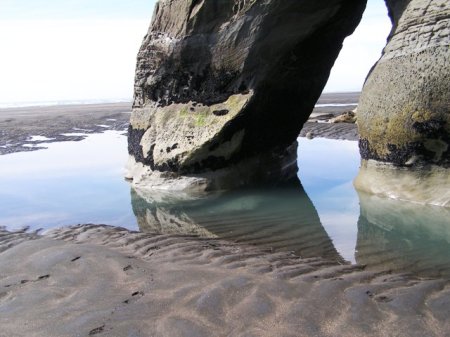
The black sands of a North Taranaki beach

The black sands of a North Taranaki beach

With rain every day this week, there has been little gardening going on here and little of the current flush of blooms will survive. The one consolation is that it could be worse – as it is in other parts of the country. Mark has been busy in the shed sowing seed while I made the Christmas tree but we may start to suffer from cabin fever, unless we get some sunshine soon.

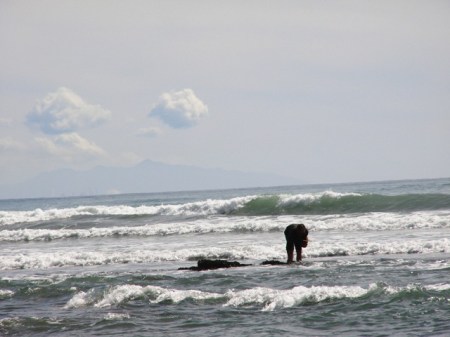
Rather than battling out to try and photograph some sodden plant or garden scene this week, I have turned instead to two beach scenes from last Friday (when the weather was gratifyingly good – sunny, calm and mild) and we headed to the beach at Tongaporutu to gather oysters and mussels for dinner. On the west coast we have very fine black sand beaches. It used to amuse me that despite only ever seeing black sand, the vast majority of young Taranaki children still paint beach scenes showing golden sand. In mid summer, the hot sand can get too hot to walk on with bare feet above the high tide mark, but this early in the season, it is not a problem. Tongaporutu is about 30 minutes up the coast from us and is a wide open beach, often completely empty of people and completely magical. It felt like the essence of New Zealand, captured in a few hours

Mark, gathering dinner last Friday

Mark, gathering dinner last Friday