Grow It Yourself – Parsley

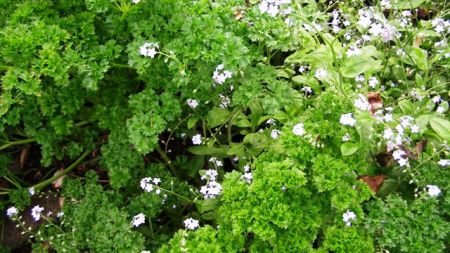
The parsley patch - naturalising nicely with the pretty but weedy forget-me-nots

The parsley patch - naturalising nicely with the pretty but weedy forget-me-nots

I am a huge fan of parsley. If you have a good big patch of it in the garden, you are never without a green veg, a garnish, a flavouring and a basic ingredient for all season pesto. Chop it through pasta, serve a thick layer on soup, use abundantly in coatings for foods – the options for use are numerous as long as you have plenty available. It is particularly useful in the depths of winter when you may have a shortage of other fresh greens. And you can feel virtuous because it is full of goodness if you eat enough.

The critical aspect of ensuring that you have an uninterrupted supply is to get it established two years in a row because this is a biennial plant. In its second year, it will set seed and die. As long as you leave at least one plant to go to seed, parsley can naturalise itself and pop up gently throughout the vegetable garden or even in the flower beds. Once you have established it two years in a row, it should continue under its own steam as long as you let some of the seedlings grow and are not too vigilant on the weeding.

There are two types of parsley – curly leafed (which is arguably more flavourful and easier to chop) and flat leafed Italian (which is allegedly sweeter and is certainly more trendy in modern recipes). Both grow in the same conditions so you can have either or both. Parsley is usually started in the first instance from seed. Be patient. It can take several weeks to germinate. While it is starting, it needs to be kept moist so if you are planning on sowing some, start before the dryness of summer. After that, just let it grow and start picking. It does not require any care and is generally free from pests and diseases.

First published in the Waikato Times and reproduced here with their permission.

Cordyline Red Fountain receives high praise in Australia.

Cordyline Red Fountain and Mark Jury

Cordyline Red Fountain and Mark Jury

Gardening Australia, the top rating magazine and TV show, has named Cordyline Red Fountain as one of the top twenty new introductions in the last twenty years. It was the first of a new generation of clumping cordylines which does not develop a trunk allied to deep burgundy colouring. The hybridising was done by the late Felix Jury at Tikorangi in Taranaki and the plant was raised by his son, Mark Jury. It is widely available in garden centres both in New Zealand and overseas.

In the Garden: November 4, 2011

The start of a new fortnightly series first published in the Weekend Gardener and reproduced here with their permission.
An easy method of killing unwanted moss

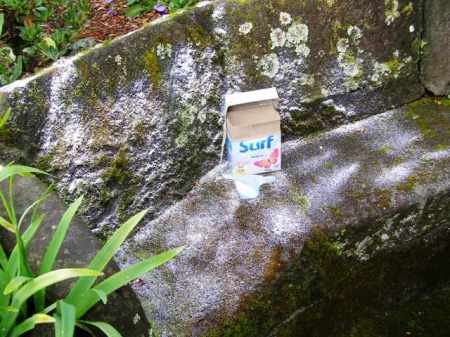
An easy method of killing unwanted moss

With our garden festival currently in full swing (now styled the Powerco Taranaki Garden Spectacular), all our efforts in the garden have been on presentation for the most important days of our garden visitor year. We call this garden grooming – a bit like giving your car a valet treatment. It doesn’t last long but it looks great in the meantime. When it comes to the lawns, we have made a deliberate decision to avoid chemical use where possible, both for weed control and fertilising. We use a mulcher mower, an edger and we hand dig flat weeds. As long as the rest is comprised of small, fine leafed green plants which mow well, we are willing to live with a mixed colony rather than just rye grass and fescue. At least our lawns are not toxic.

We don’t worry too much about moss in the lawns – it occurs most in shade where the grasses struggle. And if we were Japanese, we would revere the moss. But with our high rainfalls and humid conditions, we get a lot of moss growth on paths, brickwork and stonework. Often I will sprinkle soda ash (which is simply powdered washing soda crystals available from bulk bins) which kills the moss overnight. Indeed, cold water washing powders work equally well though I have found the leading brands are better than the budget brands – perhaps they have more water softener in them. Our chemist daughter reassures me that there should not be any problems of toxicity in using soda ash or washing powder to kill moss though if you get too carried away over time, you will be altering the pH of your soils because they are alkaline. I have experimented on grass and it kills moss without harming the grass. Do not do as someone I know – use so much that when it rained, his entire lawn foamed. The moss dies but does not disappear so you have to rake it out of lawns and brush it off hard surfaces.

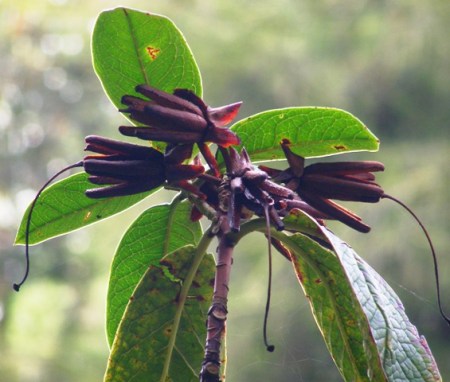
Rhododendron seed head, missed from last year

Rhododendron seed head, missed from last year

Top tasks:
1) Deadheading rhododendrons. While conventional wisdom is that all rhododendrons including vireyas need deadheading, in fact only those that set seed need it. Setting too much seed can weaken a plant and even cause it to die over time. The others just look better for having it done.
2) Mulching garden beds. There is no point in mulching dry soils so we like to get it on before summer. We mulch frequently with homemade hot compost mix which means we rarely need to fertilise garden borders.
3) Getting the planting out of this season’s trees and shrubs completed. November is getting late for this but we soak all root balls thoroughly and can generally rely on regular rainfall here in North Taranaki.

Tikorangi Notes: Saturday 5 November, 2011

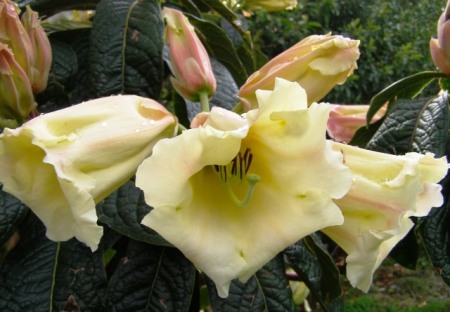
Mark's "Platinum Ice" is just opening

Mark's "Platinum Ice" is just opening

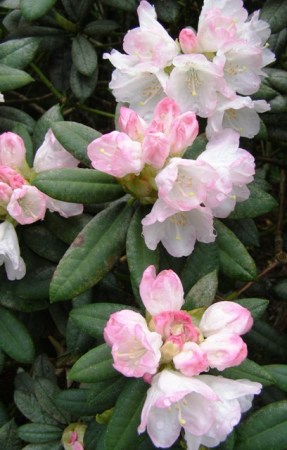
And "Coconut Ice" is looking a picture

And "Coconut Ice" is looking a picture

Latest Posts
1) From designer trend to cliché in the blink of an eye – Abbie’s column

2) The wonderfully brazen Azalea mollis in Plant Collector this week.

3) Grow it Yourself: lettuces with particular reference to Misticanza di Lattughe (available from Franchi Seeds, or Italian Seeds Pronto in New Zealand).

Tikorangi Notes: Saturday 5 November, 2011

There has not much (indeed, any) gardening going on here this week. As we host the large majority of our annual visitors in one ten day period, we get to spend 8 or even 9 hours a day standing on concrete doing the meet and greet. It is very tiring but also enormously affirming to have so many people come and enjoy the garden. Little do they realise that this means our Lloyd was out mowing the park at 6.30am this morning. I admit it was as late as 7.00am before I was out and about doing the clean up of our public welcoming areas.

The later season rhododendron display is just coming into its own – the wonderful nuttalliis and the later flowering maddeniis. We are still running at least a week behind on the blooming season.

Our annual garden festival finishes on Sunday. Monday will see us back in gardening clothes, probably mooching about in solitary silence achieving very little but focussing our attentions back on the garden. It is a source of amazement to garden visitors that we manage a garden this size with just ourselves as gardeners and our one staffer, Lloyd, on the mower, mulcher, tractor, weedeater and generally assisting. While we would enjoy having additional assistance, visitor numbers in New Zealand are not high enough to pay the wages. However, in the final analysis, we garden for our own pleasure and the visitors are a welcome bonus.

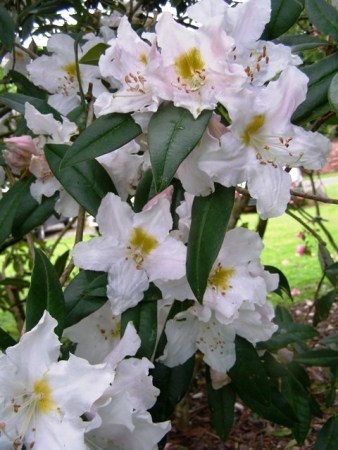
The wonderful fragrant nuttalliis are coming into flower - this one is Floral Legacy (nuttallii x sino nuttallii)

The wonderful fragrant nuttalliis are coming into flower - this one is Floral Legacy (nuttallii x sino nuttallii)

Plant Collector – Azalea mollis

Look at me! Look at me! Azalea mollis

Look at me! Look at me! Azalea mollis

The mollis azaleas can be such a wonderfully flamboyant addition to a garden with strident colours which shout “look at me”! They are members of the rhododendron family but deciduous, cold tolerant and more forgiving of less than ideal soil conditions, particularly wetter and heavier ground. Many have fragrance which is gilding the lily further. Not all of them are such loud colours. You can get pastels, whites and subdued shades which show more refined taste, perhaps. But the vibrant oranges, yellows, reds and colour mixes have an intensity which is unrivalled in other members of the rhododendron family, magnified by the fact that they flower on bare wood, before the new season foliage appears.

Azalea mollis used to be very popular but are nowhere near as readily available these days. Their habits don’t suit modern nursery growing practices and they are only saleable when in flower so garden centres often shy away from them. In winter they are just bare sticks and in summer they are relatively anonymous and prone to mildew in warmer, humid climates. Their comparatively short selling season does not suit modern plant retailing so you may have to search them out and grab them when you find them without worrying too much about particular named cultivars. They are easy to raise from seed and often what is sold are just seedlings. Plant them in sunny positions where they can star in flower and not be too obvious when they aren’t.

Azalea mollis are not a species (which is how they occur in the wild). They are hybrids from controlled crosses, initially between the Chinese and Japanese azaleas but now pretty mixed in their genetics.

First published in the Waikato Times and reproduced here with their permission.