Drainage

As yet more heavy rain falls this weekend on already saturated ground in northern and eastern areas of Aotearoa New Zealand,  I make no apology for pulling out photos I have used before, showing alternatives to huge slabs of concrete or paving around homes.
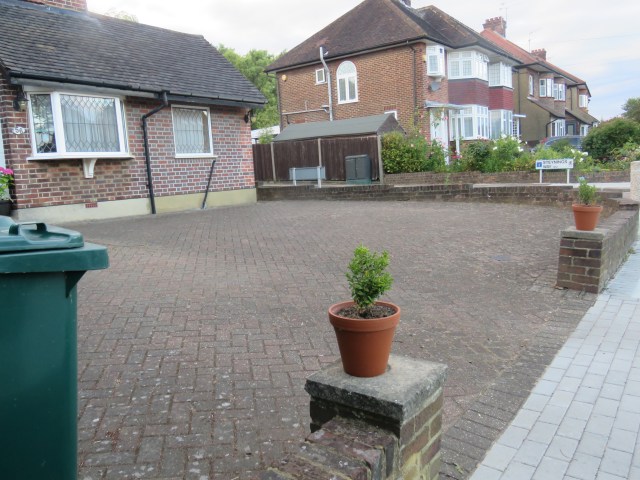
This is in London but too many of our urban areas are heading down this track

Most of us are not in a position to influence urban planning, but we can have an impact on our own property. Putting in large areas of sealing and paving, mostly to accommodate car parking or to ‘reduce maintenance’, is a significant problem contributing to urban flooding.

I have said it before, if you want a low or no maintenance section, move into an apartment – preferably one with underground carparking so the footprint of the building and housing cars remains as small as it can be. The alternative of concreting or paving your section is not only aesthetically unpleasant, it is environmental vandalism.

When accommodating cars is more important than anything else

When I took these photos, the concern was more for preserving aspects of nature, providing habitats and food sources for the natural world. This month, it is about drainage, in this country at least. All that rain falling from above has to go somewhere and if you have surrounded your home with impermeable surfaces, it has no choice but to run off and contribute to storm water systems that are overwhelmed. When an area is planted, the ground is permeable and the root systems create little channels for the water to flow down deeper into the soil. Even mown grass will do this, once it is established.
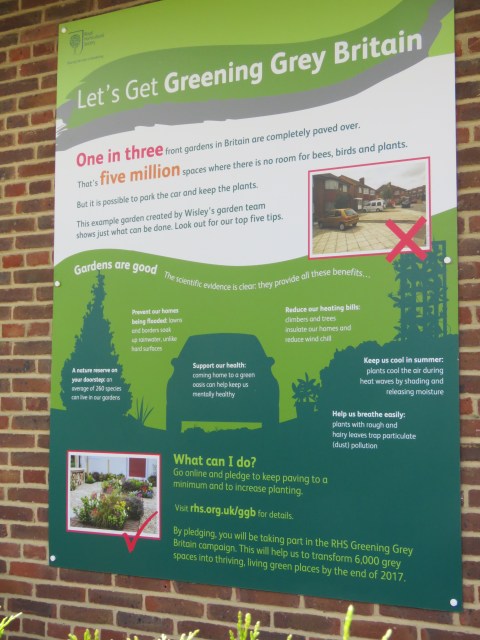
The education boards at RHS Garden Wisley in the UK claim that one in three front yards are fully paved now. Our major urban areas may not be lagging far behind in this country as sections get ever smaller and houses – almost all single storey and detached – get ever larger, leaving little space devoted to wheelie bins and car parking.
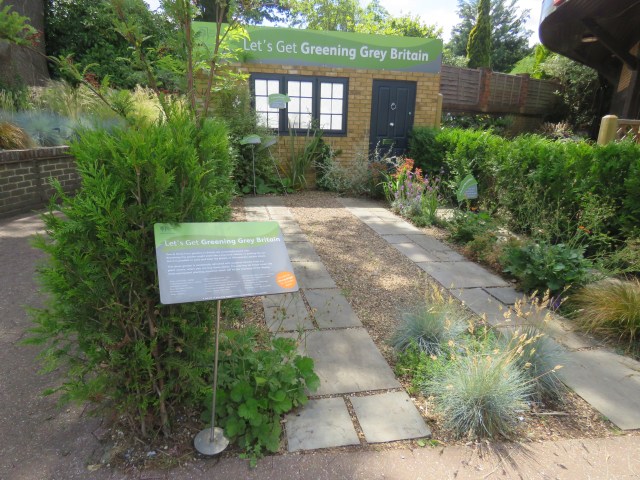
Wisley’s alternative display shows the use of spaced pavers, gravel with plants in it and recommends clipped hedging rather than solid fences on the boundaries. Just don’t lay an impermeable lining below the gravel – often recommended to ‘reduce maintenance’ but entirely defeating the drainage function of this type of driveway. Yes, it will take a bit more work to maintain than just getting the leaf blower out onto a slab of straight concrete or seal on a Saturday morning, but how much more pleasing is it visually? And it will absorb a whole lot more excess water.
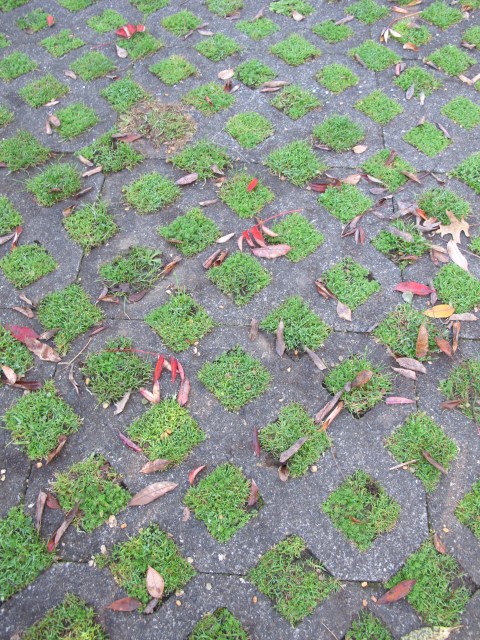
I photographed this driveway in Auckland. It is another alternative, allowing drainage while giving a hard surface on which to park the wretched motor cars that are so demanding on space. Laid properly, it should be level enough to run the lawnmower over it or to allow for sweeping, if need be.
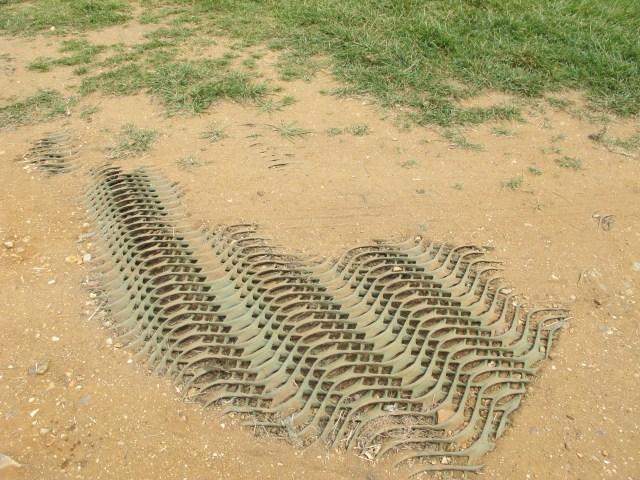
This subsurface reinforcement looks as though it may be made from recycled tyres. It was very dry at the time I spotted it exposed in a few places in a distinctly utilitarian carpark. It is another way to solve the problem of an area that would become a mud bath in wet conditions leading to a rough, rutted surface as it dries. It  could be over-sown with grass to be mown in areas where there is lower vehicle traffic – like a front section.
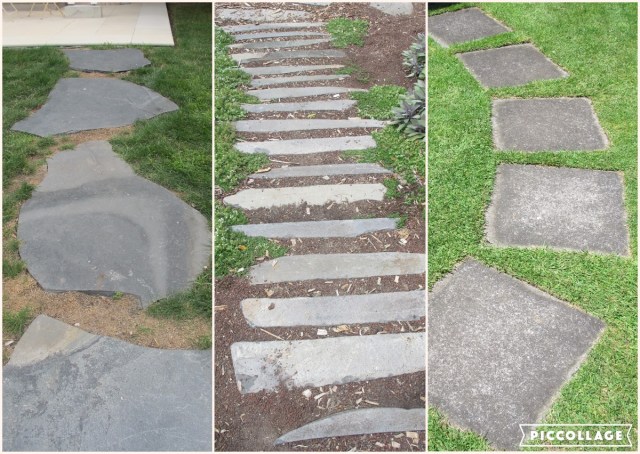
When it comes to paths, there are alternatives to a solid surface and the ones I have photographed are all using paving slabs. The one on the right would take a bit of extra maintenance to keep that sharp look because it involves using an edging tool around each paver but most of the time, the lawnmower would run straight over it. Don’t even think about spraying the edges because it would look awful with a brown, sprayed border around each paver. Again, the laying is important to get a flat surface that doesn’t become a trip hazard.
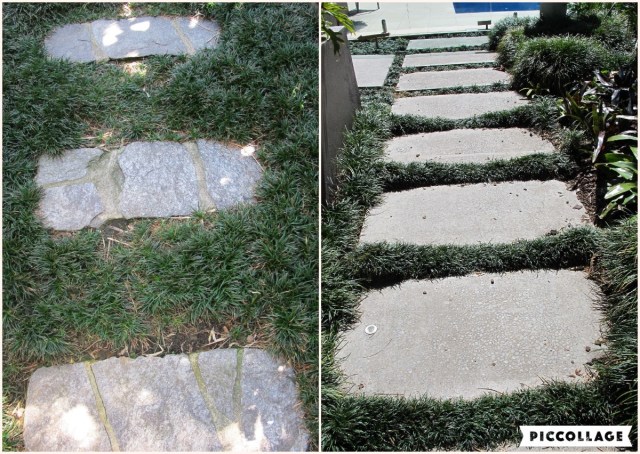
Planting around large pavers in mondo grass (Ophiopogon) gives a softer look that is really pleasing to my eyes. It is also one of the lower maintenance techniques because the mondo grass will choke out most weeds and it is extremely hardy, even to heavy foot traffic.  Maintenance is just a matter of getting in and thinning it out when it starts to look too congested, which can be done with an old carving knife or a cheap flax cutter.

Wider pavers give a generous look befitting, even, to a main path to the front door.

When we last lived in a city – and I admit that was loooong time ago – we walked. A lot. It was pre-children so we probably had a lot more time on our hands. Walking in a city is a great way to get ideas, to see what is growing successfully and what is not, to influence your likes and dislikes and to look for alternative ways to accommodate modern life and vehicle dominance without damaging the environment. I don’t think many of us saw drainage as being one of the more confronting aspects of climate change.

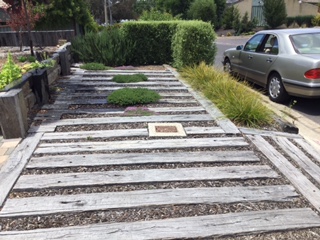
Reader Susan has kindly sent this photo of another design that combines functionality with both drainage and aesthetics. Those are railway sleepers filled with coarse woodchip. Fine woodchip runs the risk of either compacting in some conditions or simply floating away in a flood to block stormwater drains.
After the cyclone

To say it has been a difficult week would be an understatement, at least for those of us living in Te Ika-a-Māui or the North Island, as it has long been unimaginatively named. My heart goes out to the many thousands who have had their lives turned upside down, are currently displaced or have lost everything they owned this week.

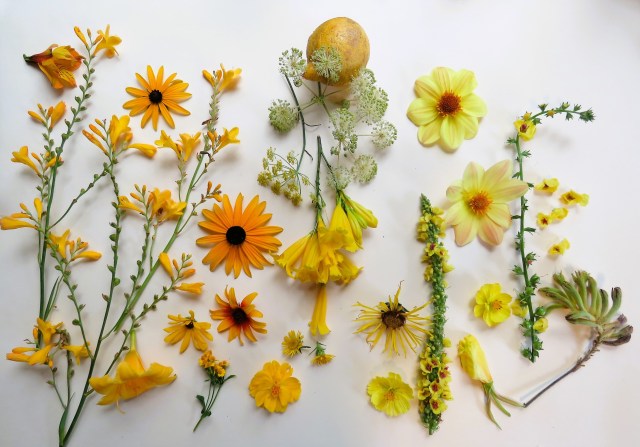
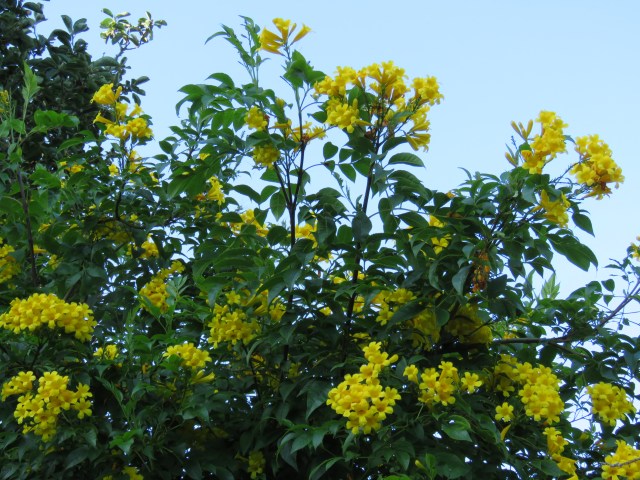
We are all overwhelmed by images of damage and loss this week so I chose to go with totally unrelated photos in yellow. This is Tecoma stans.

I just looked up the population and I see it is just shy of 4 million people living in the North Island. Given that Cyclone Gabrielle hit hard in Northland, Auckland, Coromandel, Bay of Plenty, Tairāwhiti and Hawkes Bay with lesser effects throughout much of the rest of island, it is not an exaggeration to say that the impact has been felt by at least a couple of million people, probably more. As I write this, we are still learning about the scale of damage and loss.

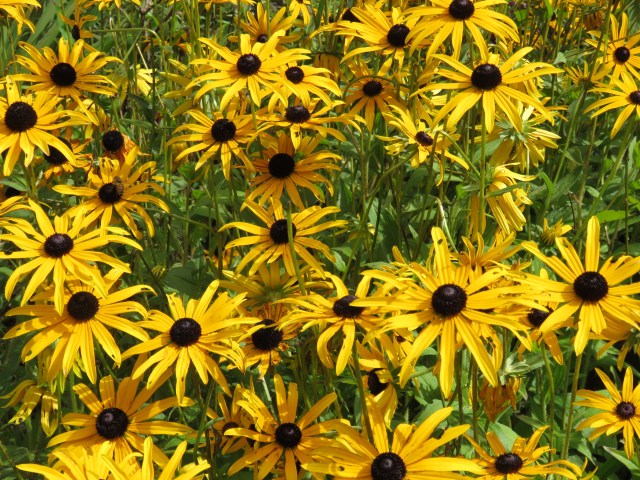
Rudbeckia

After taking a direct hit from Cyclone Dovi exactly a year ago, we spent Tuesday in a state of extreme anxiety as the winds hit us again. We didn’t get the rain and sea surges that have drowned the eastern coast and places north. There was some damage here but nothing on the scale of Dovi and negligible compared to the damage suffered elsewhere. I didn’t bother photographing it because it would seem trite compared to the loss and destruction in badly hit areas.

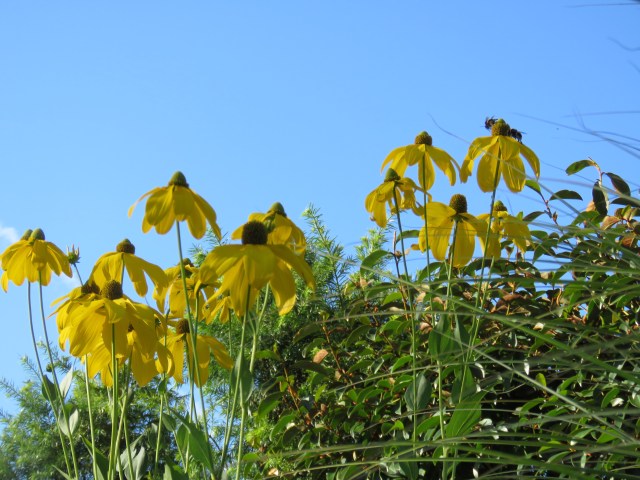
Echinacea laciniata ‘Herbstsonne’

When the earthquake hit on Wednesday night, it seemed like the universe was conspiring against us. At 6 or 6.1, it was a solid shake lasting quite a long time. It made me realise how frayed my nerves are and I don’t generally suffer from frayed nerves. I am not alone in that. I imagine the current high state of anxiety across our country is similar to that experienced across Australia during their horrendous fire season of 2019-2020. A few high profile, shrill voices blame the media; some even accused the media of over-hyping the anticipated arrival of Cyclone Gabrielle and causing unnecessary anxiety. Those voices went silent when Gabrielle turned out to be at the extreme end of the worst case scenario.

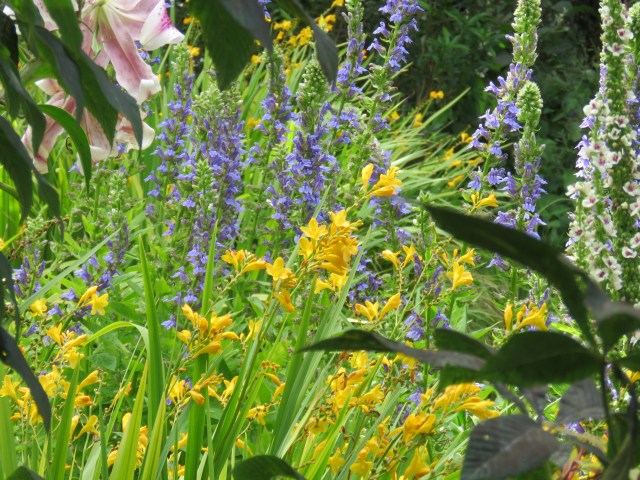
Crocosmia and blue lobelia

We live in difficult times. Those of us largely unaffected by Gabrielle may hope for a quiet breathing space, time to gather our thoughts, maybe even to experience a little boredom in normality, as we used to know it. But those who have been hit so very hard by this natural disaster don’t have the luxury of hoping for even that.

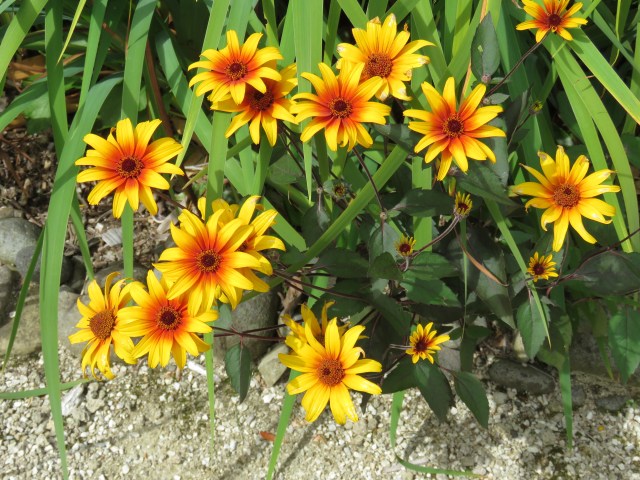
Helianthus

Stay safe. And if you or people close to you are among the badly affected, may you at least be able to see a path through this catastrophe in the weeks ahead and to find hope after despair. The sun will shine again, which is why I picked the colour yellow to accompany this post.

Abbie

The Colour Orange

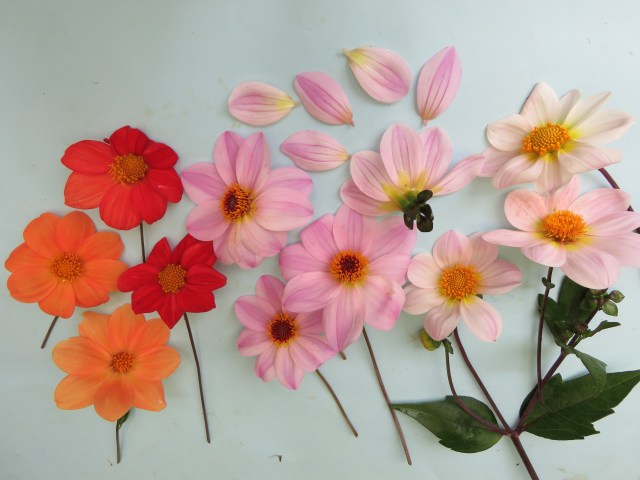
My starting point was dahlias, single and semi-double flowers

I was intending to write about dahlias this week. Not that we grow many dahlias but I see friends posting many photos of huge, specimen blooms in a range of colours and complex forms. I was going to plead the case for the simplicity of single and semi double blooms in a garden setting and argue that those big novelty blooms are perhaps better grown in a row in the cutting garden than in mixed plantings in flower beds. I like the light, airiness of the simpler forms in the garden.

We don’t know if this orange dahlia with its dark foliage is a named form or a seedling from the red ‘Bishop of Llandaff’ beside it but it is very attractive.

But then I got distracted by the colour orange because this year, my favourite dahlias are the orange ones and I have not been greatly enamoured of that colour since I was a child when I desperately wanted an orange bedspread. My dear mother always did her very best to meet our requests but we were only ever a step or two above the poverty line so it was always a case of near enough has to be good enough. She found some velvet being remaindered but it was more red than orange so she made the bedspread and assured me it was *tangerine*. It may have been tangerine-ish but it wasn’t the pure orange I had dreamed of. I remember swallowing my disappointment to express appreciation, knowing she had done the best she could.  

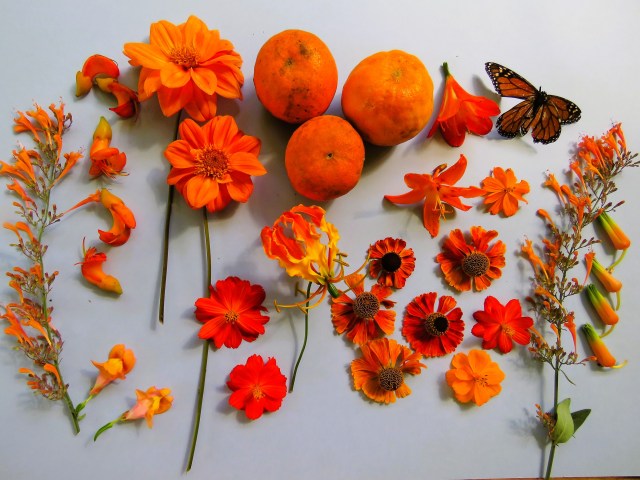
A selection of orange flowers from the garden with three tangerines in memory of my mother and a monarch butterfly that died of natural causes. Reader, my velvet bedspread was not the colour of these tangerines.

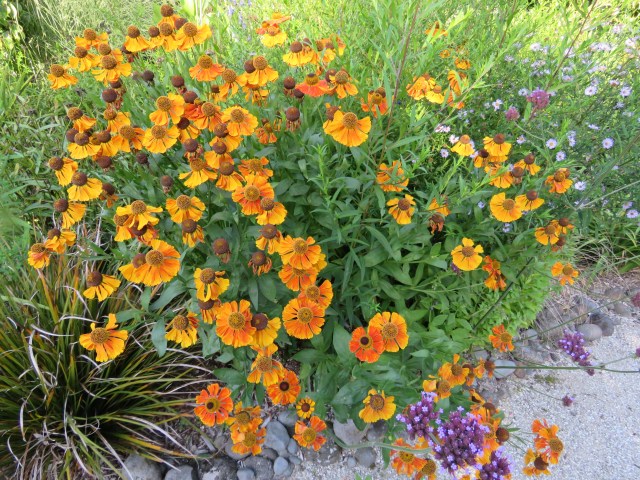
I turned my eyes to orange flowers in the garden and was surprised when I picked flowers from a dozen different plants. The orange – and yellow – cosmos we planted in the rockery for late summer and autumn colour are looking particularly cheerful and they started flowering within two weeks of my planting out tiny seedlings a few centimetres high. And this week, it is the heleniums that are the stars of the twin borders.

Heleniums or sneezeweeds

Every year, I forget whether these are helenium, helianthus or helianthemum and I have to google them to refresh my memory. Maybe I could call them sneezeweeds instead. That is the common name conferred upon them when, in times gone by, the dried leaves were used in snuff to encourage sneezing in order to rid the body of evil spirits. Fellow sufferers of hayfever, take heart. We just didn’t know that we were expelling the bad spirits from our bodies without having to resort to snuff. That said, I am not aware of the helenium flowers making my hay fever worse.

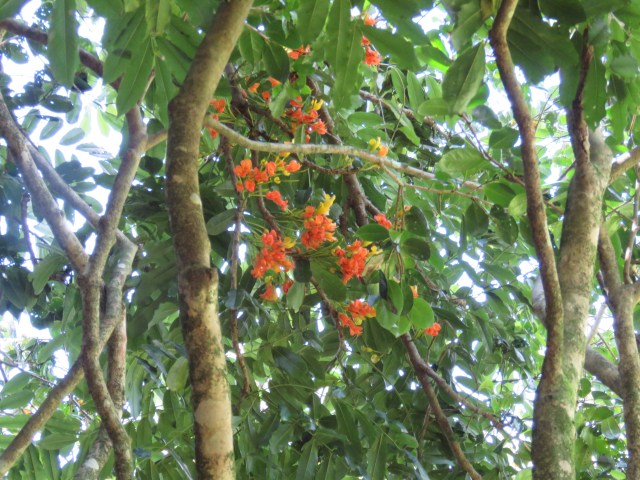
Castanospermum australe, black bean tree or Moreton Bay Chestnut

The Castanospermum australe is having a particularly good season. The tree is well over ten metres tall now and we usually only see the flowers from a distance right at the top. This year, we seem to have more growing beneath the foliage as well so they are only about eight metres up. Being native to the more tropical parts of Australia, it may be enjoying the milder winters and warmer summers we are now experiencing.  

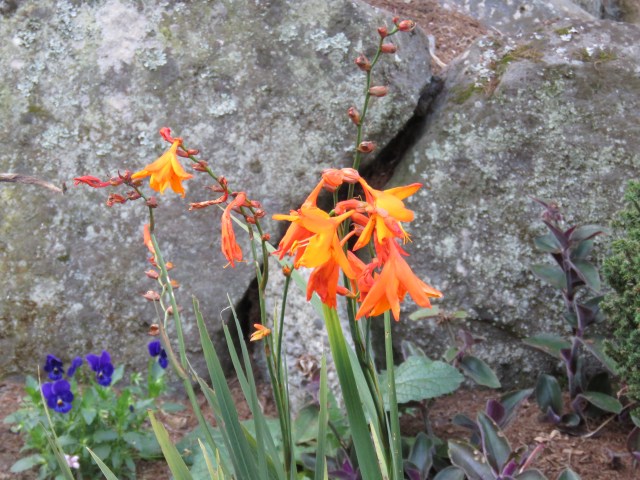
A crocosmia on steroids in the rockery. It may be a similar colour to the common roadside weed but the flowers are huge by comparison and it is very slow to increase. We think it is the form named as ‘Star of David’.

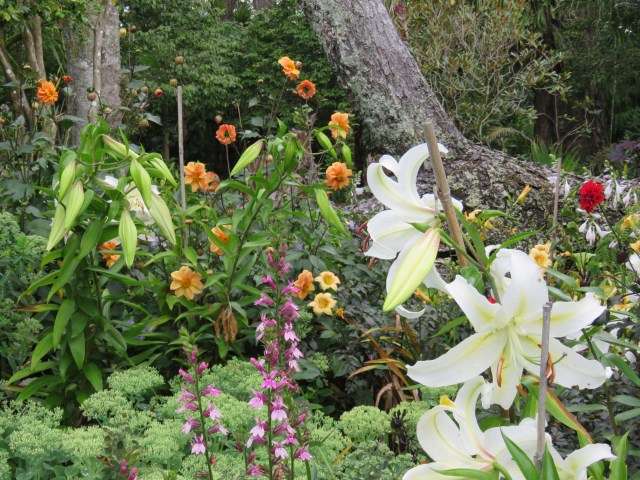
When it comes to orange as a colour in the garden, a little can go a long way. It is a very strong colour in its pure shades. Mark’s advice is to include plenty of other plants from the other side of the colour wheel – so in the blue and purple shades, although green also acts as a visual foil. Personally, I am not so keen visually on a whole lot of orange combined with either red or yellow and pastel pink is problematic.

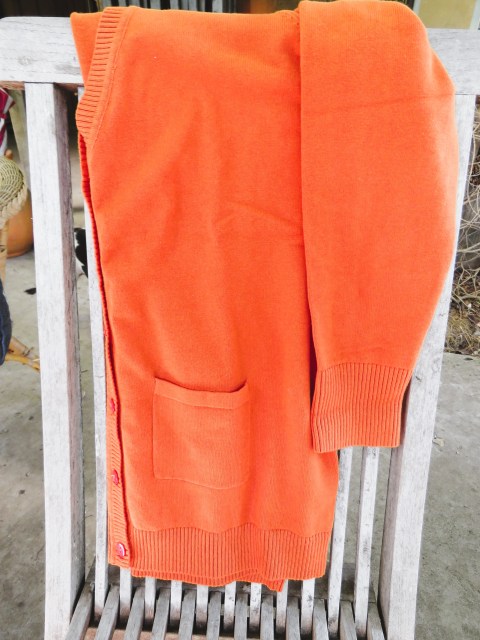
I would have said I never wear orange, but that changed as of yesterday when this orange cardigan arrived. In self defence, I tell you that it is just for summer gardening, 100% cotton, has the all-important pockets and was reduced from $100 to $25. I was just a little alarmed by the colour. I may have thought of it more as burnt orange when I ordered it but it is Very Orange. At least I will not be difficult to find in the garden. When I come to think of it, it is probably the very shade eleven-or-twelve-year-old me had envisaged for my bedspread.

My thoughts are with northerners this weekend, particularly in Auckland, Coromandel and Northland, who must feel as though they have the sword of Damocles poised above them as they await the arrival of Cyclone Gabrielle. It is one week off a year since we learned what cyclonic winds can do when we took a direct hit from Cyclone Dovi. That was bad enough and we didn’t get the torrential rain that is predicted with Gabrielle, falling on land that is already saturated and further threatening infrastructure already badly damaged by the recent extreme weather and flooding in those areas. May you stay safe. We will breathe a sigh of relief if the dire predictions do not come to pass for you in the next few days.

Plum Summer

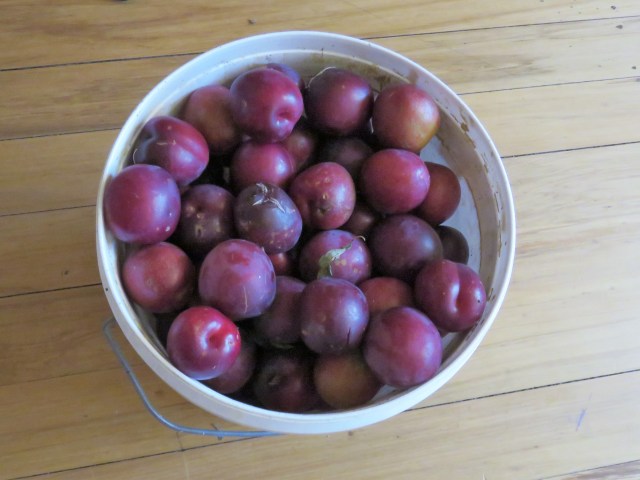
Plums by the bucket-load. Literally. These ones are ‘Hawera’ which I presume is a local selection from the South Taranaki town of the same name.

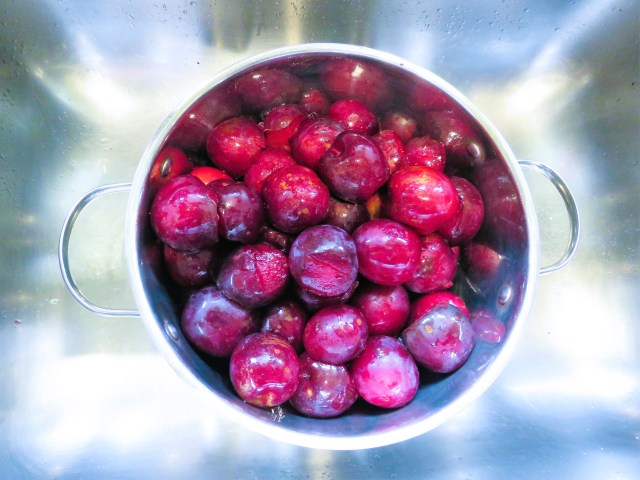
A plumcalypse! We must have had good weather around plum-blossom season because the crop is prolific this year. My will to ensure that no plum go to waste is fading fast. It is becoming more of an endurance test than a triumph of my inner Squirrel Nutkin instincts.

Many New Zealanders will remember the children’s book named ‘Jam’ by the late, great Margaret Mahy. The online blurb reads: “A delightful tale by Margaret Mahy about an industrious stay-at-home dad who is on a mission to ensure his family gets the most out of their plum harvest.” I can relate. I went looking for our copy of the book which dates back to when our children were small but as I couldn’t find it, I assume I sent it to Canberra daughter who went through a similar plummy summer, as I recall.

What to do with plums in a household where we don’t eat jam and where dessert is generally confined to Christmas dinner? I certainly never cook plum crumble, pie or duff and jammy sandwiches or jam on toast are not part of our diet here.

I add just enough water to stop the plums from burning on the bottom of the pan before they release their juices but I don’t add sugar until I get them out of the freezer to use.

I have frozen as many lightly stewed plums as I think we will consume over the next year. Stewed fruit is never the top of my list – I would rather eat fresh fruit. But we eat fruit every morning with muesli and I find that Alison Holst’s vintage rhubarb sago recipe works very well with plums. It is very simple: add a scant ¼ cup of sago to a 2 or 3 of cups of fruit with sugar to taste and cook it until the sago grains are expanded and clear. I find the microwave is better than the stove element because the time between the grains being still hard and them softening enough to stick to the bottom of the pot is very brief. The result is a sort of jellied version of the fruit which I enjoy with muesli or yoghurt.

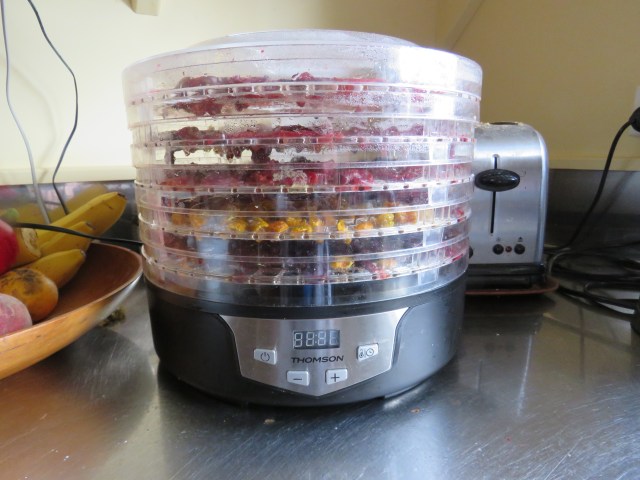
I have dehydrated a swag of plums. It condenses the fruit down to a very small space – a full bucket  can reduce to four tiny snack bags. I bought a cheap dehydrator in the first year of Covid, as we now refer to 2020, and I have never regretted it. It was about $40 online and, unlike the early behemoths of dehydrators, it is small enough to fit in a cupboard and it has temperature controls. It is probably only worth owning if you grow your own fruit and vegetables but I no longer buy dried fruit for baking, although it means I substitute the variety of fruit specified in recipes. We now have plenty of dried and semi-dried plums.

Yesterday, I made spicy plum sauce but as a household of two, we don’t need litres of plum sauce so that only used 500 grams of plums.

And still the plums come.  I have given them away by the bucket-load but now, when I ask others around me if they want some plums, there is a hesitancy in their replies which tells me they, too, have reached the point of over-load. But the last heavy-fruiting tree, the ‘Hawera’ is now past its peak so the flush is over. Just the damsons to come.

I am not going to cut the damson out but if it died, it is unlikely I would bother replacing it.

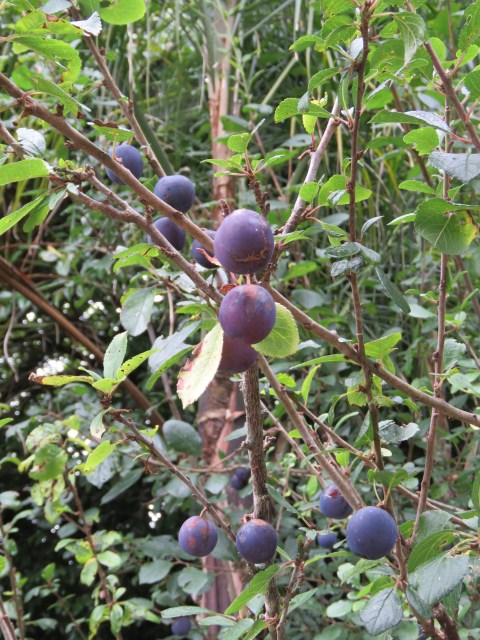
I differ from my colleague, Lynda Hallinan, in that I do not rate the damson tree highly. It really isn’t a good plum for eating fresh. It makes good jams and jellies. It dehydrates well. I take the stones out first so it does require a bit of faffing around because the fruit are so small. Beyond that, its main use seems to be making damson gin. I have made damson gin in the past but, along with shunning jam and desserts, we don’t like sweet drinks and damson gin is essentially a sweet liqueur. I would rather drink the gin without the long steeping in damsons and sugar. But I am not averse to pink gin and flavoured gins so I think I may try steeping the damsons in gin without the addition of sugar. Topped up with soda water, I think it might lift a cheap gin to a new level of interest and flavour. It leaves the problem of what to do with the byproduct of damsons pickled in gin in a dessert-free household. I will face that problem when I get to it.

The bottom line is that I wouldn’t recommend planting a damson tree where space is limited. There are many better eating options. ‘Hawera’ and ‘Sultan’ are our best eaters. The failure of the ‘Omega’ crop again is likely related to its location. The ‘Phillips’ plums are not the most exciting plum by any means but they are reliable, prolific croppers and early season. Sadly, we cut out the Blue Gage and the Green Gage because they didn’t crop in our climate. They likely prefer drier climates with more winter chill. So too do the apricots and cherries that I would prefer to grow.

Helpful readers identified the plum I photographed last week as a ‘Luisa’. I was all for buying one until I questioned myself as to whether we actually need yet more plums. Maybe not.

Marigolds! And a community orchard.

On Friday, our weeks of fine weather broke and it was grey and starting to rain as I headed into our local town of Waitara for essential supplies like gin and dogfood.

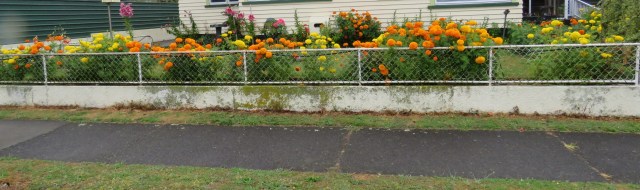
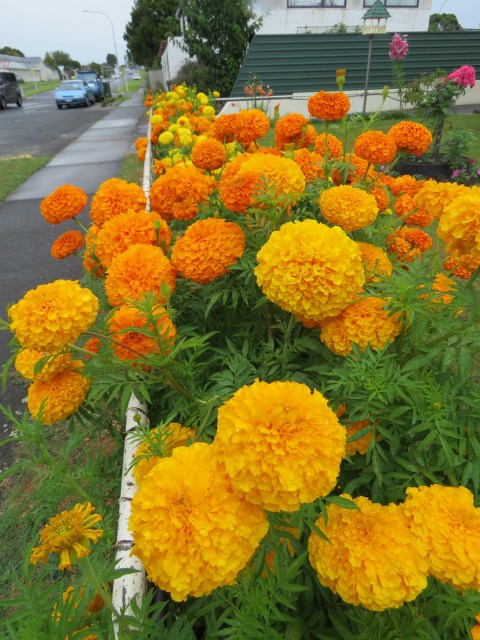
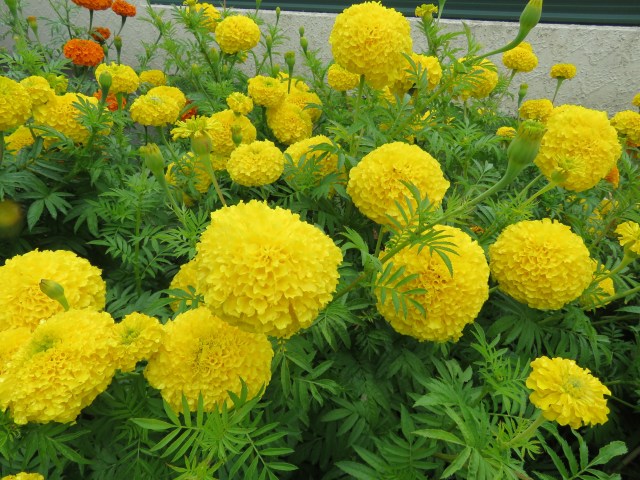
Marigolds have never featured on my list of plants to grow but this display in a front garden was so joyously eye-catching that I turned the car around and went back for a second look. I knocked on the front door to ask permission because, even if it is legal to photograph from the footpath, it feels a bit rude to be in front of a stranger’s home taking photos. Permission was granted readily and with evident pride.

For those of you who don’t know the place, Waitara is a small coastal and river-mouth town of about 7000 people. I will brook no argument when I declare that it has the best climate of anywhere in Taranaki, but it has long been seen as a lower socio-economic area and never as desirable as other satellite areas of New Plymouth. So far, it has largely escaped gentrification and it certainly has a character of its own with a rich pre-colonial history and a complicated and often tense history in times since colonial settlement started. It also has a community orchard.

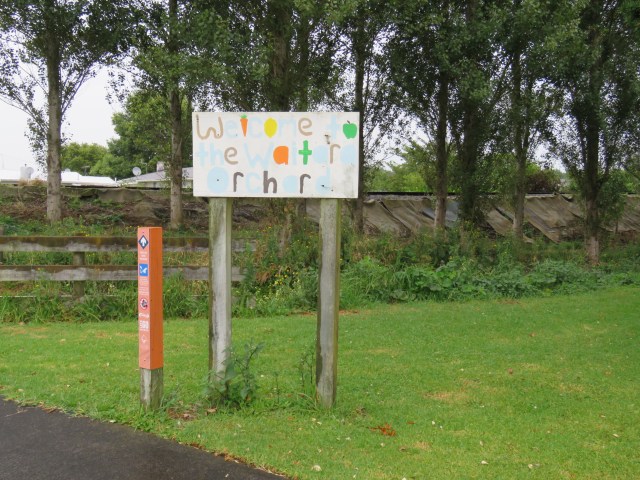
It is a bit hard to read but the faded sign says ‘Welcome to the Waitara Orchard’

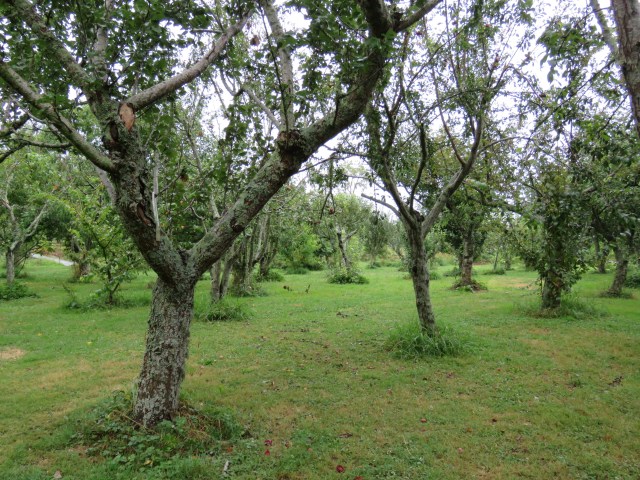
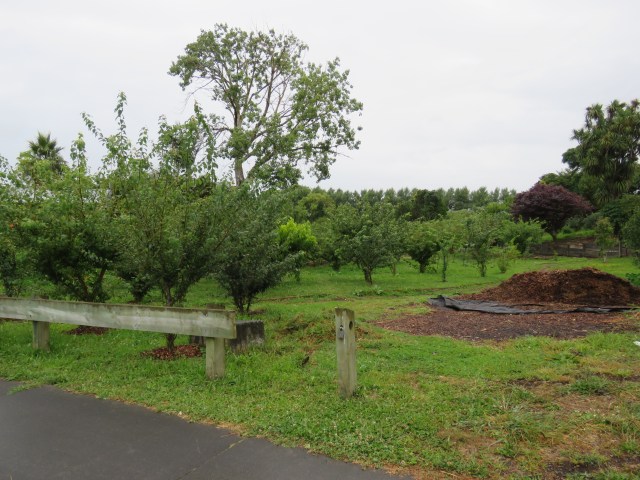
The orchard is low-key, as illustrated by the only sign I saw. It is not flash and clearly the maintenance regime is fairly light but it is remarkably extensive and undergoing expansion yet again. We are not talking just a few fruit trees. I am pretty sure that it is supported by the local council and community board who presumably provide the land, a bit of financial support and some level of essential maintenance while the rest is carried out by volunteers.

There is a lot of orchard at varying degrees of maturity

We don’t need the fruit ourselves and it would drive me nuts because I bet people pick a lot of the fruit before it is fully ripe. If I lived nearby, I would be eyeing up a tree thinking the fruit needs another week before it is ready to pick and somebody else would swoop in and pick it while I waited for optimal timing, but that is the way of an open community garden. Judging by the very few remaining windfalls beneath the plum trees that had finished fruiting, most of it is being collected by people whose needs are greater than ours.

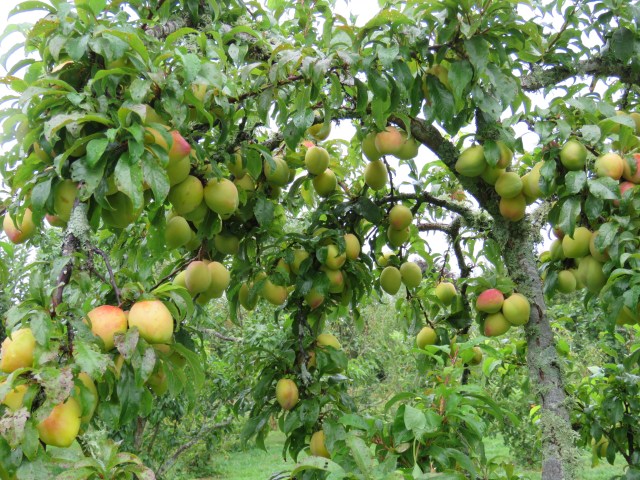
Can anybody identify this variety? It will have been purchased locally.

Nothing is labelled. There were a couple of trees heavily laden with what look to be a plum hybrid which were still too firm to test for flavour. I would like to know what variety they are because they are performing very well.

There is a good project there for somebody to map the orchard and track the performance of all the many different cultivars, providing a resource of information that would be both helpful and relevant to local residents who may be thinking of planting their own fruit trees. If I lived close by, I would start doing it.

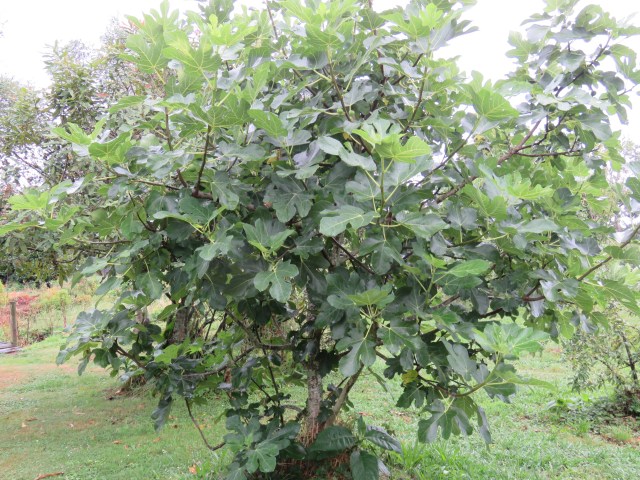
The fig trees were looking good and are a good fruit option where there isn’t much maintenance of plants going on
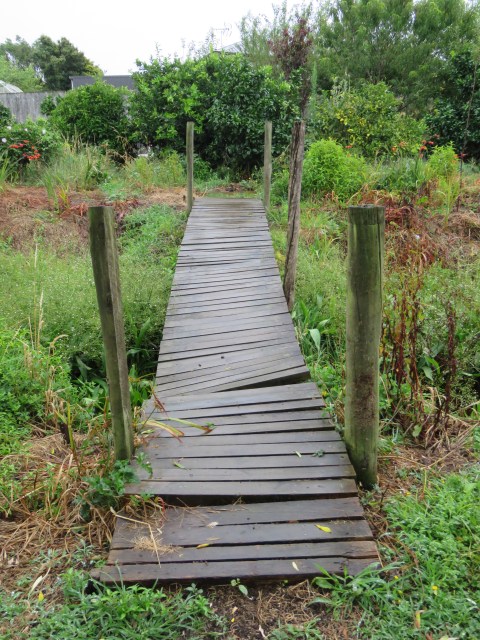
The bridge could do with a bit of repair

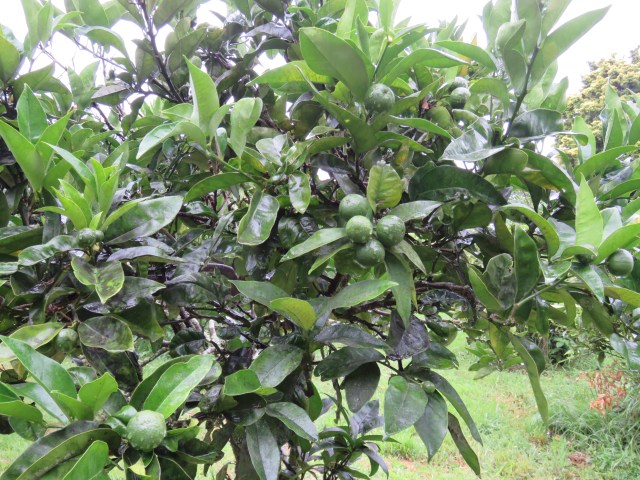
The figs were growing well. There were a lot of citrus trees (wrong season for those but plenty of small green fruit set for later in the year). The apples were patchy in fruit set. Some had lots of fruit, others needed a spray and some pruning. I am sure that various stone fruit have been planted – peaches, apricots and nectarines – but I would have to live closer to monitor those to determine which varieties were fruiting and growing well in our climate which is distinctly marginal for any stone fruit other than plums. I would guess there were pear trees there too, but the rain was getting heavier and a collapsing bridge discouraged me from exploring further.

Citrus are a good crop in our benign climate and not at all demanding in terms of general maintenance

Maybe it is because it is so low-key and community-based that this orchard can not only survive but also expand. What a wonderful resource it is, even more so in a small town with a median income well below the national average.

The marigolds and community orchard made my morning.

I would guess that wood chip mulch or maybe compost has been supplied by the local council