Dividing calanthe orchids

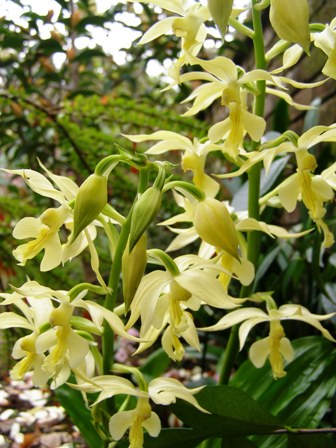
1) We are besotted with calanthes which are an obliging ground orchid suitable for humus rich woodland areas which do not get too frosty or cold. Mark is out digging and dividing them right now, though he feels he should have been onto it in June or July. He is having to take great care not to break off the flower spikes which are showing now.
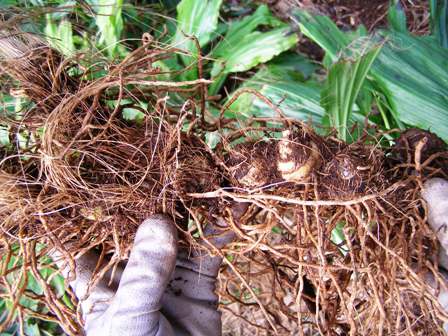
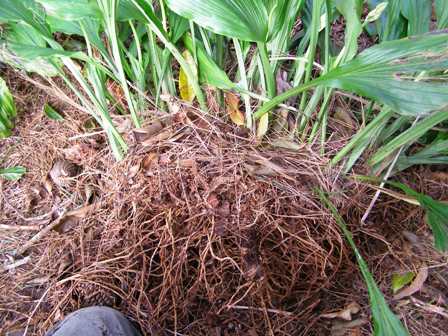
2) When the clumps are teased apart, it becomes clear that each section of foliage has a chain of rhizomes attached.

3) Break the rhizomes apart with care. Each will form a new plant. Discard any soft or mushy rhizomes. While these orchids will make a full set of new roots each year, leaving the old ones on at this time gives something to anchor the nubbly rhizome into place when you replant it.

4) The top rhizome of the chain will have the foliage attached. Leave this intact and attached to the first rhizome. Replant in well cultivated soil with plenty of compost or humus added. As the rhizomes tend to run along very close to, or on the surface, they only need to be lightly covered but they need well tilled soil below to get their roots down. The division with foliage will still flower this year. The dormant rhizomes should come into growth soon and some may flower next year, the remainder the year after.
Tikorangi Diary: Thursday August 18

The lovely blue Lachenalia glaucina

The lovely blue Lachenalia glaucina

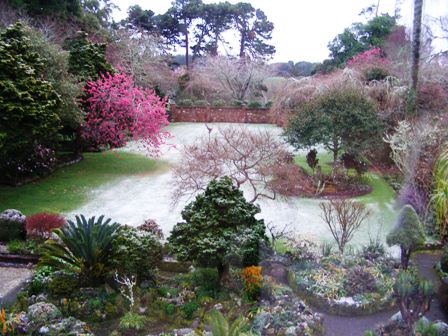
The coldest spell of winter weather we can remember still continues. While Mark was entranced by the unbelievable event of snow falling here on Monday, there is no doubt that the unusual experience of a major hailstorm followed by an exceptionally heavy frost, culminating in snow and a second frost this week has knocked the early magnolia display. Magnolia Lanarth has been particularly badly hit and we may just have to look back to previous years to remind ourselves of how fantastic it usually is. (Check out the Magnolia Diary I kept two years ago). Usually we are peaking with the first flush of magnolias in bloom around now and we have an unsurpassed display of red flowered types at this time. Not yet. Many of the new cultivars set flower buds down the stem so will open fresh blooms but it appears that we will be particularly grateful for the second peak we get in early September with the mid season varieties, including the magnificent Iolanthe.

With the threat of frost, I have upon a couple of occasions rushed out with sheets of newspaper to cover the planting of Lachenalia glaucina that we have in the open. Sheets of newspaper work because if they blow off in the night, it means we have sufficient wind to disperse the frost. We grow a wide range of lachenalia in the garden to give us flowers over many months and only a few are vulnerable to cold temperatures in our conditions – glaucina is one. It is a lovely thing and for the first time in years, we have pots of it for sale ($10). They are only just starting to put up their flower spikes so I had to resort to a photo from previous years. Lachenalias come in blues, lilac, pink, red, yellow, orange, green, white and various colour mixes – we have available for purchase the red bulbifera, white contaminata, blue glaucina, yellow reflexa hybrid and an odd, predominantly green form of aloides.

We are open for plant sales every Friday and Saturday (other days by appointment) and we have Eftpos here but we only sell to personal customers. Sorry, no mailorder. If you want to check what else we have available, check our Plant Sales

A short lesson in hooping, no less

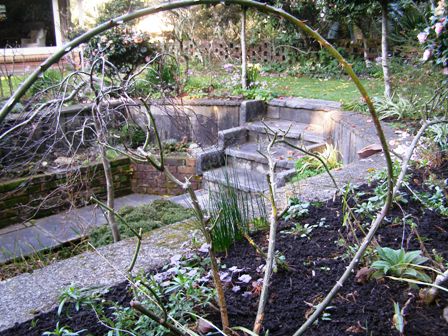
Hooping the long whips on the apple trees

Hooping the long whips on the apple trees

Many woody plants concentrate their hormones at the tips of branches. If you bend the branch closer to the horizontal, then the hormones which lead to flowering are more evenly dispersed along the length which encourages the growth buds lower down to flower and grow.

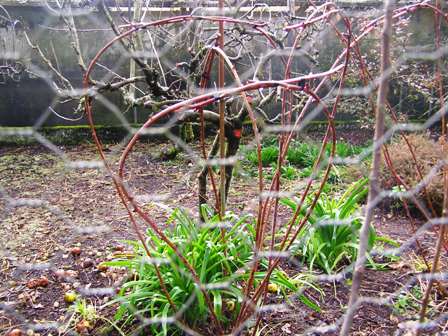
Our Friend of the Garden, Colin, braved the snow and frost this week to come and stay and he has pruned the apple trees. He has hooped over some of the long whips to encourage the plant to push out growth buds along the length, which should result in the production of stronger fruiting spurs to replace old, spent spurs.

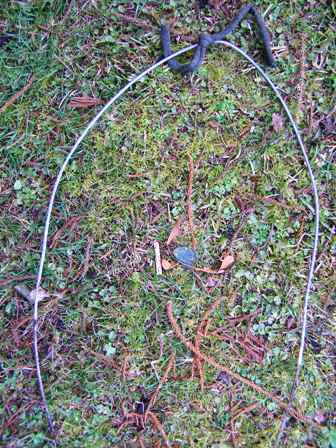
Hooping roses which put out long growths increases the flowering markedly. It is a technique I first saw done at Ayrlies Garden (back in the days when Neil Ross was head gardener there). It takes up a lot of space but is worth the effort. I tie the long whips down to wire hoops in the garden. Many of the David Austin roses put out long whips which are ideal for hooping.

Hooping the roses to maximise flowering this season

Hooping the roses to maximise flowering this season


Using a simple wire hoop to tie down the long rose whips

Using a simple wire hoop to tie down the long rose whips

It is of course the same principle as using espalier techniques to increase cropping. Espalier is not just a space saving exercise in keeping plants as close to flat as possible. It can also maximise fruit yields in a restricted space. You need to make sure that ties are flexible so they don’t cut in and damage the branches – stockinette or similar. The apple hoops were secured with a tapener or tying machine which staples a small piece of flexible plastic tape in place.

Postscript: A man on a mission, Colin is now hooping the raspberries. This is a particularly strong growing variety and this hooping is in part to keep the growth under control and to prevent them making an escape out the top of the raspberry cage. It should also make picking easier.

Any woody plants which make long, whippy growths can be hooped to maximise flowering and fruiting. Colin, a retired horticulturist of vast experience, assures me that when it comes to fruiting plants, the redistribution of the plant’s hormones achieved through hooping encourages leaf buds to form flower buds as well which increases potential fruit yield.

A man on a mission, Colin is now hooping the raspberries

A man on a mission, Colin is now hooping the raspberries

Snow!

A blizzard, we decided yesterday morning

A blizzard, we decided yesterday morning


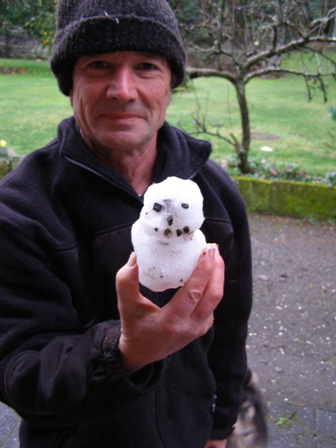
Mark's very small snowman

Mark's very small snowman

Yesterday it snowed. We were simply astounded. For years, I have been saying it never snows here and until yesterday, it never had – not in Mark’s memory or indeed in the time of his late father so that has 100 years covered. A little of it even settled on the ground, albeit for a couple of hours only. Mark was so excited he rushed out to make a snowman. A friend scoffed at the photo on Facebook, saying it is the smallest snowman she has ever seen (he did not have a lot of snow to work with!) but at least it fits in the deep freeze and Sydney-based daughter thought we could bring it out at Christmas.

Today it is just very cold. We think there must have been some overnight snow, judging by the white dusting on the roof tiles but on the ground, it is more about ice and frost. More snow is possible, according to the forecast. There will be damage in the garden – none of our material is hardened off to very cold temperatures but at this stage it does not look devastating. The same can not be said about the nursery remnants we still have. Most of it is under shade cloth but that has not been enough protection for the vireya rhododendrons (badly hit by the severe frost last week and no doubt even sadder after the last two days). We are philosophical – we used to produce about 4000 vireyas at a time for sale – which meant up to 10 000 plants of various ages and stages on the floor of the nursery. There are maybe 100 now which look burned and crispy. The palms are also deeply unhappy with the conditions. Mark’s precious large Caryota (fishtail palms), the Dypsis baronii and many others show damage, but should not be fatally chilled.

So much for global warming. I think we already knew it meant more extreme weather events rather than rising temperatures! The novelty of a winter chill and a one-off event of snow may wear off very quickly indeed.

Snow, not frost, in the front garden

Snow, not frost, in the front garden

Tikorangi Notes: Thursday August 12, 2011

Signs of spring - the campanulata cherries are in flower

Signs of spring - the campanulata cherries are in flower

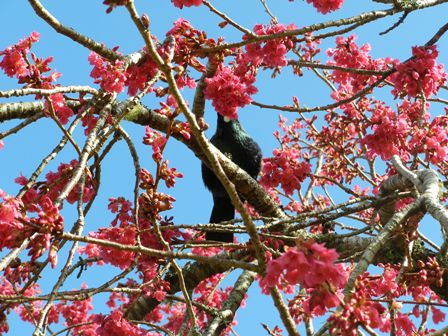
Technically it is still winter here but we are rocketing into full spring and the garden is looking very colourful. The campanulata cherries are opening and at times can appear to be dancing with the movement of the nectar feeding tui. They don’t sit still for long enough to count (and are very difficult to photograph because they move so quickly but we do seem to have them by the score (as opposed to just a few).

Beautiful but the flowers are too floppy

Beautiful but the flowers are too floppy

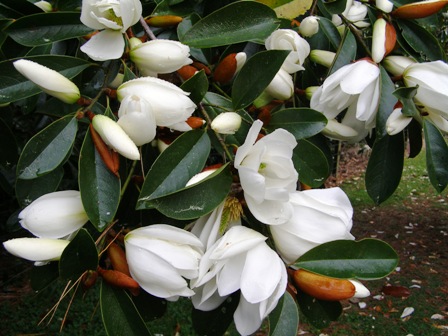
More magnolias are opening by the day as are spring bulbs and even the early rhododendrons. The early white michelias are flowering. We have rows of these and they look splendid and smell divine. But Mark is very picky. There is only room to name one, or maybe two at the most, and plants such as the one in the photograph are destined forever to be just part of our windbreak hedges. Its flowers are simply too floppy. The cultivars Mark selected for further trialling and the one that has been selected for release in the next year or two have much cleaner flowers which are displayed well. They are a big improvement with blooms which hold up and show excellent form.

The garden is open now but if you wait another week or so, there will be a better display of magnolias out. Mind you, the snowdrops will have finished by then but other spring bulbs are opening day by day. For us, this is a time of year we glory in. For details on plant sales this week (personal customers only, though we will hold orders for later collection if they are prepaid) click through to Tikorangi Diary.