Tikorangi Notes: June 19, 2011

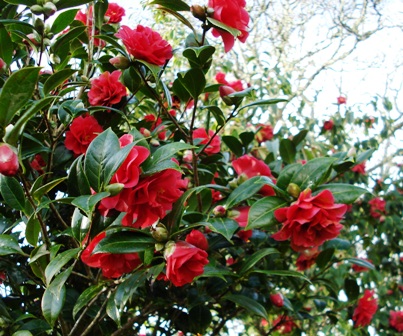
Spring Festival is one of the prettiest in flower this week  though spring is still a way off here

Spring Festival is one of the prettiest in flower this week though spring is still a way off here

Tikorangi Notes: Sunday June 19, 2011

Our mild autumn continues though technically we are now well into winter. It may be wet but it is not generally cold. The ski fields inland and south seem to be getting nervous (and I am wondering whether the Christmas gift of a season lift pass to our snowboarding son was badly timed for the one season in a decade when the snows will be patchy and unpredictable) but it does mean that we are enjoying great gardening conditions. Except for last Friday which was cold (calm but cloudy and cold), daytime temperatures remain in the late teens and night temperatures are not dropping much below 10 degrees Celsius.
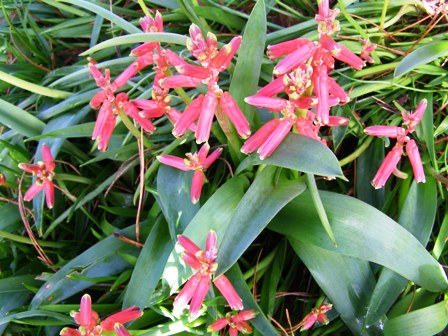
Lachenalia bulbifera, naturalised beneath a large pine tree

Lachenalia bulbifera, naturalised beneath a large pine tree

Magnolia Vulcan is opening its first blooms on the various plants we have around the property. Mid June is early. We usually expect peak flowering later in July. A hail storm last night damaged those early buds and blooms but there are plenty more to come which will be undamaged. The early lachenalias are open – red L. bulbifera, the yellow of Mark’s L. reflexa hybrids and the common L. aloides. The first of the snowdrops are in flower. We never get snow here but Galanthus S Arnott is wonderfully successful on our climate and there are few plants as pretty as the simple snowdrops. The sasanqua camellias are passing over and the japonicas and hybrids are taking over. Spring Festival is particularly pretty this week. With petal blight already hitting before many varieties have even opened, it is probably time to be a little more meticulous in recording which varieties show less damage and still put on a good show. Petal blight is probably here to stay. It will take breeding and selection to find a way past the ravages.

Just one new post this week – our Tikorangi Diary which records Mark’s unsuccessful efforts so far to extract olive oil with a zero carbon footprint and plans for our designated Citrus Grove.

We have been discussing our citrus trees here – somewhere around 20 different specimens which are very well established (as in some are probably around 50 years old now) and I have plans for a series of posts on growing fruit trees and the aim for self sufficiency and variety and how realistic this is in our climate.

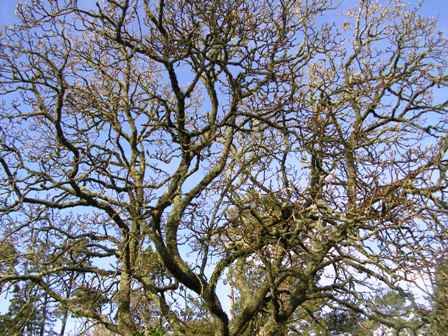
The first blooms on Magnolia Vulcan were hit by hailstones last night
The first blooms on Magnolia Vulcan were hit by hailstones last night
Tikorangi Garden Diary: Sunday 19 June, 2011

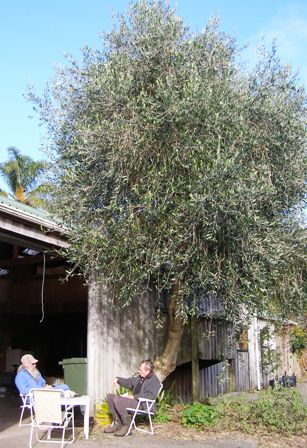
Morning coffee in our work area by the olive tree

Morning coffee in our work area by the olive tree


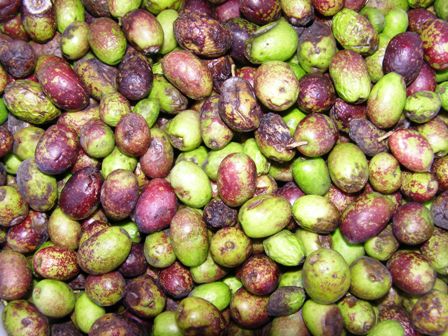
Rather optimistic, hoping to extract oil from the olives

Rather optimistic, hoping to extract oil from the olives

Mark has been much preoccupied by the olive crop this week. In the past I have tried with less than stellar success to pickle olives. Alas, the big imported olives I buy at the delicatessen counter are more delicious than my home grown efforts. We only have one olive tree which we keep primarily because it gives us some shade and privacy in the spot where we often have our winter workday morning coffee. But the olive crop this year was so bountiful that Mark felt compelled to gather it. I have taken a passive role on the attempts to extract some olive oil from this ripe crop but there may be good reasons why Google does not yield up a multitude of sites which give instructions on low tech olive oil extraction. His expectations were modest – a spoonful of pure, super extra virgin, zero carbon footprint oil would keep him happy but at this stage it looks as if pomace may be the winner, not oil. I do not think self sufficiency in the olive oil stakes is close.

The dominating presence of the original Magnolia Iolanthe

The dominating presence of the original Magnolia Iolanthe


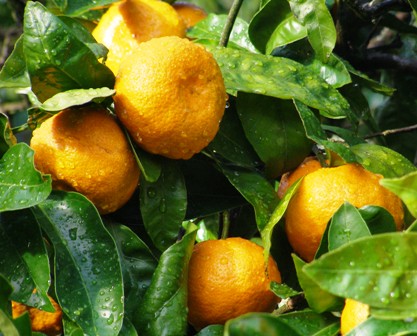
Oranges (or mandarins here) and....

Oranges (or mandarins here) and....

Having completed the once in decade (or longer) makeover of the Avenue Gardens, I have moved in to what we loosely call the kitchen garden or driveway garden. Over the years, this area which was traditionally the main vegetable garden has changed in character and use. The original Magnolia Iolanthe, heeled in temporarily in the very early 1960s, is now of such generous proportions and iconic status, that Mark has gradually been relocating most of the veg growing to other sites. These days it is a mix of quick maturing vegetables, herbs, butterfly garden, nurse area for holding plants which are destined for relocation, existing citrus trees (lime, lemon, tangelo, three mandarins and three orange trees) and the omnipresent Iolanthe. At least Mark came up with a splendid purpose for this area as we plan our new garden developments. A citrus grove, he suggested. We could designate it the citrus grove and underplant with some of the many, very beautiful Camellia yuhsienensis we have looking for a forever home, as well as the annuals for butterfly food. Sounds good to me – low maintenance, purposeful, attractive and an undeniably romantic designation. So I will do a holding pattern maintenance round while we plan the next stage of development.

... and rather a lot of plants of Camellia yuhsienensis looking for forever homes

... and rather a lot of plants of Camellia yuhsienensis looking for forever homes

On a practical level, we are chipping away at hydrangea pruning and rose pruning as each area gets a winter clean-up. The rose prunings go out in the rubbish. Burning is the only other option. They can not be composted or mulched.

Having finished cleaning up after me, (oh but I am blessed to have such a competent person following behind with the mulcher, chainsaw, leaf rake and tractor) and relocating a huge clump of self sown king ferns which had established in the wrong place, our multi-skilled Lloyd has started work on restoring a stone wall which had long ago collapsed beneath a falling pine tree. Stonework is incredibly labour intensive and it is best to measure it in terms of end result, not labour costs.

On a non gardening note, I have been spending hours working through proofing a biography of my brother. He died in an avalanche in the Himalayas in 1983. At the time, communications being pre mobile phones, it took two weeks for us to learn of his death. Around that time our second daughter was born and soon after a postcard arrived saying how much he was looking forward to seeing us and meeting our new baby on his imminent return. By then, we knew he was already dead. To me, he was a beloved brother who died too young. To the wider world, he was one of this country’s foremost mountaineers and it is quite an extraordinary experience to read the story of his achievements, much of which I never really grasped. The working title is Bold Beyond Belief and the biography of Bill Denz, written by Paul Maxim, is scheduled for publication towards the end of the year.

Tikorangi Notes: Sunday 12 June, 2011

Latest posts:

1) Introducing Roma Red, our first new camellia release for a decade.

2) Tikorangi Garden Diary – what we have been up to in the last week (including a few hints on timing for pruning of rhododendrons and camellias and why you should never try mulching your hydrangea prunings).

The first blooms on Magnolia campbellii - a new season starts

The first blooms on Magnolia campbellii - a new season starts

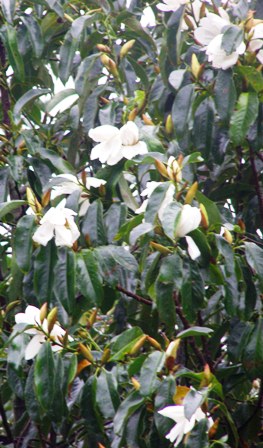
A little battered by the rains, but the first of the michelias has opened

A little battered by the rains, but the first of the michelias has opened

Tikorangi Notes: Sunday 12 June, 2011
We measure our years by the start of magnolia flowering heralding a new season. This week, just the second week of June and winter chill yet to bite, Magnolia campbellii has opened its first two flowers. The leaves are still falling but the promise of a new season is already upon us. So too with the earliest michelia – the first of the fragrant maudiae hybrid series has quite a few blooms open already. The heavy rains of the past week have not been great for the flowers but we know they will just go from strength to strength over the next months.

The rains hit (again) this week – already over 120mm since last weekend. As our rain falls in torrents over a short space of time rather than in prolonged showers, that adds up to some very heavy downpours. It is all right outside – we are well used to rain and have free draining soils. But Mark has to patrol the roof and ceiling when the rains get too heavy. We once went to a slide lecture by the current owner of Villandry in France. The style of gardening bears no resemblance at all to what we do here but we were particularly amused by the charming Frenchman who is the current owner saying that whenever it rains heavily, he has to frequent the attics in search of leaks. Admittedly, he has a chateau on a grand scale whereas we merely have a house with ageing concrete tiles but there is some remote bonding in a shared task.

Introducing Roma Red – our latest camellia

Roma Red - our first new camellia release for a decade

Roma Red - our first new camellia release for a decade

Camellia Roma Red in full bloom

Camellia Roma Red in full bloom

The first new camellia we have released for a number of years – in fact the first since Camellia Volunteer in 2001. Nobody could accuse us of naming and releasing new cultivars willy nilly. Roma Red has been a long time in the trialling process. The original plant is clipped as a lollipop standard and we have admired its good, red formal blooms for many years. Trials showed that it sets excellent flower buds on young plants and has pleasing compact growth. The flowers are formal and red – very red on the parent plant, tomato red even. In container grown plants, the red can take on a slightly coral tone but perfection is hard to find and we remain confident than when planted out, that true red will reign supreme.

Roma Red is available from selected independent garden centres this season or we have a few plants available here.

Tikorangi Garden Diary: Sunday 12 June, 2011

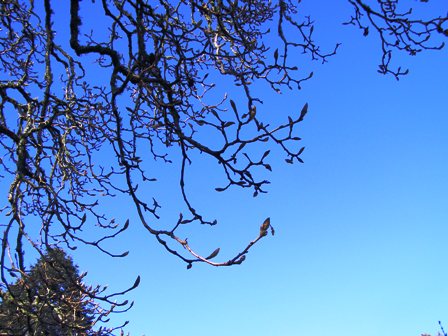
Fattening magnolia buds signal the need for a nightly possum patrol

Fattening magnolia buds signal the need for a nightly possum patrol

Despite the torrential rains this week attempting to undermine our gardening efforts, we are nearly at the end of the renovation of the Avenue Gardens. Now it is just a case of getting the mulch on to suppress the legions of weed seeds which will be triggered to germinate by digging and cultivating the soil. We have done a lot of lifting and limbing, reclaiming vistas that had gradually disappeared over the years. It always feels rather brutal cutting off branches laden in flower buds (both rhododendrons and camellias in this case) but it is best to carry out hard pruning in winter.

It may be fine in a small garden to plan hard pruning for the exact time as flowering passes its peak, just before the plant puts on its new growth. The timing is different for every plant and maybe in a small garden, one is out and about every day, ready with the loppers, saw and secateurs to seize the moment. But in a big garden, it is far more likely that we working somewhere else entirely and the opportunity passes without notice for another year. So we are hard pruning right now. Overcrowding had forced many plants to grow out at an angle so some of the pruning has been an attempt to counter that inclination.

The mulcher is working overtime (with Lloyd on the end of it). Small mulchers tend to be so slow and limited that they are more trouble than they are worth, but ours is a reasonably grunty machine capable of most of what we require. If the wood is too large for the mulcher, then it is big enough to warrant cutting up for firewood. We do not, however, mulch hydrangea prunings. Not after Lloyd told us he tried mulching his at home one year and discovered micro-propagation. The carpet of mulch became a carpet of hydrangea buds which all took root and grew.

Hydrangea and rose pruning has also started. While gardeners in colder climates may prefer to leave this until after the worst of winter (pruning can trigger fresh new growth which then gets frosted), our winter temperatures are not low enough to cause problems.

Mark thinks he is getting on top of the rat population but is now starting possum patrol. The magnolia buds are swelling and while they are not a favoured food for the pesky possums as the oranges are, every year at least one develops a taste for them. As they gnaw in and eat out just the tasty centre of the bud, it is not clear that anything has happened until the flowers open in a sad and deformed manner. Year in and year out we receive phone calls from concerned magnolia owners wondering what is wrong with their tree at flowering time. Nothing that high velocity lead earlier in the season can’t cure. Often the gaudy rosella parrots are blamed but in our experience, it is the other pesky Australian import – the possum.