Tikorangi Notes: Friday, March 18, 2011

The watermelon catfish

The watermelon catfish

Why I am still married to the same man after nearly four decades – who else would leave vegetable and fruit creations on the kitchen bench to amuse me?


Not a common sight in the rural area of Tikorangi - Rango in performance in our garden

Not a common sight in the rural area of Tikorangi - Rango in performance in our garden

Latest posts:
1) Frangipani in Plant Collector this week – but not, alas, in our garden here yet.
2) Garden tasks this week, including our method of preparing tomatoes for the freezer.
3) Outdoor Classroom – replanting the strawberry patch using runners.
4) Castanospermum australe – a mission which required the extension ladder – in Plant Collector last week.
5) Woodland gardening in Abbie’s column last week.
6) Garden tasks for early autumn last week including crop rotation, lawns, hedges and fertilising.
7) Does credibility and reputation count for nothing these days, or does Penguin NZ think we have short memories?

Members of Rango in our carpark area

Members of Rango in our carpark area

Tikorangi Notes
A taste of WOMAD came to Tikorangi. Generally we do not embrace the functions market (I met Bridezilla and it made me decide that we are not so desperate that we need to offer a venue for garden weddings) but the opportunity to host Sudanese Egyptian group, Rango, in performance with school children from our local country school was a different proposition altogether.
Alas it rained, especially as people arrived for the luncheon

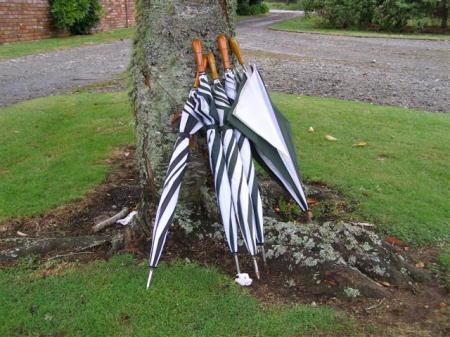
Alas it rained, especially as people arrived for the luncheon

After a week of fantastic weather, we felt the event manager may have been overly cautious in deciding to erect a marquee just in case, but as we woke to rain which became torrential during the luncheon for invited guests, we were greatly relieved to have additional covered areas. Nobody even looked around the garden which we had prepared in readiness, but the vibrancy and fun of the percussive rhythms of Rango made that irrelevant.


Plant Collector: Frangipani

The intoxicating fragrance of frangipani (or plumeria)

The intoxicating fragrance of frangipani (or plumeria)

Alas, these frangipani are not growing in our own garden. We were in Sydney last week where they are common in home gardens. We have two plants here which we have managed to get to a good size in pots and we plan to give them optimum conditions in the hottest possible, sheltered position at the front of the house because the fragrance is just to die for. I am sorry we don’t have the exotic rosy pink and yellow form, but only the more common white with a golden centre, more correctly known as Plumeria rubra var. acutifolia but frangipani will do just fine, thank you. There are dark red forms too.

Despite the fact that they are common in the Pacific islands and throughout Asia, frangipani originate from Central America (think Mexico, Venezuela and the Caribbean) and therein lies the problem – they are tropical but we are not. They are of the large deciduous shrub to small tree class, but very sappy plants so more akin to some of the larger euphorbias in growth. They will grow happily in pretty tough conditions as long as they never get cold or waterlogged.

What is often called the Australian frangipani is a totally different plant. It is an evergreen tree, usually very large though there are some smaller selections becoming available, and is in fact Hymenosporum flavum. Being a Queensland forest tree, it is not quite as tropical as plumeria but neither is it as exotic and attractive in bloom. We will keep to the plumeria and hope for that unmistakable scent of the tropics in summer.

In the Garden this week: March 18, 2011

Freezing surplus tomatoes

Freezing surplus tomatoes

• Now that the heat of summer has passed and we are getting into autumn, you can be thinking about planting woody trees and shrubs. Novice gardeners get inspired in spring but more experienced gardeners know that mid autumn is an optimum planting time. It gives plants a chance to get their roots established before the spring flush and the threat of a dry summer. Hedges, specimen trees, avenues and orchards – start frequenting your favourite garden centres to see what they have available. There is no rush. You are better to plant when we have had a few days of good rain and there is a six to eight week spell of good autumn planting weather.

• Garden centres are advertising spring bulbs. Remember when planting bulbs that most do not need super rich soils. Good drainage is the critical aspect so they don’t rot out when dormant. Light, friable soils are more hospitable than great clods of dirt but lay off the fertilisers. Digging in some leaf mulch or a little compost is all that most bulbs require. In the wild, many bulbs have evolved to survive in quite difficult conditions and mollycoddling can result in too much leafy growth to the detriment of flowers.

• You can do autumn cuttings of plants like fuchsias, pelargoniums, vireya rhododendrons and perennials which don’t clump so need to be increased by cuttings – dianthus (pinks), oenothera (evening primrose), erysimum (wallflowers) and the like. These types of plants root easily and don’t generally need rooting hormone. Use firm wood from this season’s growth and reduce the leaves by about half to stop the cutting drying out too quickly.

• You have pretty much missed the boat now on sowing root crops for winter because they need a longer growing season. If you have space, you could try carrots but they will only make baby grade. However, you are fine to continue planting brassicas, Florence fennel (finocchio), peas, winter spinach, winter lettuce and quick maturing Asian greens.

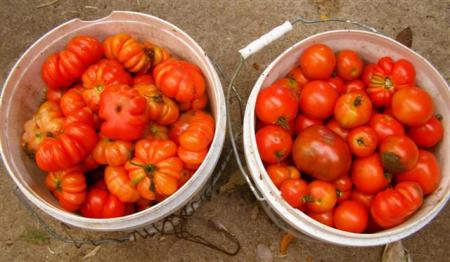
• If you have an abundance of tomatoes, we have found the easiest way yet to prepare them for freezing. Wash them, cut out any damaged bits and the central stem area. Pile them into big roasting dishes and bake in the oven until cooked. Cool. Drain off the clear liquid (tasty as juice or frozen for soups). Pull off the skins which are now very loose. Freeze in small containers. They become concentrated and ideal for using later in the year.

• As long as you can get a hosepipe within reach, it should safe to sow new lawns after the next good rain.

Redoing the strawberry patch step-by-step with Abbie and Mark Jury.

A step by step guide by Abbie and Mark Jury first published in the Taranaki Daily News and reproduced here with permission as a PDF.

New Outdoor Classrooms are uploaded fortnightly.

Plant Collector: Castanospermum australe

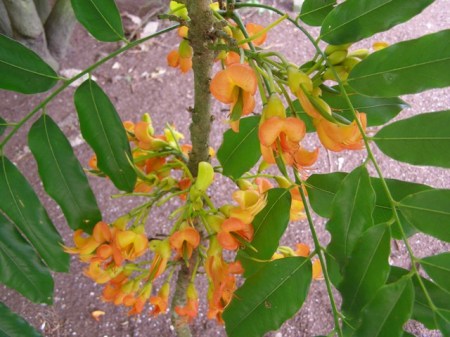
A mission requiring the tall extension ladder - gathering the Castanospermum australe flowers

A mission requiring the tall extension ladder - gathering the Castanospermum australe flowers

It was just a little difficult to photograph the orange pea flowers on the castanopsermum, owing to the fact that they are at least 10 metres up the tree and beyond the limit of my camera’s zoom. Getting this photograph entailed Mark on the end of the extension ladder cutting a branch to bring down to ground level. The tree itself is probably getting closer to 20 metres now, though it has taken several decades to get there. I was slightly alarmed to see that it has the potential to reach 40 metres high in its natural habitat of east coast Australia, particularly Queensland, but I doubt that it will reach that in our cooler climate, or indeed in my lifetime.

The common names for this plant are Black Bean Tree (on account of its large black seeds held, as legumes are, in a pod) and Moreton Bay Chestnut. Indeed castanea means chestnut in Latin and that is where it gets its name from. It has always been much on my conscience that many years ago when we sold a few of these (and painfully slow they were, to get grown to saleable size), in my ignorance I assumed that the common name of Moreton Bay Chestnut meant the seeds were edible. They can be eaten – if you are Aboriginal and understand the painstaking process of rendering toxic seeds edible (a bit like karaka berries in this country). Lacking that knowledge, poisoning is more likely. As the tree takes some time to flower, I am hoping that my incorrect plant labels will long since have faded into oblivion so nobody tries eating the seeds.

The tree is evergreen and has handsome, pale green, large pinnate leaves – pinnate meaning divided like a feather. Should it outgrow its space here, apparently the timber is attractively grained like walnut.