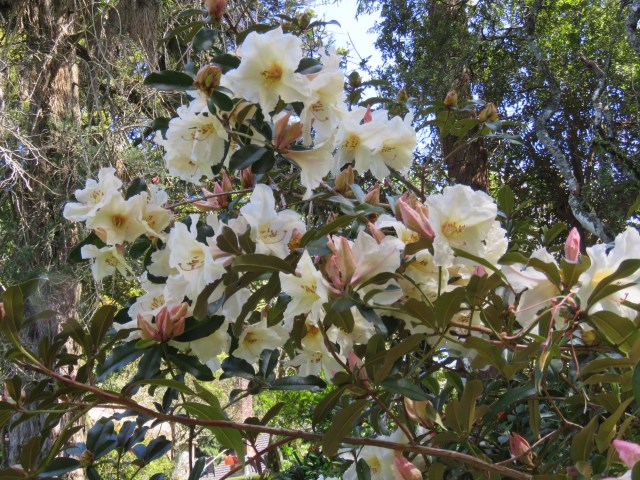
The garden festival started 33 years ago as the Taranaki Rhododendron Festival and to this day, I rate R. polyandrum as one of the loveliest sights as well as one of the most fragrant.
We are down to the last few days before we open this coming Friday as part of the Centuria Taranaki Garden Festival. I may write about how we prepare our very large garden for opening one day soon, but not today. There is still too much to do. All I will say is that it never ceases to amaze me how the final garden round (The Great Rake Over, as Mark calls it) brings all the earlier work together to present the garden at its best – or certainly its tidiest.
Some people prefer the classic ball truss on rhododendrons and we have those, too – in this case, ‘Noyo Chief’
At the risk of being repetitive, this is our final festival so a last chance to visit our garden. We have no plans to open for the general public after this event from the coming Friday 28 October to Sunday 6 November.
I am really hoping for fine weather next Sunday 30 October for our Music in the Garden event and also for a good turnout because other people are involved so I feel personally responsible that it be a success for them. Music is from La Mer, cake sold by the slice from Rose at the Garden Cake Kitchen, pre-ordered savoury platters from Becky at Humble Grazing and the Etta Coffee Van on site selling teas and cold drinks as well as coffee. Our gardener, Zach, will also be selling his plants including the sought-after Stipa gigantea, Curculigo recurvata, Elegia capensis and assorted perennials. Bring folding chairs or a rug and, if you wish, your own bottle of wine.
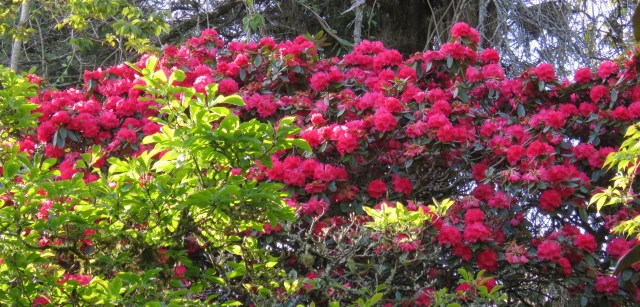
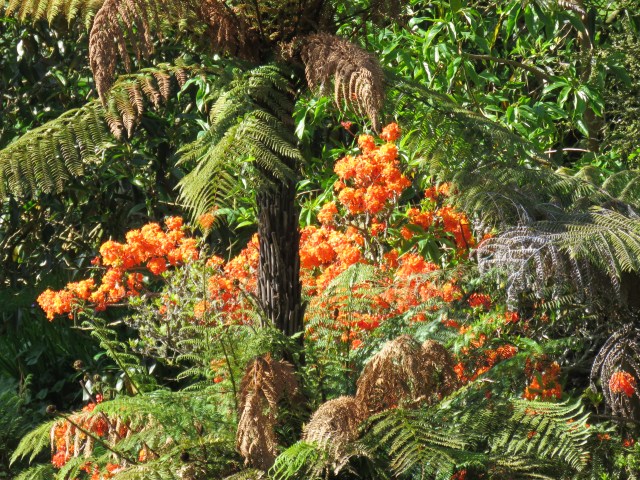
Azaleas are also members of the rhododendron family and can come in colours that may be described as vibrant or garish, depending on your liking for them. I can go with vibrant when they light up an area which would otherwise be just green.
I am offering free garden tours at 11am on Friday 28 Oct, Tuesday 1 and Thursday 3 Nov. Just turn up five minutes early if you want to join one of these.
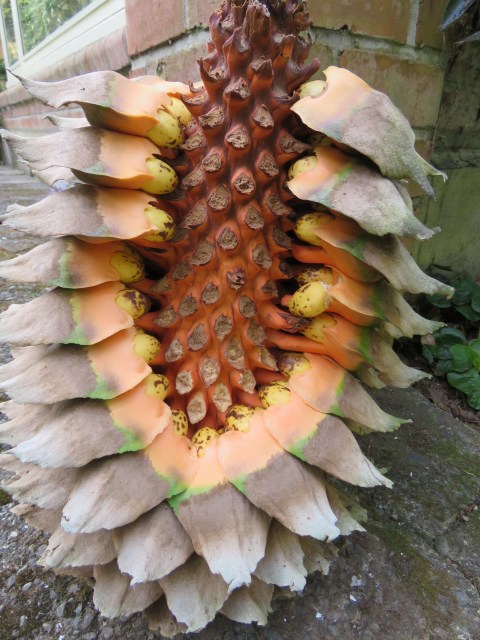
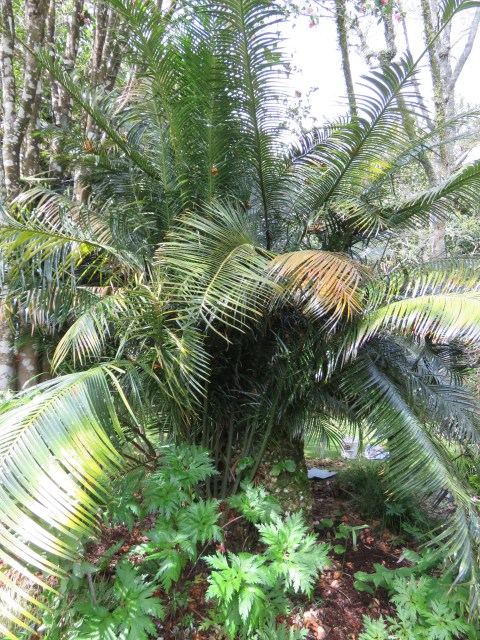
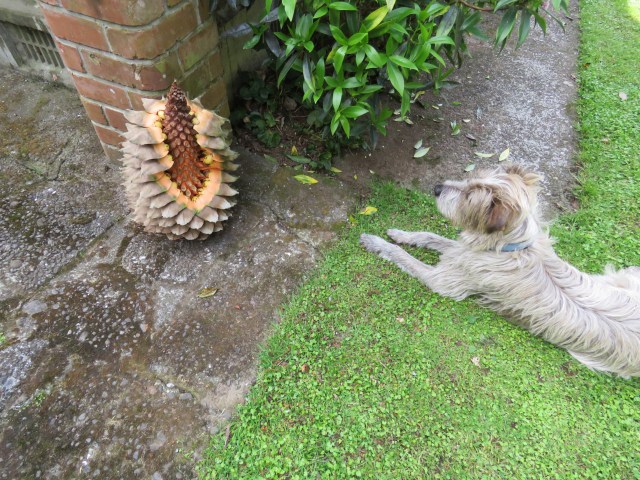
Look at this cycad cone. It is from the very handsome Lepidozamia peroffskyana, sometimes known – Wiki tells me – as Scaly Zamia or Pineapple Cycad. It is an Australian native coming from areas that are more warm-temperate than tropical which will be why it is thriving here. I see it is one of the tallest cycads and can reach up to seven metres tall but it is clearly going to take a long time to get anywhere near that height here. We cut the cone off because our experience is that if we leave it on the plant, it reacts by turning the new growth yellow which is distinctly unsightly. Neither of us being botanists, we are uncertain why this happens although Mark vaguely mentioned ‘something to do with a chemical reaction’.
Lepidozamia peroffskyana
Ralph was particularly fascinated by it and felt sure that the segments should be edible. There is not much that bypasses that dog’s nose. There is some anxiety here about how Ralph will cope with festival, this being his first (and last, as it turns out). We bought a new chest harness for him in case we have to keep him on a lead or tie him up but he is fairly sure that harness is a punishment and an instrument of torture. Dudley dog is more experienced and likely to take on his seasonal role of Carpark Biosecurity Officer as he optimistically checks all arrivals for hidden food.
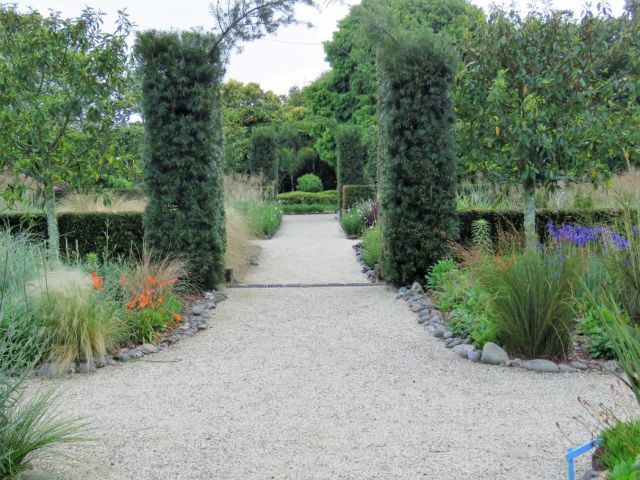
The summer gardens are our newest area and starting to mature well
This is it, folks. The die has been cast, the decision made. This is our last festival. I am referring to the Centuria Taranaki Garden Festival that starts in under three weeks – on Friday 28 October. This is likely to be your last chance to visit our garden.
Much and all as we love meeting you and seeing you enjoy our garden, we would rather go out on a high note than fade away. The garden is looking its very best – or it will be in another couple of weeks. This festival looks as though it will be a cracker event and that seems a good time for us to say farewell before we close the gates to visitors.
If you are one of the people who say, “I have been meaning to come for ages,” this is your last opportunity. We won’t stop gardening or sell up but we will be closed to the public from November 7 and we won’t be opening next year.
La Mer
We are particularly keen that our music in the garden event on Sunday 30 October be a success. We can’t control the weather (and the music from La Mer is weather dependent) but we have everything else in hand. La Mer is a four-piece group playing a mix of gypsy swing and French chanson which blends delightfully with a garden setting.
Delights from the Garden Cake Kitchen, available by the slice on the day
Not only is Rose from the Garden Cake Kitchen selling her dreamy cakes by the slice, but there is more.
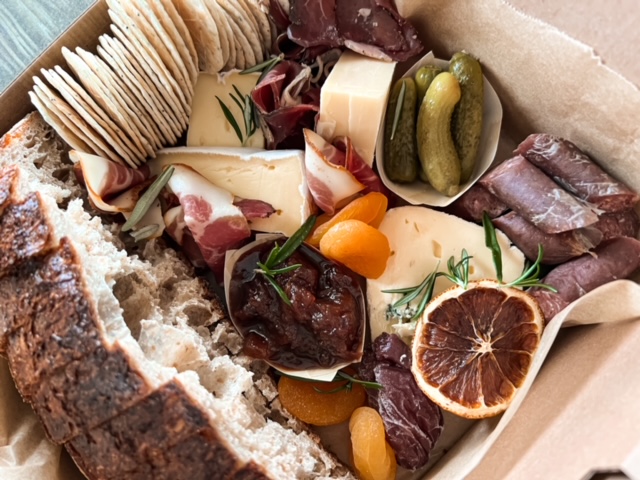
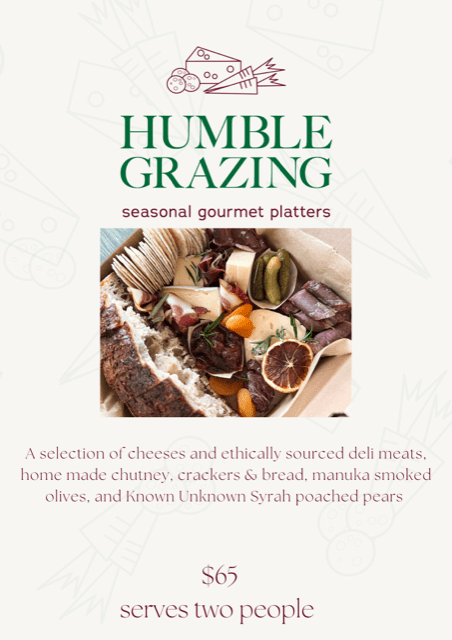
Humble Grazing’s platters need to be pre-ordered
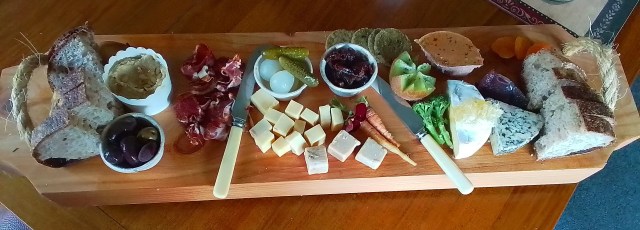
Look! I have been lucky enough to try Humble Grazing’s platters before. This is most of one taken out of the box and plattered for our consumption. And consume it we did, with great gusto.
Becky from Humble Grazing is offering pre-ordered platters for those of a more savoury persuasion. Becky can be contacted through her Facebook page, her website under the name of Humble Grazing or Instagram. If the weather forces a cancellation of the music and you have pre-ordered a platter, you can pick it up from here and take it back to your accommodation to consume. You are welcome to bring a bottle of wine to accompany your platter – or indeed bring your own picnic.
Good coffee and more from Etta
But we will also have the Etta Coffee Van on site selling both hot and cold drinks. These include iced coffee and chocolate (the day may even be hot!), smoothies and a range of organic teas, if coffee is not your favoured afternoon drink.
Seating is limited so maybe add a picnic blanket or folding chairs if you want to be seated. La Mer will be playing from 2.00pm onwards. Please come. There is no additional charge for the event – just the garden entry fee of $10. You are free to sit and enjoy the music or to wander the garden at your leisure. For those of us who are still Covid-anxious, we have plenty of space and being able to physically distance is not an issue.
Jennifer
Auckland botanical artist, Jennifer Duval-Smith is our artist in residence. Three of her four nature journaling workshops are already fully booked and there are just a few places left on her Tuesday 1 Nov workshop centred on the grandeur and glory of rhododendrons.
If you are interested in my garden tours on Friday 28 Oct, Tuesday 1 and Thursday 3 Nov, no bookings are needed. Just be here at 11am and we will be starting from the main lawn. These tours last between about 75 to 90 minutes but you don’t have to stay the whole distance. That said, Mark is in awe at my ability to enter the garden with a group and return later with pretty much the same number as I started.
And it will all end on November 6 when we close our gates (metaphorically speaking).
First published in the September 2022 issue of Woman magazine
“… an ecologically dead status symbol.” Douglas W. Tallamy
Let’s talk about lawns.
I remember doing a profile on a gardening couple who took great pride in their lawn. “Visitors say they just want to take their shoes off and luxuriate in the grass,” declared the lawn man of the pair. I had taken my gardening and life partner, Mark, along for moral support and as soon as we were safely in the car and departing, he expostulated, “People want to let their bare skin touch that?”
We both knew what sort of chemical arsenal was used to achieve a lawn that looked like green velvet and we would not be wanting our skin touching it. It is a value that originates from American suburbia – all those perfect street frontages – and I am not sure that is of merit.
There is the perfect lawn and then there is mown grass. It is many years since Mark declared that he would not routinely spray the lawn to try and keep it to the chosen grass varieties that give a handsome sward. As long as it was small-leafed, green and able to be mown, that was fine. I notice that it is me, not him, who goes around on my hands and knees rooting out the flat weeds but the excessive daisies, dandelions and docks worry me more than him.
I would make an exception if we had small children in our lives. I might then agitate for spraying Onehunga weed, or prickle weed as it is often called. It makes going barefooted unpleasant. If you are going to resort to spraying it, you need to understand that it germinates in winter, grows madly all spring and, when the prickles appear in summer, it has already set its seed and the plant will die so there is no point at all in spraying at that time. You need to spray in spring when it is in full growth to break the seeding cycle and you will need to do it for several years as dormant seeds will keep germinating.
If you are not keen on spraying, you can let the grass grow long in the spring flush which will force the Onehunga weed to grow taller to reach the light. Then set the mower level lower than usual and you will be cutting off most of the Onehunga weed before it has a chance to flower and seed.
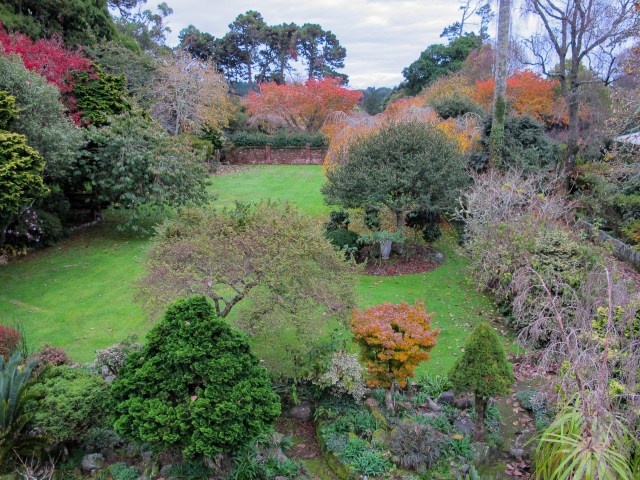
Our front lawn, seen here in autumn, is a fairly major feature and I wasn’t sure about letting it grow wild.
What about not mowing at all? It is a controversial position to take in an urban setting. We recently let our front lawn grow over summer and there is no doubt it is alive with bees and butterflies when in flower. The Californian quail love it too with its abundance of seed. Our main interlopers are clover, lotus major and self-heal (Prunella vulgaris) which means it flowers pink, white, yellow and blue. Mark refers to it as a low meadow.
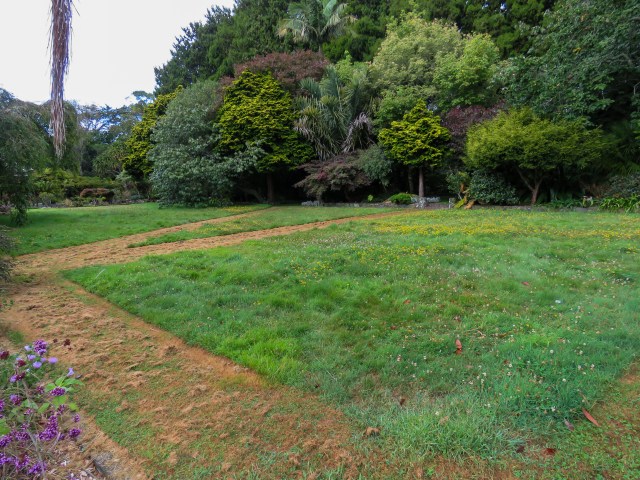
Mowing the perimeter of the lawn and paths gave instant form to what would otherwise look unkempt. It would look better had we raked the paths or collected the clippings as well. The mulcher mower was not equal to the sheer volume of grass to be cut down on this occasion.
Because our front lawn is quite a major statement, it worried me when it looked …. well… rank and unloved in the early stages. I had a stroke of genius, drawing on what I had seen overseas, and asked for a double width to be mown around the perimeter and our most used paths across the lawn to be mown, again a generous two mower widths wide. It made all the difference visually and transformed it from unmown lawn to managed meadow. We kept it that way until the flowering was finished and then cut it all down again.
Our ‘low meadow’ in full flower
On the topic of mowing, get yourself a mulcher mower that chomps up the clippings to a fine tilth that is absorbed back into the grass. It means you don’t ever need to feed your lawn with nitrogen fertiliser again and it makes mowing faster without faffing around with lawn clippings which are the bane of landfill. The only reason lawns need fertilising is because constant mowing and collecting the clippings strips out any goodness and doesn’t allow for a natural cycle of replenishment. We haven’t fed our lawns for years, maybe even decades, but they remain green, well-covered and healthy simply because we use a mulcher mower.
If you choose to spray your lawn, then at least educate yourself as to what the active ingredients are and choose accordingly. There are more environmentally friendly options coming available but lawn sprays in the past – some of which will still be in garden sheds around the country and some may still be available – were a toxic brew.
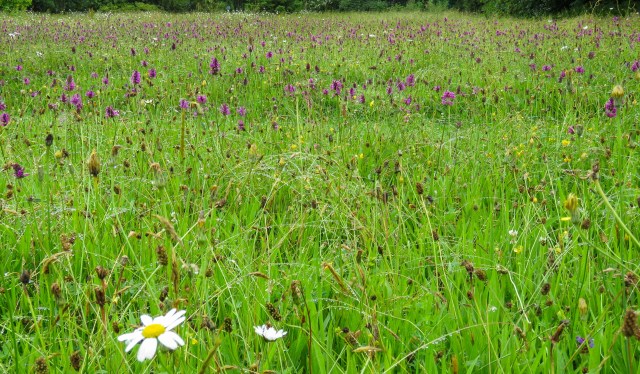
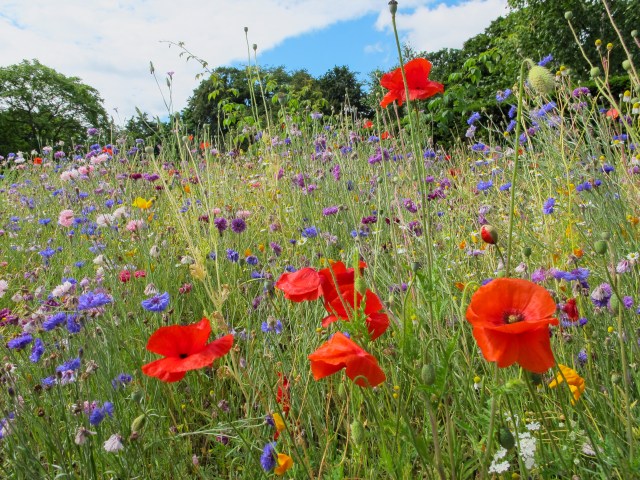
Contrary to widespread opinion in NZ, this is not a wildflower meadow. It is a pretty sowing of annuals in a casual style and is not an easy-care alternative to lawn.
Proper meadows and wildflowers are a whole different topic. When wildflowers are mentioned, most people think of wildflower seed mixes – the ones that are soldier poppies, cornflowers, cosmos, daisies white and daisies yellow and a whole lot more. Pretty though they can be at their peak, they are neither meadow nor wildflower, or certainly not our wildflowers. Essentially it is gardening with annuals and such plantings are generally short-lived and need quite a bit of work to stop them deteriorating to a flattened, weedy mess. There are alternative approaches but they are not an easy answer and take a much higher level of gardening skill than a simple lawn requires.
What does a lawn achieve? If you are the sort of family who gets out for wholesome games in the garden, be it backyard cricket, rugby, badminton or even croquet, then yes, the lawn provides a suitable recreational space. Most of us persist with lawns long past the time when we have children frolicking outdoors, assuming they ever did.
Mondo grass creates a green breathing space that is every bit as effective as mown grass.
I came to the conclusion that there are two reasons for lawns. The first is practical; they are lower maintenance than most styles of garden. The second reason is aesthetic; an expanse of mown grass gives a breathing space in a garden and can frame the more detailed, decorative areas. The mistake is to think that you can only get that breathing space with a lawn. There are other ways and it doesn’t have to be the courtyard approach of paving or decking. I remember Gil Hanly’s garden in Auckland where she created a simple breathing space with green mondo grass beneath palm trees. It would have been lower maintenance than mown grass and, in a highly detailed garden with lots of colour, it gave that space to draw breath and relax.
In the end, lawns are on a spectrum. At the extreme end are the lawn fanatics who will de-thatch, aerate (because they have killed off the earthworms), core, oversow, irrigate, use sprays frequently, fertilise extensively and mow every day or every second day to maintain a perfect velvet monoculture comparable to a bowling green. I see this as an environmental travesty and a political statement from people who are proudly declaring total control and supremacy over nature by every means in their chemical and mechanical arsenals.
At the other end of the scale are those who either dispense with lawns entirely or simply give up mowing. There is a lot of room to move in between those two extremes where most of us can find a level which sits better with us in environmental, aesthetic and practical terms.
There is a different charm to a casual seating arrangement in long grass rather than on mown lawn although my practical side says this probably works better in a drier climate.
We just need to stop thinking of one end as admirable and aspirational and the other end as disgraceful and lazy. Nature would prefer it if more of us were inclined to land on the laissez faire end of the spectrum.
“Over three-quarters of all garden chemicals sold in Britain are for the improvement of our lawns.” The Curious Gardener’s Almanac by Niall Edworthy (2006)
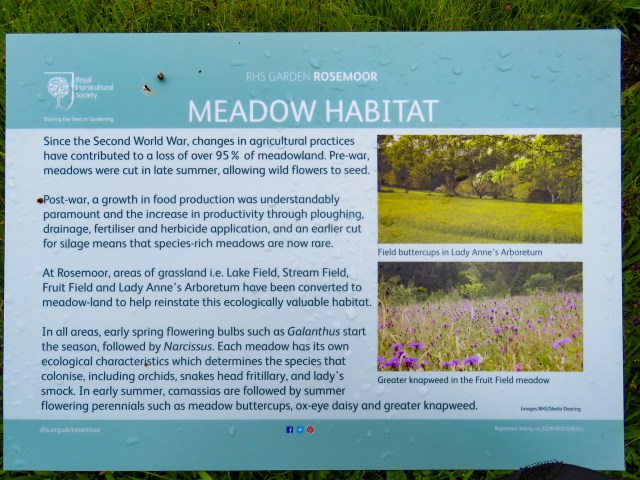
Once was mown lawn at RHS Rosemoor. English friends tell me that the sight of mown grass in public parks and gardens is increasingly rare
Today is brought to you by the colour lilac. Well, mostly lilac but also leaning towards purple, pink and blue. It is a colour I love although I can not think it is a colour I ever wear in clothing so maybe I only love it in the garden.
Primula denticulata
The Primula denticulata have been bringing me pleasure for weeks. We were given seedlings of it a couple of years ago. While the ones I planted in the Iolanthe Garden have largely survived, they are clearly not as happy in the sunny conditions there because these ones in heavier soil and partial shade have romped away with enthusiasm and are putting on a good show.
The ‘pink’ form of the Spanish bluebell is more mauve than pink
The lilac bluebells are commonly referred to as pink but really they are more mauve than pink, I think. This week we have swathes or drifts of bluebells blooming in various areas and I forgive them for their weedy, seeding ways. They do need to be actively managed, however, or they will take over in quick time. The white and mauve-pink bluebells are a delightful addition to the blue but in moderation – overall, think about 70% blue to 30% of the other two colours. If you have all white, people may mistake it for onion weed. The fact that the flower spikes are standing up straight tell you that these are Spanish bluebells, not the more desirable English species. Besides, only the Spanish ones come in colours other than blue.
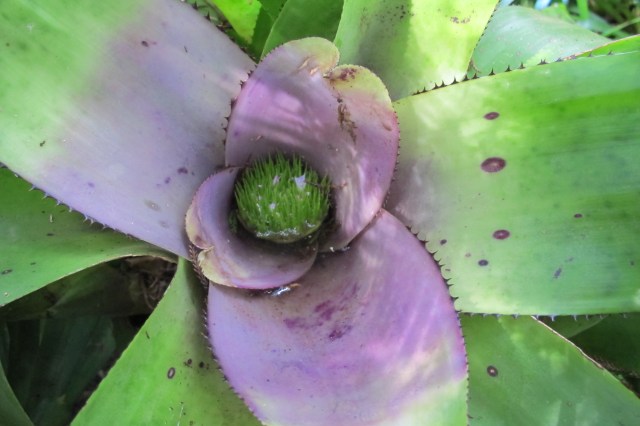
A neoregelia, I think
This week has seen me working my way along beneath the Rimu Avenue at precisely the same time I did the big sweep through last year – five weeks before we open for the Centuria Taranaki Garden Festival. I like the look of the bromeliads and the atmosphere they lend to this woodland area but I don’t like having to handle them on account of many of them being prickly, very prickly in some cases.
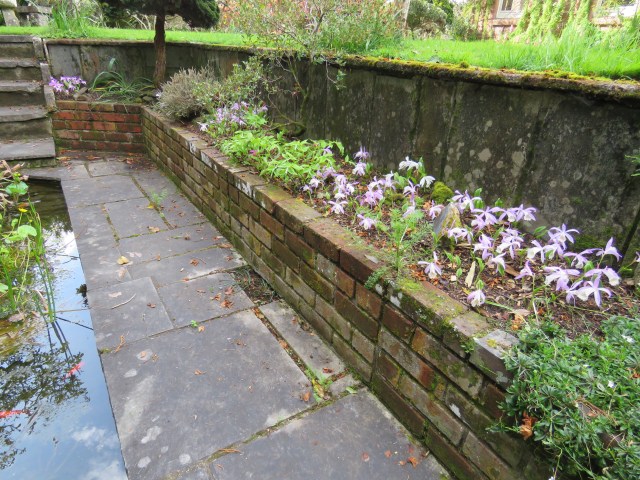
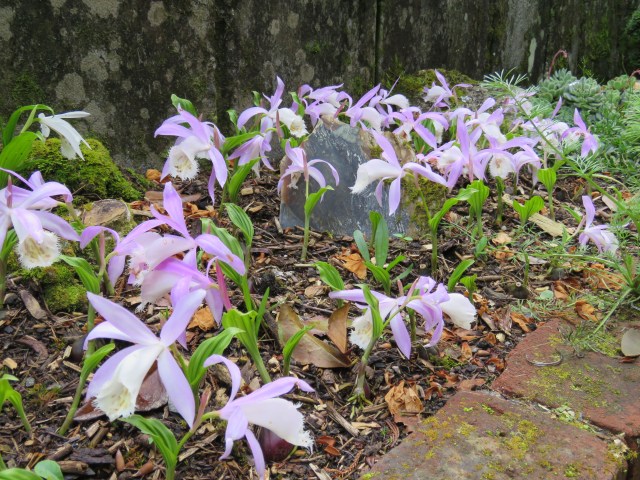
Pleione orchids on the shadier side of the sunken garden
As garden plants, the pleiones need good drainage and a location where they will not get swamped by their neighbours
In the sunken garden, the pleione orchids are in full bloom. They don’t last as long as the cymbidiums and dendrobiums but they are an obliging seasonal pleasure which don’t require much attention year on year. Most of ours came from the late George Fuller and are his named hybrids although we have lost track of the names since George died. This one may, however, be the one he called ‘Lilac Beauty’ if the depths of my memory serve me right.
Just an unnamed seedling but from a controlled cross
I post this photo of a pretty, lilac rhododendron less for the flower but so those in the know can admire the clean foliage. Back when we had the nursery and rhododendrons were a popular line, Mark spent some seasons breeding to get plants with full, ball trusses which keep healthy foliage. Burned or silver foliage (from thrips) is all too common in our humid, mild conditions and this plant has never seen even a whiff of spray but keeps excellent foliage. He succeeded – and with plants which flower in various colours – but too late for both our nursery and for public demand which had fallen away. None have been named or released and it is frankly not worth it commercially so we just get to enjoy them ourselves. For rhododendron lovers, this lilac one is ‘Susan’ X R. metternichii.
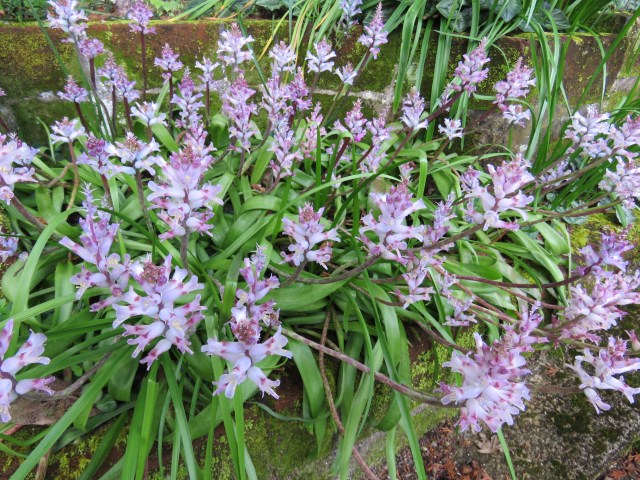
Lachenalia glaucina happily ensconced and multiplying well in the rockery
The later flowering lachenalias are in full bloom. Of the so-called blues, we have most success with Lachenalia orchioides ssp glaucina in the garden. Some of the less common varieties are not overly vigorous and this is one plant family that Mark tries to keep going with back-ups grown in pots under cover so we can keep the range going.
Lachenalias are much more varied than many realise, although not easy to source in this country
For those who have only seen the common orange and red form (Lachenalia aloides but still occasionally misnamed as Lachenalia pearsonii in this country) the huge range of other lachenalias may come as a surprise. They are native to South Africa and Namibia. We collected every obscure species we could find but they are very mixed and the names have never been particularly accurate because there is a lot of variation even within the same species.
Lachenalia aloides vanzyliae to the left and we are unsure of the identity to the right
Finally, off the lilac theme, I was looking at the lachenalias and picked these two. The one on the left is a variation on the most common species – the red and orange one that I think looks like a garish plant you might buy from The Warehouse – but in this case is Lachenalia aloides vanzyliae. It is nowhere near as vigorous as its less refined sibling. Of course it isn’t, the desirable plants never are, but it is so pretty and distinctive. The one on the right is mislabelled as L. arbuthnotiae but that may well be our mistake. Looking on line, I wonder if it is L. pustulata despite the lack of pustules on the leaves which generally give a characteristic warty look but maybe some reader with more expertise will know? It is a pretty and unusual colour combination, with good, strong stems.
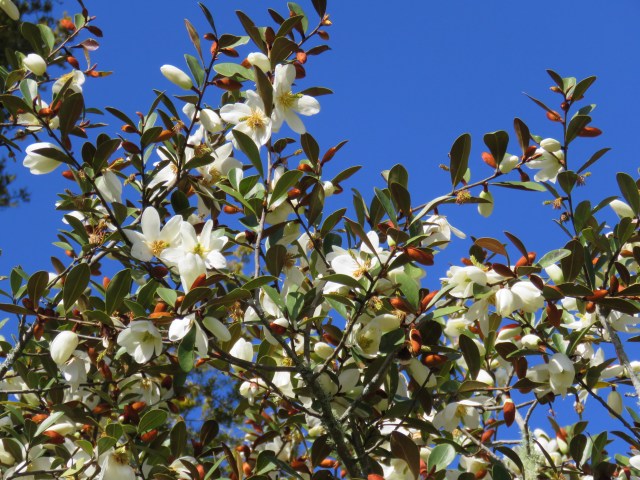
Magnolia laveifolia (formerly Michelia yunnanensis) was alive with bees in the spring sunshine. Many very busy bees
I took this photo on Thursday morning when the joy of a blue sky and bright sun made the whole world seem a better place. I admit that feeling was brief. An hour later, it clouded over, the temperature dropped and then it rained, remaining patchy rain, cloud and sun for the rest of the day. Such is a typical spring day here in the antipodes. Our weather is very changeable.
But how pretty is Magnolia laevifolia? You may know it – as we used to when it first became available in Aotearoa New Zealand and we produced it commercially in the nursery – as Michelia yunnanensis. I think it is still widely sold by that earlier classification but genetic testing moved all michelias into the magnolia group.
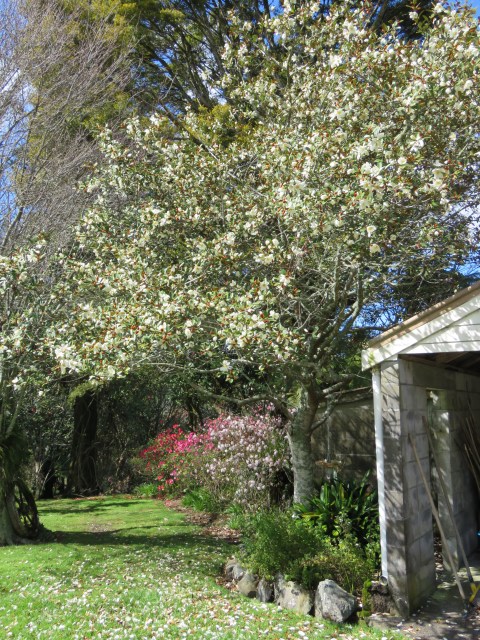
This specimen only ever gets an occasional tidy-up of wayward branches
This particular one is named ‘Velvet and Cream’ and is a selection made and released by Peter Cave, back in the early 1990s. There are countless other named selections around, both in this country and overseas because this is a plant species that sets prolific amounts of seed. For a while it seemed as though every man, woman and their dog had named a selection. Even Mark picked one out – more honey coloured than cream or white and he named it ‘Honey Velvet’.
We have two reasonably prominent plants of ‘Velvet and Cream’ and after a period of time, they are both attractive small trees. As far as we can remember, both were planted maybe 25 years ago but they achieved that small tree stature within 10 or 15 years. We could have clipped them hard and kept them down to shrub level had we chosen to, but their natural instinct is to grow a little larger than most people expect – but not too large.
Leafy and flowering this week and clearly more small tree than large shrub – Magnolia laevifolia. One year after a major prune.
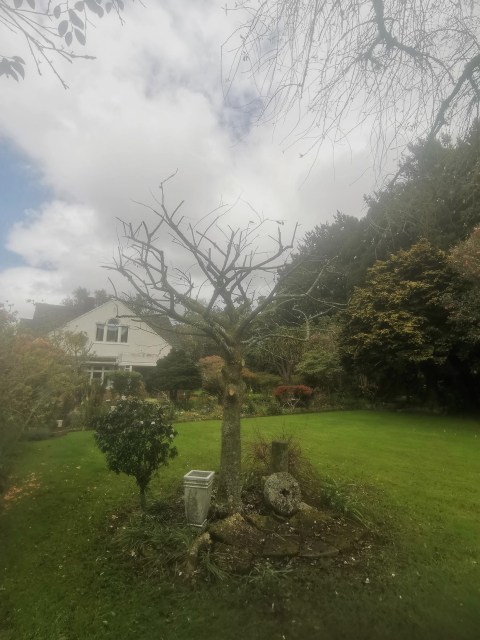
I also wanted to show the effect of hard pruning on the second plant which is a central specimen in the front lawn. We don’t generally go for specimen plants in our lawns but this is a legacy installation that dates back to Mark’s parents creating a minor garden feature around a small millwheel and stone trough from the early colonial days of New Plymouth. See it leafy and flowering.
One year ago. Apologies for the low-grade photo which is not mine. I am sure I have a better one somewhere but I can’t find it. This plant is NOT deciduous. It has just been pruned very hard indeed.
Last spring in mid October, it received a severe prune. M. laevifolia has a tendency to defoliate – drop all its leaves – in a wet spring and we get plenty of those. Last year, its flowering was patchy and it had dropped pretty much all its leaves. It was looking twiggy, overgrown and pretty much dead, to the inexperienced eye at least. We thought it would be better to cut it back hard and emphasise its natural form. What a difference a year can make.
This type of drastic pruning and shaping also works on camellias and indeed loropetalums but not on every plant. It is do or die on rhododendrons (some will respond with vigour and some will die) but it will kill most conifers because they don’t sprout from bare wood. You really need to know the capacity of the plant to regenerate and to push growth buds out from the trunk and stems before you start.
While the flowering of the deciduous magnolias this year is patchy yet again (we are blaming La Nina with frequent heavy downpours and too many spoiled blooms hanging on the branches), the michelias bloom on unscathed.














 Tikorangi The Jury Garden