
-37.914482
175.471230
A Major Mission in the Rockery
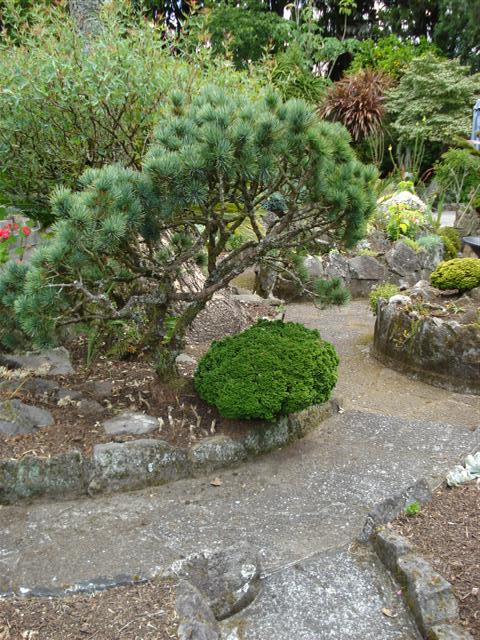
The refurbished rockery looks a little barren in places but below the mulch are many bulbs waiting to spring into fresh growth
My current activity started in a very minor way. I must thin out the Cyclamen hederafolium and nerines in the rockery, I thought yet again but this time I had my timing more or less right. The nerines look fantastic in flower in autumn but the clumps had become so large that they had forced themselves up out of the soil and the foliage hangs on right into late spring, swamping treasures around them.
What I did not realise when I started was that the task was going to be so major that I would spend eight hours a day for several weeks, taking apart the contents of the rockery pocket by pocket. It has become a Major Mission.
Cyclamen hederafolium is the autumn flowering species, formerly known as neapolitana. It is a gem which flowers over a period of months in white and, more commonly, cyclamen pink. After many years, decades even, they sure were overdue for thinning out. They grow from flattish, round corms and a large one is about 10cm across. Some of ours were closer to 25cm across and as I gently excavated, I found them up to three deep. In fact, my thinning exercise yielded up around 60 litres of surplus corms with which Mark plans to carpet woodland margins and add to his naturalised bulb hillside in the park. That is six 10 litre pots, in case you are wondering how I arrived at the 60 litre figure.
Having started, I found that the English snowdrops and black mondo grass which share some of the same rockery pockets were also in desperate need of thinning. And while I was about it, I figured the heavily compacted soil could do with aeration and a light dressing of compost. Then the rocks needed some of the lichen and moss scraped off them and some of the pockets had soil levels which overflowed. In fact a complete spruce-up seemed in order. And of course the areas which I did looked so fresh and clean that I felt I had to continue. I am still not finished but I am a driven woman and will not desist until I have done the lot. I have uncovered rocks and divisions in the pocket beds that we did not even know existed.
Rockeries are not in fashion these days, not at all. Ours is a 1950s style rockery using raised beds in island formation. There are a lot of rocks, brick and concrete in it and it must have been a major exercise to build. I had not noticed before that the largest rocks are in the beds closest to the drive. The further you go from the vehicle access, the smaller the rocks get and the more freeform concrete construction there is. I can understand why. Some of the largest rocks must have been very difficult to move.
The basic rockery concept is to emulate the conditions of an alpine meadow. We can’t do alpine, though we have tried. We lack the winter chill and are a great deal too humid with rainfall evenly spread all year. Alpine meadows are cold deserts kept dry in winter by a coat of snow and ice. So our rockery plants are by no means traditional. No gentians or edelweiss here. But what it gives us is a section of garden which is highly detailed, where the pictures are small and individual and baby gems can be admired in close up view. It is entirely different to the big picture style of garden where form, colour and flow are what dominate. Bulbs rule in our rockery, especially those of a miniature or dwarf persuasion. We use cycads, venerable dwarf conifers and some smaller growing perennials so the area is not totally bereft of woody and herbaceous plantings but they are merely the backdrop.
Best guess is that there are well over 500 individual pockets in our rockery. And the skill that has my gardening ability stretched to its absolute limit is the creation of differing combinations in at least some of those pockets. So one may contain nerines for autumn colour, moreas (peacock iris) for early spring and a small perennial such as a prostrate campanula for summer interest. I can not claim that I get triple layering in them all. I wish. Alas some will be bare during parts of the year because they are too small or I Iack the material or skills to plant in layers. But the structure provides the year round interest and does not demand to be filled to capacity twelve months of the year. Some bulbs will only flower for one or two weeks but in that time, they are the daintiest and most ephemeral of delights which would be lost entirely in larger garden beds.
Mark’s parents both loved the rockery. Stepping out from the house, there is always something different to view. Day to day maintenance is relatively easy. We have always worked to keep it weed free, to restrict the occasional invasive bulb (it is why one has separate pockets to keep those with wandering ways in a confined area) and beyond the occasional light mulch and ongoing tidying, it is not generally labour intensive. With most of it being raised, it is not back breaking either. Many bulbs are happy to continue in an environment which is relatively poor. But there comes a time when the soil is so impoverished and compacted that treasures start to go back and thugs multiply so much that the competition is to survive, not necessarily to flower well.
Bulbs are not gross feeders so we like to spread a thin layer of compost on top to mulch and give a light feed only. Not every plant is precious and that realisation has been wonderfully liberating. Some plants are past their use-by date. Some are just in the wrong place. Some have multiplied too well so there are too many of them. Going though centimetre by centimetre has been like a voyage of discovery. I have worked out that I can average about four square metres a day if I stick at it. With about 100 square metres of rockery, it is a mere 25 days work.
Some people like to garden in containers to keep little treasures apart and to be able to give different conditions. Despite my current intensive effort, I think the rockery concept takes less work overall for more aesthetically pleasing results. Maybe the rockery will stage a fashion comeback. If the thought of assembling, placing and securing all those rocks defeats you, there is an alternative in what we call the carpet garden, but for more thoughts on that garden genre you will have to wait.
Flowering this week: Gloriosa superba
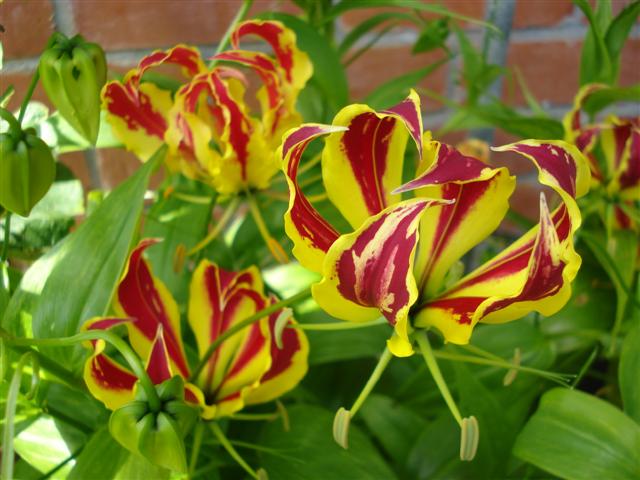
Summer glory in Gloriosa superba
Commonly called the glory lily, flame lily or climbing lily, this plant should be recognised by all ex-pat Zimbabweans and some Indians. Oddly enough, it originates in both areas and is the national flower of Zimbabwe and also accorded special status in the state of Tamil Nadu in India. It is only a very distant relative of the lily, being a member of the colchicum family and because it is full of the chemical colchicine, all parts of the plant are poisonous. Colchicine is used to double the chromosomes in plant cells and is highly toxic in concentrated form. Not that I have ever seen anybody want to eat gloriosas.
The plants grow from V shaped tubers which will survive in very dry, sandy conditions so we use them in the narrow dry house border facing north where very little else but succulents will grow. They are winter dormant and never get watered, even in summer. The tubers find their own required depths and can end up quite some distance below ground.
Gloriosa is a good cut flower, lasting well in a vase though the pollen can stain. But look at the flower shape. It opens conventionally enough but then the petals reflex entirely (in other words they all bend backwards) leaving the anthers and stamens completely exposed. Sometimes the petals can be so recurved that it looks like a full crown with fringe. The colours are always in the yellow/orange/red spectrum and the most desirable forms tend to be those with the sharpest yellow and dark red contrast. It is not particularly rare in this country, so you should be able to find gloriosas if you want them and they are an ideal plant for sandy, coastal gardens.
In the garden this week January 15, 2010
- Mark is keeping an eagle eye out for the nasty potato and tomato psyllid which has made an unwelcome arrival in this country. A call from a Central Taranaki gardener describing psyllid-like symptoms had him searching the internet for additional information. The psyllid is a bit like a white fly but it will destroy crops if left untreated. It injects a bacteria into the plant in the process of sucking the sap and that bacteria weakens the host. Alas it has been found already in Taranaki. If your potatoes or tomatoes have symptoms which don’t look quite right for standard blight, seek out additional advice. All garden centres have apparently been circulated with information on this pest from Crop and Food. It appears that the psyllid may be easier to control than whitefly and can be treated with a pyrethrum but early action is essential. Plants can grow out of it if you get onto it early enough.
- It is time to get a summer copper spray onto citrus trees. Whilst mostly easy care, the occasional preventative spray on these can pay dividends in avoiding premature fruit drop.
- Winter firewood needs to be felled without delay if it is to dry in time. This is by way of motivating you to get out and prune your cherry trees now. Cherry wood burns well.
- Now is also a good time to get out and carry out summer pruning and limbing up on evergreen trees and shrubs. Cleaning out the accumulated debris from dense conifers can reduce the habitat for slugs and snails and keep the plant in a healthier state with better air movement.
- • Do not let your vegetable garden dry out. Most vegetables put on a great deal of rapid growth and adequate moisture is essential to sustain that.
- Keep mounding up the earth around potatoes. This protects the tubers from the sun which is what turns them green and there is a school of thought that says it leads to a heavier crop but we have not seen proof of this.
- Continue planting successional salad vegetables, green leafy veg, corn, beetroot and dwarf beans.
- The article on the food pages on Tuesday listing edible flowers missed out courgette flowers (divine stuffed with a ricotta mixture – pumpkin flowers can also be used) and day lilies. If you don’t mid sacrificing the flowers, day lily buds are surprising tasty and can be a good addition to salads.
Flowering this week: Hydrangea Immaculata

Perfection in pristine white - Hydrangea Immaculata
The most perfect floral display in our garden this week has been Hydrangea Immaculata – such an appropriate, if somewhat Roman Catholic name. A smaller growing, compact variety, being about a metre high and a metre wide, its moptop flower heads are pristine white. It is best grown in the shade where it will light up a dark area because it tends to burn in our intense summer sun. Beyond that, there is nothing fussy or difficult about this summer perfection. It is just one of the common macrophylla types and as the flowers age, they often develop a pretty rose pink tinge. Cuttings are easy to strike, even for the novice gardener.
Hydrangeas are a wonderful source of colour in summer and ideal in verdant Taranaki with our combination of high sunshine hours and summer rain. Because our soils are acid, most are blue though as you drive northwards through the Pio Pio and Te Kuiti area, you may notice that their hydrangeas tend to pink which indicates alkaline soils in their limestone country.
We just happen to have an international expert living in our midst here. Glyn Church at Woodleigh Nursery and Garden near Oakura is probably better known overseas than here (ain’t that just the way?) but locals at least have the chance to go and see his garden in person. Mark was there a few days ago and can vouch that it is full of summer colour and looking great with some gorgeous hydrangeas. Bloody Marvellous was a showstopper in purple. Glyn is working towards being accredited as holding the national collection of hydrangeas in New Zealand which means he has a wide range. He has targetted the summer garden and the floral display goes well beyond hydrangeas. His garden is open by appointment.
 Tikorangi The Jury Garden