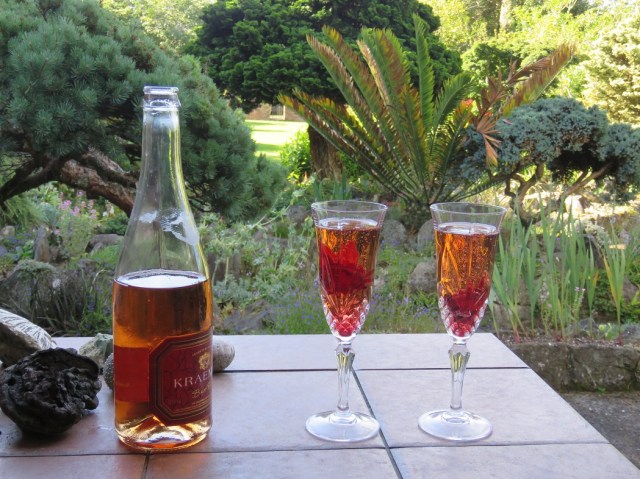
Toasting the end of 2021 with wild hibiscus flowers

Like so many others, we had a quiet new year at home. To be honest, we tend to favour quiet new years at home so I can not claim this is due to keeping ourselves safe in these Covid times. Neither can I be trumpeting the usual happy new year greetings. With Omicron knocking on our border doors, I feel all we can do is hope that 2022 will be better for us all than 2021. To those of you with Omicron already swirling all around you, may you stay safe and well – or at least recover quickly and completely if it catches you. This is a year of modest hopes and expectations.
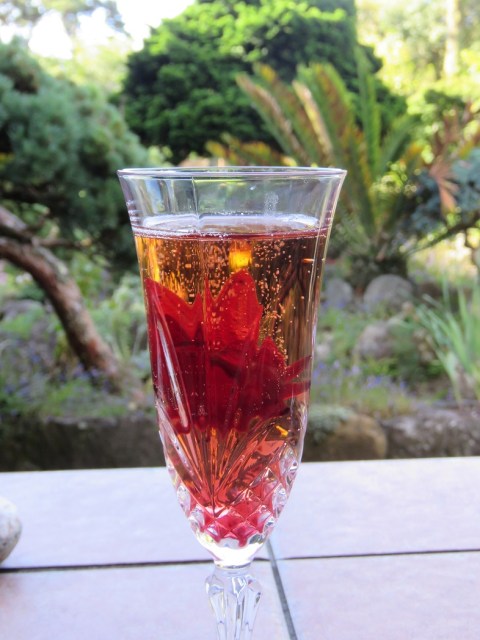
If you look closely, you will notice the red flowers in our glasses of bubbly. These came in a small jar, labelled ‘Wild Hibiscus Flowers in Syrup’, part of a Christmas package of goodies from our Sydney daughter. These are new to us although, looking on the internet, I am guessing more urban readers who lead sophisticated lives which involve cocktail bars and upmarket restaurants may have met them before. My local supermarket – Waitara New World – does not run to stocking wild hibiscus flowers in syrup, being more utility in character.
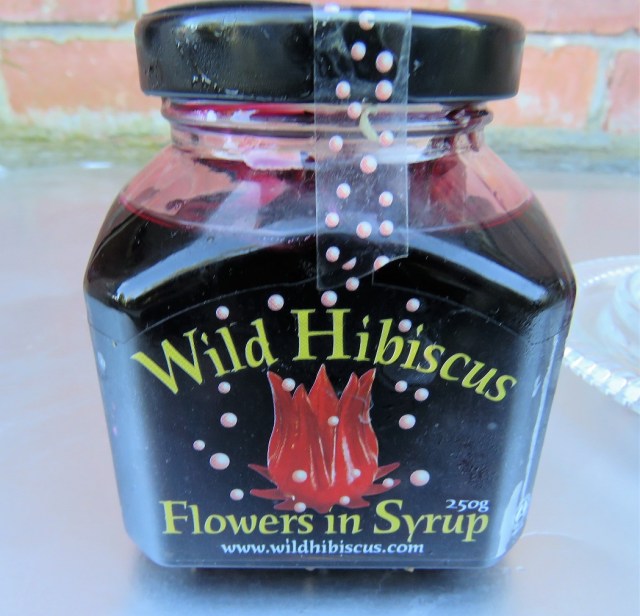
Being a gardener, I had to look up these wild hibiscus. Hibiscus sabdariffa, common name roselle, is native to West Africa but now widely distributed across the tropical and subtropical world. It was popular in the West Indies by the 1500s and in Asia by the 1600s. It is the calyx of the flower – in other words, the cup part that holds the petals of the flower – that is gracing our drinks but its early popularity will have nothing to do with drinking bubbly or cocktails. It is one of those enormously versatile plants. The calyxes are eaten both fresh and preserved in sweet and savoury dishes, the stems and leaves used as vegetables and seasoning, both cooked and raw, in Africa the oily seeds are also consumed while in Asia, the plant is harvested commercially for the fibre that is extracted from the stems. But wait there is more. It is a traditional herbal remedy that contains anti-oxidants, used to treat many ailments from cancer to heart problems.
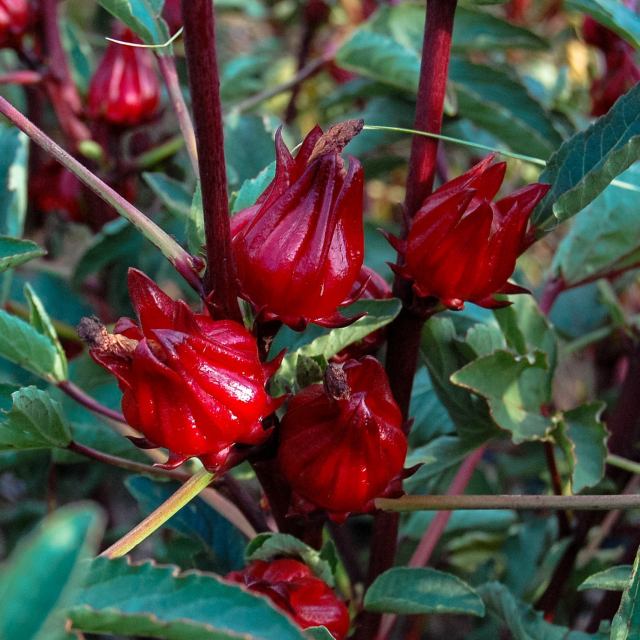
In the wild
Not in our garden, but Mark is now wondering if the seeds are available in NZ

When the petals are still attached to the calyx, the plant looks just like a typical hibiscus with the darker centre containing the stamens, surrounded by a single set of petals, mostly white, flushed pink or pink but there are red forms.

I do not think our eleven calyxes in a jar of syrup are going to cure any of our ailments but they are deliciously fruity to eat after consuming the drink.

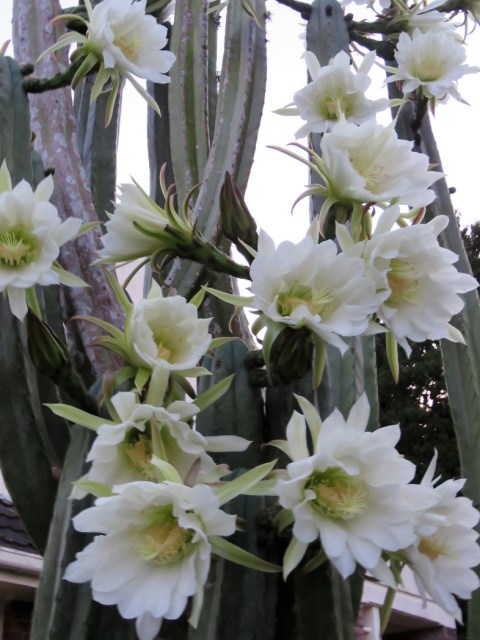
On another topic, I usually photograph the towering Trichocereus pachanoi against a blue sky. But as the evening draws in, the flowers open fully and the scent hangs heavy in the air even several metres from the plant. Night-scented flowers are usually an indicator that the plant is pollinated by moths.

Trichocereus pachanoi towering in the evening light

Go well. Stay safe.
Seasons Greetings

What can I say about Christmas 2021? May you find peace, happiness and tranquillity wherever you are in these difficult times. And may you and those around you stay safe and well.

All the best,

Abbie and Mark

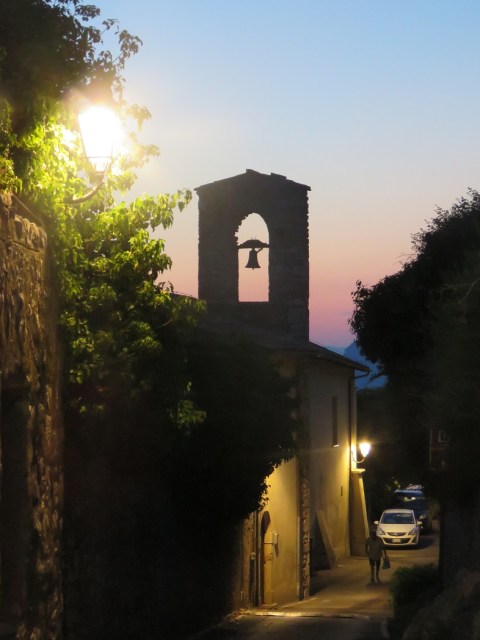
Not, I admit, a Christmas scene. It is in fact June 2017 in Sermoneta, a hilltop village in Italy and it feels like another world now. But I like the photo.

Crazy paving

When life gives you broken concrete, crazy pave.

Zach broke up the two concrete paths I mentioned last week. This was a bit of a mission because it turned out they had been laid to a depth that was considerably in excess of what the situation required but it is done now. I had been wondering about using the pieces in a crazy paved pathway linking the separate areas and when we looked at the spaces and the concrete pieces, I could see it would work.

Not being trained garden designers, we think visually on our feet – not on paper. We do a lot of looking before we make a move. Fortunately, Lloyd is equal to many tasks and it turns out that crazy paving is one of those. Mark and I may visualise the end result but it is Lloyd who thinks his way through the process and addresses it with precision and care. I have learned about laying crazy paving this week by watching him.

First he dug out the area, removing excess soil. Then he levelled it all, constantly checking the depth in order to achieve a flat surface that will end up on the same level as the surrounding ground and avoiding potential trip hazards that broken concrete can create. I failed to photograph the dirt stage but I did at least record the next step.

Laying a base course and making sure everything is level and at the right depth

Next he laid a bed of gravel, screeding that to get it level and making sure again that the depth was correct. Fortunately, we had the gravel here, stored in a small mountain from previous use. It is very handy having resources on site, though if bringing in materials from outside, sand may have been an easier option to form the base layer. We just lack a handy mountain of sand on site so we use what we have.  

Only then did he place the concrete slabs, constantly checking to make sure the level throughout was consistent.  

I can’t show the finished result yet but he has broken the back of the job. It is a wide path leading from the summer borders through to my tussock walkway and Zach asked me if we would lay a few informal pieces of concrete to blend the crazy paving to the new area. I hadn’t thought of that but he is right that it would stop the hard edge of the end of that particular stretch of path and make it more of seamless transition. I think of it as melting the path into the informality of the woodchip and tussock area.

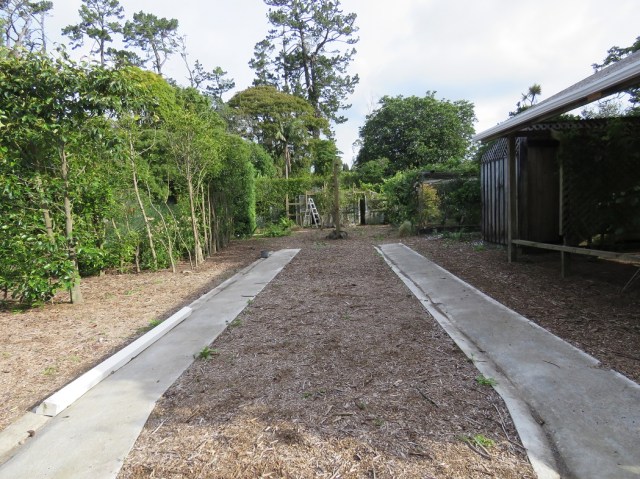
The trench is unrelated to the path. We are needing to lay electric cables. But you can see the visual context where we will blend the path into the new area.

It is a minor project by our standards, but a good example of getting the foundations right from the start so that the finished result will be visually pleasing, practical, permanent and safe.

The blue of Cordyline stricta

Two flower photos to finish, because broken concrete is not pretty. While social media shows me it is jacaranda time in Sydney, we are not good jacaranda territory here (and ours won’t flower until February). At least we have the blue-flowered Cordyline stricta in full bloom at this time and how pretty is that?  

A single red dahlia, tall white daisies and Verbena bonariensis in the summer borders

When good plants go rogue

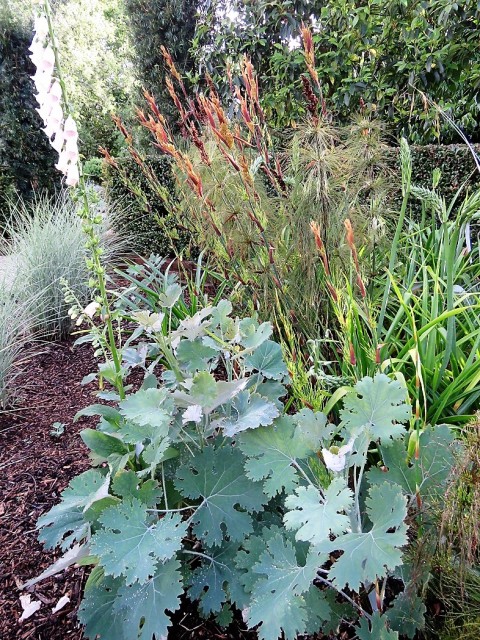
I liked how the cutwork foliage provided a contrast to the dominant grassy foliage

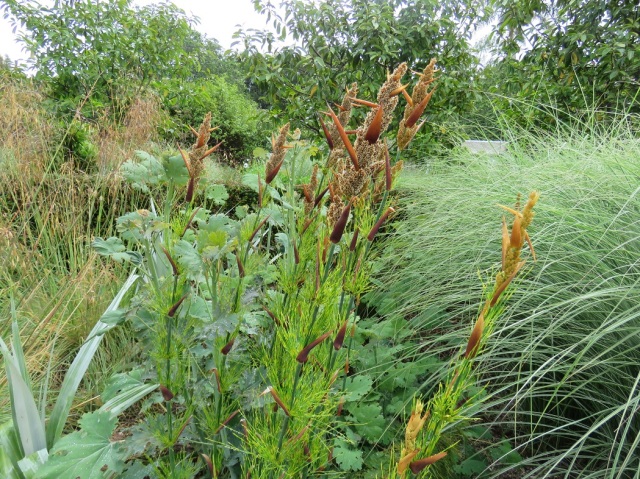
It is no good. The plume poppy had to go from the sunny Court Garden. While I liked the foliage contrast, it is just waaaay too invasive to leave in place.

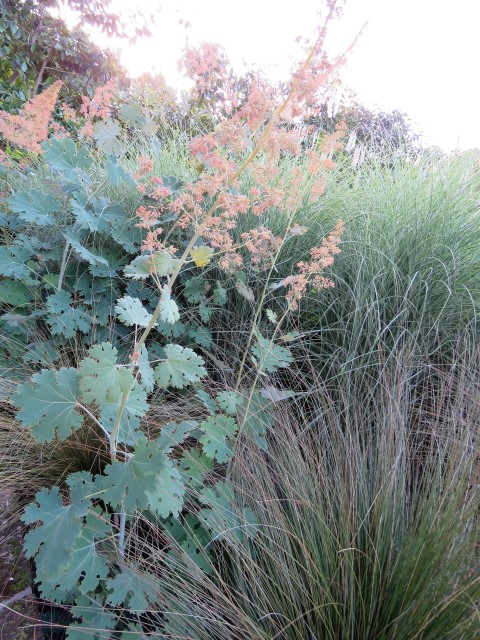
That is the full extent of the flowers. Pinky beige, perhaps?

The plume poppy is Macleaya cordata, native to China and Japan. It has an attractive blue-grey leaf that looks a bit like the plant version of cut-work embroidery. In spring and summer it shoots up stems to maybe two metres before flowering. True, the flowers are not exciting. More brown than gold, they look like seed heads even when they are in full bloom but they have a certain feathery charm while playing second fiddle to the more striking foliage. The problem is that it runs below ground, more like sprinting than running in some situations.

Here a fortnight ago, gone today on the grounds of bad behaviour

We have grown it for years in the high shade of the Avenue Gardens where it has not been problematic. The running tendency slows in shade – more a walking pace  – and in the thinner, dry soils it is easy to pull out wayward shoots and keep it to an area. I was not prepared for what it would do in cultivated soils in full sun. Not only did the runners bed down to a greater depth but they headed off with gusto in every direction, popping up metres away from the original plant.

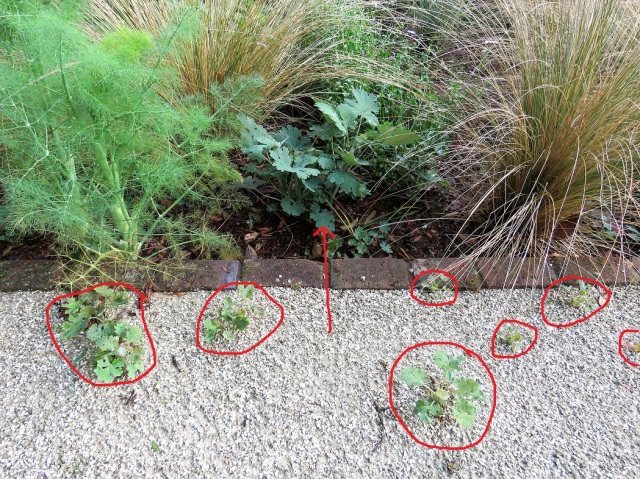
Making a break for it

Really, it was the determination to colonise the paths that sealed the fate of this plant. Look at these runners appearing in the terrace. Not only have the shoots struck out enthusiastically on every side, this terrace is 30 cm higher than the garden bed, separated by a brick wall. I just don’t need a plant that can make such determined efforts to colonise. It was already growing through other perennials in the garden beds and leaping beyond.

It is going to take me a few years to completely eradicate it because roots that remain below ground will continue to push up growing shoots but I removed all that was visible two weeks ago and will just keep on its case until it finally disappears.

Macleaya cordata can remain quietly co-existing in the high shade of the Avenue Gardens

It can stay in the shade of the Avenue Gardens but I can’t be having invasive thugs in the Summer Gardens.

Phlomis russeliana flowering now in the shady Avenue Gardens where it will probably be fine left to its own devices for another decade or so.

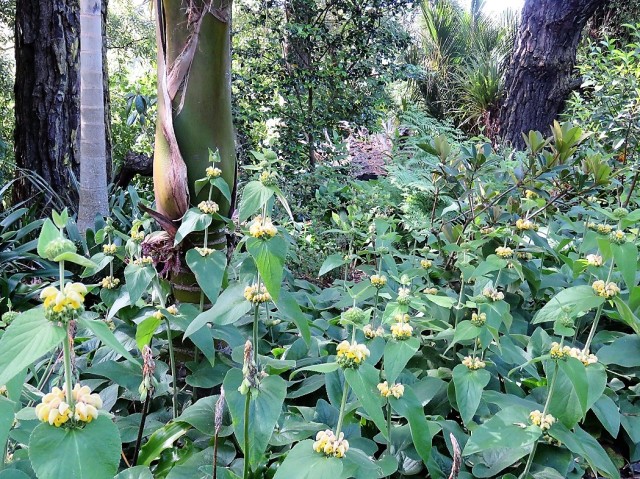
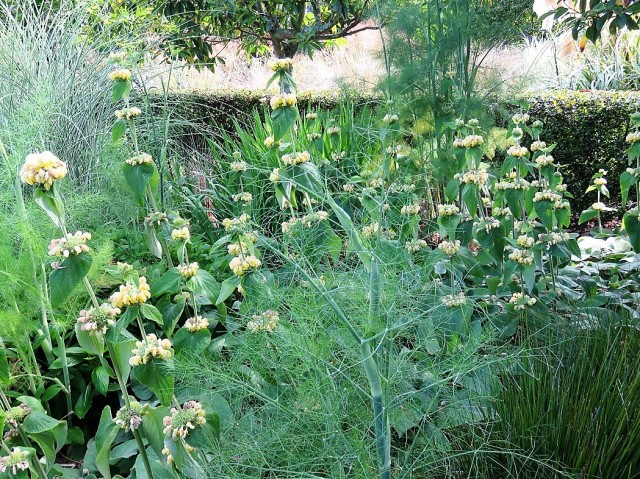
Another plant that has surprised me with its vigour is Phlomis russeliana or Jersualem sage. While described as a perennial for sunny spots, we have long used it as a low maintenance, obliging bedding plant in the high shade of the Avenue Gardens. It has never needed any attention there, bar cutting the tall growth and spent seed heads back to the ground at some stage in winter. The only time I have ever done any work on lifting and dividing it was when I raided the patch to get plants for the new, herbaceous borders.

In the sunshine, the phlomis romps away and needs major attention every two years at least.

Introduced to the bright light of full sun and well-cultivated soils, the phlomis has become something of a triffid. The growth is lusher and much stronger. The twin borders are only entering their fifth summer but the blocks of phlomis have already been lifted and divided twice, discarding probably half of them in the process. I think I can get away with a total dig, divide and replant every second year if I alternate it with picking and thinning them from the top in the year between. It is a bit more work than I had anticipated for a cheerful but utility plant.  While it seeds a bit more in sunny conditions, at least it doesn’t spread below ground like the plume poppy.

The lines between a strong grower, a thug and an invasive weed are sometimes finer than we expect. Generally, we will cope with the first and get rid of those in the second two classes.

The exotica of water lilies

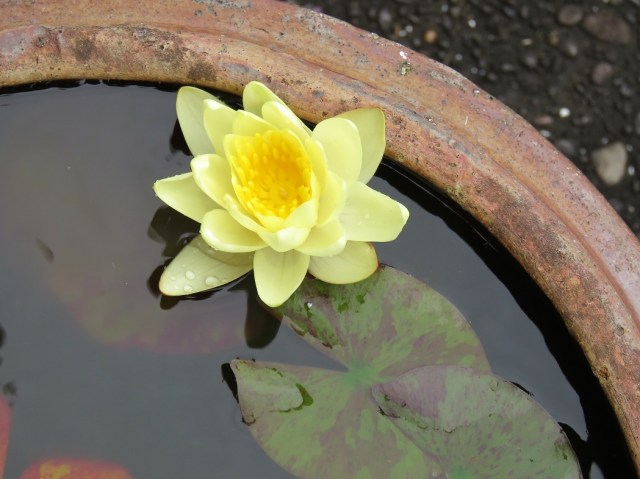
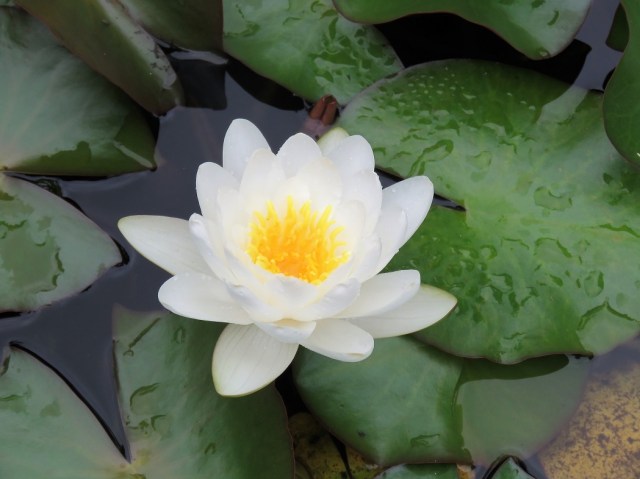
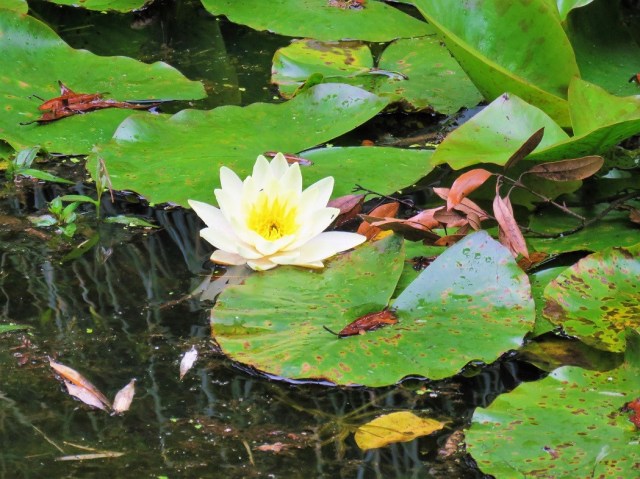
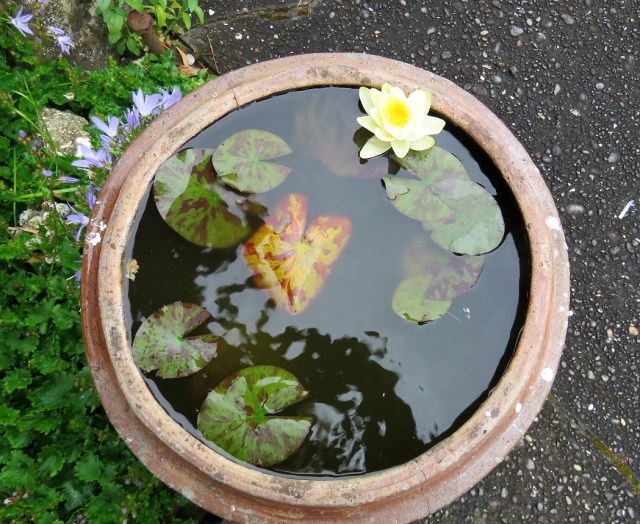
If I believed in woo-woo (or, at least, that plants can sense what humans are saying), I might think that the appearance of this charming, little lemon water lily flower was because of my threats made over the past few months. The plant came into our possession about ten years ago and it has lived in a vintage pot ever since without flowering. Maybe three years ago, I took it out, reduced some bulk, raised it higher in the pot and gave it some new compost mix. Nothing happened. It just put up its usual leaves. I declared this year – probably in its hearing – that this was its last year. If it didn’t flower, I would cast it out and find something more obliging to grow instead.

And lo, this flower appeared and it has won a reprieve. It is a very pretty little flower. Water lilies do have lovely blooms with a pristine purity of form.

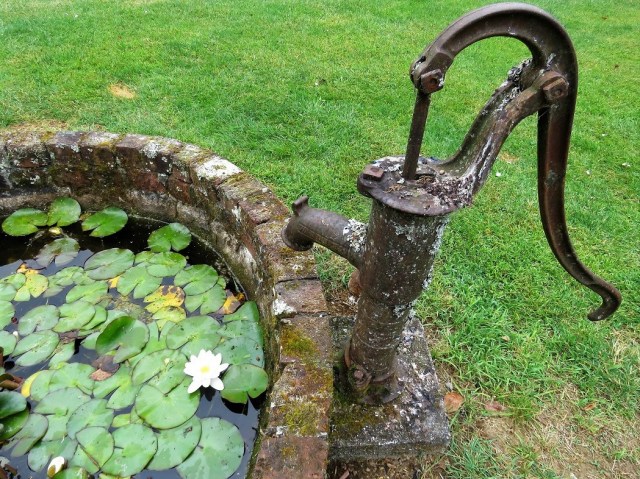
The vintage water pump is, I admit, merely ornamental in this situation.

We have water lilies in assorted bodies of water. The purest white one in a round pond on the side law is the best, I think. A white waterlily is the national flower of Bangladesh but looking at the photos, while similar, I think it is a more tropical form than this one.

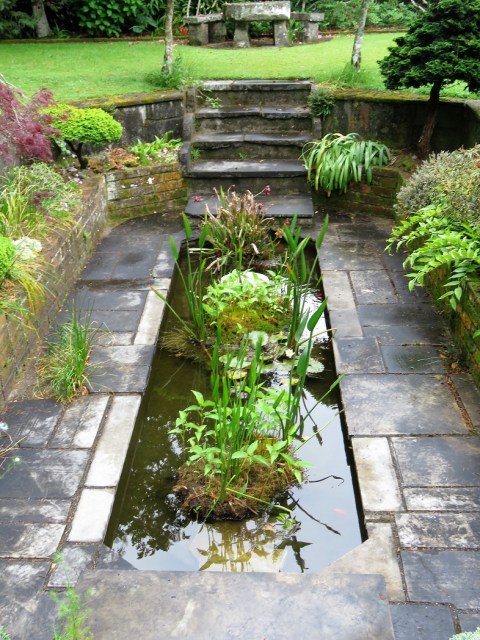
The setting
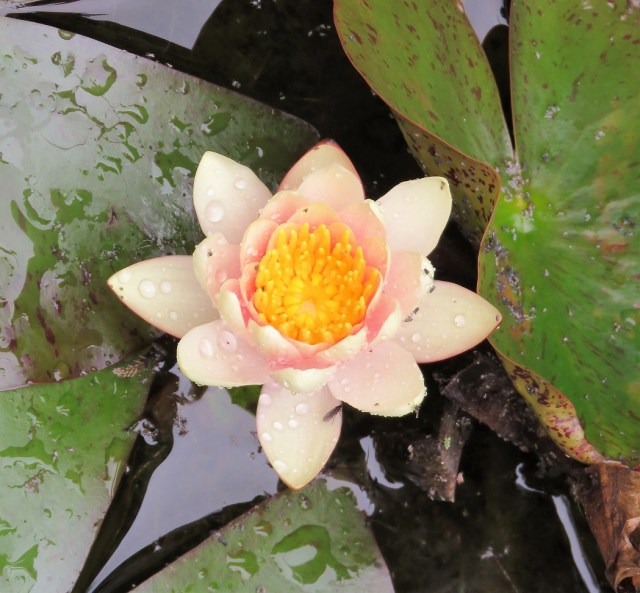
The one in the goldfish pond at the bottom of the sunken garden is a bit murky in colour

I don’t find them the world’s most exciting bloom but they have an exotic beauty to them. I looked them up to see where their homelands are and I see they are broadly spread across the globe ‘in temperate and tropical climates’ which is pretty sweeping. They are a bit more complex than I expected though, if I am honest, I would admit I have not given them a lot of thought. Their plant family is Nymphaeaceae and I will never remember how to spell that with all it’s ‘a’s and ‘e’s. There are about 5 genera in that family and maybe 70 different species which don’t all look the same as the ones we grow. That is quite a lot of different species. As far as I can see, the ones we see here are from the nymphaea group.

The bigger growing forms we have in ponds in the Wild North Garden are lovely but they need occasional intervention to reduce their spread or we would have no visible water remaining

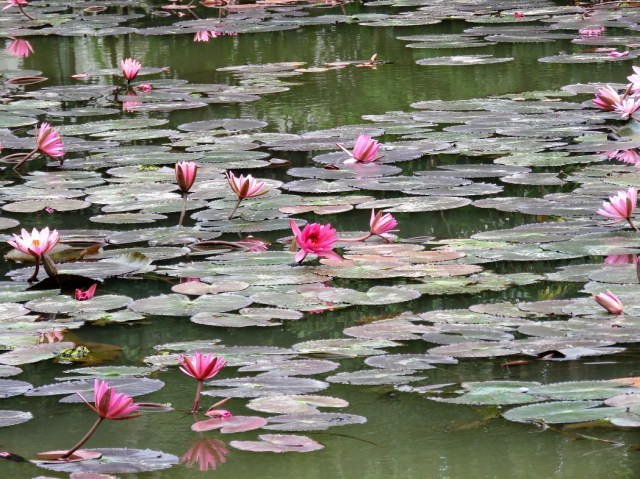
Water lilies grow from rhizomes rooted in soil so they only grow in fairly shallow water. Many years ago, we went to visit two ‘water gardens’. In fact, they were water lily gardens. I can’t recall other aquatic plants. That is where I learned that some varieties can be such strong growers that they will entirely cover the water surface if they are not restricted. A mass of water lilies without visible water reflecting, shimmering and rippling to frame the plant is not actually that aesthetically pleasing or exciting to see.

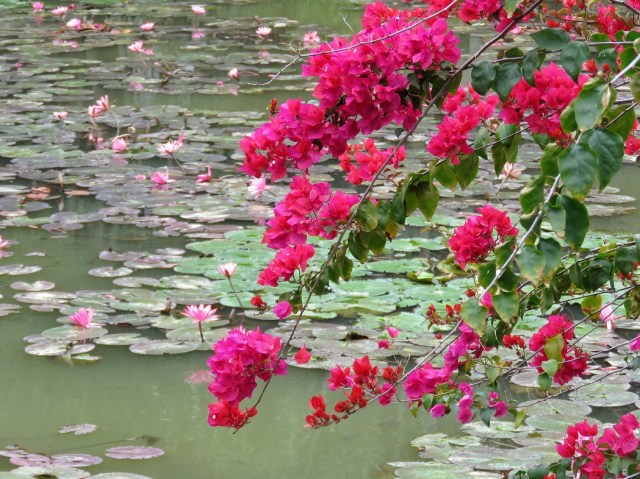
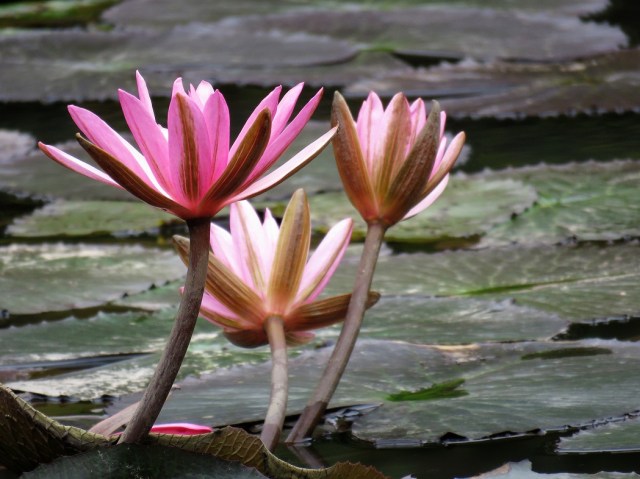
The loveliest water lilies I have seen were in the Xishuangbanna botanical gardens in southern China. They were held up above the water on longer stems and I think this makes them a different genera to the common nymphaea types we grow here. “They’re tropical,” Mark said, but he may have been generalising from the fact that it was hot and many of the plants we were looking at there were very tropical. I have no idea if that type is even in NZ.

This week at least, I am happy that the pretty lemon one has flowered after a very long wait.