

Here we are, 23 days off the shortest day of the year and in the late autumn phase. The daytime temperature has dropped to the mid teens celsius and we even had a light frost this week. But we are lucky here that our light levels during the day don’t drop much. It just gets dark earlier.
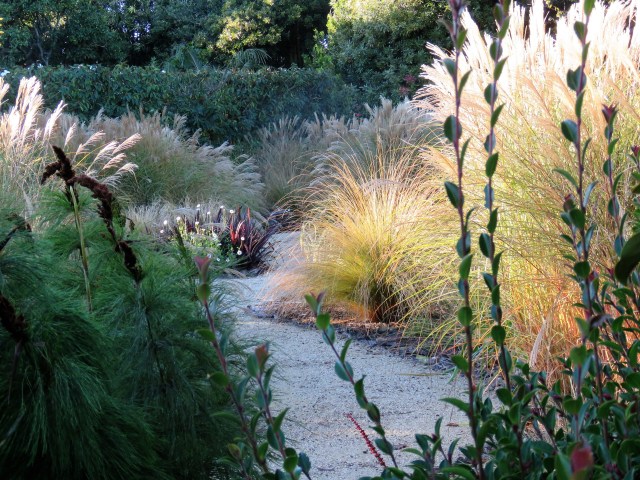
We never get that grey, leaden look of spent perennials and patches of dark green that characterise many gardens in colder climates, let alone the blanket of white snow many northern countries experience. But neither are we tropical. I have busted out my thermals already. In self-defence, we do not retire indoors as the temperature drops and we are out and about in the garden in all but the worst weather.

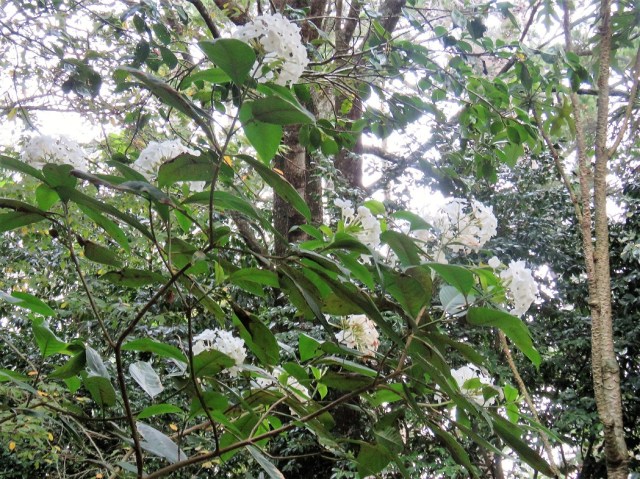
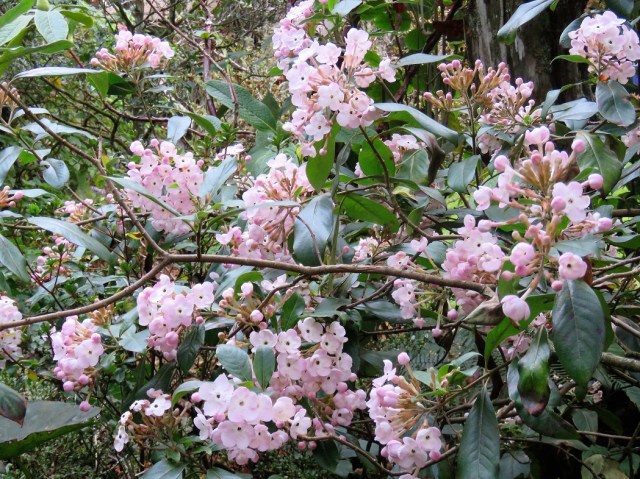
The luculias are in flower. Rangy and frost tender these plants may be, the scent is divine and the flower heads are large and attractive balls of colour well into winter. My favourite is the almond pink of ‘Fragrant Cloud’. Unfortunately, they don’t hold well when picked but we keep our house at a warm temperature in winter that is not conducive to any garden flowers holding well indoors.
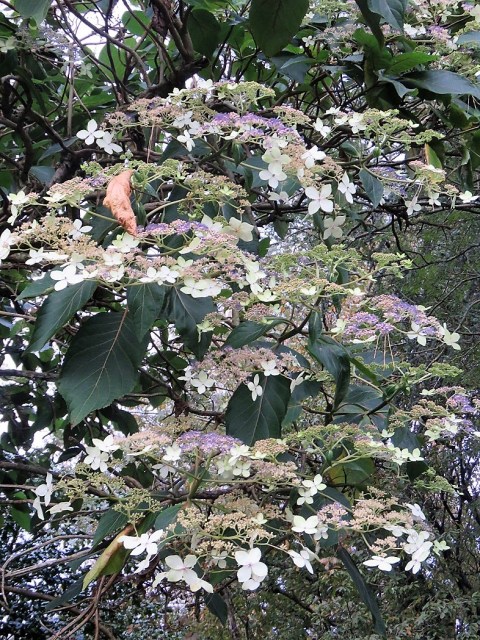
Also rangy and frost tender, the enormous, evergreen tree hydrangea is in full bloom. Walking past it on sunny days, the hum of honey bees is not quite deafening but certainly on track in that direction. As the plant is about 5 metres tall and currently sporting so many blooms on the sunny side that the foliage is barely visible, it can accommodate a whole lot of honey bees at a time when other food sources are less abundant. Last I heard, this unusual Chinese hydrangea is thought to be a member of the aspera group.
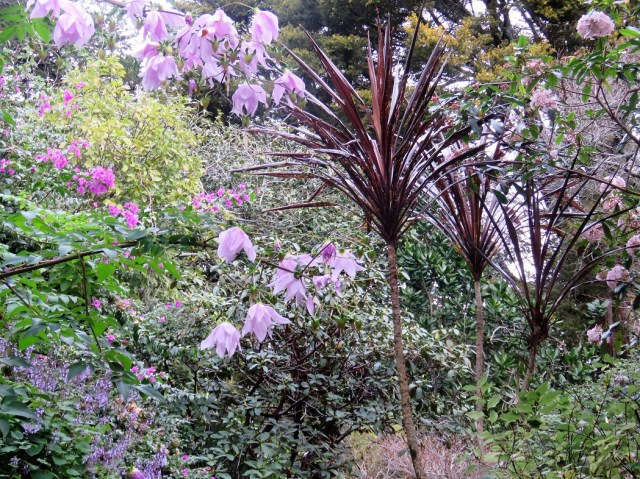
Nearby, still in the woodland area we call the Avenue Garden, I like this seasonal composition with the red form of Cordyline australis x banksii, the hanging chalices of the tree dahlia D. imperialis (another rangy, frost tender plant), the cerise of the enormous bougainvillea, blue flowered plectranthus and Luculia ‘Fragrant Cloud’ on the right.
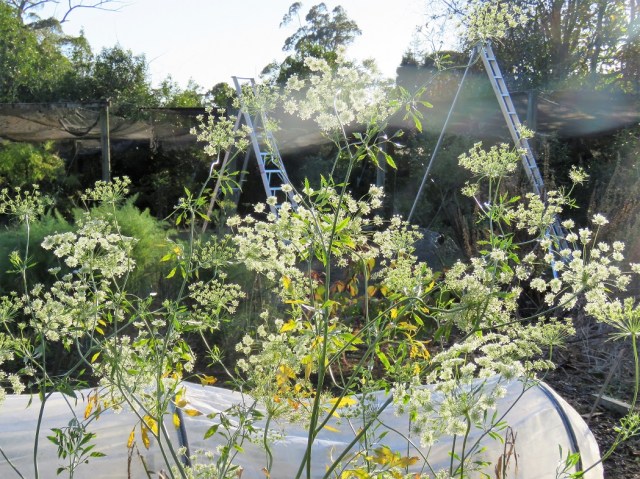
Out in the rather wilder margins of Mark’s vegetable garden (which we never open to public view because while he is a productive gardener, he is also very messy in this area), the Ammi majus flowers on. I liked the mix of wildflower, the cloche and the communion of our two new ladders which Lloyd was using in tandem at the time.
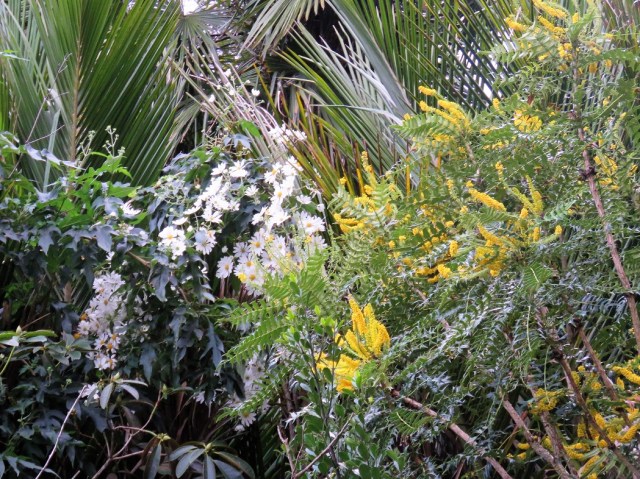
In still wilder margins, this scene was the coming together of a United Nations of self-seeded plants – the nikau palms from NZ, Montanoa bipinnatifida otherwise known as the Mexican tree daisy,and the yellow mahonia which may or may not be Mahonia japonica from Japan.

Back in the more cultivated areas of the garden, many vireya rhododendrons are blooming. These are the subtropical rhododendrons – so frost tender and generally pretty sensitive – and tend not to be longlived. Their flowering is triggered by day length, not temperature, so they bloom intermittently but autumn and spring are the main seasons. We have some dead specimens we are removing now and Mark is doing a cuttings round to propagate an ongoing supply. But this specimen, this one is defying that tendency to whiff off and die. It is the very plant that Felix collected from the highlands of New Guinea in 1957 and the start of his breeding programme – R. macgregoriae.

Autumn is sasanqua camellia season, now my favourite group of camellias. For years the NZ sasanqua market was completely dominated by consumer demand for white sasanquas – it may still be the case but I am out of touch with commercial production these days. We have plenty of different white sasanqua varieties in the garden but they do not spark joy for me in the way the coloured options do. This one is pretty ‘Elfin Rose’, seen here with the last nerines of the season, N. bowdenii at its feet.
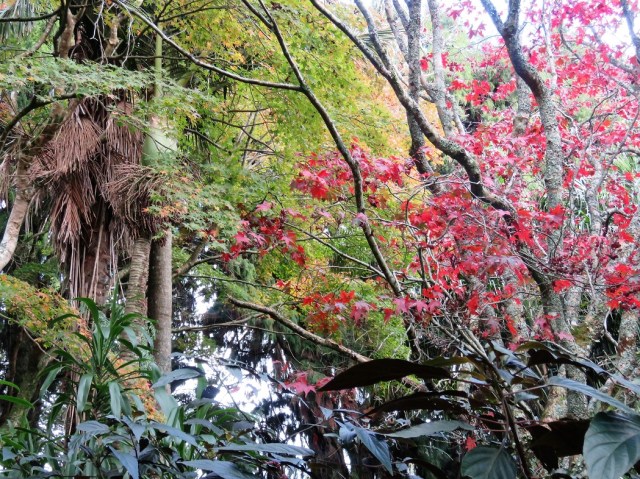
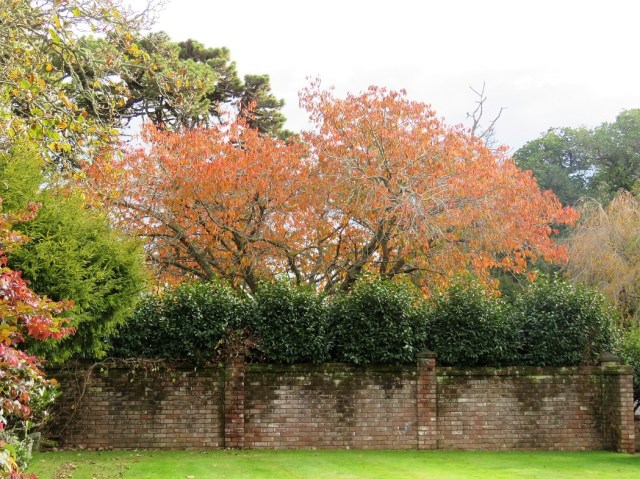
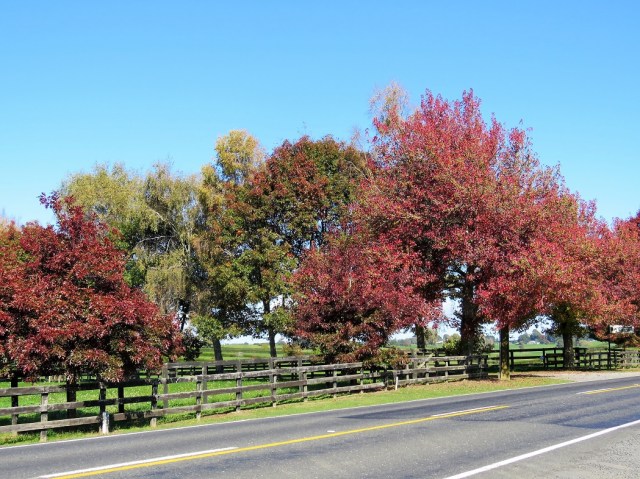
It is not just flowers giving colour. While autumn colour is patchy and extended over a long period of time because we move so gradually from late summer to autumn to winter, the maples and some of the prunus give a pretty display.
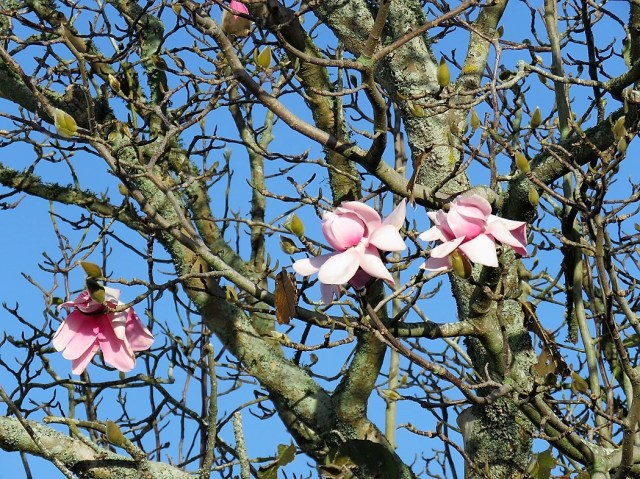
Finally, in a sign of how our seasons lack the sharp demarcations of colder climates, the first magnolias are already opening. I follow a Facebook page for magnolia enthusiasts that is heavily dominated by mad keen magnoliaphiles from northern Europe. They are still posting photos of late season blooms opening on their spring magnolias. Meanwhile, as far away as we can get across the world, the Magnolia campbellii in the Anglican churchyard of my local town of Waitara is already open with a score or more blooms.

Here, we are looking at the first flowers open already on ‘Fairy Magnolia White’, the first of the michelias of the new season to bloom. As we are in the last gasps of autumn, these early magnolias are a reminder that spring is not far away.












 Tikorangi The Jury Garden