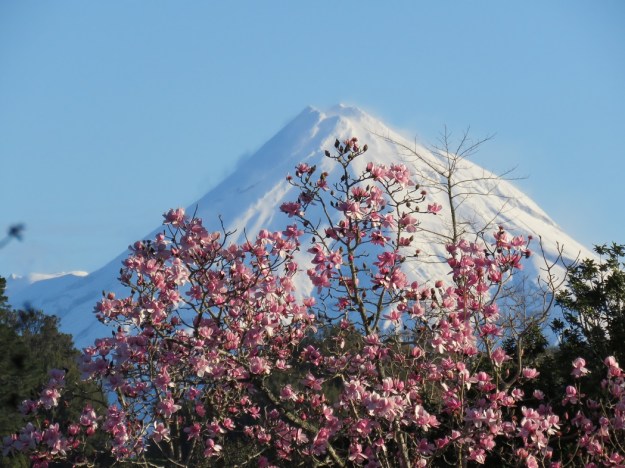
A tribute to the mountain – despite its lack of bears

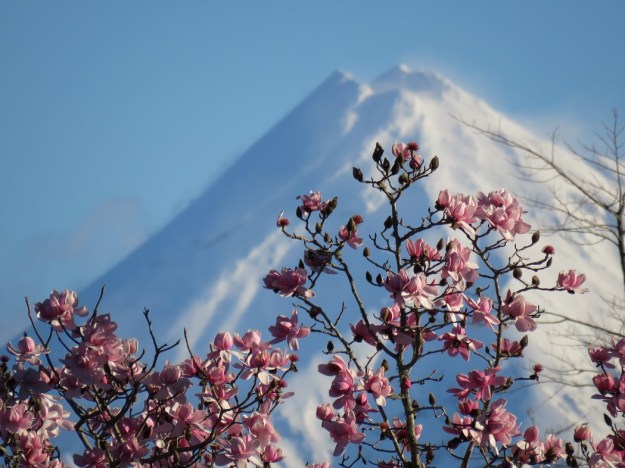
Photographed from the path down to our park – the mountain and the magnolia

It was perhaps the desire to post more photos of our Magnolia campbellii and the mountain that motivated me to write about te mounga.

It remains an active volcano and most of the province is urged to have evacuation plans at the ready. At least we can head north or inland to get away. I am not sure how those around the coast are meant to evacuate should a major eruption occur because either way, their escape routes take them around the base of the mountain – unless they evacuate by sea. In reality, it is more likely to be lahars or ash clouds that are the problem. As you head around the coastal side of the mountain, the remains of lahars are a dominant feature in the landscape.
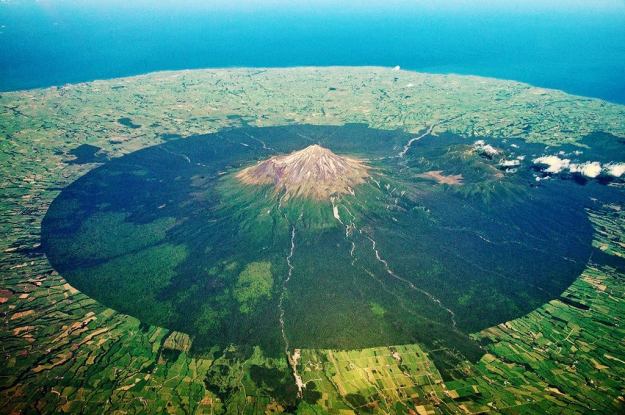
Photo credit: u/apexcutter on Reddit

Flying in to New Plymouth from the south takes one over the mountain and on a clear day, the sight is breathtaking. It is a near-perfect cone sitting alone, very close to the sea and surrounded by what is called the ring plain – land that is rolling to flat farmland. Lacking my own image, I found this photo on Reddit. That is the Tasman Sea in the upper section. The dark circle around the lower mountain is where the native bush ends – the boundary of the National Park giving way to farm land.
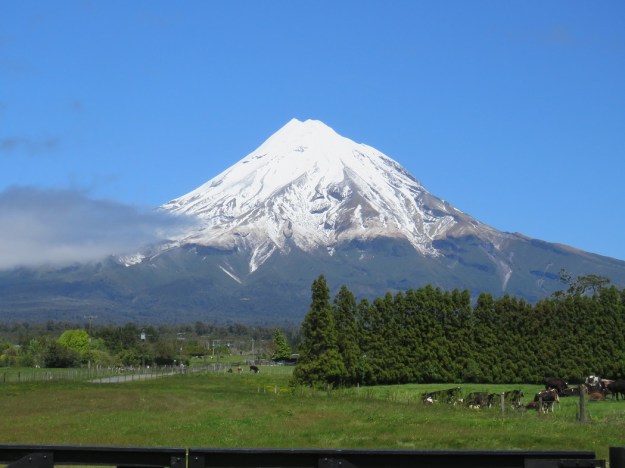
As seen from an Inglewood garden in late spring

It is an extremely accessible mountain which makes it one of the most dangerous in the country because inexperienced people underestimate it and fail to factor in that it has alpine conditions at higher altitudes. The fatality rate is high. In icy conditions, people can slip a long way. Neither Mark nor I have ever climbed it. As Mark says, he loses interest really quickly once above the bush line. Plants, not rocks are his thing. And I am wary of mountains. My brother remains buried in the ice of the Himalayas on the slopes of Mount Makalu.

Whereas Mount Fuji in Japan is widely accepted as being of sacred status, going well beyond just those of the Shinto faith, we are such a secular and residual colonial society that many people struggle with the thought that of course our Mount Taranaki has deep spiritual significance for the original people of the land. When Maori politely requested that people stop standing right on the top point of the pinnacle and, if my memory serves me right, refrain from carrying any bodily functions at the summit, the howls of outrage were loud. For what is the purpose of climbing a mountain if you can not place your footprints on the very highest point? The same people who are appalled at the thought that anybody might vandalise a graveyard and who would never dream of urinating on an altar regard it as a civil liberty that they can do what they wish on the highest point of te mounga.

Mind you, that outrage pales into insignificance compared to the outpouring of anger when the name of the mountain was addressed in 1983. Captain Cook named it Mount Egmont in 1770, after the Earl of Egmont who never came to New Zealand and died before he got to hear of the honour. But of course the mountain had names before that and a long campaign led to the decision that it could be called either Taranaki (the most common of its pre-European names) or Egmont. This might be called hedging bets but to some, this outrage was tantamount to the end of western civilisation. There are even a few older people who insist on continuing to make a stand by calling it Mount Egmont but they are a dying breed. Literally. The name ‘Mount Taranaki’ has taken precedence in official usage and to people beyond the region. To locals, it is simply ‘the mountain’, or ‘te maunga’ (in standardised Maori) or ‘te mounga’ with an o in the local dialect.
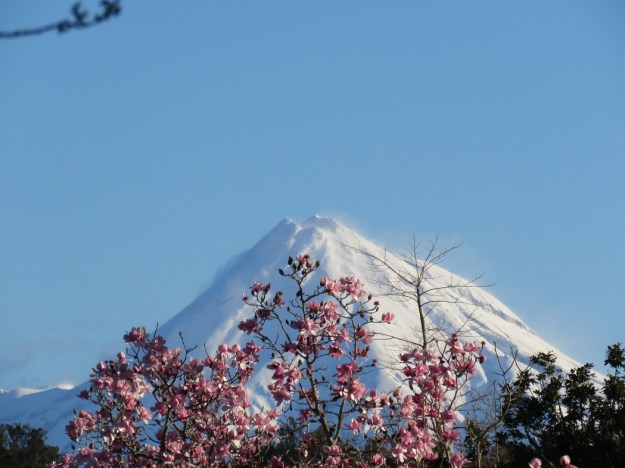
While sacred is rarely used as a descriptor and spiritual connection makes some people scoff, there is no doubt in my mind that our mounga is embedded into the very souls of people who are born here or spend time living here. Long before I ever came to Taranaki, I noticed that most people identify where they come from by the nearest town or city. Not Taranaki folks. They commonly declare themselves as coming from Taranaki and that, I think, has more to do with the mountain than the province. It is widely visible throughout the region. In summer, we make small talk about when the very last vestiges of white ice will melt. In autumn, we chart the first snowfalls. Through winter, we note how low the snow is lying and in spring we observe the retreating snow line. If it is blocked from view by cloud (as mountains often are), we can make that the marker of small talk about weather. Every rescue or dramatic event, including avalanches, makes headlines as do the relatively few days that the club skifield is open.

Te mounga just is. It was there before any humans populated this area. It will be there long after we have shuffled off the mortal coils. If that is not a shared spiritual connection that transcends all other social constructs, I am not sure what is.

An image search on line will yield many astounding photographs of our mountain. Some are even untouched by filters and other enhanced editing techniques. There are countless references giving more information but these give a brief, and probably accurate oversight.
The legends: https://taranakimounga.nz/the-project/about-taranaki-mounga/history/

The official history: https://www.linz.govt.nz/regulatory/place-names/tuia-%E2%80%93-encounters-250/mount-taranaki-or-mount-egmont

Climbing advice: https://www.doc.govt.nz/parks-and-recreation/places-to-go/taranaki/places/egmont-national-park/things-to-do/tracks/mount-taranaki-summit-track/

Amusingly, I found an article from Wilderness Magazine comparing NZ mountain peaks to more famous international peaks. Of course the comparator for Mount Taranaki is Mount Fuji in Japan.

“Why they’re similar: Are you kidding? Look at them!

Why they’re not: Taranaki seriously lacking bears and a summit post office

This comparison is a no-brainer. The two mountains look almost identical – so much so, that Mt Taranaki was famously used to represent Mt Fuji in the Tom Cruise film The Last Samurai.

They look like cartoon summits – ask a five-year-old to draw a mountain and they will quickly pencil something that looks very much like Fuji or Egmont.

Both have erupted within the last 350 years, both take about four or five hours to climb from where the road ends and both involve steep rocky ascents.

But the fact that they’re relatively straight forward to climb means both are commonly underestimated. The changeable weather makes Taranaki statistically one of the most dangerous mountains in New Zealand. And regular deaths on Mt Fuji have resulted in Japanese authorities urging wannabe peak-baggers to climb only in July and August, when conditions are mildest.”

The Japanese can keep their summit post office but I am now worrying about the distinct lack of bears to spice up a summit attempt on our mounga.

Matrix planting – a skill worth pursuing

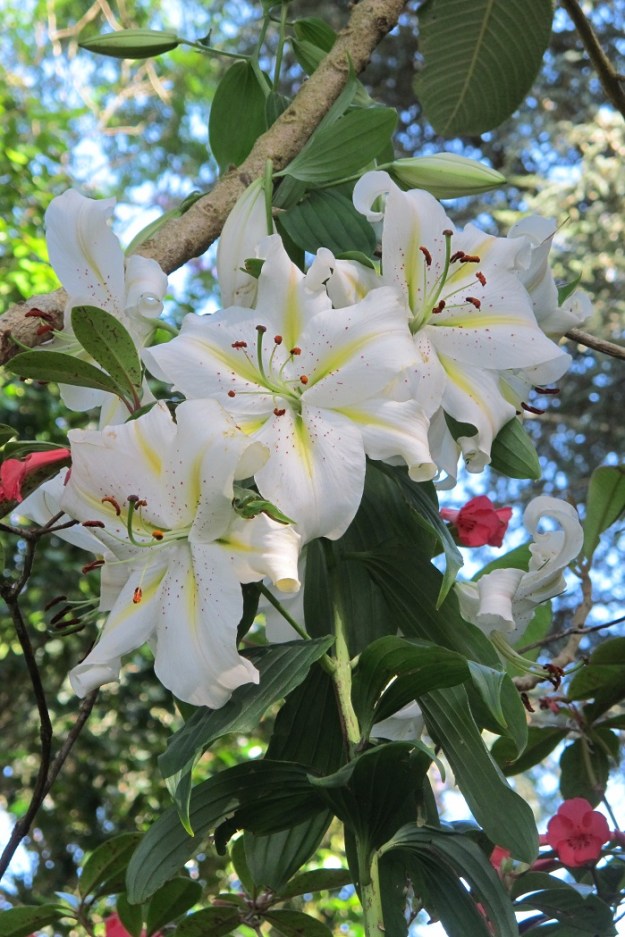
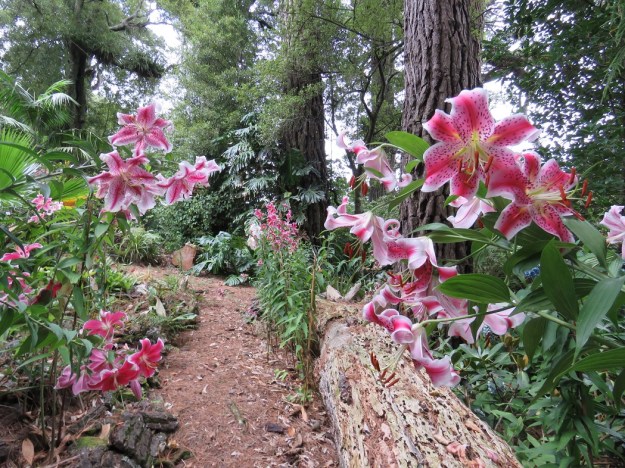
The auratum lilies -now dormant – called to me for some attention

Many gardeners will recognise the situation where one heads out to the garden to do something and what initially seemed to be a straightforward task escalates into one that is considerably more major. I shall dig and consolidate the lily bulbs in the avenue garden, I thought to myself. They haven’t been touched for years and are somewhat higgledy piggledy around the place. It escalated. Of course it did.

After more than 20 years…

“I am surprised they are still there, really,” said Mark. “It must be 20 years since I planted them and some of those now are seedlings from the originals.” It is probably more like 25 years since Mark planted the lower beds of the Avenue Gardens. No major work has been carried out in the time since, bar clearing up after the occasional treemageddon. We do a tidy-up from time to time and most years the lilies get staked. Nothing has been fed and not a lot new has been planted, just the occasional removal of a dead plant and plugging the gap if need be. I ended up going over almost every square centimetre of the area and becoming familiar with every plant, not just the lilies.

Remarkably low maintenance in the long term

As the days passed, my awe at the skills Mark used when planting the area grew. Matrix planting. That is what it was at the time – a highly complex planting of a whole range of different material, most of which has stood the test of time and is still there. It is the stability and the compatibility of the plants used that makes it a matrix – a form of sustainable gardening that is worth attempting to come to terms with.

When I did a net search looking for a definition of matrix planting, I found a fair number of recent references attributing it to renowned Dutch designer, Piet Oudolf. Oudolf is a giant in the contemporary international garden scene and he may have popularised matrix planting as a concept but he did not come up with it.

Orchids a-plenty in early October

As I told Mark how much I admired his skills in carrying the original planting 25 years ago in some areas, he just shrugged it off and said, “I was only copying what my father did”. Indeed, we still have areas in the garden that Felix planted from the 1950s onwards that remain stable, interesting, timeless and remarkably low maintenance today. These are mostly in shade and semi shade whereas Oudolf’s contemporary work that I have seen is predominantly in open, sunny conditions.

It is the sustainability and low maintenance with a high level of plant complexity that makes matrix planting so important. Without a high level of plantsmanship, you end up with utility, mass planting of few varieties – the hallmark of many contemporary landscape designers who have to plant clients’ gardens with reliable selections so they can not take risks. And people who pay professionals tend to like the tidiness of uniformity. Without sustainability, you have much higher maintenance requirements. This may not matter much in a small garden but if you are managing a large area with a low budget and low labour input, that stability of plant relationships is critical to keeping it all manageable while maintaining a high level of plant interest.

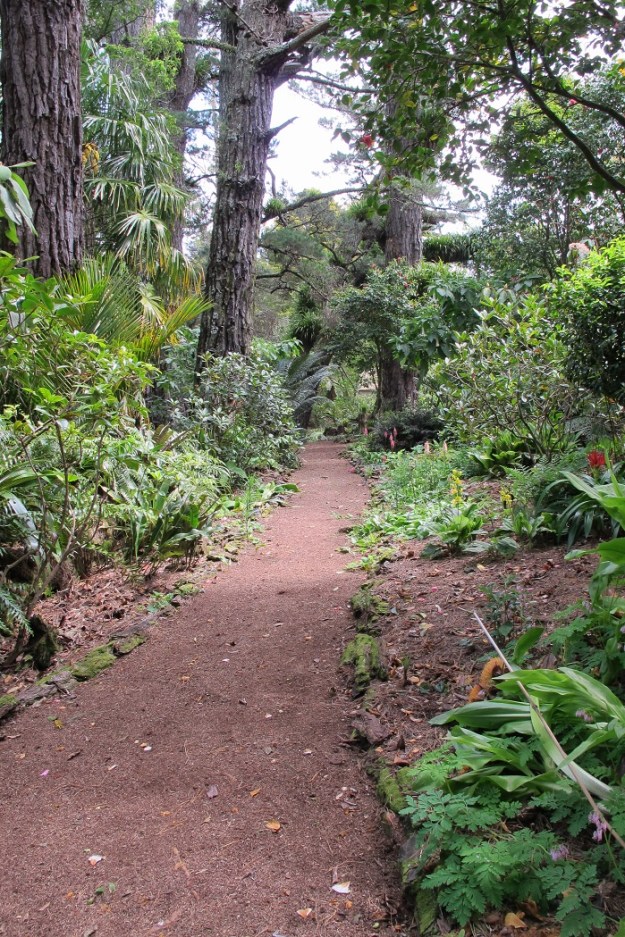
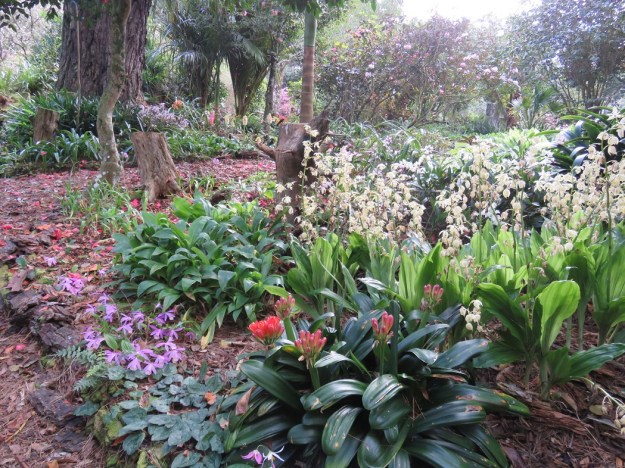
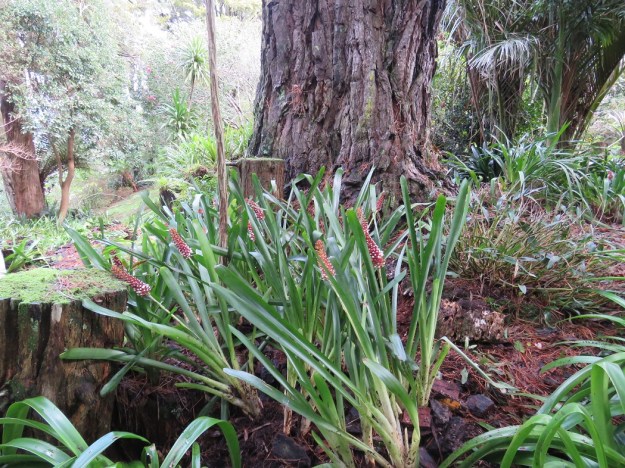
When I talk about a complex planting, I mean different layers and a mix of trees, shrubs, perennials both evergreen and deciduous, bulbs and a smattering of self-seeding plants. In this area, we start at the top with a layer of massive old man pines which are up to 50 metres high. At a lower level, we have rhododendrons (a few, in better lit areas), vireya rhododendrons, cordylines, brugmansia, palms, a few cycads, hydrangeas and the like). At ground level we have trilliums, Paris polyphylla, assorted varieties of bromeliads, Helleborus x sternii, argutifolius and foetidus, orchids (mostly dendrobiums, calanthes, cymbidiums and pleiones), veltheimias, hippeastrums, the aforementioned lilies and a whole lot more. I did say it was a complex planting.  Oh, and lots of clivias in red, orange and yellow. Being in the shade, we don’t get a lot of weeds but the naturally occurring vegetation needs to  be managed and thinned – assorted ferns, macropiper (kawakawa, pepper tree or, botanically, Piper excelsum), native astelias and collospermum, even seedling nikau palms and cordylines.

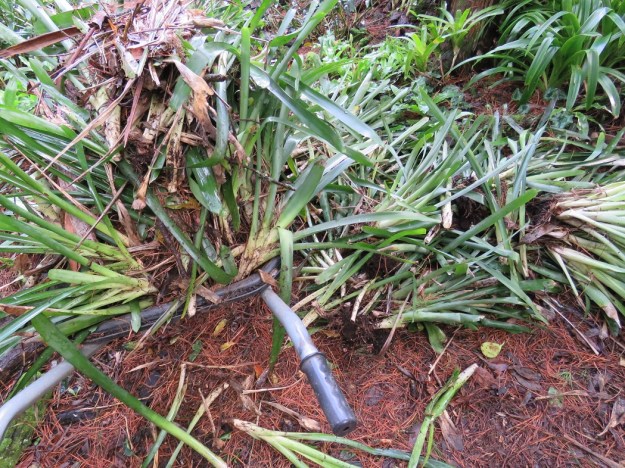
Lifted, divided and replanted after many years

The surplus from this one small batch amounted to 3 or 4 barrow-loads

I was amazed at how much I could remove without making it look different, just tidier. I lifted entire blocks of bromeliads and reduced them to a shadow of their former selves. After replanting this patch, I removed four laden barrows to dump but it still looks well furnished.

At the end of about three weeks, I decided I had done as much as I intended to. I didn’t need to add much new material at all. That is why I was in awe at Mark’s original plant selections and plantings. And while it was a larger job than I originally envisaged, if that sets it up so that it can be maintained with the lightest of intervention over the next two decades, that is a good outcome.


A forgotten resource

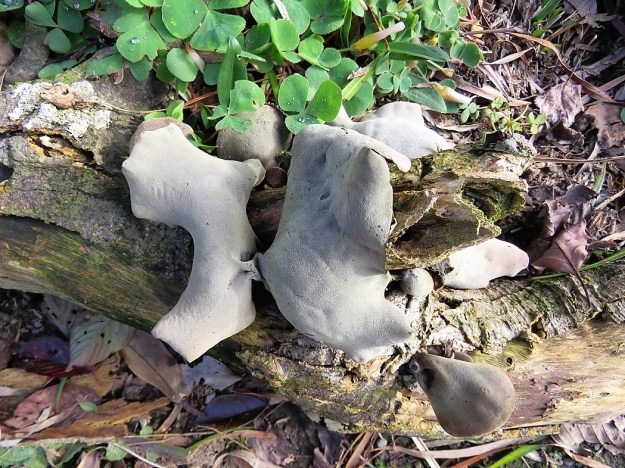
Auricularia polytricha, hakekakeka, or wood-ear fungus

It is a fungus, Auricularia polytricha, and it played a very important role in the European settlement of Taranaki 150 years ago. Mark was raised knowing it as ‘pigs’ ear fungus’. I shall call it wood-ear fungus if I can not commit the Maori name – hakekakeka – to immediate memory. Most of the common names appear to have an ear reference in them, though the unfortunately named ‘Jew’s ear fungus’ is a different species of auricularia. The Chinese call it mu-er.

I thought I should try cooking some if I planned to write about it but when I looked up how to use it, I found the comment:

Auricularia polytricha is usually sold in dried form, and needs to be soaked in water before use. While almost tasteless, it is prized for its slippery but slightly crunchy texture, and its potential nutritional benefits. The slight crunchiness persists despite most cooking processes.” (1)

It didn’t sound sufficiently appealing to me. Our son has friends whose parents were new migrants from China and occasionally they used to collect it here for their father, but he has moved on from Taranaki now. 

This fungus is by no means unique to Taranaki. It grows widely through South East Asia and parts of China and it was the Chinese connection that proved to be the salvation of the early settlers. When they arrived in this area, commonly expecting rolling grass fields, they found instead the daunting sight of dense native forest. They set about clearing the land and indeed, Mark’s settler great-great grandfather was killed by a falling tree, as was often the case in those days. Hakekakeka found the environment of felled and decaying native trees and stumps particularly hospitable and grew in abundance. I am sure these early settlers, most of whom hailed from South Devon and Cornwall, had no idea what this odd fungus was so it was their good fortune that a local merchant did.

Enter Chew Chong, though this is the anglicised version of his name which was actually Chau Tseung. Like so many Chinese, he left his homeland in the mid 1800s for the goldrushes, first in Australia and then New Zealand. The hardship, contempt, extreme discrimination and prejudice these early Chinese settlers endured has only been highlighted in recent years and there is real irony to new colonisers from Britain being so harsh on new settlers from China.

But Chew Chong carved out his own space in history. Gold mining was not for him. He became a merchant and found his way to Taranaki. He was an extraordinarily successful and entrepreneurial businessman. He saw the resource in hakekakeka and brought together an abundant supply in Taranaki with a market in China. In a period of 30 years, he is credited with exporting 8400 tons of dried fungus. If you convert imperial tons, that makes it over 8.5 million kilos of it, which is beyond comprehension, really. What was more critical to the development of Taranaki, is that he paid out in cash at a time when cash was in very short supply. I do not know how the recorded pay-out sum of £309,343 converts to modern monetary values but Chew Chong is credited with keeping the new settlements in Taranaki viable, laying the economic foundations for the dairy industry. Mostly based on this fungus.

I photographed it growing on one of the lengths of branch that we use to edge a garden. The decaying branch is whiteywood, (mahoe or botanically Melicytus ramiflorus) which is one of the main hosts, along with tawa and pukatea. Mark commented that people still sold the fungus when he was a child but he has no idea who was buying it. However, it might be time for a revival given the search for alternative protein, in addition to its many other valued qualities.

“It contains carbohydrates, calcium, potassium, iron, the same percentage of protein as meat, including eight kinds of amino acids, and is low in fat. The Chinese used it to lower cholesterol, coagulate and purify blood, improve circulation and aid wellbeing, and as an antiseptic mouthwash, an aphrodisiac and an ingredient in wood glue.” (2)

Maybe a hakekakeka revival could replace the highly polluting, intrusive Methanex plants locally that turn gas into methanol which is then used, amongst other things, to manufacture builders’ glue. I would call that a win all around. And all the clichés about our province of Taranaki being built on dairy, oil and gas (‘white gold’ and ‘black gold’, the defenders of those two industries like to declare) entirely ignores the pivotal role of Chew Chong and the flabby fungus.

  1. https://en.wikipedia.org/wiki/Cloud_ear_fungus
  2. https://www.nzgeo.com/stories/chew-chong/

Postscript: Mark is sure we should be trying it after I pointed out its claimed protein content and all round goodness. This cluster of it has turned black now. When I find a fresher batch, we may try it after all. I shall report further as to whether it is neutral to eat or an acquired taste.

Botanical art for beginners in the garden here

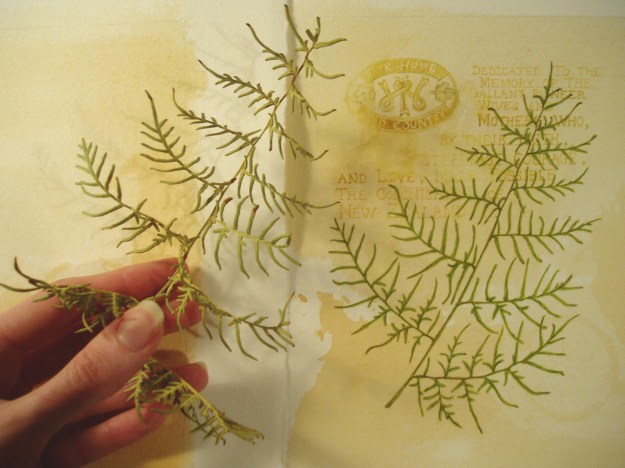
copyright T.Forbes 2006 

Do you dream of being able to paint and draw plants and flowers? Mark does and that is how we came to meet Tabatha Forbes. Dr Tabatha Forbes, thank you. She has a PhD in fine arts from Elam Art School at Auckland University.

Tabatha tutors botanical art for beginners. This is a very specific branch of art combining both accurate botanical depiction with the skills and aesthetics of painting and drawing. Mark says that he just wants to be able to paint pretty flower pictures while realising that some level of skill in both close observation and translating that to paper is required to achieve that goal. He is hoping that his time with Tabatha at an August workshop will get him started (again) on drawing and painting.

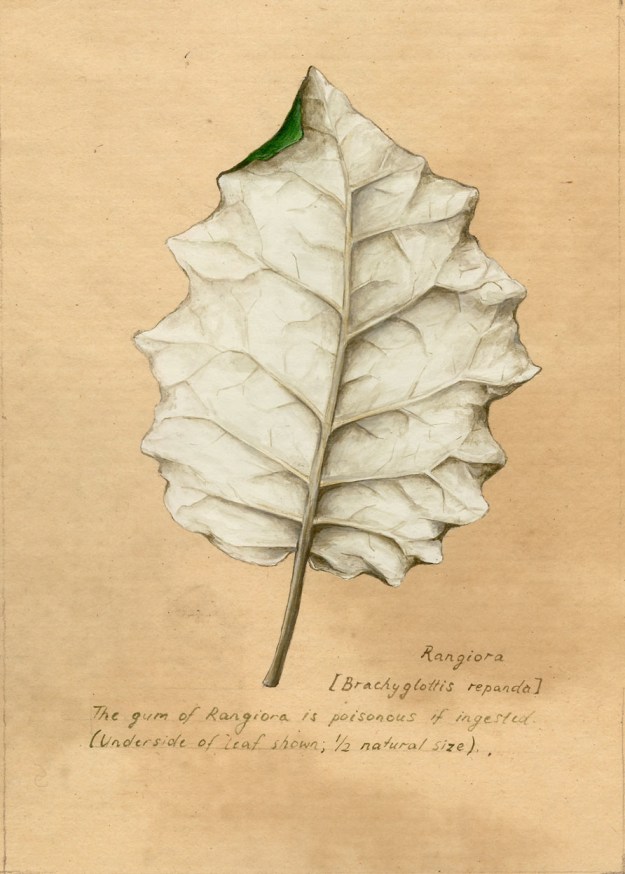
Rangiora. copyright T.Forbes 2006

Later in November, Tabatha is offering two small-group workshops in our garden during this year’s garden festival. Our garden isn’t open for the festival this year but participants will have the run of the place while here. The first workshop is on the first weekend of the festival – Saturday 2 and Sunday 3 November from 10am -3pm each day. She starts beginners with leaves – observing and drawing in detail on the first day, moving onto acrylic painting on the second day.

The second workshop on the weekend of November 9 and 10 is a follow-up – progressing onto painting berries and fruit, so more colour and added detail.

If you want to know more, Tabatha has a comprehensive website which showcases her own work, her interests and experience and current projects.

The Taranaki Daily News recently published a profile on her here: The soothing art of retreating into nature. 

For more information and bookings, please email Tabatha at drtab72@gmail.com. We will be delighted to meet you should you attend either or both of her workshops here.

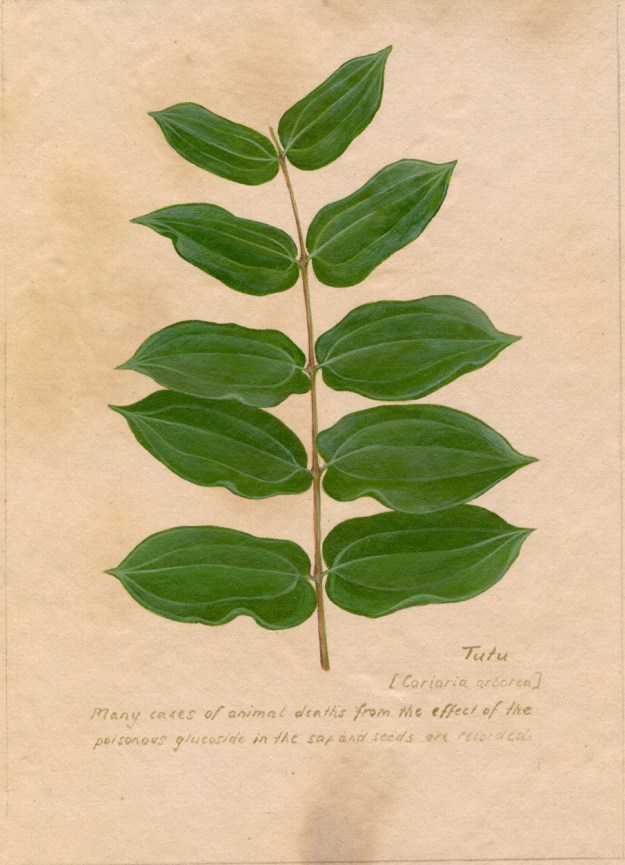
Toxic tutu (Coriaria arborea) copyright T.Forbes 2006

When your lawnmower is worth more – a lot more – than your car

Out with the old… 

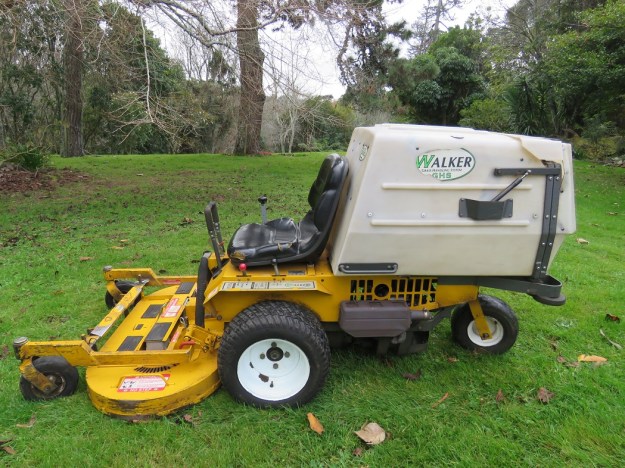
and in with the new. I see Lloyd left it air-drying after its first wash on Friday. He likes to keep a clean machine.

We bought a new lawnmower. This may not seem particularly momentous, unless you have met Walker mowers. We have been a Walker mower establishment for maybe 30 years now and this is our third new machine. Walkers, you understand, are like the Rolls Royce of lawnmowers – with a price tag to match. As the person who pays the bills, I was less than enthusiastic about the move to this brand of lawnmower but I have come to accept that ours is a life where having a lawnmower that costs more than our car is a perfectly logical position.

Walker is an American brand, an evangelical company which fully integrates its faith with its business. We are Walker fans because these machines are much safer, more stable and manoeuvrable than most ride-on mowers. It is capable of turning in its own space and of mowing steep slopes without tipping. It also gives us the option of mulching or catching and gives a good result on the house lawns as well as coping with our rough road verges, grassy slopes and the variety of terrain across our acreage. That is why we have a fancy-pants lawnmower despite its price tag and ongoing maintenance requirements. We have never seen another mower that is capable of doing what a Walker does.

Over the years, the Walker has brought us much amusement. It comes with a certain amount of merchandising – caps, coffee mugs, pads and the like – and every few months we receive a copy of their magazine, Walker Talk. It appears that we became members of the ‘Walker Family’ when we bought the first mower. Were we in USA, we could even attend annual get-togethers of the Walker Family. We used to get a copy of the Walker calendar and we thought maybe we should submit a photo of Lloyd mowing here to see if we could get him as a Walker pin-up boy. The calendars featured photos of garden and park settings, all with somebody on a Walker mower in the foreground. Lloyd has long hair and a bushy beard so he may have looked more Amish than Bible Belt, even had we dressed him in the mandatory white, long sleeved shirt that all these Walker mower operators appear to wear in the US. We never got around to staging a photo shoot and the calendars stopped coming.

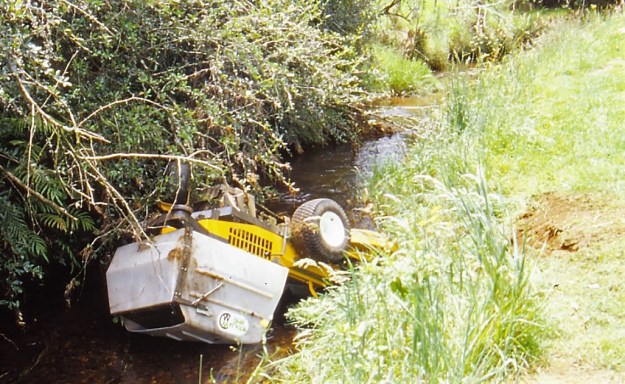
When the bank gave way beneath Mark on the machine (22 years ago)

I did find a photo – as in a print photo from pre-digital era – of Lloyd mowing the lawns on the Walker, wearing a Santa hat. But I need his permission before posting his photograph and he does not work on Sunday. He may, after all, be less than enthusiastic about having a photo of himself wearing a Santa hat sitting on the internet. I give you instead a photo of an upside down mower. Very stable, the Walker may be, but even it can not stay upright when the stream bank caves in. I think Mark was responsible for this mishap 22 years ago, cutting in too close to the bank.

What to do with the old machine? We were not going to get a good trade-in price on it so decided that we would try and sell it privately. The lawnmowing here is entirely Lloyd’s domain so he gave the old machine a final wash and clean and I listed it on two local Facebook buy and sell pages. Overall it was in good nick, well maintained but with very high hours on it so we set a price accordingly at $2900, leaving a little room to negotiate.

Well, who would have thought that an old Walker is so very desirable? They are a specialised machine with exacting maintenance requirements and there are much cheaper ride-ons for home gardeners. It had only been on line for a few minutes when the messages started pouring in. I am not exaggerating when I say that in the three hours that followed, I could have sold six of them at that price. Four were people willing to pay immediately, sight unseen, based on the photos. But we only had one to sell and it had been paid for and left the property within three hours. Yes, it is tempting to think that we set the price too low and we could have got more for it. But we set that price at what we thought it was worth and we are fine with that.

Oh look. We are valued customers.

Lloyd is very happy with his new Walker mower. Mark and I are happy that Lloyd is happy, though we hope this machine may see us out. And then we received this little hamper by courier from the salesman. Apparently, Walker mower owners are more craft beer drinkers than wine drinkers. Mark was most delighted by the two little bags of potato crisps which says something about the lack of such taste treats in our household. I could calculate how many bags of potato chips we could have bought for the price of the mower but then they would no longer be a treat. Mark instead calculated what sort of luxury vehicle we could be driving for the price of our three, brand new Walker mowers.