
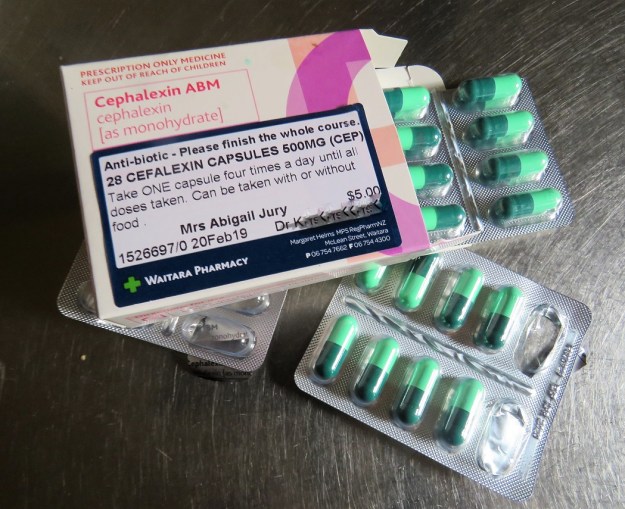
 A cautionary tale this weekend: last week my foot encountered a stick. The skin abrasion was so minor that I didn’t worry about it, though when it started to show signs of infection rather than recovery three days later, I reached for antiseptic salves and bandaids. Two days on from there, when my whole foot was swelling rapidly, I took advice and headed in for urgent after-hours care at the hospital. Yup, cellulitis – the bacterial infection was spreading rapidly into the surrounding soft tissue and skin.
I have been in this situation before, about 20 years ago. In that case, I knew I was in trouble within three hours of puncturing my foot and went for medical attention. Unfortunately, that escalated over the next week to the point where I became an emergency admission to hospital for surgery and then a four-night stay on intravenous antibiotics. In that case, the problem was that the bacteria, just a particular strain of E coli, was resistant to all but the remaining last-line-of-defence hospital-only antibiotics but it took a week of spiralling infection and ineffective antibiotics before that was ascertained. I was understandably nervous about this scenario repeating itself but fortunately, this time the bacteria responded to the more common antibiotics that are tried first. My foot is fine now but I still have another four days of antibiotics to take to finish the course.
Ringing at the back of my mind is my mother’s oft-repeated anecdote that the first autopsy my father ever carried out was on a man who died of a whitlow – a hang nail. That would have been before antibiotics were widely available because my father qualified in the later 1930s. I bet the victim developed cellulitis from that minor skin tear and it all spiralled out of control from there.
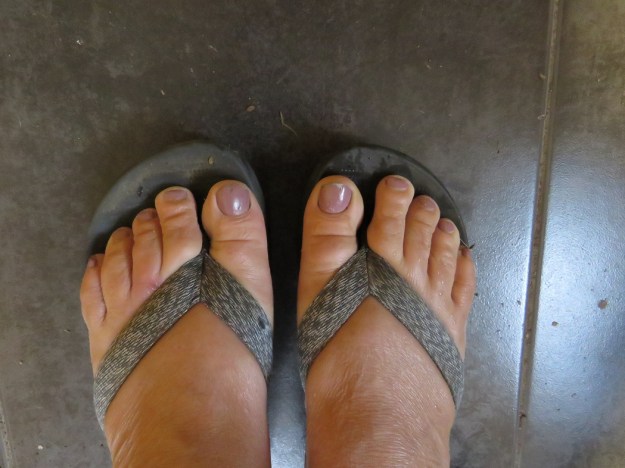
The left foot is just a little swollen today but I shall no longer garden in my jandals.
What is disturbing is that our future holds a return to this past if antibiotic resistance continues to grow. It is genuinely worrying. Without being too neurotic about it, the lesson we have learned is to keep a close eye on the minor injuries that we often sustain as part of our gardening activities. I have heard of major complications being caused originally by rose thorns. I am telling myself that I must garden in closed shoes, though that wouldn’t have helped me this time because I was just wandering out to pick up a couple of ripe rock melons to give away. I am not going to put on protective boots every time I go out the back door.
For overseas readers living in countries where medical attention is a personal cost, the total charge for my recent experience (hospital care at Accident and Emergency, a precautionary tetanus injection, antibiotics and after-care if required) was … $5. Yes, $5 for the dispensary charge on the extended course of antibiotics. I am feeling very kindly towards paying taxes this week.





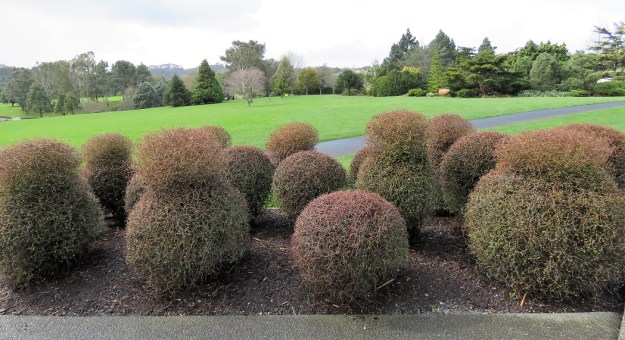



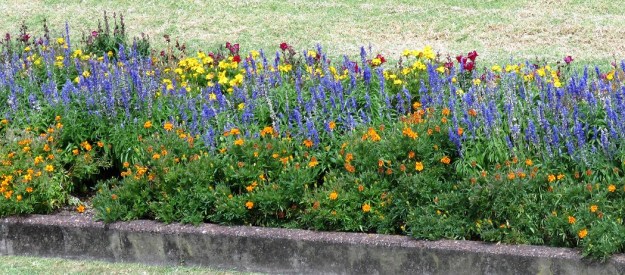




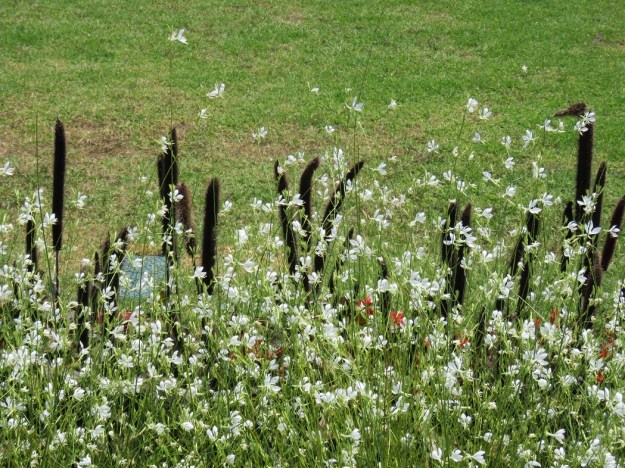 Ha! This strip of waving gaura with Pennisetum glaucum immediately in front of the entry was pretty much as good as it got when it came to summer perennials. There are major works underway putting in a new sealed route through the gardens and when I say road, I mean something that resembles a fairly major highway. It is going straight through the area of summer perennials so there was no summer display that I could find. It is the first time that Auckland Bot Gardens have ever let me down and I did feel a mite tetchy that I had driven all the way out to Mangere on a thoroughly disappointing visit.
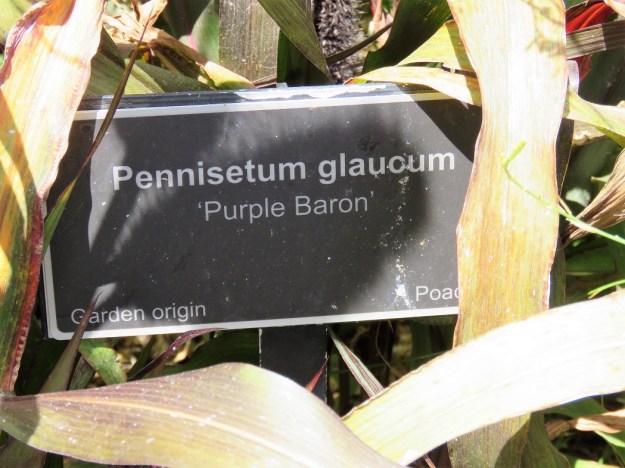 But look at the lovely seed heads on the pennisetum. I thought I needed this plant until I looked at the foliage. Pennisetums are classified as grasses and many have fine foliage. However, Pennisetum glaucum is actually millet, grown commercially for its grain harvest, though these named cultivars with purple foliage have been selected as decorative garden annuals rather than grain production. The foliage is closer to maize than a grass and while it may be possible to keep it lush and dark in a well cultivated and irrigated garden border, grown in harsher conditions, the foliage didn’t have a whole lot to recommend it. The seed heads did, though, especially in conjunction with the airy, waving gaura. In the interests of accuracy, I should perhaps add that there was a row of red bedding begonias in the front but I carefully framed my photo to cut them out. I am not a bedding begonia fan.
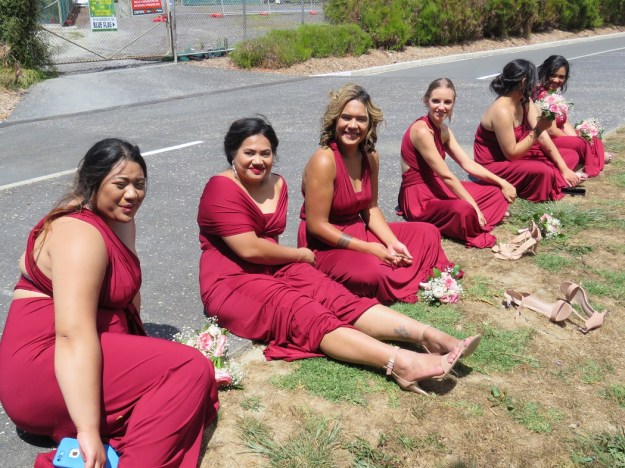 Other than that pretty scene, it was the waiting bridesmaids that most took my fancy. It was a hot afternoon and they must have found their stiletto heels a little taxing for prolonged standing around. I assume they were waiting for the bride but I didn’t quiz them. Now I think about it, I only saw a very large wedding party (there were pretty flower girls, another couple of bridesmaids and a fairly large cluster of well-turned-out young men standing in the shade as well) but no wedding guests. I was more concerned about the missing bride but now I wonder where the guests for this large wedding were hiding out. This will remain a mystery.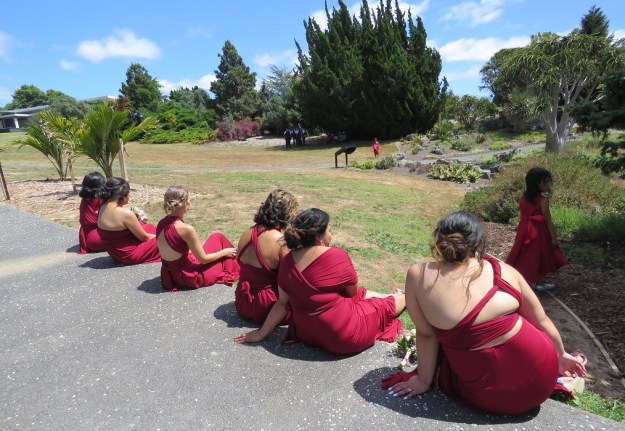





 Tikorangi The Jury Garden