
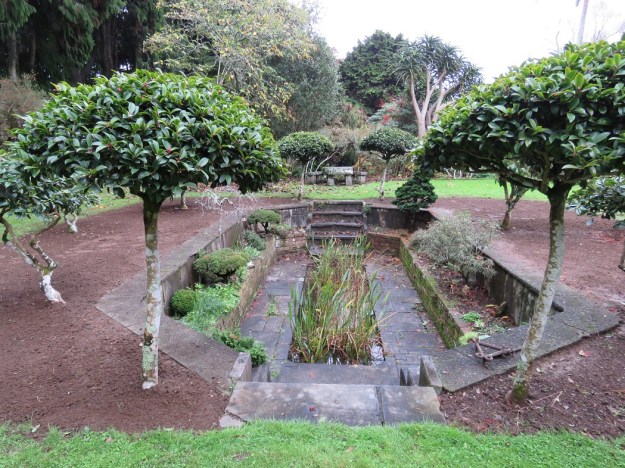
Currently a bit forlorn, but give it a few months and it will look very different
The rose garden has gone. Gorn forever. Henceforth this area will be known as the sunken garden. Because the centrepiece is the sunken garden area – Felix and Mimosa’s DIY colonial Lutyens effort, as I have described it. It is all fashioned from granite, marble and brick. Mark once water blasted it and it came up an alarming shade of white.
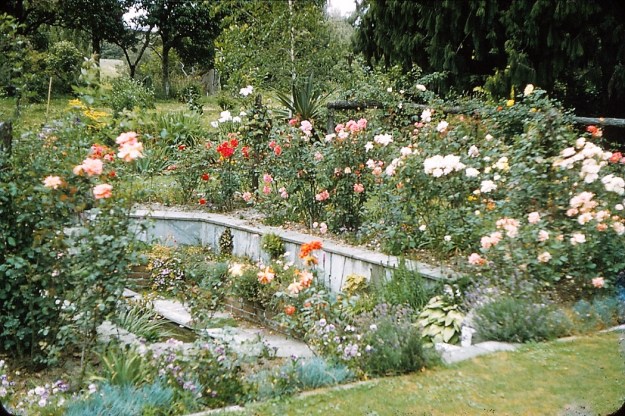
An undated photo but best guess is around the mid 1950s. The marble lining is still white
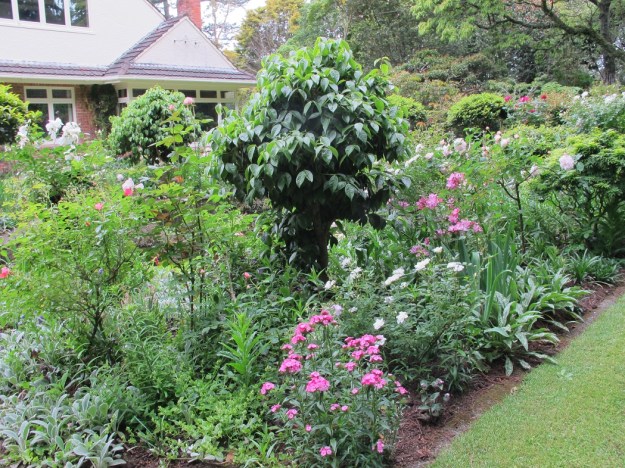
I, too, could get it looking pretty but it took a lot of work and it didn’t stay looking pretty for long enough to warrant the effort
It was the rose garden because it used to house Mimosa’s old rose collection. I think I can recall it as being fantastically opulent, voluptuous and romantic with the air hanging heavy with scent – but only for a couple of weeks in spring. The rest of the time, it could look pretty scruffy. By the time I came onto the scene here in the eighties, it was already past its peak. This particular garden has probably had more attention lavished upon it in the last 30 years than any other area. Major makeovers, not just regular maintenance. At least four major makeovers that I can recall doing myself. And no matter how hard I tried, it looked okay in winter, really pretty for a few weeks in spring but scruffy in summer and autumn. I could not keep it looking good all year and it finally reached the point where I avoided looking closely, preferring to skirt around the outside rather than walking through it.
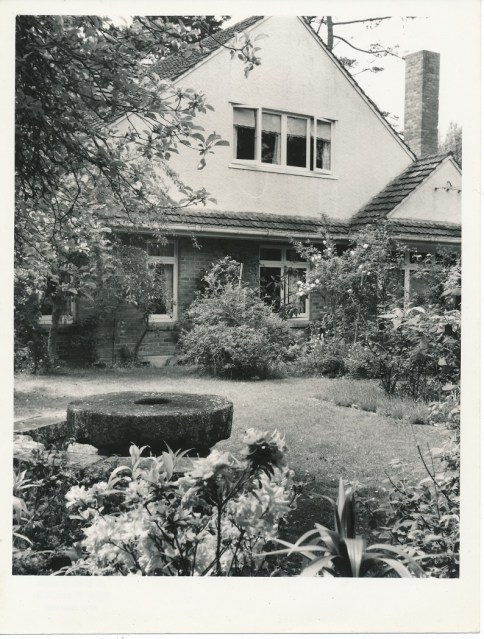
We have a date on this photo – 1961
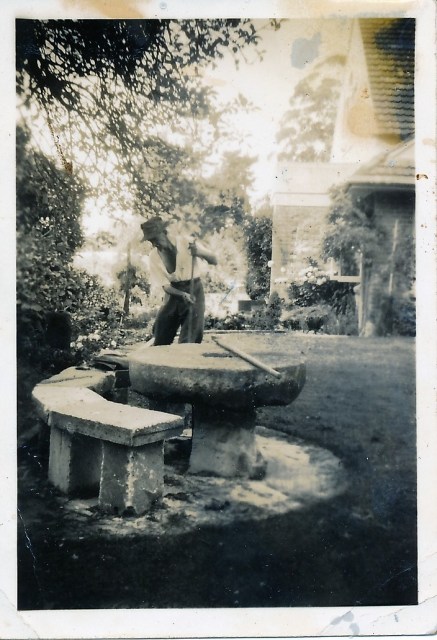
Felix, down to his woollen singlet but still wearing his tweed hat putting in the stone millwheel table and benches. The wheel is the inner, turning centre of the mill, used for grinding papa to make a low quality brick on a neighbouring farm. Felix traded two sacks of potatoes for the wheel. The date of this photo must be mid to late 1950s
It is obvious what the problem is when I look at the old photos. When Mimosa started and had the area at its peak in the late 1950s and 1960s, conditions were very different. It was open and sunny and the plants grew without competition. In the 70 years since she started, the backbone rimu trees have doubled in size and their root systems have grown to match. Half the area is now always bone dry, sucked out of nutrients and plants have to compete with the rimu roots. The area has also become enclosed, very sheltered and the sunshine hours have been reduced by a whole range of perimeter plants.
I wrote about this area back in March when I was into full-on stripping out. It would have been easier had I been composting the plants but I recycled most of them. It would also have been easier had I not planted quite so many bulbs through it over the years. Clearing the area was a major operation and has generated many, many more square metres of ground cover than I started with to use elsewhere. There is much to be said for digging and dividing. The good picking roses have been relocated to the vegetable garden where it does not matter that they get black spot and suffer from defoliation. I can at least pick the flowers. We do not have a good climate for roses.
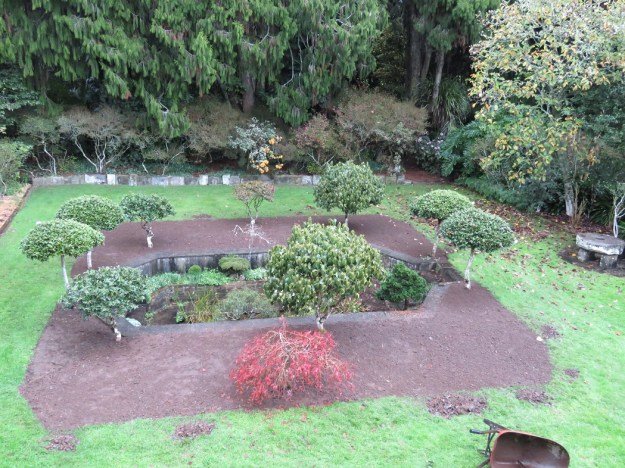 Finally, the last plants were gone at the weekend and the area was bare. Lloyd, our extraordinarily handy and obliging man about the garden, has moved in extra topsoil and raked and levelled to get it ready for sowing in grass. The eight camellias and two maples will stay and be shaped into gnarly, character, feature plants. We normally avoid growing plants in mown lawn areas and I know I will have to hand-trim the grass around the trunks but I am willing to do that. We do not like the weed-sprayed brown look of lank grass around trunks and I have no desire for the tidy, suburban look of encasing each trunk in a tidy round concrete circle planted with pansies. For those of you who want to know what the camellias are, two are the gorgeous species C. yuhsienensis, two are Mark’s ‘Pearly Cascade’ (C. pitardii hybrid) and the four standards are one of Mark’s hybrids that we never released but we refer to as ‘Pink Poppet’.
I am anticipating that once the grass grows we will have something far more sculptural to look at. And that seems a more appropriate look for the next era of this garden. Gardeners must look forward, not try forever to recapture the recalled magic moments of the past.
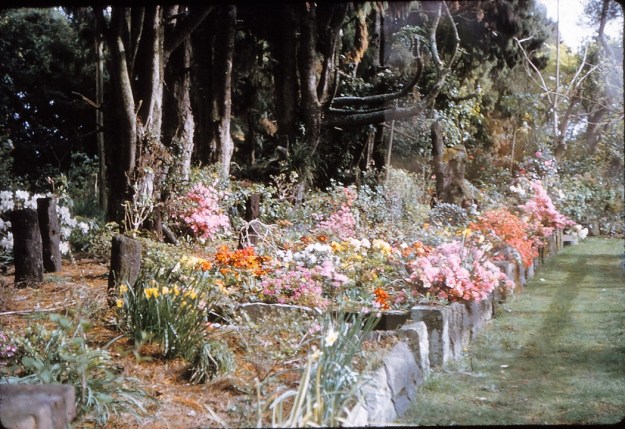
Again, this must be 1950s – the planting of the azalea bed that provides the far boundary to this garden, butting up to the rimu trees
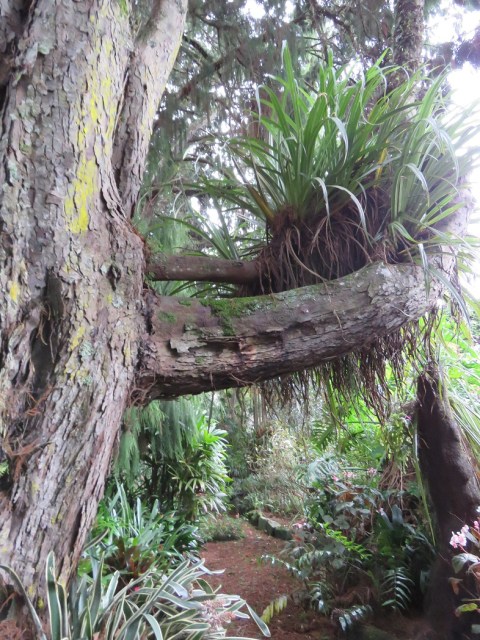
Match the two horizontal branches in the preceding image to how they look this very morn. After 60 years, the trees have more or less doubled in size
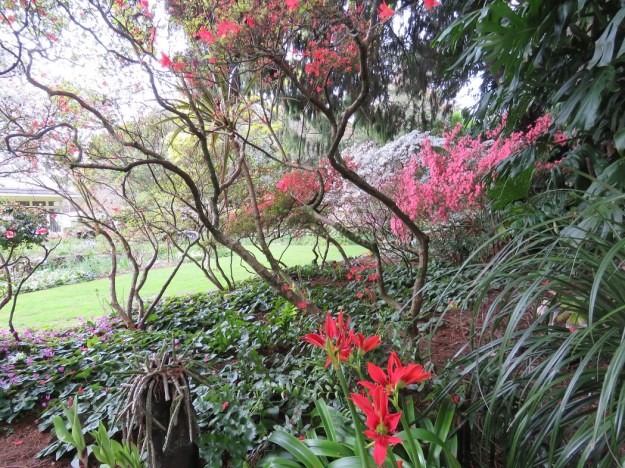
The same Kurume azaleas as they look today, this time viewed looking from the other direction, underplanted with cyclamen.
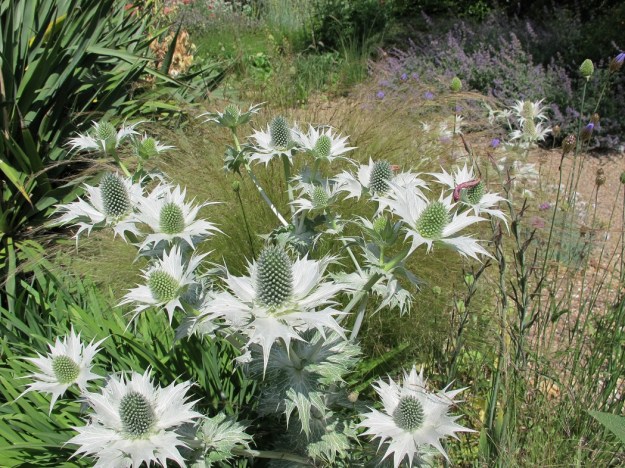 Beth Chatto dead? This should not be a surprise.
 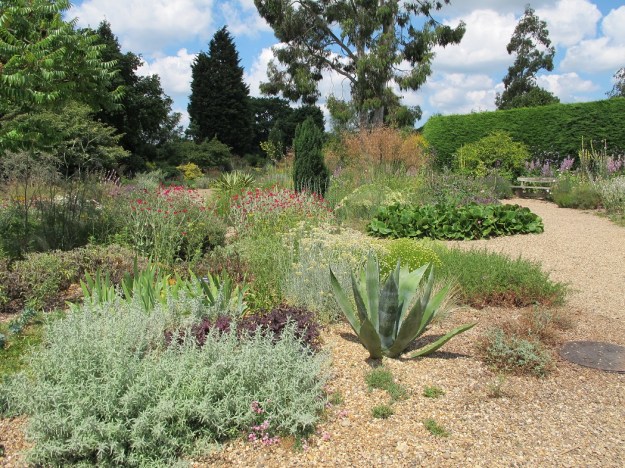 We returned to her garden with Charles in 2014 but she was too frail that day to join us. It was a bright, sunny day and I have since regretted that I did not get good enough photos of her dry garden in the glaring light.
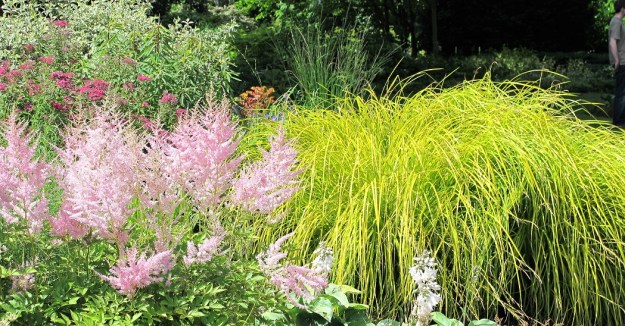
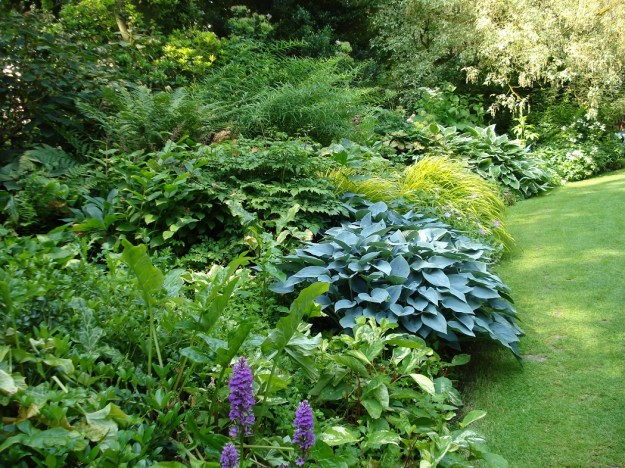 The original garden is perhaps a little dated by modern standards – rather a lot of curvy, hose-pipe borders – but always managed to the highest horticultural standards and underpinned by that knowledge of which plants will perform in those conditions and co-exist well with each other. I would love to see the woodland area in early spring when it must be magical but the UK in early spring is a bit cold for us these days. It is the dry garden that lifts a visit to another level altogether.
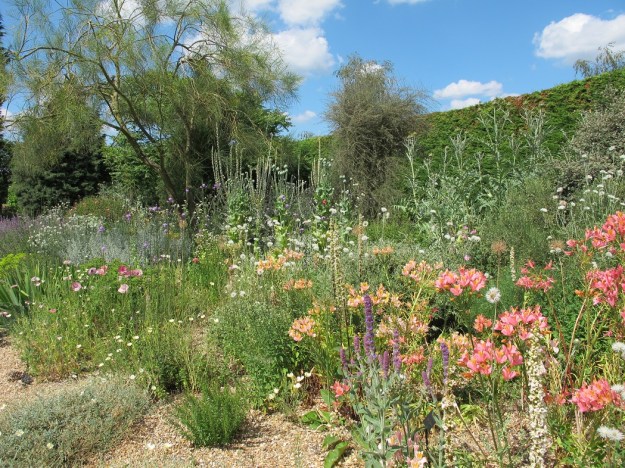 We have spent quite a bit of time making sense in our own minds of contemporary European and UK gardening trends – New Perennials (where Piet Oudolf’s work is still the gold standard), the New Naturalism, meadows, prairies, ecological gardening, matrix planting, sustainable plant communities and what we call the romantic revival or, simply, romantic gardens. And in Beth Chatto’s garden, thirty years ago, she was creating the precursor to all these modern trends in her new dry garden. In a very dry climate, nothing is irrigated in this garden built on a compacted carpark and river gravel. The skills lie in plant selection and the light-handed but deft management which allows plants to have their own space and follow their own natural inclinations. She had a rare combination of exceptional plantsmanship and top-level gardening skills.
 I did not so much appreciate her



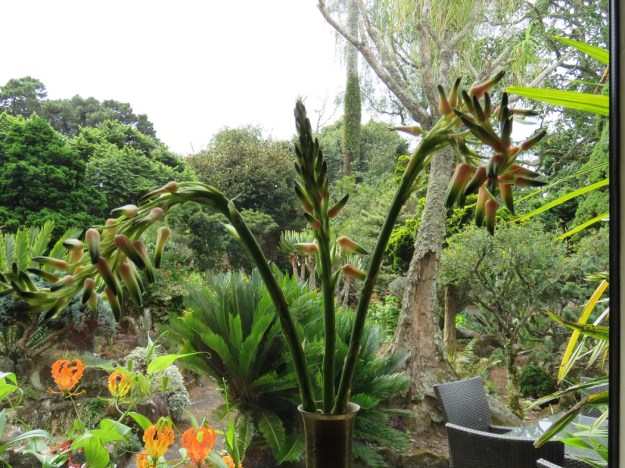


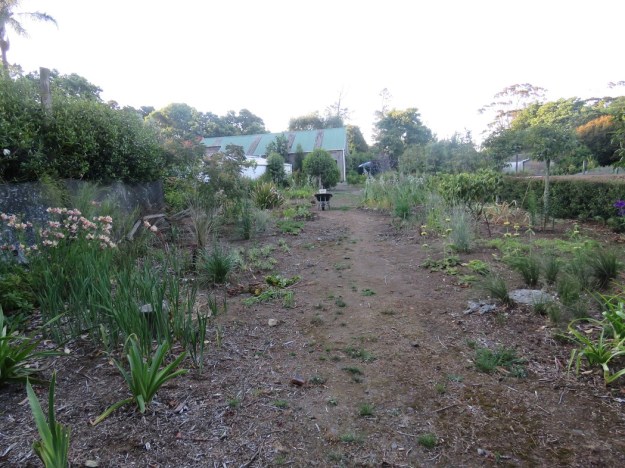
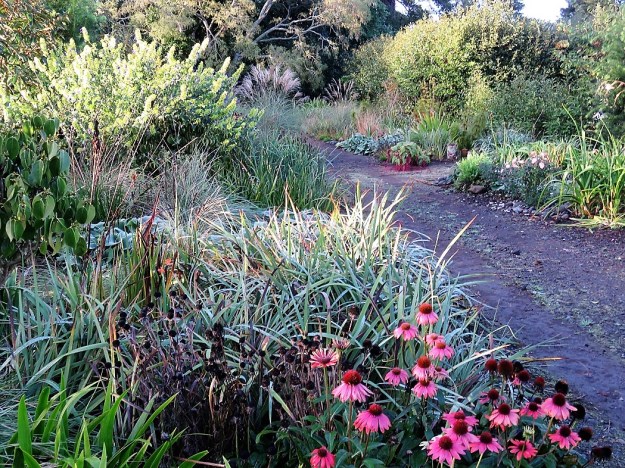
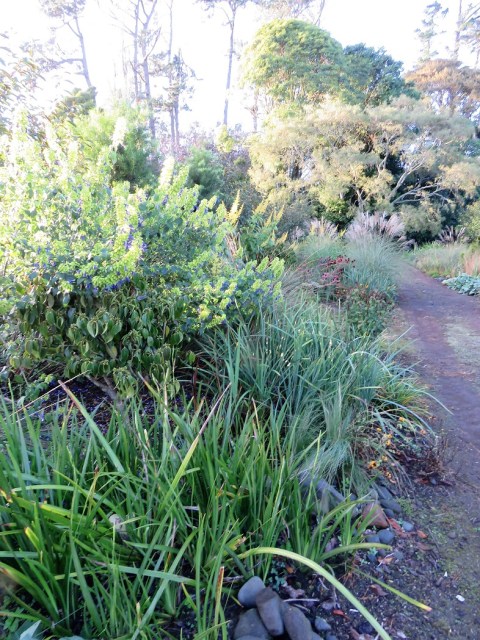
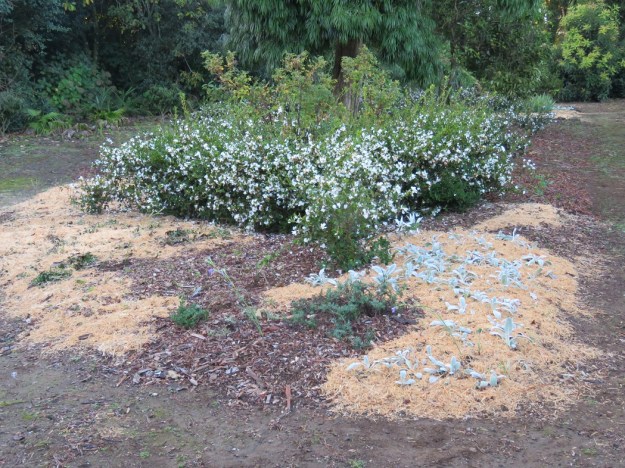
 I do not know whether it was the rainy Saturday that made me pensive or whether it was my somewhat melancholy state of mind. Either way, I took a damp walk around the area we call the park. While the autumn colours seem quite striking this year and relatively early considering we have only had two cold days so far, I am not sure that damp autumn days are uplifting to my soul.
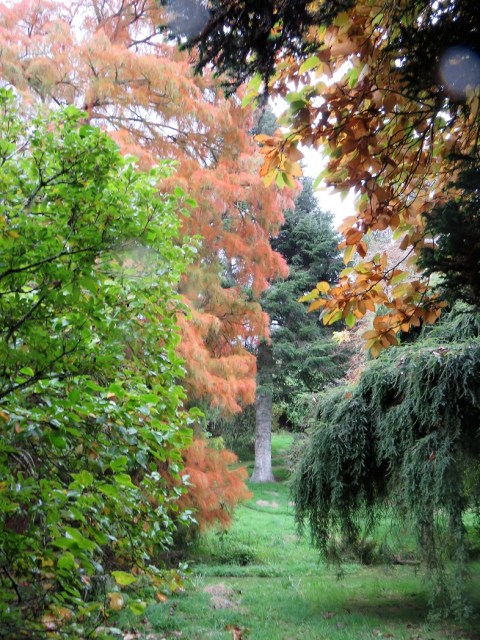 But I have been pondering the differences between those of us who see gardening as a process and those who see it as a product. I am happier in the company of the former – those who enjoy the act of gardening and see it as a journey where there may be a destination in mind but experience says that such a goal will be but transient and fleeting and not an end point at all. For a garden can never be static and frozen in time so will never be finished or full. I suspect these are the characteristics of a gardener.
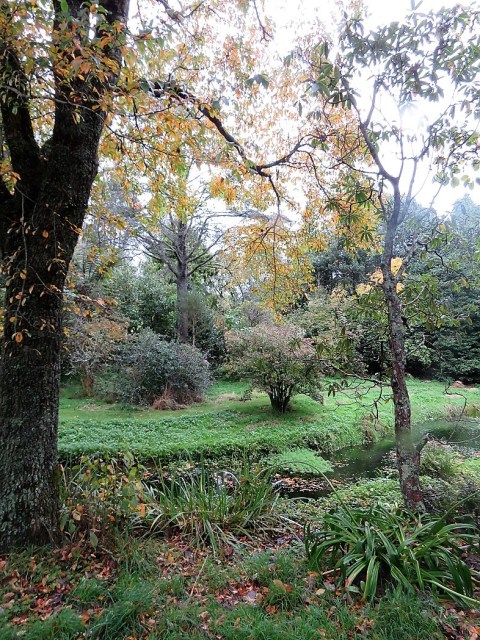 There are many who see a garden as a product – a particular destination or point of achievement in a creation that can then be frozen in time. This, I think, is probably a viewpoint of a garden owner who is not a gardener by nature. I felt a passing pang of sympathy for landscape designers. I would guess the majority of their paying clients fall into this category. Some may come to understand the whims of nature but many more make a rod for their backs, requiring that a garden be preserved in pristine condition at a certain point of its development.
 But Sunday dawned fine and dry which meant my usual cheerful disposition was restored. We cannot complain about an autumn which delivers us a daytime temperature of 24 degrees Celsius and night time temperature still well into double figures. Behold Mark’s pride and joy – his luverly bunches o’ bananas. Several lovely bunches. We are super marginal when it comes to growing bananas for tropical we are not. These are the only plants we cover for winter – festooned in protective shade cloth suspended on a giant bamboo frame.
 Tikorangi The Jury Garden