Tag Archives: Abbie Jury

Lower maintenance gardening

The raised beds are going - to be replaced by wider steps

The raised beds are going - to be replaced by wider steps

I have been forced to look at practical lower maintenance gardening this week. Most of the time, we are practitioners of relatively high maintenance gardening on a large scale. I think it was the late Christopher Lloyd (he of Great Dixter fame) who made a comment that the more experienced one is, the more one realises that a high maintenance garden is a great more interesting. But there are times when a low maintenance one is required, particularly with rental properties.

For our sins, we are landlords. Just the one rental house and it is one we used to live in ourselves. There was a certain irony when we bought the property many years ago. We were doing a little land amalgamation at the time and Mark had exchanged quite a few plants with a previous owner for some work with his handy little bob-cat. When we came to buy the property, the valuation mentioned the high quality plantings. We certainly paid dearly to get our own plants back.

While living in the house, we duly extended the gardens and plantings to the point where they were reasonably expansive. When it came to letting the house, we realised the scope of the lawns and gardens were beyond what most tenants would manage, so part of the successive tenancy agreements has been that we will mow the lawns and loosely maintain the gardens as required.

Mowing tenants’ lawns is not a bad thing. We mow pretty much every Friday and it gets you onto the property on a regular basis so you can keep a discreet eye on things. It operates as an early warning system, so to speak.

But gardens are another thing. Few tenants garden. A few scratch around from time to time, but none we have met take as good care as we did. It is a fact of life. In this hiatus between tenants, we are doing a major clean out and simplification in the garden. Once it has been reduced to bare bones, the onus will be on the incoming tenants to maintain the gardens at that standard. There will be nothing too demanding.

Simplification has been ongoing but reached its zenith this time. The only garden borders left are the two defined by concrete paths alongside the house. A previous property owner had put in a number of raised garden beds. The last two are going now. Out with garden beds. They just look messy if not maintained.

The designated vegetable garden needs clearing but is being retained

The designated vegetable garden needs clearing but is being retained

The designated and fenced vegetable garden is staying. In this day and age, it is probably an asset and it has good soil, is an appropriate size and is sheltered but in full sun. It will be ready for a tenant to plant. We just need to clear it first. Similarly, the citrus trees can stay. They are fine with total neglect.

The extensive perimeter plantings have matured to shrubbery and they are staying. If you want low maintenance, long term plantings, go for shrubberies. Over time, shrubs and small trees will gently mesh and knit together to provide a green and flowery undulating wall of foliage. Being relatively dense, few weeds grow beneath. The herbaceous plantings we had there have long gone but that is fine. All we have to do from time to time in the shrubberies is to go through with a pruning saw and trim anything that is getting too large. In return, the mixed plantings of camellias, rhododendrons, magnolias, maples, self sown pongas, feijoas and the rest provide a soft and pleasing backdrop to the property. They stop it from being too austere and bare.

Any plants that require regular attention have gone. The last of the roses are on the burning heap. The espaliered camellias have gone. The devastatingly rampant wisteria has gone. It put up a brave fight but truly, wisterias are unsuitable plants to leave in a situation where they are not actively managed. This beautiful Blue Sapphire had put out its runners a good 20 metres away.

I have replanted the remaining, tiny house borders. I couldn’t stop myself especially as I found spring bulbs. But I have gone for simple mass plantings. A shaded, dry border which is a pathetic 20cm wide (honestly, who would make a permanent border 20cm wide?) is now mass planted with green mondo grass and bedding begonias. Utility and easy to maintain by non gardeners. The one hot, dry border retained its existing vireya rhododendrons which have survived total neglect and fifteen years of tenants, underplanted en masse with a compact yellow sedum. That is it for herbaceous material. As the one who does the knapsack spraying, Mark approved the mondo grass and sedums as being largely resistant to glyphosate so he could spray amongst them if necessary.

When you are preparing a property for sale, it is often about good looks in the short term – as we have all learned from those property makeover programmes on TV. When you are preparing a rental, it is about easy care, easy living in the long term. It can be done.

The shrubbery is the lowest maintenance form of gardening I know

The shrubbery is the lowest maintenance form of gardening I know

First published in the Waikato Times and reprinted here with their permission.

Plant Collector: Norfolk Island Pine (Araucaria heterophylla)

The urge is to put a Christmas star on top - Araucaria heterophylla

The urge is to put a Christmas star on top - Araucaria heterophylla

I am very fond of Norfolk Island pines in the landscape though they should come with a warning not to ever, under any circumstances, plant them in a suburban setting. We once owned a house where the neighbour’s Norfolk Island Pine robbed us of several hours of sunshine a day.

These are not actually members of the pine tree family. They are araucarias and this one is A. heterophylla. That name is used synonymously with its earlier name of A. excelsa but heterophylla is the correct one these days. The best known araucaria is the monkey puzzle tree (A. araucana) and it hails from Chile. At least these are true to their name in that they come from Norfolk Island which gives a hint to ideal conditions – mild and coastal. Last time I was in Napier, I thought their seafront avenue specimens looked a bit scruffy but any tree that can survive and grow in the full blast of salt spray and wind is a bit of a wonder. The tough, tightly whorled leaves encircling the branches will have evolved to cope with salt spray. Even so, any tree is going to look lusher with a smidgeon more shelter or planted a little further back from the seashore than those Napier specimens.

It is that perfect, open pyramid shape that makes it such a fantastic landscape tree where space allows. You just want to put a Christmas star on top every time you look at one. Potentially they can grow huge, up to fifty or sixty metres over time and that is massive. This is not a tree that will look attractive if you try and top it to keep it lower. Its application is probably limited to public plantings and farms but viewed from afar, they make a great visual contribution.

First published in the Waikato Times and reprinted here with their permission.

Grow it Yourself Fruit and Nuts by Andrew Steen

There is a clear gap in the market for an authoritative modern reference book on growing fruits and nuts in this country, so does this new book fill the niche? Hmm. It is like the curate’s egg – good in parts. It is worth buying for the fertiliser chart on page 111 – the best representation of this information we have seen. The chart on common pesticides is also very good as is the attention to pest and disease management, giving different approaches and addressing the issues. At last we are not seeing everything dumbed down and made simple when it is not, based on the assumption that the average home gardener has a mental age of about eight. If you want to be successful at growing these plants, you do need to get to grips with some of the details regarding pests and diseases. The range of fruits covered is appropriate and the information on recommended varieties is up to date, appears to be comprehensive and very useful. The author is credible. You may know his name from the Weekend Gardener – he is a keen gardener, backed up with professional qualifications and experience.

So what lets it down? The photography is not good enough. Amateur photography is not a suitable replacement for good diagrams when it comes to pruning and shaping and too many of the photographs fail to tell any story at all, let alone save words. The text is too wordy and would have benefited from tighter editing. Magazine writing is different to books. It is much more transient by nature and a looser organisation of ideas is acceptable because it’s all in shorter pieces. Much of the information is here but it is a little too loose and wordy, ranging rather too freely at times without a clear sequence. A greater use of tables and charts would have helped reduce the verbiage. Peer review prior to publication might have plugged a few of the gaps where the author was beyond his own areas of expertise.

For all its faults, it is a better reference than other recent offerings on the topic.

Grow it Yourself Fruit and Nuts by Andrew Steen (David Bateman; ISBN: 978 1 86953 789 0) reviewed by Abbie Jury.

First published in the Waikato Times and reprinted here with their permission.

"It is natural and plant-based so it must be safer and healthier, mustn't it?"

The call went out to UK gardeners for yew clippings. Yew snowman from Helmingham Hall

The call went out to UK gardeners for yew clippings. Yew snowman from Helmingham Hall

I keep waging war on what I see as very sloppy thinking and pseudo science. The sort of thinking that says natural = good, chemical = bad, synthetic = even worse, modern medicine = corrupt multi national pharmaceutical hijack, herbalism and natural medicines = healthy alternatives. Often there’s a sort of Luddite sentimentality, a belief that the wise women and healers of long ago knew better.

Ahem. Life expectancy was much shorter, by decades in fact. And for every natural plant-based cure that worked, there were probably many more that didn’t. Poisonings went unrecorded, as did misidentification of plants. Medical misadventure was not exactly a matter of record.

The binomial plant naming system devised by Linnaeus in the mid 1700s has stood the test of time, though it is now under siege from the dumb-it-down brigade of Make Gardening Easy persuasion. Linnaeus’s plant classification system was incredibly important when it came to medicine. Until that time, there was no standard identification, naming and recording system for plants. Doctors and healers were often at the mercy of those who went out collecting the wild plants, many of whom would have had little idea of what they were harvesting. The same plant could be given many different names and vice versa – the same name could be applied to many different plants. It still happens.

Marigolds. But which one?

Marigolds. But which one?

Take marigolds. Yes do take them. They are not my favourite plant at all. But how many readers understand the difference between calendulas and tagetes? They are entirely different plant families and we commonly refer to both as marigolds. Both are used quite extensively for their natural compounds but they are not interchangeable. If anybody is going to treat me either internally or externally with marigold extracts, I would like to think they know the difference between, for example, Calendula officinalis and Tagetes minuta, let along the various other plants entirely which are often referred to as marsh marigolds, corn marigolds or marigolds of various other persuasions. I prefer my medicine a little more exact and for that, I thank Linnaeus.

A large proportion of modern pharmaceuticals continue to be derived from plants. Aspirin originated from willow. Much work has been done on the cancer fighting properties of yew. Valerian has long been recognised for its special properties – but false valerian is a different plant family altogether.

The yew is an interesting case study for those who think synthetic copies are all bad. In the early days of cancer research into the curative properties of taxus, British gardeners were encouraged to gather all their trimmings when they clipped their yew hedges and topiary and to deliver them to collection points. If you had sufficient volume of high quality trimmings, you could even get paid for it. They responded with enthusiasm but it took an awful lot of yew trimmings to yield a very small amount of the relevant compounds used in chemotherapy. Even more problematic was the one which derived from the bark of the Pacific yew (Taxus brevifolia). You cannot continually harvest tree bark in large quantities. Clearly it would never be viable unless the researchers were able to reproduce the compounds efficiently in a laboratory. It is called synthetic organic chemistry because it is about reproducing a natural compound by synthesis. I know a small amount about this on account of having a daughter study it to a very advanced level (by which I mean post doctoral fellowship, working as part of a team isolating the active ingredients from a Thai plant with huge potential). It is not all bad. In some cases it may save the natural environment, not having to harvest huge volumes of natural products. It can even out seasonal and geographic variations in the strength of active compounds in plants. It can certainly deal to the problems of misidentification.

Most of our poisons are also plant-based. Many people know about laburnum seeds. Fewer realise the toxicity of daphne seeds. Cyanide has its origin as a plant product. So indeed does strychnine. Euphorbias exude a sticky sap which is renowned as a skin irritant. Rhus trees are problematic – so much so that after one bad encounter with some sawdust while chainsawing a fallen branch, Mark refuses to approach our rhus tree without donning protective gear similar to a beekeeper. Derris dust is seen as natural and organic – and it is because it comes from roots of certain plants but that doesn’t make it safe. Rotenone (which is sold as Derris dust) is linked to Parkinson’s Disease and is very toxic indeed.

It is a dangerous natural world out there. It’s a miracle we gardeners survive really. Which is why I am deeply suspicious of ill-informed enthusiasts rushing out to promote the use of plant remedies on the grounds that they are natural and therefore safer. A little bit of knowledge is a dangerous thing. Until herbalists and natural healers are as strong on botany and chemistry as they are on traditional “wisdom”, I will err on the side of caution.

First published in the Waikato Times and reproduced here with their permission.
Grow it yourself: onions

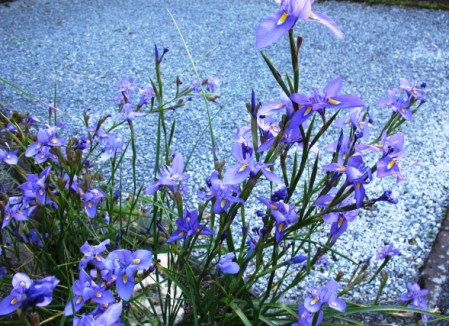
Is it worth growing onions when the product is so cheap to buy with consistent quality? Possibly not if your vegetable gardening is suburban dabbling and you have access to a good farmers’ market or another reliable source. We grow them because we aim at self sufficiency (even though we don’t always make it) and we like to know where our food comes from. If you grow your own, you can also go beyond the usual brown, red or spring onions. Kings Seeds have at least 10 different types listed. If you want the range, you will have to grow from seed. Alternatively you can buy bundles of seedlings which look like baby spring onions, at the garden centre.

Onions don’t like heavy soils. They do well in light, sandy soils but you need to build up the soil fertility by using manure, a green crop, compost or fertiliser. They don’t have big root systems. In fact they don’t have a lot of top either so you have to make sure they don’t get swamped and shaded by competitive weeds. Onions get planted any time between autumn and spring though you won’t be harvesting until next summer and autumn. However, different varieties of onions have different planting requirements in that time span so check the instructions.

Spacings depend entirely on the variety. Some are small so can be grown close together while others need room to develop. While commercial production uses a non bulbous variety (Allium fistulosum) for spring onions, home gardeners know that any thinnings and surplus juvenile plants will fit the bill.

First published in the Waikato Times and reprinted here with their permission.