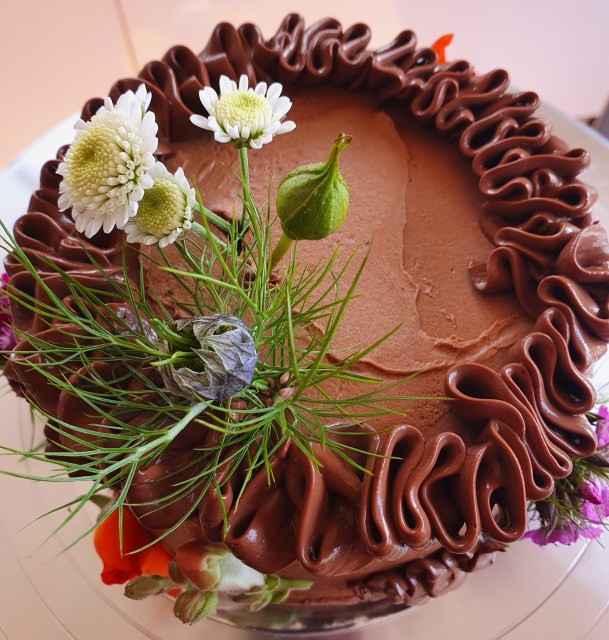
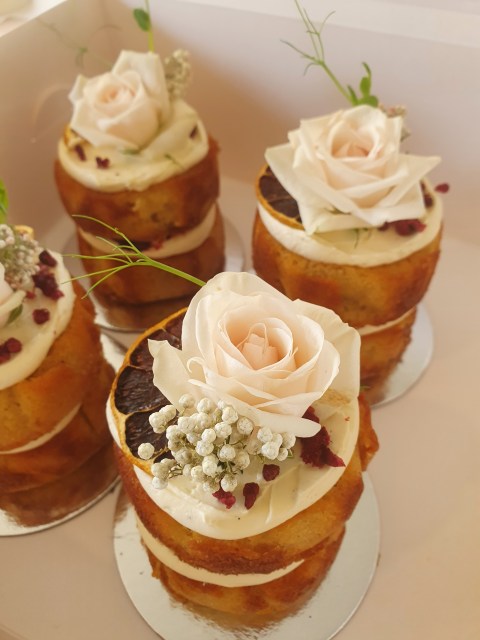
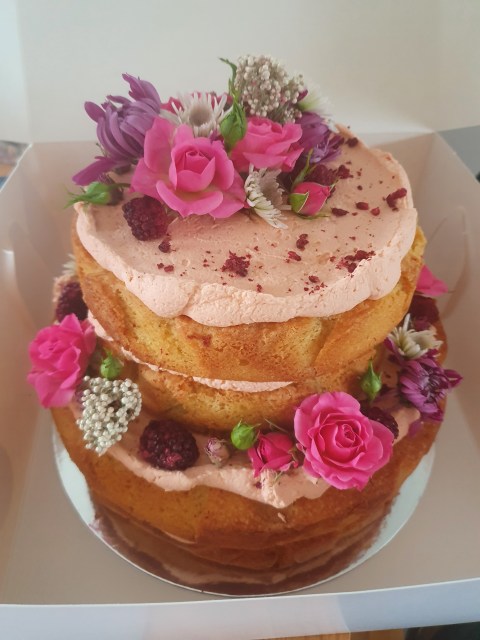
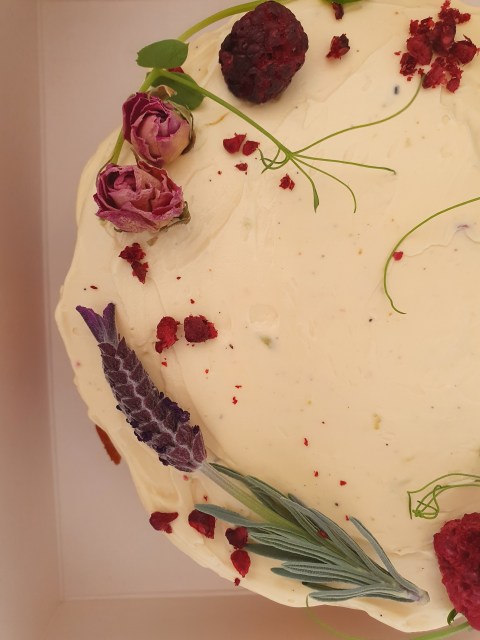
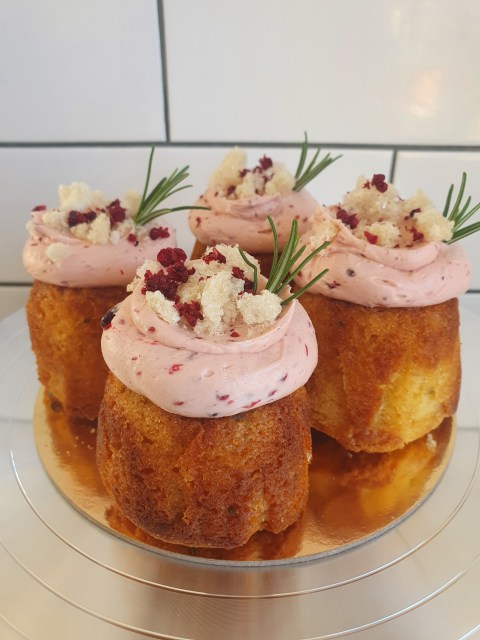
Not my efforts. I do not make cakes like this. These cakes are all the work of Rose Lawrence from the Garden Cake Kitchen
And lo, there will be cake.
On the first Sunday of the garden festival – 30 October – Rose from the Garden Cake Kitchen will have her wares for sale during the afternoon concert by La Mer. French Cafe-style music blended with gypsy swing and extravagant cake on our front lawn – what could be better? I admit that it would be better if we could guarantee a fine day because the concert is weather dependent, but that is beyond our control, alas.
Rose describes her cakes as “botanical-inspired, perfectly imperfect, and even more delicious than they look!” Rest assured that we will be carrying out some quality control testing.
To be honest, I am not even sure how one serves a slice of cake from this type of construction but fortunately, I will not be serving cake personally.
Rose will be selling her cakes by the slice and there will be a limited amount of gluten-free and vegan slices as well.
If you are coming to the Centuria Taranaki Garden Festival over that weekend, please join us on our front lawn. There is plenty of room. I have just posted a second video of La Mer’s music on my Facebook page here, to capture of the flavour of the music as well as the cakes.
The Sunday morning Nature Journaling workshop with Jennifer Duval-Smith has sold out but there are still a few spaces left in her other three worksops – Meadows and Wildflowers on Saturday 29 October, Grandeur and Glory of the Rhododendron on Tuesday 1 November and Flowers of the Early Summer Garden on Saturday 5 November. For more details and bookings, go to the festival website.
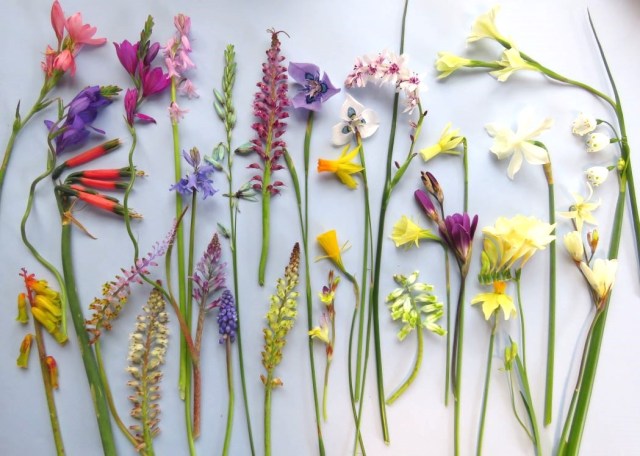
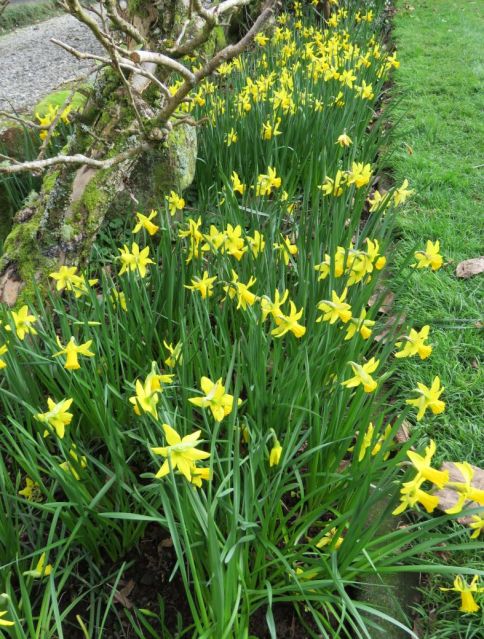
I picked a sampling of the smaller bulbs currently in flower yesterday morning, just before the rain returned
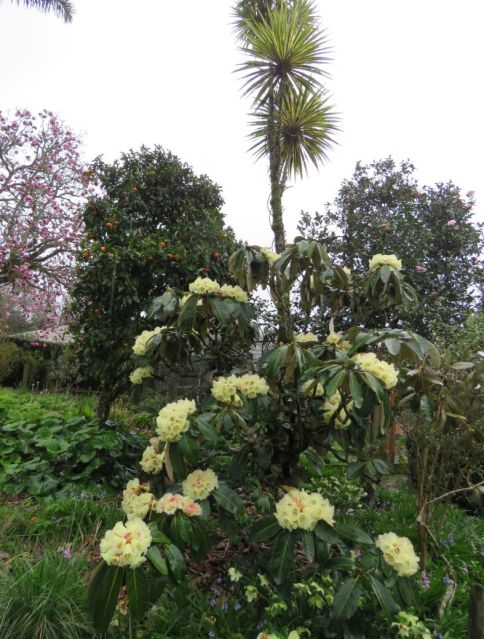
I was thinking about writing about rhododendrons this week. The big-leafed Rhododendron macabeanum that was *temporarily* heeled into the Iolanthe garden years ago, pending relocation to a more suitable spot, is looking absolutely splendid. It is clearly in its forever home where it is. And the firecracker R. spinuliferumnever fails to delight me, but the rain has returned, interfering with photo opportunities. Apparently four consecutive fine days is all we can expect. Besides, for all the grandeur and stature of the fine rhododendrons, it was the simple sight of a few flowering bulbs down in the Wild North Garden that gladdened my heart more.
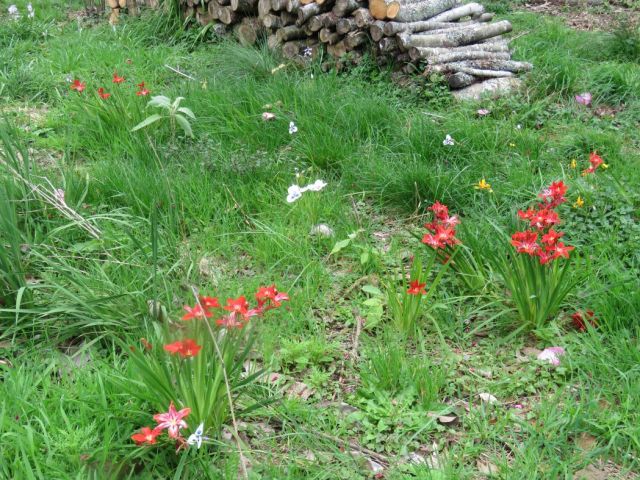
A simple sight on an ongoing project but one that is delighting us all. Red valottas, moraeas and a dainty little yellow bulb that I have forgotten the name of but belongs to that babiana, sparaxia, valotta group of bulbs.
Have I mentioned before how much we love gardening with bulbs? Of course I have. The Wild North Garden is now largely the project of our garden apprentice, Zach. I give him surplus bulbs from the more cultivated house gardens that we think may be able to bed in and compete in the more naturalistic environment and he plants them where he thinks they may thrive.
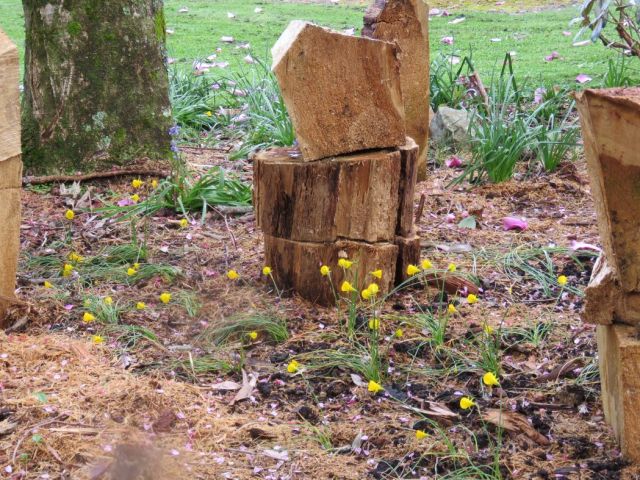
The Narcissus bulbocodium were planted planted just last week but have already opened up their flowers
Zach has also been tidying and replanting the area where the fallen giant gum tree laid waste when it fell in Cyclone Dovi last February. Because there are enough trees and shrubs in the area that will recover over time, we have taken advantage of the more open conditions to thread rivers of surplus bulbs through below.
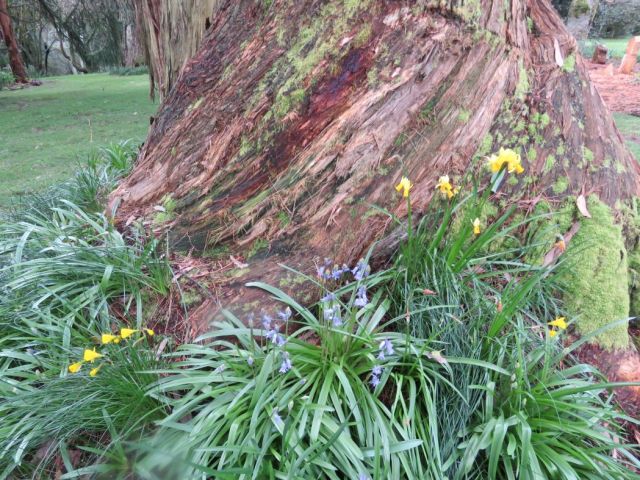
This is another gum tree – you can tell by the characteristic twist in the trunk – but fortunately it survived Cyclone Dovi and its falling neighbour.
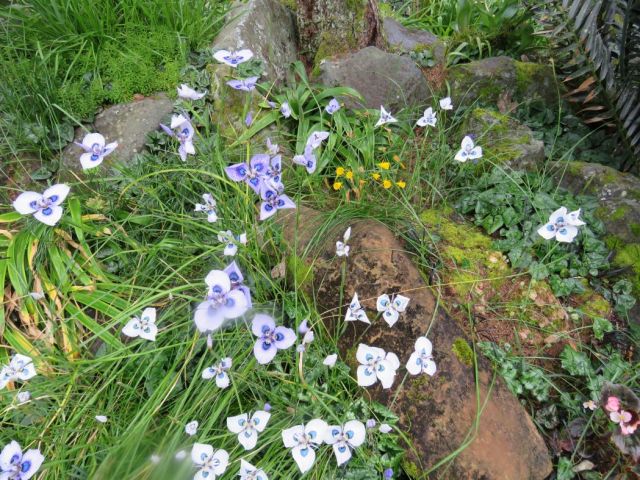
Wilder areas need tough, robust bulbs that are capable of surviving competition. That means bluebells, snowflakes (leucojum), snowdrops, some of the vigorous smaller narcissi and lachenalias, peacock iris (Moraea villosa), valottas and the like. The more delicate, pernickety bulbs are given prime positions in well-tended areas like the rockery where we can guard them from being out-competed by stronger plants.
Moraea villosa and bulbocodiums in the rockery
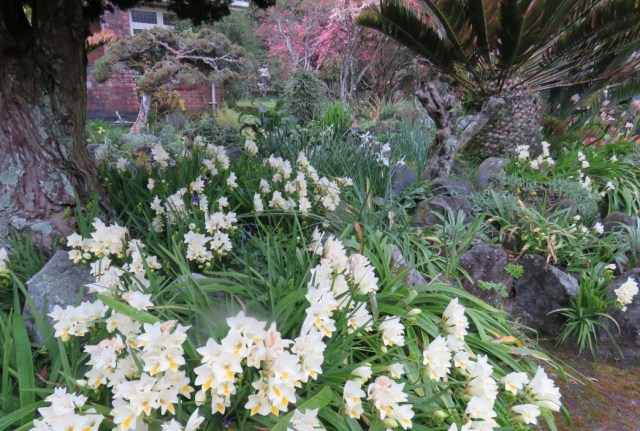
There are too many freesias but we will relocate some and they are pretty on their day.
The most interesting bulbs also have back-ups kept in pots, sometimes in a covered house. They don’t get a lot of love and attention but the conditions mean they are more likely to survive and enable us to replenish the garden when they may have died out or to extend existing plantings. This is particularly true of some of the more interesting lachenalias, especially the blue forms.
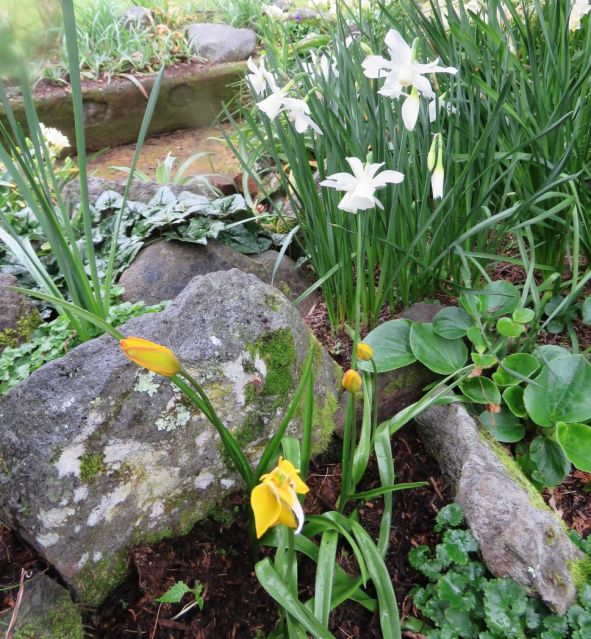
Somewhere I have the name of this yellow tulip species. I am just not sure where. It does not exactlyy thrive here but it does keep returning each spring as long as it is given its own space. The white daffodil behind is ‘Thalia’.
It takes ongoing attention to keep the detail in a garden and it is the high level of detail that brings both Mark and me most pleasure and interest on a daily basis. Vistas, views and big pictures – a beautiful magnolia in full bloom or the aforementioned R. macbeanum – are great but they are only part of the gardening experience.
“Why do you like the dwarf narcissi?” Ruud Kleinpaste once asked Mark’s dad, Felix. when in the garden filming a story on magnolias for the TV garden programme hosted by Maggie Barry.
“Because they are small,” Felix replied.
I know exactly what he meant. I did, however, pop out briefly in the rain to snap the macabeanum for readers who prefer bigger, showier pictures.
Rhododendron macabeanum
The macabeanum was not supposed to stay in this position because it will grow a great deal larger over time but we will work around that as need be.
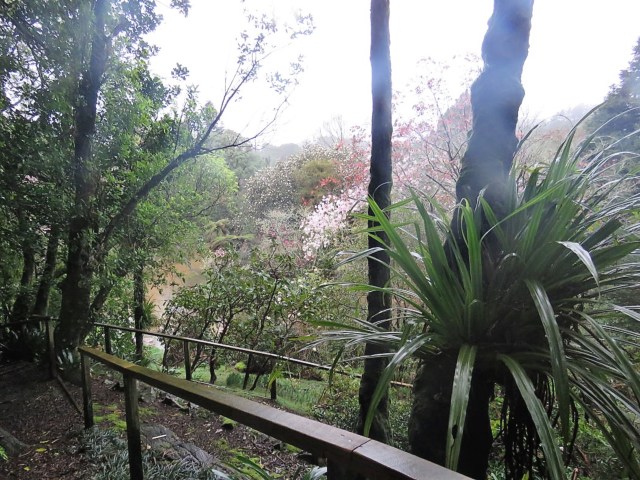
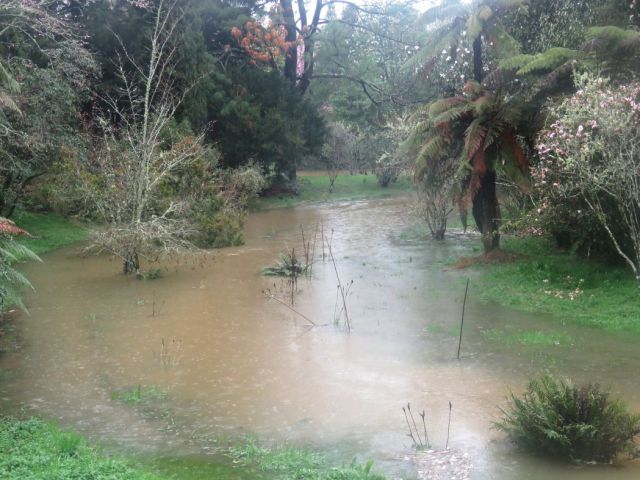
Heading down into the park, the flood waters are visible to the left
The rain started late on Tuesday and as I write this on Saturday, it seems to be stopping. Firstly, heartfelt sympathies to those up and down the country who have been badly affected – particularly the Nelson area and Northland where extensive damage has occurred.
The stone bridge is beneath that water
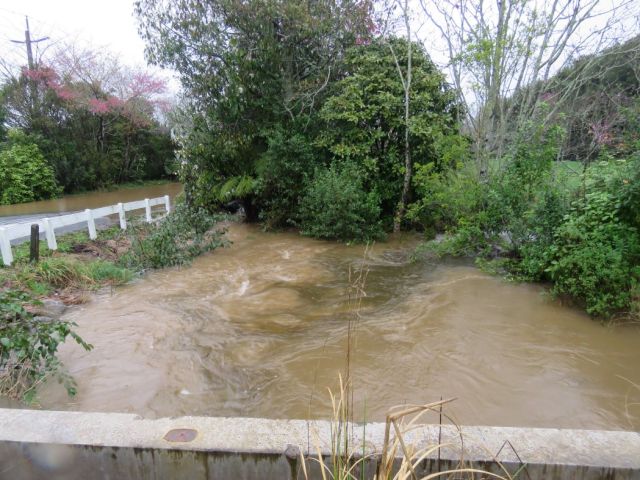
It isn’t the biggest flood we have had here but it is sizeable. We cope with our floods with resigned equanimity because they don’t threaten our house or property. We are not slip-prone and the house will never get flooded. The water comes up and up and then, because we have brilliant drainage on our volcanic soils, it goes down just as quickly when the rains stop. Others are not so lucky and we would be a great deal more stressed if we were faced with the devastation I see in other parts of the country.
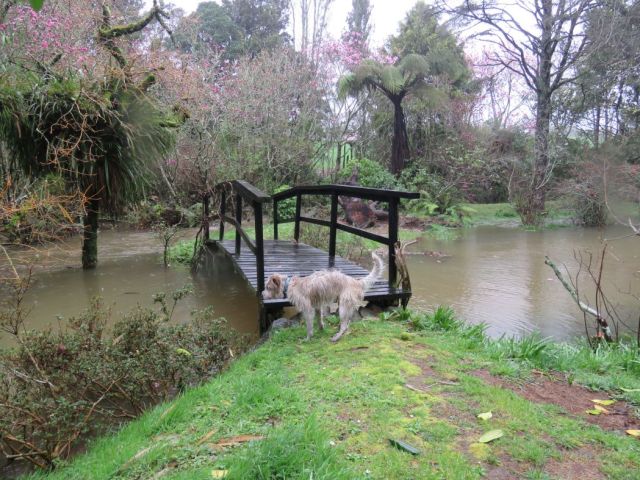
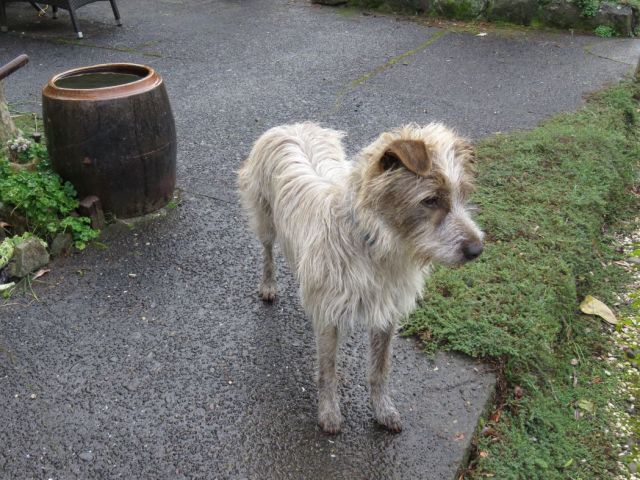
What we refer to as the high bridge, which is not so high at the moment. Ralph is unphased by getting wet which makes a change from aquaphobic Dudley dog who heads indoors at the first raindrop.
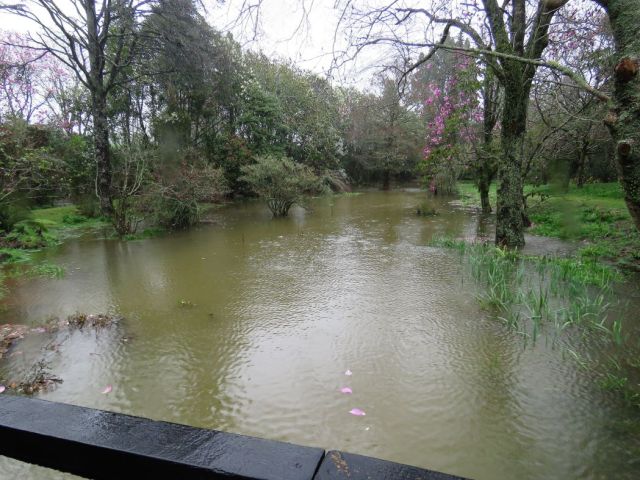
Standing on the bridge, looking upstream
It is a huge issue in New Zealand where most settlement is around the coastline and often at the mouths of rivers so on the natural flood plain areas. It seems highly possible, if not probable, that torrential deluges are to become more common with climate change. This is not a comforting thought.
Confined indoors, I realise how much we live our lives out in the garden. I cleaned the oven instead and all I can say about that is my double width de Longhi wall oven is brilliant to use but was clearly designed by an Italian man who had never cleaned an oven in his life. I am not sure what to do with my time next if the weather doesn’t clear.
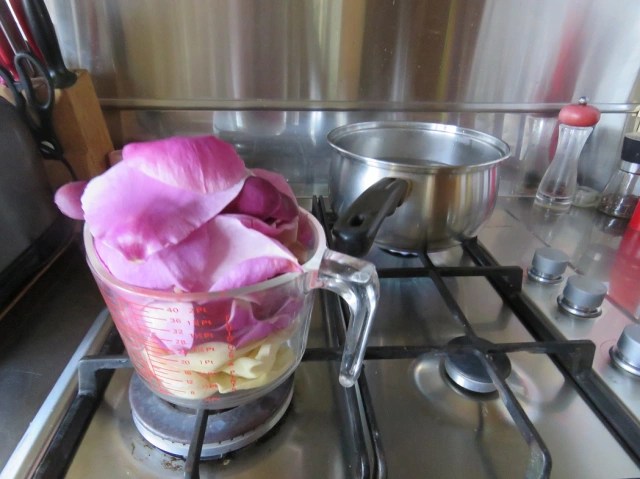
Maybe it is a good day to gather magnolia petals for a couple of jars of pickled magnolias. I was surprised last year at how easy these are to make and how delicious they are. They would be perfect to accompany rice paper rolls but we had already eaten them before I remembered to make the rolls again. If you want to try this at home, younger, smaller petals are best. They don’t keep their colour in the pickle so a pretty mix is not necessary. Keep to deciduous magnolias; michelia petals are not a nice flavour.
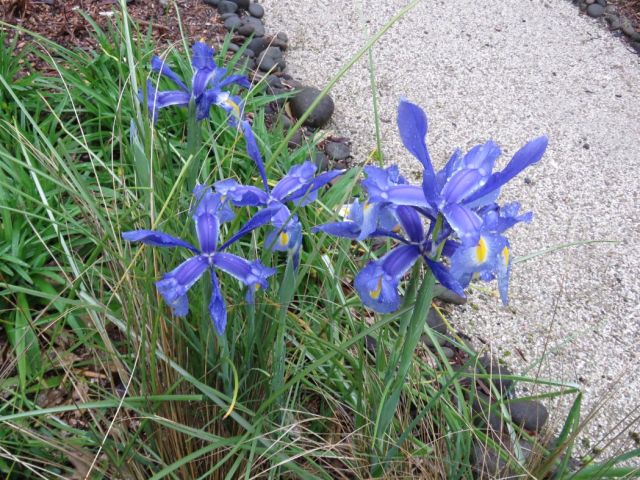
Out in the garden, I must acknowledge the resilience of the Dutch iris. These are not my favourite plant by any measure but the narcissi are bent double from the heavy rain, the magnolias and michelias are shedding petals everywhere, the camellias are browning on the bush while the Dutch iris stand firm and tall, unmarked by the rain. In the right place, they are a lovely addition to the early spring garden.
May the sun return for everyone this week. There is work to do in the garden.
The confluence of two streams entering our property. Despite the rain, you can see the stream to the right is reasonably clear water. This is because it has a long distance of riparian planting filtering the run-off before it enters the stream. The stream to the left is unfenced, unplanted and the water is running straight off grazed farmland, washing topsoil to the sea.
New dog Ralph is no respecter of gardens and one recent morn, I looked out the window to see him standing in the middle of my self-sown patch of parsley having a pee. Now I can never use that parsley again. Mark suggested washing it well might suffice but I think not.
New dog Ralph. That is a prostrate thyme at ground level that the bees love when in flower but I don’t pick because it has almost no aroma at all so I assume the flavour content is also lacking.
Then I found something even worse in the mat of marjoram. I have no idea if that was Ralph, Dudley or Thor who likes to visit from next door, but enough is enough.
I am no expert on herbs but I like to use them fresh. None of those dusty packets of dried leaves for me, thank you. I don’t even like buying pre-stuffed chook or herby-coated chicken in the supermarket because all I can smell are those dried herbs.
I keep the herbs I use all the time close to the back door so I can get to pick them without having to put on shoes. Oregano, marjoram, tarragon and rosemary are in the dry, hot border beside the house. Parsley, mint, chives and thyme are in the parallel border just across the drive. I have to walk a little further to get the bay leaves, the self-sown coriander, the second area of self-sown parsley and the less-favoured sage whereas the fennel I harvest and store the seeds. Sometimes Mark will grow basil in the summer vegetable garden. There are many more herbs that can be used but those are the staple herbs we favour.
I have only written about herbs once before that I can remember and that was back in 2009. At the time, I advised never to plant herbs on the corners of garden beds because that is where dogs will pee and cats will spray to mark territory. As far as I know, that has worked for us in the past when we favoured smaller dogs. But Ralph is larger and more energetic.
In that 2009 article, I also queried the merit of the designated herb garden which was pretty fashionable back in those days. Different herbs need different growing conditions. In the days of yore, the medieval herb gardens were much more extensive and more focused on medicinal herbs than culinary options. Scaling it down to a small modern garden is not likely to be successful in providing the different conditions needed to grow them well. Besides, while some herbs are pretty enough on their day, as a group of plants they are utility more than ornamental.
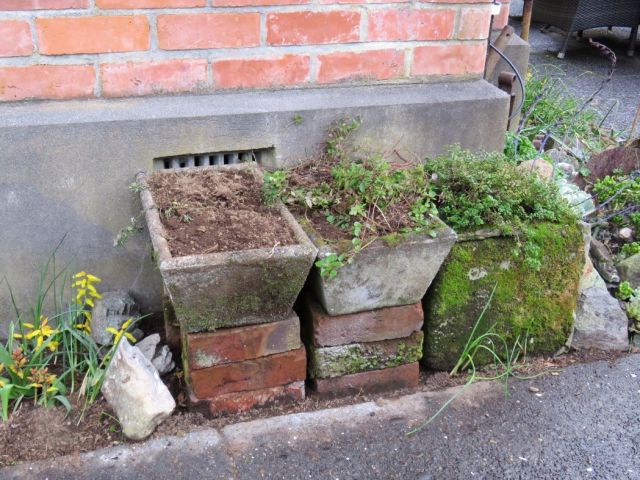
Concrete laundry tubs recycled to elevate herbs
Fortunately, we are an establishment rich in stored resources so elevating my back door herbs was not such a major exercise and cost no money. Tucked out behind the grapehouse were the old twin concrete tubs which we discarded when we renovated the laundry 20 years ago. We elevated them further using concrete pavers and blocks and I think they are high enough. They now hold mint, thyme, chives and some small parsley plants that need to grow before I can harvest them.
Two concrete troughs and an old concrete planter repurposed in the pursuit of herb cleanliness
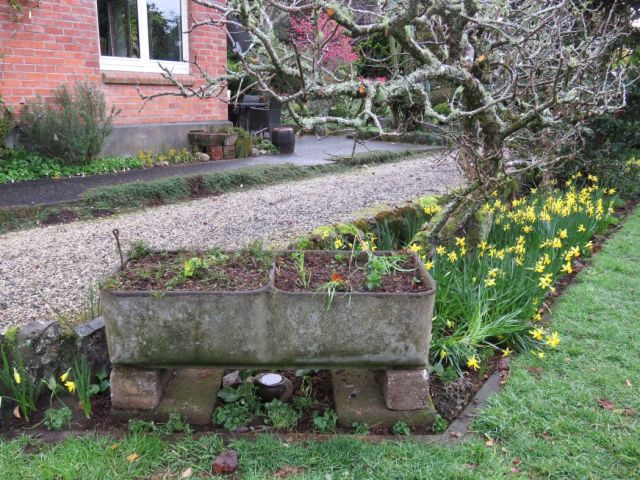
The oregano and marjoram need hotter, drier conditions to build up flavour. These are still in the dry house border but now elevated in smaller concrete troughs that Mark’s dad Felix made back in the 1950s in the days before you could pop along to the shop to buy such things (though mostly in plastic these days).
The narcissi in the apple border behind the trough, now minus the parsley plants – all Peeping Tom at this time of the year, although a ground hugging blue campanula and yellow daisy Doronicum orientale will take over later in the season.
I protected the drainage holes with broken pieces of terracotta pots and put in a thick layer of gravel at the base of all the tubs because drainage is everything for herbs generally (mint is the exception). I then used a 50/50 mix of top soil and homemade compost for the plants to grow in. They may need the occasional water in dry times but there is a nearby tap.
Mark has just come in and commented that Thor-from-next-door paid a visit and was lurking around the area out from the back door, peeing everywhere, including against the container holding the herbs which, fortunately, are now safely out of the way. So this new configuration has at least passed that test.
Finally, because my elevated herb planters are not very exciting visually, a few photos from yesterday morning. Spring has sprung here.
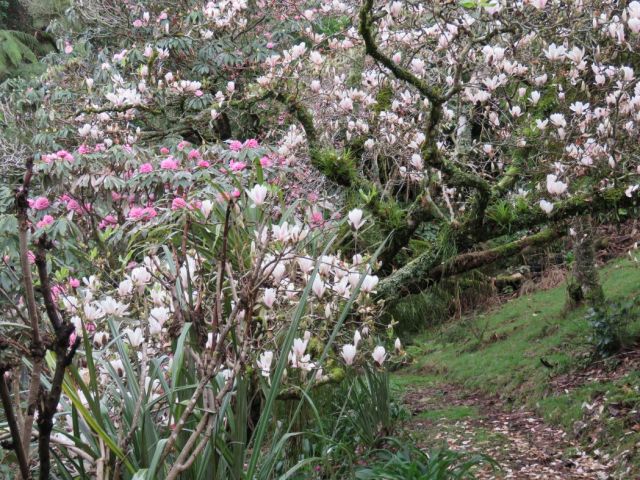
Magnolia x soulangeana ‘Alexandrina’ and Rhododendron protistum var. giganteum ‘Pukeiti’
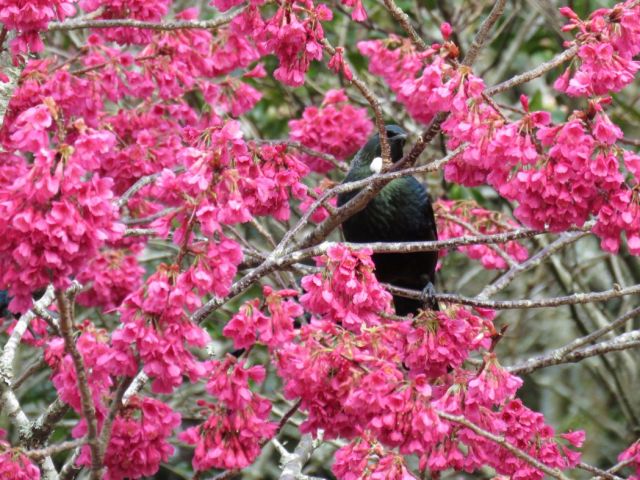
Prunus campanulata is controversial in NZ because of its seeding ways but our trees are so full of nectar-feeding tui that we are constantly in danger of being taken out by low flying tui heading from tree to tree.
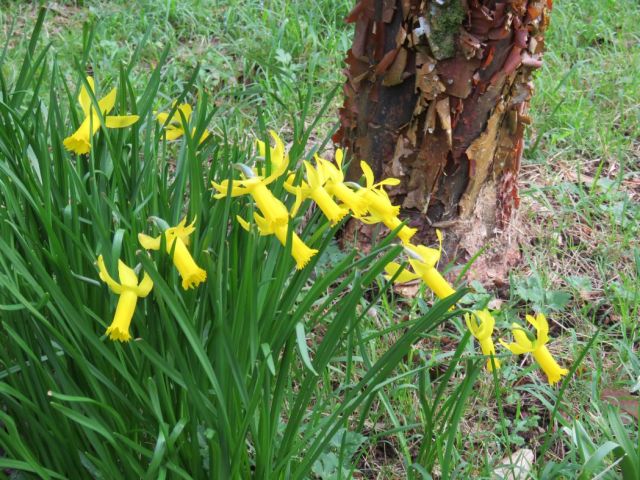
Narcissus cyclamineus seedlings growing in the park meadow agains the peeling bark of what may or may not be Acer griseum
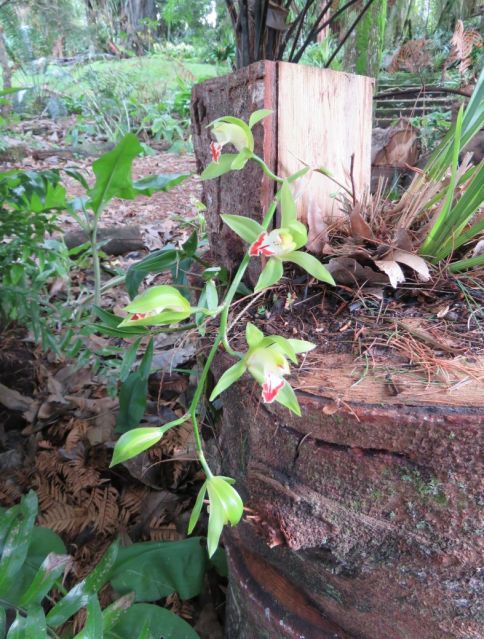
Our garden apprentice, Zach, has created an orchid garden in the barricades and was stoked to see the first plant in bloom this week.
First published in Woman magazine, July 2022 edition and reprinted here with additional photographs.
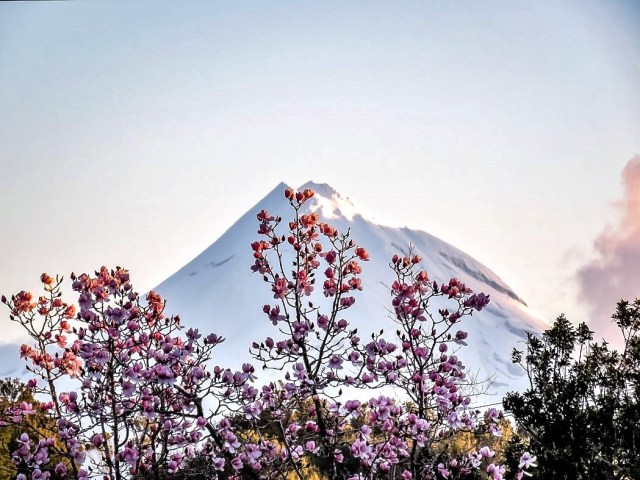
Magnolia campbellii is always the first to open a flower bud, seen here framed against the distant peak of Mount Taranaki.
I am a Jury. Ergo, I love deciduous magnolias. Why does one follow the other, you may wonder. My very late father-in-law, Felix Jury, was the creator of such varieties as Magnolia ‘Vulcan’, ‘Iolanthe’ and others and we still have the original plants here in the garden at Tikorangi. I am married to the man who created ‘Black Tulip’, ‘Felix Jury’, ‘Honey Tulip’ and ‘Burgundy Star’ with more to come soon.
I have long declared that the first blooms on the magnolias herald the start of a new gardening year. The first one to open for us is always the pink Magnolia campbellii in our park. It is one of the earliest harbingers of spring and we usually get the first flower a few days after the winter solstice which is around June 21.
Enter Matariki which we celebrated as a nation on June 24 this year. While we accept the Gregorian calendar dating back to 1582, that only determines the elements of time which are derived from Earth’s position in the solar system – such as the length of individual months, equinoxes and solstices. The assignment of certain dates to celebrations is an arbitrary human decision. The determination that January 1 is the start of a new year is based entirely on northern hemisphere tradition and it happens to come 9 or 10 days after the winter solstice. What I find fascinating is that Maori arrived at the same conclusion, give or take a few days. It may be six months out of step as far as the calendar goes but it is synchronised with the seasons.
Matariki is determined by the rising in the sky of the star formation generally known as the Pleiades and the start of the new lunar year. It just so happens that Matariki occurs within a few days of the winter solstice in New Zealand. It seems perfectly logical to me and of much greater relevance to my gardening year than the January 1 date.
Our pink Magnolia campbellii is not quite as predictable as the solstice dates and it doesn’t hit its peak display until well into July, but that first bloom bravely opens around the time of Matariki and is a significant seasonal marker for me. Each year, I don my woolly gloves on fine frosty mornings and head out to capture the one beautiful line of sight we have with the blooms on the bare tree and the snowy slopes of te mounga – Mount Taranaki – behind. I am using a zoom lens – te mounga is somewhere over 35km distant.
Over time, most magnolias grow into trees. From left to right are an unnamed pink seedling, Magnolia ‘Felix Jury’ and Magnolia ‘Manchu Fan’.
That magnolia was first sold in New Zealand in the latter half of the nineteenth century by a Lower Hutt nurseryman commonly referred to as Quaker Mason on account of him being a Quaker. It was also the first magnolia planted in our garden by my father-in-law, Felix Jury in the early 1950s. This pink M. campbellii is probably the most recognisable form in the country. Interestingly, that is unusual internationally. In the wild, most campbelliis are white. The pink ones are largely limited to a small area around Darjeeling in India and we should count ourselves lucky that Quaker Mason just happened to get a particularly good form of the unusual pink one to popularise here.
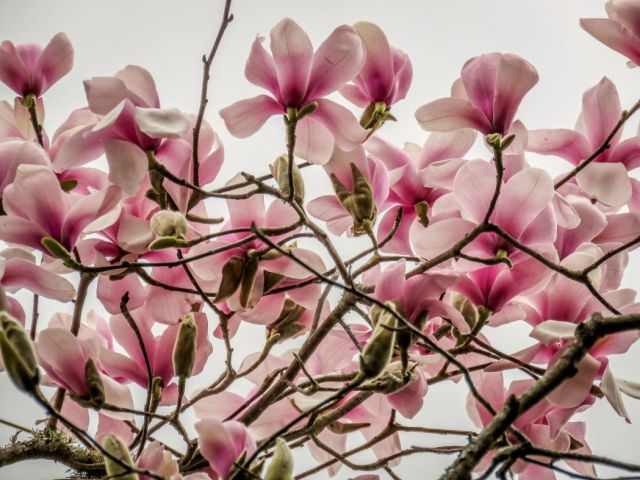
Looking up into the floral skyspaper of Magnolia sargentiana robusta
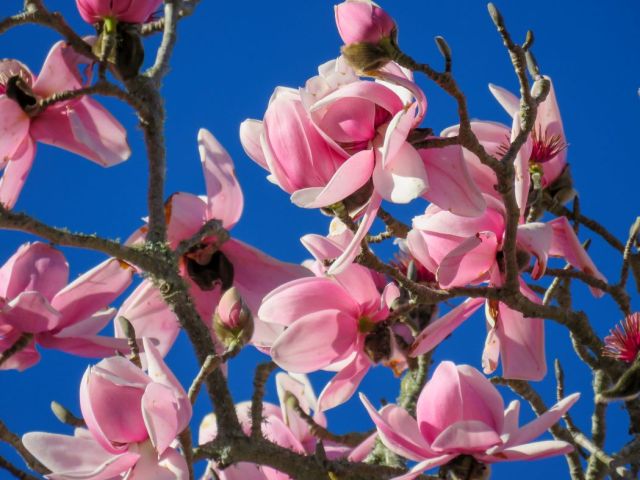
The magnolia flowering season from late June to September is a special time of year for us. We have many magnolias, both named varieties and species and unnamed hybrids from the breeding programme. This is a plant family where the larger the plants get, the bigger show they make.
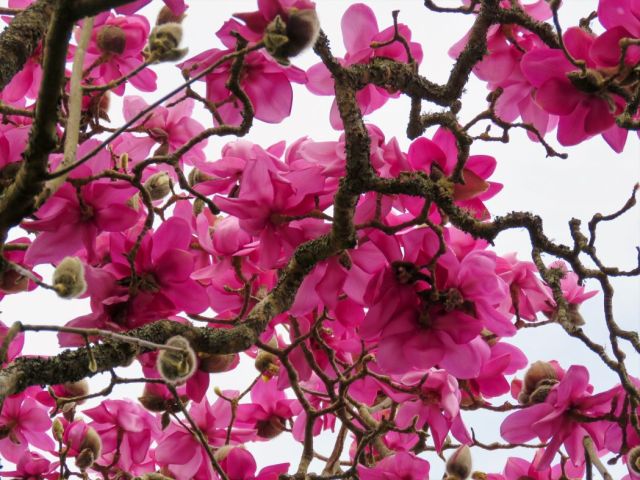
For me, the deciduous magnolias hold pride of place. That display of bare blooms on a tree with no foliage can take my breath away. Because we have large trees, I am often looking up from below and I describe it as floral skypaper.
The purple petals of Magnolia campbellii var mollicomata ‘Lanarth’ forming a carpet beneath.
When I look down, I see the petal carpets on the ground and I have a great fondness for petal carpets. However, I will concede that they are not great on paths, driveways and sealed areas where the carpet can soon turn to slippery brown sludge. We will use a leaf rake or leaf blower on sealed areas but leave the petals on grass or garden.
And looking up to ‘Lanarth’ against a grey wintry sky
Most of the deciduous magnolias are Asiatic in origin – particularly areas of China, northern India and Nepal. The exception is the one truly yellow deciduous species – Magnolia acuminata – which is from North America. It is one of the parents of all the yellow hybrids that have become available in the last 25 years.
USA is also the homeland of the most popular evergreen magnolias which are widely grown here. These are characterised by heavy, leathery leaves and large, white flowers. I am not a fan of the evergreen grandiflora types; the ratio of flower to foliage is not high enough for my liking. I prefer the 100% flower to 0% foliage of most deciduous varieties.
Michelias, on the other hand, are all Asian in origin with many also being found in tropical areas, so into Southern China, Vietnam and Thailand. These are also evergreen but with softer, smaller leaves than the American leathery ones, a higher ratio of flowers and they are smaller growing overall. Botanically, they are magnolias but they look very different to the deciduous magnolias and they fill a different role in the garden.
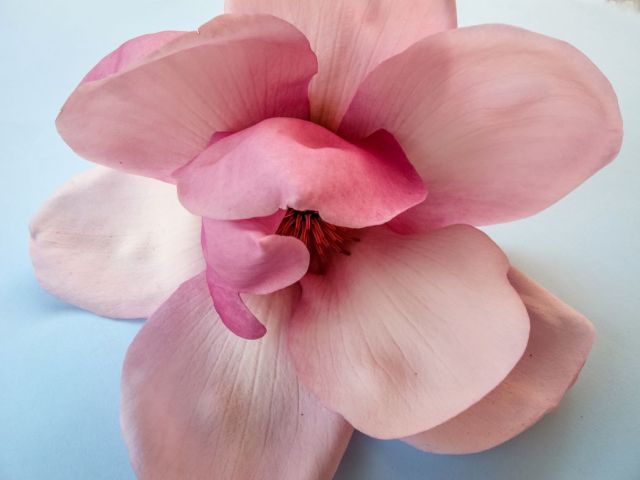
Magnolia Iolanthe in pink
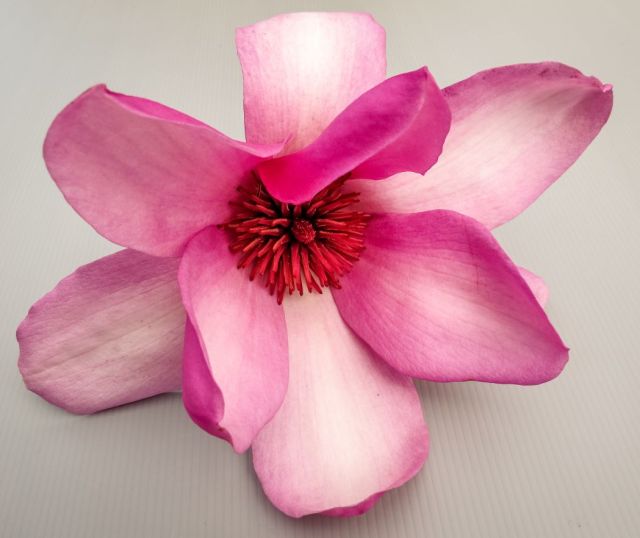
Magnolia Apollo in purple
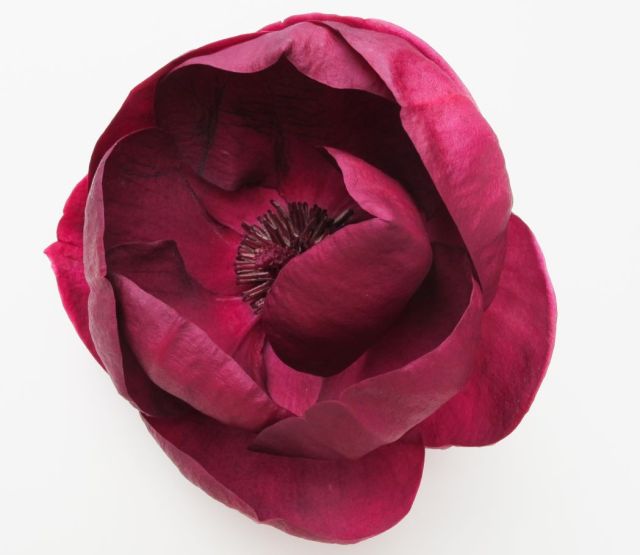
Magnolia Black Tulip in red
Magnolia Lotus in white
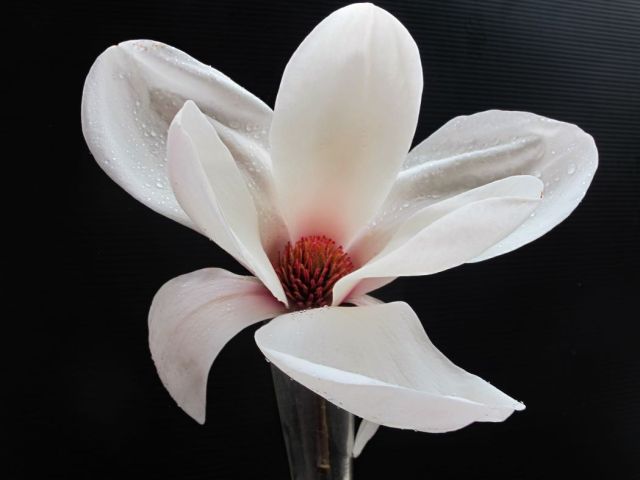
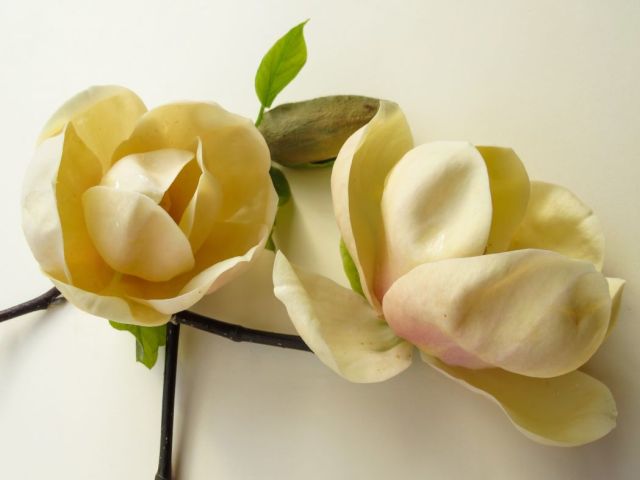
Deciduous magnolias come in shades of pink, purple, red, white and yellow.
Magnolias are ancient, evolving before bees emerged. It is thought that they were originally pollinated by beetles. Now they provide a food source for bees at a time of short supply in late winter.
We get deeper, richer colouring in magnolias in New Zealand. It is likely to be related to our soils, climate and the clarity of light here. The same plant can look very different with the colour washing out, particularly in Northern Europe and the UK where winters are longer and colder and light levels lower.
New Zealand is recognised internationally as leading the way on breeding red magnolia hybrids, initiated by Felix Jury with ‘Vulcan’ and continued by Mark Jury, Vance Hooper and Ian Baldick.
No, you can not get very large blooms on a deciduous magnolia that will stay a small plant under two metres. Smaller growing varieties will have smaller blooms and the vast majority of deciduous magnolias are trees, not shrubs.
If you have a magnolia where the buds either drop off or fail to open properly, it is a sign either of frost damage or pest damage by rats or possums.
When deciduous magnolias have new leaves that are clearly distorted on opening, it is an indication of spray drift. Lawn spray is the main culprit. If you feel you must spray your lawn, don’t do it in early spring when the leaf buds on magnolias are about to break into growth.
The limited range of species that were all that was available in the past could take 15 to 20 years before they set flower buds. Nowadays, you can expect magnolias to bloom within a couple of years of planting and some will even be sold with flower buds.




 Tikorangi The Jury Garden