Tag Archives: Abbie Jury

The cabinet minister who fell from grace, my late mother-in-law and phallic symbols

Lighting up the winter gloom on the North Taranaki roadsides

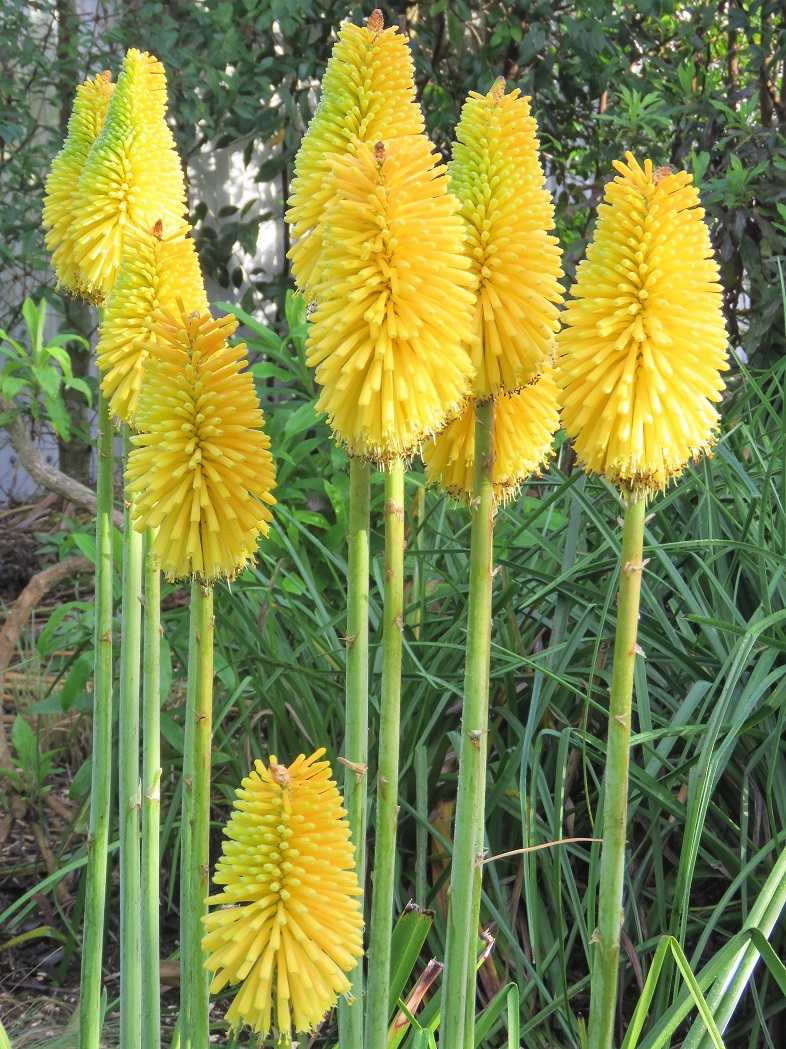
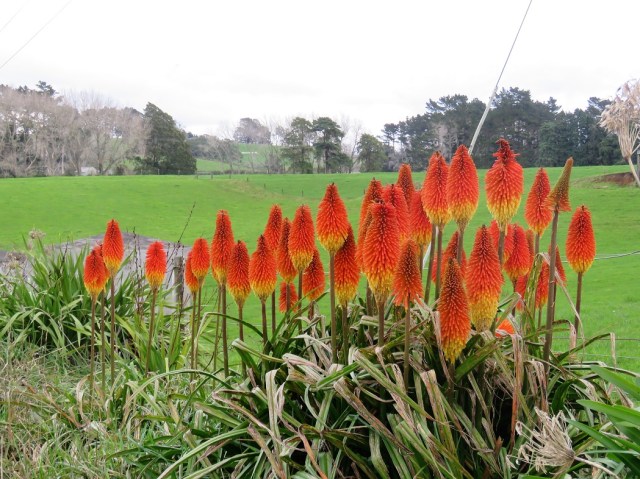
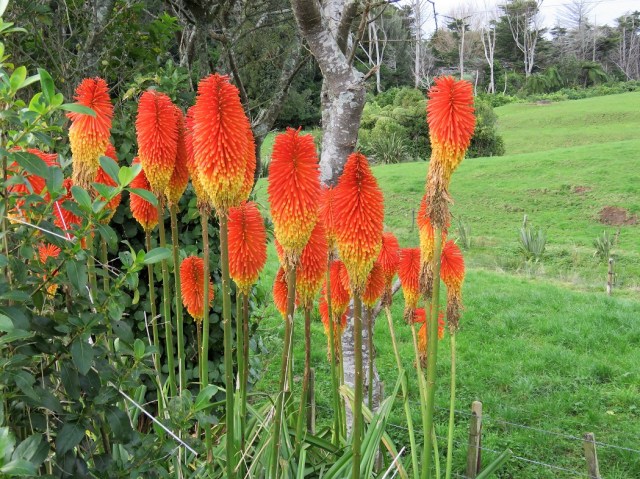
At this time of the year, the most cheerful splash of colour on a somewhat gloomy winter’s day comes from the ubiquitous red hot pokers that grace our roadsides. They make me smile, especially as I see them spreading and achieving what a lesser remembered Member of Parliament mooted, much to the chagrin of my late mother of law who is probably cringing in her grave.

I have told this anecdote before but I make no apology for repeating it. It returns to my memory every winter and I still think it is funny.
The MP was named Derek Quigley and he will have slipped from most people’s memories. He would have vanished from mine entirely, were it not for the kniphofia. Demoted from his Cabinet role in finance in 1981, he threw his energies – such as they were – into his minor portfolio of the day, which was tourism. International tourism was still pretty much in its infancy back then. His frightfully clever idea was to plant up the roadsides with a different plant – all exotic introductions – for each of the provinces. Canterbury, he suggested, could be themed with cherry trees. That would suit the grace, tradition, class and Old Money that some saw as characterising his home province. I don’t recall what the other provinces were to be allocated but as the man was neither horticulturist nor gardener, they would have been random plants that he knew the names of.

Taranaki, well, Taranaki was to be clothed in roadside red hot pokers, he suggested.
Enter my mother-in-law, Mimosa. She was given to lengthy anecdotes but was not without a sense of humour. To this day, I remember the car journey where she was aghast at Quigley’s plans. She regaled us with a complicated story from her childhood, replete with plenty of extraneous detail where none of us could see quite where the story was headed. We were a captive audience in the car, you understand. The upshot was that her sex education in her childhood (presumably late 1920s) began and ended with being given a book on the topic. I imagine the book to be along the lines of the Flower Fairies of Sex Education because Mother was a blushing violet; Father – he was a red hot poker.

Father was a red hot poker (!!!!)

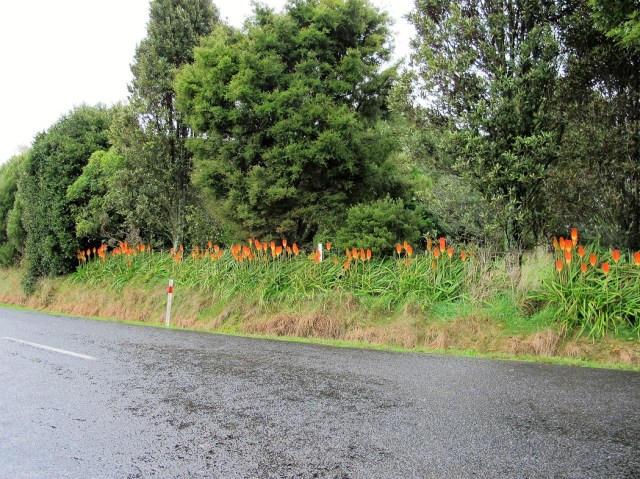
Forty years on, Nature is achieving what Derek Quigley failed. The roadsides of North Taranaki are increasingly clothed in what were undeniably, irredeemably, inescapably phallic symbols to Mimosa.
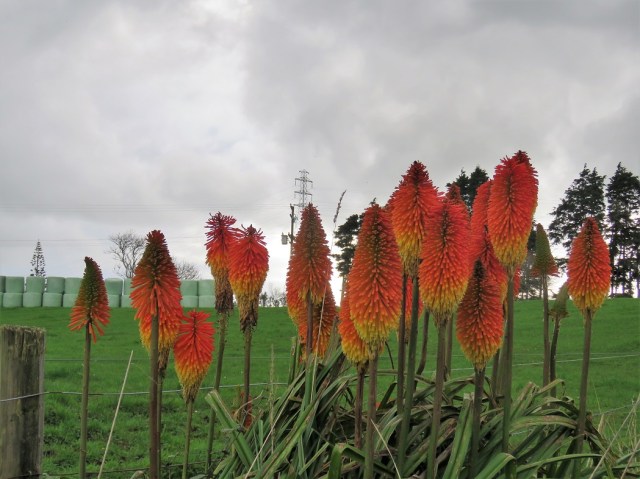
Chalk a victory up for the former cabinet minister, even though he had nothing to do with this scene today

There is little variety in the roadside plants which I assume are all just Kniphofia uvaria. In looking this up, I found that Auckland Botanic Gardens did a trial of different named cultivars to see which were the best performers there but I have no idea on how readily available these are to buy.
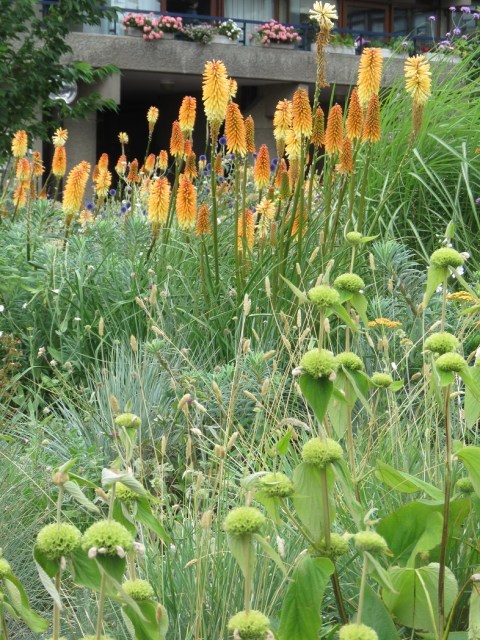
Tawny kniphofia at the Barbican in London

We noticed on our last visit to the UK in 2017 (and, sadly, that may turn out to be our very last visit) that kniphofia were very popular as garden plants. I would quite like to get hold of this pretty tawny one we saw used extensively in the elevated garden at the Barbican if anyone has seen it in New Zealand. Beyond that, we may have to make do with the red and yellow forms we have and the splendid pure yellow I showed a couple of weeks ago. The yellow will be a named form; we just don’t know the name.
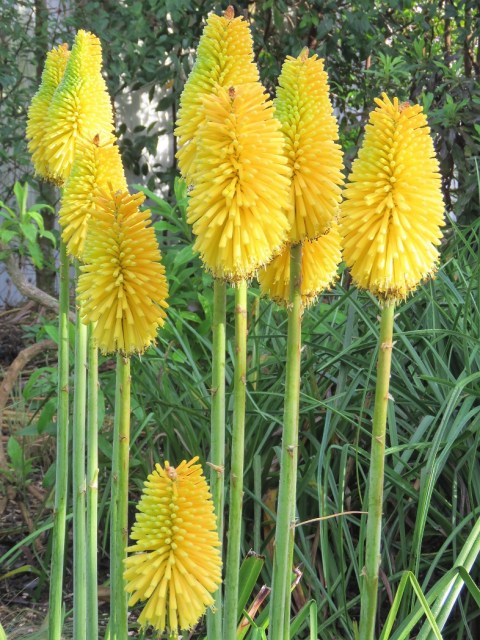

Gratitude. In shades of yellow on an early winter morn.

Our maunga, Mount Taranaki, wreathed in snow and cloud yesterday morning

If anybody said to me a year ago that the world would still be on hold with rampant Covid in mid 2021, I do not think I would have believed them. I guess we thought it would burn itself out and we would see some sort of return to the old ‘normality’. The opposite is the case. By most objective measures, the pandemic is actually getting worse and we may yet have to grapple with a scenario where a highly contagious strain emerges that is resistant to vaccines.

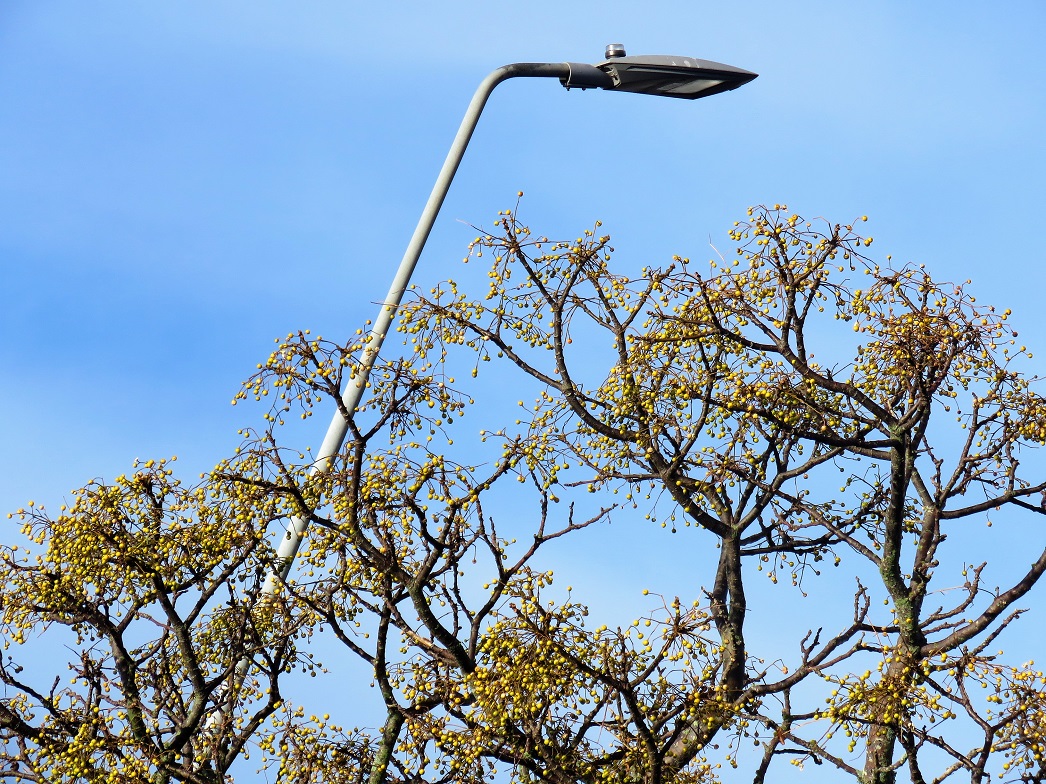
Melia azedarach, or the Indian bead tree, has been used as a street tree in my local town of Waitara – showing its yellow berries or drupes

As we see other countries that have pursued elimination strategies now battling border incursions with new, more rampant strains, New Zealand and a number of south Pacific islands stand alone as places with no community transmission. But we have to be realistic; it is a matter of when, not if, we get another border incursion. It is the result of both good luck and good management that has kept us free so far and there will be a time when that luck fails. If you are of a mind to question how good our management has actually been, you should at least concede that it has been and continues to be  better than most.

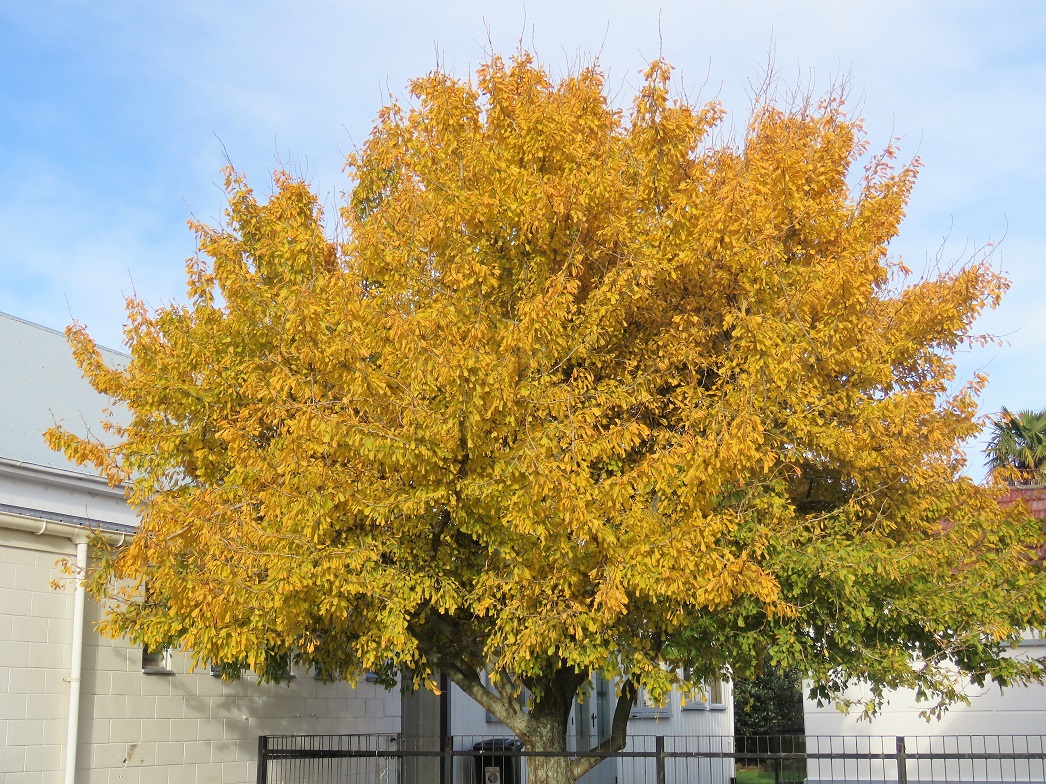
I went past a local church to photograph the Magnolia campbellii coming into flower (not shown here because it is pink and I am on a yellow theme with blue sky). I am not sure that the good folk at the Church of St John the Baptist actually realise how large this glorious Ginkgo biloba will grow…

There are times I get a few pangs about not being able to travel as we used to. I miss that stimulation and inspiration. And it may be that our future offshore travel will be limited to family events, and quite possibly just to Australia. Even when travel opportunities reopen, I won’t be rushing to book further afield. Long haul air travel was never fun in better times; the prospect of sitting on aircraft for 27 hours or so (one way) wearing face masks and being attended by air crew clad from head to toe in PPE sounds grim, let alone transiting Covid hot spot air terminals on the way.  

But, there are worse places to live out our dotage than here. And in this first week of our antipodean winter, all the yellows reminded me to be grateful for what we have and where we are.

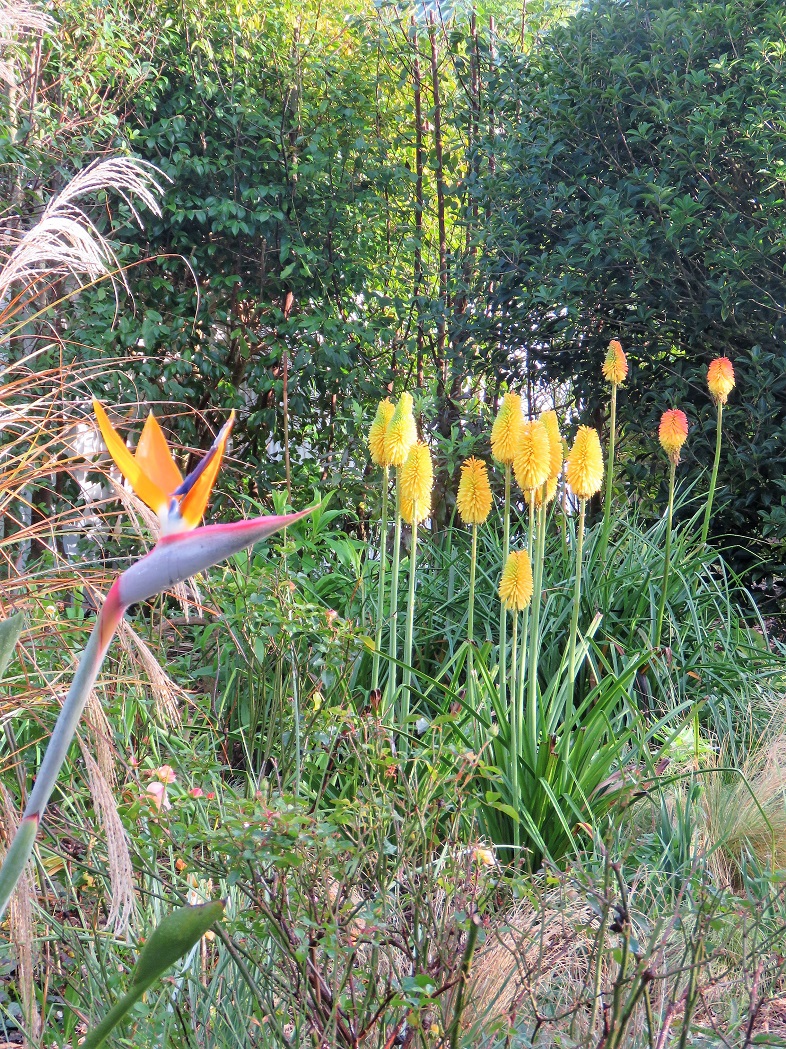
The exotic bird of paradise flower, Stelitzia reginae, made an unexpected apprearance on this, the first week of winter
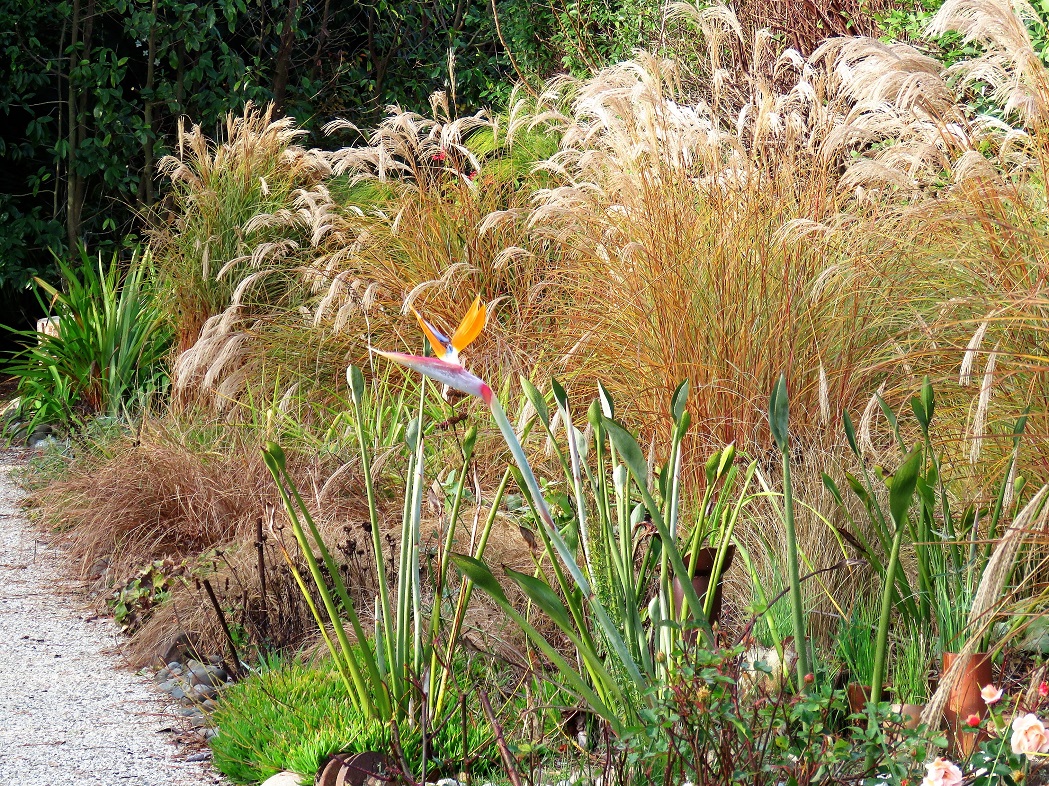
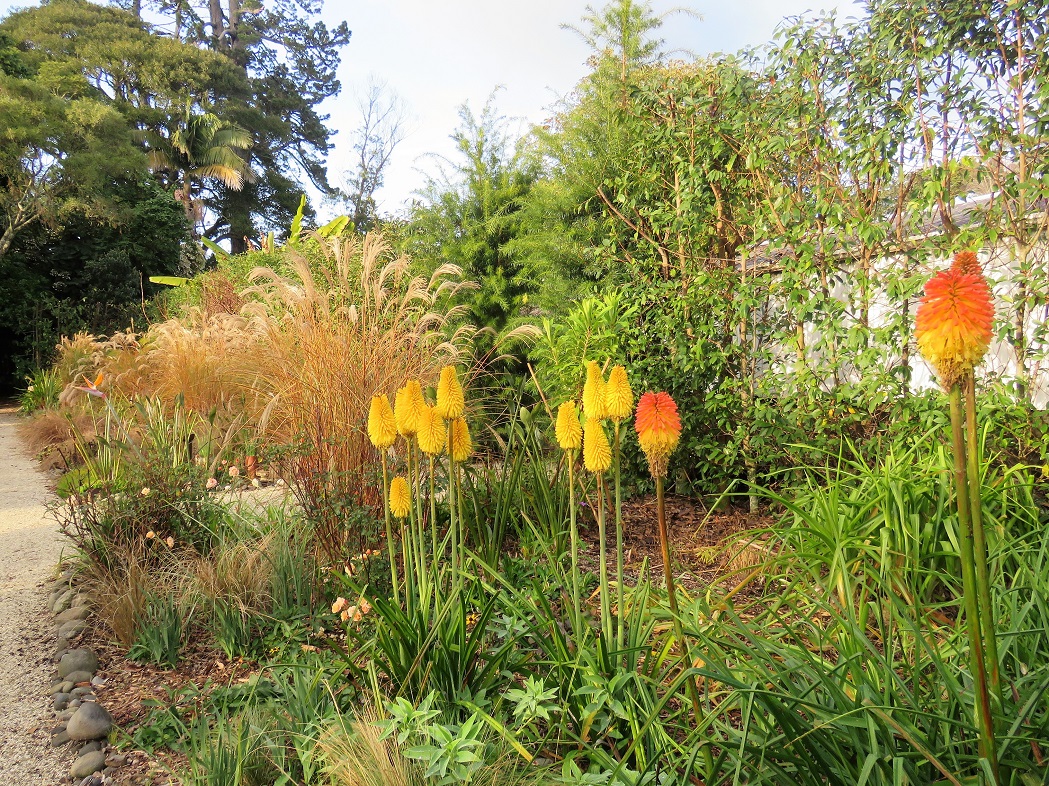
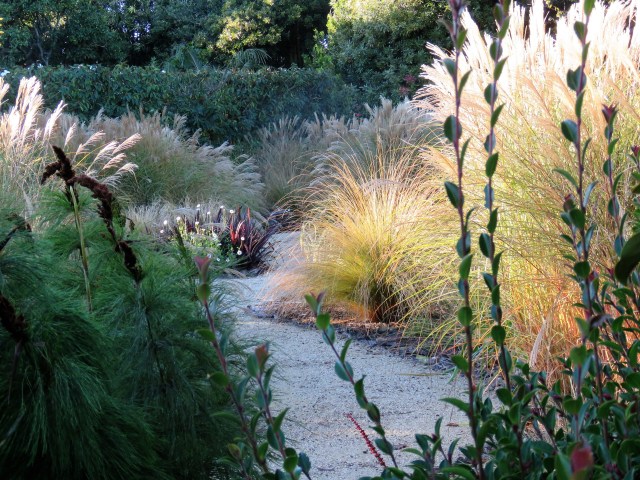
The borders in winter – miscanthus and strelitzia
I don’t know the name of this kniphofia – Mark retrieved it from just inside our far boundary fence line where a neighbour had tossed it over into our shelter belt – but it certainly is handsome and a very pure yellow
The orange and yellow kniphofia is a species but we have lost the name. It is a terrific performer but rampant. And it seeds down readily. I may end up replacing it with one that is better behaved in a garden situation. For winter, the borders still look reasonably well furnished.
The colours of late autumn

Persimmons – golden orbs against a clear sky in late autumn. Being an old fashioned, astringent variety, we have to wait until they are very ripe before picking them

Here we are, 23 days off the shortest day of the year and in the late autumn phase. The daytime temperature has dropped to the mid teens celsius and we even had a light frost this week. But we are lucky here that our light levels during the day don’t drop much. It just gets dark earlier.

The first of the sun’s rays hitting the Court Garden this week

We never get that grey, leaden look of spent perennials and patches of dark green that characterise many gardens in colder climates, let alone the blanket of white snow many northern countries experience. But neither are we tropical. I have busted out my thermals already. In self-defence, we do not retire indoors as the temperature drops and we are out and about in the garden in all but the worst weather.

Luculia gratissima ‘Early Dawn’ in sugar pink
Luculia pinceana ‘Fragrant Pearl’ with its white rounded heads
Luculia pinceana ‘Fragrant Cloud’

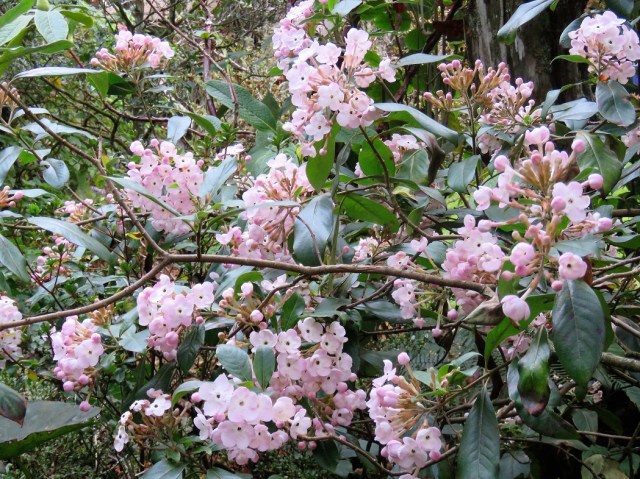
The luculias are in flower. Rangy and frost tender these plants may be, the scent is divine and the flower heads are large and attractive balls of colour well into winter. My favourite is the almond pink of ‘Fragrant Cloud’. Unfortunately, they don’t hold well when picked but we keep our house at a warm temperature in winter that is not conducive to any garden flowers holding well indoors.

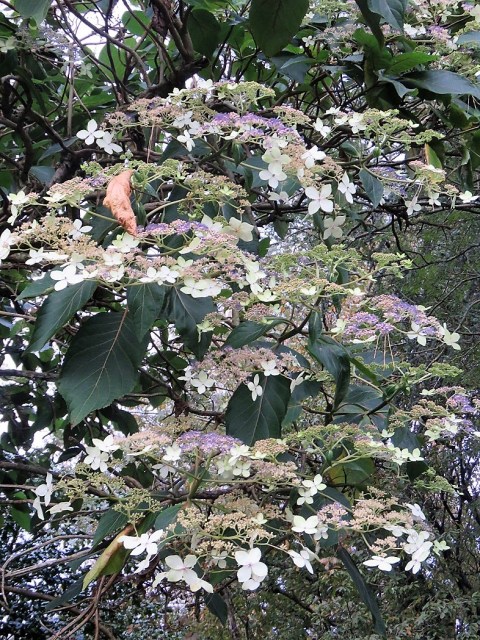
The most enormous of hydrangeas and evergreen, too

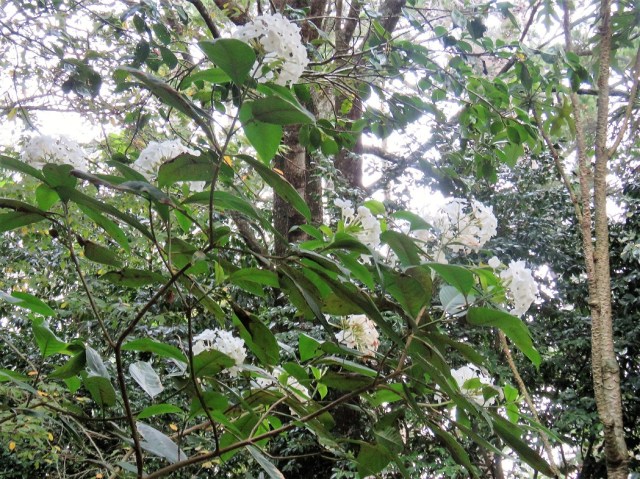
Also rangy and frost tender, the enormous, evergreen tree hydrangea is in full bloom. Walking past it on sunny days, the hum of honey bees is not quite deafening but certainly on track in that direction. As the plant is about 5 metres tall and currently sporting so many blooms on the sunny side that the foliage is barely visible, it can accommodate a whole lot of honey bees at a time when other food sources are less abundant. Last I heard, this unusual Chinese hydrangea is thought to be a member of the aspera group.

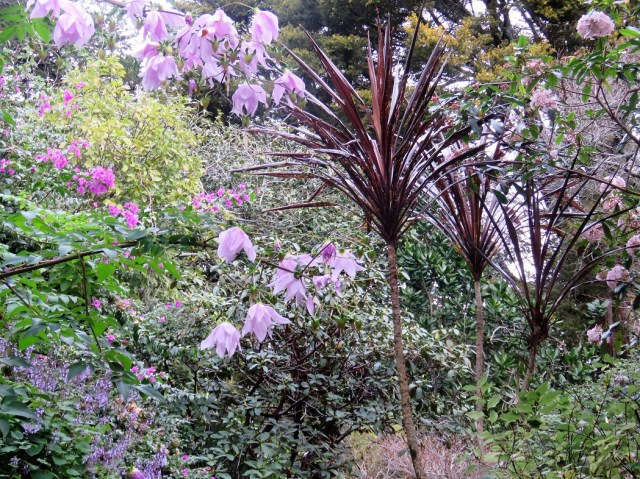
Nearby, still in the woodland area we call the Avenue Garden, I like this seasonal composition with the red form of Cordyline australis x banksii, the hanging chalices of the tree dahlia D. imperialis (another rangy, frost tender plant), the cerise of the enormous bougainvillea, blue flowered plectranthus and Luculia ‘Fragrant Cloud’ on the right.

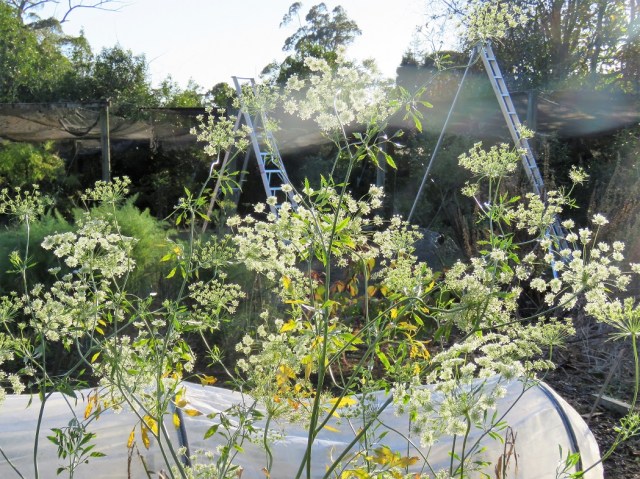
Ammi majus

Out in the rather wilder margins of Mark’s vegetable garden (which we never open to public view because while he is a productive gardener, he is also very messy in this area), the Ammi majus flowers on. I liked the mix of wildflower, the cloche and the communion of our two new ladders which Lloyd was using in tandem at the time.

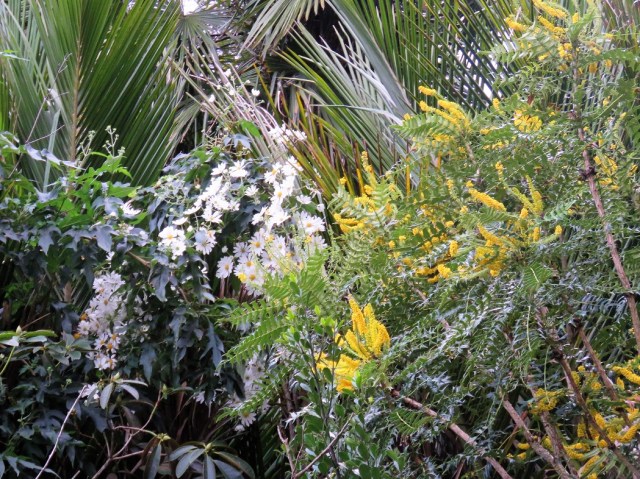
In still wilder margins, this scene was the coming together of a United Nations of self-seeded plants – the nikau palms from NZ, Montanoa bipinnatifida otherwise known as the Mexican tree daisy,and the yellow mahonia which may or may not be Mahonia japonica from Japan.

Vireya rhododendron macgregoriae, this plant defying the odds and still going strong after 64 years

Back in the more cultivated areas of the garden, many vireya rhododendrons are blooming. These are the subtropical rhododendrons – so frost tender and generally pretty sensitive – and tend not to be longlived. Their flowering is triggered by day length, not temperature, so they bloom intermittently but autumn and spring are the main seasons. We have some dead specimens we are removing now and Mark is doing a cuttings round to propagate an ongoing supply. But this specimen, this one is defying that tendency to whiff off and die. It is the very plant that Felix collected from the highlands of New Guinea in 1957 and the start of his breeding programme – R. macgregoriae.

Sasanqua camellia ‘Elfin Rose’ and Nerine bowdenii

Autumn is sasanqua camellia season, now my favourite group of camellias. For years the NZ sasanqua market was completely dominated by consumer demand for white sasanquas – it may still be the case but I am out of touch with commercial production these days. We have plenty of different white sasanqua varieties in the garden but they do not spark joy for me in the way the coloured options do. This one is pretty ‘Elfin Rose’, seen here with the last nerines of the season, N. bowdenii at its feet.

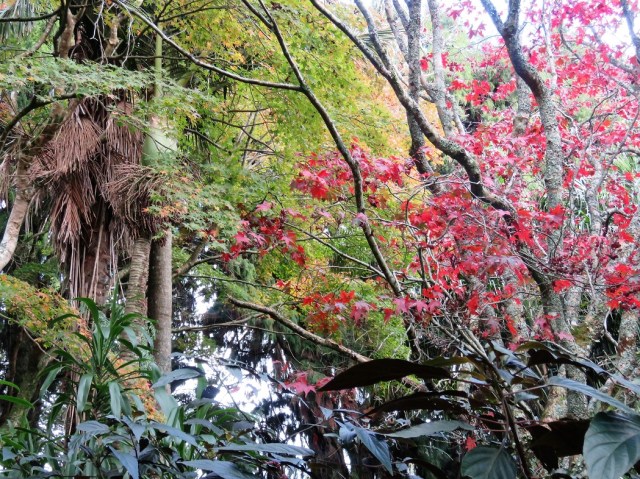
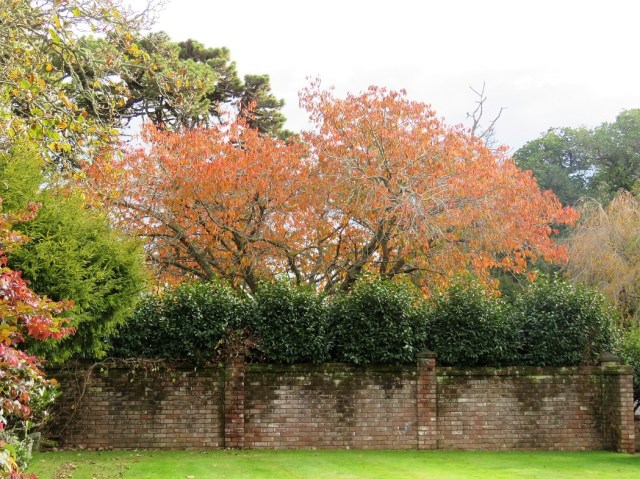
It is not just flowers giving colour. While autumn colour is patchy and extended over a long period of time because we move so gradually from late summer to autumn to winter, the maples and some of the prunus give a pretty display.

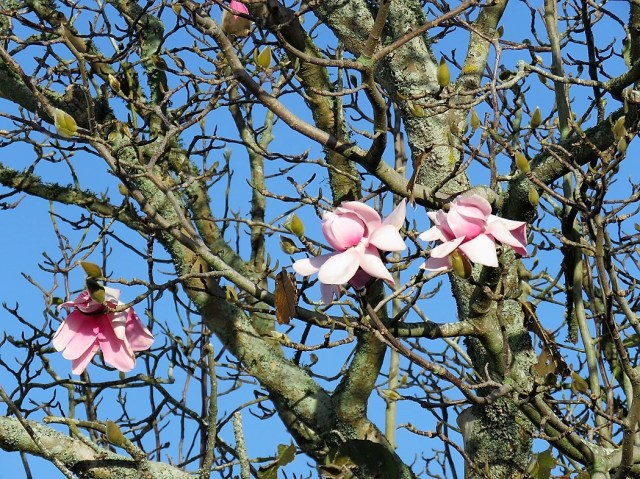
Magnolia campbellii opening blooms in late May

Finally, in a sign of how our seasons lack the sharp demarcations of colder climates, the first magnolias are already opening. I follow a Facebook page for magnolia enthusiasts that is heavily dominated by mad keen magnoliaphiles from northern Europe. They are still posting photos of late season blooms opening on their spring magnolias. Meanwhile, as far away as we can get across the world, the Magnolia campbellii in the Anglican churchyard of my local town of Waitara is already open with a score or more blooms.

First flowers on ‘Fairy Magnolia White’ in late May

Here, we are looking at the first flowers open already on ‘Fairy Magnolia White’, the first of the michelias of the new season to bloom. As we are in the last gasps of autumn, these early magnolias are a reminder that spring is not far away.

A latter day Don Quixote

I get a fair number of emails from strangers. Too many are people trying to order plants from us – I have complained about this before; then there are a whole lot from people who think that research on the internet comprises finding somebody who might know the information, locating their address and sending an email along the lines of ‘please tell me all you know’. I admit I delete most of these. I no longer feel obligated to reply to every email. Then there is the spam. Initially, I thought the email I am about to share was spam but as I read through, I realised not. It is, I think, a combination of trying to order product from us which we don’t have and never have had, a ‘tell me everything you know’ (which is actually nothing on this topic) AND an offer that is, the sender thinks, too good for me to refuse.

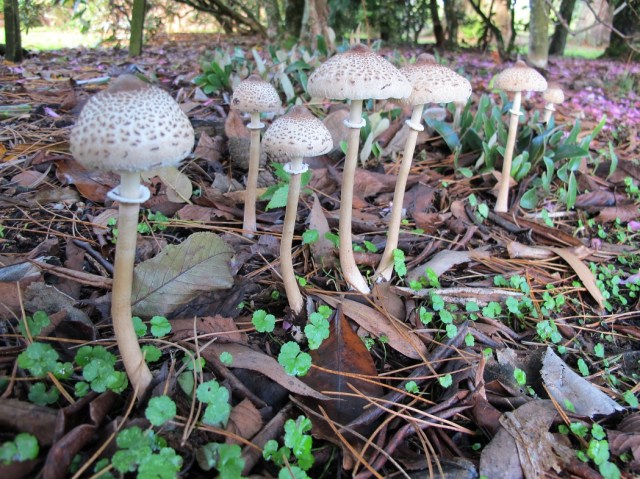
A single photo and mention of parasol mushrooms from 2014

As far as I can make out, the only reason I was singled out for this attention is because back in 2014, I wrote a piece about autumn fungi which included a photo of parasol mushrooms.

Do not spoil the big reveal. Hold back your impatience. At least speed read the body of the email before you scroll down to the photos at the bottom that the writer included, showing the glory of the HUGE container filled with beautiful plants located in such a prominent place that it is admired by thousands of people. It is worth the wait.

“Congratulation!

You have a chance to join a charity project which is seen by thousands of people of general public and you can have a sales promotion, for free, of your mushroom business:

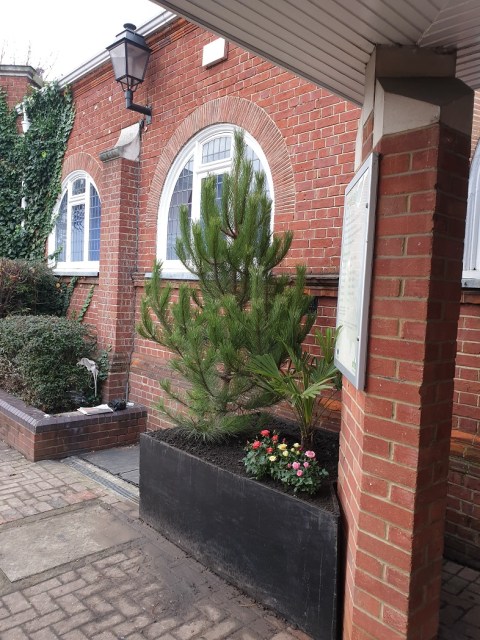
I am an owner of a huge container of beautiful plants located in a public place, in the front of the entrance of Balham library in London, quite close to the Waitrose supermarket, so, thousands of people are passing by my huge container and enjoying the plants’ beauty.

I do this my private charity project to support the beauty of plants.

Please, SEE the pictures in the attachments.

Right now, I am going to add to my plants, beautiful Parasols, Macrolepiota proceras, on the corner of the huge container under the pine tree, (SEE the pictures) to be very visible by the thousands of people of general public so that they can be enjoying the beauties of the big beautiful Parasols, Macrolepiota proceras.


I am not any expert about any plants. I just want people can enjoy the beauties of plants. So, please, can you send me already prepared, ready to grow, cultivation kit, that can be transferred directly into my top soil which I have in the huge container, fruiting in about two months?

I mean the special substrate which is already mixed with the Parasols? Just to make a hole in the top soil in my huge container and to put into there your special substrate which is already mixed with the Parasols? I suppose, about 3 kilograms and fruiting in about two months?

Because this is a charity project, and because I am not any charity organization, I just am a person who is doing a good deed to support the beauties of plants, I can pay the total price up to £10 including the postage. (My budget is very narrow because I am going to add many more plants.) Or, I would appreciate if you can send it to me for free.


In return, I can place on my huge container a sign where will be written something like this (or suggest your text):

THESE BEAUTIFUL PARASOL MUSHROOMS WERE
DONATED
BY:
www………………….
TO SUPPORT THE BEAUTY OF THE NATURE.
You can order these beautiful mushrooms or/and many other mushrooms on the website above!


If you do not have the power to make the decision, please, forward this email to the owner /  director / manager of your business. Many thanks!

If you cannot provide the one, please, can you send me a link to a web page where they can sell the one what I am looking for? Many thanks!


Many thanks for your reply


J***
London, Balham”

Behold the glory of the container. Is this not a triumph of naïve optimism?

Am I feeling a little guilty about gently mocking this person’s efforts, worried they may read this post? Well, yes but as he or she clearly never read the content of the first post that led them to contact me, the chances of them reading this one seem remote.

Mrs Wang’s garden

Photo credit: Alden Williams/Stuff

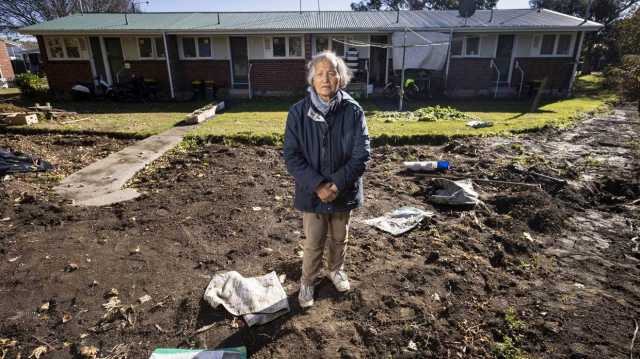
A sad story came out of Christchurch this week. Mrs Wang, an elderly woman aged 80, had a thriving vegetable and herb garden she had been tending for ten years out the back of her home, a charmless block of four social housing units. She came home to find the landlord, a charitable housing trust, had sent in a digger to destroy her garden and level it, to be sown back into grass. ‘Acting on complaints,” they said, from another resident.

Mrs Wang was clearly distressed. She was growing traditional Chinese vegetables and herbs that are not easy to source in New Zealand and they were gone. That is the short version. You can read more here.

The social housing trust went into immediate defensive mode when the story broke, issuing one of those apologies that isn’t really an apology because it is immediately followed by self-justifications and then an attempt to occupy the higher moral ground. We made a mistake in not warning her the digger was coming in, they said, but they would put it right by installing raised vegetable beds for the use of all the residents this very week.

This defused some of the criticism, especially from those who do not garden. After all, who would not be thrilled to get that symbol of the middle classes, a raised vegetable bed?

Where to begin? Did the trust ask all residents if they wanted to have their own raised vegetable plot? Is all that stood between the complaining resident and a thriving vegetable garden of their own the absence of a raised bed?

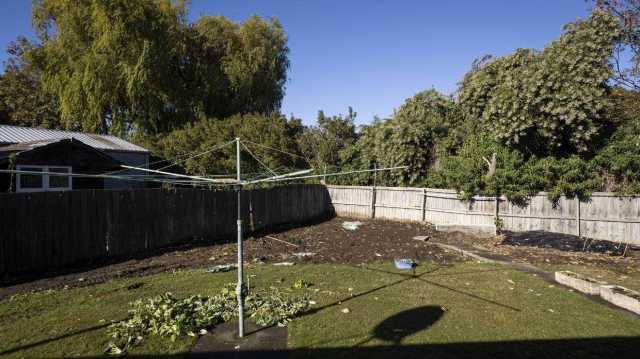
Gone, all of it, when really, it was just a corner of the shared back yard. Photo credit: Alden Williams/Stuff

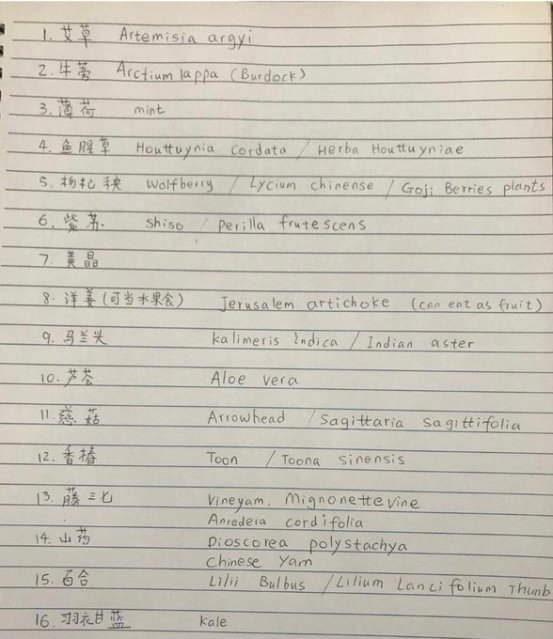
I have no inside knowledge but it seems likely that Mrs Wang is a first generation Chinese New Zealander. I say that because when her plant list came down social media, she had clearly written it in Chinese and she was growing traditional foods and medicinal herbs from China.

If this is the case, then Mrs Wang was born into a time and place where famine was a massive issue. In the land of relative plenty where we live, ripping out a productive garden seems like vandalism. To somebody for whom the Great Famine of 1959 to 1961 (or 1958 to 1962, depending on which historian you are following) is a part of her living memory and her dual heritage, such wanton destruction must be beyond comprehension.

Back to raised vegetable beds. They have their place, particularly for gardeners with mobility issues or where the ground is somehow unsuitable for cultivation. But commonly, they are an affectation, an attempt to pretty up the productive garden, maybe emulate the potager style made famous by UK gardener, Rosemary Verey. They are not often favoured by diggers, by those for whom cultivating the soil and building up the richness is an integral part of gardening. Mrs Wang spent ten years working that ground. I am betting she is a digger, a cultivator. And diggers don’t have raised beds.

But the Ōtautahi Community Housing Trust is going to give her one and the cynic in me says that is more about them pretending to be contrite and putting things right with one hand while exerting an iron fist of control with the other. See, with a raised bed, they can insist that is the only area she is allowed to use. It defines the space and stops her expanding. Because it is better, in their eyes, to have a bleak area of mown grass with a shared clothesline holding pride of place.

There were so many better – and cheaper – ways to deal with this situation. A mediator could have helped broker a compromise between the unhappy residents (was there even more than one?) and Mrs Wang. It would have saved a lot of distress and distrust, not to mention bad publicity for the social housing trust that is the landlord. And my goodness, if I ever hear judgemental comments about how the poor should be growing vegetables again, I may make a very terse reply. Mrs Wang did until last week.

We have only been to China once but here you see a private vegetable patch being grown on public land beside the river in Jinghong City. Why waste good, productive land when the alternative is low grade grass?