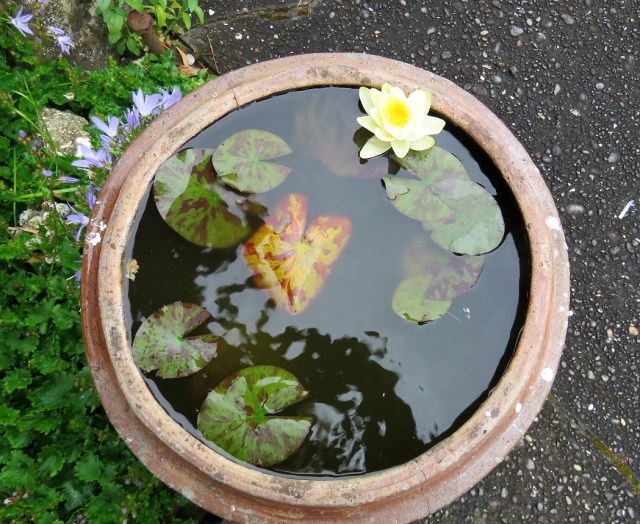
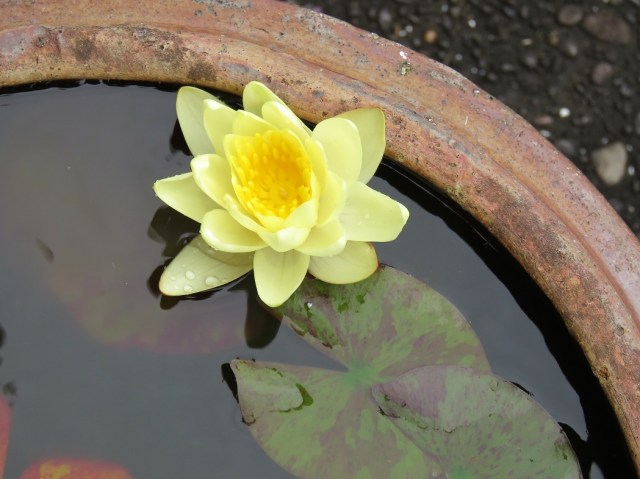
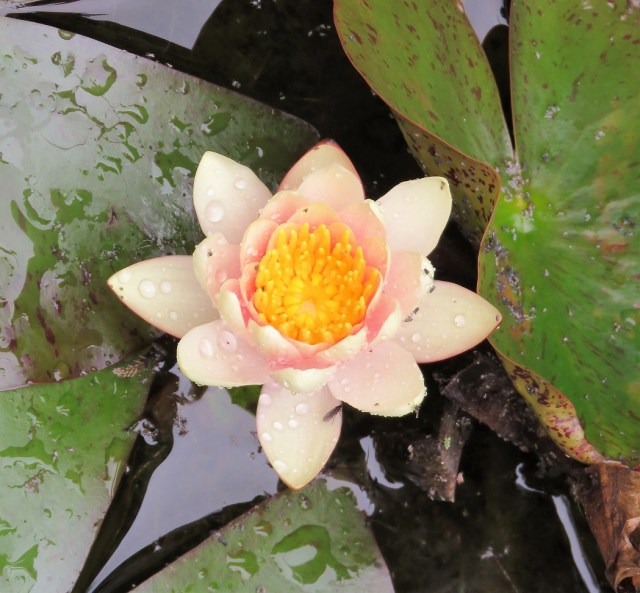
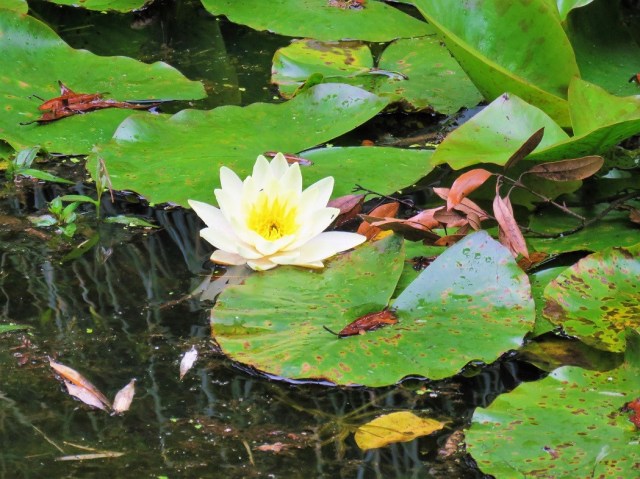
If I believed in woo-woo (or, at least, that plants can sense what humans are saying), I might think that the appearance of this charming, little lemon water lily flower was because of my threats made over the past few months. The plant came into our possession about ten years ago and it has lived in a vintage pot ever since without flowering. Maybe three years ago, I took it out, reduced some bulk, raised it higher in the pot and gave it some new compost mix. Nothing happened. It just put up its usual leaves. I declared this year – probably in its hearing – that this was its last year. If it didn’t flower, I would cast it out and find something more obliging to grow instead.
And lo, this flower appeared and it has won a reprieve. It is a very pretty little flower. Water lilies do have lovely blooms with a pristine purity of form.
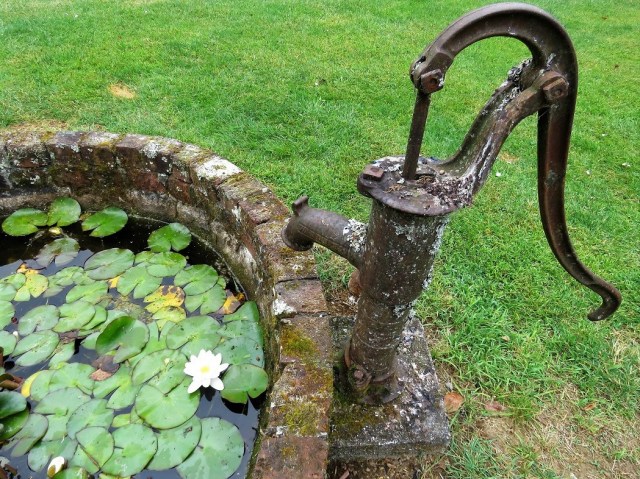
The vintage water pump is, I admit, merely ornamental in this situation.
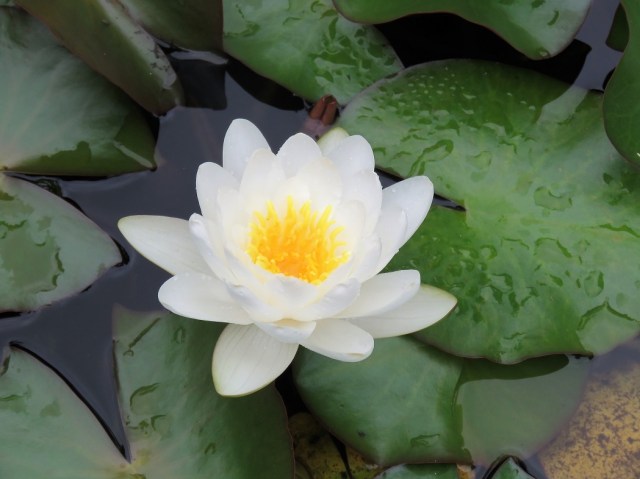
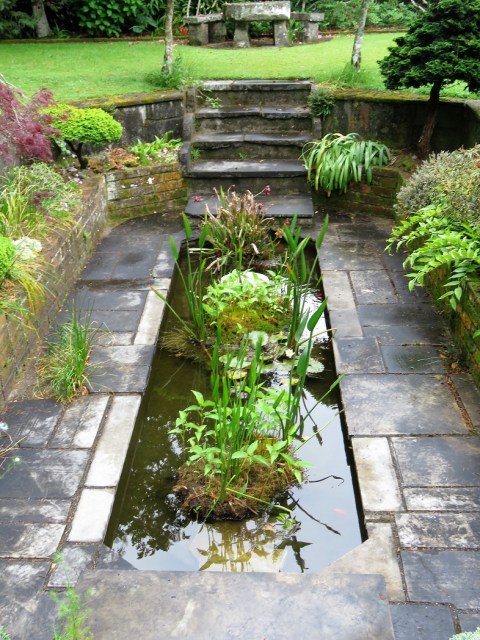
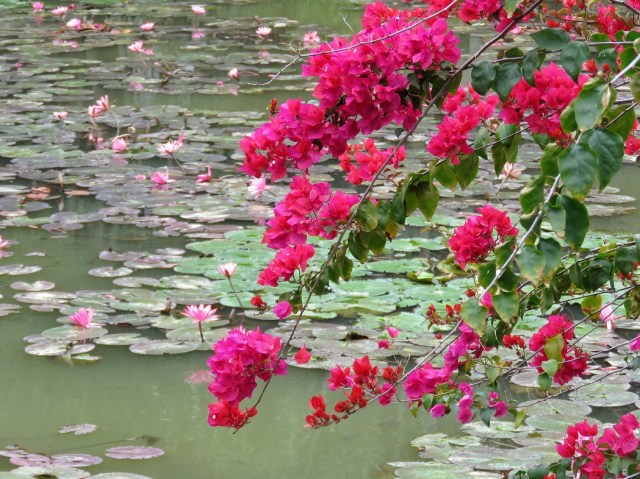
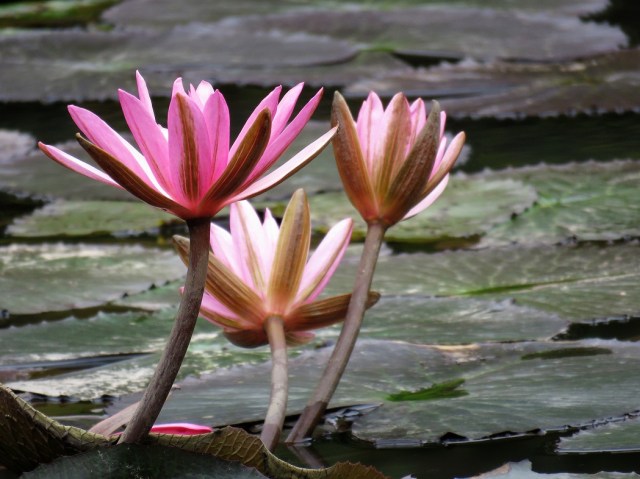
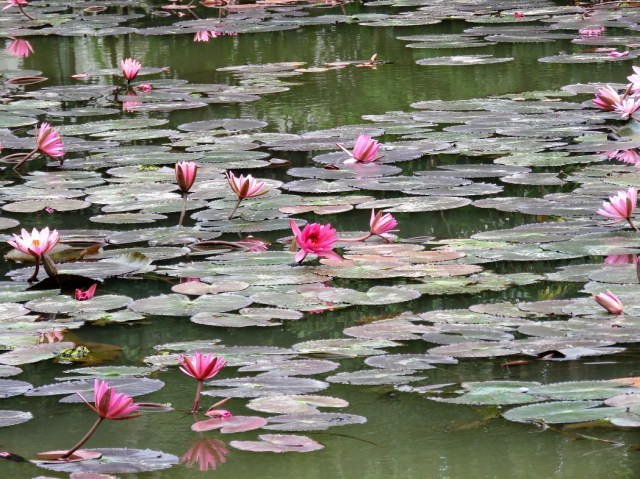
We have water lilies in assorted bodies of water. The purest white one in a round pond on the side law is the best, I think. A white waterlily is the national flower of Bangladesh but looking at the photos, while similar, I think it is a more tropical form than this one.
The setting
The one in the goldfish pond at the bottom of the sunken garden is a bit murky in colour
I don’t find them the world’s most exciting bloom but they have an exotic beauty to them. I looked them up to see where their homelands are and I see they are broadly spread across the globe ‘in temperate and tropical climates’ which is pretty sweeping. They are a bit more complex than I expected though, if I am honest, I would admit I have not given them a lot of thought. Their plant family is Nymphaeaceae and I will never remember how to spell that with all it’s ‘a’s and ‘e’s. There are about 5 genera in that family and maybe 70 different species which don’t all look the same as the ones we grow. That is quite a lot of different species. As far as I can see, the ones we see here are from the nymphaea group.
The bigger growing forms we have in ponds in the Wild North Garden are lovely but they need occasional intervention to reduce their spread or we would have no visible water remaining
Water lilies grow from rhizomes rooted in soil so they only grow in fairly shallow water. Many years ago, we went to visit two ‘water gardens’. In fact, they were water lily gardens. I can’t recall other aquatic plants. That is where I learned that some varieties can be such strong growers that they will entirely cover the water surface if they are not restricted. A mass of water lilies without visible water reflecting, shimmering and rippling to frame the plant is not actually that aesthetically pleasing or exciting to see.
The loveliest water lilies I have seen were in the Xishuangbanna botanical gardens in southern China. They were held up above the water on longer stems and I think this makes them a different genera to the common nymphaea types we grow here. “They’re tropical,” Mark said, but he may have been generalising from the fact that it was hot and many of the plants we were looking at there were very tropical. I have no idea if that type is even in NZ.
This week at least, I am happy that the pretty lemon one has flowered after a very long wait.
Lloyd clipped the Camellia transnokoensis hedges to the left; Zach clipped the feature camellias to the right this year.
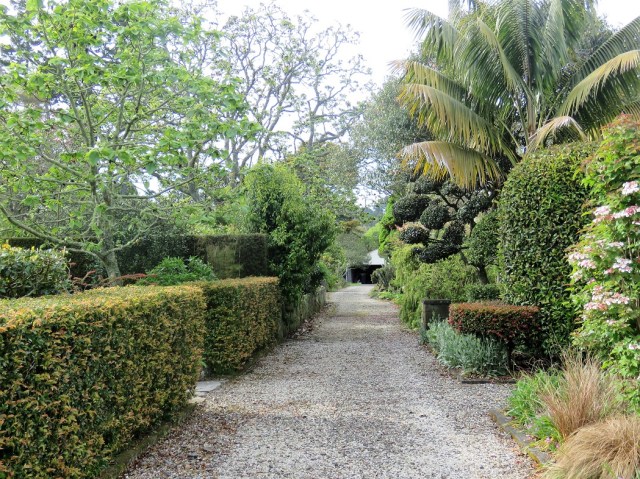
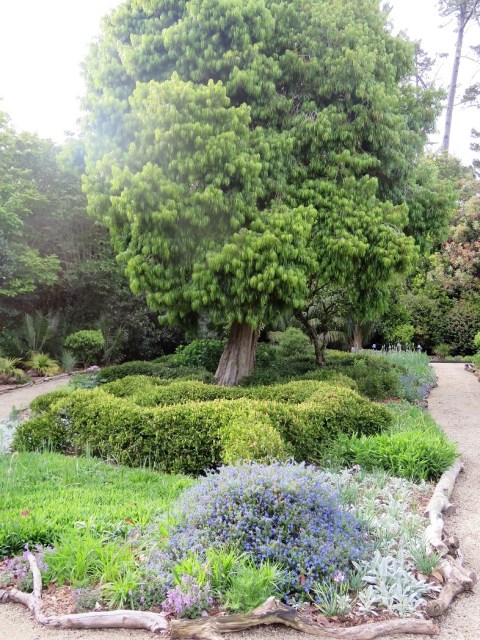
We don’t have a lot of clipped hedging here, I am prone to declaring. I may have to amend that. I paced them out and came to a rough estimate of somewhere over 150 metres which seems rather more than I thought. It is probably more accurate to say that we don’t have a lot of garden where the design is defined by clipped hedging. Just the Wave Garden, in fact.
Clipped Camellia minutiflora in the Wave Garden
I have been thinking about hedge trimming because it has taken up almost all of Lloyd’s work hours this week. At the same time, I saw a comment by an English gardener about currently trimming his clients’ hedges and that seemed odd to me because it is autumn there. I am guessing they trim in autumn so that they retain their sharp lines over winter. In colder climates, sharply defined shapes are often what gives winter interest in places where plants don’t flower all year round. Maybe they trim twice a year?
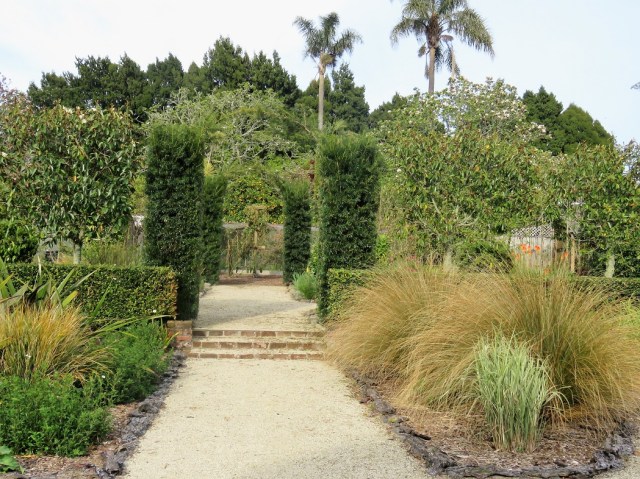
On the left is clipped Camellia Fairy Blush with a low buxus hedge in front. At the back is clipped totara (Podocarpus totara). You too can keep this forest giant to this size over 110 years if you keep it clipped hard!
We cut in spring for two reasons. One is that we want to look sharp for the spring garden festival starting this Friday. The other is that the majority of our clipped hedges are small-leafed camellias. Trimming those in autumn would take all the flower buds off so we trim in spring before the next season’s buds are set.
Hedges of Camellia Fairy Blush provide a demarcation line between the sunken Court Garden and the gardens either side of it.
We only trim once a year and we accept that come next autumn and winter, the hedges will be looking a bit woolly. I seem to remember that if you have hedges of teucrium or lonicera, you need to trim every four to six weeks in the growing season – and we have a growing season that lasts nine months of the year. That does not sound fun to me although maybe some people don’t mind forever trimming their garden hedges.
I can’t help but think that people who are obsessive about sharp hedges all year round might be better to make permanent walls instead – more expensive to erect but a lot lighter in maintenance down the years.
This wave hedge at La Plume was sensational.
The wave hedges we saw at Le Jardin Plume in France still rule supreme for me. I have never seen hedges like them. Alas, I may not see them again in this new world we are in.
Chupa chups to the right, umbrellas to the left
While Lloyd has been trimming hedges, Zach has been clipping feature plants. He pointed out to me that the taller michelias at our entranceway (Fairy Magnolia Blush) are more like chupa chups than lollipops, which is right because they are fully round, not like the two dimensional round lollipop. The small ones to the left we trim to an umbrella shape – so flatter on top than the rounded chupa chups.
No longer a path that terminated in an unattractive building, even if it currently terminates at the raspberry coop
Visitors who have seen our new summer gardens may recall the path that led to nowhere as we airily waved and said that we planned to move the two buildings in the way. Well, it is done. The large propagation house and Mark’s personal botanical treasure house have indeed been moved and we have opened up a new area. True, the path still doesn’t go straight through yet. It now terminates at the raspberry cage. I have served notice that can not be taken down until somebody has built me a new raspberry cage. I love the raspberry harvest more than I love the thought of a long, long vista there.
Zach gave the Podocarpus parlatorei pillars their annual trim and has started training the top over to form the arch Mark envisaged.
This year’s Taranaki Garden Festival was shaping up to be the busiest ever in over 30 years of its life span. Alas, now it is on track to be the quietest ever. The NZ Rhododendron Association were to have their annual conference at the same time and we were expecting four coach loads of rhododendron lovers on the very first morning of festival. It was cancelled this week. Northerners can’t get here, southerners no longer want to come and who can blame them? I am expecting pretty much all our tour bookings to be cancelled in the next few days.
But we will be here, bright-eyed, bushy-tailed and all prepared next Friday. It will be down to locals to fly the flag for our gardens and the associated arts trail. It is disappointing but so much of life in this era of pandemic is disappointing. At least with gardens, they will still be here next year.
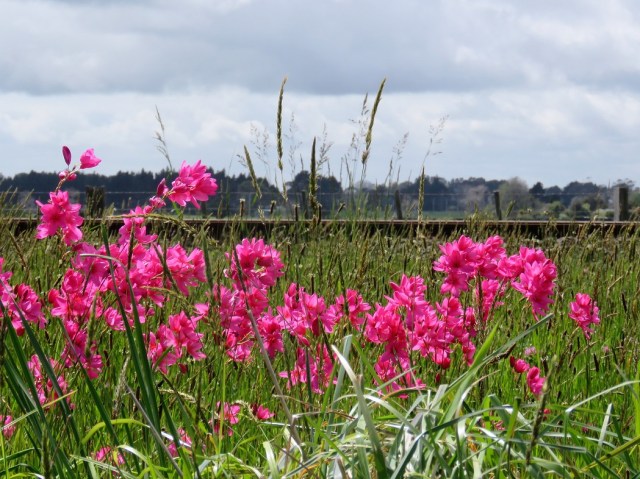
I flashed past these eye-catching ixias (corn lilies) at speed and promptly thought that I should have stopped and photographed them. I then thought I couldn’t be bothered until a couple of kilometres down the road when I turned and went back. Are they not pretty? They are growing on wasteland beside the railway in Lepperton and the sight of them stopped me being grumpy about something else that had happened.
There is nothing choice or rare about ixias. We have them in the twin borders in several colours and they show up each year on one of the mass bulb suppliers’ catalogues. But as a wildflower, their charm seems greater to me. I was glad I had dug some to put down in the Wild North Garden where they may recreate the simple charm of the railway siding.
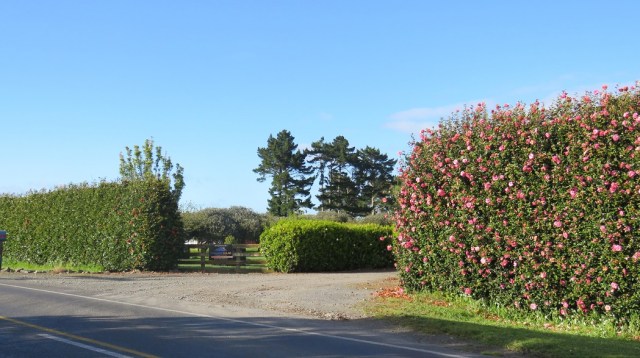
The rare sight of a camellia hedge in full bloom, though now past its peak
I also stopped to photograph a camellia hedge because a mass flowering camellia hedge is a rare sight for us in these days of the cursed camellia petal blight. This one is down the road from us (in a rural sense – maybe 5km down a different road entirely to the one we live on but still ‘down the road’). We used to have mass displays of larger flowered camellias in informal hedges but they are a thing of the past here. The plants haven’t gone; it is the flowering that is a memory. This particular hedge is in an extremely open situation, exposed to both full sun and wind from every direction. It confirmed for me that the extremely sheltered microclimate we have in our own garden has exacerbated camellia petal blight to be some of the worst in the world. Fungi thrive in a protected situation. It is a trade-off. That microclimate enables us to grow many other plants that would not otherwise thrive but at the expense of the japonica and hybrid camellia flowers.
Camellia ‘Waterlily’
Camellia ‘Les Jury’ to the left and Felix’s ‘Waterlily to the right. Something that had finished flowering but appears to be white at right angles in the centre.
It was Mark who drew my attention to the fact that it is Camellia ‘Waterlily’, one of his father’s early cultivars. We have the original plant in the garden here. Next to it, to the left, is a clipped hedge – now at the end of its flowering season – of Camellia ‘Les Jury’. It is the best red his Uncle Les bred so they have the Jury camellia brothers right and left of the gateway.
Each spike is a cluster of a huge number of individual flowers with long stamens on the xeronema
We don’t have a whole lot of native plants that carry gardeners’ bragging rights with them but the Poor Knights’ lily – Xeronema callistemon – is one. It grows on the rocky cliff faces on the Poor Knights islands, often washed by sea water and never drying out but never getting waterlogged. According to Wikipedia, those offshore islands of New Zealand which few people ever get to visit but are a treasure trove of unique flora, were so-named because their shape reminded the early Europeans of a bread pudding popular at the time, the Poor Knights Pudding. There is a random piece of information for you.
Xeronema callistemon in the central row on a bank in Waitara, thriving in a regime of benign neglect
Their natural habitat is not easy to re-create in a garden situation which is why they carry some bragging rights. I am pretty sure they are also frost-tender and it takes a long time for them to reach flowering size. Despite all that, there is fine display of huge plants on a shady bank in my local town of Waitara. Prostrate rosemary festoons down the bank below them and they are flanked by some pretty scruffy trachycarpus palms but eat your heart out, gardeners who have failed with the xeronema at home. Finding a suitable spot and then allowing benign neglect seems to work better.
Poor Knights lily and Marlborough rock daisy in our swimming pool garden. Maybe they feel at home because we have a salt water filter on the pool and they can smell the salt? Or maybe not.
Our best plants are just coming in to flower. I admit we groom the plants a bit – removing spent leaves. I like the combination with the Marlborough rock daisy (Pachystegia insignis) – another cliff dweller but this time from a location which must be close to 1000km south of the Poor Knights Islands.
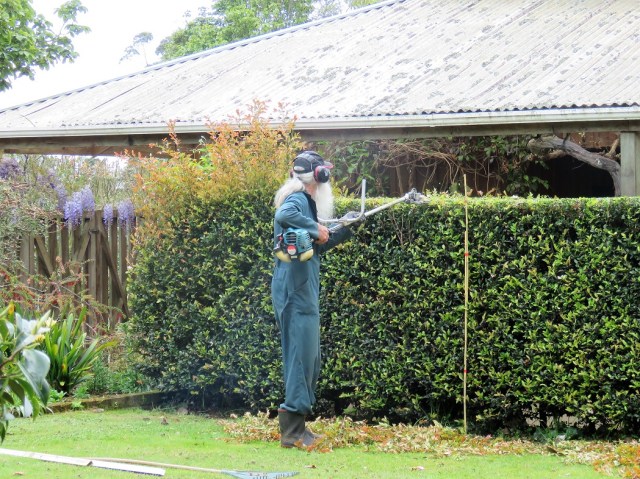
Trimming the hedges here is largely done by Lloyd. If you look carefully, there is tape on the bamboo to mark the desired heights and he also checks with a string line.
Meantime, it is all go on preparing the garden for the Taranaki Garden Festival, opening on October 29. We have our fingers crossed that we stay at level two which enables it to go ahead. We will be awfully miffed if we get Covid Delta in Taranaki with a last-minute cancellation after all this work.
Kia kaha. Stay sane and stay safe in these trying times. We are living through an event that will become a significant point of history for future generations to study. It is not a comfortable position for anyone.
That is an old stone mill wheel from the ninteenth century, repurposed these days as a bird bath
It has been a difficult week in New Zealand. I recall commenting here to an Irish reader (*waving to Paddy*) that if anybody can get rid of Delta, we will. This week brought us the distressing realisation that we almost certainly can’t. Gone is the dream of the return to level one this summer – level one being no restrictions on day-to-day living bar those pesky border controls. Like many others, we were plunged into a state of deep anxiety. All due to just one case entering the country and now spiralling ever larger, creating the whack-a-mole situation we are now in.
I have to grit my teeth with those who declare ‘we just have to learn to live with it’. I don’t think learning to live with Covid looks like they think it does. It does not mean a return to life as it was with some people getting a bit sick and a few dying – but, presumably, nobody known to those advocating this course of action. Learning to live with Covid means living with ongoing anxiety, wearing masks, using sanitiser, scanning, restrictions on movements and gatherings and playing whack-a-mole all the time. Learning to live with Covid means an indefinite extension of the current status quo.
Scadoxus puniceus
The only path out of this is very high vaccination rate. Please, if you haven’t been vaccinated yet, get it done now. Ignore that small group of very loud, insistent anti-vaxxers. Surveys show that there aren’t that many of them, statistically speaking (somewhere between 4 and 7%?) but too many of them seem pretty determined to keep their ‘freedom of choice’ by attempting to abuse and verbally bludgeon everybody else out of exercising their freedom of choice.
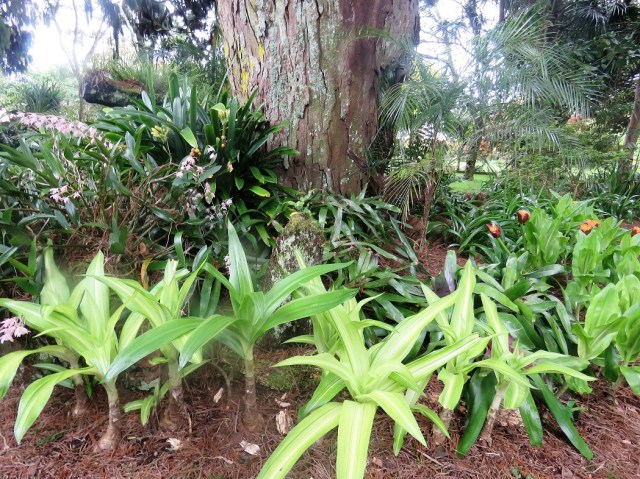
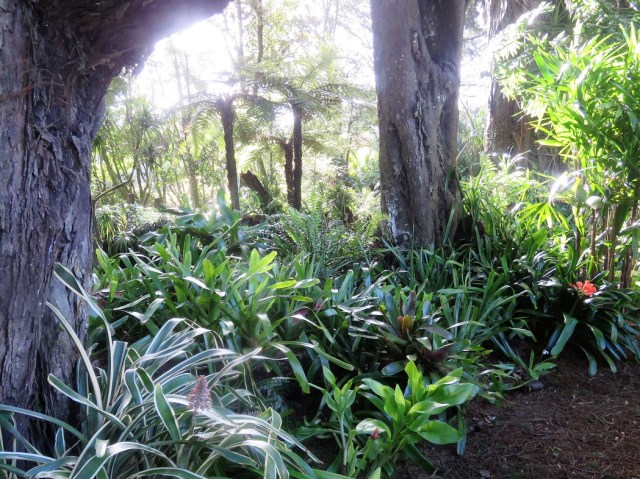
Crinum moorei at the front, which will flower white later in the season, dendrobium orchid, clivias, bromeliads, Scadoxus puniceus and the wedding palm – Lytocaryum weddellianum – in a tiered woodland planting beneath giant rimu trees
What does this mean for our garden festival, scheduled to start on October 29? Goodness only knows; we certainly don’t. We were headed for one of the largest attendances ever with coach tours and ticket sales setting new records. That seems unlikely now.
I see three possibilities. The first is the best-case scenario where travel restrictions are lifted to the north of us and we plough ahead but with masks, sanitiser and physical distancing. This is also the least likely scenario.
The second scenario is the border remains in place on our main northern access to Taranaki and numbers are hugely reduced as a result. In which case it will all be much quieter and lower key.
The third is that Covid reaches Taranaki in the next few weeks and all events are cancelled but I figure we cross that bridge if we come to it.
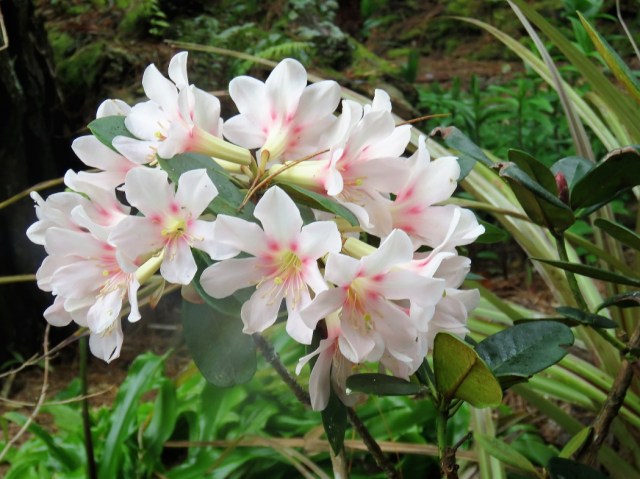
Seedling vireya, very scented, which seems to be predominantly R. konorii growing beneath pine trees Pleione orchids have a shorter season in bloom but are so pretty
It all makes planning very difficult here. When we know we are opening the garden, there is a lot of extra garden grooming that gets done – titivating, one might call it. It takes a lot of time to titivate a garden the size of ours and we don’t do that final flourish if it is just for our own pleasure.
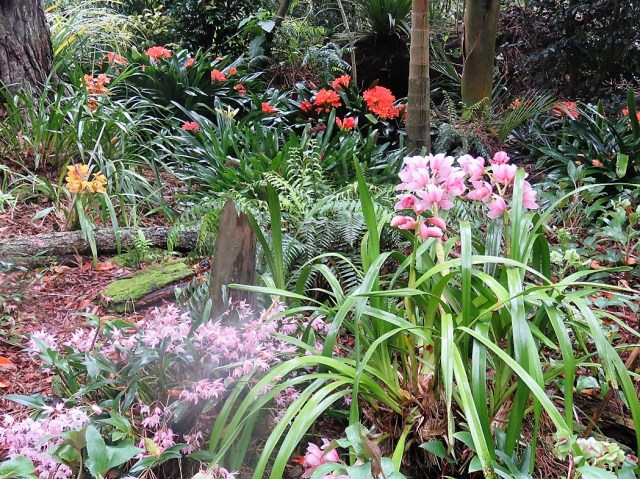
Colourful woodland on rainy morning this week to lift the spirits
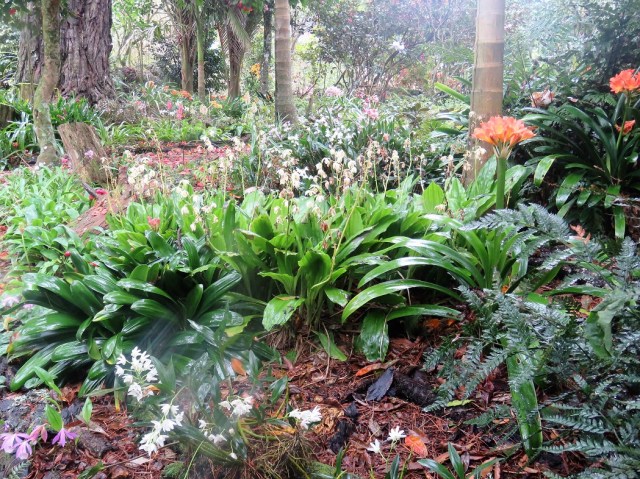
But if it all turns to custard, there are many (many, many) worse places to be than here. The colourful woodland this week soothes my soul and relieves my own anxieties. Woodland gardening does not generally conjure up colourful visions bar maybe a sea of snowdrops beneath bare trees if you are British, or perhaps large drifts of bluebells or hellebores.
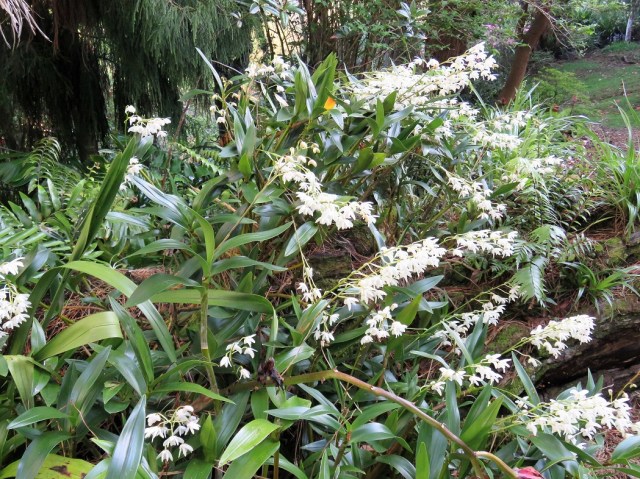
Finally getting Mark’s neglected orchids out of his Nova house and into the garden in lengths of tree trunk with the centre rotted out We are big fans of the dainty dendrobium orchids from the Bardo-Rose group
We like highly detailed woodland and it certainly is looking very pretty this week. We achieve this by lifting the canopy of our tall trees to let filtered light in below. Over the years, low branches have been removed to keep the lower trunks clear for maybe the bottom four metres or so. These days we do more thinning at ground level than planting and we use various strategies to ensure that plants can grow despite the massive root systems on the trees. Zach has been planting out some of Mark’s neglected orchids – mostly dendrobiums in the Bardo-Rose group – in hollowed out tree rings this week. These stump lengths are from the silver birch we dropped a few weeks ago. The rotten heart of the tree tells us we were right to fell it.
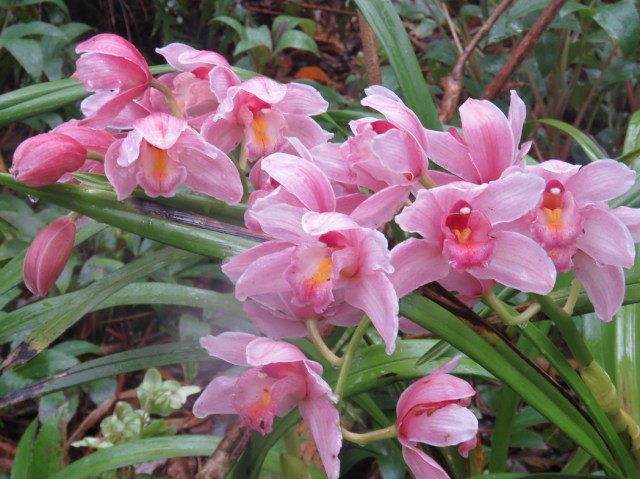
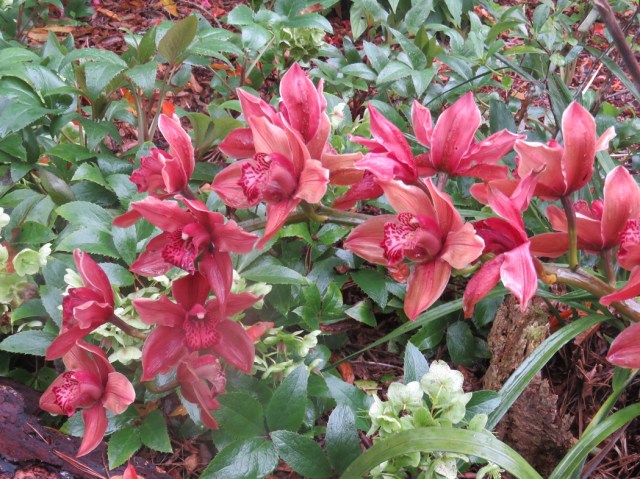
We do not get florist-quality blooms outdoors but the cymbidiums last a long time in the garden and add glamour Cymbidium with Helleborus sternii. I would like more cymbidiums but need plants with smaller flowers. Those bred for cut flowers tend to be larger and can look out of scale in the garden.
Our interest in orchids is basically on plants we can grow outdoors in the garden so mostly pleiones, cymbidiums, calanthes and dendrobiums in practice. I like the little dendrobiums the best but the cymbidiums add a touch of glamour.
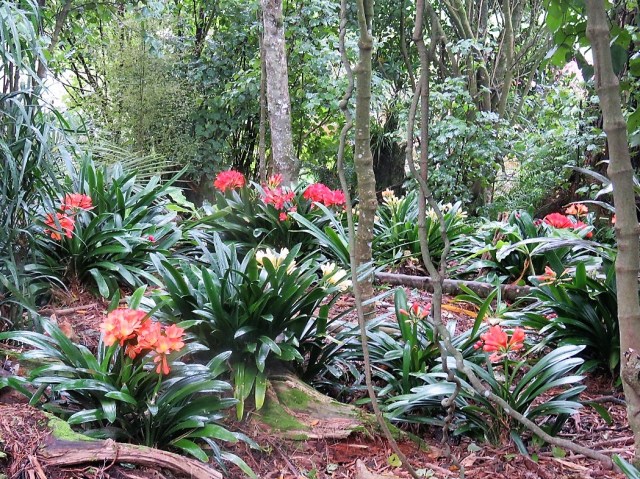
Clivias in orange, red and yellow, we have in abundance
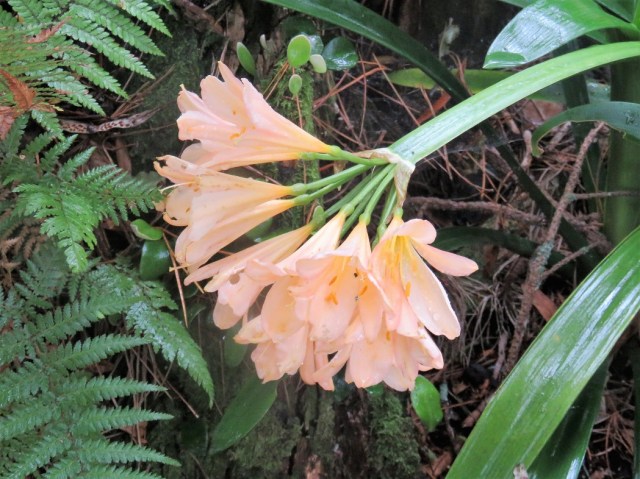
Mark’s peach hybrids add variety but this one seems reluctant to hold its flower spikes upwards
Quite a few years ago, Mark did some hybridising with clivias to try and get some peach coloured ones. He rather lost interest but I planted out the best and they are coming in to their own. I wish this one held its flower up better but it is a pretty, pastel variation on the many oranges, reds and yellows we have. Last time I looked, there were quite a few international breeders working on peach tones and then on white and green flowers but I have no idea if these are commercially available here yet.
Wherever you are, stay sane as well as staying safe. These are trying times we are living through. I will be hiding in the garden somewhere, maybe taking photos to share.
I have, as we say, been ‘doing under the rimus’. “It looks like you have vacuumed it,” said Zach and I was gratified because it is a big job on one of the key areas of the garden. The pressure is on, you understand, with just under five weeks until we open for the Taranaki Garden Festival.
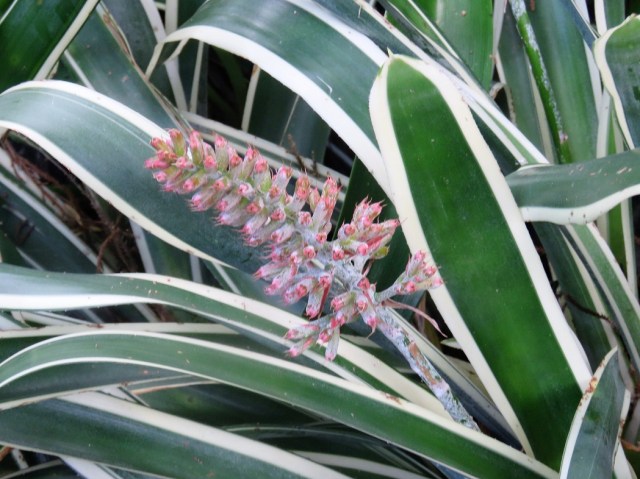
Not, as we thought, a billbergia but Aechmea coelestris var albomarginata
We have our fingers crossed that Auckland will be out of Level 3 so able to travel (looking good, Aucklanders, on Friday’s figures! The rest of us around the country are holding our collective breath for you. Well, most of us around the country).
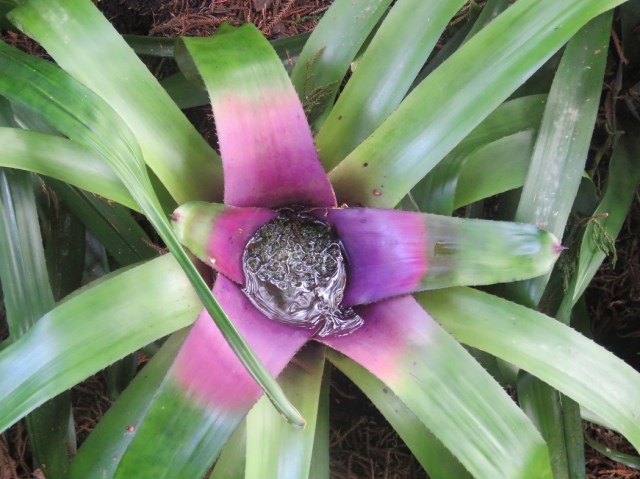
Neoregelia
Cleaning up under the rimus is painstaking work but it only needs that level of attention once a year so I generally describe it as low maintenance. I go through and pick over every plant to remove the debris that falls continuously from the trees above and to groom each plant. We are not talking a small area – maybe 100 metres long and varying from 10 to 30 metres wide. The debris is being removed by the wool bale load even though we leave the rimu needles to provide the path surfaces.
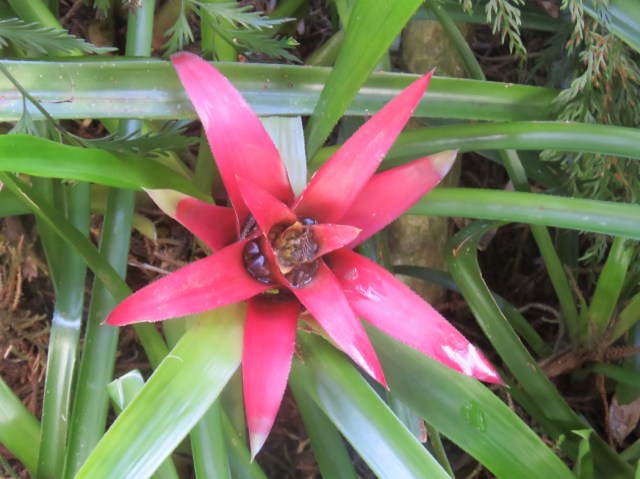
Vriesea
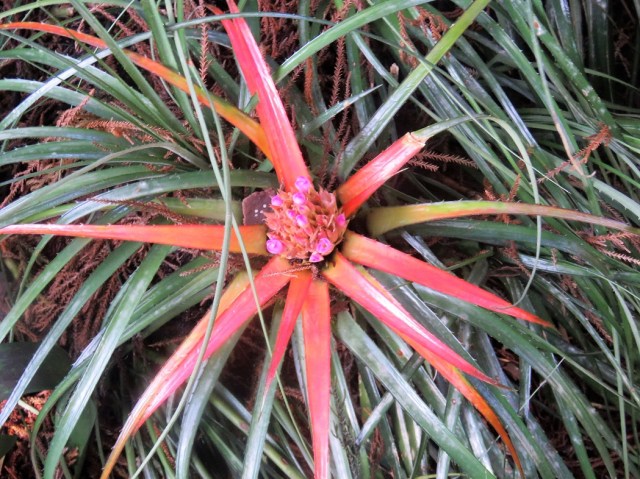
It is a complex planting but bromeliads feature large. It is not that we have a choice collection of bromeliads. Our interest lies solely in them as garden plants in a shaded, borderline-sub-tropical situation so that limits the range we can grow. Broms are a huge family and largely from the tropical areas of the Americas. The best-known bromeliad is of course the pineapple. I have something of an aversion to prickly plants and many broms are prickly. Their flowering, while undeniably exotic and interesting, doesn’t make my heart sing like some other plants. So my knowledge of them is limited to caring for the ones we have and I have never felt motivated to get to grips with the whole plant family, botanically speaking.
Nidularium probably procerum, I am told by one who knows more about these than I do
Most of the varieties we have flower and then put out one or two fresh shoots to the side while the flowering centre starts to whiff off and die, sometimes very slowly over a period of two years or more if left alone. Once they start to discolour, I go through and cut them off which stops the clump from looking too crowded.
A particularly prickly aechmea
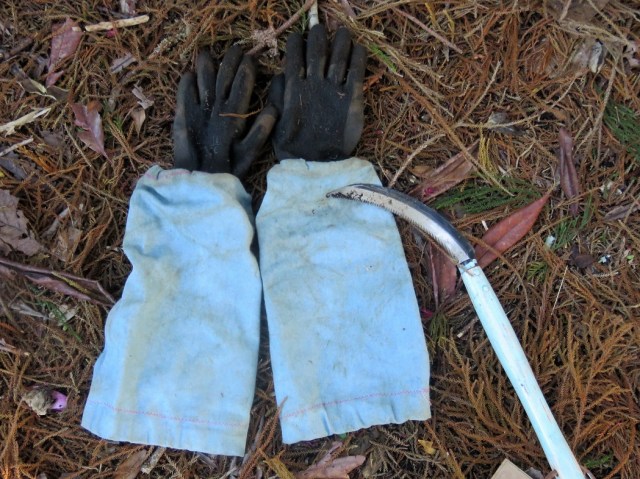
The very best implement for this is what I now see is named a ‘flax cutter’ – a small curved, serrated blade that is extremely useful for many garden tasks but probably not cutting flax. It is handy for cutting down grasses and faster than secateurs for deadheading perennials that need flowering spikes cut off. I had to go and buy a new one this week. I lost my good one somewhere amongst the bromeliads. I then went and found my old one and promptly lost that too. You would think I might have learned by now to keep better track of garden tools. This one came with a nice ash wood handle but I spray painted it before I even took it out to the garden – blue, because we had a can of blue spray paint on the shelf. I will not lose this one, I have vowed to myself.
Arm puttees and the new flax cutter
The second piece of vital gear is arm puttees. The alternative is that the prickly bromeliad leaves will shred the skin from the top of the garden gloves to the elbow. I speak from experience here. My arm puttees are simply the sleeves cut from an old denim shirt, elasticated at both the wrist and the elbow. They are worth improvising if you are dealing with prickly plants.
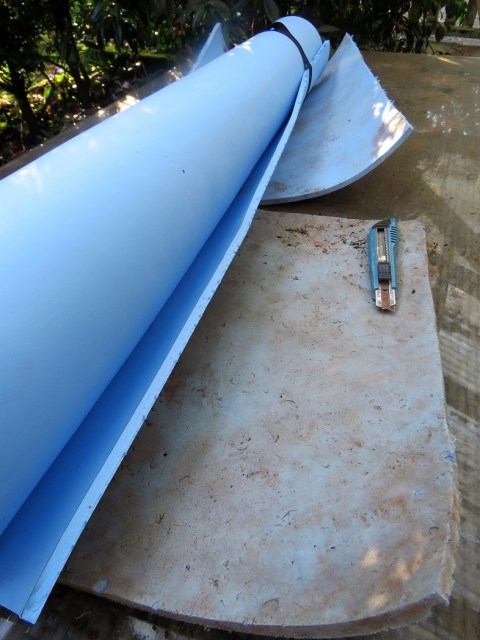
DIY garden kneeling pads
While on handy hints, I can highly recommend cutting kneeling pads from the high-density foam mats sometimes used as yoga mats or sleeping mats for trampers. One came into my possession and I can see it will last me for years. I simply cut it to the required size with what we know as a Stanley knife which is just a larger box-cutter. I find the kneeling mats sold in garden supply shops way too small but these I can make in a size that suits me. They cushion the ground and keep my knees dry, as long as I keep to the mat.
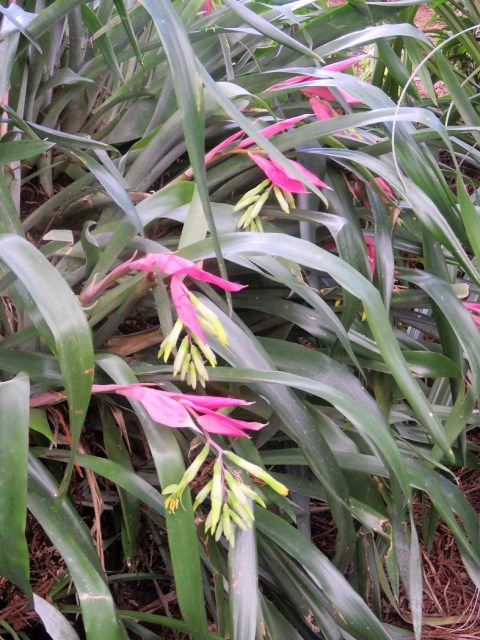
A billbergia
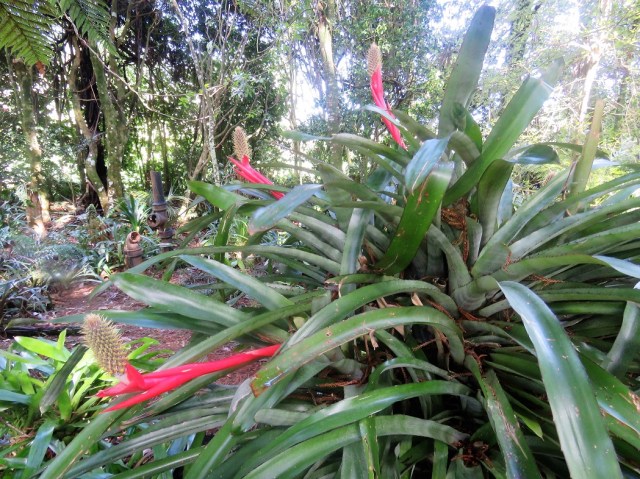
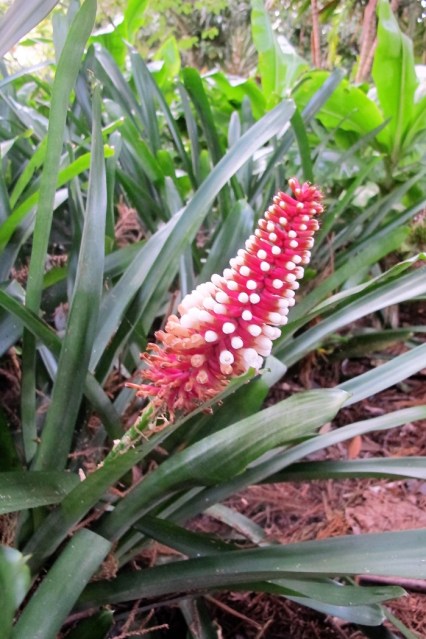
I had a mental debate with myself as to whether I could post my few photos of those currently in flower in the area where I am working without naming them – by general group if not cultivar. Well, we have long since lost the cultivar names. I have never committed bromeliad groups to memory but I feel I am lowering standards if I don’t name plants here so feel free to correct me on the classifications. We are by no means certain on them. Postscript: I have done a round of corrections on the photo caps after receiving advice from a reader who knows a whole lot more about bromeliad botany and nomenclature than we do.
What we refer to as an FIK but I am now told is Aechmea pineliana












 Tikorangi The Jury Garden