Tag Archives: Abbie Jury

Tikorangi notes: THAT yucca, wretched geissorhiza and the close of magnolia season.

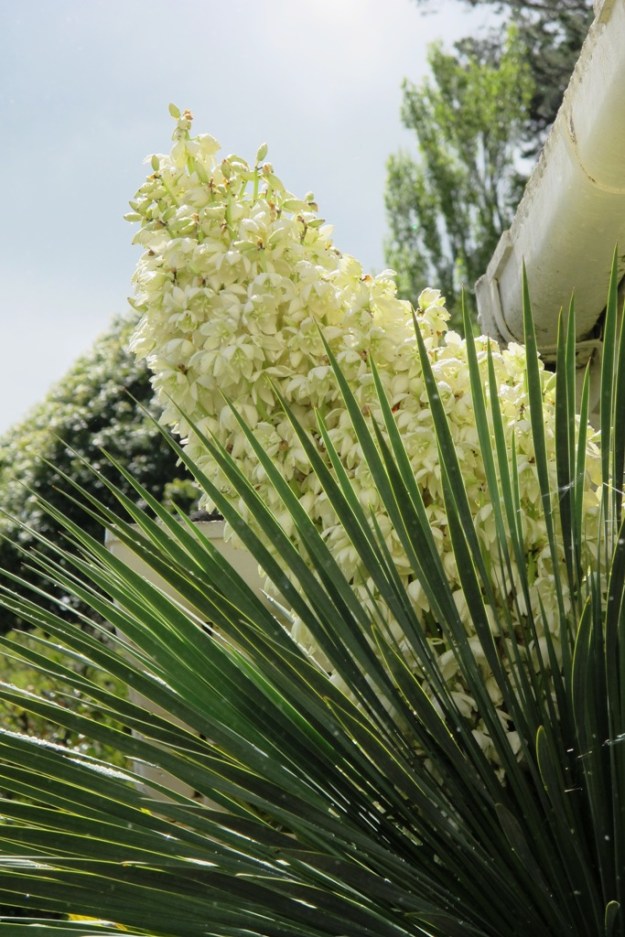
Yucca whipplei finally flowered after maybe 20 years

Yucca whipplei finally flowered after maybe 20 years

The state of our Yucca whipplei is such an ongoing saga here it even has its own folder in my photo files. I wrote about its impending move back in early 2013 when we had cut the concrete paving in preparation for its move. But it was still in situ this time last year when, after a period of getting on for 20 years, it actually flowered. We were thrilled. As the flower spike edged past the first story of the house, it was a well-documented blooming.

IMG_5269But other needs were always more urgent so the moving of the yucca had not taken place. Nor had the windows to what is our TV room been cleaned for many years. But yesterday the day came, forced by the arrival of the glaziers to install retro-fitted double glazing in our wooden window sashes. It was not an easy task. Mark had thought he could probably chainsaw the top off but the fibrous nature of the spent foliage merely jammed the chainsaw. At this point it is in two pieces. The top will be replanted on the sunny bank in the north garden where it will likely recover. The base, with a new rosette well-formed already, will be dug out and also relocated. It will, I tell you it will. I like the garden view out of the windows which is now visible again and while cleaning windows is not my favourite activity, I do like to be able to do it when necessary.
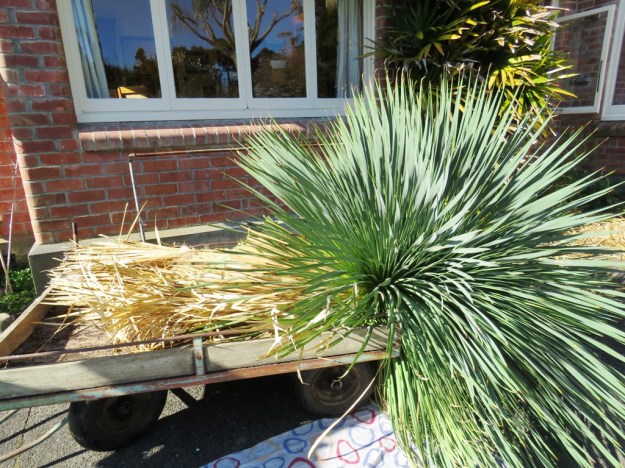
IMG_5272As far as we know, this is Yucca whipplei, also known as Hesperoyucca whipplei, chaparral yucca, Our Lord’s candle, Spanish bayonet, Quixote yucca or foothill yucca. So Wikipedia tells me. Apparently the most common name is Our Lord’s candle. It being native to southern America from California through to Mexico, it clearly felt right at home in the bone dry conditions of the house border beneath the eves. In the meantime, Our Lord’s candle is no long alight at our place.
Pretty it may be in bloom, but I have spent countless hours trying to eradicate this plant, as Felix Jury did before me

Pretty it may be in bloom, but I have spent countless hours trying to eradicate this plant, as Felix Jury did before me

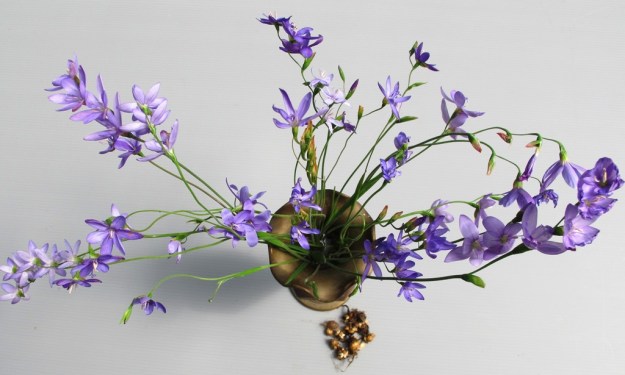
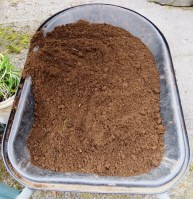
IMG_5004IMG_5005I have been forced to extreme remedial action in the rockery in the Battle of the Geissorhiza. Such a pretty weed and so dreadfully invasive. Each bulb is surrounded by many little baby bulbs that peel  off as soon as you look at them, ready to grow into the future. In the worst affected pockets of rockery, I am lifting everything and washing the roots to make sure no dreaded geissorhiza bulbs are lurking in there hiding. Then I dig out all the soil and replace it with clean soil. I was surprised that one pocket generates almost a full barrow of soil. The contaminated soil is being dumped in the deepest, darkest shade where I hope nothing will germinate and if it does, as a last resort it can be sprayed. This somewhat extreme and labour intensive treatment should, I hope,  get me closer to victory and the extermination of this pretty but hideously invasive bulb.

Shun Geissorhiza aspera. It belongs to the same group as highly invasive oxalis or allium-type of Pesky Weeds Masquerading as Pretty Plants. You have been warned.

Magnolia Serene

Magnolia Serene

Magnolia Serene is opening. This always heralds the end of the deciduous magnolia season for us as it is the last of the major magnolias here to bloom. Alas, a magnolia season that was progressing magnificently was dealt a near death blow two weeks ago when we had a huge wind which lasted more than 24 hours. We are used to wind here – it is the west coast of the Windy Isles after all (New Zealand being marooned in expanses of vast ocean all round means that we are a windy country) but this was more than an ordinary wind. Reminiscent, in fact, of the worst winds we can remember which came as Cyclone Bola 27 years ago. Fortunately the damage was minor though the debris was great. And the later flowering magnolias were something of a casualty. Because Serene was still in bud, it came through unscathed but the rest of the plants in bloom had their season cut short.
The industrial chic garden

IMG_4503I visited a most interesting private garden in Auckland earlier this month. Industrial, urban chic, I would call it.

I wrote about hedging ideas after my visit to the Kelliher Estate on Puketutu Island but I didn’t name the gardener at the time because I hadn’t asked him if he wanted to be identified. It is Grahame Dawson, and as I walked around the Kelliher garden, I asked my companion what Grahame’s own garden was like. What made me curious was that his approach to gardening at the Kelliher showed a flair that is unusual in a public garden (or a trust garden) and I felt sure that I was looking at somebody who had large garden instincts. My companion took me in to meet Grahame in his home garden.

It was very different to the Kelliher Estate garden and I loved it. It is not that I want to emulate it myself. I just thought it was very different, quirky, characterful, self-indulgent even, but not naff and goodness, that is a fine line to tread.
IMG_4509
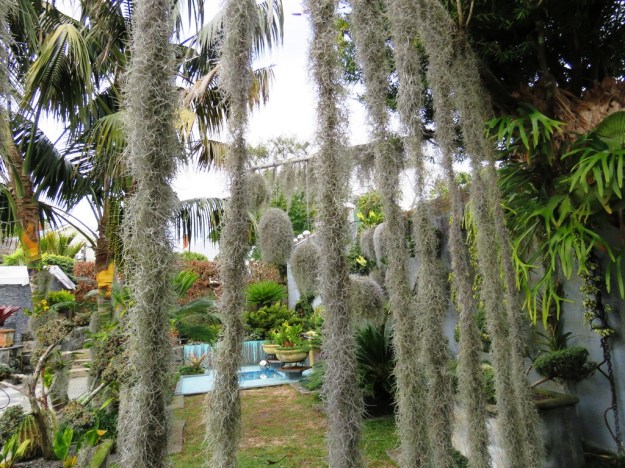
I loved the hanging curtain of tillandsia growing through weighted chains (top photo) and the disco ball echoes of the rounded mounds (threaded through hanging baskets suspended upside down). Yes there was a lot of tillandsia – three main types in the hanging mode, I think Grahame said. Tillandsias, or air plants as they are often referred to, have a huge a family of well over 700 different species and are in the bromeliad group. These ones contributed to the curious phenomenon of a predominantly grey garden. I was viewing it on a grey, cool spring day and I didn’t find it in the least bit dreary, in case you are wondering.
IMG_4506
I liked the bold juxtaposition of the almost stark seating area to one side, with the plantings opposite on the site.
IMG_4499
The undercover display of specialist orchids were arrayed in the manner of an auricula theatre and that is natural light casting an ethereal glow in the mid afternoon light.
IMG_4505
The pool resembled a shrine to my eyes. The little figure, Grahame told me, is Narcissus.
IMG_4511
For those who want ideas, Grahame has a natural flair for managing multiple pots without looking messy or cottage-y. The simplest of terracotta pots painted grey made the row a feature with or without the orchid selection they house.
IMG_4483
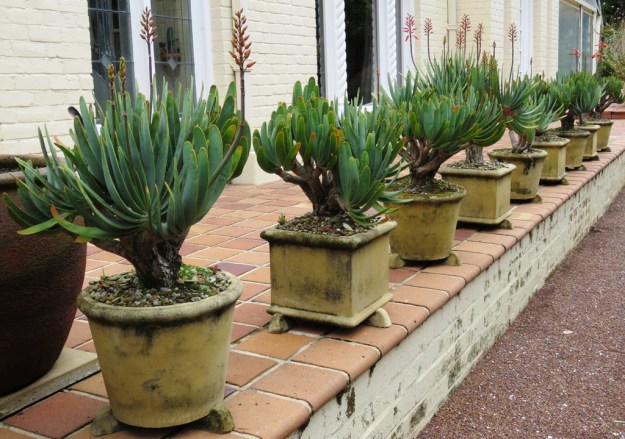
Back at the Kelliher Garden, I had photographed the pots along the front terrace. Alternating square and round pots, he had filled them all with Aloe plicatilis. The very simplicity gave it a formality while softening the scene with thoroughly practical foliage.

People visit gardens for many reasons and goodness knows, with two decades of opening our own garden behind us, we have heard many of those reasons over the years. Too often, a garden is judged – and I use the word ‘judged’ deliberately – on whether the visitor can imagine themselves owning the garden. I didn’t want to own Grahame’s garden – industrial chic is not my style – but it is rare to come across a place that I would describe as genuinely original, combining both wit and skill. This was one.

IMG_4496

Plant collector: the curious native Muehlenbeckia astonii

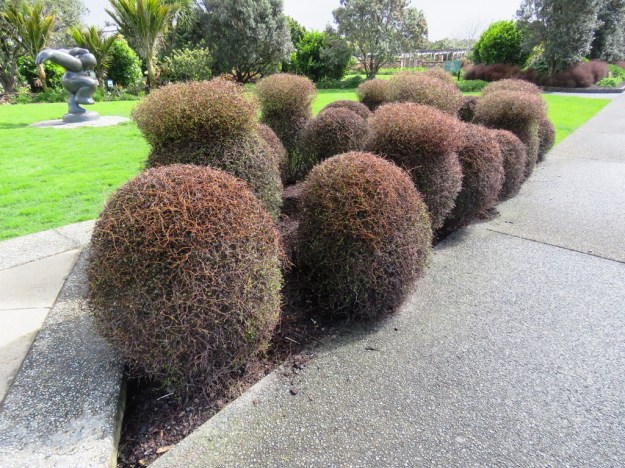
An unusual clipped specimen, M. astonii

An unusual clipped specimen, M. astonii

The proper name of this plant is not easy to spell – Muehlenbeckia astonii – but I have never even heard it referred to by its alleged common names of ‘shrubby tororaro’ or ‘wiggy-wig bush’. Not that common, apparently. The plantings in a prominent position at Auckland Botanic Gardens have caught my eye before. I am guessing they are planning to extend the clipping up another layer. In this interim phase. Mark chuckled and suggested they resemble Kim Jong-Un. The hair, dear Reader, the hair.

This is another of our native plants now threatened by loss of habitat. These days it is limited to the eastern coastal lowlands, stretching from Wairarapa to Banks Peninsula but it may have been more widespread in the days before extensive land development. Fortunately, it makes a good garden specimen and it is the ability to integrate into gardens that has saved critically endangered plants like Tecomanthe speciosa, Pennantia baylisiana and the kakabeak (clianthus).

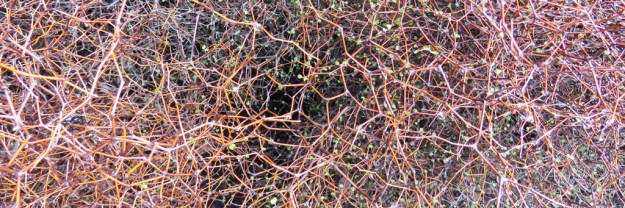
Divaricating plants are not unusual in this country – divaricating being that tight criss crossing of the branches, often combined with tiny leaves. The ever-handy internet advances two botanical theories for the prevalence of divaricating plants here. I like the first theory which is that plants evolved this way to protect themselves from moa grazing on them. The second theory is that the plants have adapted to withstand harsh climatic conditions, particularly wind and dryness found in exposed coastal conditions and maybe hard frosts.
Muehlenbeckia astonii (7)
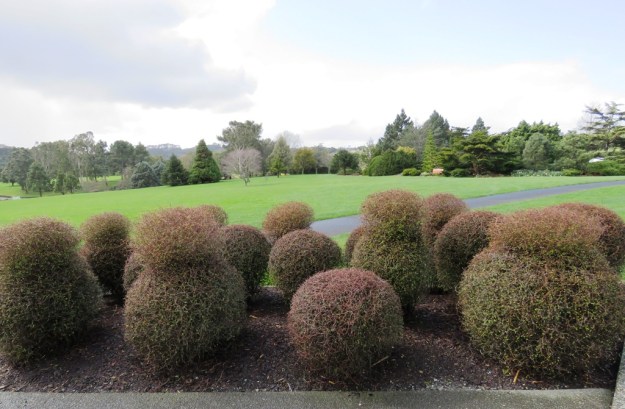
M. astonii will be deciduous in hard conditions but retains some of its tiny leaves in Auckland. The orange and red tones in the wiry zigzag branches add interest. It clips well and is apparently not difficult to strike from cutting or raise from fresh seed. We don’t have M. astonii in our garden but we do grow a comparable tiny-leafed divaricating coprosma which has a natural form of mounding layers that is often described as cloud form.

Muehlenbeckia astonii, featuring prominently at Auckland Botanic Gardens

Muehlenbeckia astonii, featuring prominently at Auckland Botanic Gardens

When saying it with flowers becomes a political statement

Red Peak, floral clock style

Red Peak, floral clock style

NZ_flag_design_Red_Peak_by_Aaron_Dustin.svgIt may be a surprise to you, as it was to me, to learn that “say it with flowers” did not orginate as Interflora’s slogan but was in fact a 1934 British musical film. Faced by the many memes associated with the Red Peak flag in New Zealand, I felt I could reinterpret it with flowers. First up was the one in the style of floral clocks, perhaps.


Version 2 in wild cherry blossom and anemone

Version 2 in wild cherry blossom and anemone

It is not that I am totally enamoured of the Red Peak flag option. It is that I do not appreciate being given a choice of four designs for our proposed new national ensign that are a silver fern, a silver fern, a silver fern and a close-up of a fern frond (for that is what the black and white koru represents). Given that our Prime Minister has made no secret of his strong preference for a silver fern, I can’t help but feel that crowd-sourcing the designs and then going through a $28 million “public consultation” and not one, but two referendums, all to achieve what looks like a pre-determined outcome is a bit of a have, really. Over 10 000 designs submitted and it came down to three silver ferns and a close-up of an unfurling frond? I feel short-changed, as apparently the majority of New Zealanders do at this stage of the campaign.

NZ_flag_design_Silver_Fern_(Red,_White_&_Blue)_by_Kyle_Lockwood.svg NZ_flag_design_Silver_Fern_(Black,_White_&_Blue)_by_Kyle_Lockwood.svg NZ_flag_design_White_&_Black_Fern_by_Alofi_Kanter.svg NZ_flag_design_Koru_(Black)_by_Andrew_Fyfe.svg

Red Peak, rendered in Hippeastrum aulicum and wild cherry blossom.

Red Peak, rendered in Hippeastrum aulicum and wild cherry blossom.

So I am backing Red Peak as an alternative option to be added to the referendum just to give an alternative choice to the fern logos. In my mind, after doing the floral clock styled Red Peak, I mentally envisaged the Japanese-influenced Ikebana style, stripped bare and exquisitely simple, capturing the essence of the design only. Alas my skills in floral art are non-existent and I quickly realised that translating the mental image to reality was well beyond my capabilities.

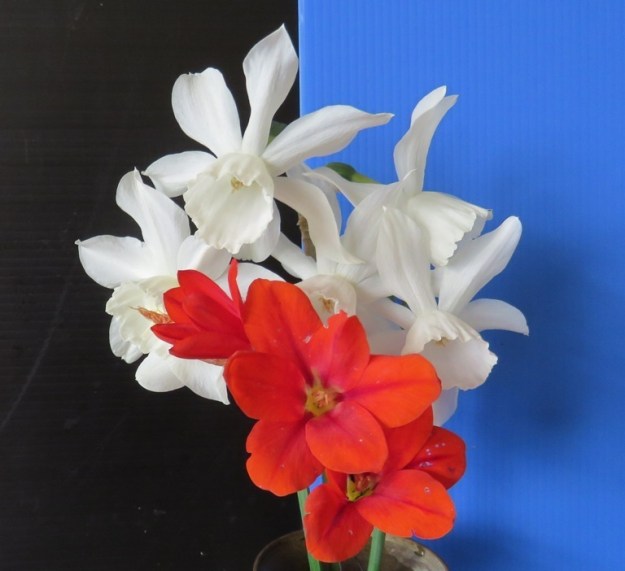
Red Peak in Narcissus Thalia and what I think is a tritonia, not  a sparaxis

Red Peak in Narcissus Thalia and what I think is a tritonia, not a sparaxis

downloadWhen all is said and done, we’d have had a lot more fun with the wild card, Lazer Kiwi though I feel this may be better rendered in the style of a vegetable animal, such as our children used to create for the annual Show Day at primary school.
Petal Pushers – the Jury Michelias


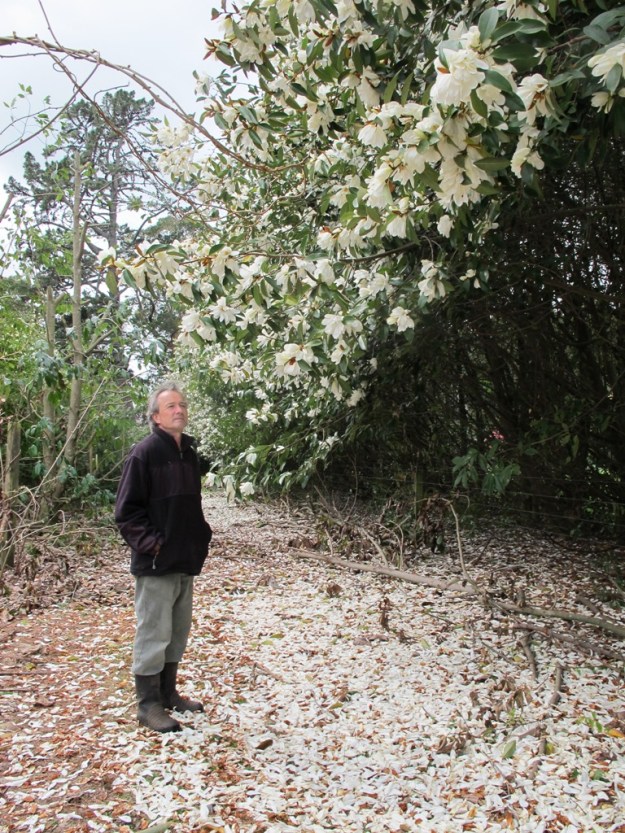
Mark Jury standing on a carpet of fallen scented petals, surveying one of his early shelter belts planted with michelia hybrids

Mark Jury standing on a carpet of fallen scented petals, surveying an early shelter belts planted with michelia hybrids

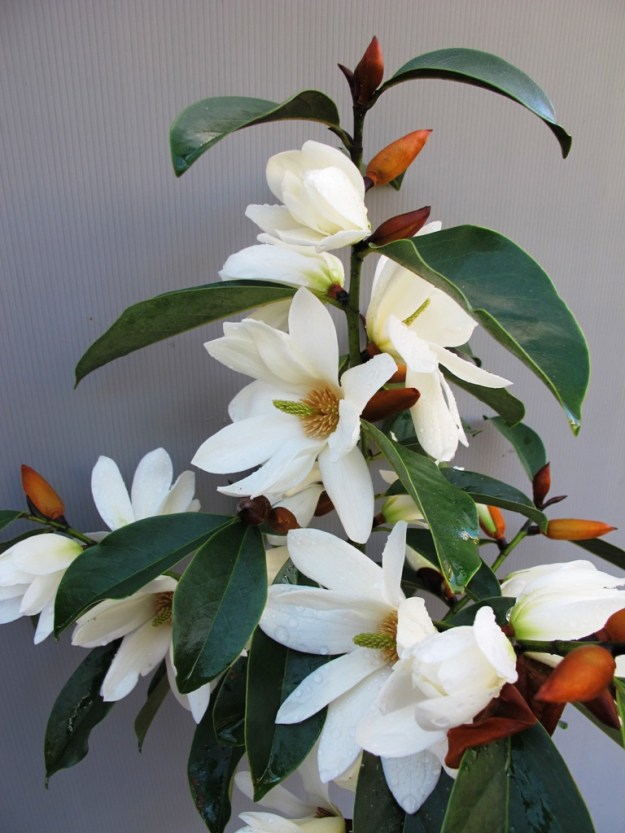
All michelias are magnolias but not all magnolias are michelias. We have always known them as very close relatives to magnolias but they sat in a group of their own. Now there has been some international reassignment after DNA testing and they have become magnolias, which has led to some confusing name changes. In common usage, they are still often referred to michelias and we are a bit betwixt and between on names.

Until very recent times, there weren’t many different michelias in New Zealand. Doltsopa (the best known cultivar being named ‘Silver Cloud’) and figo (common name of port wine magnolia) have been here for a while. It was an early cross between these two by the late Oswald Blumhardt that gave us ‘Mixed Up Miss’ and ‘Bubbles’.

Interest started to grow when yunnanensis was brought in some twenty years ago. It has spawned a gazillion named selections because it sets seed readily, but just to confuse you, it is now correctly referred to as Magnolia laevifolia. There are a few other species which are not widely available, including maudiae, and some obscure ones that are of interest to collectors only. But our borders closed to new introductions so there are a number of recent discoveries in Asia that we don’t have here. Yes, new plants are still being discovered in this world of ours but we can only look at them from afar with our bio-security rules.

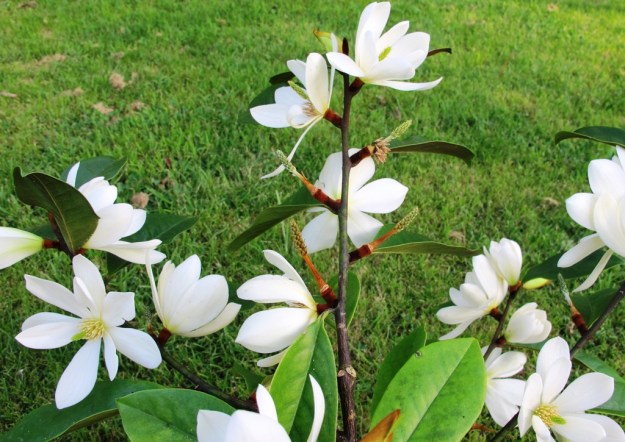
Fairy Magnolia White

Fairy Magnolia White

Mark started hybridising them here back in the 1990s. He figured there was room to improve on them as garden plants. Figo’s flowers are a bit insignificant and the foliage tends to go yellow in full sun. ‘Silver Cloud’ has a wonderful fragrance but the flowers are very floppy and lack good form. It also grows too large for many town gardens and it can defoliate – dropping all its leaves – after flowering. Laevifola (yunnanensis) can defoliate too, in spring conditions which are wet and cold. These are evergreen plants so defoliation is not a great look. ‘Bubbles’ and ‘Mixed Up Miss’ look great as juvenile plants but are pretty ordinary when they get bigger and older. Mark could see possibilities.

September and October are exciting months for us as the michelias bloom. We live and breathe michelias and magnolias at this time of the year. There are six hundred new michelia seedlings ready to flower this spring alone, part of a long term breeding programme. Out of the thousands he has raised, only three have been named and released so far.

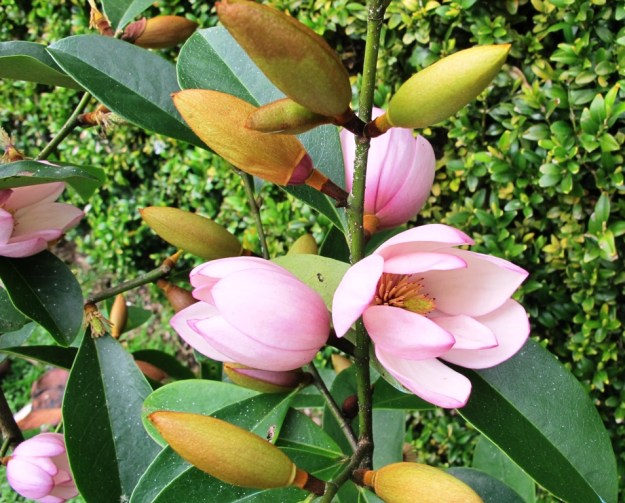
Fairy Magnolia Blush

Fairy Magnolia Blush

There is a long way to go yet but some directions are emerging. Despite the vast majority of michelias being basically white, he has reached reds, purples and deep pinks and is working on deepening the pale yellows to get stronger colour. Along the way there are an awful lot of murky colour combinations that get the chop. There is a big range of flower form, foliage and growth habits. Perfume can be an issue when two of the most fragrant species spawn offspring with no scent at all. Bringing together all the different elements to get a new plant is an absorbing and time consuming occupation.

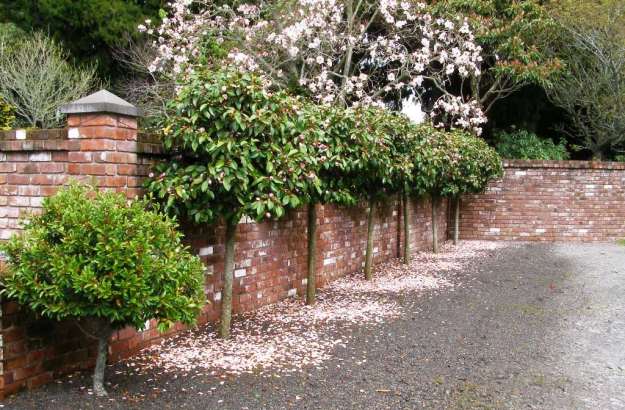
Along the way we have also learned that michelias are very tolerant of cutting and clipping and sprout again from bare wood. The row of lollipop Fairy Magnolia Blush at our entrance has been clipped and shaped over ten years now and we can keep it to the size we want by trimming just twice a year. They make excellent hedges and some of our roadside shelter belts are a feast of flower and fragrance at this time.

The sustainable wood lot

The sustainable wood lot

Regrowth

Regrowth

An unexpected bonus has been the sustainable woodlot. Because we heat our large house entirely with wood, we burn through a prodigious amount every winter. Mark had been thinking along the lines of establishing a sustainable woodlot for the future that we could harvest on a rotational basis. I even sourced a book on the very topic. But lo, he realised a few years ago that his reject michelia seedlings already filled that very niche, doing dual duty as winter feed for our very small herd of beefies that we keep to eat the paddock grass. I say very small herd – there are only four at the moment. Cut off close to the base, the plants soon shoot away again with long straight whips that could be used as poles or left to grow for firewood. Mark drags the branches into an adjacent paddock where the cattle enthusiastically eat the foliage. He then gathers the remaining trunks to cut up for next season’s firewood. It seems a good multi-purpose use of a plant breeding programme.

Fairy Magnolia Cream

Fairy Magnolia Cream

Mark’s three michelia selections to date are sold under the Fairy Magnolia brand and are widely available in New Zealand garden centres and in some overseas countries. Blush is a soft pink, Cream is very fragrant and grows in a similar, compact manner to Blush. White is a larger grower and the first in the season to flower. Mark has always seen it as a garden-friendly alternative to “Silver Cloud” with good fragrance and beautiful flower form.

First published in the September issue of NZ Gardener and reprinted here with their permission.

Lollipop Fairy Magnolia Blush at our entranceway. The smaller michelia to the left is an unnamed figo hybrid with masses of creamy yellow flowers.

Lollipop Fairy Magnolia Blush at our entranceway. The smaller michelia to the left is an unnamed figo hybrid with masses of creamy yellow flowers.